
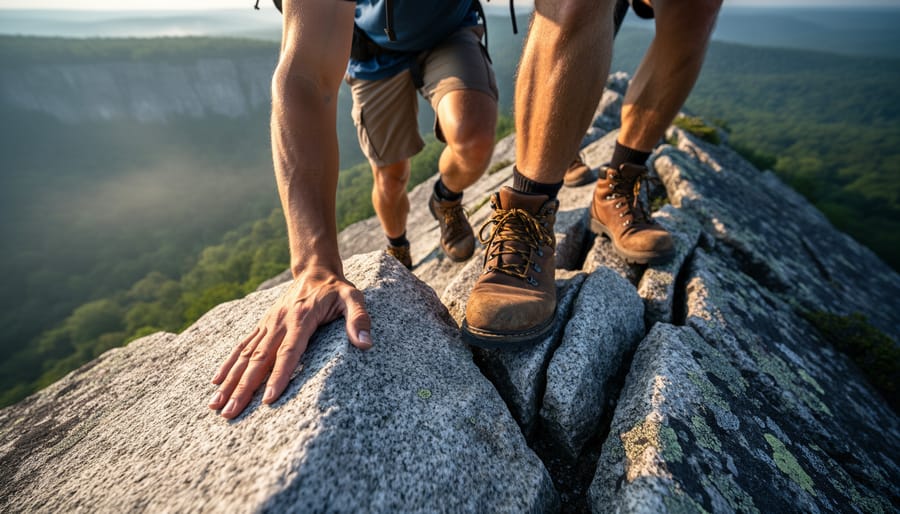
Scramble hiking sits somewhere between a forest trail walk and a technical rock climb, and if you’ve been itching for something more adventurous than your usual Sunday hike, this might be exactly what you need. Picture yourself pulling your body up over boulders, testing handholds on granite slabs, and navigating steep terrain where the trail occasionally disappears beneath your boots. No ropes required, but you’ll definitely use your hands.
This style of hiking has exploded across Ontario in 2026, partly because people got bored with the same flat trails and partly because social media made scrambling look incredibly fun (it is). The Canadian Rockies have long been scrambling territory, but Ontario’s rocky landscapes offer surprisingly good opportunities closer to home. Think Killarney’s white quartzite ridges, the Niagara Escarpment’s limestone faces, and Algonquin’s rugged backcountry routes.
Here’s the thing though: scrambling demands more respect than regular hiking. You’re moving through Class 2 and Class 3 terrain, which means exposure to falls and consequences if you slip. But master the basics, pack the right gear, and you’ll access viewpoints that 95% of hikers never see. The learning curve isn’t steep, you just need to know what you’re getting into before you grab that first handhold.
What Exactly Is Scramble Hiking?
Scramble hiking sits in that exciting sweet spot between a challenging trail hike and technical rock climbing. If you’ve ever found yourself on a steep trail where you instinctively reached out to grab a rock for balance, you’ve had a taste of what scrambling is all about. It’s where your hands become just as important as your feet, and choosing your route up a rocky ridge becomes part of the adventure itself.
The outdoor community uses the Yosemite Decimal System to classify scrambling terrain. While technical climbing starts at Class 5 and requires ropes and specialized gear, YDS Class 2-3 scrambling occupies that thrilling middle ground where you’ll need good judgment and solid footing, but not climbing equipment.
- Class 1
- Standard hiking on maintained trails where hands aren’t needed for balance or progression.
- Class 2
- Off-trail terrain with occasional use of hands for balance on steeper sections. Falls are possible but generally not serious.
- Class 3
- Sustained handholds required with significant exposure. A fall could result in serious injury, and some people use ropes for protection.
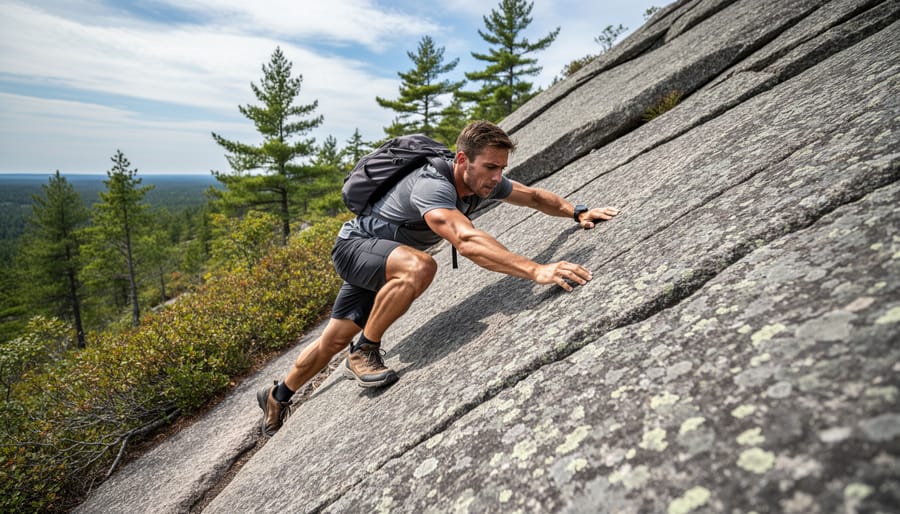
Picture yourself working your way up a granite slope in Killarney Provincial Park, testing handholds on white quartzite, choosing between a direct line or an easier route around an exposed section. That’s scrambling. You’re reading the rock, feeling for stable holds, and making route decisions on the fly. Unlike following a marked trail, you’re actively engaged with the terrain, using your whole body to navigate upward. The reward isn’t just reaching the summit, it’s the problem-solving journey that gets you there, where every move forward feels earned and intentional.
Why Scramble Hiking Is Taking Off in 2026
Ontario hikers are trading well-worn trails for rocky ridges, and the numbers tell the story. Scrambling courses in the province sold out faster in early 2026 than ever before, with outdoor education providers reporting waitlists for introductory sessions. What’s driving this shift toward more adventurous terrain?
The answer starts with hikers themselves. After years of logging kilometres on marked paths, many are craving something that tests more than their endurance. Scrambling delivers that challenge without requiring climbing harnesses or technical rope work. It’s the natural next step for anyone who’s felt restless on flat trails.
Social media has amplified the appeal. Dramatic photos of scramblers navigating rocky ridges in places like the Lake District’s Sharp Edge, described by hikers as “a very tricky grade one scramble”, have caught the attention of Ontario adventurers wondering where they can find similar terrain closer to home. These visuals showcase what standard trail photos can’t: the satisfaction of route-finding and using your hands to navigate challenging ground.
Ontario’s outdoor recreation boom has primed the pump. Provincial park visits hit record levels in recent years, creating a larger pool of experienced hikers ready for progression. At the same time, outdoor clubs are responding with more scrambling-focused outings. The Alberta Alpine Club has long organized scrambling trips, and similar appetite is emerging in Ontario’s hiking community.
The timing feels right. People want genuine adventure without needing specialized climbing skills, and scrambling fills that gap perfectly.
Ontario’s Best Scramble Hiking Destinations
Killarney Provincial Park
Killarney’s La Cloche Mountains deliver some of Ontario’s most dramatic scrambling terrain, where blindingly white quartzite ridges cut sharp profiles against the sky. The park’s backcountry rewards adventurous hikers willing to venture beyond the marked trails, especially around Silver Peak where the landscape transitions from forested paths to exposed rock slabs that demand careful footwork and route selection.
The approach to Silver Peak’s upper reaches involves navigating Class 2 terrain across tilted quartzite shelves, where the rock’s brilliant white surface can be disorienting in bright sunlight. You’ll find yourself choosing lines across smooth slabs, testing the surprisingly solid grip of the quartzite’s textured surface beneath your boots. The ridgeline sections require genuine scrambling, using hands for balance while picking routes around or over boulder obstacles that block the most direct path to the summit.
A detailed Killarney map guide becomes essential here, since scrambling routes aren’t marked and navigation across the exposed ridges demands confidence with topographic features. The reward? Sweeping views across Georgian Bay’s blue waters, La Cloche’s distinctive white peaks, and the deep satisfaction of earning your summit through genuine scrambling skills rather than simply following trail markers.
Bon Echo Provincial Park
Bon Echo Provincial Park offers a different flavour of scrambling experience, centred around the park’s iconic Mazinaw Rock, a massive 100-metre cliff face rising straight from the lake. While the marked trails provide excellent viewpoints, adventurous scramblers can explore the rocky ridgeline above the main cliff, where careful route-finding through boulder fields and ledges rewards you with stunning perspectives over Mazinaw Lake. The terrain here is Canadian Shield granite at its finest, with solid handholds but exposure that demands respect. I’ve found the best scrambling opportunities along the edges of the main cliff system, where you can work your way through jumbled rock formations while staying well back from dangerous drop-offs. The park’s backcountry also features lesser-known rocky outcrops perfect for practicing scrambling skills in a more remote setting, though these require solid navigation abilities to locate and safely explore.
Lion’s Head and Bruce Peninsula
The Bruce Peninsula’s dramatic limestone cliffs and ancient Niagara Escarpment terrain offer some of Ontario’s most accessible scrambling opportunities. The Lion’s Head lookout trail itself contains optional scrambling sections along its cliff edges, where you’ll navigate rocky outcrops with sweeping Georgian Bay views. Beyond the main trails, the peninsula’s boulder fields and escarpment faces, particularly around the Cabot Head area and sections of the Bruce Trail’s northern terminus, provide natural Class 2 terrain where hands-on route-finding becomes part of the experience. The exposed rock here is generally stable, though the cliff edges demand respect and careful footing. Visit during spring or fall when cooler temperatures make the exposed scrambling more comfortable, and always stay well back from deteriorating cliff margins.
Frontenac Provincial Park
Frontenac Provincial Park’s 5,355 hectares of backcountry wilderness offer some of eastern Ontario’s most rewarding scrambling terrain for those willing to venture beyond the marked portage routes. The park’s Canadian Shield landscape features exposed granite ridges, boulder fields, and rocky outcrops that reveal themselves as you explore the interior lakes region. Many of the higher elevation campsites, particularly those on Big Salmon Lake and Cedar Lake, serve as excellent basecamp locations for day scrambles up the surrounding ridges.
What makes Frontenac special for scramblers is the freedom to navigate your own route across the granite domes and ridgelines connecting different lake systems. The terrain typically falls into Class 2 scrambling, where you’ll use your hands for balance while picking your way across sloping rock faces and testing footholds on fractured granite. The park’s backcountry permit system ensures you won’t encounter crowds, giving you that genuine wilderness scrambling experience just two hours from Ottawa.
Essential Gear for Your First Scramble
Your hiking boots and day pack won’t cut it on scramble routes where rock becomes your handhold and footholds demand precision. The good news? You don’t need technical climbing gear, just smart upgrades to your standard kit.
Start with your feet. Approach shoes or hiking boots with sticky rubber soles make all the difference when you’re balancing on slanted rock faces. Look for stiffer soles than trail runners provide, you need support when edging on narrow ledges, but avoid heavy mountaineering boots that limit ankle flexibility. The sweet spot is a boot that grips confidently on dry rock and allows you to feel the terrain beneath you.
Your hands will thank you for bringing lightweight gloves. Even on warm summer days, sharp granite and rough quartzite will shred your palms after a few hours of pulling yourself up rock faces. Cheap gardening gloves work fine for easy scrambles, though dedicated climbing gloves offer better dexterity.
A helmet becomes worth considering on routes with loose rock overhead or exposure to significant falls. While many Ontario scramblers skip helmets on easier terrain, they’re smart protection on challenging routes where other groups might dislodge rocks from above.
Downsize your pack to 20-30 litres. Bulky backpacks throw off your balance and catch on rock as you squeeze through tight spots. You need just enough room for the ten essentials, extra layers, and plenty of water, scrambling works muscles that standard hiking doesn’t.
Finally, pack a headlamp even for day trips. Routes take longer than you expect when you’re picking your way across boulder fields, and descending scramble terrain in darkness is genuinely dangerous.
Safety Skills Every Scrambler Needs
Scrambling looks casual from a distance, but the moment you commit your weight to a rock ledge thirty feet above the trail, you realize this activity demands a specific skillset. The good news? These skills are learnable, and practicing them consistently will keep you safe while expanding your adventure possibilities.
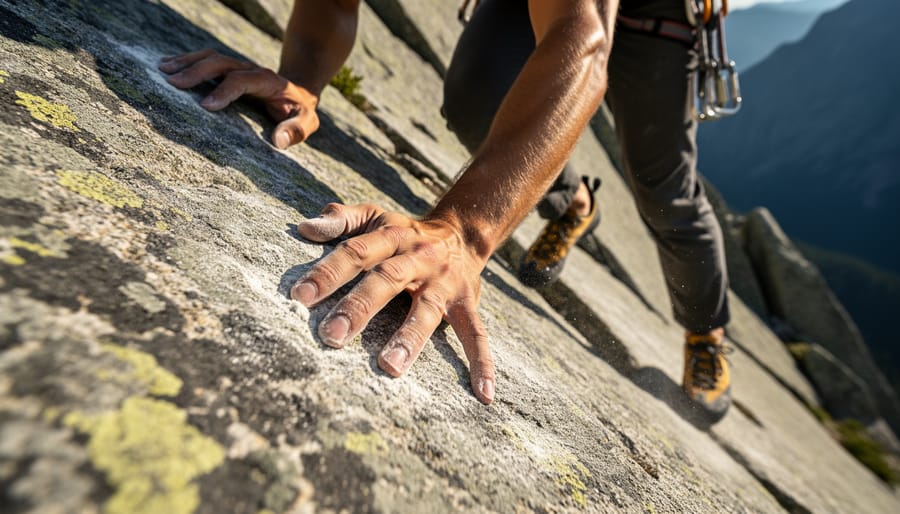
Start with three-point contact, the fundamental rule of scrambling. At any given moment, three of your four limbs should maintain secure contact with the rock, two hands and one foot, or two feet and one hand. This creates a stable tripod that prevents you from relying on a single hold. It sounds simple, but when you’re navigating an exposed section, this technique becomes your safety anchor.
Route-finding separates confident scramblers from those who get stuck or turned around. Unlike marked trails, scramble routes often follow the path of least resistance up natural features. Strong backcountry navigation skills help you identify your line before you commit. From your position, scan ahead for ledges, cracks, and features that create a logical path upward. I always pause every twenty feet or so to look back, memorizing the descent route while you’re fresh prevents dangerous mistakes on the way down.
Test every handhold before trusting it with your weight. Give rocks a firm tug or push to check stability. Loose rock is common on less-traveled scrambles, and a shifting hold can send you tumbling. Similarly, avoid grabbing vegetation for support, roots and branches pull out easier than you’d think.
Weather awareness becomes critical on exposed terrain. Wet rock dramatically reduces friction, turning manageable scrambles into slip hazards. If rain threatens or fog rolls in, turn back without hesitation. There’s no shame in retreat, experienced scramblers know that summits will wait, but mistakes on wet rock won’t.
Finally, scramble with partners who have experience, especially when you’re learning. They’ll spot hazards you might miss and offer guidance on technique. The outdoor community thrives on mentorship, so don’t hesitate to join a club or connect with local scrambling groups.
Building Your Skills: From Hiker to Scrambler
The jump from hiker to scrambler isn’t about one dramatic leap, it’s a series of smaller steps that build your confidence and competence over time. I made the mistake early on of trying terrain that was beyond my comfort zone, and I’ll never forget the feeling of being stuck halfway up a rock face, questioning every decision that brought me there. That experience taught me the value of a structured progression.
Here’s how to develop your scrambling skills safely and systematically:
- Start with Class 2 terrain where you’ll use your hands occasionally for balance but never feel exposed. Many trails in Ontario have short rocky sections perfect for this.
- Practice three-point contact on easier scrambles until it becomes second nature, keeping three limbs secure while moving the fourth.
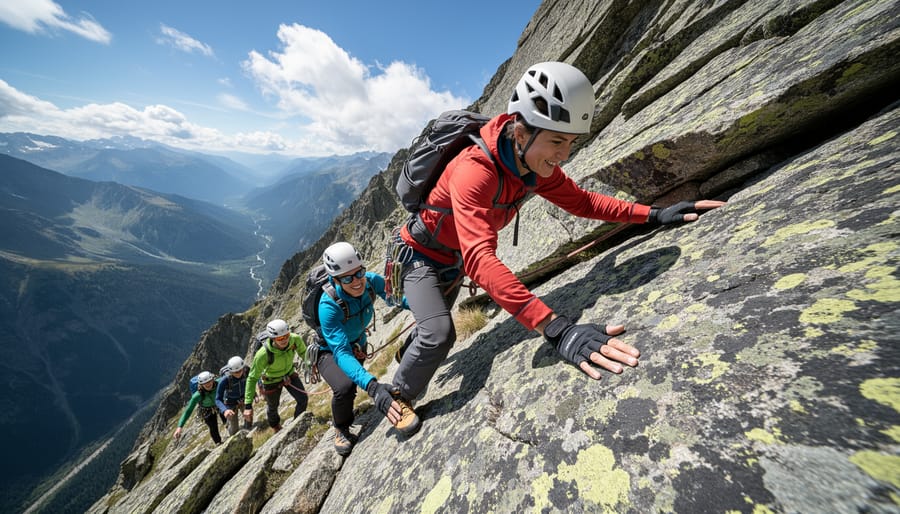
- Join an outdoor club or scrambling group where experienced members can mentor you and point out good hand and footholds you might miss.
- Take a navigation course to build your route-finding confidence, since scrambles often require choosing your own path rather than following blazed trails.
- Progress to Class 3 terrain only after you’re comfortable on Class 2, and never push yourself on days when conditions are wet or icy.
The outdoor community in Ontario is welcoming and eager to share knowledge. I’ve learned more from tagging along on group scrambles than from any guidebook. Watch how experienced scramblers test handholds, read the rock, and make decisions about whether to continue or turn back. These observations become internalized skills that serve you when you’re making your own calls on the mountain.
Give yourself permission to progress slowly. Some hikers transition to scrambling in a season; others take years. What matters is that you’re building genuine competence, not just checking boxes.
Leave No Trace on Sensitive Scramble Routes
Scrambling takes you into some of Ontario’s most fragile ecosystems, cliff-edge plant communities, exposed rock faces with slow-growing lichens, and rare habitats that can’t recover from heavy traffic. Practicing Leave No Trace principles matters even more when you’re off established trails.
Stick to bare rock and durable surfaces whenever possible. Those green patches clinging to cliff faces? They’ve taken decades to establish and can be destroyed in seconds. Choose your route thoughtfully, avoiding loose rock that accelerates erosion and selecting lines that minimize your impact. If a scramble route shows signs of vegetation damage or unstable rock, consider finding an alternative path.
Respect closure signs and restricted areas, they’re there to protect nesting raptors, rare plants, or unstable geology. When you’re route-finding through untracked terrain, spread out rather than following single file to prevent creating new erosion paths. The scrambling community in 2026 understands that our access to these thrilling routes depends on treading lightly, ensuring future adventurers can discover the same wild landscapes we’re exploring today.
Planning Your First Ontario Scramble Adventure
Your first scramble outing deserves thoughtful planning. Start by choosing routes within your comfort zone, if you’re new to scrambling, look for trails described as having “optional” scrambling sections or Class 2 terrain. This lets you test the waters without committing to sustained hands-on climbing.
Timing matters more for scrambling than regular hiking. Late spring through early fall offers the best conditions in Ontario, with June through September being prime season. Weekdays beat weekends for avoiding crowds, especially at popular spots like Lion’s Head. Early morning starts give you better light for route-finding and ensure you’re off exposed terrain before afternoon thunderstorms roll in.
Check current conditions before heading out. Contact park offices about recent rockfall, wet conditions that make rock slippery, or seasonal closures. Provincial park websites often have trail reports, and local hiking groups share recent trip updates on social media.
Here’s an insider tip: always file a detailed trip plan with someone reliable. Don’t just say “hiking at Killarney.” Specify your intended route, scrambling sections you plan to tackle, expected return time, and what to do if you’re overdue. Take photos of trailhead signs and text them to your contact.
Understand regulations before you go. Some parks restrict off-trail travel or require backcountry permits for scrambling areas. Bon Echo, for instance, has specific rules about cliff access. Respect these, they protect both you and fragile ecosystems.
Pack a paper map and know how to use it. Cell service vanishes quickly in scrambling terrain.
Ontario’s scramble hiking scene is just waiting for you to discover it. You don’t need to travel to the Rockies to find terrain that challenges your skills and rewards you with stunning views. From the white quartzite ridges of Killarney to the dramatic cliffs of the Bruce Peninsula, the province offers surprising adventures for anyone ready to use their hands as much as their feet.
Start where your ability meets the terrain. There’s no rush to tackle the most technical routes. Choose a destination that matches your current skills, reserve early for popular parks, and bring along someone with scrambling experience if this is your first time.
The landscapes you’ve hiked dozens of times reveal entirely new perspectives when you scramble up their rocky faces. That familiar provincial park transforms into an adventure playground. Your favourite escarpment trail becomes a vertical challenge. And 2026 is the perfect year to experience these places in a completely different way, hands on rock, heart pumping, horizon expanding with every upward move.









+ There are no comments
Add yours