

A switchback is a zigzag trail feature designed to help hikers ascend or descend steep terrain safely and efficiently. Instead of charging straight up a mountainside, the trail folds back on itself in a series of angled segments, creating a manageable grade that saves your knees, conserves energy, and protects the landscape from erosion.
If you’ve ever wondered why trails seem to take the long way around instead of going straight to the top, there’s solid science behind the design. Those gentle S-curves you’re walking aren’t there to frustrate you or add mileage. They’re carefully engineered features that make challenging elevation gain possible for hikers of all abilities while preventing the environmental damage that occurs when water races down steep trails.
Whether you’re tackling the rocky climbs of Algonquin Peak in Algonquin Provincial Park or navigating the Bruce Trail’s Niagara Escarpment sections, understanding how switchbacks work will change the way you hike. You’ll move more efficiently, avoid the common mistake of cutting corners (which actually damages trails), and appreciate the thoughtful design that makes Ontario’s most scenic vistas accessible. This guide breaks down everything from the mechanics of why switchbacks reduce effort to the proper technique for hiking them, so you can make the most of every uphill adventure.
What Switchbacks Mean on the Trail
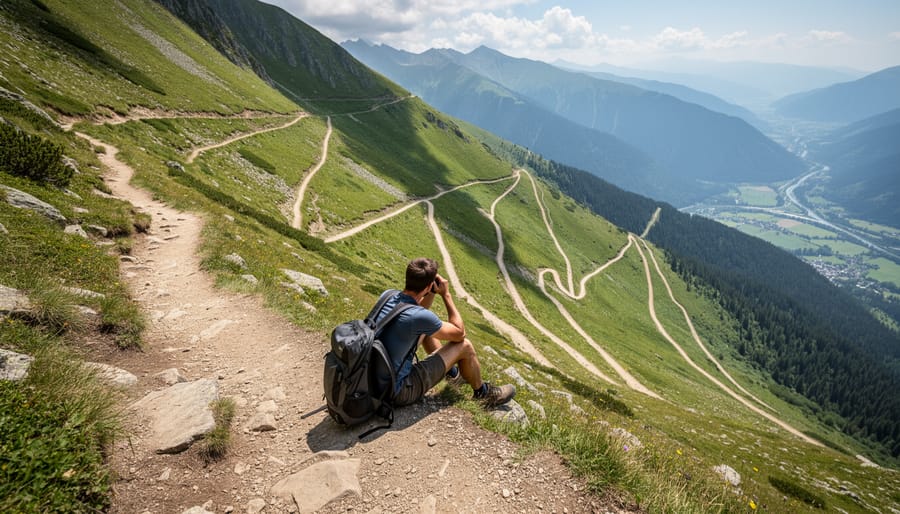
Picture yourself looking up at a steep hillside from the trailhead. Instead of a punishing, straight-up scramble, the path ahead carves back and forth across the slope in a distinctive zigzag, almost like a giant letter Z laid on its side, repeated several times as it climbs. That’s a switchback, and once you know what to look for, you’ll spot this signature pattern on trails all over Ontario and beyond.
A switchback is essentially a sharp turn where the trail reverses direction, sending you back across the slope in the opposite direction before turning again. Think of it as the trail folding back on itself, creating legs or segments that run roughly parallel to each other as they climb. From below, well-designed switchbacks look like a ribbon draped across the mountainside, each turn marking a deliberate change in direction.
- Switchback
- A sharp reversal in trail direction that creates a zigzag pattern up steep terrain, allowing hikers to gain elevation gradually rather than climbing straight up.
- Grade
- The steepness or incline of a trail section, typically expressed as a percentage; switchbacks reduce grade by spreading vertical climb over a longer horizontal distance.
- Trail Reversal
- The point where the path makes a hairpin turn and doubles back, changing direction by roughly 180 degrees to continue climbing in the opposite direction.
- Climbing Turn
- The curved section of trail where hikers transition from one switchback leg to the next, often the most technical part requiring careful foot placement.
When you’re actually on a switchback trail, you’ll walk a fairly gentle incline for a stretch, hit a sharp turn (sometimes reinforced with stones or logs), and then head back the way you came, only higher up the slope. The turns can be tight hairpins or wider, sweeping curves depending on the terrain and trail design. Between turns, you might catch glimpses of the trail leg you just hiked below you, or see the next reversal waiting above.
How Switchbacks Work on Steep Terrain

The genius of switchbacks lies in a simple trade-off: distance for gentleness. Instead of attacking a steep slope head-on with a brutally direct climb, switchbacks spread that same elevation gain across a much longer horizontal distance. Picture climbing 300 metres straight up versus zigzagging back and forth to reach that same height, the vertical distance is identical, but the angle of each step becomes dramatically easier.
This works because of grade reduction. A direct route up a steep mountainside might create a 40% or even 50% grade, forcing you to haul yourself up what feels more like a ladder than a trail. Switchbacks break that punishing angle down into manageable segments, often reducing the grade to 10-15%. Your legs cover more ground, yes, but each individual step requires far less effort. You’re essentially converting a gruelling vertical slog into a series of moderate inclines.
The zigzag pattern also creates natural rest opportunities at each turn, where the trail briefly levels out before reversing direction. These transition points give your muscles a momentary break and let you catch your breath without fully stopping.
Here’s an insider tip: the tightness of switchback turns tells you what you’re in for. Closely spaced switchbacks that reverse direction every 15 or 20 metres signal very steep terrain where trail builders needed aggressive grade reduction. Wide, sweeping switchbacks with long traverses between turns indicate a more moderate slope. Count the switchbacks visible above you on the mountainside and you’ll get a rough sense of the climb’s intensity before you’re halfway up and committed.
Types of Switchbacks You’ll Encounter
Not all switchbacks are created equal. The type you’ll encounter depends on the steepness of the terrain, the trail’s purpose, and how the landscape naturally shapes the route.
Tight switchbacks pack multiple hairpin turns into a short vertical stretch. You’ll recognize these by their sharp 180-degree reversals, often with just a few strides between each turn. Trail builders use this configuration on extremely steep sections where spreading elevation gain more widely isn’t possible. The turns feel abrupt, almost stacked on top of each other, and you can sometimes see hikers on the switchback directly above or below you. These are common on escarpment climbs where the terrain rises sharply over a short distance.
On moderate slopes, you’ll find gradual sweeping turns instead. These switchbacks curve gently across the hillside with longer straight sections between turns. The transitions feel less jarring, and the overall climb maintains a more consistent rhythm. Many Ontario trails favor this design because it works well with rolling terrain and feels more natural to hike.
Trail construction methods create another distinction. Constructed switchbacks feature deliberate engineering, you might notice stone retaining walls, water bars to divert runoff, or reinforced edges that clearly define the trail bed. These built features prevent erosion and keep the path stable through heavy use. Natural contour switchbacks, by contrast, follow the land’s existing shape with minimal modification. Trail builders identify the most sustainable route along natural benches and ridges, creating a path that works with the terrain rather than imposing a pattern onto it.
Common switchback configurations include:
- Tight hairpin turns on cliff faces and steep mountain grades
- Long sweeping curves on moderate hillsides and forest slopes
- Reinforced switchbacks with stone work on high-traffic routes
- Contour-following turns that trace natural terrain features
- Stepped switchbacks with flat platforms at each turn for resting
The terrain dictates everything. Rocky, exposed slopes often require shorter, tighter switchbacks because there’s simply no room to spread them out. Forested hillsides with deep soil allow for more gradual designs. Trail purpose matters too, a recreational hiking path might feature gentler, more comfortable turns, while a backcountry route to a remote peak might take a more direct, aggressive approach with steeper grades between turns.
Why Trail Builders Design Switchbacks
Trail builders face a delicate balancing act when designing paths up steep terrain. They’re not just thinking about getting you to the summit, they’re protecting the mountain itself.
The primary engineering goal is simple: make steep climbs manageable for hikers of varying abilities. By spreading elevation gain across a longer horizontal distance, switchbacks transform a brutal straight-up slog into a steady, sustainable climb. But the environmental benefits matter just as much as hiker comfort.
When rainwater hits a steep, straight trail, it rushes downward like a river, carving deep channels and washing away soil. Switchbacks interrupt this flow. The gentler grade of each zigzag leg slows water movement, allowing it to disperse naturally into surrounding vegetation rather than concentrating into erosive streams. This drainage control keeps trails from becoming gullies and preserves the hillside’s natural structure.
Switchbacks also protect plant life. A well-designed trail confines foot traffic to a specific path, preventing the trampling of surrounding vegetation. Without switchbacks, frustrated hikers create their own shortcuts straight up the slope, killing plants and triggering soil erosion across a wide swath. Those rogue paths multiply over time, scarring the landscape with branching networks of damaged terrain.
In Ontario’s provincial and conservation parks, this sustainable approach aligns perfectly with Leave No Trace principles that guide responsible outdoor recreation. Properly constructed switchbacks concentrate impact on the trail surface itself while keeping fragile ecosystems intact on either side.
Trail designers essentially build in environmental protection from day one, creating paths that can handle thousands of boots each season without degrading the natural beauty hikers came to experience.
How to Hike Switchbacks Properly
Hiking switchbacks isn’t rocket science, but a few smart techniques make steep climbs safer and less exhausting. The golden rule? Always stay on trail and follow the designated path, even when shortcuts look tempting.
Start by setting a sustainable pace from the very first switchback. Resist the urge to charge uphill fast. Instead, find a rhythm you can maintain for the entire climb, taking small, deliberate steps rather than big lunging strides. Many experienced hikers adopt the “rest step” technique, briefly locking the rear knee with each step to give leg muscles a micro-break. This steady tortoise approach beats the hare every time on long switchback ascents.
Foot placement matters more than you’d think. On the outside turns where the trail reverses direction, plant your uphill foot slightly wider for better balance and stability. Keep your weight centered over your feet rather than leaning into the slope. This positioning prevents ankle rolls and reduces fatigue.
Trekking poles transform switchback hiking when used correctly. Plant poles on the uphill side as you navigate tight corners, using them to push yourself forward rather than simply for balance. Adjust pole length shorter for steep ascents so you’re not reaching awkwardly high. Check your hiking gear tips and safety gear before tackling challenging switchback trails.
Most importantly, fight the shortcut temptation. Those straight-line paths cutting between switchbacks damage trails, create dangerous erosion, and honestly make your climb harder by forcing you up steeper grades. The switchback path is the easier way up, deliberately designed that way by people who know what they’re doing.
The Big Mistake: Why You Should Never Cut Switchbacks
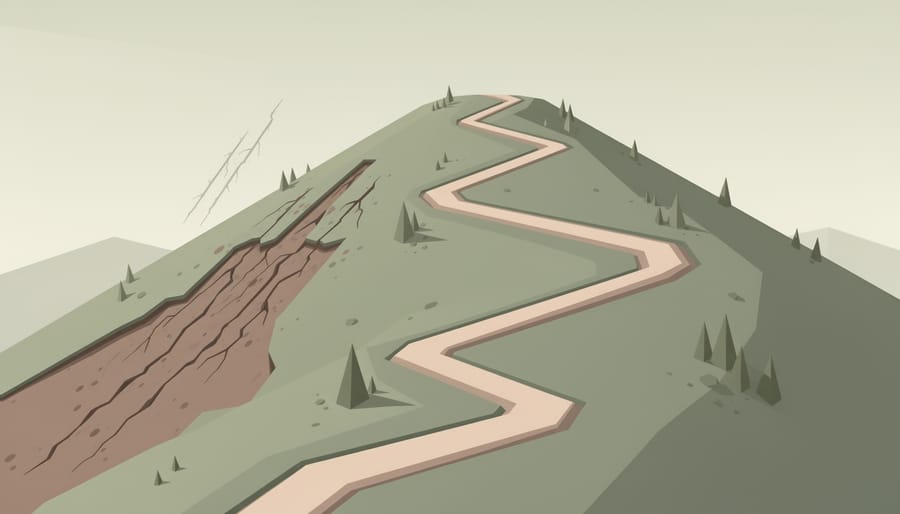
I’ll admit it: the first time I hiked a trail with tight switchbacks, I thought I was being clever. Why walk all that extra distance when I could just scramble straight up the hillside? I saved maybe two minutes and arrived at the top completely winded, legs shaking, with mud caked on my boots. Worse, I’d left a visible scar down the slope behind me.
Cutting switchbacks is one of the most common mistakes hikers make, and it’s far worse than just poor trail etiquette. When you abandon the zigzag path for a straight shot up or down, you’re stepping on fragile vegetation and exposed soil that wasn’t designed to handle foot traffic. Each shortcut creates a social trail, a user-made path that channels water straight downhill during rain. That water picks up speed on the steep grade, carving deep ruts and washing away topsoil. What starts as one person’s shortcut becomes a gully that undermines the carefully engineered switchback system.
The safety risks are equally real. Steep shortcuts lack the stable footing of constructed trail. Loose soil, hidden roots, and crumbling edges make slips and falls far more likely, especially on descents. And here’s the kicker: that “shortcut” is actually harder. The switchback spreads the elevation gain over a manageable grade that you can sustain with steady breathing and rhythm. The straight-up scramble burns your quads, spikes your heart rate, and leaves you exhausted.
The engineered path is always the smarter choice. Trail builders designed those switchbacks for your legs and the landscape’s longevity.
Where to Find Switchbacks on Ontario Trails
Ontario’s varied terrain offers plenty of opportunities to experience well-designed switchback trails. The Niagara Escarpment, stretching across southern Ontario, features numerous hiking routes where you’ll encounter switchbacks navigating the dramatic limestone cliffs and steep forested slopes. This UNESCO World Biosphere Reserve creates natural elevation changes that demand the zigzag approach.
Head north and you’ll find switchbacks on trails climbing rocky ridges and hillsides throughout provincial parks. The Canadian Shield’s rugged topography, with its exposed rock faces and sudden elevation gains, makes switchbacks essential trail features. Trails ascending lookout points and climbing to scenic viewpoints typically incorporate multiple switchback sections to manage the steep grades.
Even in less mountainous regions of Ontario, you’ll spot switchbacks on trails that tackle river valleys, escarpment edges, and drumlin formations. Conservation areas across the province use switchback design wherever natural features create slopes too steep for direct ascent. The key is looking for destinations with significant elevation change, whether that’s a 50-meter climb to an overlook or a longer ascent through mixed forest terrain. Provincial parks with varied topography and established trail systems consistently offer the best examples of thoughtfully constructed switchback trails that protect both hikers and the landscape.
Common Questions About Hiking Switchbacks
What exactly is a switchback in hiking?
A switchback is a zigzag path up a steep hillside or mountainside where the trail changes direction from one side to the other, creating a back-and-forth pattern. Trail builders design this folded route to spread elevation gain horizontally, making steep terrain manageable instead of climbing straight up.
Why shouldn’t I just cut across switchbacks to save time?
Taking shortcuts between switchback turns causes serious trail erosion, damages vegetation, and actually makes your climb harder by forcing you straight up steep grades. The slightly longer switchback path was intentionally placed to make the ascent easier on your legs and sustainable for the environment.
Are switchbacks harder to hike than straight trails?
Switchbacks are actually easier than going straight up because they reduce the grade significantly by spreading the climb horizontally. While you cover more distance, the gentler slope means less strain on your muscles and cardiovascular system with each step.
How can I tell if a trail has switchbacks before I start hiking?
Trail maps and elevation profiles often show zigzag patterns indicating switchbacks, and trail descriptions typically mention them when discussing steep sections. Once you’re on the trail, you’ll recognize the distinctive back-and-forth turns as the path climbs or descends hillsides.
These questions reflect what most hikers wonder when they first encounter switchbacks on Ontario trails. Understanding the answers helps you appreciate why that winding path exists and encourages you to stick with the designed route instead of creating damaging shortcuts. When you approach your next steep climb with proper switchback technique and respect for trail design, you’ll find the ascent more enjoyable and sustainable.
How Switchbacks in Hiking Is Used
Switchbacks serve critical functions on trails throughout Ontario and beyond, making challenging terrain accessible while protecting the environment. Trail designers deploy them on any slope steeper than about 15 percent grade, transforming what would be an exhausting or dangerous straight climb into a manageable ascent. You’ll find switchbacks on mountain trails in places like Killarney Provincial Park, escarpment hikes along the Bruce Trail, and even urban nature parks with significant elevation changes.
The practical applications extend beyond simply getting up hills. Switchbacks control water flow during rain, channeling runoff along the trail surface instead of washing straight down and creating gullies. This drainage management keeps trails intact through Ontario’s freeze-thaw cycles and heavy spring melt. Conservation authorities use switchback design when building new trail sections specifically to prevent the erosion scars you see where old straight-up trails have failed.
For hikers, switchbacks offer built-in rest points at each turn, natural spots to catch your breath and check your progress. They also provide safer descent routes, reducing the knee strain and slip risks that come with steep downhill sections, which matters especially when trails are wet or icy.
Now that you understand the purpose and engineering behind switchbacks, you’ll likely look at these zigzag trail patterns with fresh appreciation on your next Ontario hike. These seemingly simple trail features represent thoughtful design that makes challenging terrain accessible while protecting the natural landscape from erosion and damage. Each turn along a switchback trail reflects decades of trail-building wisdom focused on balancing human access with environmental stewardship.
The next time you’re climbing the Niagara Escarpment or tackling a northern Ontario hillside, resist the temptation to cut corners. Stay on the designated path, take your time with the turns, and recognize that you’re part of a long tradition of hikers who’ve learned to work with the land rather than against it. The extra distance you travel following switchbacks pays dividends in easier grades, safer footing, and preserved trails for future adventurers.
Ontario’s trail systems offer countless opportunities to experience well-designed switchbacks firsthand. Grab your boots, pack your water, and head out to explore these engineering marvels that turn steep climbs into manageable adventures.










+ There are no comments
Add yours