
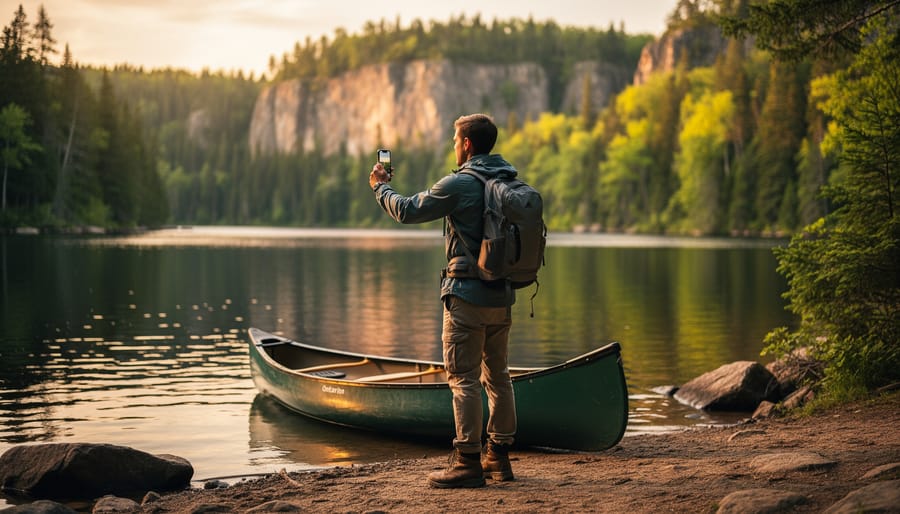
You’re standing at the trailhead with your phone in hand, and that’s perfectly okay. The old notion that nature and technology can’t coexist has faded like morning mist off a provincial park lake. Today’s outdoor adventures blend the digital and natural worlds in ways that enhance both experiences without diminishing either.
Your smartphone isn’t just a distraction in Ontario Parks. It’s a field guide that identifies birds by their calls, a GPS that keeps you safely on trail, and a camera that captures memories you’ll treasure for decades. Apps like iNaturalist turn casual hikers into citizen scientists, documenting species and contributing to real conservation data. That’s meaningful engagement, not mindless scrolling.
The question isn’t whether you should bring technology into nature. It’s how you use it once you’re there. Snap photos during golden hour, then tuck your phone away to watch the sunset with your own eyes. Let your kids play Pokémon GO on the campground loop, then challenge them to spot real wildlife on the afternoon hike. Balance is everything.
This guide walks you through practical ways to integrate gaming and social media into your park visits without losing what makes outdoor spaces special. You’ll discover which apps add genuine value, learn photography techniques that capture Ontario’s beauty, and understand the unwritten rules that keep everyone’s experience positive. The goal isn’t choosing between screens and scenery. It’s finding the sweet spot where both make your adventure richer.
The New Face of Parks: Where Nature Meets Your Newsfeed
Social media hasn’t just changed how we share our Ontario Parks adventures, it’s revolutionized how we discover them in the first place. A scroll through Instagram or TikTok now reveals hidden waterfalls in Algonquin, sunrise views from Killarney’s La Cloche Mountains, and golden-hour shots at Sandbanks that make you want to pack your bags immediately. This digital window into Ontario’s natural spaces has done something remarkable: it’s made parks cool again, especially for audiences who might never have considered a camping trip before.
The numbers tell a compelling story. Research confirms that social media exposure increases visits to parks, with viral posts acting as powerful discovery tools for new generations of outdoor enthusiasts. That viral TikTok of the turquoise waters at Bruce Peninsula or the Instagram reel showing fall colours at Algonquin? They’re converting screen-scrollers into trail-hikers.
What’s particularly exciting is how digital platforms have broadened who sees themselves as a “park person.” Young creators from diverse urban communities are sharing their first camping experiences, parents are documenting family adventures, and adventure seekers are showcasing activities from rock climbing to paddleboarding. This visibility matters because representation in outdoor spaces has historically been limited. When someone sees people who look like them enjoying Ontario Parks online, they’re more likely to visit themselves.
The conservation angle deserves attention too. Social media has become an unexpected ally in environmental awareness. When visitors share their experiences, they’re also sharing the “why it matters” story, whether that’s posting about Leave No Trace practices, celebrating wildlife sightings, or raising awareness about threatened ecosystems. These digital ambassadors create emotional connections between people and places they’ve never visited, building broader support for conservation funding and protective policies.
Technology itself is making parks more welcoming through features like accessibility Zoom features that help visitors with different abilities plan and enjoy their trips. The digital and physical experiences aren’t competing, they’re complementing each other in ways that expand who gets to enjoy Ontario’s natural heritage.
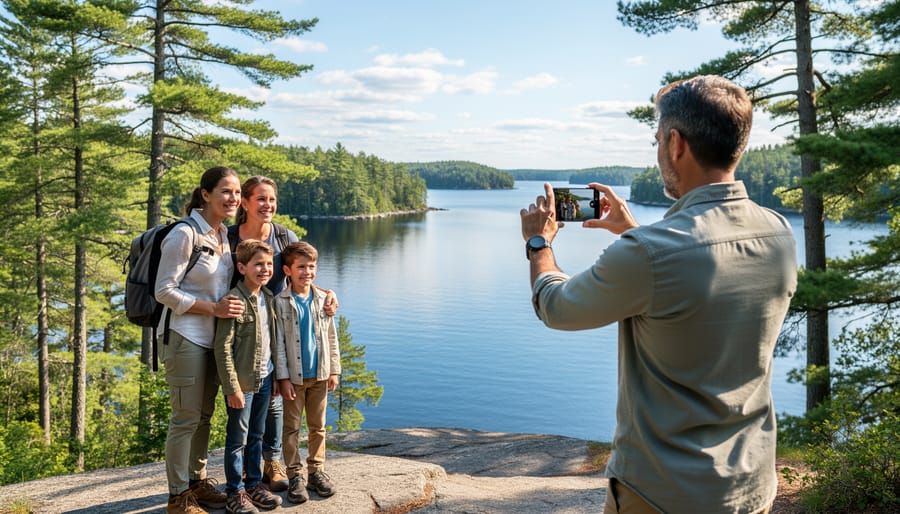
Gaming in the Great Outdoors: It’s Not What You Think
Geocaching: Ontario’s Hidden Treasure Trail
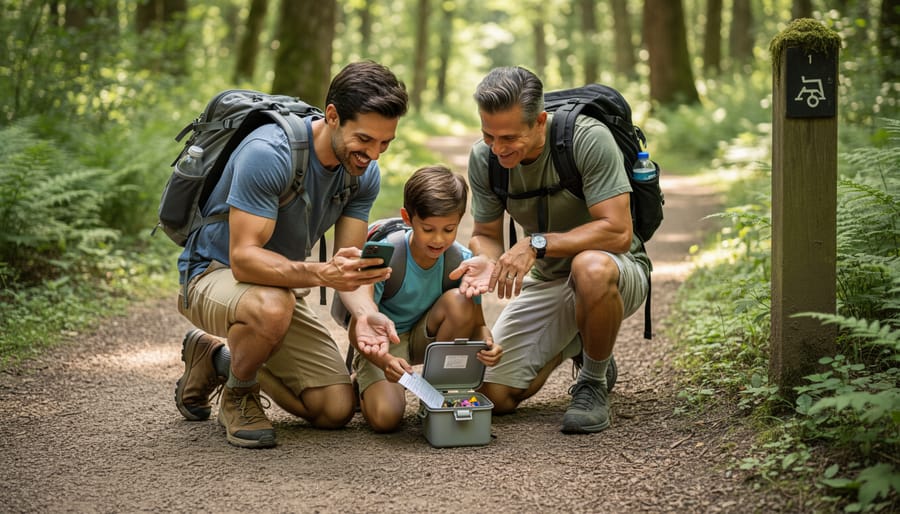
Last summer, my kids discovered a camouflaged container tucked beneath a birch log near Charleston Lake. Inside sat a tiny logbook and a collection of small toys. That five-minute hunt turned our afternoon hike into a treasure quest they still talk about.
Geocaching transforms Ontario Parks into a massive scavenger hunt using GPS coordinates. Players download coordinates from geocaching.com, then use their smartphone or GPS device to locate hidden waterproof containers called caches. Each find lets you sign the logbook and swap trinkets. It’s like a real-world video game that actually gets everyone outside.
Ontario Parks hosts hundreds of caches, from easy roadside finds perfect for beginners to challenging backcountry hunts requiring serious hiking. Algonquin Park alone has over 200 caches scattered across its trails. Killarney, Frontenac, and Sandbanks all have active geocaching communities maintaining regular routes. Conservation areas like geocaching at TRCA parks offer additional options throughout the Greater Toronto Area.
What makes geocaching brilliant for families is how it solves the “are we there yet?” problem. Kids who normally complain about walking will hike kilometers when there’s treasure involved. The app shows your distance from the target, building anticipation with every step. It creates safe family outings with built-in motivation.
Start with a cache rated 1.5 or lower for difficulty and terrain. Pack small items for trading (think erasers, keychains, or toy cars), and bring a pen to sign logbooks. Download your coordinates before arriving since many parks have spotty service. The thrill when your kids actually find that hidden container beats any screen time reward.
Nature Apps That Make Kids Actually Want to Hike
I’ll be honest: getting my nephew off the couch last summer felt like negotiating with a tiny union boss. Then I discovered iNaturalist, and suddenly he was leading the charge up the trail, phone in hand, racing to identify every fungus and frog we encountered.
The app turns nature observation into a real-time science game. Kids photograph plants or animals, and the community helps identify them while contributing to actual research databases. My nephew’s competitive streak kicked in when he realized other users were “collecting” more species than him. By the end of the weekend, he’d logged 47 observations and asked when we could go back.
Merlin Bird ID from Cornell Lab works similarly for birding. Kids hold up their phones, the app listens to bird calls, and instantly identifies species. It’s like Shazam for nature. The excitement on a child’s face when they correctly identify their first cardinal or chickadee? Worth every minute of screen time.
For plant identification, try PictureThis or PlantSnap. Both offer kid-friendly interfaces with care guides and fun facts. They even include AR features that overlay plant names when you point your camera.
The trick is setting mini-challenges before you hit the trail: “Can you find five different tree species?” or “Let’s identify every bird we hear.” Suddenly, that two-mile loop becomes an adventure worth bragging about.
Capturing Your Park Moments: A Content Creator’s Field Guide
You don’t need thousands of dollars in camera gear to capture stunning Ontario Parks content. Your smartphone, paired with good timing and thoughtful composition, can produce images that stop the scroll. The secret is understanding light and being patient enough to wait for the right moment.
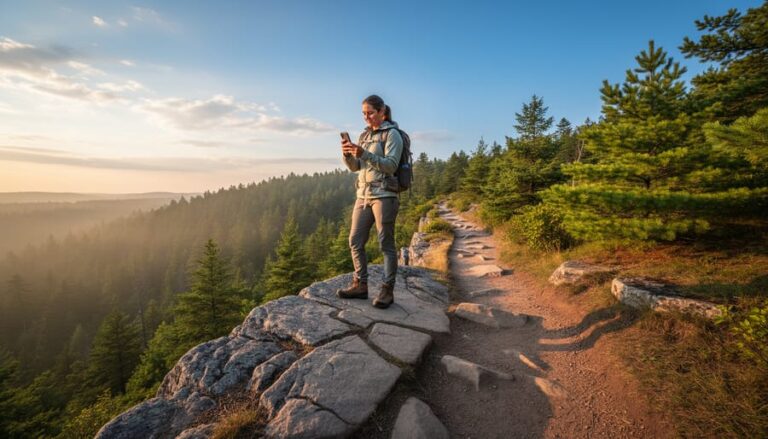
Golden hour transforms ordinary park scenes into social media gold. Plan your photo sessions for the first hour after sunrise or the last hour before sunset. The warm, diffused light during these times adds depth and dimension that harsh midday sun simply can’t match. At Algonquin Park, I’ve watched dozens of photographers pack up at noon, missing the magical way late afternoon light filters through pine canopies.
Composition matters more than equipment. The rule of thirds works brilliantly in natural settings, place your horizon line on the upper or lower third of your frame rather than dead center. At Killarney’s La Cloche mountains, position those distinctive white quartzite ridges along the top third to give your image breathing room. Include foreground elements like wildflowers or rocks to create depth and lead viewers into your scene.
Tell stories through sequences rather than relying on single hero shots. Capture the journey: your boots on the trail, a close-up of lichen on granite, the view from your campsite, steam rising from your morning coffee. These narrative arcs perform better on Instagram Stories and TikTok because they invite viewers into the experience rather than just showing them a postcard.
Video content doesn’t require fancy gimbals or editing software. Simple clips with natural sound, a crackling campfire, waves lapping at Georgian Bay shores, birds calling at dawn, create immersive moments. Hold shots steady for at least five seconds to give yourself editing options later. A thirty-second video showing mist rising off a lake at sunrise will often outperform any static image.
Embrace vertical formats for social platforms. Your phone’s portrait mode naturally suits Instagram Reels and TikTok. When filming waterfalls at places like Bridal Veil Falls, shoot vertically to capture the full drama from pool to cascade.
The Etiquette of Digital Experiences in Nature
Here’s what your phone shouldn’t do while you’re creating memories: disturb everyone else’s experience. That scenic overlook you’re photographing? Three other groups are waiting their turn while you nail the perfect angle. The solution is simple: be quick, be considerate, and remember you’re sharing these spaces.
Geotagging creates a genuine dilemma. Tagging Algonquin’s Lookout Trail helps friends discover an incredible view. But it also risks overwhelming fragile ecosystems with foot traffic they weren’t designed to handle. My rule of thumb: tag the general park or well-known features with established infrastructure, but skip the precise location pin on that secret swimming hole you stumbled upon. Some magic deserves protection through discretion.
Quiet zones exist for reasons beyond just wildlife. Families come to Ontario Parks to escape screens and noise, not to hear your TikTok narration echoing across the lake. Before you start filming or taking phone calls, scan your surroundings. If you’re near campsites, portages, or designated quiet areas, save the content creation for later. And when you plan an accessible visit remember that others using accessible trails may need calm environments for sensory or mobility considerations.
Leave No Trace now includes a digital dimension. Don’t trample vegetation to stage a shot. Don’t move rocks, disturb nests, or handle wildlife for better footage. That “harmless” photo op with a baby bird could mean its parents won’t return. The selfie stick balanced on that cairn? You just dismantled a trail marker someone carefully built.
Your best content comes from genuine presence anyway. Put the phone down between shots. Experience the moment first, document it second. The irony is that the less you focus on capturing everything, the more authentic and compelling your eventual posts become. People respond to real experiences, not manufactured performances.
When to Log Off: Finding Your Digital-Nature Balance
I’ll be honest: some of my best park memories involve zero photo evidence. That morning I watched a family of otters play in Algonquin’s Costello Creek? My phone stayed in my pocket the entire time. By the time I thought to grab it, they’d disappeared, but the memory is sharper than any photo I’ve taken since.
Here’s what I’ve learned works: designate specific activities as phone-free zones. Canoeing at sunrise. That first hour on the trail. Sitting by the campfire after dinner. Tell yourself (and your travel companions) that these moments are just for you. The world can wait 45 minutes.
Try the “one meal unplugged” rule. Pick breakfast, lunch, or dinner and make everyone stack their phones in the tent or car. You’ll be amazed how much more you notice: the way light filters through pine needles, the actual conversation happening across the picnic table, the taste of camp coffee that somehow beats anything from home.
Remote parks like Killarney and Quetico practically force this balance, and visitors consistently rate these as their most memorable trips. That spotty cell service isn’t a bug. It’s your permission slip to exist without the constant ping of notifications.
Start small if full disconnection feels impossible. Leave your phone in airplane mode until noon. Take photos but don’t post until you’re back home, giving yourself time to actually experience what you’re documenting. The content will still be there tomorrow. The sunrise won’t.

Making the Most of Limited (or No) Connectivity
Here’s the truth about staying connected in Ontario Parks: you probably won’t be, and that’s actually part of the charm. Most provincial parks operate in areas with spotty or nonexistent cell service, which means your carefully planned Instagram stories might need to wait until you’re back in civilization.
The connectivity landscape varies dramatically across Ontario’s parks. Here’s what you need to know before you go:
| Park Type | Typical Connectivity | Digital Planning Strategy |
|---|---|---|
| Urban/Day-Use Parks | Usually good cell service | Post in real-time, minimal prep needed |
| Popular Drive-In Campgrounds | WiFi at office, spotty cell elsewhere | Draft posts offline, upload at office/gate |
| Backcountry/Remote Parks | Little to no connectivity | Download everything before arrival |
| Parks Near Towns | Service at entrances, dead zones inside | Check service maps, plan upload spots |
Smart visitors download offline maps through apps like Google Maps or AllTrails before leaving home. Save park trail guides as PDFs on your phone. Pre-write those wildlife encounter stories in your notes app so you’re ready to post when you hit a signal.
The brilliant workaround? Embrace batch uploading. Spend your days shooting photos and videos without the pressure of constant posting. When you reach the park office or a nearby town, upload your favourite moments all at once. Many content creators find this approach actually produces better content since they’re fully present during the experience itself.
Building Community Through Shared Experiences
When I post a sunrise photo from Killarney’s La Cloche Mountains, I’m not just sharing a pretty picture. Within minutes, comments roll in from fellow hikers who’ve stood on that same rocky overlook, swapped trail conditions with me, and recommended their favorite campsites nearby. That’s the real magic of Ontario Parks on social media: it transforms solitary adventures into shared stories that connect strangers who speak the same language of bug spray and campfire smoke.
Ontario Parks’ official accounts on Instagram, Facebook, and Twitter serve as digital campfires where thousands gather daily. The hashtag #OntarioParks has over 500,000 posts showcasing everything from foggy mornings at Algonquin to families roasting marshmallows at Presqu’ile. These aren’t just vanity posts. They’re planning tools, inspiration boards, and proof that your next adventure is possible.
Niche communities have sprouted around specific interests too. Winter camping enthusiasts gather under #WinterCampingON, while paddlers share routes through #OntarioPaddling. I’ve discovered hidden swimming holes, learned backcountry cooking hacks, and even arranged meetups with other photographers through these digital networks. Some parks now offer virtual reality tours that let people preview trails before booking, building anticipation in online groups.
The ripple effect is real. When someone shares their first successful canoe portage or their kid’s excitement at spotting a beaver, they’re not bragging. They’re opening the door for others who thought parks weren’t for them. Every post becomes an invitation, every photo a possibility. That’s community building that extends far beyond screen time.
The next time you visit an Ontario park, you don’t have to choose between being present in nature and sharing your adventure with the world. Your phone isn’t the enemy of a great outdoor experience, how you use it makes all the difference.
Whether you’re geocaching with excited kids who suddenly want to explore every trail, capturing that perfect golden-hour photo to inspire your friends, or simply checking in to let loved ones know you’re safe, technology can deepen your connection to these incredible spaces. The key is intention. Let your digital tools serve your experience, not dominate it.
I’ve found my sweet spot: mornings spent hiking with my phone tucked away, afternoons editing photos while relaxing at the campsite, evenings scrolling through the day’s captures by the fire. Your balance might look completely different, and that’s perfectly fine.
So go ahead, snap that waterfall selfie, log that geocache find, or post that sunset that took your breath away. Just remember to look up from the screen often enough to let Ontario’s natural beauty take your breath away again and again.




+ There are no comments
Add yours