
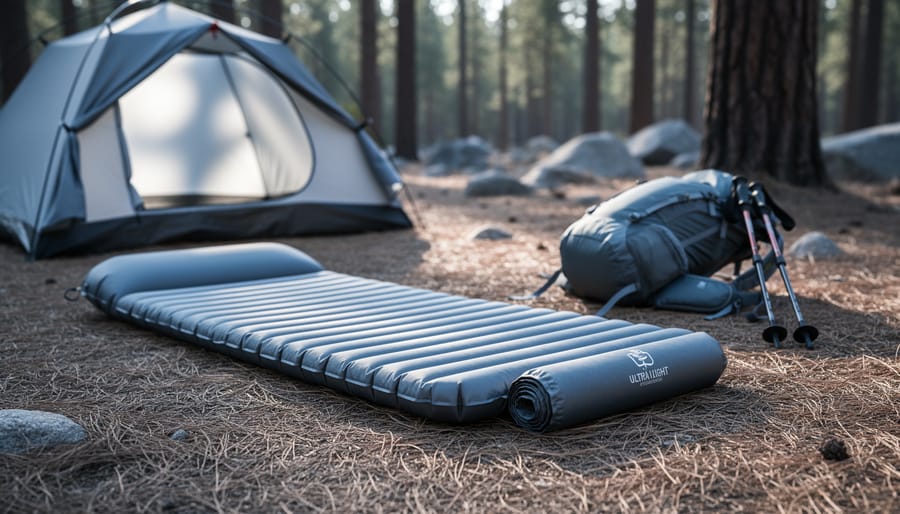
Your first night on the trail shouldn’t mean waking up with a sore back and regret. The sleeping pad you bring hiking is fundamentally different from what you’d toss in the car for a weekend at Algonquin. We’re talking about gear that needs to fold down smaller than a water bottle, weigh less than your lunch, and still keep you warm when you’re sleeping on granite in Killarney.
I learned this the hard way during a spring trip to Frontenac Provincial Park when I hauled in a bulky foam pad that took up half my pack. Sure, I slept fine, but I sacrificed room for proper food and rain gear. Not ideal when you reserve your campsite weeks in advance and then show up underprepared.
Here’s what matters for Ontario backcountry: weight, packed size, and R-value (that’s insulation rating, and yes, you need it even in summer). A quality hiking pad typically weighs between 350 and 600 grams and packs down to the size of a one-litre Nalgene bottle. The R-value determines whether you’ll actually stay warm. For three-season hiking here, aim for R-3.5 minimum. Those chilly May and September nights on the Canadian Shield demand real insulation between you and cold rock.
The good news? Today’s pads use clever designs like vertical baffles and reflective layers that deliver comfort without the bulk. You’ll choose between inflatable pads (ultralight but puncture risk) and self-inflating foam (slightly heavier but nearly indestructible). Each has earned its place in different hiking scenarios, and understanding which works for your trips makes all the difference between restful sleep and a miserable morning.
What Makes a Sleeping Pad Essential for Hiking (Not Just Camping)
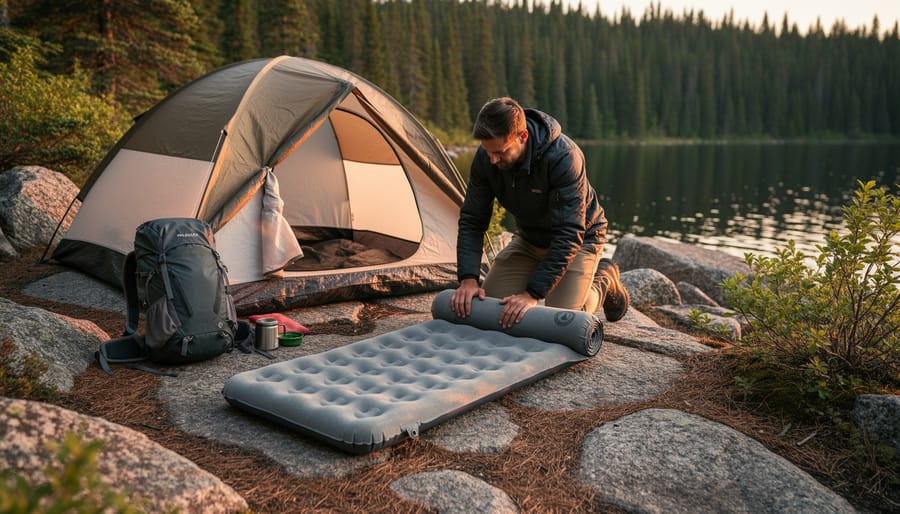
The moment you shoulder a backpack and head into the backcountry, everything changes. That bulky foam pad you toss in the trunk for car camping? It weighs as much as your tent and takes up half your pack. I learned this the hard way on my first overnight along the Bruce Trail’s Niagara section, where I hauled a monster self-inflating pad designed for drive-up sites. By kilometre eight, my shoulders screamed, and I swore I’d never make that mistake again.
Hiking sleeping pads face demands that weekend car-camping gear never sees. Weight becomes currency when you’re covering 15 kilometres a day with everything on your back. A pad that weighs 700 grams instead of 1,200 grams means room for extra food or a warmer jacket. Packability matters just as much. Your pad needs to compress small enough to fit inside or lash onto your pack without catching on every branch along the trail.
Then there’s durability across multiple nights. Car camping means one setup on flat ground. Hiking through Algonquin’s interior or across the rocky Canadian Shield means pitching camp on tree roots, granite slabs, and uneven forest duff night after night. Your pad takes a beating from sharp sticks, abrasive rock, and constant inflation cycles. A puncture on night three of a five-day trek turns into a miserable ordeal unless you’ve chosen proven reliability.
Insulation from cold ground matters more than most hikers realize. Your sleeping bag compresses underneath you, losing its warmth, and the earth pulls heat from your body all night. Quality insulated pads provide warmth through reflective layers or synthetic fill, keeping you comfortable when temperatures plummet after sunset. I remember shivering through a September night near Ragged Falls because I skimped on insulation, figuring fall would stay warm. The granite beneath my tent had other plans.
Comfort directly affects recovery, especially on multi-day trips. You need quality sleep to tackle the next day’s elevation gains and uneven terrain. A pad thick enough to cushion pressure points and wide enough to accommodate side-sleeping makes the difference between waking refreshed or limping into camp exhausted.
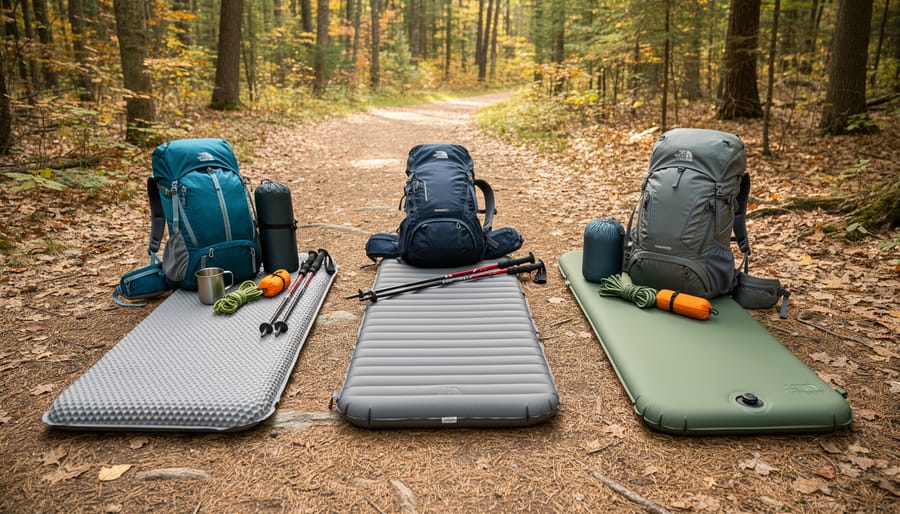
The Three Types of Hiking Sleeping Pads (And When Each Shines)
Ultralight Air Pads: The Backpacker’s Best Friend
Ultralight air pads strip away every unnecessary ounce while delivering surprising warmth and comfort. These inflatable marvels compress to the size of a water bottle and typically weigh less than a pound, making them the go-to choice for serious backpackers tackling Ontario’s multi-day routes. The Nemo Tensor All-Season Ultralight Insulated exemplifies this category, packing a high R-value into a whisper-light package that won’t punish your shoulders on the third day of a Bruce Trail section hike.
The magic lies in their construction: air-filled baffles trap warmth while adding minimal weight. You’ll get genuine insulation from cold Algonquin nights without hauling the bulk of traditional foam. Most modern air pads inflate in 10 to 15 breaths, though I’ll admit that feels longer after a long day on the trail.
- Exceptional warmth-to-weight ratio makes them ideal for weight-conscious backpackers.
- Pack down smaller than any other pad type, freeing up precious backpack space.
- Modern designs offer impressive comfort with cushioning that rivals home mattresses.
- Vulnerable to punctures from sharp rocks and sticks common on Canadian Shield campsites.
- Require careful site preparation and a ground sheet for protection.
- Depend entirely on staying inflated, a single leak means a miserable night.
The puncture concern isn’t paranoia. I’ve patched more than one air pad on the trail, which is why I always carry a repair kit with self-adhesive patches and a bit of rubbing alcohol for surface prep. Most quality pads come with patches, but add extra. If you get a pinhole leak, the fix takes five minutes: clean the area, apply the patch, wait for it to set. Practice at home before your trip so you’re not fumbling in the dark.
Self-Inflating Pads: Comfort Meets Convenience
Self-inflating pads bridge the gap between featherweight air pads and bombproof foam. When you crack the valve, open-cell foam inside expands and sucks in air, doing most of the inflation work for you. Models like the Therm-a-Rest NeoLoft deliver serious cushioning, a full inch thicker than the Nemo Tensor and two inches plumper than the Klymit Static, which translates to genuine comfort on uneven Canadian Shield bedrock.
That extra thickness comes at a cost: self-inflating pads weigh more and pack bulkier than their air-only cousins. But for weekend trips around Algonquin or Bruce Peninsula, when you’re covering 15 kilometres rather than 50, the trade-off often makes sense. You get easier setup after a long day, better insulation without worrying about deflation overnight, and enough padding that you’ll actually wake up rested instead of stiff.
These pads shine for hikers who value a good night’s sleep over shaving every gram, especially on cooler shoulder-season trips when ground insulation and thickness matter most.
Closed-Cell Foam: The Bombproof Budget Option
Closed-cell foam pads are the workhorse choice for hikers who prioritize reliability over plushness. These simple accordion-fold mats require no inflation, won’t puncture on sharp rocks, and work perfectly when you’re combining canoeing and hiking through Ontario’s parks, just strap them to your pack exterior and they’re ready the moment you set up camp. The trade-off? They’re bulkier and less comfortable than air or self-inflating options, offering minimal cushioning on uneven ground.
I’ve watched paddlers flip canoes, drag packs through blackberry thickets, and toss gear carelessly at campsites, yet their foam pads soldier on without complaint. They’re also brilliant as backup insulation under inflatable pads during shoulder-season trips when temperatures drop unexpectedly along the Waterfront Trail or in Killarney’s backcountry. At a fraction of the cost of premium inflatables, foam pads let budget-conscious hikers get on the trail without sacrificing warmth or durability, just don’t expect cloud-like sleep after a long day hiking the Crack.
Key Features That Actually Matter on the Trail
When you’re three days into a backcountry loop and your back aches from rocky ground, marketing buzzwords won’t save you. Here’s what actually separates a good night’s sleep from a miserable one on Ontario trails.
R-value measures how well a pad insulates you from the cold ground beneath, and it’s the single most important spec for multi-season hiking. Think of it like a coat for your body’s underside. An R-value of 2 might work for July nights on the Bruce Trail, but you’ll want 4 or higher for shoulder-season trips when temperatures drop. The Canadian Shield radiates cold like a massive heat sink, so don’t skimp here. I learned this the hard way on a September trip to Frontenac when my summer pad left me shivering despite a warm sleeping bag.
Thickness determines comfort on uneven terrain. A 3-inch pad like the Therm-a-Rest NeoLoft cushions you from roots and rocks far better than a 1.5-inch model, but you’ll carry the extra weight. Most hikers find 2.5 to 3 inches hits the sweet spot between comfort and reasonable pack weight for weekend trips.
Weight becomes critical when you pack light for multi-day adventures. Every ounce counts when you’re hauling food, water, and shelter. Ultralight pads weigh under a pound, while self-inflating models can push two pounds or more. That difference feels negligible in your hands but significant on mile fifteen.
Packed size affects how your gear fits together. A pad that compresses to the size of a water bottle slides easily into your pack. A bulkier one forces compromises with your food bag or rain gear. Test the fit before you hit the trail.
Durability matters most on the Shield’s granite slabs and exposed roots. Recent testing from spring 2026 showed that puncture-resistant fabrics and reinforced seams make the difference between a reliable pad and a disappointing first-night failure. Closed-cell foam never fails, while ultralight air pads demand careful site selection and a repair kit in your pocket.
Standout Options for Ontario Hikers in 2026
After testing over 60 sleeping pad models and logging more than 3,000 nights in the backcountry, experts have narrowed down the standout options for 2026. These picks aren’t based on hype or marketing claims but on real-world performance across varied conditions similar to what you’ll encounter on Ontario’s trails.
The Nemo Tensor All-Season Ultralight Insulated consistently earns top marks as the best overall choice. It strikes that rare balance between weight, warmth, and comfort that makes multi-day trips genuinely enjoyable rather than endurance tests. At around 15 ounces for the regular length, it packs down smaller than a Nalgene bottle yet provides enough cushioning for side sleepers on rocky Canadian Shield campsites. The insulation keeps you warm during those unexpectedly cold September nights in Algonquin, and the mummy shape saves a few ounces without feeling restrictive.
For hikers watching their budget, the Klymit Static V Base costs a fraction of the price of other top pads while delivering solid performance for three-season use. It’s a smart entry point for newer backpackers or those building out their hiking gear tips collection. The V-chamber design works well on relatively smooth sites, though you’ll want to be more selective about clearing twigs and sharp stones than you would with thicker options.
If comfort ranks highest on your priority list and you can handle a bit more weight, the Therm-a-Rest NeoLoft delivers. This pad sits 1 inch thicker than the Nemo Tensor and 2 inches thicker than the Klymit Static, creating a plush sleeping surface that feels closer to your bed at home. Weekend warriors tackling the Bruce Trail’s shorter sections or paddlers doing canoe-in camping in Killarney will appreciate the extra cushioning, especially after a long day navigating rugged portages.
| Pad Name | Best Use Case | Weight Class | Ontario Trail Fit |
|---|---|---|---|
| Nemo Tensor All-Season | All-round performance | Ultralight (15 oz) | Multi-day Algonquin, Bruce Trail thru-hikes |
| Klymit Static V Base | Budget-conscious 3-season | Standard (18 oz) | Frontenac loops, beginner trips |
| Therm-a-Rest NeoLoft | Maximum comfort | Heavier (24 oz) | Weekend Killarney, canoe-in sites |
These recommendations come from reviews updated in spring 2026, reflecting the latest materials and designs. None of these pads will transform a poorly chosen campsite into luxury, but each excels in its category. Match your choice to your typical trip length, the weight you’re comfortable carrying, and the seasons you hike most often. A well-chosen pad becomes one of those pieces of gear you stop thinking about because it just works, trip after trip.
Matching Your Pad to Ontario’s Hiking Seasons and Terrain
Ontario’s hiking seasons throw distinct challenges at your sleeping pad, and understanding these nuances prevents miserable nights under the stars. The rocky Canadian Shield terrain that defines much of Ontario’s backcountry demands different strategies than the sandy shorelines of Lake Superior or the soft forest duff along southern trails.
Spring’s mud season (April through early June) calls for durable pads that can handle damp, uneven ground. Self-inflating pads work well here because their foam core continues insulating even if moisture seeps in, though they weigh more for multi-day trips. I’ve learned to pair lighter air pads with a piece of Tyvek ground cloth when camping on the Bruce Trail’s rockier sections, protecting against both punctures and the Cold that radiates through limestone outcrops.
Summer humidity around the Great Lakes creates condensation issues that many hikers overlook. Air pads with fabric exteriors dry faster than foam when morning dew saturates everything. Sandy beach campsites in parks like Pukaskwa require careful site prep, sweep thoroughly before laying down your pad, because even fine sand can abrade valve systems over time.
Fall brings Ontario’s most dramatic temperature swings. September nights might drop to 5°C, demanding an R-value of at least 3.5, while October expeditions near Lake Superior need winter-rated insulation. The thick layer of fallen leaves in hardwood forests feels soft but compresses quickly, so thickness matters less than insulation rating during these cold snaps.
When selecting campsites, consider Leave No Trace principles. Avoid clearing vegetation to create flat spots, which damages fragile ecosystems. Instead, choose naturally level areas and use your pad’s design features to work with the terrain rather than against it.
Care, Repair, and Extending Your Pad’s Life on Multi-Day Hikes
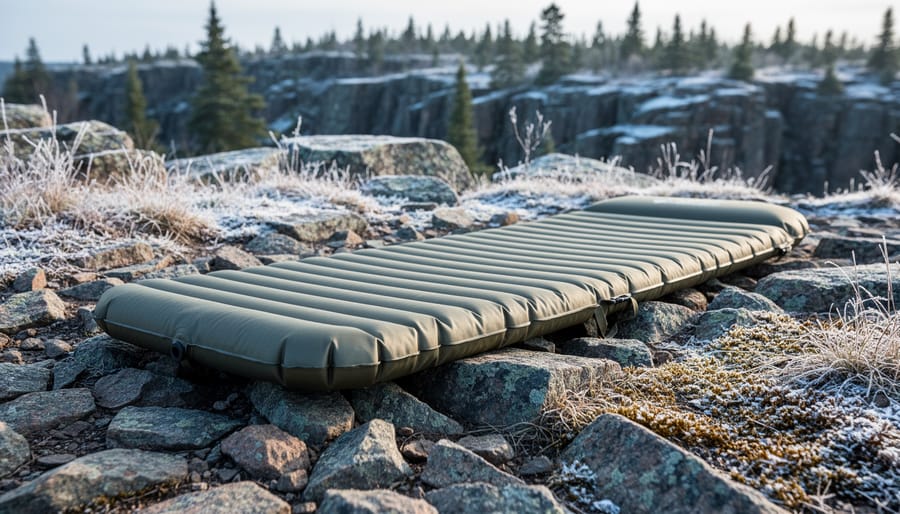
After my third night on the Bruce Trail, I woke to find my once-plump air pad had deflated to nothing, a tiny puncture from a sharp twig I’d missed when clearing my tent site. That uncomfortable wake-up call taught me more about pad maintenance than any gear guide ever could.
Cleaning your pad properly after Ontario trails makes a real difference. After muddy spring hikes or sandy Lake Superior beach camps, wipe down your pad with a damp cloth before packing it away. Never store a dirty pad, the grit acts like sandpaper against the fabric, creating weak spots. For deeper cleaning between seasons, use mild soap and lukewarm water, then air-dry it completely (both sides) before rolling it up.
Storage matters more than most hikers realize. Keep your pad unrolled or loosely rolled in a cool, dry place. Storing it tightly compressed damages the insulation in self-inflating models and stresses seams in air pads. I learned this the hard way when my Nemo Tensor developed slow leaks after a winter compressed in my pack’s bottom pocket.
When punctures happen on the trail, and they will, knowing field repair saves your trip. Always pack a repair kit in your camp safety checklist. Here’s the process that’s rescued several of my backcountry nights:
- Inflate the pad and listen for the hiss, or submerge sections in water to spot bubbles.
- Dry the area completely and mark the puncture with a pen or small stone.
- Clean around the hole with an alcohol wipe from your first aid kit.
- Apply the adhesive patch, pressing firmly from the center outward to eliminate air bubbles.
- Wait at least 30 minutes before re-inflating (overnight is better if you can manage).
Carry duct tape as backup, it won’t hold forever, but it’ll get you through the night. For closed-cell foam pads, maintenance is beautifully simple: rinse, dry, and you’re done. They’re nearly indestructible, which is why paddlers heading into Algonquin’s interior often choose them despite the comfort trade-off.
Treating your pad right means it’ll support hundreds of nights under Ontario stars instead of failing when you need it most.
The difference between collapsing into your tent exhausted and waking up genuinely refreshed comes down to those few ounces of carefully chosen foam or fabric beneath you. After days on the trail through Killarney’s quartzite ridges or the Bruce’s endless escarpment, your body needs real recovery, and the right sleeping pad delivers that in ways a poorly chosen one never will. It’s not about luxury, it’s about being able to hike strong on day three because you actually slept on night two.
Think about what you’re really asking your pad to do. Will you carry it through humid July weeks on the Coastal Trail, or push into October’s cold snaps in Algonquin’s interior? Are you chasing ultralight miles or weekend comfort? Your answers shape whether you need the Nemo Tensor’s warmth-to-weight balance, the NeoLoft’s plush thickness, or a bombproof foam pad that laughs at sharp rocks.
Invest thoughtfully, test it before committing to a long trek, and don’t cheap out on the gear that literally supports every adventure you’ll take. Because the best mornings in Ontario’s backcountry start with a night under impossible stars, sleeping soundly on ground that no longer feels like ground at all.










+ There are no comments
Add yours