
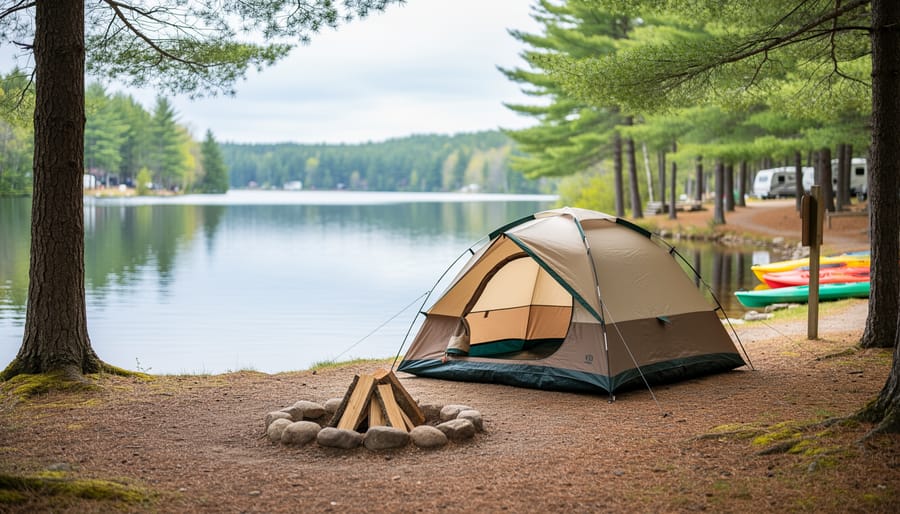
Just 90 minutes from Ottawa, tucked along the quiet shores of the Gatineau region, Camping Lac Lafontaine has become one of Quebec’s best-kept secrets for Ontario campers seeking something different from the usual Provincial Parks circuit. If you’ve ever refreshed the Ontario Parks reservation page at midnight only to find Bon Echo and Algonquin completely booked, you’re not alone. That’s exactly why more campers from the Ottawa Valley and Eastern Ontario are crossing the border to discover this family-run gem.
What started as a small seasonal operation has grown into a full-service campground that rivals anything you’ll find in Ontario, but with a distinctly Quebecois charm. The 200-acre property wraps around a spring-fed lake where the water stays refreshingly clear all summer, and the wooded campsites offer genuine privacy rather than the shoulder-to-shoulder setup you sometimes get at busier parks.
Here’s what makes this spot worth the short drive into Quebec: advance reservations open earlier than Ontario Parks, the nightly rates typically run 15-20% lower than comparable Ontario campgrounds, and the season extends well into October for those spectacular fall camping trips. You’ll find all the amenities you’d expect (flush toilets, hot showers, firewood delivery), plus some you might not (a small beach with rental kayaks, weekend outdoor movie nights, and a surprising selection of beer from local Gatineau breweries at the camp store).
The cross-border logistics are simpler than you’d think, and this guide covers everything from making reservations to what you actually need to bring across provincial lines.
What Makes Lac Lafontaine Stand Out for Ontario Campers
For Ontario campers accustomed to the familiar rhythms of provincial parks back home, Lac Lafontaine offers something refreshingly different. The biggest draw? You can be pitching your tent just 50 kilometers from Montreal, yet feel completely immersed in nature. That proximity means less highway time and more campfire time, especially appealing when you’re crossing from Eastern Ontario.
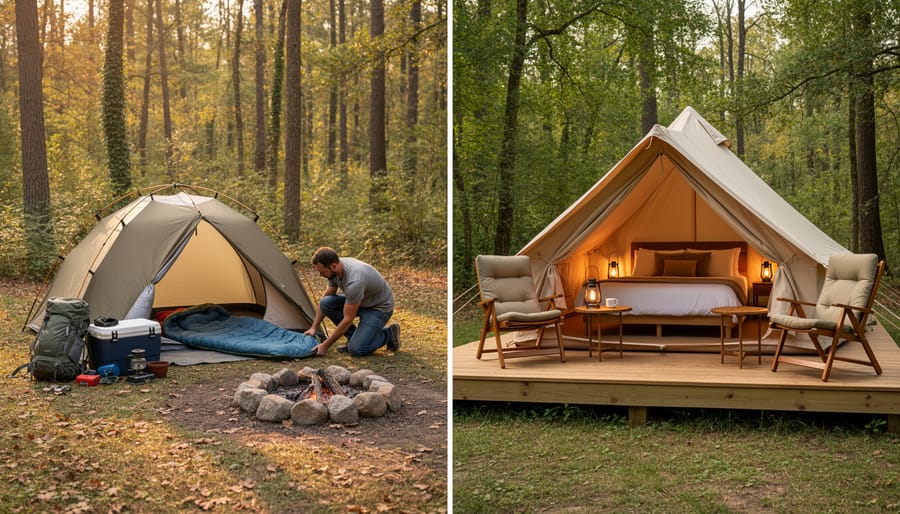
I’ve talked to several Ontario families who made the trip last summer, and they all mentioned the same thing: the dual camping experience. Unlike many Ontario Parks that offer primarily traditional sites, Lac Lafontaine blends both worlds seamlessly. You can choose between bringing your own gear or stepping into a ready-to-camp setup. This flexibility means you’re not locked into one camping style, making it perfect for mixed groups where some want the full outdoor challenge while others prefer a softer landing.
The Saint-Jérôme location itself brings a distinct Laurentian character that differs from the Canadian Shield landscapes dominating Ontario’s parks. The terrain feels gentler, with rolling hills and a different ecosystem that makes you genuinely feel like you’ve ventured somewhere new. One Kingston couple I met at a campfire described it as “camping with a French accent”, not just the language, but the whole vibe feels pleasantly foreign without being intimidating.
What sealed the deal for many Ontario visitors? The combination of accessibility and novelty. You’re not committing to a massive road trip, yet you get that satisfying sense of adventure that comes from crossing provincial boundaries. The campground manages to feel both close enough for a long weekend and far enough to break your usual camping routine. Plus, being this close to Montreal means you can easily mix urban exploration with your outdoor time, something harder to pull off at more remote Ontario locations.
Campsite Options and Accommodations
Traditional Campsites
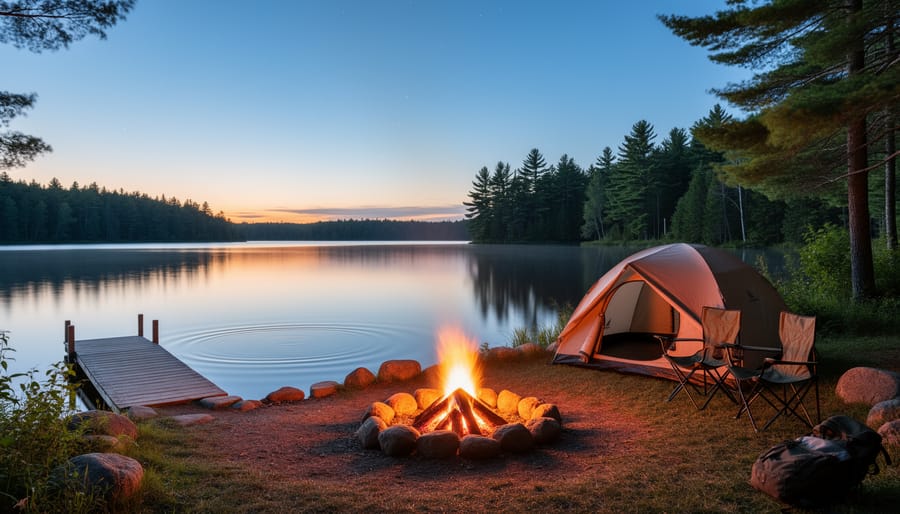
Traditional campsites at Lac Lafontaine bring you back to the core camping experience that many Ontario Parks enthusiasts know and love. These sites accommodate tents, trailers, and RVs, giving you the flexibility to camp your way without the need for specialized equipment or pre-set accommodations.
The campground offers a range of traditional sites with varying levels of services. You’ll find options that suit both minimalist tent campers and those traveling with larger RVs who need electrical hookups. Most sites provide enough space to set up your gear comfortably, with designated areas for your fire pit and picnic table, essentials that feel familiar to anyone who’s camped across Ontario.
What sets the traditional camping experience apart here is the balance between rustic charm and accessible amenities. You’re surrounded by the natural beauty of the Laurentides region, yet you’re not entirely roughing it. The atmosphere skews more family-friendly and social than backcountry, making it ideal if you’re crossing the border for the first time with kids or camping companions who appreciate some creature comforts nearby.
Pricing maxes out at $80 per night for traditional campsites, which compares favorably to many Ontario Parks locations during peak season. Check the official rates and accommodation types before booking, as costs vary by site type and services included.
Ready-to-Camp Accommodations
Ready-to-camp accommodations offer the perfect middle ground if you’re curious about camping but not quite ready to invest in a full gear setup, or if you simply want to enjoy nature without the hassle of pitching tents and inflating air mattresses. These pre-set units let you show up, unpack your cooler and clothes, and start relaxing immediately.
At Lac Lafontaine, the ready-to-camp options max out at $160 per night. While that’s double the traditional campsite rate, you’re paying for convenience and comfort that’s hard to beat. Most ready-to-camp setups in Quebec campgrounds include basics like beds, electricity, and sometimes small kitchenettes, though amenities vary by unit type.
I’ve found these accommodations particularly appealing for families with young children who aren’t yet sold on tent camping, or for groups where some members want to try camping without committing to sleeping on the ground. They’re also brilliant for shoulder-season visits in late April or October when nights get chilly and you’d rather have solid walls around you.
For first-timers crossing from Ontario, ready-to-camp removes a lot of the intimidation factor. You’re testing the waters of a new campground in a different province without the pressure of making sure you packed everything. If you love the experience, you can always return with your own gear and save some money on traditional sites.
How to Book Your Stay (Reservation Essentials)
Booking your spot at Camping Lac Lafontaine is straightforward once you know the system, though it works a bit differently than the Ontario Parks reservation process many of us are used to. If you’ve followed general reservation advice for securing competitive sites in Ontario, you’ll find the Quebec approach refreshingly simple, just with a few key differences to keep in mind.
- Visit the campground’s website or call the reservation line to check availability for your preferred dates within the 2026 season (April 25 – October 26).
- Select your accommodation type, traditional campsite (maximum $80 per night) or ready-to-camp option (maximum $160 per night).
- Provide your contact information and payment details to secure the booking with a deposit.
- Receive confirmation of your reservation with details about arrival procedures and any additional information you’ll need.
Here’s what you need to know about the financial side: you’ll pay a deposit upfront to hold your reservation. This deposit is fully refundable if you cancel at least 14 days before your scheduled arrival date. However, if you do cancel, the campground retains $20 plus applicable taxes as an administrative fee, a policy worth noting when you’re weighing your commitment level.
The 14-day cancellation window is firmer than some Ontario Parks policies, so I’d suggest being reasonably certain about your dates before booking. That said, the $20 retention fee is modest enough that it shouldn’t stop you from securing a prime weekend spot if you’re mostly confident about your plans.
One insider tip: if you’re planning a trip during peak summer weekends or the beautiful fall foliage season in late September, book as early as possible once reservations open for the season. Popular ready-to-camp accommodations tend to fill quickly, especially for Friday and Saturday arrivals.
Season Dates and Best Times to Visit
Camping Lac Lafontaine’s 2026 season dates run from April 25 through October 26, giving you a solid six-month window to experience this Quebec getaway. That’s roughly similar to many Ontario Parks, though some Ontario campgrounds open slightly later in May and close around mid-October depending on location and amenities.
The sweet spot for visiting really depends on what you’re after. Late May through mid-June offers cooler temperatures, fewer bugs than high summer, and noticeably lighter crowds since most families haven’t started their vacation season yet. This shoulder period is perfect if you appreciate eco-friendly practices like minimizing your impact when wildlife is most active and trails are less worn. You’ll also snag better campsite selection and enjoy quieter mornings by the lake.
July and August bring peak season energy, warm swimming weather, and the full buzz of family camping. Expect busier weekends, especially around Quebec’s construction holiday in late July when many Montreal-area residents head outdoors. Book well ahead if you’re eyeing these months.
September into early October delivers my favorite combination: comfortable days, crisp nights, and stunning fall foliage that rivals anything you’ll see back home in Algonquin or Killarney. The Laurentian landscape puts on quite a show, and you’ll often have more space to yourself as kids return to school. Weekend spots still fill up during prime leaf-peeping weeks, but weekdays offer peaceful solitude.
Visiting during those quieter shoulder months means less generator noise, reduced strain on facilities, and better opportunities to spot local wildlife without the summer crowds. The late-season dates extending into late October give you flexibility that some Ontario Parks can’t match, especially if mild fall weather holds.
Facilities and Amenities You Can Expect
Quebec campgrounds typically offer a different mix of amenities than what you’re used to in Ontario Parks, and Lac Lafontaine follows this regional approach. If you’ve camped extensively at places like Algonquin or Killarney, you’ll notice both familiar comforts and a few charming differences.
Most Quebec campgrounds in the Laurentides region provide the essentials Ontario campers expect: washroom facilities with showers, picnic tables at each site, and fire pits for evening gatherings. Many also include services that might surprise Ontario Parks regulars, like small on-site convenience stores or snack bars where you can grab morning coffee or ice for your cooler without leaving the property.
The language environment is worth mentioning, though not as a barrier. Staff at campgrounds near Montreal are typically bilingual, especially during peak season. Signage might be primarily in French, but common camping terms are easy to decipher once you’ve seen them a couple of times.
One notable difference: Quebec campgrounds often embrace a more social atmosphere than their Ontario counterparts. You might find organized activities for families, communal spaces that encourage interaction, or weekend events during July and August. If you prefer the quieter, more dispersed feel of backcountry-style Ontario Parks, this livelier vibe takes some adjustment.
Water access varies by campground type. Some Quebec sites offer lakefront or waterfront positioning with swimming areas, canoe rentals, or fishing access. Others focus more on the camping experience itself with nearby trail access.
The recycling and waste management systems work similarly across both provinces, so your eco-friendly camping habits transfer seamlessly. Bring your reusable containers, practice Leave No Trace principles, and you’ll fit right in.
Getting There from Ontario: Location and Access
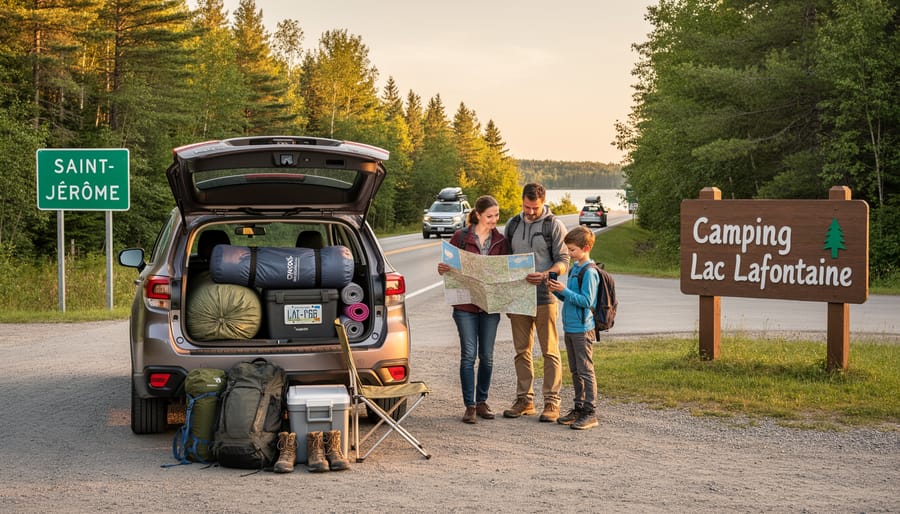
Getting to Camping Lac Lafontaine from Ontario is straightforward, with Saint-Jérôme sitting just 50km northwest of Montreal. Most Ontario campers will cross into Quebec via Highway 417 (which becomes Autoroute 40), then take Autoroute 15 north to Saint-Jérôme, a route that’s well-maintained year-round and clearly signed in both English and French.
From different Ontario starting points, here’s what you’re looking at:
- Ottawa: About 2 hours via Highway 417 East and Autoroute 15 North, following the Ottawa River corridor
- Kingston: Roughly 3.5 hours through Ottawa or via Highway 401 to Montreal, then north on Autoroute 15
- Greater Toronto Area: 5.5-6 hours via Highway 401 East through Montreal, connecting to Autoroute 15
There’s no formal border crossing between Ontario and Quebec, so you won’t encounter customs or checkpoints, just seamless provincial travel. That said, it’s worth brushing up on Quebec’s camping rules which can differ slightly from Ontario’s in areas like quiet hours and firewood regulations.
Pack your driver’s license and vehicle registration as you would for any provincial trip. Gas stations and rest stops are plentiful along the major routes, though prices tend to run slightly higher in Quebec. If you’re GPS-dependent, download offline maps beforehand, cell coverage can get spotty in the Laurentians, especially once you leave the autoroutes.
What to Pack: Cross-Border Camping Considerations
Packing for a Quebec camping trip requires a few extra considerations beyond your standard packing list. First things first: bring your driver’s license or other government-issued ID. While you’re not crossing an international border, having identification on hand is smart for any travel and required for vehicle registration checks.
Language shouldn’t be a barrier, but packing a French phrasebook app or having Google Translate downloaded offline can help when you’re shopping locally in Saint-Jérôme. Most staff at the campground speak English, but nearby shops might not always have bilingual service. I’ve found that a friendly “Bonjour” goes a long way.
Here’s what might be trickier to find across the border: specific brands of camping fuel, your preferred bug spray, and familiar food items. Stock up on propane canisters, butane, and camp stove fuel before you leave Ontario. While Quebec stores carry these items, finding your exact brand and fitting can eat into precious camping time.
Pack all your prescriptions with enough for the trip plus a few extra days. Reusable water bottles and collapsible containers help reduce waste, especially since you’ll want to minimize single-use purchases if stores near the campground have limited eco-friendly options. Bring your own firewood from within 10km of your Ontario home (or plan to buy certified local wood at the campground) to prevent spreading invasive species across provincial borders.
Don’t forget your provincial health card, though you’ll want to check if your travel insurance covers Quebec just in case. A small amount of Canadian cash helps for roadside stops where card readers might be finicky.
Comparing the Experience: Quebec vs Ontario Parks Camping
Having camped at both Lac Lafontaine and numerous Ontario Parks over the years, I’ve noticed each offers something distinct. The differences aren’t about one being better, they’re about what kind of experience you’re after on any given trip.
Ontario Parks generally feels more wilderness-focused, particularly in northern locations like Algonquin or Killarney. You’ll find extensive backcountry options, well-established trail networks, and a strong conservation ethos woven into every aspect. The booking system is familiar to most Ontario residents, and you know exactly what to expect in terms of site layout and amenities. Winter camping in Ontario Parks opens up a whole different dimension, with yurts and heated facilities at select locations for those who want to experience snowy landscapes without roughing it completely.
Lac Lafontaine brings a distinctly Québécois flavour to the camping experience. It’s smaller and more intimate than many Ontario Parks, with that charming blend of European-influenced camping culture and North American wilderness. The ready-to-camp options feel more extensive here, catering to families who want an outdoor experience without the full commitment. Being just 50 kilometers from Montreal means you can combine wilderness time with urban exploration, grab fresh croissants and cheese in the city, then head to your campsite for the evening.
- Ready-to-camp options offer more comfort and variety than typical Ontario alternatives.
- Proximity to Montreal provides unique city-wilderness combination opportunities.
- Different cultural atmosphere adds novelty to the camping experience.
- Often less crowded than popular Ontario Parks destinations during peak season.
- Language barriers may arise for non-French speakers in communications and signage.
- Reservation and payment systems may be less familiar to Ontario residents.
- Longer drive from most Ontario population centres compared to nearby provincial parks.
- No winter camping options for those seeking cold-weather adventures.
The practical considerations matter too. Your safety gear checklist remains the same regardless of province, but you’ll want to pack a few French phrases and perhaps download a translation app before heading across the border. Ontario Parks accepts the Recreation Activity Camping Permit that many residents already own, while Quebec campgrounds operate independently with their own systems.
What I’ve found is that the best approach isn’t choosing one over the other permanently. Some summers call for the rugged backcountry of Killarney, others for the relaxed, cultural blend of Lac Lafontaine. Both provinces offer exceptional camping, just with different personalities that suit different moods and trip goals.
Lac Lafontaine represents something special for Ontario campers willing to venture just across the provincial border. It’s not about turning your back on the incredible camping opportunities we have here at home, from summer adventures in Algonquin to winter camping in Ontario Parks. Rather, it’s about expanding your camping repertoire and discovering new experiences that complement what we already love.
The 50km proximity to Montreal, combined with the blend of traditional and ready-to-camp options, makes this Quebec destination an accessible addition to your camping rotation. Whether you’re drawn by the chance to explore a different region, try a new campground style, or simply shake up your usual routine, Lac Lafontaine offers Ontario campers a fresh perspective without the commitment of a major expedition.
The 2026 season runs from April 25 to October 26, and with that 14-day cancellation window, securing your spot early gives you flexibility while ensuring you don’t miss out. This summer, why not try something different while keeping your favourite Ontario parks in the mix too?









+ There are no comments
Add yours