
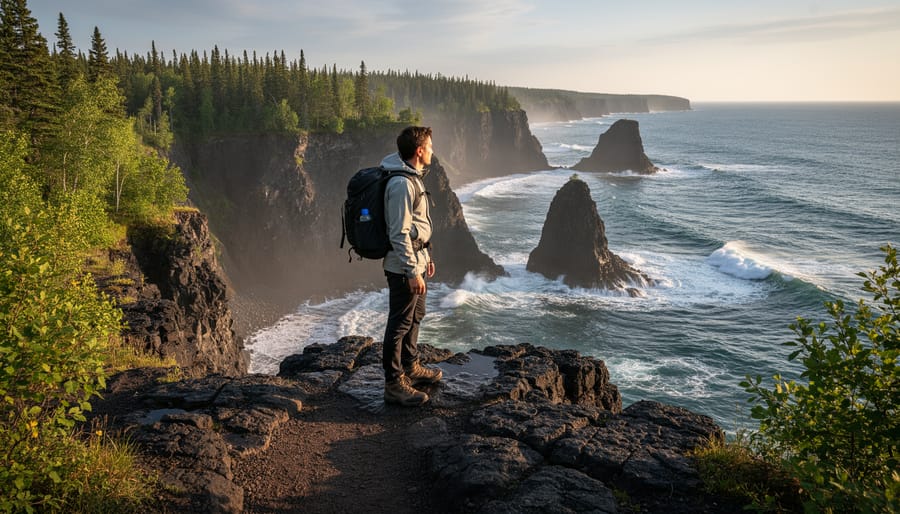
Picture this: a rugged coastline where the Atlantic crashes against 400-million-year-old rock faces, where every turn reveals sea stacks, hidden coves, and the kind of raw coastal drama that makes you stop and stare. That’s Chance Cove in Newfoundland, and while it’s not in Ontario, it holds valuable lessons for anyone planning coastal hikes closer to home along the Great Lakes.
I’ve spent years exploring Ontario’s shoreline trails, and studying exceptional coastal routes like Chance Cove has completely changed how I approach our own waterfront hiking. The 6-kilometre trail through Chance Cove Provincial Park showcases what makes coastal hiking truly unforgettable: dramatic elevation changes, wildlife encounters (think caribou and seabirds), and that intoxicating mix of forest and ocean that creates microclimates you won’t find anywhere else.
Why learn from a Newfoundland trail? Because the principles of great coastal hiking translate beautifully to Ontario’s freshwater coastlines. The same geological storytelling happens along Lake Superior’s ancient shores. The same ecosystem diversity exists where Bruce Peninsula limestone meets Georgian Bay. The same sense of adventure awaits on trails hugging Lake Huron’s coastline.
This comparison isn’t about convincing you to book a flight east (though you should). It’s about understanding what makes coastal trails exceptional so you can find those same qualities in Ontario’s 250,000 kilometres of shoreline. From trail design to safety considerations, from photography opportunities to seasonal timing, Chance Cove offers a masterclass in coastal hiking that applies directly to planning your next Great Lakes adventure.
The Chance Cove Trail Experience: A Coastal Hiking Blueprint
The Chance Cove Trail offers a masterclass in coastal trail design that Ontario park planners and outdoor enthusiasts can study and adapt. Located just 1.2 hours from St. John’s, this 3.2 km return route delivers a concentrated lesson in how to showcase marine ecosystems while managing visitor impact. The Chance Cove trail length proves you don’t need epic distances to create memorable coastal experiences, something particularly relevant for Ontario’s developing Great Lakes shoreline trails.
| Trail Metric | Chance Cove Specification | Ontario Application |
|---|---|---|
| Distance | 3.2 km return | Ideal half-day experience for families |
| Duration | 1-2 hours | Allows time for tide pool exploration |
| Difficulty | Moderately challenging | Balances accessibility with adventure |
| Access from City | 1.2 hours from St. John’s | Comparable to Toronto-Georgian Bay |
What sets Chance Cove apart is how the trail itself becomes a teaching tool. The route winds through three distinct coastal zones: clifftop barrens where wind-sculpted vegetation demonstrates adaptation to salt spray, a descent through coastal forest showing the transition between terrestrial and marine influence, and finally the shoreline proper where tide pools and wave-cut platforms create natural classrooms. Each zone represents a layer of the coastal ecosystem that hikers can observe changing in real time with the tide.
The Moderate hike difficulty rating reflects thoughtful design choices rather than arbitrary terrain. The challenge comes from navigating rocky shoreline sections and managing the timing around tidal access, not from unnecessary obstacles. This approach maximizes educational value while keeping the experience accessible to most visitors who take reasonable care.
For Ontario trail designers, Chance Cove demonstrates how a relatively short coastal route can pack in diverse learning opportunities. The trail’s pacing allows hikers to stop frequently, examine intertidal life, photograph sea stacks and coastal formations, and genuinely engage with the environment rather than simply passing through it. The 1-2 hour duration means families can time their visit to coincide with optimal tidal conditions for tide pool observation, a principle equally applicable to Great Lakes coastal trails where water levels fluctuate seasonally rather than daily.
Interactive Oceanography in Practice: What Makes Coastal Trails Special
# Response
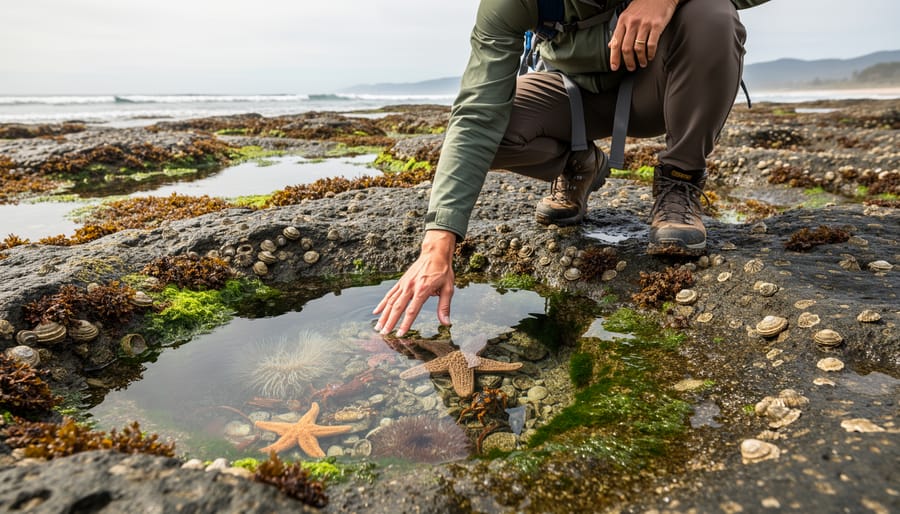
Coastal trails transform hiking into an active classroom where you can see, touch, and experience the forces that shape shorelines. At Chance Cove, walkers encounter tidal pools teeming with sea stars and periwinkles, witness wave action sculpting rock faces in real time, and observe how vegetation adapts to salt spray and constant wind. This hands-on engagement with coastal processes, what researchers call interactive oceanography, turns a simple walk into a dynamic learning experience about how land and water interact.
The same principles come alive along Ontario’s Great Lakes coastlines. When you hike the rugged Lake Superior shore or explore Georgian Bay’s granite headlands, you’re witnessing freshwater versions of these coastal dynamics. Waves carve sedimentary cliffs, ice scours rock formations each winter, and shoreline plants develop specialized adaptations to survive spray and exposure. The scale differs, our inland seas lack ocean tides and salt, but the fundamental interactions between water, rock, and life remain remarkably similar.
What makes these trails special isn’t just scenic views. It’s the opportunity to read landscape history in layered rock, spot how wind shapes tree growth patterns, and understand why certain plants cluster at specific distances from the waterline. You can crouch beside a tidal pool (or its Great Lakes equivalent, a wave-washed depression) and observe an entire miniature ecosystem. You notice how weather changes throughout your hike, seeing firsthand why coastal environments create their own microclimates.
This educational dimension enriches every coastal hike. Instead of walking past interesting features, you start asking questions: Why does this cliff face fracture in vertical lines? How do these hardy shrubs survive winter storms? What created this smooth, rounded boulder field? Coastal trails become ongoing conversations between hiker and environment, where observation leads to understanding, and understanding deepens appreciation for the fragile, powerful systems that shape our shorelines.
Lessons for Ontario’s Coastal Trail Network
Trail Design and Coastal Conservation
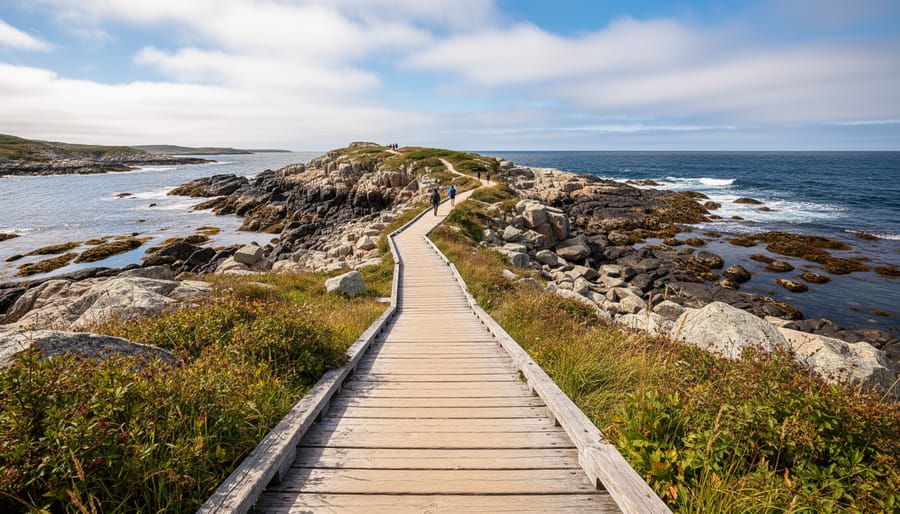
Chance Cove’s trail architects solved a familiar challenge: how to let visitors experience fragile coastal ecosystems without destroying them. The solution lies in strategic infrastructure placement. Elevated boardwalks carry foot traffic over sensitive vegetation zones and wetland areas, concentrating impact on durable surfaces rather than allowing thousands of boots to compact soil and trample native plants. Viewing platforms perch at natural vantage points where rock formations can support them without requiring extensive excavation that would destabilize slopes.
Ontario trail managers face identical pressures along Lake Superior’s Pukaskwa coast and Bruce Peninsula’s limestone shores. The Newfoundland approach offers a tested playbook: invest in robust boardwalk systems where erosion risk is highest, typically within 50 meters of the waterline. Position rest areas on bedrock outcrops rather than vegetated headlands. Install drainage features that redirect runoff away from trail edges before gullies form.
The return on this infrastructure isn’t just ecological. Well-maintained coastal trails extend the hiking season, remain accessible after storms, and reduce maintenance costs over time. When boardwalks protect the very ecosystems visitors came to see, conservation becomes the visitor experience rather than a restriction on it.
Visitor Education and Interpretation
Chance Cove’s approach to visitor education offers Ontario trail planners a proven model for transforming a simple hike into coastal learning. Well-placed interpretive panels along the trail identify native plants, explain tidal zone ecology, and highlight geological features without overwhelming hikers with text. This layered approach lets visitors choose their depth of engagement, from quick photo stops to extended study of intertidal life.
Ontario Parks already excels at interactive outdoor programs in forest settings, and these same principles apply beautifully to Great Lakes shorelines. Guided naturalist walks during peak migration seasons can reveal how coastal corridors function as highways for birds and monarch butterflies. Self-guided interpretive trails with QR codes linking to audio content about Great Lakes geology or seasonal water level changes let hikers learn at their own pace.
The key lesson from Newfoundland’s success is relevance. Educational elements work best when they connect directly to what hikers see around them. If you’re standing beside exposed Precambrian bedrock along Lake Superior’s coast, that’s the moment to learn about billion-year-old geology. Seasonal programming around ice formations in winter or spawning fish in spring turns repeat visits into ongoing education rather than one-time experiences, deepening visitors’ connection to Ontario’s unique freshwater coastal environments.
Planning Your Own Coastal Exploration in Ontario
Ready to trade Atlantic swells for Great Lakes waves? Ontario’s coastal trails offer their own distinctive shoreline adventures, and you can apply what makes Chance Cove special right here at home. The Great Lakes coastlines create unique microclimates and ecosystems that rival any ocean shore for drama and discovery.
Timing matters for lakeside exploration. May through October delivers the most predictable conditions along Lake Superior and Georgian Bay, though early spring and late fall bring dramatic storm-watching opportunities if you’re prepared for cooler temperatures. Summer weekends draw crowds to popular access points, so consider midweek visits or shoulder seasons for quieter trail experiences. Winter coastal hiking requires specialized ice safety knowledge and should only be attempted by experienced cold-weather trekkers.
Your pack needs differ from inland trails. Layered clothing handles the temperature swings between forested sections and exposed shoreline, where lake breezes can drop the perceived temperature 10 degrees in minutes. Wind-resistant outer layers prove essential, even on seemingly calm days. Closed-toe water shoes or sandals with ankle support let you explore tide pools and rocky shorelines safely, while trekking poles help navigate uneven coastal terrain. For comprehensive hiking gear tips specific to Ontario conditions, review the full equipment checklist before heading out.
Understanding coastal hiking safety prevents common lakeside hazards. Never turn your back on the water, as Great Lakes waves can surge unexpectedly, especially during spring and fall. Check marine forecasts, not just land weather, since lake conditions change rapidly. Stay back from cliff edges, where erosion creates unstable overhangs, and avoid walking on wet rocks, which become treacherously slippery.
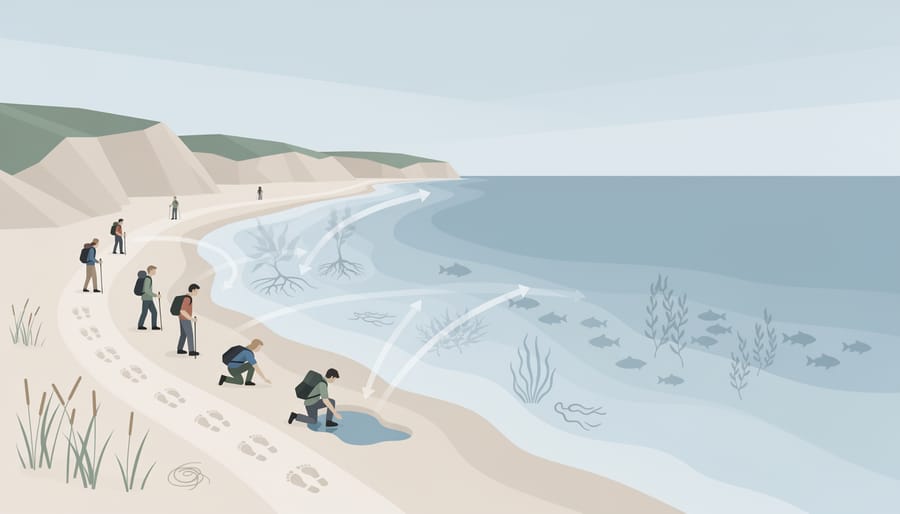
Protecting fragile shoreline ecosystems requires conscious effort. Stick to established paths, as shoreline vegetation prevents erosion and provides crucial habitat for migrating birds and aquatic species. Leave No Trace principles apply doubly to coastal zones, where human impact shows immediately and lasts longer. Never disturb nesting areas, particularly from April through July when shorebirds raise their young.
Top Ontario Coastal Trails to Experience in 2026
Ontario’s Great Lakes coastlines offer remarkable opportunities to experience the same kind of coastal exploration that makes Chance Cove special. These trails let you witness the dynamic interaction between land and water, study shoreline ecosystems up close, and understand how wave action, geological processes, and seasonal changes shape our province’s lakeside environments.
- Lake Superior Coastal Trail (Lake Superior Provincial Park)
- This 65-kilometer multi-day trek along Superior’s rugged eastern shore features dramatic cliff viewpoints, cobblestone beaches, and ancient rock formations that tell the story of billions of years of geological history. The trail’s difficulty ranges from moderate day sections to challenging multi-day wilderness routes where you’ll camp directly on coastal headlands and wake to the sound of waves against Canadian Shield granite.
- Georgian Bay Coastal Trail (Bruce Peninsula National Park)
- A 16-kilometer point-to-point route that showcases the UNESCO-designated Niagara Escarpment as it meets Georgian Bay’s turquoise waters. This moderately challenging trail takes you past limestone sea caves, fossil-rich rock platforms, and coastal wetlands where you can observe how freshwater ecosystems create their own tidal-like patterns through seasonal water level changes.
- Coastal Trail at Pukaskwa National Park
- Ontario’s most remote coastal wilderness experience offers 60 kilometers of backcountry hiking along Lake Superior’s pristine northern shore. The trail demands advanced navigation skills and wilderness experience, rewarding prepared hikers with intimate encounters with boreal coastal ecosystems, river mouth estuaries, and some of the clearest water you’ll find anywhere in the Great Lakes system.
- Singing Sands Beach Trail (Bruce Peninsula National Park)
- This accessible 2.4-kilometer loop demonstrates how even shorter coastal hikes can offer rich interactive learning. The trail’s namesake beach produces audible sounds when you walk on its quartz sand, while interpretive markers explain dune formation, rare coastal plant communities, and the delicate balance required to protect these specialized habitats.
- Coastal Wetlands Trail at Rondeau Provincial Park
- A 2-kilometer boardwalk system that reveals how Lake Erie’s coastal marshes function as critical transition zones between terrestrial and aquatic ecosystems. The easy-rated trail allows close observation of wetland birds, fish spawning areas, and the seasonal rhythms that drive one of Canada’s most biodiverse ecosystems.
Each of these trails offers something Chance Cove hikers would recognize: that sense of standing at the edge where two worlds meet, where you can literally see and touch the processes that shape coastal landscapes. The Lake Superior routes deliver the dramatic wave-carved rock formations and exposed geology. Georgian Bay trails showcase the fossil record and underwater visibility that lets you peer into aquatic ecosystems. The wetland boardwalks at Rondeau reveal the quieter but equally fascinating dynamics of protected bays and marshes.
What makes these Ontario coastal trails particularly valuable for 2026 is their accessibility throughout the hiking season, combined with well-developed interpretive programs that help you understand what you’re seeing. Most feature detailed trail guides that explain the coastal features you’ll encounter, making every hike a learning experience about how Great Lakes shorelines function and evolve.
Studying trails like Newfoundland’s Chance Cove reveals possibilities for our own Great Lakes coastal landscapes. The principles of interactive exploration, thoughtful trail design, and ecosystem stewardship translate directly to Ontario’s shoreline environments. Georgian Bay’s granite shores, Lake Superior’s dramatic coastlines, and Lake Huron’s quieter beaches all offer the same potential for meaningful coastal discovery you’d find along Atlantic paths.
When you next walk an Ontario lakeside trail, bring that same curiosity about tidal patterns, coastal geology, and shoreline ecosystems. Notice how waves shape the land, how vegetation adapts to wind and spray, how different the environment feels compared to inland forests. This awareness transforms a simple hike into genuine exploration.
Support provincial parks that prioritize educational programming and conservation-minded infrastructure along their coastal routes. Volunteer for shoreline cleanup efforts. Share your observations with park staff. The more we value these fragile environments, the better protected and interpreted they’ll become. Ontario’s freshwater coasts deserve the same thoughtful development and visitor appreciation that makes distant coastal trails remarkable. Your next lakeside adventure starts with that perspective shift.







+ There are no comments
Add yours