
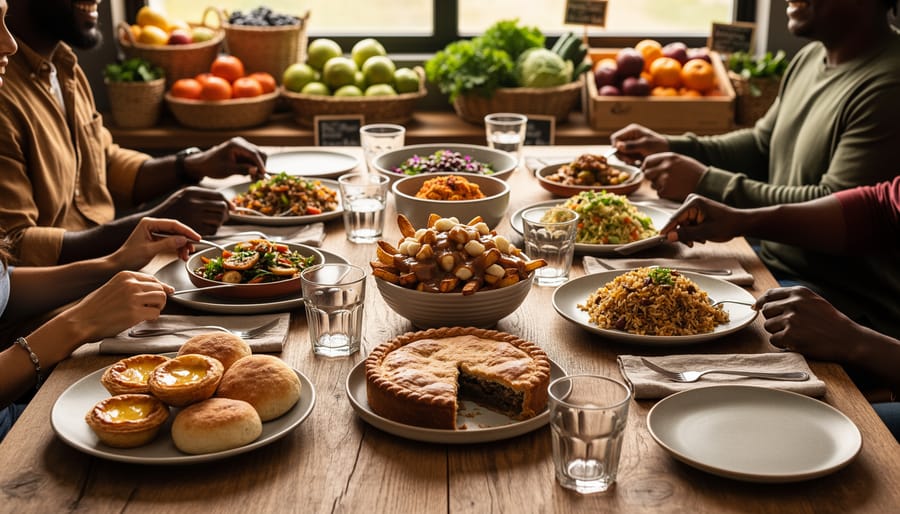
Canadian food culture is the story of many kitchens meeting in one country. It reflects waves of immigration, Indigenous traditions, French and British colonial roots, and regional ingredients shaped by geography and climate. Rather than a single signature dish, Canada’s culinary identity lives in its diversity: tourtière in Quebec, bannock across Indigenous communities, butter tarts in Ontario, poutine gone global, and dozens of immigrant-driven food scenes that make cities like Toronto and Vancouver some of the most exciting places to eat in North America.
Ontario sits at the heart of this evolution. The province welcomed more newcomers than any other part of Canada throughout the 20th and early 21st centuries, and those arrivals built neighborhoods around their food. Little Italy, Greektown, Chinatown, Little India, Koreatown, and Portuguese enclaves each turned their cuisines into anchors of daily life. Walk through Kensington Market in Toronto or the ByWard Market in Ottawa and you’ll taste how immigration continues to redefine what Canadian food means.
But food culture here isn’t confined to urban streets. Exploring Ontario’s wild side means discovering farm-to-table dining near provincial parks, wild berry foraging traditions, maple syrup tapping, and lakeside fish fries that connect outdoor adventure with what’s on your plate. This article unpacks how Canadian food culture took shape, what makes Ontario’s contribution unique, and where you can experience it whether you’re planning a backcountry canoe trip or a weekend market crawl.
What Canada’s Food Culture Actually Means
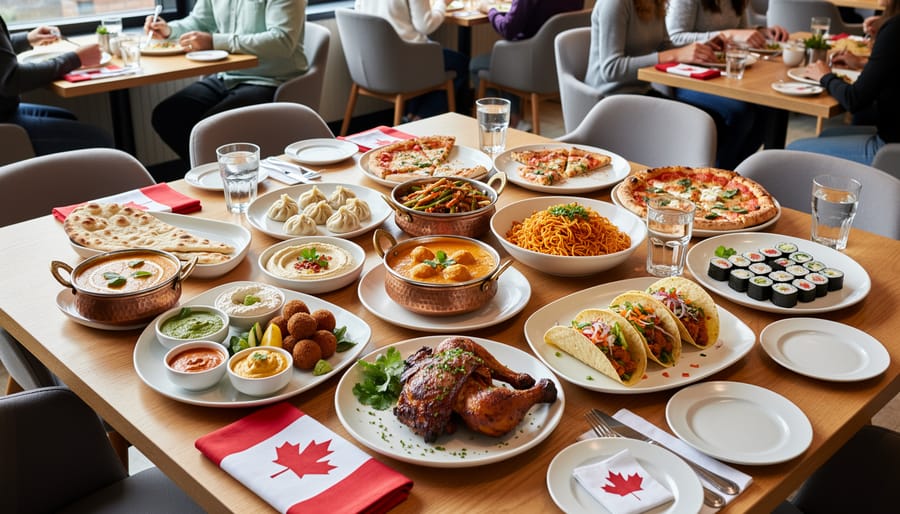
Canadian food culture is a living, breathing thing, not a single recipe passed down unchanged, but a conversation happening in kitchens, markets, and restaurants across the country. At its core, it started with Indigenous, English and French roots built on wild game, fish, foraged plants, tourtière, and bannock. But that foundation keeps shifting and expanding as each wave of newcomers brings ingredients, techniques, and tastes from home.
Ontario captures this evolution perfectly. Walk through Toronto’s Kensington Market or Ottawa’s Chinatown, and you’ll see Polish delis beside Jamaican roti shops, Vietnamese pho counters next to Portuguese bakeries. Immigrants shape Canadians‘ everyday eating habits in profound ways, introducing flavours that eventually become as familiar as maple syrup. What starts as ethnic food, something exotic, different, gradually weaves itself into the broader culture until nobody questions finding samosas at a hockey game or grabbing banh mi for lunch.
Understanding a few core concepts helps explain how this works:
- Culinary Mosaic
- The way immigrant food traditions coexist side by side in Canadian cities, maintaining their distinct identities rather than blending into one homogenous mix. Each culture keeps its authenticity while contributing to the larger food landscape.
- Fusion Cuisine
- When different culinary traditions intentionally combine, think Korean-Mexican tacos or butter chicken pizza. This happens when second-generation chefs blend their heritage with Canadian ingredients and tastes.
- Heritage Foods
- Traditional dishes that immigrant communities preserve and celebrate, often tied to specific holidays, family gatherings, or cultural festivals. These anchor people to their roots even as they adapt to life in Canada.
- Community Foodways
- The social practices around food, how meals are shared, ingredients are sourced, recipes are taught, and eating becomes a way to maintain cultural identity and build connections across generations.
This isn’t just abstract cultural theory. It plays out in real, tangible ways across Ontario, where food becomes the easiest, most welcoming entry point into unfamiliar cultures and a reason to explore beyond the usual tourist paths.
How Ontario’s Immigrant Food Culture Works
From Home Kitchens to Community Tables
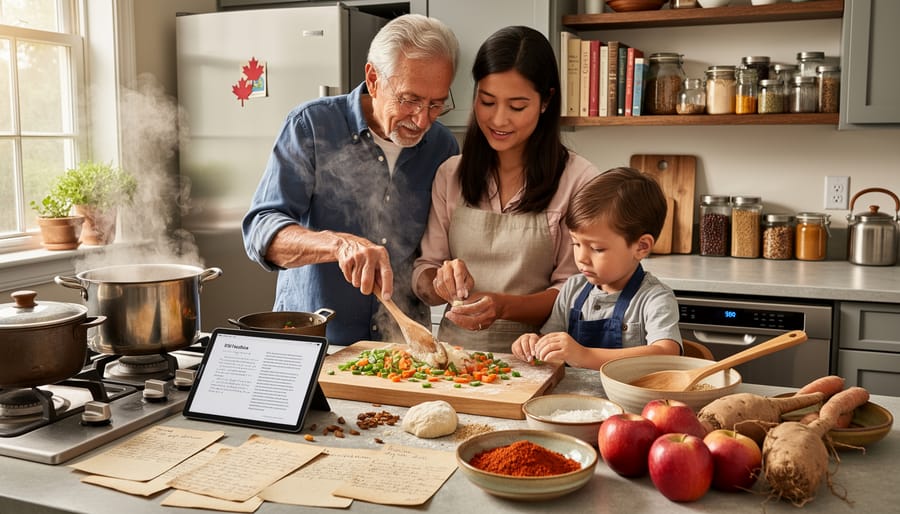
In countless Ontario homes, the preservation of culinary heritage starts before dawn. A Portuguese grandmother in Toronto’s Little Portugal begins kneading dough for pão caseiro, the same bread recipe her own grandmother taught her in the Azores. Down the street, a Punjabi family gathers around a tawa, rolling chapatis while discussing the precise ratio of flour to water that makes them soft. These aren’t just cooking sessions, they’re cultural classrooms where techniques, tastes, and stories flow between generations.
The kitchen table serves as the primary setting for this transmission. Children learn by doing: stirring, tasting, adjusting seasoning under watchful guidance. A Tamil mother explains how to tell when mustard seeds are perfectly tempered. A Polish father demonstrates the proper crimp for pierogies, the same fold his mother showed him decades ago. These hands-on lessons encode not just recipes but the sensory knowledge that can’t be written down, how dough should feel, what properly caramelized onions smell like, when sauce has reached the right consistency.
As families expand their networks through community potlucks, school events, and neighbourhood gatherings, home cooking moves beyond private kitchens. Caribbean families share jerk marinade secrets at park barbecues. Korean households bring homemade kimchi to community centers. These informal exchanges create bridges between Ontario’s outdoor culture and its culinary diversity, much like Indigenous food experiences connect traditional knowledge with modern appreciation for local ingredients.
The Role of Markets and Specialty Grocers
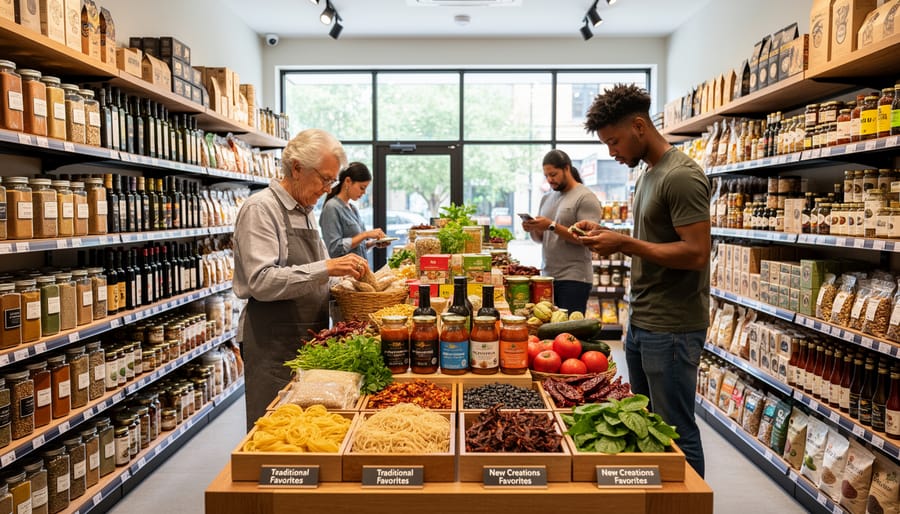
Step into a Korean grocer in Koreatown and you’ll find banchan ingredients and gochugaru varieties that no mainstream supermarket stocks. Walk the aisles of a Portuguese fish market in Little Portugal, and you’ll see salt cod displayed alongside fresh octopus and custard tarts still warm from the oven. These aren’t just places to buy food. They’re cultural anchors where diaspora communities access the exact ingredients their recipes demand, where grandmothers compare prices in their mother tongue, and where second-generation kids learn the names of vegetables their parents grew up eating.
Ethnic grocery stores as cultural pillars maintain connections to homelands that big-box retailers can’t replicate. A Tamil family finds the right curry leaves and drumstick vegetables for sambar. A Polish household sources proper kielbasa and sauerkraut for bigos. These stores stock not just ingredients but the specific brands families remember, the regional variations that matter, the fresh versus dried or frozen distinctions that transform a dish from acceptable to authentic.
Beyond commerce, these markets become informal community centres. Bulletin boards advertise rooms for rent, language tutors, and cultural events. Shopkeepers offer cooking advice, recipe swaps happen between strangers in the checkout line, and newcomers get oriented through conversations about where to find halal meat or which bakery makes the best baklava. The market becomes the first stop for recent immigrants and the nostalgic pilgrimage for established residents.
Major Culinary Traditions Across Ontario’s Communities
European Heritage: Italian, Portuguese, and Eastern European
Italian espresso bars and family-run trattorias transformed Ontario’s urban landscapes starting in the post-war era, particularly along Toronto’s College Street and St. Clair West, where generations still gather for housemade pasta and proper cappuccino. These neighbourhoods became templates for how immigrant food culture could anchor entire communities, with third-generation owners maintaining recipes their nonnas brought from Calabria or Sicily while adapting to local tastes.
Portuguese communities built their presence around churrasqueiras, charcoal chicken houses, that became weekend destinations for families across cultures. The aroma of piri-piri spiced chicken draws crowds in areas like Toronto’s Little Portugal and Cambridge, while Portuguese bakeries supply the morning pastéis de nata that have become Ontario staples. These bakeries double as social hubs where older generations speak Portuguese over coffee while younger customers grab lunch.
Eastern European contributions run deeper than most realize. Polish delis stock preserves and sausages that connect diaspora families to home, while Ukrainian pierogi makers and Hungarian pastry shops operate in smaller cities across the province. These businesses often sit near provincial parks, creating opportunities for food and wine journeys that pair outdoor adventures with authentic cultural dining experiences you won’t find in tourist districts.
Asian Flavours: Chinese, South Asian, and Southeast Asian
Ontario’s Asian food scene reflects waves of immigration that brought distinct regional traditions rather than homogeneous “Asian cuisine.” Chinese restaurants alone span multiple regional styles, Cantonese dim sum parlours serving har gow and char siu bao, Sichuan spots with mouth-numbing mapo tofu, hand-pulled noodle shops representing northwestern traditions. Toronto’s Scarborough neighbourhood houses some of North America’s most authentic Chinese regional cooking, while smaller cities like Waterloo and London have their own established Chinese communities with family-run restaurants serving the dishes they grew up eating.
South Asian immigration brought tandoori ovens and complex spice blends that now define Ontario dining. Indian and Pakistani restaurants offer regional specialties, Punjabi butter chicken and naan, South Indian dosas and idlis, Hyderabadi biryani, Pakistani nihari slow-cooked overnight. Brampton’s Indian grocers stock fresh curry leaves and specific lentil varieties that let home cooks recreate ancestral recipes.
Vietnamese pho shops became neighbourhood fixtures in the 1980s, their restorative beef broths now as familiar to many Ontarians as chicken soup. Korean BBQ restaurants let diners grill marinated galbi at their tables, while Filipino restaurants serve adobo, lumpia, and the vinegar-forward dishes that fuel Toronto’s growing Filipino community. Each cuisine maintains its distinctiveness while gradually influencing Ontario’s broader food landscape, bubble tea shops and banh mi counters now sit comfortably beside Tim Hortons.
Caribbean, Latin American, and Middle Eastern Traditions
The warmth of Caribbean, Latin American, and Middle Eastern kitchens has fundamentally reshaped Ontario’s food landscape, bringing bold spices and communal eating traditions to cities and small towns alike.
Caribbean communities, particularly Jamaican, have made patties, flaky pastry pockets filled with spiced beef, chicken, or vegetables, an Ontario staple you’ll find everywhere from downtown bakeries to gas stations near provincial parks. Jerk chicken, with its Scotch bonnet heat and allspice-thyme marinade, defines outdoor food culture at summer festivals and roadside grills. Trinidadian roti shops serve curry-filled flatbreads that satisfy hungry hikers, while Bajan fish cakes offer coastal flavours far from any ocean.
Latin American immigrants brought handheld comfort foods perfectly suited to Ontario’s on-the-go lifestyle. Venezuelan arepas, grilled corn cakes split and stuffed with shredded beef, black beans, or cheese, appear at food trucks near trailheads. Argentinian empanadas, Mexican tacos al pastor, and Salvadoran pupusas each tell migration stories through their fillings and preparation methods.
Middle Eastern traditions emphasize sharing platters that encourage conversation. Lebanese restaurants serve shawarma wraps and mezze spreads of hummus, tabbouleh, and baba ghanoush that work as picnic fare. Persian communities have introduced fragrant rice dishes like tahdig with its prized crispy bottom layer, plus slow-cooked stews flavoured with dried limes and pomegranate molasses. These cuisines transformed how Ontarians think about family-style dining and vegetable-forward eating.
Where and How to Experience Ontario’s Immigrant Food Culture
Planning Food-Focused Park and City Trips
The best culinary discoveries often happen when you treat food exploration as part of your outdoor adventure, not an afterthought. Before heading to Algonquin or Bruce Peninsula, research the towns within 30 minutes of the park entrance. Many gateway communities host surprising immigrant-run restaurants that cater to locals, not just tourists passing through. A morning hike followed by authentic Vietnamese pho in a nearby town creates a richer travel memory than eating generic trail mix in your car.
Pack a cooler and plan your food adventure in Ontario parks around meal times in neighbouring cities. After kayaking in Bon Echo Provincial Park, drive to Bancroft for Polish pierogies at a family bakery. Following a day at Sandbanks, explore Picton’s growing food scene with its mix of Lebanese shawarma shops and Caribbean takeout spots. This rhythm lets you enjoy nature during optimal daylight hours while supporting small businesses that define these communities.
Download offline maps marking both trailheads and ethnic restaurants, since cell service disappears in many parks. Call ahead to confirm hours, especially in smaller towns where family-run spots close unexpectedly for cultural holidays or family events.
Cultural Food Festivals Throughout the Year
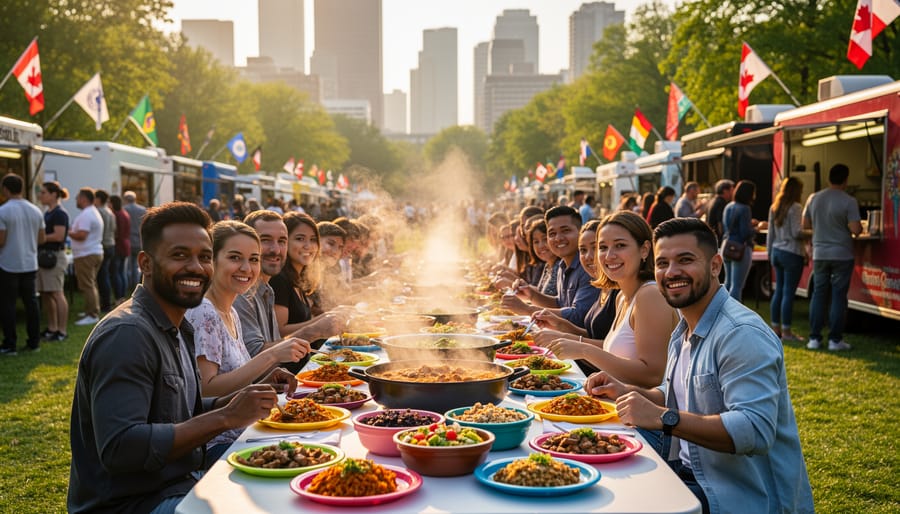
Food festivals offer concentrated tastes of Ontario’s immigrant cuisines, with communities hosting celebrations that blend culinary traditions, live performances, and cultural education. These events typically run from late spring through early fall, when outdoor gatherings are most comfortable, though indoor winter celebrations also dot the calendar.
Expect neighbourhood street festivals in Toronto’s Little Italy, Greektown, and Little India, where vendors line blocks with food stalls serving everything from arancini to samosas. Larger multicultural festivals bring dozens of communities together under one roof or across city parks, letting you sample globally in a single afternoon. Church and temple grounds often host smaller, more intimate fundraiser festivals where homemade recipes shine.
Most festivals charge modest admission or operate on a ticket system for food purchases. Arrive hungry and early, popular items sell out, and lineups grow by midday. Look for festivals tied to cultural holidays: lunar new year celebrations feature dumplings and noodle dishes, Caribbean Carnival weekends overflow with jerk and roti, and harvest festivals showcase Eastern European pierogies and sausages. Check community centre websites and cultural association pages rather than waiting for major tourism promotions, you’ll discover authentic neighbourhood events that locals cherish.
Supporting Sustainable and Community-Based Food Experiences
Your dining choices shape both the cultural landscape and environmental footprint of Ontario’s food scene. Prioritize family-owned restaurants where your dollars directly support immigrant entrepreneurs maintaining authentic recipes, these establishments typically source ingredients more sustainably than chains and generate less packaging waste. Visit immigrant-run farmers’ markets to buy produce and prepared foods with minimal transportation emissions while connecting with growers who often practice traditional, low-impact farming methods.
Reduce waste by ordering family-style portions you’ll actually finish, bringing reusable containers for leftovers, and choosing restaurants that compost. When pairing meals with local artisan drinks select small-batch beverages in returnable bottles rather than single-use packaging. Ask servers about ingredient sourcing, many immigrant-owned kitchens already emphasize nose-to-tail cooking and minimize food waste through stocks, pickles, and preserved preparations rooted in their culinary traditions. Supporting these businesses preserves both cultural heritage and sustainable food practices that benefit Ontario’s communities and ecosystems.
Common Questions About Ontario’s Immigrant Food Culture
Finding authentic immigrant cuisine in Ontario can feel overwhelming when you’re surrounded by so many options, especially if you’re unfamiliar with a particular culinary tradition. The questions below address the most common concerns travelers have when venturing beyond their comfort zones to explore the province’s diverse food landscape.
How do I know if a restaurant is authentic?
Look for family-run establishments in ethnic neighborhoods where the dining room is full of people from that community speaking their native language. Authentic spots typically have menus in multiple languages, use traditional cooking methods, and source specialty ingredients rather than substituting Western alternatives.
What should I order if I’m unfamiliar with the cuisine?
Ask your server what they or their family eat at home, or request the most popular dish among regular customers. Many restaurant owners appreciate genuine curiosity and will steer you toward regional specialties rather than the dishes created specifically for Western palates.
Are immigrant-run restaurants accommodating for dietary restrictions?
Most establishments happily accommodate vegetarian, vegan, and common allergy concerns, particularly since many cultural cuisines have strong plant-based traditions. Communicate your restrictions clearly and ask about ingredients, as some dishes use fish sauce, ghee, or nuts in ways that aren’t immediately obvious from menu descriptions.
How can I be a respectful culinary tourist?
Come with genuine curiosity rather than treating the experience as exotic entertainment. Learn a few basic phrases in the language if possible, ask questions respectfully, tip according to North American standards regardless of customs elsewhere, and remember that you’re a guest in someone’s cultural space.
Beyond these basics, don’t hesitate to step outside your usual preferences. The small Portuguese bakery near Algonquin Park or the Punjabi dhaba on your way to Niagara Falls might serve dishes you’ve never heard of, but that unfamiliarity is precisely the point. Immigrant food culture thrives when people approach it with openness rather than expecting every meal to match their existing tastes.
If you make a mistake or order something you don’t enjoy, handle it gracefully. Not every dish will resonate with your palate, and that’s fine. What matters is showing respect for the traditions, ingredients, and stories behind the food. The family who opened that Caribbean roti shop or Korean barbecue restaurant brought generations of knowledge with them, and your willingness to learn makes Ontario’s culinary landscape richer for everyone.
Ontario’s food landscape tells the story of countless journeys, families who crossed oceans carrying recipes, techniques, and food memories that have transformed what it means to eat Canadian. These immigrant communities didn’t just add dishes to the menu. They created living culinary traditions that continue evolving with each generation, making Ontario one of the most exciting food destinations you’ll encounter anywhere.
Next time you’re planning a trip to Algonquin or driving the Bruce Peninsula, look beyond the usual highway stops. That Portuguese bakery in a small town might serve the best pastéis de nata outside Lisbon. The family-run Indian restaurant near your campground could introduce you to regional specialties you’ve never tasted. A farmers’ market on your route home might feature ingredients and prepared foods from a dozen different cultures, all grown or made within the province.
Food creates connections that hiking trails and scenic viewpoints can’t quite match. When you sit down at a Korean BBQ spot after a day on the trails, or grab Jamaican patties for your picnic lunch, you’re not just refueling. You’re participating in the ongoing story of how people share what matters most to them, comfort, celebration, home.
The best adventures happen when you’re curious enough to try something unfamiliar. Ontario’s immigrant food culture rewards that curiosity with flavours, stories, and hospitality that make every meal memorable.













+ There are no comments
Add yours