Greensburg’s support for ecotourism represents a deliberate, community-wide strategy to align economic development with environmental stewardship, where local businesses, municipal policies, and resident initiatives work together to create tourism experiences that actively benefit rather than deplete natural resources.
What makes Greensburg’s approach noteworthy isn’t just its commitment to sustainability, it’s the practical infrastructure and partnerships that turn good intentions into measurable outcomes. Most communities talk about eco-friendly tourism. Greensburg built a framework that ties visitor spending directly to habitat restoration, renewable energy investment, and educational programming. The result? Tourism dollars fund conservation work, while visitors gain authentic access to restored prairie landscapes and innovative green building showcases you won’t find anywhere else.
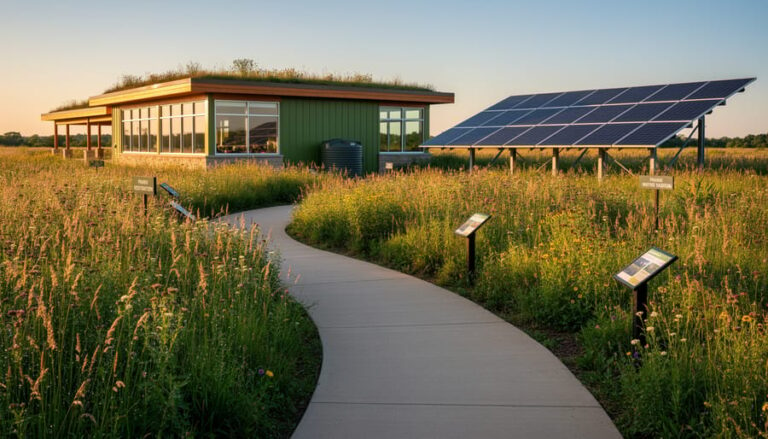
This matters because ecotourism often gets reduced to feel-good marketing without meaningful environmental impact. Greensburg took a different path. After a devastating tornado leveled the town in 2007, residents rebuilt with a clear mandate: every new structure, every business decision, and every tourism initiative would contribute to long-term ecological health. That rebuilding process created a living laboratory where visitors can see how renewable energy systems, water conservation techniques, and native habitat restoration function at community scale. It’s education through immersion, backed by tangible results.
Understanding how Greensburg supports ecotourism means looking beyond the surface attractions to examine the partnerships between the city council and environmental nonprofits, the certification programs that hold businesses accountable, and the revenue-sharing models that direct tourist dollars into ongoing conservation work. Similar principles guide Ontario’s green infrastructure plan where strategic investments protect natural heritage while creating visitor experiences.
Whether you’re planning a visit or looking for models your own community might adopt, Greensburg’s systems offer concrete lessons in making ecotourism functional rather than theoretical. The town proves that visitor economies and environmental restoration can fuel each other when the support structures are designed with intention.
What Greensburg’s Ecotourism Support Means
Greensburg’s ecotourism support represents a coordinated community framework where local government, businesses, conservation groups, and residents work together to create tourism experiences that actively protect natural habitats while generating sustainable economic benefits. Unlike conventional tourism development that often treats nature as a backdrop, this model embeds conservation directly into how the community plans, funds, and operates its visitor infrastructure.
At its core, community-based ecotourism infrastructure means the physical and organizational systems aren’t imposed by outside developers but emerge from local priorities. Greensburg’s approach involves residents in decisions about which habitats open to visitors, what types of activities fit the landscape’s capacity, and how tourism revenue flows back into land stewardship. This creates accountability, when tour operators live in the same community where they guide visitors through sensitive wetlands, they have personal stakes in keeping those ecosystems healthy for future seasons.
Several foundational concepts shape how this support operates in practice:
- Community-Based Tourism
- A development model where local residents control tourism planning and operations, ensuring economic benefits stay within the community while maintaining cultural and environmental integrity.
- Conservation Easements
- Legal agreements restricting land development to protect wildlife habitat, often funded through tourism revenues and allowing controlled public access for nature-based experiences.
- Interpretive Programming
- Educational activities that help visitors understand ecosystems and conservation challenges through guided walks, signage, and naturalist talks, transforming casual tourists into informed advocates.
- Sustainable Infrastructure
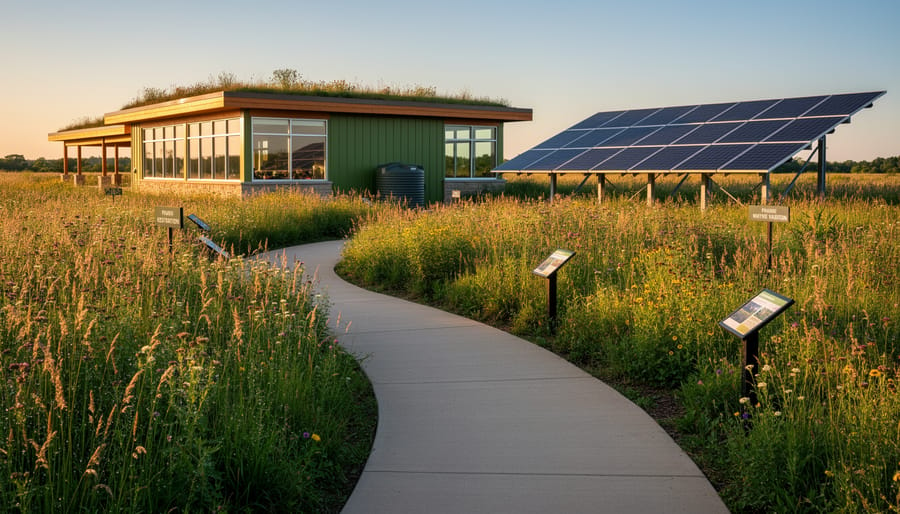
- Visitor facilities designed to minimize environmental impact through features like composting toilets, solar power, elevated boardwalks that protect ground vegetation, and seasonal closures during wildlife breeding periods.
The integration of conservation goals into tourism planning happens through mechanisms like habitat impact assessments before new trails open, seasonal visitor caps during bird nesting periods, and mandatory training for anyone leading commercial nature tours. Policy support includes municipal bylaws requiring eco-certification for tourism operators and zoning that clusters visitor services away from critical habitats.
Grassroots initiatives complement official policies. Local naturalist clubs run volunteer monitoring programs that track wildlife populations in tourist areas, providing data that shapes management decisions. Accommodation owners collaborate on waste reduction systems and native plant landscaping. These aren’t token gestures but foundational practices that make conservation outcomes inseparable from tourism success, creating what residents describe as a shared stewardship culture rather than just a business sector.
How Greensburg’s Ecotourism Framework Works
Partnership Networks and Stakeholders
Greensburg’s ecotourism framework runs on collaboration among four core groups. The municipal government sets policy direction and manages public lands, working closely with Ontario’s conservation authorities to align local tourism initiatives with provincial habitat protection goals. Private tourism operators, from lodge owners to kayak outfitters, participate in certification programs that ensure their services meet sustainable tourism guidelines while generating revenue that flows back into conservation projects.
Conservation groups provide the scientific backbone, conducting wildlife surveys and habitat assessments that inform where and when tourist access makes sense. These organizations often partner with Indigenous heritage stewards who contribute traditional ecological knowledge to management plans, particularly around sensitive species and seasonal considerations.
Residents participate through a community advisory committee that reviews proposed tourism developments and weighs in on visitor capacity decisions. This structure gives locals direct influence over how ecotourism grows, they can flag concerns about trail overuse or support new programming that creates jobs without compromising the natural assets that attract visitors in the first place.
Decision-making follows a consensus model where all stakeholders review quarterly impact data before approving changes to access zones or marketing campaigns. It’s not always fast, but this collaborative approach ensures ecotourism expansion serves both conservation objectives and community needs rather than prioritizing visitor numbers alone.
Visitor Management and Education Systems
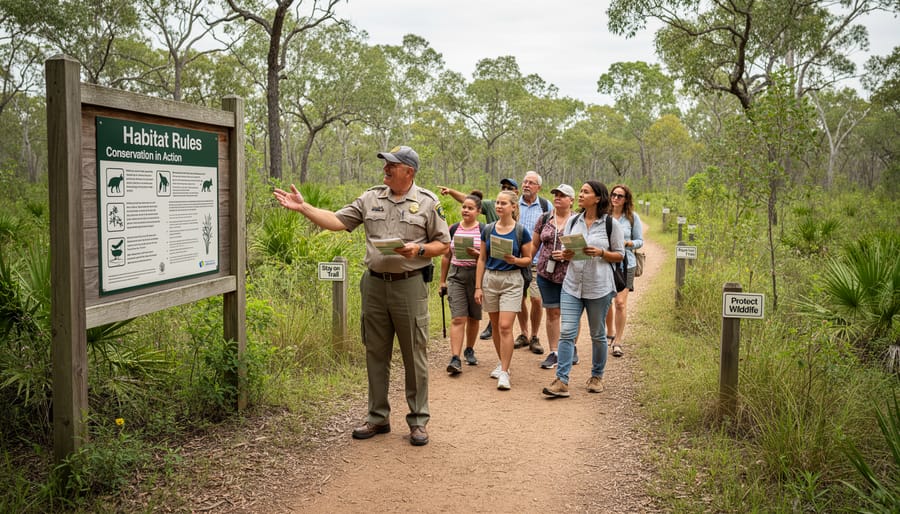
Greensburg’s visitor management infrastructure turns education into action through a layered system that meets tourists where they are. The community uses interpretive signage, trained guides, and certification standards to ensure visitors understand conservation while minimizing their footprint.
At trailheads and habitat access points, bilingual interpretive panels explain why certain areas have seasonal closures or restricted pathways. These aren’t generic “stay on trail” signs, they detail which species nest nearby, what human activity disrupts, and how boardwalks or viewing platforms protect fragile ecosystems. Similar educational approaches appear in Ontario’s specialized environments, from caves and karst formations to wetland corridors, adapting messaging to each habitat’s vulnerabilities.
The community’s naturalist guide program trains local residents in both ecology and visitor communication. These guides lead small-group wildlife viewing tours, explaining animal behavior and conservation challenges in real time. Certification requires ongoing education about habitat changes and species status, ensuring accuracy.
Greensburg’s operator certification program sets clear standards for tour companies and accommodations. To earn the eco-certified badge, businesses must demonstrate low-impact practices, contribute to habitat restoration funds, and employ trained staff who can educate guests. The certification isn’t a one-time achievement, operators undergo annual reviews and participate in community conservation meetings.
The town’s interpretive center serves as the educational hub. Interactive exhibits explain local ecosystems, the connection between tourism dollars and land protection, and what responsible wildlife viewing looks like. First-time visitors often start here, leaving with trail maps, species identification guides, and a clearer picture of how their choices affect conservation outcomes.
Types of Ecotourism Initiatives in Greensburg
Wildlife Habitat Access Programs
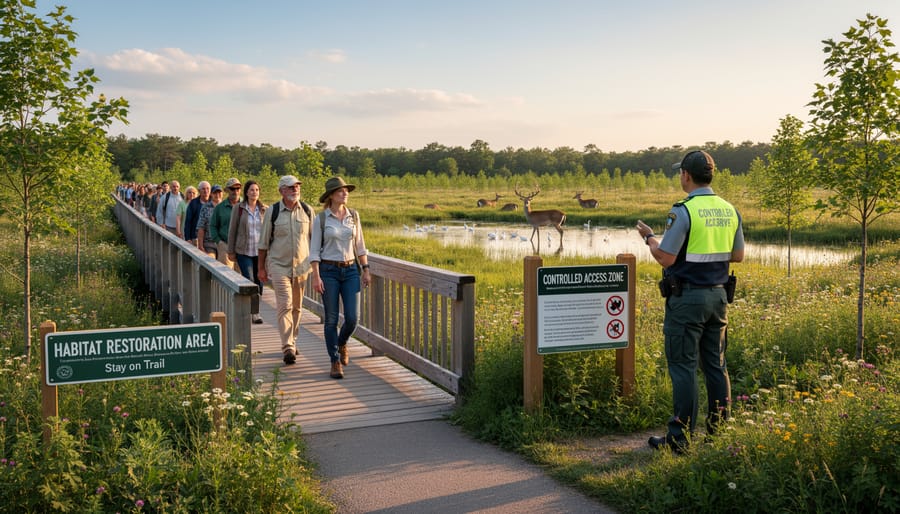
Greensburg balances visitor access with habitat protection through carefully designed access programs that let tourists experience wildlife areas without compromising ecological integrity. The community treats habitat access as a privilege that requires thoughtful infrastructure and clear boundaries.
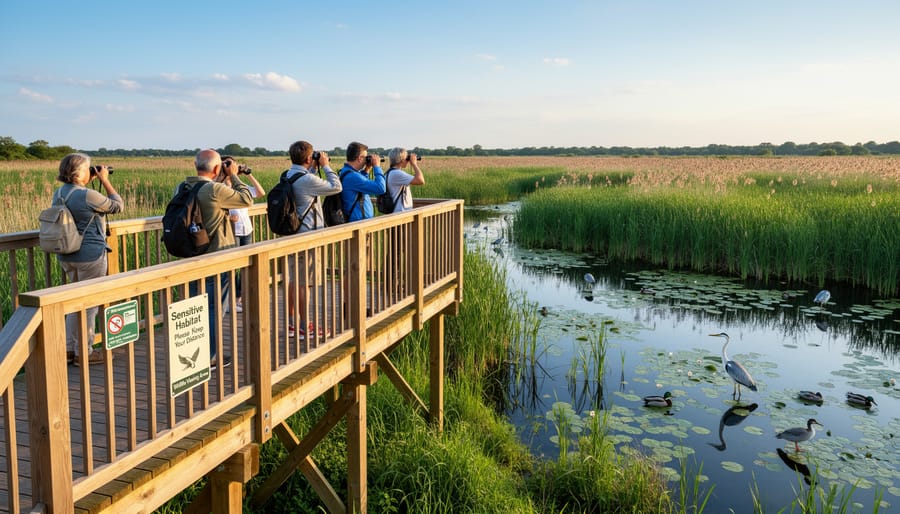
Designated viewing platforms form the backbone of the system. These structures position visitors at optimal observation points while keeping foot traffic off sensitive ground. At wetland sites frequented by migrating waterfowl, elevated boardwalks allow close encounters with nesting areas while preventing soil compaction and vegetation damage. Platforms include interpretive signage explaining what species to watch for and why the access controls matter.
Seasonal restrictions protect wildlife during critical periods. Certain trails close during spring nesting season or fall migration windows when human presence causes the most disruption. The community publishes an annual access calendar that highlights when different habitats open for viewing, turning the restrictions into educational opportunities rather than inconveniences.
Habitat restoration zones serve a dual purpose. Areas undergoing active restoration remain partially accessible through guided walks that show visitors the recovery process firsthand. These controlled visits demonstrate how degraded habitats bounce back while generating volunteer interest in ongoing restoration work.
The community monitors all access points for signs of overuse. When visitor numbers threaten habitat quality, capacity limits kick in through timed-entry permits or shuttle systems that concentrate impact in specific zones while leaving other areas undisturbed.
Conservation-Linked Accommodations and Services
Greensburg’s accommodation network operates on a direct-contribution model where lodging and service providers aren’t just marketing themselves as green, they’re actively funding conservation work. Local eco-certified lodges allocate a portion of room rates to habitat restoration projects, typically $5-10 per night, which has generated over $50,000 annually for wetland protection and trail maintenance. Several outfitters require guides to complete wildlife monitoring training, turning routine canoe trips into data-collection opportunities that inform species management decisions.
The system includes tiered certification reflecting conservation commitment levels. Bronze-certified operators meet baseline standards like waste reduction and energy efficiency. Silver-tier businesses contribute financially and participate in quarterly habitat stewardship days. Gold certification requires ongoing conservation partnerships, one local lodge employs a full-time conservation coordinator who works with researchers studying migratory bird patterns. For travelers seeking similar models elsewhere in the province, these affordable eco resorts demonstrate how accessible conservation-focused stays have become. Guests receive documentation showing exactly how their accommodation fees supported specific conservation outcomes, creating transparency that traditional tourism rarely offers.
Educational and Volunteer Tourism

Greensburg transforms passive sightseers into hands-on conservation participants through structured volunteer programs that contribute directly to local research and habitat health. The community partners with conservation authorities to offer citizen science initiatives where visitors help collect wildlife data, tracking bird migrations, recording amphibian calls, or documenting plant species in restored areas. These aren’t token activities; the data feeds into actual management decisions and long-term monitoring projects.
Weekend habitat restoration programs invite tourists to plant native species, remove invasive plants, or build wildlife structures like brush piles and nesting boxes. Local ecologists supervise the work, teaching participants about ecosystem function while accomplishing real conservation tasks. Some programs run seasonally, spring tree planting, fall seed collection, summer wetland surveys, allowing repeat visitors to see the cumulative impact of their efforts.
Several outfitters offer multi-day volunteer tourism packages combining accommodation with structured conservation work. You might spend mornings monitoring turtle nesting sites and afternoons learning tracking techniques from wildlife biologists. The model works because visitors gain meaningful experiences and insider knowledge while providing labor and funding that stretched conservation budgets couldn’t otherwise afford.
How Visitors Experience Greensburg’s Ecotourism in Practice
When you visit Greensburg, the ecotourism infrastructure shapes your trip from the moment you start planning. The community’s online visitor portal lets you search for certified operators who’ve met specific environmental standards, think waste reduction commitments, habitat protection protocols, and participation in local conservation funding. You’ll notice certified lodges display their contributions prominently: perhaps they’ve restored 50 meters of shoreline habitat or donated proceeds to support zoological conservation programs protecting at-risk species.
A typical day might begin with a guided wetland walk where your tour operator explains how your entrance fee directly funds the boardwalk maintenance and invasive species removal you’re witnessing. Your guide isn’t just pointing out birds, they’re sharing how visitor numbers help justify continued protection of this habitat against development pressure. Mid-morning, you stop at an interpretive kiosk that shows real-time wildlife camera footage and explains seasonal access restrictions, helping you understand why certain trails close during nesting season.
Lunch happens at a restaurant sourcing ingredients from farms practicing conservation tillage, and your server mentions they’re part of the local training program teaching hospitality workers about low-impact tourism. The connection between your meal and the landscape becomes tangible.
Afternoons offer hands-on options. You might join a citizen science project counting monarch butterflies, where a coordinator explains how tourist-collected data informs habitat management decisions. Or you participate in a two-hour wetland restoration session, planting native species alongside residents who treat this as regular weekend activity. These aren’t performative gestures, the work genuinely contributes to ongoing projects, and you receive follow-up emails months later showing how the area has recovered.
Your accommodation’s in-room materials explain the property’s greywater recycling system and provide a map of self-guided trails with notes on respectful wildlife viewing. There’s no preaching, just clear information about staying on marked paths and why flash photography disrupts nocturnal species.
Before leaving, you complete a brief survey that asks specific questions: Did you understand how your visit supported conservation? Which operators excelled at minimizing impact? The feedback directly influences which businesses maintain certification and where the community invests next year’s ecotourism infrastructure dollars. You leave knowing your spending created measurable environmental benefit, not just economic activity.
Wildlife Conservation Benefits and Community Outcomes
Greensburg’s ecotourism framework delivers measurable wins for both wildlife and residents. Over the past decade, the community has channeled roughly $2.3 million in tourism-generated revenue directly into habitat conservation projects, funding that restored 180 hectares of wetland corridors and protected critical nesting sites for species like the Blanding’s turtle and Eastern meadowlark. These aren’t abstract conservation goals. Local monitoring shows turtle nest survival rates jumped from 32% to 68% in protected zones where ecotourism fees fund predator exclusion fencing and habitat patrols.
The model also tackled human-wildlife conflict head-on. Before structured ecotourism programs existed, deer-vehicle collisions near popular nature areas averaged 47 incidents annually. After implementing wildlife crossing structures funded partly by visitor fees and adding interpretive signage that educated tourists about animal movement patterns, collisions dropped to 19 per year. Residents noticed fewer raccoons raiding garbage bins near trailheads once the community installed bear-proof containers paid for through ecotourism infrastructure budgets.
Community benefits extend well beyond environmental metrics. Greensburg’s eco-certified operators now employ 340 people year-round, up from just 85 seasonal positions a decade ago. That shift matters in a town of 8,500, it means stable jobs with benefits rather than summer-only gigs. Local suppliers benefit too: eco-lodges source 78% of their food from farms within 50 kilometers, and outfitters contract maintenance and guiding work to residents trained in conservation practices.
The educational ripple effect runs deep. Schools partner with ecotourism operators to offer hands-on conservation curriculum, kids assist with wetland plantings and water quality testing alongside visiting tourists. That early exposure shapes attitudes. A 2024 survey found 83% of Greensburg high schoolers could identify five native species and explain their ecological roles, compared to the provincial average of 41%.
These outcomes mirror patterns across Ontario’s ecotourism hotspots, where well-structured visitor programs consistently generate conservation funding that government budgets alone can’t match. Greensburg’s success proves the formula works at community scale: protect habitat, create visitor access that doesn’t degrade ecosystems, and reinvest revenue locally. The result is healthier wildlife populations, stronger community economies, and residents who view conservation as essential infrastructure rather than a nice-to-have.
Common Questions About Greensburg’s Ecotourism Approach
Visitors and prospective ecotourism operators often have practical questions about how Greensburg’s model differs from typical tourism destinations and how to participate effectively.
What makes Greensburg’s approach different from conventional tourism?
Greensburg integrates conservation goals directly into tourism planning through mandatory certification programs, habitat access fees that fund restoration work, and partnership structures that give conservation authorities a voice in operator licensing. Conventional tourism typically treats environmental concerns as optional add-ons rather than foundational requirements.
Do ecotourism activities cost more than standard tours?
Certified ecotourism experiences in Greensburg generally carry a 15-25% premium compared to conventional outdoor recreation, reflecting smaller group sizes, specialized guiding, and conservation contributions. However, many visitors find the value higher because fees directly support habitat protection and you’re guaranteed low-impact access to sensitive areas.
How can I verify an operator is genuinely eco-friendly?
Look for Greensburg’s official Eco-Operator certification seal, which requires annual audits covering waste management, group size limits, and documented conservation contributions. You can cross-reference certified businesses on the community tourism website or ask operators for their certification number and renewal date.
Can families with young children participate in these programs?
Absolutely. Greensburg offers family-friendly options including interpretive center activities designed for ages 5+, accessible boardwalk trails suitable for strollers, and half-day programs with shorter attention spans in mind. Some volunteer restoration activities welcome families, though wildlife monitoring programs typically require participants to be at least 12 years old.
Another common question concerns wildlife expectations. Greensburg doesn’t guarantee sightings because ethical ecotourism respects animal behavior and seasonal patterns rather than staging encounters. Spring and fall migration periods offer the highest probability of observing diverse species, while summer focuses more on habitat education and nesting bird protocols that limit close approaches.
The community measures success through both ecological and social metrics. Annual reports track habitat quality indicators, species population trends in tourism zones, and the percentage of visitor fees allocated to conservation projects. They also survey residents quarterly about tourism impacts and monitor whether local employment in the ecotourism sector meets livability wage standards. This dual accountability keeps the program honest about balancing conservation outcomes with community well-being.
Greensburg’s approach proves that supporting ecotourism doesn’t require choosing between conservation and community prosperity, it’s about building systems where both thrive together. The partnerships, certification programs, and visitor management strategies working here aren’t theoretical ideals. They’re practical frameworks that protect sensitive habitats while creating meaningful experiences and local economic benefits. When tourists contribute fees that fund habitat restoration, when lodges employ residents trained in wildlife stewardship, when viewing platforms keep people engaged without disturbing nesting sites, that’s the conservation-tourism synergy in action.
What makes Greensburg’s model valuable beyond its borders is its scalability. The stakeholder collaboration methods, the educational tourism programs, the eco-certification networks, these aren’t dependent on unique geography or extraordinary resources. They’re replicable approaches other Ontario communities can adapt to their own conservation priorities and visitor capacities.
If you’re planning a trip, consider Greensburg not just as a destination but as a template for responsible travel. Choose certified operators. Participate in volunteer programs. Ask questions about how your visit supports local conservation. The experience you’ll gain goes deeper than standard tourism, you become part of a functioning conservation ecosystem rather than just an observer passing through.
Ontario’s wildlife and wild spaces need this kind of engaged, conservation-minded tourism. Greensburg shows it works. Now it’s on travelers to make it the standard they demand everywhere.









+ There are no comments
Add yours