
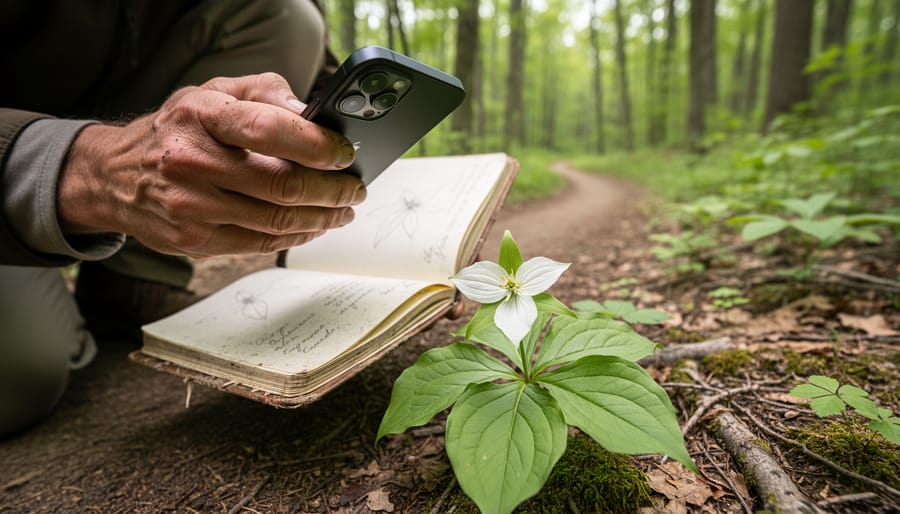
Learning to identify plants doesn’t require years of botanical study or memorizing thousands of Latin names. The Patterns Method, introduced in Thomas Elpel’s “Botany in a Day,” teaches you to recognize plant families by spotting consistent patterns in flower structure, leaf arrangement, and growth habits. Master just seven major plant families and their telltale characteristics, and you’ll be able to identify roughly 45,000 species across North America, often within minutes of spotting them on the trail.
This approach transforms what traditional field guides make frustratingly complex into something intuitive and surprisingly fast. Instead of flipping through hundreds of individual species descriptions, you learn to see the family resemblance first, the same way you’d recognize someone’s siblings by shared features. A five-petaled flower with stamens fused into a central column? That’s the Mallow family. Parallel leaf veins and flower parts in threes? You’re looking at a Monocot.
For anyone exploring Ontario’s diverse ecosystems, from the Carolinian forests of the south to the boreal landscapes up north, this method opens up a new dimension of outdoor adventure. You’ll move beyond simply enjoying the scenery to actually understanding the living community around you. The best part? You can start using these skills on your very next hike, turning familiar trails into interactive learning experiences where every plant becomes a puzzle you have the tools to solve. No PhD required, just curiosity and a willingness to look closely at the flowers, leaves, and stems you’ve been walking past for years.
What You’ll Need: Essential Tools for Pattern-Based Plant ID
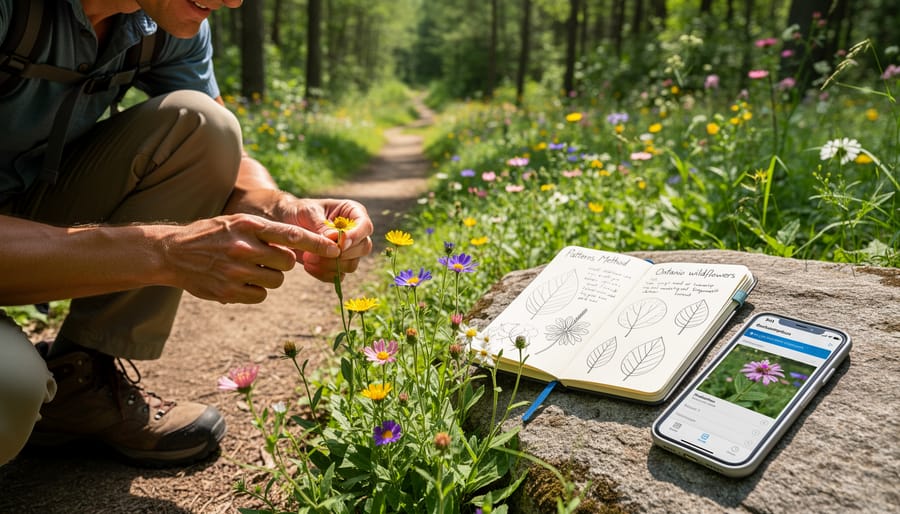
Good news: you don’t need a backpack full of expensive equipment to start identifying plants in Ontario’s parks. The Patterns Method thrives on simplicity, which means you can begin your botanical adventures with just a few lightweight essentials.
Here’s what to bring along on your next trail outing:
- Botany in a Day by Thomas J. Elpel (or summary notes of the key patterns if you prefer to travel light)
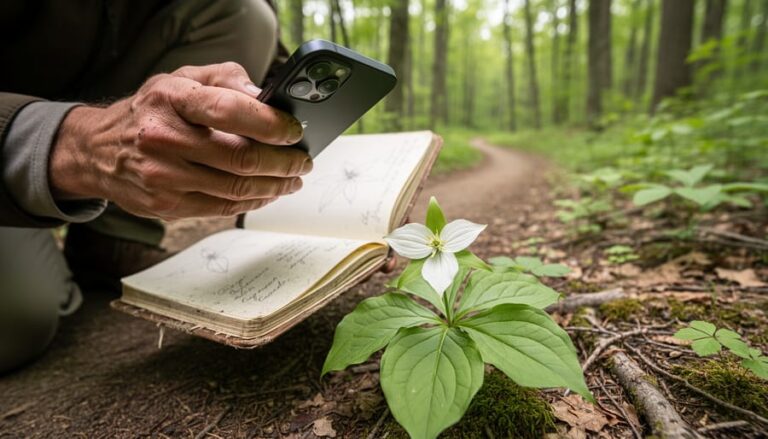
- Smartphone with a decent camera for photographing plants in situ
- Small field journal or waterproof notebook for sketching and recording observations
- Hand lens or jeweler’s loupe, 10x magnification (optional but helpful for examining tiny flower parts)
- Pencil or waterproof pen that won’t smudge in Ontario’s unpredictable weather
- Zip-lock bags for temporary specimen viewing (return plants to their spots afterward)
That’s really it. The beauty of pattern-based identification is that you’re training your eye to recognize family characteristics, not collecting specimens or running lab tests.
A few eco-friendly considerations for Ontario’s parks: swap disposable notebooks for a reusable journal you’ll keep for years. Instead of picking plants, photograph them from multiple angles and make quick sketches of distinguishing features. This preserves the park’s biodiversity and keeps you compliant with Ontario Parks regulations, which prohibit removing vegetation.
Seasonal tip: spring and summer are ideal for learning since most plants flower between May and August. Pack layers regardless of the forecast because Ontario weather shifts quickly, especially in northern parks. A light rain jacket protects both you and your field journal during those surprise afternoon showers that seem to time themselves perfectly with your botanical discoveries.
Stay Safe and Respectful: Important Precautions
Before you kneel down to examine that interesting wildflower, let’s talk safety. Plant identification in Ontario parks is wonderfully rewarding, but it requires some common-sense precautions that’ll keep both you and the park’s ecosystems thriving.
First and most critical: never taste, chew, or ingest any plant you haven’t identified with absolute certainty. Ontario’s woodlands and wetlands harbor several poisonous look-alikes that can cause serious harm. Water hemlock, which grows in wet areas across the province, is among the most toxic plants in North America. Wild parsnip, increasingly common along Ontario trails, causes severe skin burns when its sap contacts skin in sunlight.
Respect park regulations about collecting specimens. Most Ontario parks prohibit removing plants, and for good reason. Instead, take detailed photos from multiple angles and submit observations to iNaturalist to contribute valuable data while practicing leave no trace principles. Your smartphone is your specimen collection tool.
Stay on designated trails to protect fragile plant communities and reduce tick exposure. Deer ticks carrying Lyme disease are active in Ontario’s wooded areas from spring through fall. Wear long pants tucked into socks, use insect repellent, and check yourself thoroughly after botanizing sessions.
Here’s an insider tip: if you spot something unusual or rare, report it to park naturalists at the visitor center. They genuinely appreciate these sightings and can help confirm identifications. Many parks keep species inventories, and your observation might contribute to conservation efforts. Think of it as combining basic wilderness safety with citizen science, you’re not just learning botany, you’re helping protect Ontario’s botanical heritage.
The Five Core Patterns: Understanding Plant Family Signatures
Flower Patterns: The Fastest Family Clues
Flowers are the botanical world’s nametags, broadcasting family identity with every petal and stamen. Once you start noticing their patterns, you’ll spot relatives everywhere on Ontario trails.
Start with petal count. Five petals often signal the Rose family, and you’ll find members everywhere from wild strawberries carpeting forest floors to hawthorns lining meadow edges. Count those petals, then look at the center: dozens of stamens create a fuzzy yellow cluster that’s unmistakable once you’ve seen it. I remember the moment this clicked for me on a Frontenac trail, suddenly recognizing cinquefoil, wild roses, and even blackberry flowers as cousins.
Symmetry tells another story. Most flowers have radial symmetry, like daisies you can slice evenly any direction. But the Mint family breaks this rule with bilateral symmetry: their two-lipped flowers look like tiny snapdragons. Bergamot and wild mint bloom along Ontario wetlands in summer, and you can’t mistake those tubular flowers with an upper and lower lip. Bonus clue: roll the stem between your fingers. Square? Definitely Mint family.
Flower arrangement matters too. The Carrot family presents flat-topped umbrella clusters called umbels, while the Aster family packs tiny flowers into what looks like a single bloom. That daisy? Actually dozens of flowers working together.
These patterns repeat across hundreds of species, turning every blooming trail into a treasure hunt.
Leaf Arrangements and Shapes
When flowers are absent or past their prime, leaves become your most reliable identification tool on Ontario trails. The beauty of the Patterns Method is that leaf arrangements follow predictable family patterns you can spot from a few feet away.
Start with the basics: are the leaves opposite each other on the stem, or alternate? Opposite leaves (two leaves emerging at the same point, facing each other) appear in relatively few families, making them powerful eliminators. The Mint family always shows opposite leaves paired with square stems, think of wild bergamot along Frontenac’s woodland edges. Maples also grow opposite leaves, which is why recognizing this pattern instantly narrows your options.
Alternate leaves (staggered along the stem) are far more common. The Rose family, Oak family, and most wildflowers follow this arrangement. Once you notice this on a plant along the Rideau Trail, you’ve already ruled out several families.
Next, observe whether leaves are simple (one blade per leaf stalk) or compound (multiple leaflets per stalk). Compound leaves signal specific families. Spot three leaflets? You might be looking at members of the Pea family, like wild lupine in sandy areas. Five to seven leaflets arranged like fingers? That’s often the Rose family, wild roses throughout Ontario parks display this perfectly.
Leaf shape adds another layer. Toothed edges, smooth margins, lobed patterns, each characteristic points toward particular families. After a few hikes, you’ll recognize these patterns instantly, transforming every plant encounter into a quick puzzle you can solve.
Other Diagnostic Features
Beyond flowers and leaves, a few extra clues seal the deal on plant identification. Squeeze a stem gently, square stems with a minty scent instantly flag the Mint family, while hollow, grooved stems might warn you away from the carrot family’s toxic members like water hemlock. Bark texture matters too: peeling papery layers signal birches, while thorny stems often point to roses or brambles.
Fruits tell stories long after flowers fade. Clusters of red drupes? Think sumacs. Papery winged seeds spinning down? That’s a maple. Fuzzy burrs clinging to your socks reveal members of the Aster family hitching a ride. Even growth habit counts, does the plant sprawl as ground cover, climb like a vine, or stand upright? These patterns, combined with your flower and leaf observations, build a complete picture. Just as with trail wildlife spotting the more features you notice, the more confident your identification becomes. Soon you’ll recognize plant families by their overall “personality” before you even crouch down for a closer look.
Step-by-Step: Your First Pattern-Based Identification
Step 1: Observe the Whole Plant First
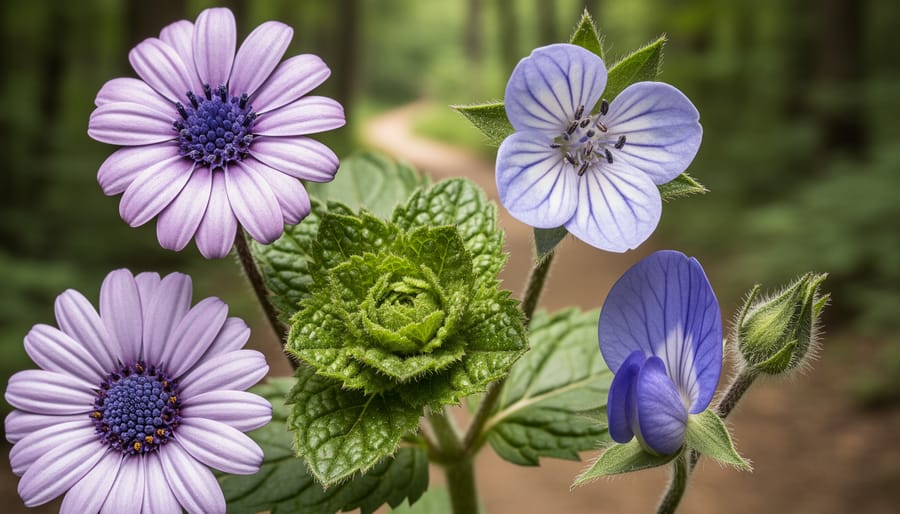
Before you rush to examine petals or count stamens, step back and take in the plant’s entire presence. Notice its height, is it hugging the forest floor or reaching for the canopy? Observe whether it grows as a single stem, a sprawling cluster, or a woody shrub. Look at where it’s thriving: shaded woodland understory, sunny meadow edge, or wetland margin. These environmental clues matter because plant families often favor specific habitats. A low-growing rosette in Frontenac Provincial Park’s rocky areas tells a different story than a tall, branching specimen in a moist creek valley. This initial impression creates your mental framework before diving into finer details. You’re building context, not just collecting data points. The plant’s overall architecture and chosen home often eliminate entire families from consideration, making your identification work far more efficient than if you’d started with a magnifying glass and a single leaf.
Step 2: Examine the Flowers (If Present)
When you spot flowers, you’ve hit the botanical jackpot. Start by counting petals, not as obsessive as it sounds, I promise. Are there three? Four? Five? Many? This simple number instantly narrows your options. Rose family plants consistently show five petals, while lilies and trilliums (common in spring at Algonquin) display three or multiples of three.
Next, check symmetry. Can you draw a line straight down the middle and get mirror images (like violets and mints)? That’s bilateral symmetry. Or does the flower look the same from any angle, like a daisy? That’s radial symmetry. Bilateral flowers often belong to pea or mint families, while radial patterns suggest roses, buttercups, or asters.
Notice petal fusion too. Are petals separate or joined into tubes? Fused petals point toward families like morning glories or phlox. These three observations, count, symmetry, fusion, unlock family identity faster than any complex key.
Step 3: Check Leaves and Stems
Once you’ve narrowed down the family using flower clues, leaves and stems seal the deal. Check whether leaves attach opposite each other or alternate along the stem, this single feature eliminates entire families from consideration. The Mint family, for instance, pairs opposite leaves with signature square stems you can actually feel when you roll them between your fingers. Run your hand gently along a stem during your next hike through Charleston Lake Provincial Park and you’ll recognize that tactile signature instantly.
Look at leaf edges too: smooth, toothed, or deeply lobed? Simple leaves versus compound leaves that split into multiple leaflets? These details confirm what the flowers suggested. If your plant has opposite compound leaves, you’re likely looking at the Maple family or perhaps an ash tree. Cross-referencing these characteristics against your flower observations builds confidence fast, turning tentative guesses into solid identifications you can trust.
Step 4: Narrow to Genus and Species
Once you’ve identified the plant family, it’s time to pinpoint the exact species. Pull out your field guide or open a plant ID app like iNaturalist and flip to the section for that family. Look for plants that match your specimen’s specific features: leaf shape, flower color, overall size. Pay close attention to habitat descriptions, does the guide mention wetlands, rocky outcrops, or deciduous forests? Cross-reference this with where you’re standing in the park.
Ontario-specific field guides are invaluable here because they only include plants within our range, dramatically narrowing your options. A plant might look identical to something in California, but if it doesn’t grow in Ontario, you can eliminate it immediately. Check the species’ bloom time too, finding yellow flowers in May versus August can distinguish between two similar-looking plants.
If multiple species seem possible, take detailed photos from several angles and note the exact location. You can review these later or share them with naturalists at park visitor centers who know the local flora intimately.
Step 5: Document Your Find
Once you’ve confidently identified your plant, capture the moment before moving on. Snap photos of the flower from multiple angles, getting close-ups of petals and stamens, then step back for a full plant shot showing leaves and growth habit. Photograph the stem and leaf attachment too, you’ll thank yourself later when reviewing discoveries at home.
In your field journal, jot down the plant name, family, location (which trail marker or park area), and date. Note anything memorable: “Found near the creek crossing, blooming with trilliums” brings the experience alive months later. Record the habitat (sunny meadow, shaded forest floor, wetland edge) since many plants stick to preferred environments.
This documentation builds your personal botanical reference library. Over time, you’ll notice seasonal patterns, when certain families bloom in your favorite parks, and revisit special spots year after year, greeting old plant friends like familiar trail companions.
Verify Your Identification and Build Confidence
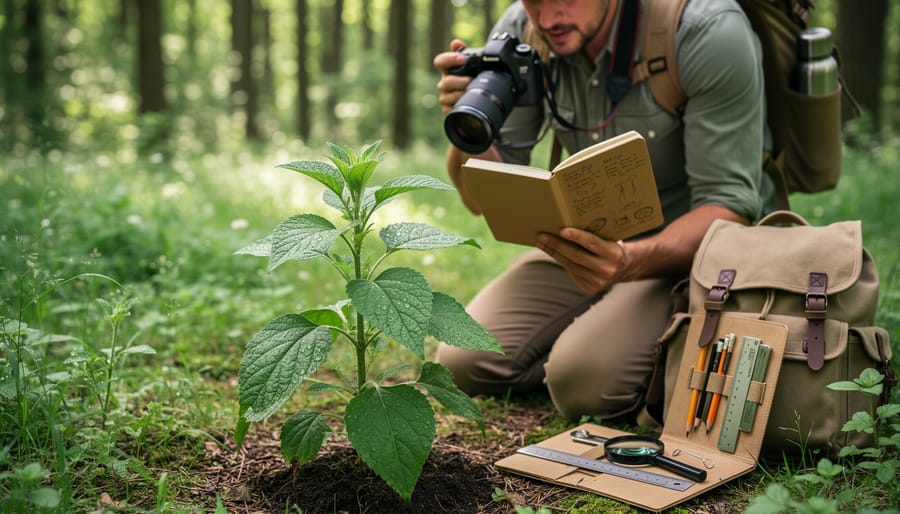
Getting an identification that feels right is exciting, but confirming it properly builds the confidence you need to trust your skills long-term. Think of verification like getting a second opinion: it catches mistakes early and reinforces correct pattern recognition.
Start by cross-checking your findings in multiple field guides. If your flower observations led you to the Mint family and you tentatively identified wild bergamot, verify that the descriptions match across at least two sources. Regional guides specific to Ontario flora often include habitat notes and bloom times that help confirm you’re on the right track.
Smartphone apps transform verification from guesswork into interactive learning. iNaturalist lets you upload photos and receive identification suggestions from a global community of botanists and naturalists. The real power comes when experts review your observations and confirm or correct them, creating a feedback loop that sharpens your pattern recognition. PlantNet focuses specifically on visual matching and works surprisingly well even with partial plant photos. Both apps contribute your verified observations to scientific databases, turning your nature walks into meaningful citizen science.
Ontario Parks runs seasonal naturalist programs that are gold for building identification skills. Many parks offer guided botanical walks during peak wildflower season (late April through June) where staff naturalists can verify your identifications on the spot. These programs fill quickly, so check park schedules in early spring and book ahead. At larger parks like Algonquin, naturalist stations provide drop-in help during summer months.
Don’t hesitate to photograph mystery plants and email images to park offices. Most naturalists genuinely enjoy helping visitors learn and will respond with identification tips. Keep a running list of your confirmed identifications. Watching it grow transforms abstract learning into tangible progress you can celebrate.
Next Steps: Turning Every Hike into a Botanical Adventure
Now that you’ve got the Patterns Method basics down, turn your regular hikes into botanical treasure hunts. Start with the Big Four families that dominate Ontario trails: Rose, Mint, Aster, and Mustard. These show up everywhere from Algonquin’s backcountry to your local conservation area, and once you recognize them, you’ll spot relatives at every turn.
Time your outings to match what’s showing off. In April and May, chase spring ephemerals like trilliums and trout lilies before the canopy closes. Summer transforms meadows into identification workshops with daisies, clovers, and wild bergamot in full bloom. Come fall, shift your focus to fruits and seed heads, perfect for pattern practice when flowers have faded.
Here’s where it gets exciting: Ontario Parks runs biodiversity monitoring programs that welcome trained volunteers. You’ll contribute real scientific data while sharpening your skills alongside naturalists. Programs like the Ontario Reptile and Amphibian Atlas accept observations from citizen scientists who’ve demonstrated plant knowledge.
I’ve watched this method transform my own trail experiences. What used to be “just trees and weeds” became a cast of characters I recognized mile after mile. That woodsy smell? Wild bergamot from the Mint family. Those cheerful yellow clusters? Probably Black-eyed Susans from the Aster gang. Every walk becomes a reunion with old friends and an introduction to new ones, turning familiar paths into endless learning opportunities that never get old.
The next time you lace up your hiking boots for an Ontario park adventure, you’re not just heading out for a walk, you’re about to unlock a whole new dimension of the landscape around you. The Patterns Method has opened the door to botanical literacy without requiring years of study or intimidating Latin memorization. You’ve learned that plant families reveal themselves through simple visual signatures that become second nature with practice.
Start small on your next outing. Pick just one or two families to focus on, maybe the Mint family with those telltale square stems, or the unmistakable Rose family with its five-petaled flowers. Before long, you’ll find yourself automatically noticing these patterns everywhere. That moment when you correctly identify a plant family before even checking your field guide? It’s genuinely thrilling.
Ontario’s parks are waiting with hundreds of botanical stories to tell. Each trail becomes an interactive classroom where every plant is both teacher and puzzle. Grab your copy of ‘Botany in a Day,’ choose a nearby park, and get started this weekend. Soon you’ll be greeting familiar plant families like old friends on every trail, and that connection transforms every outdoor adventure into something richer and more meaningful.
Common Questions About Pattern-Based Plant ID
Do I need a biology background to use the Patterns Method?
Not at all. The beauty of this approach is that it teaches you to see what’s actually there, like noticing whether someone has curly or straight hair. If you can count petals and spot whether leaves grow opposite each other or alternate along a stem, you’ve got everything you need to start.
What’s the best season for learning plant identification in Ontario?
Late spring through early summer is ideal because most wildflowers are blooming, giving you those crucial flower patterns to work with. That said, fall offers fantastic opportunities too, since you can identify plants by their fruits and seed heads, and the cooler weather means fewer bugs while you’re studying specimens.
How long does it take to actually learn this method?
Most people recognize their first few plant families within a single afternoon hike. You’ll probably nail down 5-10 common families after a few outings, and within a season of regular practice, you’ll find yourself automatically spotting family traits as you walk past plants on any trail.
What do I do if the plant I’m looking at doesn’t have flowers?
Focus on leaf patterns, stem characteristics, and overall growth habit instead. Many families have distinctive leaf arrangements that work just as well, think of how Maple family leaves are always opposite and palmate, or how most members of the Mint family have square stems you can feel between your fingers even without flowers present.
The Patterns Method adapts beautifully whether you’re examining a towering oak or a tiny spring wildflower at your feet. Trees require a bit more attention to bark texture, branching patterns, and leaf shape since you won’t always catch them in bloom, but the same family-recognition principles apply. Start with leaves and twigs, then use fruits or seeds as backup confirmation.
One thing I’ve learned on Ontario trails is that “flowerless” times actually force you to become a better observer. When you can’t rely on showy blooms, you notice subtler details, the way compound leaves are arranged, the distinctive smell when you crush a leaf, or how certain plants always seem to grow in specific habitats. These observations stick with you and make identification faster when flowers do appear.
Keep your field journal handy year-round. Sketching a plant’s winter silhouette or photographing its dried seed pods builds a complete mental picture of each family across all seasons, turning you into the kind of naturalist who can name plants at a glance regardless of when you encounter them.








+ There are no comments
Add yours