
You can bypass Ontario Parks’ “no availability” wall and book scattered open nights at sold-out campgrounds by manually checking individual dates instead of relying on the system’s default multi-night search. The technique works because the reservation platform only shows fully available date ranges. When you search for a week-long stay and get a “no availability” message, there may actually be open sites on Tuesday, Thursday, and Saturday, but the system won’t show them since no single site is free for all seven consecutive nights.
Here’s the reality: this strategy takes patience and involves some hassle. You’ll need to book each available night as a separate reservation, pack up your gear between stays, and sometimes move to different campsites within the same campground. On busy weekends at popular parks like Algonquin or Kilbear, you might spend 20 minutes clicking through calendars only to discover genuine full bookings.
But for determined campers who’ve watched their favorite sites disappear within minutes of the booking window opening, partial availability often delivers. I’ve used this method to piece together four nights at a supposedly booked-solid campground during peak fall colors, moving campsites twice but still waking up to that incredible Georgian Bay sunrise.
The approach works best for flexible campers willing to treat site-hopping as part of the adventure rather than an annoying chore. Solo travelers and couples with minimal gear find it easiest. Families with young kids, large RVs, or those seeking a relaxing getaway may find the constant packing frustrating.
What You’ll Need to Search for Partial Availability
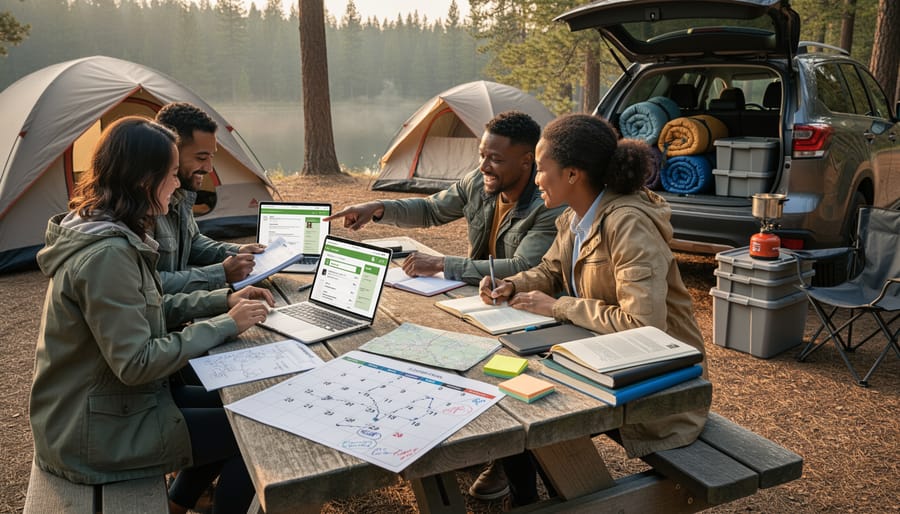
Before you start hunting for those elusive partial-availability campsites, gather the right tools and set realistic expectations. This isn’t complicated, but you’ll save yourself frustration by having everything ready before you begin clicking through Ontario Parks’ reservation system.
Here’s what you need before starting your search:
- An active Ontario Parks reservation account with verified email and payment method
- A flexible date range of at least 3-5 days (the wider, the better)
- A list of 2-4 backup parks you’d be happy visiting
- A calendar or planning tool to track available date combinations
- Patience and 30-60 minutes of uninterrupted time
The technical side is straightforward. Ontario Parks’ booking system works best on desktop browsers, particularly Chrome and Safari. The mobile app functions for searching, but the desktop version displays the availability calendar more clearly when you’re trying to spot patterns across multiple dates. Make sure you’re on a stable internet connection since the system can time out if you’re piecing together reservations.
The Multi-Park Availability Search feature is your secret weapon here. Instead of checking Algonquin, then Killarney, then Bon Echo individually, this tool scans multiple parks simultaneously for your date range. You’ll select your desired parks from a list, enter your flexible dates, and the system shows you which parks have any availability during that window, even if it’s scattered across different nights.
Your backup park list matters more than you might think. Popular destinations like Sandbanks or Presqu’ile fill up months ahead, but lesser-known gems often have partial availability when the famous parks don’t. Being flexible about location dramatically increases your chances of success.
Important Limitations and Warnings
Before you dive into partial availability bookings, understand that this strategy comes with real complications that can turn your camping trip into a logistical headache. Ontario Parks has strict rules that make piecing together reservations more challenging than simply finding open dates on a calendar.
Most Ontario Parks enforce minimum night requirements, typically two to three nights depending on the season and park popularity. You can’t book a single night and expect to fill in the gaps, each reservation segment must meet these minimums. This means partial availability only works when you can find chunks of at least two consecutive nights that align properly.
The system won’t automatically hold your original site for you. If Site 42 has Thursday through Saturday open, but Sunday through Tuesday are available on Site 67, you’re making two separate reservations for two different locations. Some parks allow same-site extensions if you call the office, but don’t count on it during peak season when every site is in demand.
Double-booking yourself is surprisingly easy when you’re juggling multiple searches and reservation windows. The system doesn’t prevent you from booking overlapping dates, and sorting out those mistakes means dealing with Ontario Parks reservation penalties and potentially losing your deposit. Keep detailed notes of what you’ve booked and when.
Cancellation policies become critical with partial bookings. Ontario Parks typically offers no refunds within a certain window of your arrival date, and there are limits on changing or cancelling reservations. If weather forces you to abandon one segment of a multi-part booking, you’re still paying for those nights.
This approach isn’t for everyone. Families with young children will find the mid-trip pack-up exhausting. First-time campers should focus on mastering the basics before adding site-transfer logistics. Large groups with multiple tents, canopies, and communal setups will spend hours breaking down and rebuilding camp. If you’re bringing a travel trailer or large RV, moving sites might mean re-leveling and unhooking utilities twice in one week. Sometimes paying slightly more for a less-popular park with full availability is the smarter choice.
Step-by-Step: Finding and Booking Partial Availability
Using Flexible Date Options Effectively
The flexible date feature transforms failed searches into booking opportunities by revealing what rigid date searches hide. When you shift your arrival date by just one or two days, sites that appeared completely booked suddenly show partial availability because most campers search for exact Friday-to-Monday windows.
Start your search with a three-day flexibility window rather than fixed dates. If you want to camp Wednesday through Sunday, search Tuesday through Monday instead. This wider net catches sites that have Thursday-to-Saturday availability or Sunday-to-Tuesday openings that you can piece together.
Mid-week arrivals give you a massive advantage. Most Ontario Parks reservations cluster around Friday and Saturday check-ins, which means Tuesday through Thursday arrivals often reveal 3-4 consecutive nights of availability that weekend searchers never see. You’ll find partial availability patterns like Wednesday-to-Saturday or Thursday-to-Monday that perfectly accommodate a long weekend if you’re flexible about your start day.
Shoulder season timing, late May, early June, and September, offers the sweet spot for partial availability success. Parks show scattered bookings rather than solid blocks, making it easier to connect multiple reservations. You’re also snagging sites that families with school-age children can’t access, so competition drops significantly.
The trick is accepting that your perfect dates might need to shift 24-48 hours either direction to unlock those hidden opportunities.
Reading the Availability Calendar
Ontario Parks’ availability calendar uses a simple color system: green means available, grey indicates unavailable, and white shows dates outside your search range. The trick is learning to read the pattern of green and grey squares instead of just looking for solid green.
When you search for a five-night stay and see “no availability,” don’t give up. Click on individual campsites to view their detailed calendars. You’re looking for sites that show green-grey-green patterns, maybe three green squares at the start of your range, a grey gap in the middle, then two more greens at the end.
I’ve found that the most bookable partial availability happens when Friday or Saturday nights are the only grey squares. Those peak nights get reserved fast, but the surrounding weekdays often stay open. If you spot a site with Tuesday through Thursday available, then Monday through Wednesday the following week also green, you’ve found your piecing-together opportunity.
Pay special attention to checkout days (typically Sundays and Fridays at Ontario Parks). Sites often show availability starting the day after checkout, which means you can book consecutive reservations with different confirmation numbers but no actual gap in your stay.
Verifying Your Reservations and Planning the Site Transfer
Once you’ve secured multiple reservations, the real work begins: making sure everything lines up correctly and planning your mid-stay logistics. Start by checking your confirmation emails the moment they arrive. Verify that the dates run consecutively or that any gap is intentional (you might be camping elsewhere or taking a break at home). Confirm each booking is for the same park, it’s surprisingly easy to accidentally book a second night at a different park when using Multi-Park Availability Search. Note your site numbers for each segment. If you’re lucky, you might have booked the same site for both periods, but more often you’ll have different sites.
Add each reservation to your phone calendar or camping planner with clear labels: “Algonquin Site 47 (Jul 10-12)” and “Algonquin Site 82 (Jul 12-15).” Set a reminder for the morning of your transfer day so you’re not caught off guard packing up. If there’s a gap between reservations, you have three options: book another park for those nights, go home and return, or monitor for cancellations that might fill the gap.
Contact the park office a few days before arrival. Explain your situation and ask if there’s any chance of staying in the same site for both periods (sometimes cancellations create this opportunity). Even if they can’t help, staff will note your transfer day and might offer advice on quieter times to move your gear. Some parks may require a vehicle moving permit if you’re relocating mid-day, so clarify this beforehand.
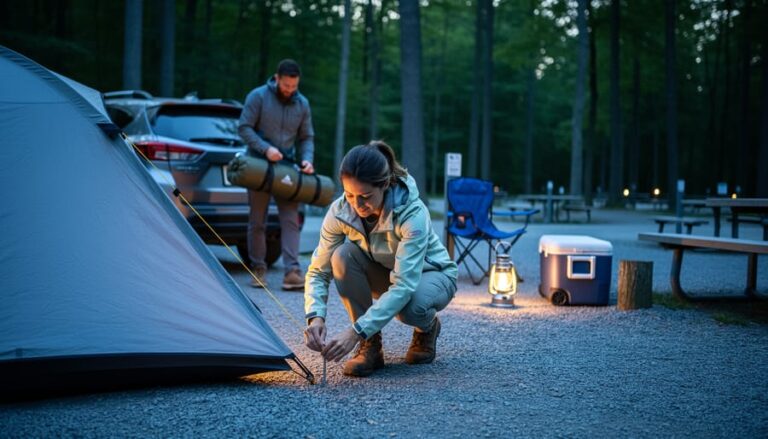
Pack strategically for the transfer. Keep your first night’s gear separate and easily accessible. Use clearly labeled bins or bags so you can quickly identify what needs to move versus what can stay packed. When breaking down your first site, minimize your impact: restore fire pits, remove all traces of your stay, and leave the site cleaner than you found it. The same goes for your second setup, multiple moves mean multiple opportunities to demonstrate good stewardship.
For the actual move, plan to relocate during mid-morning after checkout time but before the afternoon rush. This gives you breathing room and reduces stress. If your new site is nearby, consider hand-carrying smaller items rather than driving back and forth repeatedly, which reduces vehicle emissions and wear on park roads.
Alternative Strategies When Partial Availability Won’t Work
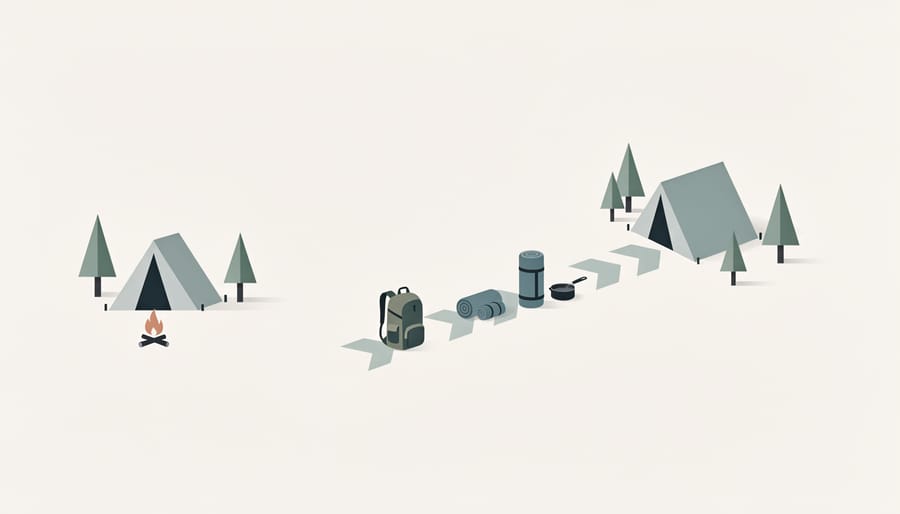
Sometimes the stars just won’t align for partial availability. Maybe the gaps between open nights are too wide, or you’d need to switch sites three times in four days. When piecing together reservations becomes more hassle than it’s worth, you’ve got solid backup moves.
Fire up the Multi-Park Availability Search and expand your horizons. Instead of fixating on one park, search five or six in the same region for your full date range. You’ll often discover that while Algonquin’s booked solid, nearby Killarney or Grundy Lake has continuous availability for your exact dates. Parks an hour apart can have wildly different booking patterns.
Shorten or shift your trip by a day or two. Sometimes sliding your dates forward by 48 hours opens up completely different availability. A Wednesday-to-Sunday trip might be impossible, but Thursday-to-Monday could be wide open at the same park.
Set up a cancellation watch if you’re committed to specific dates. Check the system daily around 8 PM when people often drop reservations to avoid fees. Download the Ontario Parks app so you can grab cancellations the instant they appear. I’ve scored July long weekend spots this way more than once.
Consider walk-in sites or backcountry permits as escape hatches. Many parks hold back sites for day-of arrivals, and backcountry camping rarely fills up the same way car camping does. You’ll need different gear, but you’ll actually get your trip in instead of staying home frustrated.
Common Questions About Partial Availability Bookings
Can I request to stay in the same site for both reservations?
Unfortunately, no. Ontario Parks’ system treats each booking as a separate reservation, and site assignments are made independently. You’ll almost certainly need to pack up and move to a different site, even if your original site has availability for the second segment.
Are there extra fees for making multiple reservations?
Yes, you’ll pay the reservation fee for each separate booking (currently $13.50 per reservation). You’ll also pay the standard nightly camping fees and permit costs for each segment of your stay.
What if bad weather forces me to cancel one segment of my partial booking?
Each reservation follows Ontario Parks’ standard cancellation policy. You can cancel individual segments and receive E-Refunds based on how far in advance you cancel, but you won’t receive special consideration just because it’s part of a multi-segment stay.
What happens if full availability opens up after I’ve booked partial dates?
You can book the continuous dates, but you’ll need to manually cancel your partial reservations. The system won’t automatically consolidate them, and you’ll still be charged reservation fees for the new booking. Watch cancellation deadlines carefully to maximize your refund on the reservations you’re dropping.
The reality of partial availability bookings means accepting some inefficiencies in exchange for access to otherwise unavailable parks. Most campers find the extra reservation fees worthwhile when it means securing a spot at Algonquin or Killarney during July long weekend, but it’s smart to calculate the total cost difference before committing. If you’re booking two segments with a site transfer, you’re looking at an additional $13.50 compared to one continuous reservation.
Book as far in advance as possible, ideally the moment reservations open (five months ahead for most parks). Partial availability becomes harder to piece together as your trip date approaches because you’re competing with other campers doing the same strategy. The early booking window gives you the most flexibility to find connecting dates that work.
Mastering partial availability turns those frustrating “no availability” messages into opportunities. Yes, it requires more planning than a single-click reservation, and you might need to move campsites mid-trip, but the payoff is access to Ontario’s most sought-after parks during peak season when everyone else sees nothing but sold-out weekends.
The techniques you’ve learned, flexible date searching, reading availability patterns, piecing together multi-night stays, work best when you practice them before you desperately need a camping spot. Spend some time this winter exploring the Multi-Park Availability Search and Flexible Date Options with hypothetical 2026 dates. Get comfortable with the booking interface when the stakes are low.
Next summer, while other campers give up after seeing that initial “unavailable” screen, you’ll know exactly how to uncover those hidden pockets of availability. The extra effort of transferring sites once or twice becomes a minor inconvenience compared to missing out entirely on camping at Algonquin, Killarney, or Bon Echo during their prime months.
Start searching now for your 2026 adventures. Those seemingly impossible reservations are closer than you think.








+ There are no comments
Add yours