
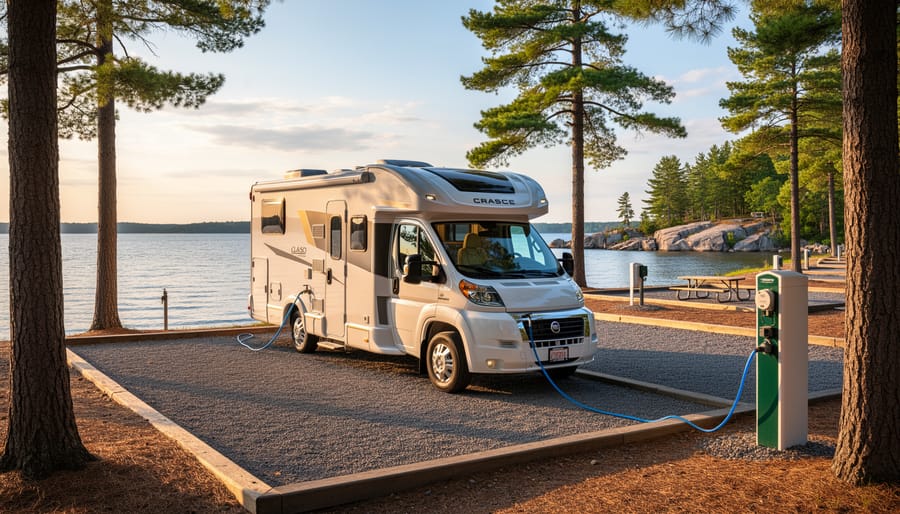
Book your RV campground site 5-6 months ahead for peak summer weekends in Ontario’s most popular parks like Algonquin or Killbear. These prime locations fill within hours of reservation windows opening, especially for waterfront and full-hookup sites. Set calendar reminders for exactly when bookings open – typically at 7 AM sharp – and have multiple devices ready with accounts pre-loaded.
Understand the difference between electrical sites (15, 30, or 50 amp), water-only sites, and full hookups before clicking “reserve.” Your RV’s power requirements determine which sites you can actually use. A 50-amp rig won’t function properly on a 15-amp site, and booking the wrong type means scrambling for alternatives or dealing with limited power all weekend.
Consider shoulder season camping in May or September when availability skyrockets and you’ll enjoy fewer crowds, lower prices, and surprisingly pleasant weather. Ontario’s provincial parks offer spectacular fall colours and spring wildflowers that rival summer’s appeal, plus you’ll snag those coveted lakefront spots that disappear instantly in July.
Navigate multiple booking platforms strategically. Ontario Parks operates its own reservation system, but private campgrounds use different platforms like Recreation.gov equivalents or independent systems. Create accounts on all major platforms ahead of time, save your payment information, and familiarize yourself with each site’s interface. When competition is fierce, those extra 30 seconds fumbling with login credentials cost you the perfect spot.
Ready to secure your dream RV site? Let’s break down exactly how the reservation process works.
When to Book Your RV Site (And Why Timing Is Everything)
Peak Season Booking Windows
Summer weekends and long holiday periods like Victoria Day, Canada Day, and Labour Day are the holy grail of RV camping—which means they require some serious planning. Here’s the reality: prime spots at popular Ontario parks can disappear within minutes of becoming available, and I’m not exaggerating!
Most Ontario Parks open their reservation windows exactly five months in advance. So if you’re dreaming of a July camping trip, mark your calendar for early February and be ready to book the moment reservations open at 7 a.m. Set an alarm, grab your coffee, and have your park account details handy.
For those highly coveted long weekends, consider the shoulder strategy. Booking the Thursday before or the Tuesday after a holiday weekend often gives you better availability and a quieter experience. You’ll avoid the crowds while still enjoying beautiful summer weather.
An insider tip: some campers cancel closer to their trip dates, so check back regularly about two weeks before your desired dates. I’ve scored amazing last-minute spots this way! Also, consider lesser-known parks in the same region—they offer the same natural beauty with far less competition for reservations.
The Sweet Spot for Spontaneous Trips
Not everyone plans their adventures months in advance, and honestly, some of the best camping trips happen when you just decide to go. If you’re the spontaneous type, there’s still hope for snagging that perfect RV site without booking six months ahead.
Your best friend for last-minute availability? Cancellations. People’s plans change all the time, especially midweek. I’ve found incredible spots opening up just days before arrival, particularly Tuesday through Thursday. Set yourself up for success by checking reservation systems multiple times daily during the week leading up to your desired dates. Some seasoned RV campers I know even use third-party apps that monitor availability and send alerts when sites open up.
Here’s an insider tip: shoulder seasons are your golden ticket. Late May before school lets out and September after Labour Day offer fantastic weather, fewer crowds, and much easier reservations. You’ll find stunning fall colours in Algonquin or enjoy warm beach days at Sandbanks without the summer chaos. Plus, many campgrounds offer better rates during these periods.
Weekday camping is another underutilized strategy. While everyone scrambles for Friday and Saturday nights, Monday through Wednesday stays are often wide open, even at popular locations. You’ll enjoy quieter campgrounds, easier check-ins, and a more peaceful experience overall.
For the truly spontaneous, provincial parks often hold back a handful of sites for walk-ins and last-minute bookings. Arrive early at the park office on your chosen day, and you might just score an unexpected gem.
Understanding RV Site Types (So You Don’t End Up in the Wrong Spot)
Full-Service vs. Partial Hookup Sites
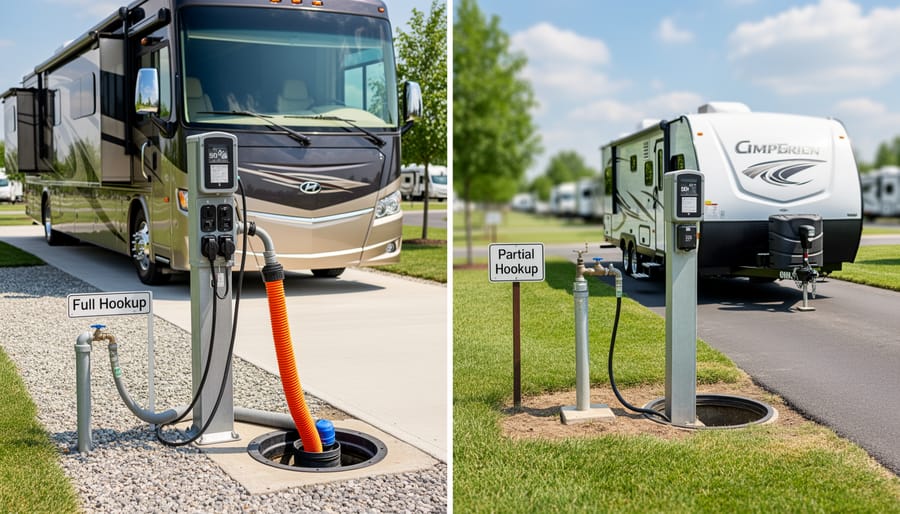
Understanding hookup options can save you money and match your camping style perfectly. When booking your RV site, you’ll typically encounter three main categories.
Electrical-only sites give you power to run essentials like your fridge, lights, and charge devices. These work beautifully for short weekend trips when you can manage without constantly refilling water or emptying tanks. I’ve found they’re ideal for boondocking enthusiasts who want just a touch of convenience without paying premium prices.
Water and electric combinations add a spigot at your site, letting you top up your fresh water tank whenever needed. This setup suits most campers perfectly, especially families who shower regularly and do dishes at the campsite. You’ll still need to visit the dump station before leaving, but it’s a quick stop.
Full hookups include electrical, water, and sewer connections, meaning you can stay put indefinitely without moving your rig. These premium sites cost more but shine for longer stays or larger RVs with smaller holding tanks.
Here’s my insider tip: if you’re staying three nights or less, water and electric usually suffices unless you have a big family generating lots of grey water. Save those dollars for s’mores supplies instead! Also consider the eco-friendly angle – partial hookups often encourage more mindful water usage, which Ontario’s beautiful parks certainly appreciate.
Pull-Through vs. Back-In Sites
When booking your Ontario campground spot, you’ll typically choose between pull-through and back-in sites, and the difference matters more than you might think!
Pull-through sites are absolute game-changers, especially if you’re new to RVing or traveling with a larger rig. You simply drive straight through without reversing – perfect for those towing a boat or extra trailer. I’ve watched countless campers breathe a sigh of relief when pulling into these no-stress sites after a long day on the highway. They’re especially valuable at Wasaga Beach or busy Sandbanks locations where maneuvering room is tight.
Back-in sites require some reversing skills but often offer better privacy and positioning. Here’s an insider tip: they’re frequently nestled in quieter, more secluded spots with better views or waterfront access. If you’re confident backing up (practice at home first!), you’ll unlock some truly premium locations that nervous drivers skip over.
For first-timers, I recommend pull-throughs for peace of mind. Experienced RVers? Don’t overlook those back-in gems – they’re often available when pull-throughs are fully booked and provide that intimate camping experience you’re craving.
Size Matters: Matching Your RV to the Right Site
Here’s the thing about RV site reservations that catches even experienced campers off guard: those length measurements aren’t suggestions. I learned this the hard way at a beautiful Muskoka campground when my 32-foot fifth wheel arrived at a site listed for 30 feet. Backing out with a lineup of annoyed campers behind me wasn’t my finest moment.
When you’re browsing Ontario campground websites, pay close attention to the listed site dimensions. The length measurement typically refers to the paved or gravel pad itself, not including your tow vehicle. Add at least 3-5 feet to your actual RV length to account for hitches, bumpers, and bikes mounted on the back.
Slide-outs are another consideration that trips people up. That cozy-looking site might have trees positioned perfectly to block your dining room slide. Most Ontario Parks list whether sites accommodate slide-outs, but private campgrounds sometimes overlook this detail. Don’t hesitate to call and ask specific questions about clearance on both sides.
The width matters too, especially if you’re planning to set up awnings or outdoor living spaces. Standard sites run about 20-30 feet wide, while premium sites offer extra breathing room.
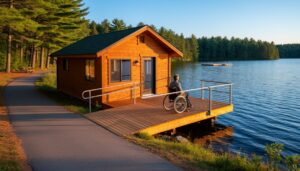
Here’s an insider tip: many Ontario campgrounds now include accessible camping options with extra-wide pads and maneuvering space that work beautifully for larger rigs, even if you don’t require accessibility features.
Navigating Ontario’s Reservation Systems
Mastering the Ontario Parks Reservation System
Ready to tackle the Ontario Parks reservation system? Don’t worry—it’s easier than parallel parking your RV! Let me walk you through the process so you can snag that perfect lakeside spot.
Start by creating your account at ontarioparks.com well before you’re ready to book. You’ll need a valid email address and credit card on file. Here’s an insider tip: set up your profile completely, including your vehicle details and camping preferences. This saves precious minutes when you’re racing against other campers for prime spots during the 5-month advance booking window.
Once logged in, use the search filters wisely. You can browse by region, park name, or specific amenities. The calendar view shows availability at a glance—green means sites are available, while red indicates they’re booked. Click on any date to see exactly which sites remain open.
The site selection screen is where the magic happens. Each campsite displays detailed information including size, hookup options, and proximity to facilities. Many listings include photos and campsite-specific notes. Take time to read reviews from previous campers—they often reveal golden nuggets about sun exposure, noise levels, or tree coverage.
When you’ve found your ideal spot, add it to your cart and proceed quickly. The system holds your reservation for 15 minutes only. For those seeking accessible Ontario parks, look for the wheelchair-accessible filter to find suitable locations.
Complete your booking by reviewing dates, confirming your vehicle information, and processing payment. You’ll receive instant email confirmation—screenshot it for easy reference during your trip!
Private Campground Booking Platforms
Private RV parks in Ontario offer a refreshingly different booking experience compared to provincial campgrounds. While government sites funnel you through Ontario Parks’ central system, private campgrounds give you options – and that’s where things get interesting!
Many privately-owned RV parks maintain their own direct booking systems on their websites. I’ve found this approach incredibly convenient because you can often chat directly with the campground owners, ask specific questions about your rig’s size, or request that perfect lakefront spot you’ve been eyeing. These direct connections sometimes lead to insider tips about the best sites or upcoming events at the property.
Here’s a savvy tip: booking directly often saves you money. Third-party platforms like Hipcamp, RoverPass, or KOA’s network charge service fees, though they do offer the convenience of browsing multiple properties in one place – perfect when you’re exploring new areas.
Some private parks embrace a hybrid approach, listing availability on both their own sites and booking platforms. Before committing, always compare prices across channels. I once saved nearly 15% by booking directly after initially finding a campground on a third-party site.
The bonus? Private campgrounds typically offer more flexibility with cancellations and modifications than provincial parks. Many family-run properties understand that travel plans change and work with you accordingly – just another reason to appreciate Ontario’s diverse camping landscape!
Amenities That Actually Matter for RV Campers
Essential Infrastructure
Before you finalize your RV campground reservation, understanding what infrastructure awaits you can make or break your camping experience. Think of these essentials as your home-away-from-home comfort checklist.
Let’s talk power first. Most Ontario campgrounds offer either 30-amp or 50-amp electrical service. Newer, larger RVs typically need 50-amp hookups to run multiple appliances simultaneously, while smaller rigs work perfectly fine with 30-amp. Here’s an insider tip: always pack an adapter just in case your reserved site differs from what you expected. I learned this the hard way during a July heat wave when air conditioning was non-negotiable!
Dump stations and water fill stations are your sanitation lifelines. When booking, confirm whether these facilities are conveniently located near your site or if you’ll need to drive your rig across the campground. Some parks include accessible camping facilities with barrier-free dump stations, which benefit all campers with easier maneuvering.
Regarding connectivity, don’t assume WiFi will be reliable or even available. Check campground reviews for honest cell service reports. Many remote Ontario parks offer digital detox opportunities rather than strong signals, so download maps and entertainment beforehand. Consider this an eco-friendly chance to genuinely disconnect and embrace nature’s rhythm.
Nice-to-Have Extras
While essentials like power and water top your checklist, those extra amenities can transform a good camping trip into an unforgettable one. Before finalizing your reservation, explore what each campground offers beyond the basics.
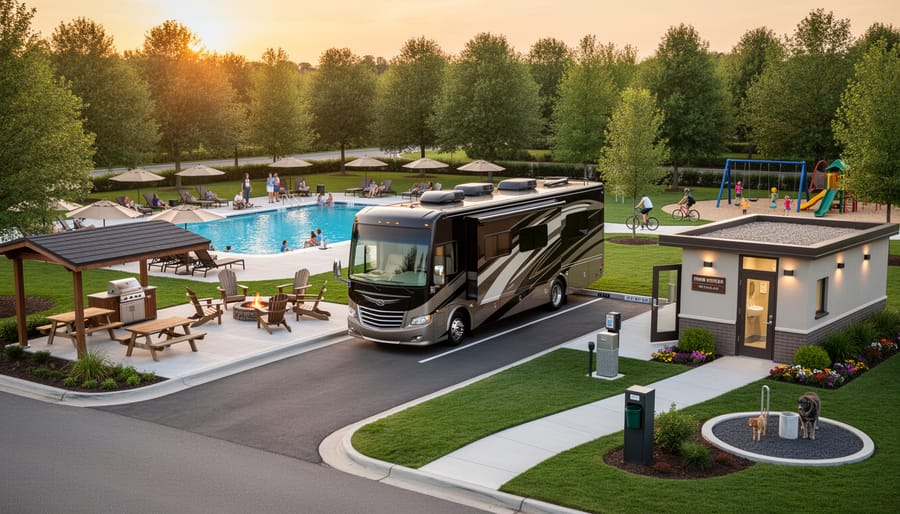
Recreation facilities vary widely across Ontario parks. Some campgrounds feature swimming beaches, boat launches, and designated hiking trails right from your site, while others offer playgrounds, sports courts, and organized activities. I’ve found that campgrounds with on-site recreation keep the kids happily occupied, giving adults more time to relax around the campfire.
Practical amenities matter too. Clean shower facilities and laundry services become invaluable during extended stays. Camp stores save the day when you’ve forgotten marshmallows or need firewood. Check if your chosen campground provides these conveniences or if you’ll need to plan supply runs.
Consider proximity to attractions and activities. Many Ontario campgrounds sit near incredible hiking routes, fishing spots, or charming small towns worth exploring. Some parks even offer Ontario’s accessible accommodations, ensuring everyone can enjoy the outdoors comfortably.
Insider tip: Look for eco-friendly amenities like solar-powered facilities, recycling programs, and natural wastewater systems. These sustainable features not only reduce environmental impact but often indicate a well-maintained campground that cares about preserving Ontario’s natural beauty for future generations.
Insider Strategies for Scoring the Best Sites
Want to know the secret weapon of seasoned RV campers? They never just accept what’s available on first glance. Here’s how the pros consistently snag those coveted waterfront and premium sites.
First, let’s talk about the cancellation game. Set up alerts through the Ontario Parks reservation system, but here’s the insider trick: check between 5-7 PM on weekdays. That’s when families realize their plans have changed and release their bookings. I’ve scored incredible lakefront sites at Algonquin Park just three days before arrival using this strategy. Some experienced campers even check multiple times daily during peak season, treating it like a fun treasure hunt rather than a chore.
Site selection secrets can make or break your trip. Pull up the park map and look for corner lots, which typically offer more space and privacy. Sites backing onto forest trails or conservation areas mean fewer neighbors behind you. Also, counter-intuitively, sites farther from washrooms often provide better experiences. Yes, it’s a slightly longer walk, but you’ll avoid the constant foot traffic and door-slamming that happens near facilities.
Here’s a game-changer: shoulder season camping at popular parks. May and September offer stunning weather, fewer crowds, and significantly easier reservations. The fall colours at parks like Killarney Provincial Park rival peak summer scenery, and you’ll actually hear birdsong instead of generators.
For hidden gems, look beyond the famous names. While everyone fights for Presqu’ile or Sandbanks, parks like Grundy Lake and Halfway Lake offer equally beautiful settings with better availability. Local RV forums and Facebook groups are goldmines for these discoveries, where campers share their favorite under-the-radar spots.
Finally, embrace flexibility with your dates. Having even one or two alternate weekends dramatically improves your chances of landing premium sites. Sometimes shifting your trip by just a few days opens up completely different options you hadn’t considered.
You’ve now got everything you need to make your RV campground reservation dreams a reality. From understanding the best booking windows to choosing the perfect site for your needs, you’re equipped with insider knowledge that’ll give you a serious edge in securing those coveted spots across Ontario’s incredible parks.
Remember, successful reservations come down to three things: planning ahead, staying flexible with your dates, and knowing exactly what amenities matter most to your camping style. Whether you’re after a lakefront site with full hookups or a quiet wilderness spot to disconnect, Ontario’s diverse campgrounds have something waiting for you.
Don’t let the reservation process intimidate you. Set those calendar reminders for booking windows, keep your account details ready, and have backup dates in mind. The early morning effort is absolutely worth it when you’re watching the sunrise over your perfect campsite.
Ontario’s natural beauty is calling, and now you know how to answer. From Algonquin’s rugged landscapes to the sandy beaches of Lake Erie, from family-friendly parks to accessible outdoor experiences that welcome everyone, your next adventure is just a reservation away.
So fire up that laptop, grab your coffee, and start planning. Your RV is ready. The campfire is waiting. Ontario’s wild spaces are yours to explore. Happy camping, friends!






+ There are no comments
Add yours