
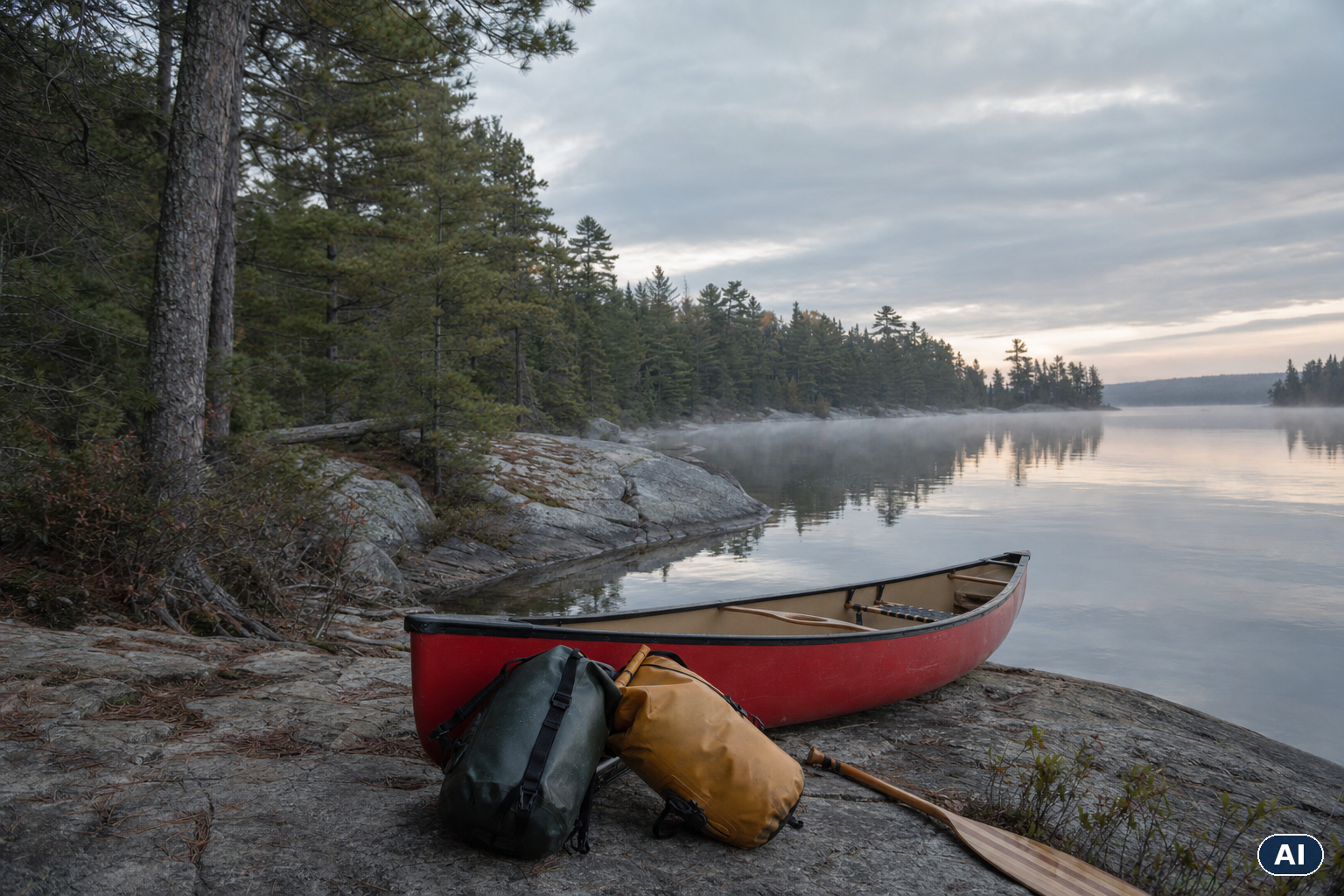
Most people who spend real time in the backcountry did not start out thinking about risk management. They started out wanting to see a lake nobody else had paddled to that week, or to string together a few nights of interior camping before the bugs got bad. The risk part came later, usually after a trip that went sideways in some small, survivable way. A portage took twice as long as the map suggested. A storm rolled in an hour before the plan said it would. Somewhere in that gap between the plan and what actually happened, a habit starts to form, and that habit is worth more than any single piece of gear.
The habit is simple to describe and harder to practice: decide your limits before you leave, not while you are already tired, wet or behind schedule. Everything else in backcountry safety follows from that one idea, and it turns out to translate cleanly into other parts of life where people make decisions under pressure, including how they spend money and time on activities with real financial stakes attached.
Before a single step happens on trail, the most important safety decision has already been made back at home or at the trailhead register. Telling a specific person your route, your entry and exit points, and the date you expect to be out is not a formality. It is the mechanism that turns a delay into a manageable problem instead of a crisis. Search and rescue volunteers make the same point every season: the trips that end badly tend to be the ones where nobody knew where the person had gone or when they were supposed to be back.
A trip plan works because it forces you to commit to specifics while you are still calm and well-rested, which is exactly the state you are not in when things start going wrong. You write down the lake you are paddling to, the campsite you are aiming for on night two, the road you will come out on. If you are three hours late, whoever is holding that plan knows roughly where to start looking rather than guessing across an entire park. The discipline is not glamorous. It is also the single cheapest insurance policy available to anyone heading into the woods, and it costs nothing but the ten minutes it takes to write it out and send it.
Checking Conditions Before You Go, Not While You Are Already There
Weather, water levels and trail reports change the plan more often than any piece of equipment does. A route that is straightforward in July can turn genuinely dangerous after a cold front drops overnight temperatures near freezing in September, and a portage that was dry two weeks earlier can be knee-deep after a heavy rain upstream. Checking conditions ahead of time is a habit that pays off almost every single trip, quietly, in ways you never notice because the problem never happened.
The same logic applies to knowing your own route before you are relying on memory and a compass bearing in fading light. Anyone building confidence with map reading, backup navigation and the small judgment calls that come up on unfamiliar terrain will get more out of a detailed guide to staying found in the backcountry than out of buying another piece of gear. Preparation research is boring in exactly the way that good risk management usually is. Nobody photographs themselves checking a forecast the night before, but it changes more outcomes than almost anything else on the trip.
Setting a Turnaround Time Before You Feel Like You Need One
Experienced backcountry travellers set a hard turnaround time before they start moving, and they honour it even when the far shore looks close enough to touch. This is the part that separates planning on paper from planning that actually holds under pressure. It is easy to say “we will turn back by two o’clock” while sitting at the trailhead with a full breakfast in you. It is much harder to actually turn around at two o’clock when you can see your destination and every instinct says another hour will get you there.
That gap between what you decide in advance and what you feel like doing in the moment is exactly where most backcountry trouble starts, and it maps almost exactly onto how people manage risk with money. Someone can set a spending limit for an evening while sitting calmly at home, then feel a completely different pull once they are mid-session and just one more attempt seems to promise a turnaround. This is why the same rule that works on a portage works at a desk: decide the number before you start, not while you are already leaning into it.
Where Safe Play Fit Into the Same Discipline
The parallel holds up better than it might first sound. Anyone deciding where to play online faces a version of the same pre-trip checklist a paddler runs through before leaving the parking lot. Set the amount you are willing to spend before you sit down, not partway through. Know which operators are licensed and which are not, the same way you would want to know a route is marked and maintained before you commit to it in poor light. Skip the first thing that turns up online and do the slightly more tedious work of checking who is actually regulated first. The Toronto Star published a careful rundown of what that groundwork looks like in practice, and it is the kind of resource worth reading before you start rather than after something has gone wrong, which is precisely the timing that makes trip plans and turnaround times useful in the first place.
None of this requires treating an evening of online gambling like a wilderness expedition. It requires the same small, unglamorous discipline: a limit decided in advance, a clear sense of your own threshold, and the willingness to stop at the number you picked rather than the number that feels right once you are already past it. In Ontario, anyone doing this needs to be 19 or older, and ConnexOntario offers free, confidential support around gambling, mental health and substance use for anyone who wants to talk it through, reachable at 1-866-531-2600 or through .
Turning Back Is a Skill, Not a Failure
The hardest lesson in backcountry travel is that turning back before you have to is not a failure of nerve. It is the entire point of having set a threshold in the first place. Groups that build a culture around honouring their own limits, on trail and everywhere else, tend to have far fewer stories that start with “we probably should have stopped an hour earlier.” The people who get into serious trouble outdoors are rarely undone by a single bad decision. They are undone by a string of small ones, each reasonable on its own, that added up because nobody called the turnaround when the plan said to.
That is the real transferable lesson, and it has nothing to do with knots or fire starters. It is about deciding your limits while you are still thinking clearly, writing them down somewhere someone else can see them, and trusting the version of yourself who set that limit more than the version of yourself who is standing in the moment wanting to push past it. Whether the threshold is a turnaround time on the water or a spending limit before a session online, the discipline is the same, and it is the difference between a trip you tell stories about and one that ends with someone else having to come looking for you.









+ There are no comments
Add yours