
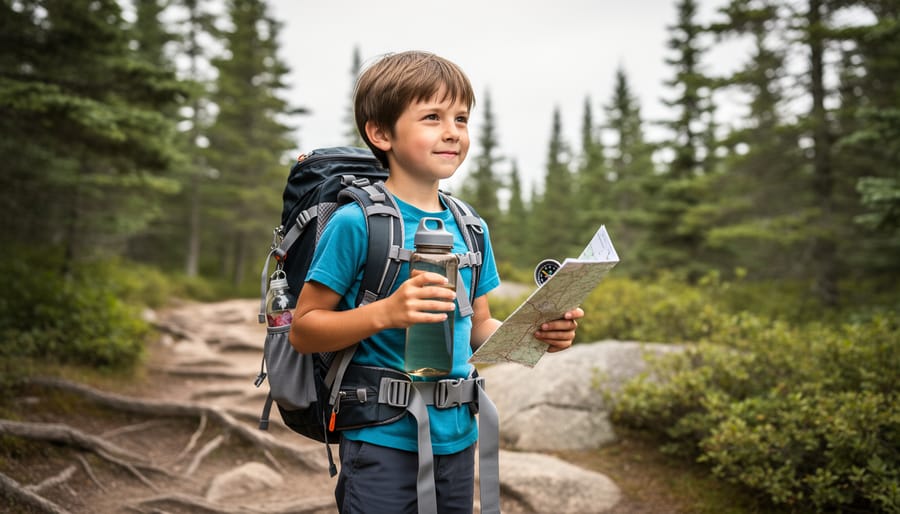
Start teaching your kids trail responsibility early by letting them carry their own gear, even if it’s just a lightweight pack with a water bottle and snack on your first Algonquin Provincial Park day hike. A five-year-old beaming with pride over their tiny backpack quickly becomes a confident ten-year-old who can handle navigation tools and emergency supplies on backcountry routes.
The right kids hiking backpack transforms family trips from “Are we there yet?” marathons into genuine outdoor adventures. I learned this watching my seven-year-old niece on the Highland Backpacking Trail. Once she had her own properly fitted pack (not a hand-me-down school bag), she stopped asking to turn back. She owned her role.
Ontario’s backcountry demands specific prep. Our sudden weather shifts, black fly seasons, and remote campsites mean kids need more than cute daypacks. They need properly sized packs with real capacity, comfortable straps that won’t dig into small shoulders after kilometer three, and enough room for the Ten Essentials adapted to their abilities.
Choosing the wrong size pack causes blisters, neck strain, and family arguments two hours into your trip. Too large and kids compensate with poor posture. Too small and you’re carrying their overflow, defeating the purpose entirely.
This guide walks through everything from measuring torso length (forget age-based sizing) to packing strategies for overnight trips at Killarney or Frontenac. You’ll learn what seven-year-olds can realistically carry versus twelve-year-olds, how to distribute weight properly, and which Ontario-specific items belong in every kid’s pack depending on season and terrain.
Why Kids Need Their Own Hiking Backpack (Not Just a Shared Daypack)
I learned this lesson the hard way on a soggy September morning in Frontenac Provincial Park. My seven-year-old son had been asking to carry “his own stuff” for weeks, but I kept stuffing his rain jacket and water bottle into my pack, thinking I was being helpful. Two hours into the trail, when the drizzle started, he had no idea where his gear was and stood there waiting for me to dig through my bag while the rest of our group hiked ahead. That’s when it clicked: he needed his own pack, not just to lighten my load, but to learn how to take care of himself in the backcountry.
Giving kids their own properly fitted backpack does something a shared daypack never will. It distributes weight correctly across their developing shoulders and hips, which matters more than you might think when you’re navigating Ontario’s rocky Shield trails or steep portages. A pack that sits right on a child’s frame prevents the shoulder strain and lower back fatigue that come from carrying weight in the wrong places. This isn’t about making kids pack mules; it’s about teaching their bodies to move comfortably under load on uneven terrain.
More importantly, ownership changes everything. When your daughter knows exactly where her water bottle sits in her pack’s side pocket, she drinks more often without asking you to stop. When your son packs his own granola bars in the top compartment, he learns to fuel himself before he gets cranky. This independence builds the kind of backcountry confidence that transforms a reluctant hiker into someone who genuinely wants to explore Ontario’s wild spaces. You’re not just handing them a bag; you’re giving them agency on the trail.
Choosing the Right Size and Fit for Different Ages
Getting the fit right matters more than you might think. I’ve watched kids squirm out of ill-fitting packs fifteen minutes into a hike, and suddenly the “building independence” plan becomes a parent lugging two backpacks through Frontenac’s rocky sections.
For toddlers and preschoolers, you’re looking at packs with a 6-8 liter capacity. At this age, torso length is minimal, so focus on adjustable chest straps that keep shoulder straps from sliding off small frames. The pack should sit naturally on their back without pulling them backward. Test this by having them walk around your living room, if they lean forward to compensate, it’s not right.
Elementary-aged kids typically need 10-15 liters, and now torso length becomes important. Measure from the bony bump at the base of their neck down to where their lower back curves inward, roughly level with their belly button. Most kids’ packs offer some adjustment range, but don’t assume they’ll “grow into” a pack that’s currently too long. On Ontario’s multi-hour trails, even half an inch too high or low creates pressure points that turn a fun adventure into a whiny slog.
For tweens and teens, you’re entering adult-pack territory at 15-25 liters or more. Proper fitting now involves hip belts that actually sit on hip bones, not floating somewhere around the stomach. Load lifter straps at the shoulders should angle back at roughly 45 degrees when properly adjusted.
Here’s the fitting sequence I use before any Ontario Parks trip: loosen all straps, put the pack on, tighten the hip belt first (it should carry most weight), then shoulder straps (snug but not tight), then chest strap (comfortable breathing room), finally adjust load lifters. Have your child walk, bend, and twist. They should be able to look up at tree canopy and down at trail rocks without the pack shifting awkwardly.
Recheck everything after the first twenty minutes on trail. Bodies warm up, straps settle, and what felt fine in the parking lot often needs tweaking.
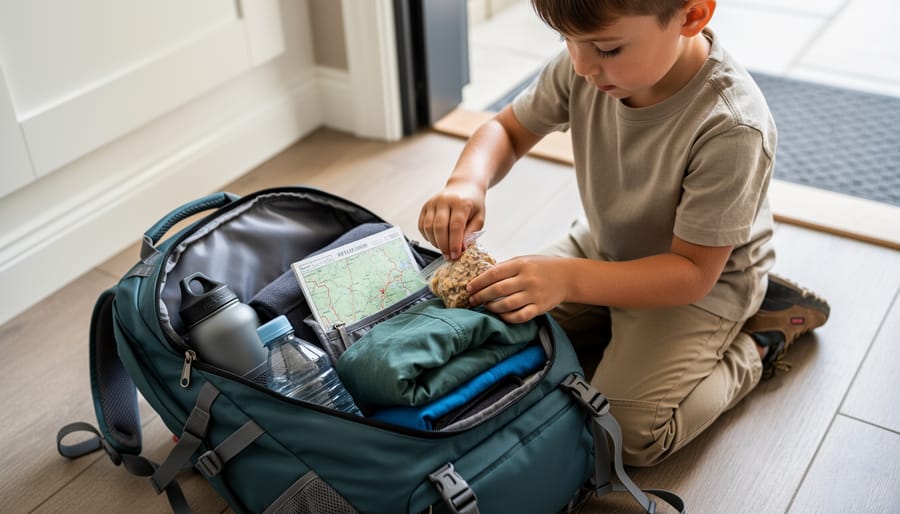
The Essential Layers: What Every Kid’s Pack Should Hold
Hydration and Snacks That Actually Work
Children dehydrate faster than adults, especially when scrambling over Canadian Shield outcrops or hiking under the summer sun. For most half-day Ontario trails, plan on 500ml to 750ml of water per child, adjusted upward for hot days or strenuous routes. Teenagers tackling full-day backcountry loops need closer to 1.5 litres. Choose containers kids can open and close themselves, wide-mouth bottles with flip-top lids work better than screw caps for small hands, and insulated bottles keep water cool through midday heat.
Snacks need to deliver quick energy without turning into a melted mess by lunchtime. Trail mix with nuts and dried fruit holds up well. Cheese strings, whole-grain crackers, and nut butter packets provide protein and fat that sustain energy longer than sugary treats. Apples and oranges travel better than soft berries. Pack snacks in a dedicated pouch near the top of the pack so kids can refuel without unpacking everything on the trail.
Teach children to sip water regularly rather than waiting until they’re thirsty, a habit that pays off on longer backcountry routes where water sources are hours apart. Following general hydration tips for children helps, but Ontario’s variable weather means you’ll adjust quantities based on humidity and exertion levels each trip.
Weather Protection for Ontario’s Unpredictable Climate
Ontario’s weather shifts faster than most kids can ask “Are we there yet?” You’ll wake to sun on Lake Superior’s shores and hit drizzle before lunch, or start a Shield hike in cool morning air and strip layers by mid-morning as the rocks radiate heat.
Pack a lightweight rain jacket kids can pull on themselves, look for ones that stuff into their own pocket. Skip bulky coats. A thin fleece or synthetic mid-layer works better because children can add or remove it without stopping the whole group. On cooler mornings near Georgian Bay or in Algonquin’s interior, a long-sleeve base layer lets them regulate warmth as they move.
Teach your kids the simple rule: if you’re sweating, take a layer off before you soak your clothes. Wet fabric makes them cold fast when you stop for snacks or navigation checks.
A lightweight rain shell doubles as wind protection on exposed shoreline trails where lake breezes cut through cotton shirts. Choose bright colors so you can spot them on the trail. Pack a baseball cap or lightweight sun hat too, Ontario’s summer sun reflects hard off granite and water, and kids forget to notice until they’re already burnt.
Test everything at home first. If they can’t work the zipper or figure out which layer goes on top, it won’t help them in the backcountry.
Basic Navigation Tools Kids Can Use
A simple baseplate compass is the perfect first backcountry navigation tool for kids aged seven and up. Choose one with a rotating bezel and straightedge they can hold comfortably, and teach them to orient the map to north before you leave the trailhead. Pack a laminated section of the trail map that shows your planned route with clear landmarks, kids feel more engaged when they can spot the pond or rock outcrop you’re approaching. A loud safety whistle belongs on every child’s pack strap or zipper pull, not buried inside where panic makes it hard to find.
Let older children mark your progress on the map with a grease pencil at each junction, which builds map-reading skills and keeps them invested in the route. Start with short loops where mistakes don’t matter much, then graduate to longer Ontario Parks trails as their confidence grows.
First Aid and Safety Basics
Every child on Ontario trails should carry three non-negotiable items in an outer pocket they can reach themselves: a Fox 40 whistle on a lanyard (three blasts signals help), a small zipper pouch with adhesive bandages and antiseptic wipes, and a laminated card with parent contact details plus your campsite or trailhead location. These basics align with Ontario Parks backcountry safety protocols and give kids tangible tools they actually understand how to use.
For children over eight, add a small headlamp with fresh batteries, Shield-country trails get dark fast under the canopy, and a single-use emergency blanket folded into a snack-size bag. Teach them what each item does before you need it. The safety gear checklist shouldn’t overwhelm; start with whistle practice at home so blowing it becomes automatic, not forgotten in a stressful moment.
How Much Weight Should Your Child Actually Carry?
The golden rule for children’s pack weight is simple: no more than 10-15% of their body weight for day hikes, and ideally closer to 10% for younger children or challenging terrain. A 60-pound seven-year-old should carry about six to nine pounds maximum, including the pack itself. Research shows that children carrying a pack too heavy over 10% of their body weight experience altered gait patterns and increased strain on developing muscles and joints, which matters even more when navigating Ontario’s rocky Shield trails or uneven forest paths.
That percentage isn’t set in stone, though. Adjust downward for several Ontario-specific factors: steep elevation changes like those on the Crack Trail in Killarney, technical terrain requiring hand-over-hand scrambling, hot and humid summer conditions that increase fatigue, or hikes longer than three hours. If you’re planning a full day on Algonquin’s Highland Backpacking Trail, start conservatively. A lighter pack lets kids maintain better balance on root-crossed paths and enjoy the experience rather than endure it.
Watch for warning signs during your hike. If your child starts leaning forward excessively to counterbalance the pack, complains of shoulder or back pain, or asks for frequent breaks much earlier than usual, the pack’s too heavy. Before any backcountry trip, do a neighborhood test walk. Load the pack as you would for the actual hike and walk 20-30 minutes on varied terrain. Your child should be able to chat comfortably, maintain good posture, and show enthusiasm rather than relief when you finish. That 20-minute investment prevents a miserable day on the trail and builds their confidence for bigger adventures ahead.
Teaching Pack Organization for Trail Independence
The best organization system is one your child creates with you, not for them. Start by spreading all their gear on the floor and asking, “What would you need first if it started to rain?” Let them place that rain jacket on top. Then work backwards through the day together.
For younger kids (ages 5-7), use a colour-coding system. Rain gear goes in the stuff sack with the blue drawstring, snacks in the red one. They won’t remember “front pocket versus main compartment,” but they will remember colours. One Ontario dad taught his six-year-old the “three-finger rule”, if you can’t reach something in three seconds, it’s packed wrong.
Older children (8-12) can handle zone packing. Top pocket holds immediate needs like trail mix and lip balm. Main compartment keeps the midday lunch and extra layer. Bottom section stores the spare socks they probably won’t need but should carry anyway. Practice this at home by having them find specific items with their eyes closed.
Teenagers should pack their own bags completely, with you checking only the final weight and safety items. They learn by forgetting their hat once, not by you reminding them six times.
The real skill is the evening ritual. After every Ontario trail, empty the pack together. Wet items come out first, trash gets removed, water bottles refilled for next time. Kids who do this can tell you exactly where their whistle is at 3 p.m. on a foggy Frontenac trail, and that knowledge matters when you actually need it.
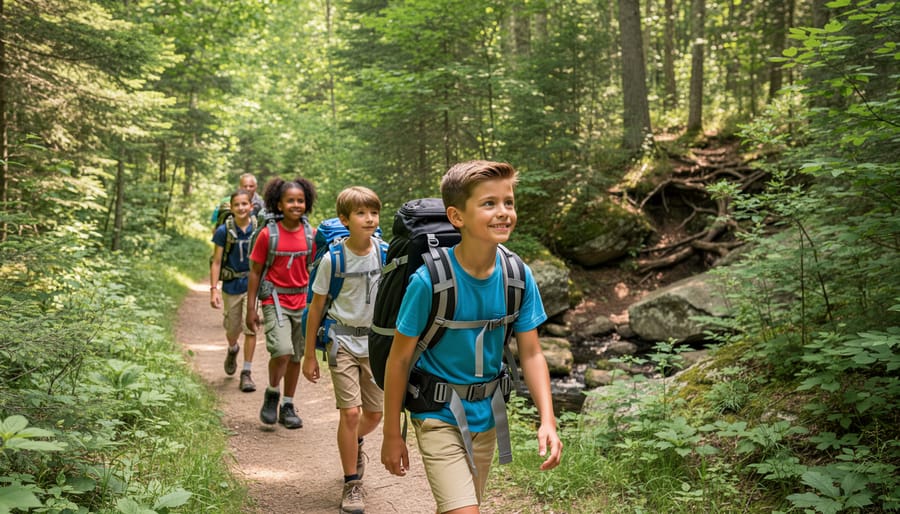
Ontario Trail Scenarios: Adjusting Packs for Different Adventures
A three-hour loop on the Barron Canyon Trail demands different packing than a full-day trek through Killarney’s La Cloche Silhouette, and both differ completely from an overnight on Frontenac’s backcountry sites. Adjusting your child’s pack for the specific scenario prevents overpacking for short trips while ensuring they have everything needed for longer adventures on Ontario hiking trails.
For half-day outings under four hours, kids need just the essentials. Think water bottle, two snacks, a light rain jacket, and basic sun protection. My daughter’s pack for our Sunday morning walks at Awenda Provincial Park rarely weighs more than three pounds, enough for independence without slowing her down. These shorter trips work perfectly for building the habit of checking their own supplies before leaving the trailhead.
| Scenario Type | Pack Contents | Approximate Weight |
|---|---|---|
| Half-Day (under 4 hours) | Water bottle, 2-3 snacks, rain jacket, sun hat, whistle | 3-5 lbs |
| Full-Day Backcountry | Full hydration system, lunch plus snacks, layered clothing, first aid basics, headlamp, trail map | 6-10 lbs |
| Overnight Trip | All full-day items plus sleeping bag, pad, extra clothes, toiletries, personal tent stakes | 12-18 lbs |
Full-day backcountry routes require more substantial preparation. When we tackle Algonquin’s Track and Tower Trail or spend eight hours on Bruce Trail sections, my kids carry lunch, extra layers for temperature swings, and backup lighting. The Shield country around Killarney means packing for sudden weather shifts, a spare fleece can make the difference between enjoyment and misery when fog rolls in off Georgian Bay.
Overnight trips introduce sleeping gear and personal camp items. Even young hikers can manage their own sleeping bag and pad when properly sized, plus a change of clothes and basic toiletries. We divide group gear like the tent body among adults, but kids carry their stakes and vestibule items, small contributions that build ownership. Before any overnight on Frontenac’s interior sites, we do a fully-loaded practice walk around our neighborhood. Better to discover an uncomfortable hip belt at home than three kilometers from your campsite.
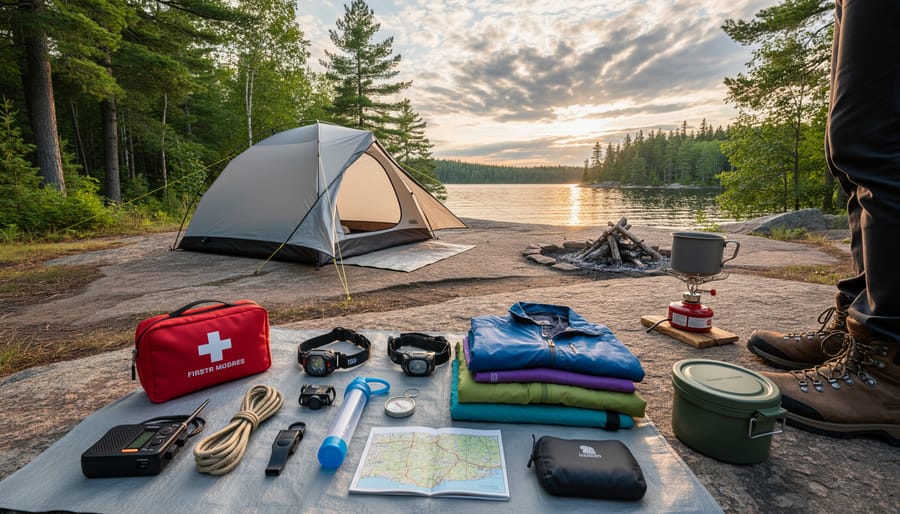
Common Packing Mistakes Parents Make (And How to Avoid Them)
The biggest mistake I see families make is packing like they’re preparing for every possible emergency. Last summer at Killbear, I watched a dad unload his eight-year-old’s pack at the trailhead, it contained three full water bottles, two complete outfits, a hardcover field guide, and a stuffed animal. The pack weighed nearly as much as the child. By the first kilometre, she was in tears and refusing to walk further.
Parents also forget that kids grow fast. That backpack that fit perfectly in May might dig into shoulders by August. Check the fit before every major hike, especially if your child has had a growth spurt. Loose hip belts and shoulder straps that sit too high cause discomfort that builds over kilometres, turning an adventure into a miserable slog.
Sun protection disappears from packs the moment families think they’re hiking in shade. Ontario’s mixed hardwood and pine forests create dappled light, and trail sections along lakeshores or granite outcrops offer zero cover. I learned this lesson on a Frontenac trail when my daughter developed painful sunburn on her shoulders despite the “shaded” route description.
The most avoidable mistake is skipping the test run. Load the pack exactly as you would for the real hike, then walk around your neighbourhood or a local conservation area for an hour. Kids will quickly tell you if something rubs, pokes, or feels too heavy, far better to discover this at home than three kilometres into the backcountry where adjusting means unpacking everything onto a rock. Review the Ontario camping rules together during your test walk so kids understand trail expectations before you arrive at the park.
Getting your kids ready for Ontario’s backcountry isn’t about buying the most expensive gear or packing for every possible scenario. It’s about teaching them to carry what matters, understand why it’s in their pack, and trust their own preparation. When a seven-year-old pulls out their own rain jacket before you’ve even noticed the darkening sky, or a ten-year-old refills their water bottle without prompting, you’re watching confidence take root.
Start with a single afternoon hike on a familiar trail. Let them carry just water, snacks, and a layer. Build from there as their comfort grows and their questions get more sophisticated. The goal isn’t perfection on the first outing, it’s cultivating the habit of thinking ahead, problem-solving on the trail, and feeling capable in wild places.
Ontario’s backcountry rewards families who approach it with respect and preparation. Your child’s backpack becomes more than just gear storage. It’s a toolkit for independence, a training ground for judgment, and a tangible connection to the landscape they’re learning to love. Pack thoughtfully, hike often, and watch them grow into the kind of confident outdoor kids who’ll be planning your next adventure before you’ve even finished the current one.








+ There are no comments
Add yours