

Venture beyond the marked trails into Ontario’s pristine wilderness, where every step reveals untold stories and hidden treasures waiting to be discovered. Backcountry adventures transform ordinary hikers into intrepid explorers, offering a raw, authentic connection with nature that can’t be replicated on well-worn paths.
Picture yourself paddling across mirror-like lakes at dawn, setting up camp on secluded shorelines, and falling asleep to the haunting calls of loons echoing across still waters. Whether you’re seeking solitude in Algonquin’s remote corners or challenging yourself in the rugged Killarney highlands, Ontario’s backcountry holds adventures for every skill level.
But true wilderness exploration demands respect, preparation, and knowledge. From mastering essential navigation skills to understanding Leave No Trace principles, your journey into the backcountry begins long before you shoulder your pack. This guide will equip you with vital insights, tested techniques, and local wisdom to transform your outdoor dreams into unforgettable experiences.
Join us as we unlock the secrets of safe, responsible backcountry travel, reveal hidden gems across Ontario’s vast wilderness, and help you craft adventures that will challenge, inspire, and forever change how you experience the great outdoors.
Planning Your Backcountry Journey
Choosing Your Trail and Season
Selecting the right trail for your backcountry adventure is crucial for both enjoyment and safety. If you’re new to backcountry exploration, start with well-marked trails rated as “beginner” or “intermediate” in provincial parks like Algonquin or Killarney. These trails often feature established campsites and clearer navigation markers, perfect for building your confidence.
For seasoned adventurers, challenging routes in the Temagami region or the rugged terrain of Lake Superior Provincial Park offer rewarding experiences with stunning vistas and true wilderness immersion. Remember to honestly assess your fitness level and navigation skills before choosing your trail.
Timing is everything in the backcountry. Summer (June to August) offers the most accessible conditions, with longer daylight hours and moderate temperatures. Fall (September to October) treats you to spectacular colors and fewer bugs, while spring (April to May) showcases wildflowers but can be muddy. For those seeking solitude and unique challenges, winter backcountry adventures provide pristine landscapes and fewer crowds.
Pro tip: Book your permits well in advance for popular summer weekends, but consider mid-week trips for a more serene experience. Also, check park websites for seasonal trail conditions and closures before finalizing your plans.
Permits and Regulations
Before heading into Ontario’s backcountry, you’ll need to secure the proper permits and familiarize yourself with local regulations. Most provincial parks require a backcountry camping permit, which you can obtain through the Ontario Parks reservation system up to five months in advance. During peak season (June to September), it’s recommended to book at least two months ahead to secure your preferred camping spots.
For day trips, you’ll need a daily vehicle permit, while overnight adventures require both a camping permit and a parking permit. Some popular areas like Algonquin Park and Killarney have specific quotas for different access points to maintain the wilderness experience, so early planning is essential.
Insider tip: Consider visiting during shoulder seasons (May or October) when permits are easier to secure and rates are often lower.
Key regulations to remember include:
– Maximum group size of 9 people per site
– No glass containers in the backcountry
– Pack out all garbage
– Store food properly to avoid wildlife encounters
– Campfires only in designated fire pits (when permitted)
– Practice Leave No Trace principles
During fire season (April 1 to October 31), check local fire ratings daily. Some areas may require additional permits for specific activities like fishing or accessing certain remote areas. When in doubt, contact the park office directly – rangers are always happy to help ensure you’re properly prepared for your adventure.
Essential Gear and Supplies

Navigation and Safety Equipment
When venturing into Ontario’s wilderness, having the right navigation and safety equipment isn’t just a suggestion – it’s essential for your well-being. Start with a reliable compass and detailed topographic maps of your intended route, even if you’re planning to use GPS devices. Speaking of which, a GPS unit with extra batteries can be a lifesaver, but remember that electronics can fail, so don’t rely on them exclusively.
A satellite communication device, like a SPOT or inReach, provides peace of mind by allowing you to call for help in emergencies when cell service is nonexistent. Pack a basic first-aid kit customized for wilderness adventures, including items like bandages, antiseptic wipes, blister treatment, and any personal medications.
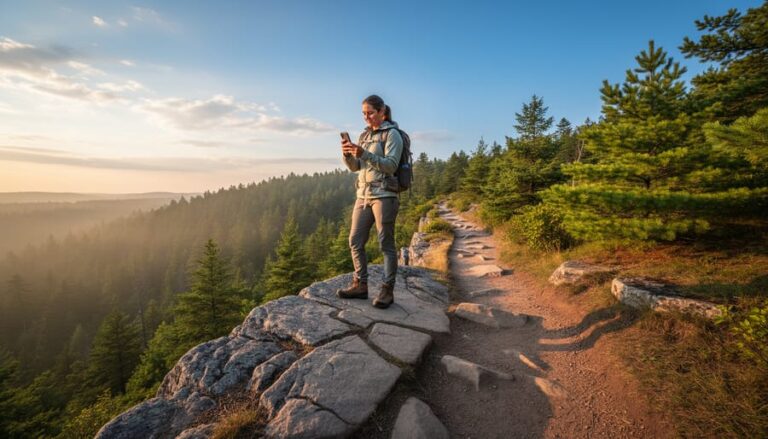
Insider tip: Take a photo of your map and compass readings at major trail intersections. This creates a backup navigation record on your phone and can help you retrace your steps if needed.
Don’t forget these essential safety items:
– Emergency whistle (three blasts is the universal distress signal)
– Headlamp with spare batteries
– Emergency shelter (light tarp or emergency blanket)
– Waterproof fire starter
– Multi-tool or knife
– Bear spray (when in bear country)
– Water purification method
For eco-conscious adventurers, consider investing in solar-powered or hand-crank emergency devices to reduce battery waste. Always test your equipment before heading out, and share your planned route with a trusted friend or family member. Remember, the best safety equipment is the one you know how to use properly, so practice with your tools before you need them in a real situation.
Camping and Survival Gear
When venturing into Ontario’s backcountry, having the right gear can make the difference between an amazing adventure and a challenging ordeal. Start with a reliable backpack that fits comfortably and distributes weight evenly across your shoulders and hips. For shelter, invest in a quality three-season tent that’s both lightweight and waterproof – trust me, you’ll appreciate this during those unexpected summer showers!
A sleeping bag rated for at least -10°C is essential, even in summer, as temperatures can drop significantly at night. Pack a sleeping pad too; it not only provides comfort but crucial insulation from the cold ground. Don’t forget a headlamp with extra batteries – it’s your best friend during nighttime bathroom trips!
For cooking, a compact camping stove and fuel are must-haves. I recommend bringing a pot set, lightweight utensils, and a water filtration system. Speaking of water, always pack more than you think you’ll need, and know where to find natural water sources along your route.
Essential survival gear includes a first-aid kit, emergency blanket, fire starter, and multi-tool. A compass and detailed topographic maps are non-negotiable – don’t rely solely on your phone’s GPS. Pro tip: keep your maps in a waterproof case!
Eco-friendly gear choices include biodegradable soap, reusable water bottles, and solar-powered chargers. Remember to pack a bear-proof food container if you’re heading into bear country, which is pretty much anywhere in Ontario’s wilderness.
For clothing, embrace the layer system: moisture-wicking base layer, insulating middle layer, and waterproof outer layer. Quick-dry materials are worth the investment – cotton becomes dangerous when wet and takes forever to dry.
Wilderness Skills You Need
Navigation and Route Finding
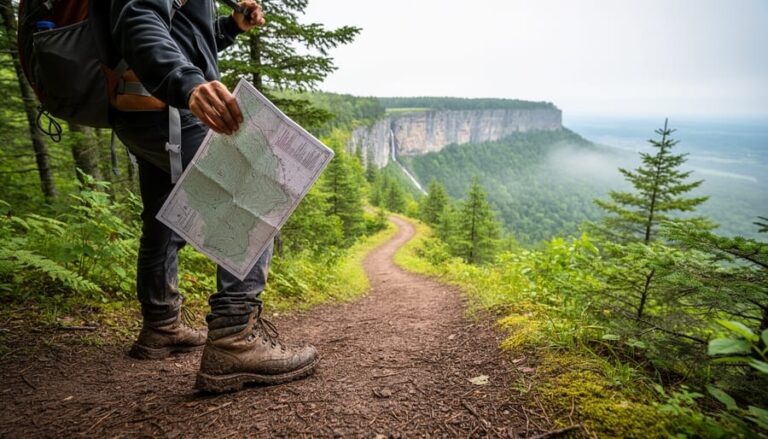
In the backcountry, reliable navigation skills are your best friend. While technology has given us convenient GPS devices and smartphone apps, it’s essential to master traditional navigation methods as backup. Always carry a detailed topographic map of your area and a reliable compass – these never run out of batteries!
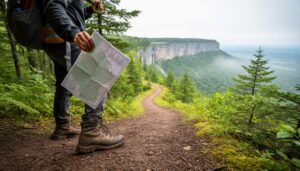
Start by learning to read your map’s features, including contour lines that show elevation changes, and symbols indicating campsites, water sources, and trail markers. Practice identifying these features in familiar areas before heading into remote territory. A useful tip is to orient your map to match your surroundings using visible landmarks like lakes or distinctive peaks.
A GPS device can be incredibly helpful, but don’t rely on it exclusively. Modern handheld GPS units are more durable and accurate than phone apps, though both work well for basic navigation. Remember to download offline maps and bring backup batteries if you’re using electronic devices.
Understanding trail blazes and markers is crucial in Ontario’s backcountry. Look for painted marks on trees, rock cairns, or official trail signs. Pro tip: take a photo of trail maps at major junctions – they can be lifesavers if you lose your bearings.
Before any trip, study your route thoroughly and note key waypoints like water crossings, elevation changes, and emergency exit points. Share your planned route with someone reliable back home, including expected arrival times at major points. When in doubt about your location, stop, consult your map, and if necessary, backtrack to your last known position rather than pressing forward uncertainly.
Remember, getting temporarily disoriented is normal – staying calm and using your navigation tools methodically will help you find your way.

Wildlife Safety and Camping Ethics
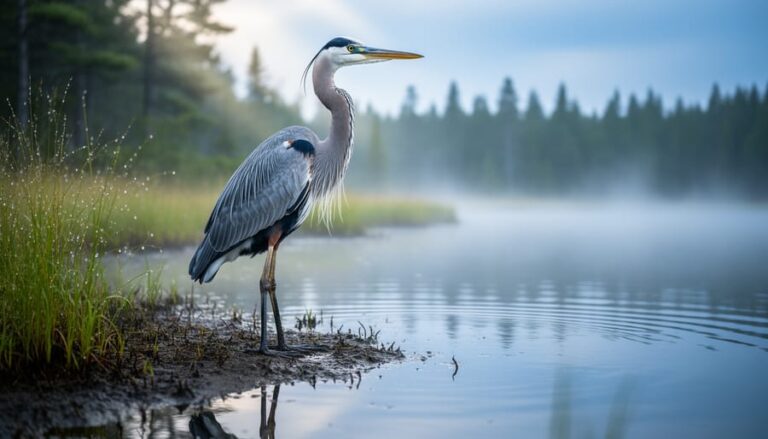
Sharing space with Ontario’s wildlife is one of the most thrilling aspects of backcountry adventures, but it comes with important responsibilities. When encountering wildlife, always maintain a safe distance – at least 100 meters from bears and 30 meters from other large animals. Make noise while hiking by chatting with companions or wearing a bell to avoid surprising animals on the trail.
If you encounter a black bear, stay calm and slowly back away while facing the animal. Never run or play dead – instead, make yourself look big and make noise. Store your food in bear-resistant containers or hang it between trees at least 4 meters high and 2 meters from the trunk.
Following Leave No Trace principles ensures future generations can enjoy these wild spaces. Pack out everything you bring in, including food scraps that could attract wildlife. Choose established campsites when possible, and if creating a new site, set up on durable surfaces at least 200 meters from water sources.
Pro tip: Take photos of your campsite when you arrive and use them to ensure you leave no trace when packing up. Even natural items like pine cones and rocks should stay where you found them – they’re essential parts of the ecosystem.
For campfires, use existing fire rings and keep fires small. In areas where fires are permitted, collect only dead and fallen wood, and fully extinguish your fire before leaving. Better yet, consider using a camping stove instead – it’s more efficient and leaves zero impact on the environment.
Remember, we’re visitors in these animals’ homes. Respectful behavior and proper camping ethics help preserve Ontario’s wilderness and keep both wildlife and adventurers safe.

Top Backcountry Routes in Ontario
Ontario’s backcountry offers adventures for every skill level, from beginners taking their first steps into the wilderness to seasoned explorers seeking new challenges. Let’s explore some of the province’s most remarkable trails and destinations.
For newcomers, the Frontenac Provincial Park Loop is perfect for a weekend adventure. This 21-kilometer circuit features well-marked trails, established campsites, and stunning lake views. The gentle terrain makes it ideal for building confidence and testing your gear.
Intermediate adventurers will find their sweet spot in Killarney Provincial Park’s La Cloche Silhouette Trail. This 78-kilometer loop showcases the park’s iconic white quartzite ridges and pristine lakes. Here, you’ll find excellent water routes and paddling trails that weave through the park’s crystal-clear waters.
For experienced backcountry enthusiasts, the Pukaskwa Coastal Trail along Lake Superior offers a challenging 60-kilometer journey. This rugged route demands solid navigation skills and proper preparation, but rewards adventurers with breathtaking coastal views and pristine wilderness camping.
The Bruce Peninsula offers diverse options, including spectacular rock climbing destinations and waterfall exploration routes. The Bruce Trail section here provides both day-hiking opportunities and multi-day adventures, with some of Ontario’s most dramatic cliff-top views.
Insider Tip: Always check trail conditions before heading out, especially in spring when melting snow can make some routes challenging. Consider visiting during shoulder seasons (late spring or early fall) when trails are less crowded and temperatures are moderate. Remember to practice Leave No Trace principles and carry appropriate navigation tools, as cell service can be unreliable in these remote areas.
Embarking on your first backcountry adventure might feel daunting, but remember that every experienced outdoors person started exactly where you are. Start small with an overnight trip, gradually building your confidence and skills. Always let someone know your plans, check the weather forecast before heading out, and respect the wilderness by following Leave No Trace principles.
Pack thoughtfully but don’t obsess over having the perfect gear – focus on essential safety items and comfort basics. Connect with local outdoor groups or experienced hikers who are often eager to share their knowledge and may even become future adventure partners.
The backcountry offers something that can’t be found anywhere else: a profound connection with nature and yourself. So take that first step, embrace the learning experience, and get ready for memories that will last a lifetime. The wilderness is calling – it’s time to answer!




+ There are no comments
Add yours