
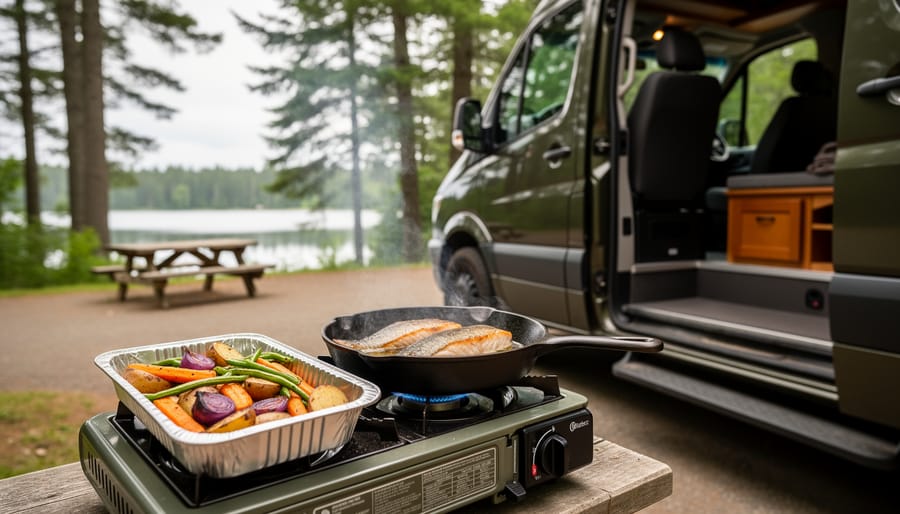
Van camping cooking comes down to three essentials: a reliable portable stove, smart space management, and recipes that deliver big flavor without requiring a full kitchen. You can prepare restaurant-quality meals from your van with minimal equipment, typically a two-burner camp stove, a cast-iron skillet, and basic prep tools. The real skill lies in planning meals that share ingredients and cook in under 30 minutes.
I’ve cooked hundreds of meals from my van across Ontario’s parks, and the difference between a frustrated camper eating cold sandwiches and someone enjoying fresh-seared trout with roasted vegetables usually comes down to preparation, not budget. Most beginners overthink the gear and underthink the workflow. You don’t need a built-in kitchenette or expensive equipment to eat well on the road.
The confined space actually works in your favor once you learn a few techniques. Heat management becomes easier to control, cleanup stays minimal when you cook strategically, and you’ll waste less food because you’re forced to plan efficiently. Ontario Parks have specific rules about open flames and food storage that shape how you’ll set up your cooking area, but these constraints push you toward smarter, safer methods that improve your meals.
This guide walks through the exact setup I use, from choosing ventilation-friendly cooking tools to troubleshooting common problems like propane performance in cold weather. Whether you’re parked at a provincial campground or boondocking on Crown land, you’ll learn how to turn your van into a surprisingly capable mobile kitchen.
Essential Cooking Gear and Tools for Your Van Kitchen
Choosing Your Heat Source
Your heat source is the heart of your van kitchen, and picking the right one matters more in Ontario’s variable climate than you might think.
Propane stoves are the workhorse choice for most van campers here. They perform reliably in cold weather, crucial when you’re cooking breakfast at Algonquin in October and temperatures drop near freezing. Two-burner camp stoves give you proper cooking flexibility, letting you boil water while frying eggs. Single-burner backpacking stoves work fine for simple meals but limit what you can prepare simultaneously.
Butane stoves are compact and affordable, but they struggle below 10°C. Fine for summer trips to Sandbanks or Pinery, but they’ll sputter out during shoulder season adventures. The canisters also can’t be refilled, creating more waste.
For extended trips, consider a stove that connects to refillable propane tanks. You’ll find refill stations near most major parks, and it’s cheaper than buying disposable canisters. Many Ontario campers keep a small backpacking stove as backup, when fire bans hit or your main stove fails, you’ll be glad you did.
Space-Saving Cookware That Actually Works
Nesting cookware sets are your best friend in a van kitchen, look for stainless steel or anodized aluminum pots that stack inside each other with detachable handles. A good three-piece nesting set replaces half a dozen bulky items. Skip traditional cast iron (too heavy) and grab enameled cast iron or hard-anodized aluminum instead; they retain heat nearly as well but weigh far less. Collapsible silicone bowls, kettles, and dish bins compress flat when not in use, freeing up precious cabinet space. One versatile pan beats three specialized ones: a deep-sided skillet with a lid handles everything from scrambled eggs to pasta. Pack a lightweight cutting board that doubles as a counter extension, and choose utensils with hanging loops so they store vertically on hooks rather than cluttering drawers.
Safety First: Van Cooking Precautions and Park Regulations
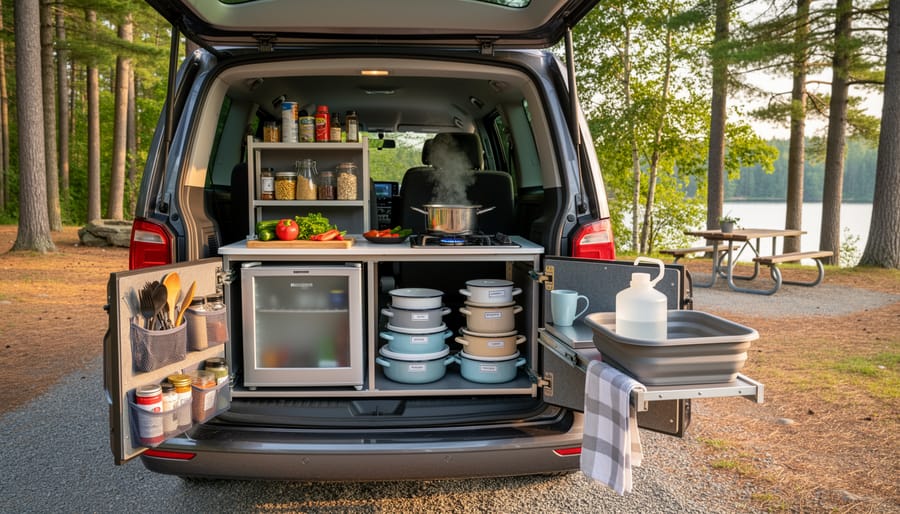
Ventilation and Indoor Cooking Safety
Cooking inside your van demands constant airflow, crack at least two windows on opposite sides to create cross-ventilation, and never cook with all doors and windows sealed. Carbon monoxide from propane stoves is odorless and deadly; proper ventilation prevents poisoning by letting combustion gases escape instead of pooling in your confined space. Keep a battery-powered CO detector among your camping essentials mounted near your sleeping area where you’ll hear the alarm. If weather turns nasty, heavy rain, high winds, or extreme cold, or if you can’t maintain adequate airflow, move your cooking outside to a sheltered spot or switch to cold meals. During fire bans, check Ontario Parks’ equipment rules during fire bans to confirm your stove setup remains permitted, and always prioritize fresh air over convenience.
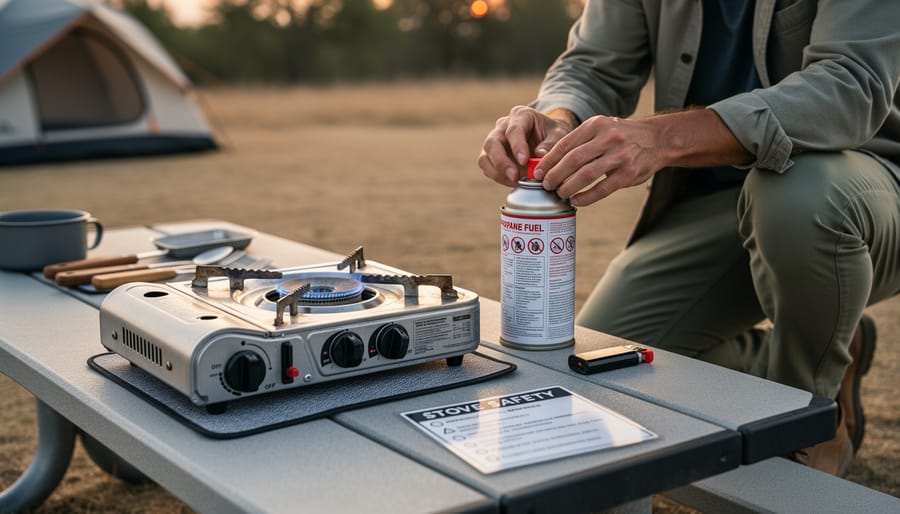
Wildlife Safety and Food Storage
Many Ontario Parks sit squarely in bear country, and a wandering black bear can detect food odours from over a kilometre away. Never leave food, coolers, or dirty dishes inside your van overnight, even locked doors won’t deter a determined bear that smells bacon grease on your stovetop. Most parks require you to use designated bear-resistant food storage in parks lockers after dark; transfer everything edible, including snacks, toiletries, and garbage, into these metal lockers before sunset. Clean your cooking area immediately after each meal. Wipe down surfaces with hot soapy water, and pack out all food scraps, don’t toss them in the fire ring or bushes. Store dishwater and cooking water in a sealed container until you can dispose of it properly at a designated grey water station, because even dishwater attracts wildlife. If your park site lacks lockers and you must store food in your van during the day, keep windows cracked for ventilation but fully closed at night, and be prepared to move everything to your vehicle’s trunk or a hard-sided cooler if a bear enters the area.
Setting Up Your Van Cooking Station: Step-by-Step
Organizing Your Workspace
Van kitchens demand ruthless efficiency. Start by clearing everything off your cooking surface, phones, maps, keys, and stash them in a designated “non-kitchen” spot before you begin. Even a few inches matter when you’re working with maybe two square feet.
Create distinct zones: one for raw ingredients, one for prep, and one for your stove. Use cutting boards that hang or wedge into place rather than slide around. Magnetic knife strips mounted on metal surfaces keep blades secure and accessible without eating up precious counter real estate.
Vertical space is your friend. Hang utensils from Command hooks on cabinet doors. Store spices in a magnetic rack stuck to your van’s metal wall. Keep frequently-used items like oil, salt, and spatulas in a small basket that you can move aside when you need the full surface.
The golden rule: finish each task completely before starting the next. Chop all your vegetables, then clear the board away. This staged approach prevents the chaotic clutter that turns van cooking from enjoyable to frustrating.
Meal Prep Before You Light the Stove
Chop vegetables, measure spices, and portion out ingredients at home or during a quiet moment at your campsite before you’re hungry and the stove is hot. This mise en place approach transforms van cooking from chaotic to calm. Store prepped items in small containers or resealable bags labeled by meal. Dice onions and peppers together for a stir-fry, pre-mix dry pancake ingredients, or marinate proteins overnight in a cooler. When cooking space is tight and propane precious, having everything ready means you’ll spend five minutes cooking instead of twenty juggling knife work over a cutting board balanced on your lap. Your future self, tired after a day hiking Ontario trails, will thank you for this prep work.
Easy Van-Friendly Recipes Perfect for Ontario Parks
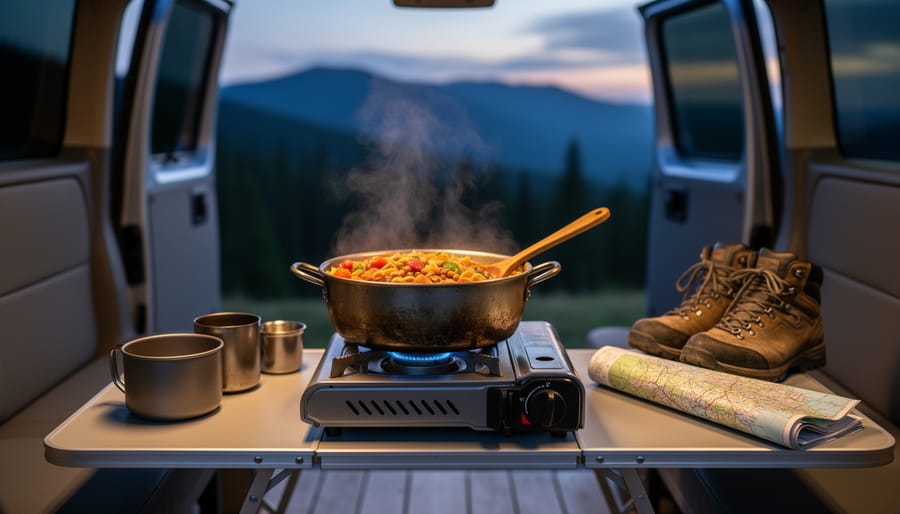
Hearty One-Pot Breakfasts
Start your Ontario Parks morning with a cast-iron skillet scramble: sauté diced potatoes with onions until crispy, push them to one side, crack in a few eggs, and toss in whatever vegetables or cheese you brought. Everything cooks in one pan, and you’ll have a protein-packed meal ready in 15 minutes.
For cooler mornings, try stovetop steel-cut oats with maple syrup and fresh berries from local markets. Simmer the oats in half milk, half water for creamier texture, then stir in dried cranberries or chopped apples. The slow-cooking warmth fights off the chill while you’re still in your sleeping bag.
Keep breakfast simple with a frittata cooked directly in your skillet, whisk eggs with leftover cooked vegetables, pour into the greased pan, cover, and cook on low heat until set. Slice it into wedges for an easy, no-flip breakfast that reheats beautifully for tomorrow’s meal.
Simple Lunches and Snacks
Midday in Ontario parks calls for fuel that won’t anchor you to the van. Pack wraps stuffed with hummus, shredded carrots, and smoked turkey, assemble them cold in minutes. Cheese and crackers paired with local apples make zero-fuss snacking. For something warm, heat canned soup on your stove in under five minutes, or toast day-old bread with butter for simple satisfaction. Pre-cut vegetables with ranch dip, trail mix, and energy bars keep your afternoon hikes well-powered without stealing time from your adventure.
Campfire-Style Dinners on Your Stove
After a day hiking Ontario’s trails, you’ll want hearty meals that deliver comfort without complicated steps. A simple chili works perfectly on a single burner, brown ground beef or turkey, add canned beans, tomatoes, and chili powder, then simmer for twenty minutes while you relax. One-pot pasta is even faster: cook pasta directly in broth with chopped vegetables and protein, letting everything absorb the liquid together. For quick stir-fries, prep vegetables at home, then flash-cook them with pre-cooked chicken or tofu over high heat, finishing with soy sauce and ginger.
These recipes echo the spirit of camp cooking adventures while fitting your van setup. Keep ingredients simple, fresh garlic, onions, and basic spices transform humble components into satisfying dinners. A cast-iron skillet works brilliantly for cornbread to accompany your chili, and leftover pasta reheats easily for next day’s lunch, maximizing your fuel and effort.
Sourcing Fresh Ingredients Near Ontario Parks
Finding fresh, local ingredients can transform your van camping meals from good to unforgettable. Many Ontario Parks sit near small towns and rural areas where farm-fresh produce and artisan goods are easy to access if you know where to look.
Before heading into the wilderness, map out grocery stores and farmers’ markets along your route. Towns like Huntsville (near Algonquin), Tobermory (Bruce Peninsula), and Blind River (Lake Superior Provincial Park) have well-stocked supermarkets where you can grab staples. Time your arrival for market days when possible, summer weekends often feature farmers’ markets in park gateway communities, where you’ll snag Ontario-grown tomatoes, sweet corn, berries, and fresh herbs that beat anything from a chain store.
Keep an eye out for roadside honour stands selling eggs, honey, maple syrup, and seasonal vegetables. These cash-only spots dot rural highways and offer incredibly fresh ingredients at honest prices. I’ve found the best garlic and zucchini at unmarked farm stands along Highway 60.
Your ingredient-sourcing toolkit for Ontario Parks trips:
– Farmers’ markets in gateway towns (check municipal websites for days and hours before your trip)
– Roadside farm stands along approach highways, especially common in summer and fall
– Fishing opportunities in parks with valid Ontario fishing licenses, fresh-caught pickerel or trout for dinner
– Foraged items like wild blueberries, raspberries, and mushrooms (only if you’re experienced; never eat what you can’t positively identify)
Plan shopping stops at the start or midpoint of your trip rather than daily runs. Stock up on perishables that travel well in a cooler, root vegetables, hard cheeses, cured meats, and sturdy greens like kale outlast delicate lettuce. Ontario’s short growing season means July and August bring peak abundance, while spring and fall require more reliance on storage crops like apples, squash, and potatoes from local growers who harvest and hold inventory.
Cleanup and Waste Management
Cleaning up after cooking in your van requires planning ahead. Bring a collapsible basin for washing dishes and use minimal water, heat small amounts on your stove to cut through grease effectively. Scrape plates thoroughly before washing to reduce the water you’ll need. For soap, choose biodegradable options and wash at least 70 meters from water sources.
Ontario Parks provide designated disposal stations at most campgrounds. Never dump grey water near lakes, rivers, or trails. If facilities aren’t nearby, strain food particles from your wash water and scatter the strained liquid widely over dry ground, far from campsites and water bodies. Pack out all food scraps in sealed bags, don’t attempt composting at parks unless specific facilities exist.
Those who master camping in Ontario understand that proper waste management protects wildlife and keeps parks pristine. Bring trash bags designated for different waste types: food scraps, recyclables, and general garbage. Store waste securely in your van until you can dispose of it properly. Many parks have recycling programs, so separate accordingly. Leave your campsite cleaner than you found it.
Testing Your Setup and Troubleshooting
Pre-Trip Test Cook
A driveway test cook saves you from discovering problems at your campsite. Set up your van exactly as you would at the park, pull out your stove, arrange your workspace, and cook an actual meal you plan to make. Time how long everything takes, from setup to cleanup. You’ll quickly spot issues: maybe your pot doesn’t fit the burner properly, your lighter ran out, or ventilation isn’t as good as you thought. Practice opening windows while cooking and figure out where to comfortably stand. This rehearsal builds confidence and reveals what’s missing from your kit before you’re an hour from the nearest store. If you’re planning eco-friendly stays test any new reusable containers or solar gear now too. Run through your entire cooking routine twice, once for dinner, once for breakfast, and make notes about what worked and what didn’t.
Common Challenges and Quick Fixes
Wind gusts out your burner mid-ccook? Position your van between the stove and prevailing wind, or craft a quick windscreen from aluminum foil wrapped around tent stakes. If you’re cooking at higher elevations in parks like Killarney, add 10-15% more cooking time since water boils at lower temperatures. Running low on propane? Most Ontario Parks have refill stations nearby, but keep a backup canister and learn to gauge fuel levels by weight. When fire bans hit during dry summers, switch all meals to your stove, this is where one-pot recipes shine. Can’t get your stove to light? Check for moisture in the igniter, use a lighter instead, and ensure your fuel canister isn’t too cold (warm it briefly in your hands, never over flame).
Frequently Asked Questions About Van Camping Cooking
Do not use this title in output – Frequently Asked Questions About Van Camping Cooking
If you’re new to van camping cooking, you probably have questions about logistics, regulations, and what to expect in different conditions. These answers address the most common concerns we hear from people planning their first cooking adventures in Ontario Parks. For broader camping preparation advice, check out our beginner camping guide.
Can I cook inside my van while camping in Ontario Parks?
Yes, but only with proper ventilation, crack windows or open doors to prevent carbon monoxide buildup. Many campers prefer cooking outside when weather permits, reserving indoor cooking for rain or cold.
Where can I refill propane tanks near Ontario Parks?
Most towns near popular parks have hardware stores, camping supply shops, or gas stations with propane refill services. Call ahead to confirm hours, as rural locations may have limited availability on weekends.
How does winter cooking differ from summer van camping?
Cold temperatures make propane less efficient and require longer cooking times. You’ll also need extra ventilation management since you can’t leave windows open as freely, and keeping water from freezing becomes a priority.
Do I need special permits to cook in my van at Ontario Parks?
No separate cooking permits are required, but you must follow the park’s fire regulations and food storage rules. During fire bans, portable stoves are usually still allowed while open fires are prohibited.
Water needs vary by meal complexity, but plan for at least three to five litres per day for cooking and cleanup. Bring extra for dishwashing, as you’ll use more than you expect for proper cleaning. Most Ontario Parks have water fill stations, though availability decreases in shoulder seasons, so confirm before your trip and carry backup containers.
You’ve got everything you need to turn your van into a mobile kitchen and enjoy incredible meals across Ontario Parks. The beauty of van camping cooking is that it gets easier each trip, your first pancake breakfast might feel like juggling act, but by your third outing, you’ll be flipping flapjacks with one hand while brewing coffee with the other.
Start small if you’re new to this. Pick a nearby park for your first adventure, test your setup at home beforehand, and stick to simple recipes you know well. There’s no shame in mastering a perfect grilled cheese before attempting gourmet stir-fries. The confidence you build with each successful meal makes the whole experience more enjoyable.
What makes van camping cooking truly special isn’t just the convenience or the money you save on restaurant meals. It’s cracking eggs while watching the sunrise over Algonquin, chopping vegetables with a lake view, or sharing a hot meal with fellow campers under the stars. You’re combining two of life’s great pleasures: good food and the outdoors.
Pack your gear, load up on ingredients, and head to one of Ontario’s beautiful parks. Your next favorite camping memory is probably waiting at the end of a spatula.



+ There are no comments
Add yours