
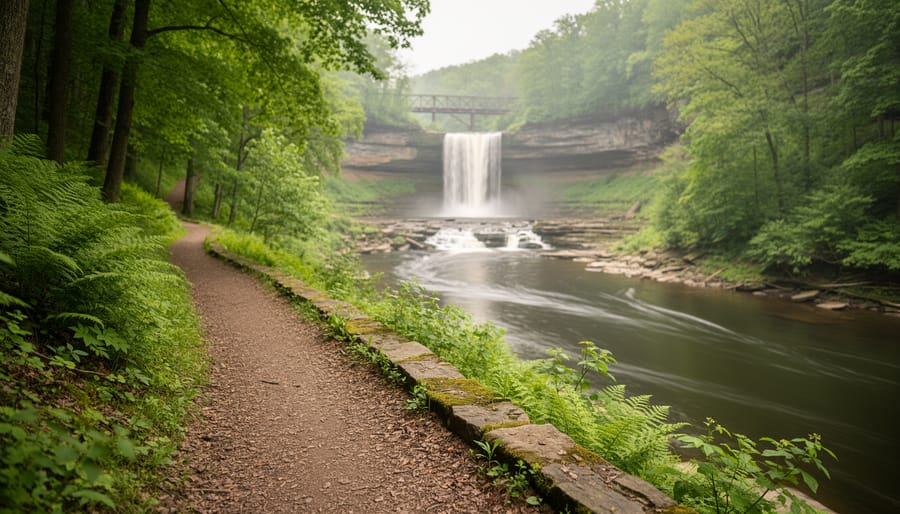
Cuyahoga Valley National Park sprawls across 33,000 acres between Cleveland and Akron, Ohio, making it one of America’s most accessible yet surprisingly underrated national parks. Unlike the remote wilderness of Yellowstone or Yosemite, this park thrives on proximity to urban life, offering a lush green corridor where waterfalls, historic canal towpaths, and dense forests exist just minutes from major highways and city centers.
The park draws visitors looking for a quick nature escape without the cross-country flight. You can hike the scenic Ledges Trail in the morning, bike the Ohio & Erie Canal Towpath by afternoon, and still make it back to Cleveland for dinner. No entrance fee means you can explore as often as you’d like, and the park stays open every day of the year, welcoming visitors through all four seasons.
What sets Cuyahoga Valley apart is its blend of natural beauty and cultural history. The Cuyahoga River winds through the valley, flanked by trails that pass 19th-century farms, vintage train depots, and the remains of the Ohio & Erie Canal. Boardman’s Mill, Boston Mill Visitor Center, and the historic Cuyahoga Valley Scenic Railroad tell stories of early American industry and transportation.
This growing interest in lesser-known national parks reflects a shift toward regional getaways. Travelers are discovering that you don’t need to venture to the Rockies for memorable outdoor experiences. Cuyahoga Valley delivers waterfalls like Brandywine Falls, wildlife spotting opportunities (beavers, herons, and coyotes roam here), and enough trail variety to satisfy everyone from casual walkers to serious hikers, all within a comfortable road trip from the Midwest and Northeast.
What Makes Cuyahoga Valley National Park Unique
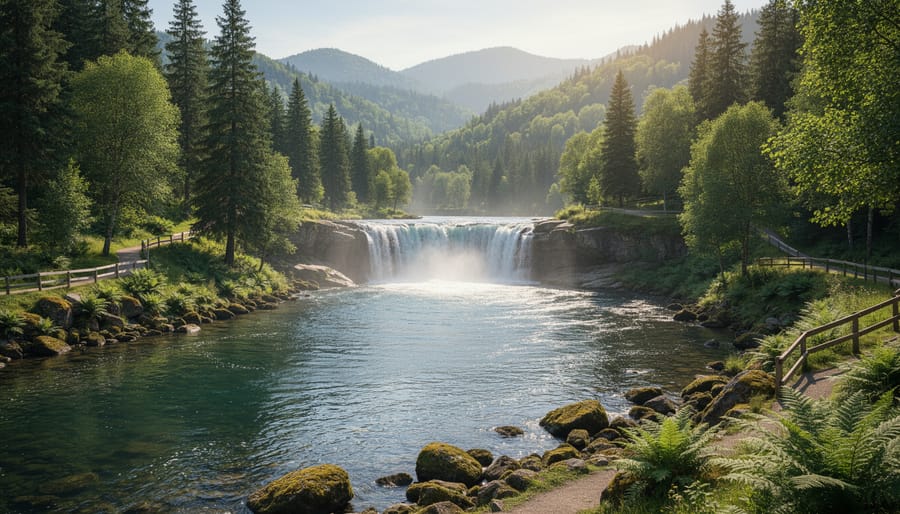
Most national parks conjure images of towering peaks in remote corners of the West, but Cuyahoga Valley flips that script entirely. Tucked between Cleveland and Akron along a 22-mile stretch of the winding Cuyahoga River, this park thrives in an urban corridor where you can hear trains rumbling alongside trails and spot city skylines from certain overlooks. It’s Ohio’s only national park, and its accessibility is precisely what makes it special, no multi-day road trips required, just an easy drive for millions of Midwest residents.
The landscape here tells a distinctly eastern story. Instead of desert vistas, you’ll find dense hardwood forests that explode with color each October, rolling hills carved by glaciers thousands of years ago, and wetlands teeming with herons and beavers. Brandywine Falls drops 65 feet over layered sandstone, while smaller cascades like Blue Hen Falls hide in shaded ravines. The park’s 33,000 acres contain over 125 miles of trails, from the flat, paved Ohio & Erie Canal Towpath Trail, a historic corridor once used by mules pulling cargo boats, to rugged footpaths through the Ledges rock formations.
What sets this park apart isn’t just geology. It’s the blend of natural beauty with living history. You’ll bike past century-old canal locks, explore working farms that demonstrate heritage agriculture, and maybe catch the Cuyahoga Valley Scenic Railroad chugging through the valley. There’s no entrance gate to pass through, no reservation lottery to navigate. The park simply exists as a public space woven into the fabric of everyday life, open every single day for whoever wants to walk in. That’s the insider secret: Cuyahoga Valley proves wilderness doesn’t have to be distant to be meaningful.
Essential Visitor Information
Cuyahoga Valley makes visiting a national park refreshingly simple. The park is open every day of the year from dawn to dusk, with trails and facilities accessible in all seasons. Best of all, an entrance pass is not required you can explore freely without stopping at entrance gates or purchasing permits. This accessibility removes barriers that often intimidate first-time national park visitors.
The National Park Service and its partners offer events and activities throughout the year, from guided nature walks to cultural programs. To see what’s happening during your visit, check the park’s official event calendar online, which lists scheduled programs with dates and locations. These ranger-led experiences can transform a casual visit into an educational adventure, especially if you’re new to the park.
Planning your visit depends on what draws you here. Hikers should prioritize the Towpath Trail and waterfall trails. Cyclists will want to dedicate time to the full towpath experience. History enthusiasts should plan around the Cuyahoga Valley Scenic Railroad schedule and historic sites. Nature watchers need early morning or evening visits for the best wildlife sightings. If you’re booking a picnic shelter at the Ledges or Octagon areas in Virginia Kendall, reserve through with a credit card, these popular spots fill up quickly on weekends.
The park’s layout spans a narrow corridor stretching roughly 22 miles north to south, so you’ll likely drive between activity zones. Most visitors focus on two or three areas per day rather than trying to see everything at once. Download a trail map before arriving, since cell service can be spotty in valleys and forested sections.
Top Trails and Outdoor Adventures

Waterfall Chasing
Brandywine Falls is the park’s crown jewel, a 65-foot cascade that thunders over shale and sandstone layers into a deep gorge. The quarter-mile boardwalk trail from the parking area delivers you to multiple viewing platforms, each offering a different perspective. Visit in early spring after snowmelt or following heavy rain for maximum drama, the falls roar with force and the spray catches golden morning light beautifully. Photographers should arrive at sunrise when the eastern light illuminates the falls while shadows still frame the gorge, creating natural contrast.
Blue Hen Falls, tucked into a quieter corner of the park, rewards those who seek it out. This 15-foot waterfall flows over a series of ledges in an intimate wooded setting. The half-mile trail from the Boston Store trailhead follows Springvale Road before descending into the ravine. Unlike Brandywine’s grandeur, Blue Hen offers a more contemplative experience. The best views come from the base of the falls, where you can capture the entire cascade framed by moss-covered rocks and overhanging hemlock branches. Visit on overcast days when diffused light eliminates harsh shadows and makes the water’s movement silky smooth in photographs.
The Ledges and Virginia Kendall Area
The Virginia Kendall area ranks among the park’s most striking destinations, where exposed Sharon conglomerate rock formations create dramatic ledges and overhangs that feel more like the Southwest than the Midwest. The half-mile Ledges Trail loops through narrow passages between towering cliffs, past caves formed by ancient erosion, and out to sweeping views of the Cuyahoga River valley below. Spring brings wildflowers tucking into rock crevices, while autumn transforms the surrounding forest into a blaze of color that contrasts beautifully with the gray stone. Ice Lake, just down the road, offers a quieter walk around a former quarry now filled with water and ringed by forest.
Families and groups can take advantage of the Ledges and Octagon Shelters, both reservable via with a credit card. These covered shelters include picnic tables and grills, making them ideal bases for reunions or celebrations. The area gets busy on summer weekends, so arrive before 10am to snag parking near the trailhead. Restrooms and drinking water are available seasonally at the main parking area.
Biking the Towpath Trail
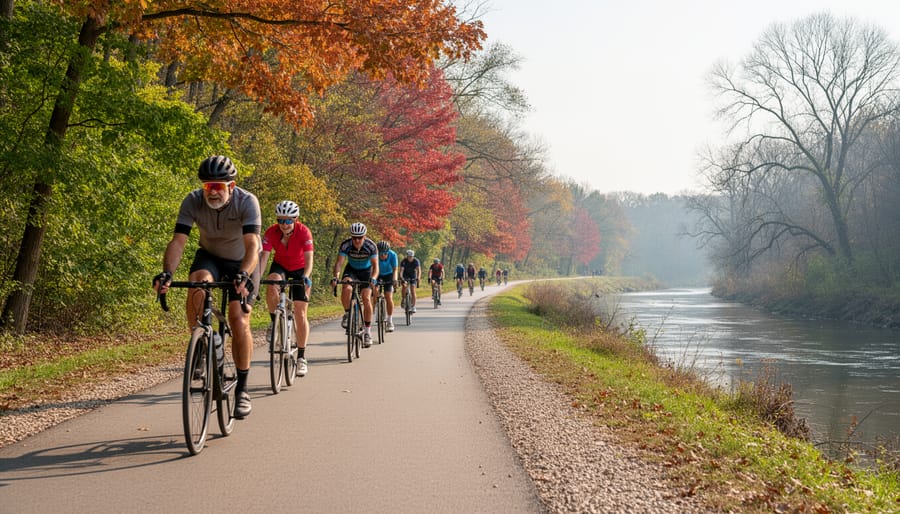
The Ohio & Erie Canal Towpath Trail stands out as one of the best park trails in the national park system for cyclists of all abilities. This 20-mile paved and crushed limestone path follows the historic canal route through the heart of Cuyahoga Valley, offering a completely car-free riding experience from the northern trailhead near Rockside Road down to Bolivar.
The trail surface alternates between smooth pavement and packed limestone, both suitable for road bikes, hybrids, and mountain bikes. You’ll ride past remnants of the canal era, weathered lock structures, stone walls, and wooden gates that once controlled water flow for commercial barges. The flat terrain makes this accessible for families with kids, though the full 20-mile stretch is ambitious for beginners. Most riders tackle 5-to-10-mile sections, turning around at Boston Store Visitor Center or one of the historic villages.
I’ve found early morning rides particularly magical, when mist rises off the canal and you might spot beavers working near the water’s edge. The tree canopy creates a tunnel effect in summer, providing welcome shade, while fall transforms the corridor into a gold-and-crimson showcase.
Several outfitters near the park rent bikes by the hour or day, including Century Cycles in Peninsula, which sits right on the trail. Peninsula makes an ideal mid-point stop, with cafes and shops within steps of the Towpath. The trail also connects to Cleveland’s urban trail network at its northern end and extends south beyond the park toward New Philadelphia, opening up multi-day touring possibilities.
Parking is available at numerous trailheads, including Boston Store, Station Road Bridge, and Hunt House. These outdoor adventures require minimal planning, just bring water, a helmet, and maybe a lock if you want to hop off and explore historic sites along the way.
Wildlife and Nature Watching
The park’s mix of forests, wetlands, and river corridors creates ideal habitat for wildlife viewing year-round. Patient observers regularly spot white-tailed deer grazing in meadows at dawn and dusk, while great blue herons stalk fish along the Cuyahoga River’s shallow banks. Beavers work industriously near Beaver Marsh, particularly in early morning hours when you can watch them drag branches or repair their lodges.
Bald eagles have made a remarkable comeback here, nesting along the river corridor each winter. Scan treetops near the Towpath Trail between Peninsula and Ira from December through March for your best chance to see these majestic birds. Bring binoculars, eagles often perch high in sycamores overlooking the water.
For birding enthusiasts, the park hosts over 250 species throughout the year. Spring migration in April and May brings warblers, vireos, and thrushes to wooded areas near Kendall Lake and the Ledges. Winter attracts northern species like dark-eyed juncos and white-throated sparrows. The Beaver Marsh boardwalk offers exceptional year-round birding, from wood ducks in spring to red-winged blackbirds in summer.
Timing matters for wildlife encounters. Visit during the quiet hours just after sunrise or before sunset when animals are most active. Move slowly and quietly, pausing frequently to scan the landscape rather than powering through. Keep at least 75 feet from large mammals and never approach nests or dens.
Respect wildlife by observing Leave No Trace principles: never feed animals, pack out all food waste, and stay on designated trails to minimize habitat disturbance. These practices help preserve the park’s recovering ecosystems and ensure future visitors can enjoy the same experiences you’re having today.
Beyond the Trails: Cultural and Historical Experiences
Cuyahoga Valley stands apart from wilderness-focused national parks through its layers of human history woven into the landscape. The Ohio & Erie Canal, completed in 1827, transformed this region into a commercial corridor connecting Lake Erie to the Ohio River. Walking or biking the Towpath Trail today, you’ll pass original canal locks, stone foundations, and interpretive signs explaining how mules hauled cargo boats through this rural passage. The canal system shaped communities that thrived here for decades before railroads took over.
The Cuyahoga Valley Scenic Railroad offers a different perspective on this history, running vintage trains through the park’s center. Unlike wildlife sightings that require patience and quiet, you can ride these passenger cars past forests and wetlands while learning about the region’s industrial heritage. The railroad operates year-round with various themed excursions.
Historic structures dot the park, preserved to tell stories of 19th-century Ohio life. Boston Mill Visitor Center occupies a restored mill building, while farms like Howe Meadow and Countryside Farmer’s Market showcase agricultural traditions. These working farms connect visitors to the area’s agrarian past, hosting seasonal events where you can watch traditional crafts and farming demonstrations.
The park’s cultural programming sets it apart. Rangers lead canal boat tours during warmer months, and the Boston Store Visitor Center serves as a hub for historical exhibits. This blend of natural recreation and cultural preservation creates an experience unlike the remote backcountry of western parks, here, you explore how people and nature coexisted for two centuries, leaving marks still visible in lock walls, railroad beds, and fieldstone fences threading through the woods.
Practical Tips for Your Visit
Timing your visit right makes all the difference. Fall draws the biggest crowds as visitors flock to see the vibrant foliage, typically peaking in mid-October. Spring offers wildflower displays and rushing waterfalls from snowmelt, while summer brings lush greenery and the most comfortable weather for biking. Winter transforms the landscape into a serene wonderland, and you’ll practically have the trails to yourself. For successful day trip planning weekday visits beat weekends for avoiding crowds, and early morning arrivals secure parking at popular trailheads like Brandywine Falls and The Ledges.
Pack layers regardless of season since temperatures can shift dramatically between sun-exposed towpath sections and shaded forest trails. Bring plenty of water, snacks, and sunscreen. For hiking, sturdy footwear with good traction is essential, especially after rain when trails get muddy. Bikers should note the Towpath Trail has a crushed limestone surface that’s generally smooth but can get soft in wet conditions.
Accommodation options surround the park in Cleveland, Akron, and Peninsula. The nearby village of Peninsula sits right on the Towpath Trail and offers the most convenient access, though camping inside the park itself is limited to organized group sites and backcountry camping by permit only.
For parking, arrive before 10am on weekends during peak seasons. The Boston Store Visitor Center lot fills quickly, but lesser-known access points like Station Road Bridge and Everett Road Covered Bridge offer quieter entries to the Towpath. Practice Leave No Trace principles by packing out all trash, staying on marked trails to protect vegetation, and carpooling when possible to reduce the park’s carbon footprint. These small actions help preserve this accessible natural treasure for future visitors.
Frequently Asked Questions
Do I need a park pass or entrance fee?
No, Cuyahoga Valley National Park does not require an entrance pass. The park is free to visit and open every day of the year.
Can I bring my dog to the park?
Yes, dogs are welcome but must be kept on a leash no longer than six feet. They’re allowed on most trails but not inside historic buildings or on the Cuyahoga Valley Scenic Railroad.
Are there camping facilities in the park?
The park doesn’t have traditional campgrounds, but Stanford House offers hostel-style lodging. Several private campgrounds and hotels are located just outside park boundaries in nearby communities.
When is the best time to visit?
The park offers year-round beauty, but fall foliage in October draws crowds, while spring wildflowers and cascading waterfalls peak in April and May. Winter offers quiet trails perfect for snowshoeing and cross-country skiing.
Can I swim in the Cuyahoga River?
Swimming is not recommended in the Cuyahoga River due to varying water quality, strong currents, and potential hazards. The park doesn’t have designated swimming areas.
What visitor facilities are available?
The park has multiple parking areas, restrooms at major trailheads, picnic areas, and visitor contact stations. Two shelters in the Virginia Kendall area can be reserved through with advance credit card payment.
Beyond these basics, the National Park Service and its partners offer many events and activities throughout the year. Check the park’s online event calendar for scheduled programs including guided hikes, nature talks, cultural demonstrations, and seasonal celebrations. Programs change monthly, so reviewing the calendar before your visit helps you catch ranger-led experiences that match your interests. Most programs are free, though some special activities may require registration.
Cuyahoga Valley National Park proves that extraordinary natural beauty doesn’t require crossing half the country. Tucked between Cleveland and Akron, this 33,000-acre sanctuary offers waterfalls, woodlands, and winding trails without the crowds, costs, or logistics that come with many western parks. You won’t need an entrance pass, advance reservations for most experiences, or weeks of planning. Just show up any day of the year and start exploring.
What makes this park special isn’t just convenience. It’s the way centuries-old canal history merges with thriving ecosystems, how a bike ride can take you from urban edges to deep forest in minutes, and how each season transforms the landscape into something new. The growing interest in Cuyahoga Valley reflects a shift in how people value outdoor spaces, recognizing that accessible wilderness matters just as much as remote grandeur.
Whether you’re chasing waterfalls, pedaling the Towpath, or simply seeking quiet along the river, this park rewards every visit. Sometimes the best adventures aren’t found in far-flung destinations, but in the hidden gems waiting closer than you think.



+ There are no comments
Add yours