
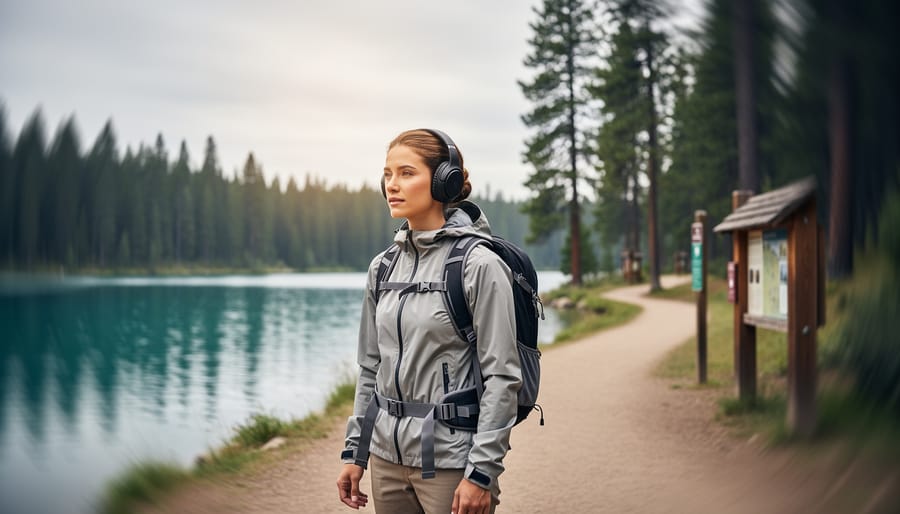
A 360 audio experience immerses you in sound from every direction, placing you at the center of a three-dimensional audio landscape where music, narration, or natural sounds move around and above you just as they would in real life. Instead of traditional stereo that splits sound between left and right channels, this spatial audio technology recreates how your ears naturally perceive sound in physical space, making a thunderstorm seem to roll overhead or letting you hear a songbird circling through the forest canopy.
For travelers exploring Ontario’s parks, trails, and cultural attractions, 360 audio transforms how you connect with places. Imagine walking a lakeside path with a guided audio tour that layers Indigenous storytelling, historical narratives, and ambient wildlife recordings that shift as you move through the landscape. Or picture yourself standing at a scenic lookout where the soundscape adapts in real time, blending wind through the pines with subtle musical cues that respond to the time of day.
This technology works through your existing headphones or earbuds (though some devices perform better than others), and it’s already showing up in museum exhibits, nature apps, and curated outdoor experiences across the province. You don’t need specialized equipment to try it, but understanding how the tech works and where to find quality experiences will help you choose options worth your time.
In this guide, you’ll learn what makes 360 audio different from regular recordings, how creators build these immersive soundscapes, and where Ontario visitors can actually experience this technology on trails, in cultural sites, and during outdoor adventures.
What 360 Audio Experience Really Means
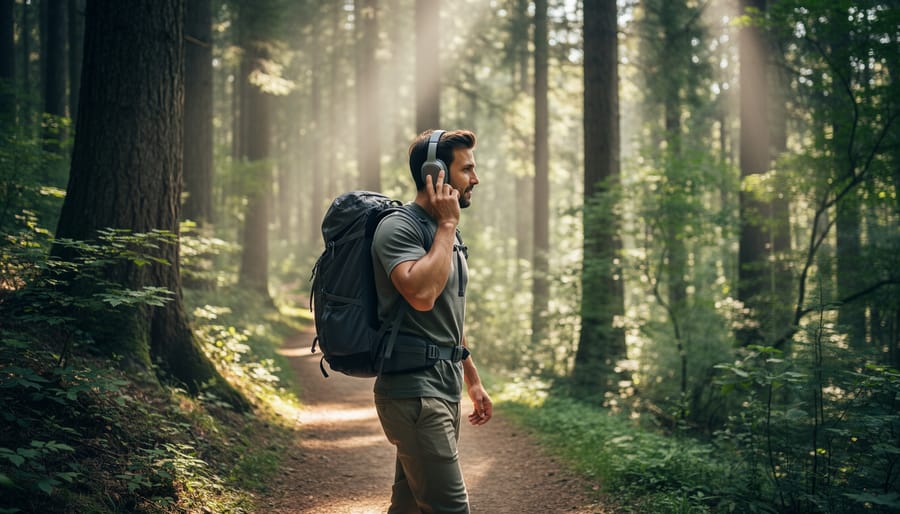
At its simplest, 360 audio is sound that surrounds you. Instead of music or voices coming flatly from left and right speakers, every sound has a specific position in three-dimensional space, above, below, behind, to your sides. When a bird chirps to your left on a trail, you hear it to your left. When wind rustles through trees overhead, the sound comes from above.
Traditional stereo gives you two channels: left ear, right ear. It creates width but not depth or height. 360 audio adds those missing dimensions. The technology tricks your brain into perceiving sound sources all around you, exactly as you’d experience them in the real world. Turn your head during playback, and the soundscape stays anchored to the environment rather than moving with you.
- 360 Audio
- Sound that positions audio sources in three-dimensional space around the listener, creating a sphere of directional sound rather than flat left-right stereo.
- Spatial Audio
- An umbrella term for audio technologies that add positional information to sound, making it feel like it’s coming from specific locations in your environment. Often used interchangeably with 360 audio.
- Binaural Sound
- A recording technique using two microphones (mimicking human ears) to capture how each ear hears sound differently, which your brain uses to determine direction and distance.
- Immersive Audio
- Audio designed to surround and envelop the listener completely, creating a sense of presence within a soundscape rather than passive listening.
For park visitors and outdoor enthusiasts, this technology transforms how you engage with nature and history. A guided audio tour at a provincial park can place a naturalist’s voice right beside you on the trail while layering in authentic forest sounds, woodpecker taps from a specific tree, water flowing from the direction of an actual creek. Historical sites use 360 audio to recreate scenes: soldiers’ footsteps crunching in the direction they would have marched, voices calling from period-accurate positions. You’re not just hearing a story, you’re standing inside it.
How 360 Audio Works in Outdoor Experiences
The Recording Side
Parks and attractions don’t just show up with a regular microphone and hit record. Creating convincing 360 audio requires specialized equipment that captures sound from multiple directions simultaneously, mimicking how our own ears receive audio information from the environment.
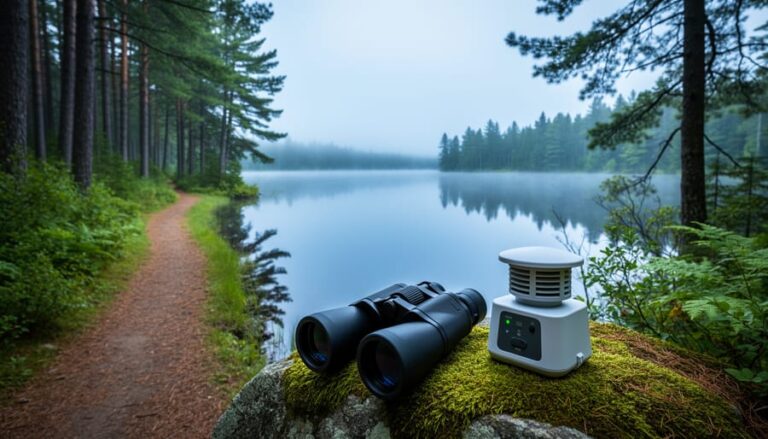
The most common setup uses binaural microphones, which are essentially two high-quality mics positioned to replicate human ear placement. Some recording teams go a step further with ambisonic microphones that capture sound in a full sphere around the device, picking up audio from above, below, and every horizontal direction. Picture a small sphere bristling with microphone capsules, each listening in a different direction.
Ontario Parks staff and content creators typically walk the trails or historic sites with these portable rigs, recording the natural soundscape exactly as a visitor would hear it. They might capture a thundering waterfall from multiple positions, the rustle of wind through pine trees overhead, or the calls of loons echoing across a lake at dawn. The raw recordings preserve the directional information so that when you listen later, sounds appear to come from their original positions in space.
The Listening Side
When you slip on headphones and press play on a 360 audio trail experience, something fascinating happens in your brain. The spatial audio technology sends slightly different signals to each ear, mimicking how sound reaches you in real life. Your brain automatically processes these interaural localization cues determining where sounds are coming from based on tiny differences in timing and volume between your left and right ears.
If a red-winged blackbird calls from your right, the audio arrives at your right ear a fraction of a second earlier and slightly louder than your left. Your brain interprets this instantly, creating the sensation that the bird is actually positioned to your right in three-dimensional space. When you turn your head, advanced 360 audio systems adjust these cues in real time, maintaining that spatial relationship.
It’s remarkably convincing. I’ve watched hikers instinctively turn toward a wolf howl in an audio recreation, even though they knew it was just technology. Your brain treats these engineered spatial cues the same way it handles actual environmental sounds, creating an immersive layer over the physical landscape you’re walking through.
Different Flavors of 360 Audio in Parks and Attractions
When you explore Ontario’s parks and attractions today, you’ll encounter 360 audio in surprisingly diverse forms, each designed to deepen your connection with the landscape or story.
Self-guided nature trails represent the most common application. You download an app before you arrive, plug in your headphones, and follow numbered markers along the path. As you walk, the audio shifts to match your location, bird calls emerge from the canopy above, water sounds ripple from the creek to your left, interpretive narration about the ecosystem wraps around you. Algonquin Park’s visitor center offers several of these trails, letting you experience the boreal forest through layered soundscapes that respond to where you’re standing.
Historical recreations transport you backward in time through spatial audio. At Fort Henry in Kingston, certain areas feature 360 audio experiences where you hear soldiers drilling, cannons firing from specific bastions, and period conversations happening in the spaces around you. The directional sound makes history feel immediate rather than distant.
Wildlife soundscape tours focus entirely on animal vocalizations and natural sounds, often recorded during prime activity periods like dawn chorus or dusk. These work beautifully for birding enthusiasts who want to learn species identification by ear. Point Pelee National Park has experimented with seasonal soundscape experiences during migration periods, helping visitors recognize different warbler calls positioned spatially as they would occur in the trees.
Interpretive programs at visitor centers increasingly incorporate 360 audio into audio exhibits allowing you to stand in the middle of a recreated ecosystem and hear it from all directions. These stationary experiences often combine with visual elements but rely on the spatial audio to create immersion.
Indigenous storytelling experiences use 360 audio particularly effectively, placing traditional narratives directly into the landscapes where they originated. Some parks partner with local First Nations communities to create these experiences, with stories unfolding spatially as you move through significant sites.
The technology also appears in newer AI guides that adapt content based on your questions and location, delivering answers through spatial audio that feels like a knowledgeable companion walking alongside you.
Where You’ll Encounter 360 Audio on Your Ontario Adventures
Right now, 360 audio is popping up in some pretty cool places across Ontario’s outdoor spaces, and you might stumble upon it even if you weren’t specifically looking for it. Provincial parks are leading the charge, with several locations testing self-guided audio experiences that layer historical narratives and ecological insights over the natural soundscape as you walk designated trails. Algonquin Park’s visitor center, for instance, has experimented with spatial audio exhibits that let you “stand” in the middle of a wolf pack’s territory and hear them calling from different directions.
Indigenous storytelling experiences are among the most powerful applications. Some First Nations communities have created spatial audio programs that bring creation stories and traditional knowledge to life as you walk through culturally significant landscapes. These aren’t just narrated tours, they’re designed so the storyteller’s voice moves with you through the environment, and natural sounds recorded at specific times of year create seasonal context you can experience any time you visit.
Historical sites have gotten creative too. Fort York in Toronto and other heritage locations offer 360 audio recreations where you can hear battle sounds, period conversations, and daily life activities positioned exactly where they would have occurred. It’s like time travel through your headphones.
For birders, several apps now use your phone’s GPS and compass to deliver spatially accurate bird calls, helping you locate species by sound direction rather than just playing a generic recording. Download these before heading into parks with spotty cell service, your future self will thank you. Conservation areas near urban centers tend to have the most robust tech infrastructure, making them good testing grounds if you’re new to spatial audio experiences.

Getting the Most Out of Your 360 Audio Experience
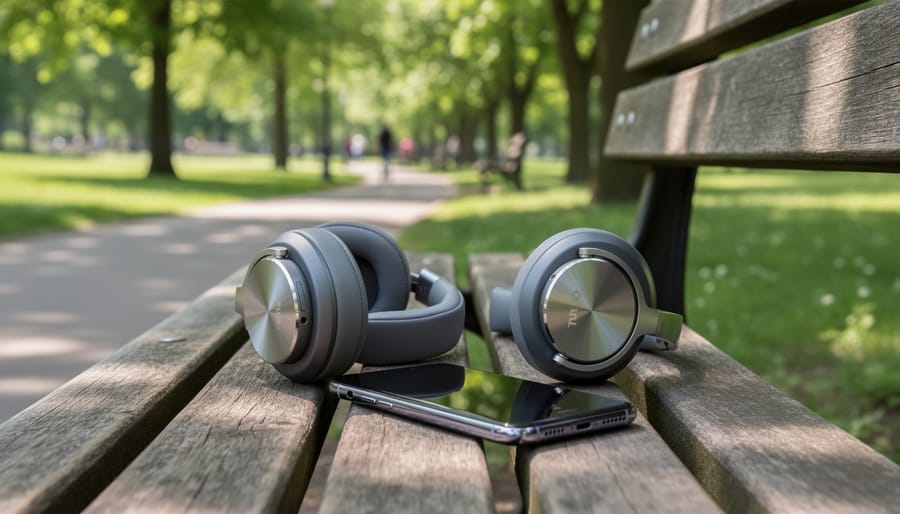
I learned this the hard way on a foggy morning at Algonquin Park: cheap earbuds flatten the entire 360 audio experience. You need headphones that support spatial audio, look for labels like “Dolby Atmos” or “360 Reality Audio.” Over-ear models work best for blocking wind noise on trails, but good in-ear buds are fine if you prefer traveling light.
Download your audio content before you leave cell coverage. Most parks offer pre-trip downloads through their apps or websites, and trust me, you don’t want to be fumbling with spotty service at a trailhead. I keep a dedicated folder on my phone for park audio tours and always grab them the night before while I’m packing.
Battery drain is real with spatial audio processing. Carry a portable charger, keep your screen brightness low, and close background apps. On longer hikes, I switch to airplane mode between listening sections to stretch my phone’s life. For more practical suggestions, check out our smart gear tips for outdoor adventures.
Here’s the eco-friendly part people forget: keep one ear open or use transparency mode. I once walked right past a family of deer because I was fully immersed in a soundscape about deer. The irony wasn’t lost on me. You need to hear actual wildlife, other hikers, and environmental cues for safety and respect.
If you have hearing differences, many park audio experiences offer customizable sound profiles, adjustable frequency ranges, and visual transcripts. Contact the park ahead of time to confirm what accommodations they provide.
Common Questions About 360 Audio in Outdoor Settings
Do you have questions about trying 360 audio on your next park visit? You’re not alone, plenty of Ontario travelers wonder how this technology fits into their outdoor adventures. Here are the answers to the most common questions I hear from visitors exploring spatial audio experiences.
Do I need special headphones for 360 audio experiences?
Most modern headphones work fine, but you’ll get the best results with headphones that have decent left-right separation. Many parks recommend over-ear or in-ear models rather than basic earbuds, though even standard AirPods or similar wireless earbuds will give you a good sense of the spatial effect.
Will 360 audio work with my smartphone?
Yes, nearly all 360 audio park experiences are designed to work with both iPhones and Android devices. You’ll typically download a free app or access the content through your web browser before heading out on the trail.
Are these experiences free, or do they cost extra?
Most Ontario parks include 360 audio tours as part of your regular park admission, though some specialized experiences at museums or historical sites might have a small additional fee. Always check the park’s website before your visit.
Can I still hear what’s happening around me while using 360 audio?
Absolutely, and you should. Keep your volume at a moderate level so you can hear approaching cyclists, wildlife, and park staff announcements. Some apps even have a transparency mode that blends real-world sounds with the spatial audio.
One question that comes up often relates to accessibility. If you have hearing differences, many 360 audio apps offer adjustable balance settings and some include visual cues or transcripts alongside the audio content. And if you’re worried about cell signal deep in the backcountry, download your chosen experience before you leave the visitor center, most content plays offline once it’s on your device.
Whether you’re standing at the edge of Niagara Falls hearing the roar shift around you or following a loon’s call across an Algonquin lake, 360 audio transforms how you connect with Ontario’s wild places. It’s not just about better sound, it’s about feeling more present in the moment, catching details you’d otherwise miss, and experiencing stories that unfold around you rather than being narrated at you.
I’ve watched kids light up when they hear a virtual thunderstorm circle overhead at a museum exhibit, and seen first-time birders finally distinguish a chickadee from a nuthatch because the app showed them exactly where the sound was coming from. That’s the real magic here.
Next time you’re planning a park visit, check if they offer a spatial audio experience. Download it before you lose cell signal, charge your headphones, and give it a shot. You might discover that the forest you’ve hiked a dozen times has layers you never noticed.
As more parks embrace this technology, we’re heading toward a future where every trail tells richer stories and every visitor, regardless of mobility or vision, can access experiences once available to only a few. That’s worth getting excited about.






+ There are no comments
Add yours