
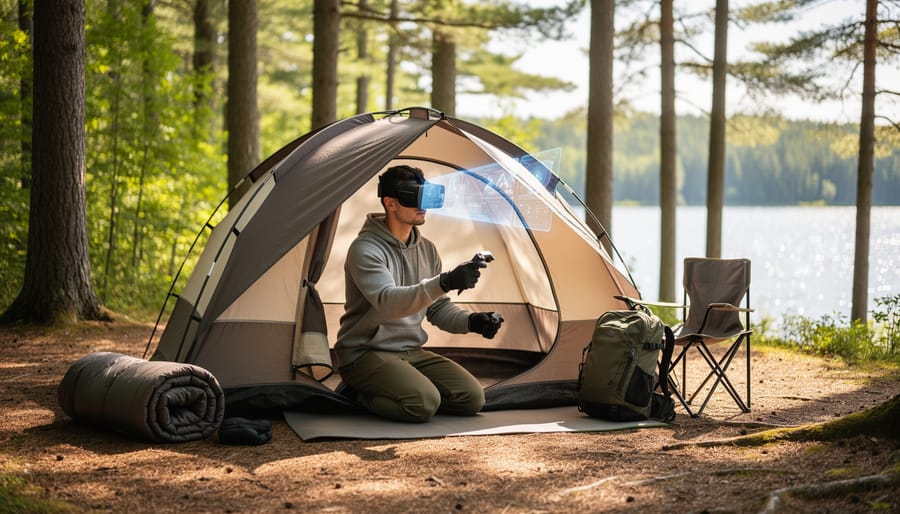
3D virtual reality tours let you explore Ontario parks from your living room, helping you scout campsites, preview trail conditions, and choose the perfect spot before you pack the car. Using a VR headset, smartphone, or even just your web browser, you can virtually walk through campgrounds, check out waterfront views, and get a 360-degree feel for what each park offers without spending a dime on gas.
If you’ve ever arrived at a campsite only to discover it’s too close to the bathroom, lacking shade, or surrounded by RVs when you wanted seclusion, you’ll appreciate what this technology brings to trip planning. Virtual reality tours give you the power to preview specific campsites, assess privacy between sites, and scope out amenities like beach access or proximity to trailheads. You’re making informed decisions based on actual visuals rather than a few photos and a map.
Ontario Parks has embraced this technology alongside innovations like AR nature walk apps recognizing that modern campers want detailed information before committing to reservations. The tours are particularly valuable during peak booking season when popular sites fill up quickly and you need to choose fast.
Here’s the insider tip: VR tours work best when you’re comparing multiple parks or trying to decide between waterfront and interior sites. The technology isn’t perfect (weather and seasonal changes can make tours look different than your actual visit), but it beats guessing. You’ll save time, reduce booking anxiety, and show up knowing exactly what to expect.
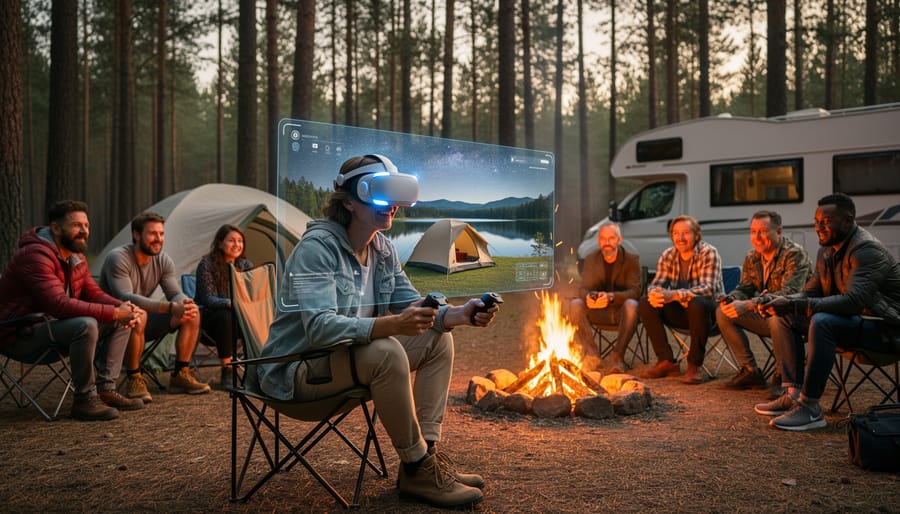
What Makes 3D Virtual Reality Tours Different from Regular Photos
When you scroll through photos of Ontario parks online, you’re seeing what the photographer wanted you to see. That perfect shot of a campsite? It was probably taken from the one angle that made it look spacious. The trail photo showing a gentle path? You have no idea what’s just beyond the frame. This is where 3D virtual reality tours flip the script entirely.
With VR tours, you control the view. You can spin around a full 360 degrees, look up at the tree canopy, check how close the neighbours are on both sides, and peer down the path to see what’s ahead. It’s the difference between looking at a postcard and actually standing somewhere. When you’re trying to decide between campsites, this changes everything.
I learned this the hard way after booking what looked like a “waterfront” site at a popular park. The photos showed blue water and trees. What they didn’t show was the steep embankment, the lack of beach access, and how far the picnic table sat from any water view. The next year, I tried a VR tour before reserving. I could immediately see the gentle slope down to the shore, gauge the distance from the fire pit to the water’s edge, and spot the perfect spot for launching kayaks. That site delivered exactly what I expected because I’d essentially visited it already.
Regular photos compress depth and distance. VR tours let you judge whether your RV will actually fit in that parking pad, whether your kids can safely reach the water, and whether that trail really matches your fitness level. You’re not just viewing the park anymore. You’re previewing your actual experience.
How to Access 3D Virtual Reality Park Tours in Ontario
Equipment You’ll Need (And Budget-Friendly Options)
You don’t need expensive equipment to start exploring 3D virtual reality tours of Ontario parks. Your smartphone is likely all you need to get started, most park VR experiences work through web browsers or free apps that let you move your phone around to look in different directions. It’s basic but genuinely useful for checking out campsite layouts and trail views.
If you want a more immersive experience, Google Cardboard viewers cost $10-15 and turn your phone into a proper VR headset. They’re surprisingly effective for park scouting, letting you feel like you’re standing in the campsite rather than just looking at pictures. I’ve recommended these to dozens of first-time campers who found them perfect for family planning sessions.
Mid-range options like the Meta Quest 2 (around $300) offer sharper visuals and easier navigation, but they’re honestly overkill unless you’re already using VR for other things. For park research specifically, the smartphone-in-viewer approach gives you 90% of what premium headsets offer. Save your budget for camping gear instead, a $15 cardboard viewer will show you everything you need to know about that lakeside site you’re considering, without the hefty price tag.
Finding Parks That Offer Virtual Tours
Ontario Parks has been rolling out virtual reality experiences gradually since 2024, so finding which parks offer them takes a bit of detective work. Start with the Ontario Parks official website, they’ve recently added a “Virtual Tours” filter to their park search tool. As of 2026, about 35 of the most popular provincial parks offer some form of VR content, with Algonquin, Killarney, and Bon Echo leading the pack.
The easiest approach: visit the individual park page you’re interested in and scroll down to the “Plan Your Visit” section. If VR content exists, you’ll see a dedicated “Explore in VR” button near the campsite map. Not all parks advertise this prominently yet, so it’s worth checking even if you don’t see it immediately flagged.
Third-party platforms like Google Earth VR occasionally feature user-generated tours of popular parks, though quality varies wildly. The Ontario Tourism website also maintains a growing directory under their “Digital Experiences” section, where you can browse by region.
Here’s a time-saver: parks managed by conservation authorities (like Credit Valley or Grand River) typically link their VR tours directly from booking pages. They’ve been more aggressive adopting this technology than some provincial sites. Call ahead if you’re planning a trip specifically to scout via VR, park offices can tell you immediately whether tours exist and if they’re up to date.
What You Can Actually Scout During a Virtual Park Tour
When you step into a virtual park tour, you’re gathering intelligence that transforms from “I hope this works out” into “I know exactly what to expect.” The practical scouting power goes far beyond pretty scenery. You can assess the actual ground conditions where your tent will sit, checking whether a site sits on level dirt, grassy terrain, or that rocky surface that’ll have you tossing and turning all night. Zoom in close enough and you’ll spot whether there’s natural shade from mature trees or if you’ll be baking under full sun during those hot July afternoons.
Distance matters more than park maps suggest. Through VR-like navigation effects you can virtually walk from your campsite to the washroom facilities and discover it’s actually a five-minute trek through the woods, not the “nearby” the description promised. That same virtual stroll reveals whether the path is smooth enough for nighttime bathroom runs or if you’ll need a headlamp and sturdy shoes. Beach access becomes crystal clear too. You’ll see if that waterfront site truly offers lake views or if dense vegetation blocks everything but mosquitoes.
Here’s what to actively look for during your virtual scouting session:
- Site privacy and spacing between neighbouring campsites
- Natural windbreaks or exposure to prevailing winds
- Proximity to high-traffic areas like playgrounds or boat launches
- Actual dimensions of the parking pad and tent area
- Overhead clearance for RVs or tall vehicles
- Condition and width of trails leading to points of interest
- Location of fire pits relative to picnic tables
- Visibility of water sources from the campsite
Trail difficulty becomes tangible when you can virtually hike the first section. Those switchbacks, root systems, and steep grades that sound manageable in text descriptions suddenly look quite different when you’re sizing them up for young kids or less experienced hikers. Accessibility features show their true usefulness too. Ramps, boardwalks, and paved paths reveal their actual width, slope, and condition rather than just checking a box on a features list.
Parking situations tell crucial stories. You’ll spot whether that “parking available” means a spacious pull-through or a tight squeeze that’ll test your backing-up skills with a loaded trailer. The virtual view shows you exactly where you’ll unload gear and how far you’ll haul it to your actual campsite.
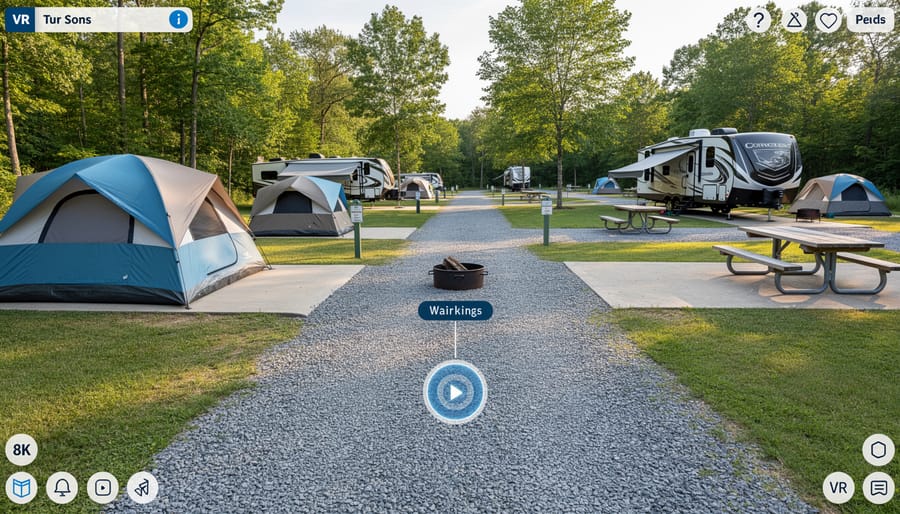
Using VR Tours to Choose the Perfect Campsite
Here’s the thing about booking a campsite sight unseen: you’re gambling. I learned this the hard way at Algonquin in 2024 when my “waterfront” site turned out to be a muddy slope 50 feet from the lake, sandwiched between two RV camps with generators. A 3D virtual reality tour would have saved me that weekend.
Now I systematically compare sites before I book. Start by loading tours of your top three or four site options. Look around each one at eye level, then crouch down virtually to see what kids will experience. That low angle reveals roots and rocks that might trip little ones, uneven tent pads, and how much actual usable space exists beyond the parking spot.
Privacy matters more than most reservation systems indicate. Use the VR tour to check sightlines between neighboring sites. Can you see their picnic table from yours? Turn 360 degrees slowly. Dense cedar screens beat a few scraggly pines. I always look for natural barriers like rock outcroppings or thick undergrowth that create genuine separation.
For families, scan for hazards you can’t spot on a map. The Johnsons told me they nearly booked a Killarney site perched above a rocky drop before the VR tour showed them the steep edge just beyond the fire pit, terrifying with a toddler. They switched to a flat, enclosed site and had a stress-free week.
Check the walk to bathrooms and water taps from each potential site. Count the steps virtually. That 200-meter trek looked fine on paper but meant multiple daily hikes with heavy water jugs. Secluded spots feel romantic until you’re making that walk at 2 a.m. with a flashlight.
Virtual Scouting for Accessibility and Special Needs
VR tours have become invaluable for campers who need to evaluate accessibility features before committing to a park visit. Instead of making an exploratory trip only to discover that pathways are too steep, washroom facilities lack proper clearances, or campsites sit too far from accessible parking, you can scout everything virtually from home. The 360-degree views let you measure distances visually, spot potential obstacles like tree roots or uneven ground, and assess whether beach access points have gradual slopes or stairs.
For families with young children, these virtual previews answer critical questions: Is the playground equipment age-appropriate? How far is the nearest washroom from potential campsites? Are there protected swimming areas visible from the shore? Parents consistently tell me that seeing the actual layout helps them pack appropriately and set realistic expectations with kids about what their camping experience will involve.
The technology proves especially helpful for wheelchair users evaluating campsite surfaces, seniors checking proximity to vehicle access, and anyone with sensory sensitivities who needs to understand noise factors like highway proximity or generator zones. One camper with chronic pain told me she uses VR tours to identify sites with shorter walks to amenities, turning what used to be guesswork into confident planning. While VR can’t capture every accessibility detail, it eliminates many of the unknowns that previously kept people from exploring Ontario’s parks.
Limitations to Keep in Mind
While 3D virtual reality tours are powerful scouting tools, they can’t capture everything about a real park visit. The most significant limitation is seasonality, that lush green campsite you explored in VR might look dramatically different covered in fall leaves or spring mud. Weather conditions change the entire character of a location, and VR tours typically show parks on perfect sunny days, not during rain, fog, or the unpredictable conditions you might actually encounter.
Virtual tours also can’t convey crowd levels or noise. A peaceful-looking site might be next to a busy family camping area during summer weekends, or positioned near popular amenities like solar charging stations that attract foot traffic throughout the day. You won’t hear neighbouring campers, generators, or highway noise in a silent VR environment.
Most importantly, VR can’t replicate the sensory experience of being outdoors, the smell of pine needles, the temperature drop near the lake, the feel of uneven terrain under your feet, or that indefinable quality of a place that makes it feel right. Technology helps you make informed decisions, but it’s not a complete substitute for the real thing.
That said, even with these limitations, VR tours remain incredibly valuable for eliminating obviously unsuitable options and identifying promising candidates worth the drive.
Insider Tips for Getting the Most from Your Virtual Park Visit
Take your virtual tour in the evening when you’re relaxed and can give it your full attention, scrolling through a park on your phone while commuting won’t reveal the details that matter. Set aside 20 minutes, grab some headphones if the tour has ambient sound, and treat it like you’re actually there.
Make it a family event. Let kids navigate the virtual trails and vote on their favourite campsites. You’ll get their buy-in early and avoid the “this isn’t what I expected” complaints later. One couple I know turns VR scouting into game night, everyone picks a site, then they compare notes on privacy, shade, and beach access.
Create a checklist as you explore. Note the distance from your preferred site to washrooms, how level the ground looks, whether there’s natural windbreak, and if neighbouring sites feel too close. Screenshot spots you want to reference later when packing or setting up.
Don’t rely on VR alone. Cross-reference what you see with recent reviews, check the park’s official site for current conditions, and look at trail maps. Drone park scouting offers aerial perspectives that complement ground-level VR views, while AI trip planning tools can match parks to your specific interests based on what you discover during virtual tours.
Time your tour for the season you’ll actually visit. A campsite that looks perfect in summer sunshine might have different shade patterns in spring or fall. If possible, revisit the VR experience closer to your trip date to refresh your memory and finalize gear decisions based on what you observed.
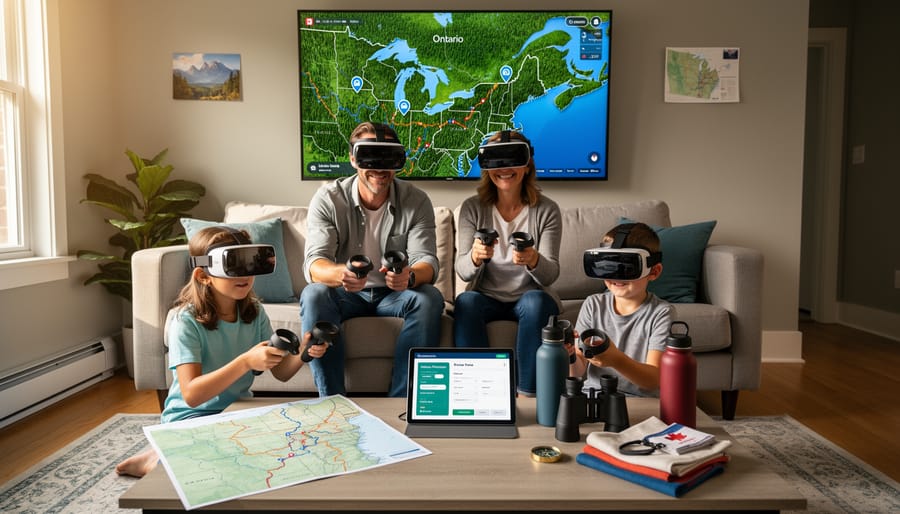
3D virtual reality tours have transformed the way we plan camping trips, turning uncertainty into confidence before you even leave home. Instead of hoping that campsite 42 will have the shade and lake access you’re dreaming about, you can actually see it beforehand. That’s powerful stuff for anyone who’s ever driven hours only to find their reserved spot wasn’t quite what they imagined.
The technology keeps getting better, more parks are jumping on board, and the best part? You’re not just passively looking at pictures anymore, you’re actively exploring spaces, making informed choices, and arriving at your destination already familiar with the layout. It takes that first-visit anxiety right off the table.
Before you book your next Ontario park adventure, take twenty minutes to scout it virtually. Pull up those VR tours, explore a few different campsites, walk the trails from your living room, and see which spot truly fits your crew’s needs. You’ll show up ready, excited, and with a plan that actually works. The future of park tourism is already here, and it’s making every camping trip better from the very first decision. Give it a try, your tent will thank you.





+ There are no comments
Add yours