
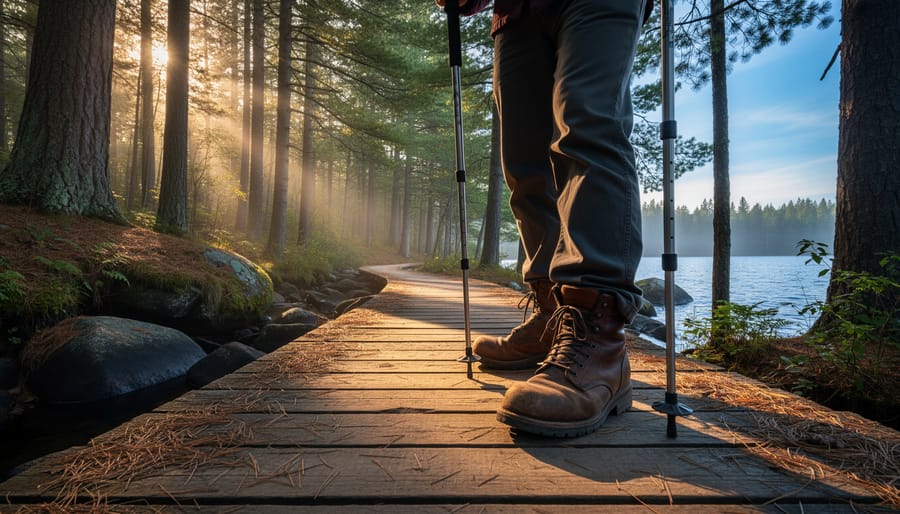
Algonquin Provincial Park offers some of Ontario’s most rewarding hiking experiences, with trails ranging from easy 1-kilometer boardwalks to challenging multi-day backpacking routes that wind through ancient forests, past pristine lakes, and up to breathtaking lookouts. Whether you’re planning your first visit and need to know where to find Algonquin or you’re a seasoned hiker searching for your next adventure, the park’s 15 established day-use trails and three backpacking trails deliver unforgettable wilderness encounters.
The beauty of Algonquin hiking lies in its accessibility. You can start your morning on the Lookout Trail’s rocky summit watching sunrise paint the maple-covered hills, spend your afternoon spotting moose along the Mizzy Lake boardwalks, and still make it back to your campsite for dinner. Each trail reveals a different side of the park’s 7,653 square kilometers of protected wilderness, from the dramatic cliffs of the Barron Canyon to the peaceful pine groves surrounding Hemlock Bluff.
Before you lace up your boots, know that all visitors need a valid day-use permit to access the trails, and a few routes face closures in 2026 that’ll affect your planning. The Highview Cabin is closed this season for repairs, and bridge closures on both the Highland and Provoking Falls sections mean backpackers should expect re-routes. But with proper preparation and the right trail choice, your Algonquin hiking adventure will showcase why this park has captivated outdoor lovers for over a century.
Why Hike Algonquin Provincial Park
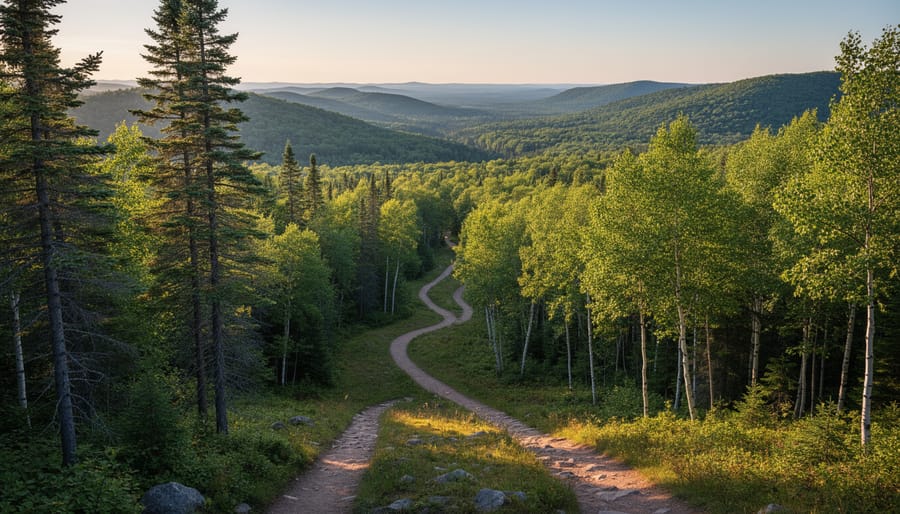
Algonquin Provincial Park isn’t just another hiking destination. It’s 7,653 square kilometres of genuine wilderness where you can step onto a trail and find yourself immersed in landscapes that have remained largely unchanged for centuries. The park protects a transition zone between the northern boreal forest and the southern deciduous woods, creating an ecological crossroads unlike anywhere else in Ontario.
What sets these trails apart is the sheer variety they offer. Complete beginners can explore accessible boardwalks that wind through wetlands teeming with life, while seasoned backpackers tackle rugged multi-day routes through remote backcountry. You might spot a moose feeding in a shallow pond, hear wolves howling at dusk, or watch a beaver working industriously on its dam. The wildlife viewing here rivals anywhere in the province.
The natural beauty shifts dramatically with the seasons. Spring brings wildflowers carpeting the forest floor and rushing waterfalls. Summer offers lush greenery and warm days perfect for combining a hike with a swim in a pristine lake. Fall transforms the park into a riot of crimson, gold, and orange that draws visitors from around the world.
Whether you have two hours or two weeks, Algonquin’s trail network accommodates your schedule and skill level. That flexibility, combined with the park’s proximity to major Ontario cities, makes it possible to experience true wilderness without extensive travel. The trails deliver what so many of us crave: a genuine escape into nature where you can disconnect, breathe deeply, and remember what wild places feel like.
Top Algonquin Hiking Trails
1. Lookout Trail
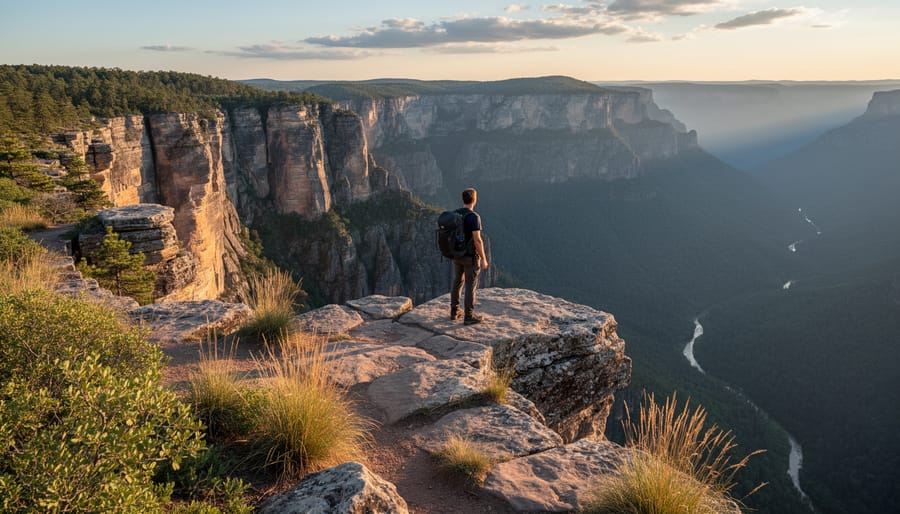
The Lookout Trail sits along Highway 60 at kilometre 39.7 and delivers exactly what its name promises: a stunning panoramic view from a high cliff overlooking forests and lakes below. This 1.9-kilometre loop is Algonquin’s most popular trail for good reason. It takes about an hour to complete at a comfortable pace, making it perfect for visitors who want a genuine wilderness payoff without committing to an all-day trek.
The trail starts gently through a mixed hardwood forest before climbing steadily to the clifftop lookout. The ascent is moderate but manageable, with a few steeper sections that get your heart pumping. Wooden stairs and railings help on the trickiest bits. Once you reach the exposed rock summit, the view stretches for kilometres across the park’s signature rolling landscape of maple ridges, spruce bogs, and glittering water.
First-time visitors to Algonquin should make this trail a priority. It encapsulates the park’s rugged beauty in a short, accessible package, and the clifftop perch is ideal for photos or simply soaking in the scale of Ontario’s wilderness. Arrive early on summer weekends to avoid crowds at the lookout itself. Fall brings spectacular colour, though the parking area fills fast during peak foliage weeks. The trail can be slippery after rain, so sturdy footwear matters more than the short distance might suggest.
2. Track and Tower Trail
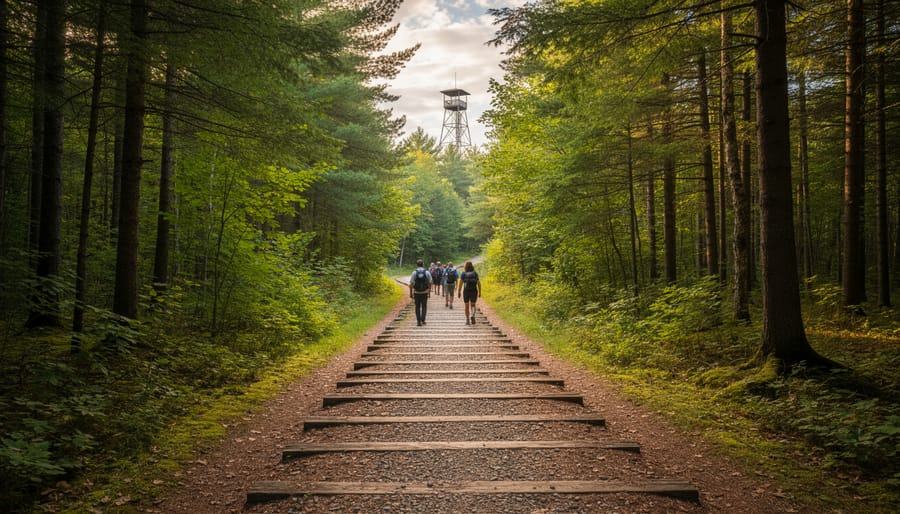
Track and Tower Trail follows an old Ottawa, Arnprior and Parry Sound Railway bed, making it one of the flattest and most accessible hikes in Algonquin. The 7.7-kilometre out-and-back route takes roughly two hours at a leisurely pace, with the main attraction being a historic fire tower that rewards climbers with sweeping 360-degree views over the surrounding forest canopy.
The wide, packed-earth path is ideal for families with young children and anyone seeking an easier introduction to Algonquin’s trails. The gentle grade means strollers with sturdy wheels can manage much of the route, though the fire tower itself requires climbing metal stairs. Along the way, interpretive signs explain the railway’s logging history and point out features like old telegraph poles still standing in the woods.
The fire tower sits about 2.5 kilometres from the trailhead at kilometre 25 of Highway 60. From the top, you can scan the horizon for hawks riding thermals or simply take in the vast expanse of maple, birch, and conifer stretching in every direction. Early morning visits often mean quieter trails and better chances of spotting deer browsing near the old rail corridor. Pack water and snacks, as there are no facilities along the route, and consider bringing binoculars to make the most of the tower’s vantage point.
3. Booth’s Rock Trail
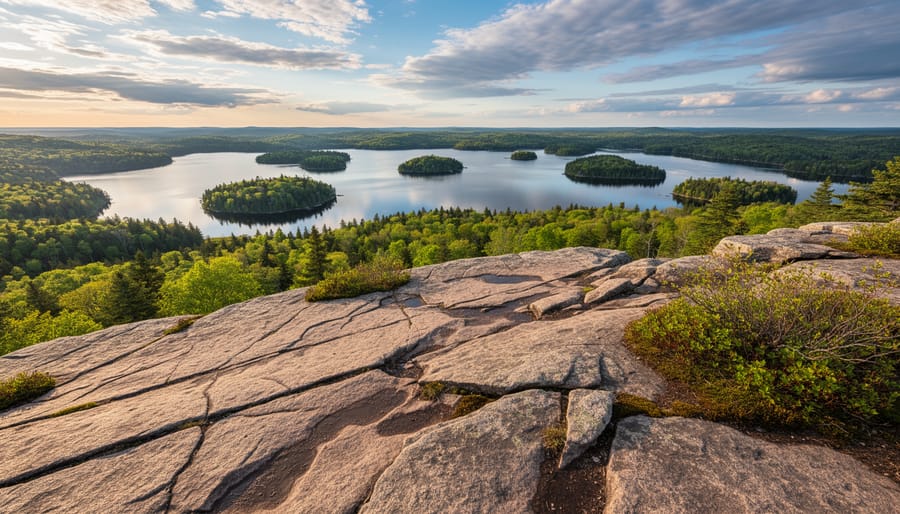
Booth’s Rock Trail delivers one of Algonquin’s most rewarding viewpoints for a moderate effort. This 5.1-kilometre loop climbs steadily through mixed forest before emerging onto a massive granite outcrop that juts out over Rock Lake, offering sweeping panoramic views that stretch for kilometres.
The trail gains roughly 180 metres in elevation, with the climb concentrated in the middle section where you’ll navigate some rocky terrain and a few steeper pitches. It’s not technical, but the elevation change makes it more challenging than the easier interpretive trails. Good footwear with ankle support helps on the rockier sections.
What sets Booth’s Rock apart is the dramatic payoff. The namesake rock formation is enormous, a bare granite promontory where you can spread out, catch your breath, and take in the vista. On clear days, you’ll see forested ridges rolling away in every direction, with Rock Lake sparkling below. It’s genuinely spectacular, and the open rock offers multiple vantage points for photography.
Photographers love the late afternoon light here when the sun illuminates the lake and distant hills. Bring a wide-angle lens to capture the full sweep of the landscape. The rock face itself also makes a striking foreground element.
Plan for about two to three hours to complete the loop at a comfortable pace, with extra time to linger at the viewpoint. You’ll want it.
4. Mizzy Lake Trail
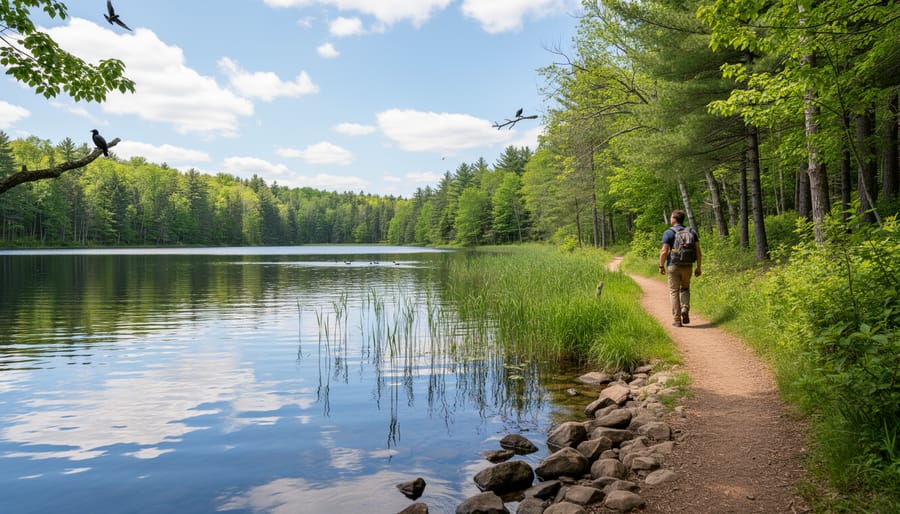
The Mizzy Lake Trail stretches 11 kilometres through some of Algonquin’s richest wildlife habitat, making it the park’s premier destination for animal watching. This relatively flat loop winds past nine different ponds and small lakes, each offering opportunities to spot moose, beavers, otters, and waterfowl in their natural environment.
The trail’s length might seem intimidating, but the easy terrain and multiple viewing points make it manageable for anyone with reasonable fitness. Plan for four to five hours to complete the full circuit, allowing time to pause at each wetland and scan for wildlife. Early morning visits between May and September give you the best chance of seeing moose feeding in the shallow waters, while beaver activity peaks at dawn and dusk year-round.
Bring binoculars and move quietly between the lakes. The boardwalk sections cross sensitive wetland areas where sounds carry easily, so keep voices low and avoid sudden movements. Watch for fresh tracks in muddy sections and listen for the distinctive slap of a beaver’s tail on water as a warning signal.
The trail also showcases excellent spring wildflowers and brilliant fall foliage reflected in still waters, but wildlife watching remains its main draw. Pack insect repellent during warmer months, as the wetlands attract clouds of mosquitoes and blackflies that can make the experience miserable without protection.
5. Centennial Ridges Trail
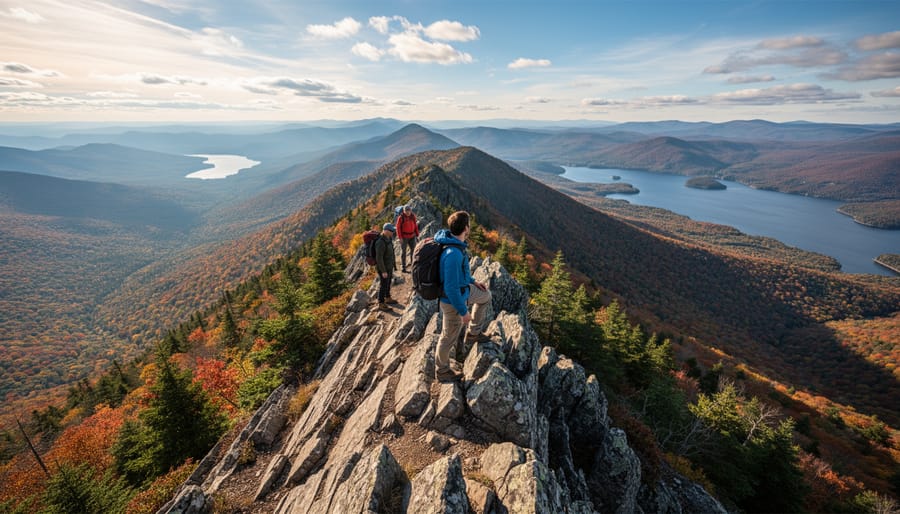
For experienced hikers seeking Algonquin’s most rewarding challenge, Centennial Ridges delivers an unforgettable 10-kilometre loop that earns every breathless view. This isn’t a casual stroll, expect steep climbs, rocky scrambles, and nearly 400 metres of elevation gain as you traverse a series of ancient ridgelines carved by glaciers millennia ago.
The payoff hits you repeatedly: panoramic vistas sweeping across endless forested valleys, distant lakes glinting through the canopy, and exposed rock faces where you’ll pause to catch your breath and your camera. Autumn transforms this trail into a pilgrimage site when the hardwood forests explode in crimson and gold, but the exposed ridges mean you’re hiking in full sun with limited shade, bring more water than you think you need.
What makes Centennial Ridges beloved among seasoned hikers is the variety. You’ll climb through dense forest, emerge onto windswept lookouts, navigate technical rocky sections that demand sure footing, and descend through quiet glens where the only sound is your boots on stone. Budget four to six hours for the full loop, longer if you’re stopping to soak in the views. This trail rewards fitness and preparation, it’s not the place to test new boots or tackle after a sleepless night.
6. Bat Lake Trail
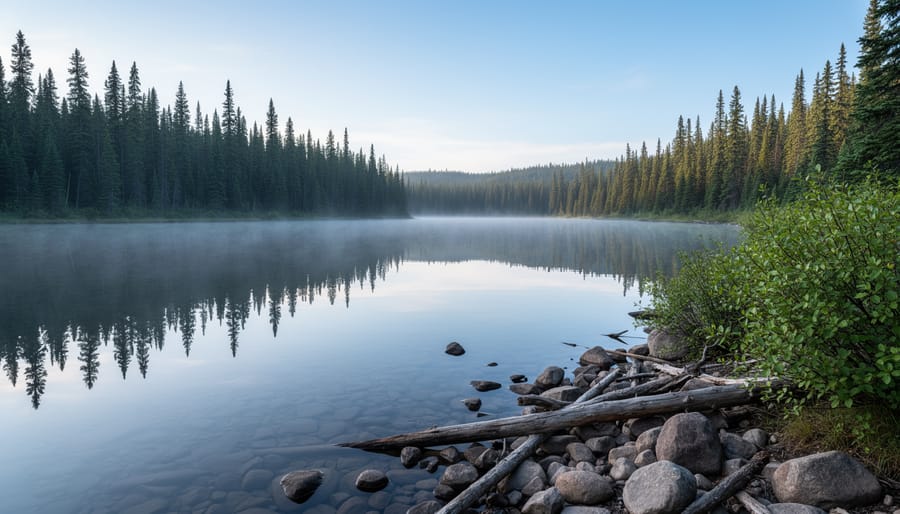
The Bat Lake Trail offers one of the park’s most rewarding moderate hikes for those seeking solitude and untouched wilderness. This 9.6-kilometre return trail winds through dense forest and over gentle ridges before arriving at the crystal-clear waters of Bat Lake, a pristine backcountry destination that sees far fewer visitors than the park’s more popular routes.
What sets this trail apart is the sense of remoteness you’ll experience despite being accessible as a day hike. The path meanders through old-growth hemlock stands and crosses several small streams, with minimal elevation gain making it manageable for hikers with reasonable fitness. You’ll likely have the trail largely to yourself, especially on weekdays, creating opportunities to truly disconnect and immerse yourself in the wilderness.
The lake itself is the highlight: a tranquil, mirror-like body of water surrounded by rocky shoreline and towering pines. It’s an ideal spot to rest, have lunch, and soak in the peaceful atmosphere before retracing your steps. The trail can be muddy in sections, particularly after rain, so waterproof boots are recommended. While not technically challenging, the length and remote feel make this a perfect choice for hikers wanting to experience Algonquin’s backcountry character without committing to an overnight trip.
7. Highland Backpacking Trail
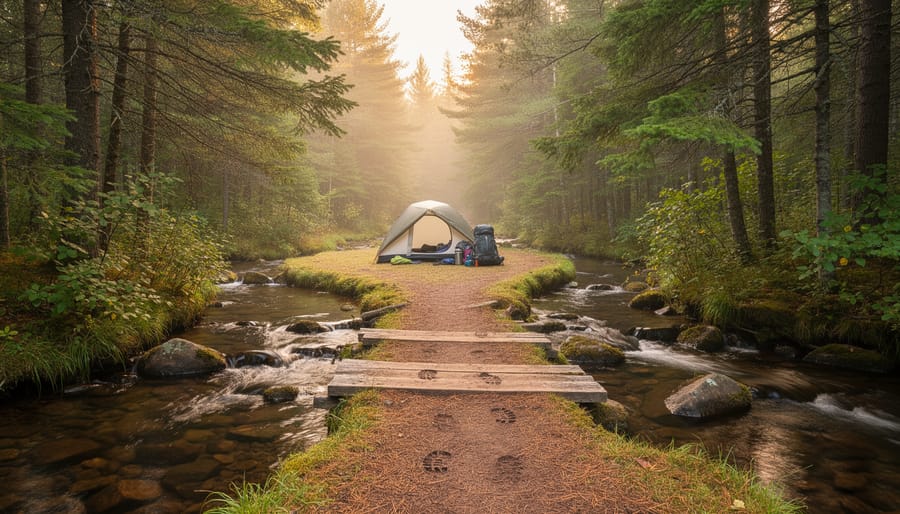
For experienced backpackers seeking a true wilderness immersion, the Highland Backpacking Trail delivers a demanding multi-day adventure through Algonquin’s most remote terrain. This 35-kilometre loop typically takes three to five days to complete, winding through dense forests, across rocky ridges, and past secluded backcountry lakes where you’re unlikely to encounter another soul.
The trail’s reputation for solitude and raw beauty comes with a legitimate challenge: steep elevation changes, rugged terrain, and navigation that requires careful attention to trail markers. You’ll need to be self-sufficient with proper backpacking gear, water filtration, and navigation skills. The reward is camping beside pristine wilderness lakes under star-filled skies, with only loon calls and crackling campfires for company.
These recent closures have altered the traditional route, so review updated trail maps and plan your itinerary accordingly. Despite the changes, the Highland remains one of Ontario’s premier backpacking experiences for those ready to earn their views. Strong hiking fitness, experience with wilderness camping, and comfort navigating off the beaten path are essential. If you’re new to multi-day backpacking, consider building up with some overnight trips on shorter trails first.
Practical Information for Hiking in Algonquin
Permits and Park Access
Every visitor to Algonquin Provincial Park needs a valid permit before hitting the trails, no exceptions. Whether you’re planning a quick afternoon hike or a full day exploring multiple routes, you’ll need to purchase a day use permit. These day use permits include access to all hiking trails, the park’s museums and visitor centers, beaches, and designated picnic grounds.
You can buy permits at any park gate when you enter. Arrive prepared with cash or card, and keep your permit visible on your vehicle dashboard while you’re in the park. If you’re new to visiting Ontario’s provincial parks, general parking tips apply here too, follow posted signs at trailheads and use designated parking areas to avoid fines or towing.
When to Visit
Each season paints Algonquin’s trails in a different light, and choosing when to visit depends on what you’re after. Spring brings muddy conditions and black flies, but the waterfalls are at their most powerful and wildlife emerges hungry and visible. Trails can be soggy through May, so waterproof boots are essential.
Summer offers the most predictable weather and all facilities are open, but popular trails like Lookout and Track and Tower see heavy foot traffic, especially on weekends. Start early to beat the crowds and the heat. The bugs thin out by late summer, making August particularly pleasant.
Fall is peak season for good reason. The hardwood forests explode in reds, oranges, and golds from late September through mid-October, creating stunning backdrops for every hike. Trails are dry, temperatures are comfortable, and the mosquitoes are gone. Expect company on the more accessible routes during colour peak.
Winter transforms the park into a quiet wonderland, though most trails are ungroomed and require snowshoes or skis. The solitude is unmatched, but come prepared for serious cold and shorter daylight hours.
Local Tips and Insider Advice
Start your hikes early, especially on popular trails like Lookout or Centennial Ridges, to beat the crowds and catch wildlife at their most active. Dawn also offers softer light for photography and cooler temperatures for climbing those steeper sections.
Pack bug spray and a head net between late May and early July. Black flies and mosquitoes are relentless in Algonquin’s backcountry, and they can turn a beautiful hike miserable if you’re unprepared. Long sleeves in light, breathable fabric help too.
- Arrive at trailheads before 9 AM for easier parking and better wildlife sightings
- Bring a head net and DEET-based repellent during black fly season
- Yield to uphill hikers on steep sections and step aside on narrow boardwalks
- Scout Mizzy Lake’s western ponds at dusk for moose and beaver activity
- Capture sunrise from Booth’s Rock or the Lookout Trail fire tower for stunning photos
Practice Leave No Trace principles rigorously. Pack out everything you bring in, stay on marked trails to protect fragile vegetation, and never feed wildlife, it disrupts their natural behaviors and can be dangerous for both you and the animals. If you’re camping overnight on the Highland Trail, use designated sites only and follow proper food storage protocols to avoid attracting bears.
Consider exploring trails beyond the Highway 60 corridor. While that area offers excellent hiking and is home to most visitor facilities, ventures into the park’s eastern or northern sections reveal quieter experiences. If you’re looking for variety and want to compare Algonquin with other options, check out the best hiking near Toronto to plan a broader Ontario hiking adventure. Algonquin’s trails reward those who venture off the main routes with solitude and pristine wilderness encounters.
Common Questions About Algonquin Hiking
Do I need a permit to hike in Algonquin Park?
Yes, all visitors to Algonquin Provincial Park must have a valid permit. Day use permits cover access to trails, museums, beaches, and picnic grounds.
Which trails are best for beginners or families with children?
Track and Tower Trail offers an easy, interpretive walk on an old railway bed, making it perfect for families. Mizzy Lake Trail is also relatively flat and provides excellent wildlife viewing opportunities for all ages.
How should I prepare for wildlife encounters?
Make noise while hiking to avoid surprising animals, carry bear safety equipment like bear spray, and never approach or feed wildlife. Store food securely and give animals plenty of space if you spot them on the trail.
Are there any current trail closures I should know about?
The Provoking Falls bridge on the Highland Backpacking Trail has been removed due to safety concerns, with a posted re-route adding 2.5 km to the trail. Additionally, Highview Cabin will be closed for the 2026 season for repairs.
Can I bring my dog on Algonquin trails? Dogs are allowed in certain areas but must be leashed at all times. Check current park regulations before your visit, as some trails have restrictions to protect wildlife habitat.
What should I pack for a day hike? Bring plenty of water, snacks, a trail map, sunscreen, bug spray, and rain gear regardless of the forecast. Extra layers are wise even in summer, as temperatures can shift quickly in the backcountry.
Algonquin’s hiking trails truly deliver experiences for every type of adventurer, from families seeking an easy afternoon stroll to seasoned backpackers craving wilderness solitude. The park’s remarkable biodiversity, stunning vistas, and well-maintained trail network make it one of Ontario’s most rewarding destinations for connecting with nature. As you plan your visit, remember that respecting the environment ensures these trails remain pristine for future generations. Practice Leave No Trace principles, stay on marked paths, and give wildlife the space they need. Whether you’re watching for moose along Mizzy Lake or conquering the ridges of Centennial, Algonquin offers unforgettable moments in Ontario’s wilderness. Ready for more Ontario hiking? Lace up your boots and discover what awaits on these incredible trails.




+ There are no comments
Add yours