
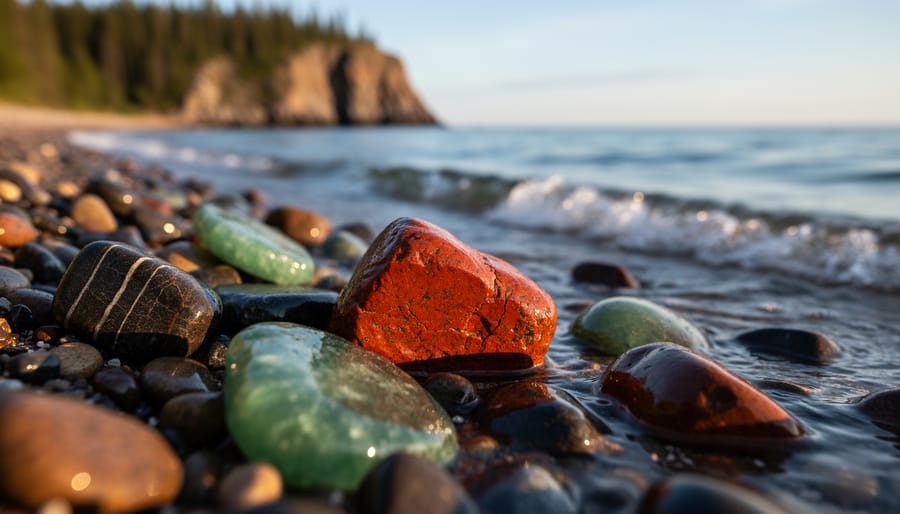
Walk the cobblestone beaches after a storm when fresh waves expose newly tumbled specimens hiding beneath the surface layer. Focus your search along the waterline where Lake Superior’s powerful currents deposit the most interesting finds, particularly near creek mouths and rocky headlands where geological diversity concentrates. Bring a spray bottle to wet stones instantly revealing their true colors and patterns, transforming dull gray rocks into vibrant displays of red jasper, banded agates, and shimmering greenstone.
Lake Superior’s shores offer one of North America’s most spectacular rock-hunting experiences, where ancient geological forces have created a natural treasure trove spanning nearly two billion years of Earth’s history. Every pebble tells a story written in stone, from volcanic eruptions that shaped the landscape to glaciers that polished and transported these geological gems across vast distances.
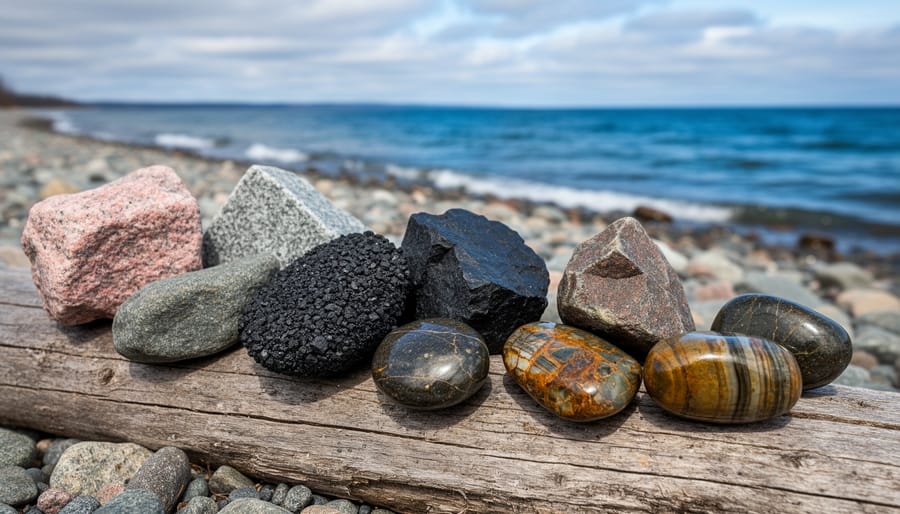
The diversity here astounds first-time visitors and seasoned collectors alike. You’ll discover smooth, translucent agates with intricate banding patterns formed in gas pockets of ancient lava flows. Look for distinctive greenstone showing traces of copper mineralization, a reminder of the region’s mining heritage. Pudding stones catch your eye with their unique composition of embedded pebbles cemented together, while red and pink granite specimens display the crystalline beauty of the Canadian Shield’s bedrock.
Understanding what you’re finding deepens the experience immeasurably. That water-worn basalt in your hand originated from massive volcanic eruptions over a billion years ago. The striped patterns in sedimentary rocks reveal ancient lake beds and river systems. Each specimen connects you directly to forces that built continents and carved lakeshores.
The best part? Rock collecting here requires no special equipment beyond curiosity and respectful appreciation. Just remember to take only memories and photos from protected areas, leaving geological wonders for future visitors to discover and enjoy.
Why Lake Superior Provincial Park Is a Rock Hound’s Dream
Lake Superior Provincial Park sits right on the ancient Canadian Shield, one of the oldest geological formations on Earth. This prime position means you’re literally walking on billions of years of history, with rocks that have been shaped, shifted, and polished by glaciers, waves, and time itself.
What sets this park apart from other Lake Superior destinations is the sheer accessibility of its shoreline treasures. Unlike Sleeping Giant Provincial Park, where clifftop views dominate, here you’ll find numerous beaches and accessible shoreline stretches perfect for leisurely rock hunting. The 11-kilometer Coastal Trail alone connects multiple beaches, each with its own geological personality.
The variety here is truly remarkable. Within a single afternoon, you might discover vibrant agates at one beach, greenstone specimens at another, and fascinating basalt formations just down the shore. The park’s position where the shield meets the lake creates a natural sorting system, with waves continually tumbling and depositing different rock types along various stretches of coastline.
Here’s an insider tip: visit after spring storms or in early June when ice breakup has freshly turned the beaches. The wave action brings new specimens to the surface, and you’ll often have the shores mostly to yourself. Katherine Cove and Agawa Bay are particularly productive spots, though I’ve had my best luck at the smaller, unnamed beaches between major points.
Fall offers another advantage for rock hounds. The cooler weather means fewer crowds, and lower water levels expose rocks that spend most summer months underwater. Plus, the autumn light makes spotting translucent agates much easier against the sand.
Remember to respect the park’s ecology while hunting. Stay on designated paths when accessing beaches, and never disturb vegetation or wildlife habitat in your search. The rocks have waited millions of years; they’ll still be there when you stick to sustainable exploring.
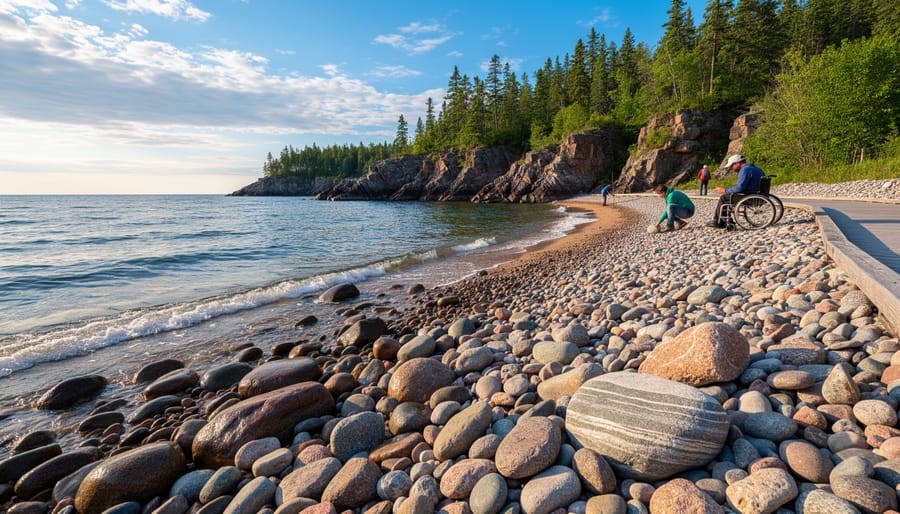
The Rocks You’ll Actually Find (And How to Spot Them)
Agates: Lake Superior’s Candy-Striped Treasures
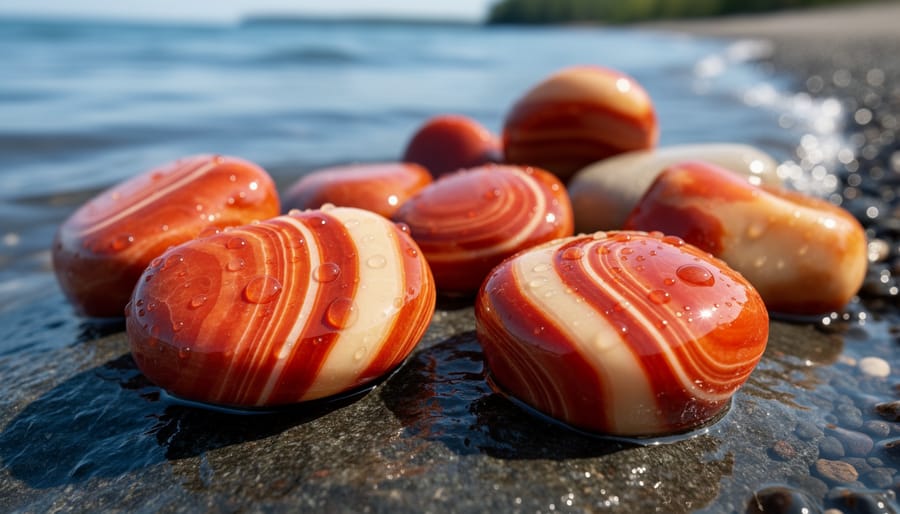
If you’ve ever dreamed of finding your own gemstone, Lake Superior agates are nature’s candy-striped gifts waiting along the shoreline. These beauties formed over a billion years ago when iron-rich waters filled gas bubbles in ancient lava flows, creating those mesmerizing bands of red, orange, white, and brown that make each agate completely unique.
Here’s an insider tip that every successful agate hunter swears by: the wet test. When rocks are dry, agates can look disappointingly ordinary—just another grey stone in the crowd. But get them wet, and magic happens. The translucent bands suddenly pop with color and pattern. That’s why the best hunting happens right after a wave retreats or during a light drizzle. Many experienced hunters carry a spray bottle to test promising candidates.
Look for agates where waves concentrate smaller stones—near creek mouths, in curved bays, and along points where currents shift. The beaches at Agawa Bay and Katherine Cove are particularly productive. Early morning or late afternoon light works best, as the sun’s angle helps you spot that telltale waxy luster agates have when wet.
Size-wise, don’t expect bowling balls. Most Lake Superior agates range from pea-sized to golf ball dimensions, though occasionally someone gets lucky with a larger specimen. The key is patience and a willingness to crouch low, scanning the shoreline with the persistence of a treasure hunter—because that’s exactly what you are.
Basalt and the Billion-Year-Old Lava Flows
When you pick up those dark, heavy rocks scattered along Lake Superior’s shoreline, you’re literally holding pieces of an ancient volcanic event that nearly split North America in two! These are basalt rocks, formed from massive lava flows that erupted about 1.1 billion years ago during the Midcontinent Rift.
What makes these rocks so fascinating are the visible features that tell their dramatic story. Look closely and you’ll spot gas bubbles (called vesicles) frozen in the rock – they formed when gases escaped from the molten lava as it cooled. Some bubbles later filled with minerals, creating beautiful agate and other gemstone formations. You’ll also notice the rocks’ characteristic dark grey to black color and their surprising weight compared to other stones of similar size.
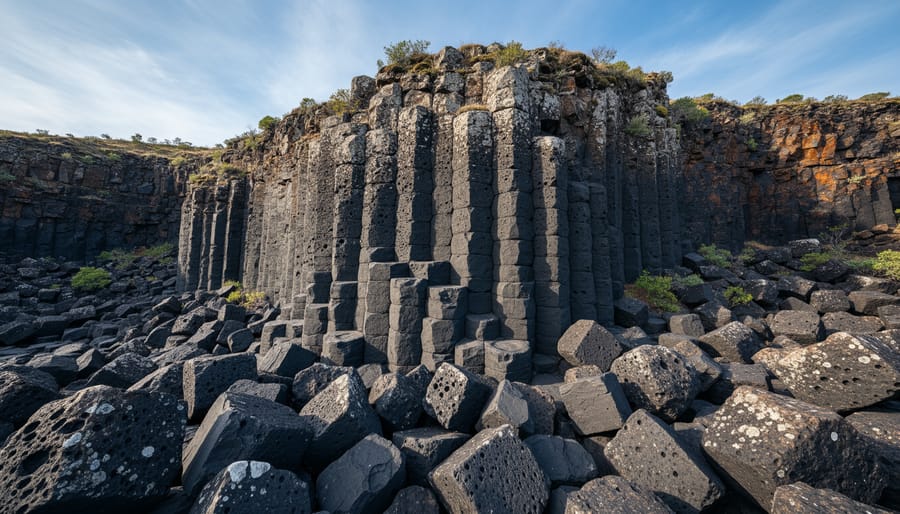
Along certain stretches of shoreline, keep an eye out for columnar formations – tall, hexagonal pillars of basalt that look almost too geometric to be natural. These columns formed as the thick lava flows cooled and contracted, creating these striking patterns.
Insider tip: The best basalt specimens are found after storms, when wave action reveals fresh rocks. Early morning beachcombing often yields the most interesting finds before other visitors arrive. Remember to practice eco-friendly collecting – take only a few small specimens and leave the larger formations for others to enjoy.
Red and Pink Granite: The Canadian Shield’s Signature
The stunning pink and red granite you’ll encounter along Lake Superior’s shoreline tells the ancient story of the Canadian Shield, one of Earth’s oldest geological formations. These eye-catching rocks get their rosy hues from potassium feldspar, a mineral that crystallized deep underground over a billion years ago. The intensity of color varies from soft peachy-pink to deep salmon-red, often swirled with white quartz and dark specks of mica that sparkle in the sunlight.
For the most impressive displays, head to Katherine Cove where massive pink granite outcrops tumble dramatically into the lake. The contrast between the warm-toned rocks and Lake Superior’s cobalt blue waters creates absolutely breathtaking photo opportunities. Old Woman Bay is another spectacular spot where you can walk right up to towering pink granite cliffs that seem to glow at sunset.
Here’s an insider tip: visit these locations in early morning or late afternoon when the angled sunlight really brings out the rocks’ pink and red tones. The colors appear much more vibrant when wet, so just after rain or where waves splash the shore, you’ll see them at their most dramatic. Remember to stay on designated paths to protect the fragile lichen communities that make these ancient rocks their home.
Greenstone and Other Metamorphic Surprises
While everyone’s hunting for agates, savvy rockhounds know Lake Superior’s shores hide some seriously underrated treasures. Greenstone, one of my personal favorites, tells an incredible story about the region’s volcanic past. These dark green rocks formed from ancient lava flows that got squeezed and heated deep underground—they’re actually metamorphosed basalt! Look for them along rocky shorelines, especially after storms have freshly turned the beach. They’re easier to spot when wet, showing off their distinctive olive to forest-green coloring.
Quartzite is another metamorphic showstopper you’ll encounter. Originally sandstone, these rocks underwent intense pressure and heat, transforming into one of the hardest materials on the beach. They range from white to pink to reddish-brown, and their glassy surface catches the light beautifully. Run your finger across one—it feels amazingly smooth compared to regular sandstone.
Here’s an insider tip: the best spots for finding these metamorphic gems are the same stretches where agates appear, but most visitors walk right past them! Early morning light makes greenstone particularly easy to identify, as the low angle highlights their color contrast against other stones.
These rocks aren’t just pretty—they’re physical evidence of the incredible geological forces that shaped this landscape over billions of years. Each piece you find represents an ancient world completely different from today’s Lake Superior.
Where to Look: The Best Rock Hunting Spots in the Park
The shoreline of Lake Superior Provincial Park stretches for over 60 kilometers, offering countless opportunities to discover beautiful rocks. Here’s where to focus your search for the best finds.
Old Woman Bay is hands-down the most popular rock hunting destination in the park. The easily accessible beach features a large parking area right off Highway 17, making it perfect for families and first-time rock hunters. You’ll find an incredible variety of agates, jasper, and quartz scattered along the pebbly beach, especially after storms when waves churn up new treasures. The bay sits in a dramatic horseshoe-shaped cove with towering cliffs as a backdrop, so even if you’re not finding rocks, the scenery alone makes the trip worthwhile. Pro tip: arrive early in the morning when fewer people have combed the beach, and the soft light makes translucent agates easier to spot.
Agawa Bay Beach offers another excellent location with convenient parking and easier walking terrain. The mix of sand and stone here produces beautiful wave-tumbled specimens, particularly smooth red jasper and banded agates. The gentle slope makes this spot ideal if you’re bringing kids or prefer less bending and scrambling over rocks.
For the more adventurous, the Coastal Trail provides access to remote beaches and coves where fewer visitors venture. This challenging 65-kilometer trail requires proper preparation, but the rewards include pristine collecting areas. Katherine Cove, accessible via a shorter trail section, offers a sweet spot between accessibility and solitude.
Before you start collecting, familiarize yourself with Ontario Parks’ collection policies. Generally, you can collect small amounts of loose rocks for personal use, but digging, hammering, or removing specimens from living rock faces damages the landscape for future visitors. Practice the leave no trace principle by taking only what you’ll actually keep and use.
Remember to watch for wave action along the shoreline. Superior’s cold waters and sudden weather changes demand respect. Keep an eye on children, wear proper footwear for slippery rocks, and never turn your back on the lake.
The Story Behind the Stones: A Billion Years in the Making
Imagine holding a rock that’s older than complex life on Earth. When you pick up a Lake Superior stone, you’re literally touching a billion years of history. The rocks beneath your feet tell an absolutely wild story – one that almost changed the shape of North America forever.
About 1.1 billion years ago, something extraordinary happened right where you’re standing. The continent started ripping itself apart. Scientists call it the Midcontinent Rift, and if it had succeeded, North America would look completely different today. You’d probably need a boat to get from Ontario to Minnesota!
Deep beneath the surface, massive plumes of molten rock pushed upward with incredible force. The earth’s crust stretched and cracked like taffy being pulled in opposite directions. Volcanoes erupted along a thousand-mile crack, spewing rivers of lava that flowed for miles. These weren’t the explosive, mountain-building volcanoes you might picture – think more like Hawaii’s gentle flows, but on a continental scale.
Layer upon layer of basalt lava built up, some flows hundreds of feet thick. The weight of all this volcanic rock actually caused the land to sink, creating the basin that would eventually become Lake Superior. In some places, the volcanic rocks piled up more than 20 kilometers deep. That’s deeper than Mount Everest is tall!
Then, about 700 million years ago, the rift just stopped. Nobody knows exactly why. The continent decided it wanted to stay together after all.
Fast forward to about 10,000 years ago – practically yesterday in geological terms. Massive glaciers, some over a mile thick, scraped across the landscape like the world’s biggest sanding machine. These ice sheets acted like conveyor belts, carrying rocks from hundreds of miles away. That’s why you might find a red jasper from Minnesota sitting on an Ontario beach.
The glaciers did something else magical too. As they ground across the ancient lava flows, they polished and tumbled the rocks, creating the smooth, rounded stones we love collecting today. The ice also gouged out the lake basin even deeper, revealing layers of rock that had been buried for hundreds of millions of years.
Here’s the mind-blowing part: when you’re rock hunting along the shoreline, you’re looking at a geological layer cake. The dark basalt came from those ancient lava flows. The banded agates formed in gas bubbles within that cooling lava. The copper arrived through hot fluids that percolated through cracks in the rock.
Every stone has witnessed the entire story – from fiery birth to icy transformation.
What to Bring and How to Hunt Responsibly
Getting ready for your Lake Superior rock hunting adventure doesn’t require fancy equipment, but a little preparation goes a long way! Start with comfortable waterproof hiking boots or shoes with good grip—those shoreline rocks can be slippery, especially near the waves. I learned this the hard way during my first visit when I wore running shoes and spent half the day with soggy socks!
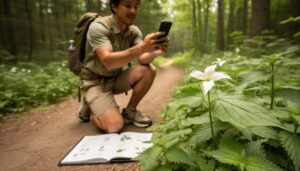
Pack a sturdy backpack and bring along mesh bags or old pillowcases for collecting specimens. These breathable options let wet rocks drain naturally and are much easier on your shoulders than plastic bags. A small spray bottle filled with water is incredibly helpful for revealing a rock’s true colors and patterns when you’re trying to identify it. While not essential, a pocket magnifying glass and a basic field guide to rocks and minerals can enhance your experience significantly.
Now, here’s where responsible collecting becomes crucial. Following Ontario Parks regulations means taking only what you’ll genuinely appreciate and leaving plenty for other visitors to discover. A good rule of thumb? If you can’t carry it comfortably, leave it for everyone to enjoy. Never use hammers or tools to break rocks from bedrock formations—collect only loose stones from beaches and shorelines.
Safety-wise, Lake Superior’s weather changes rapidly. Pack layers, sunscreen, and a rain jacket regardless of the forecast. Stay alert near the water’s edge, as waves can be unpredictable, and avoid turning your back to the lake. Keep a safe distance from cliff edges when exploring elevated shorelines. Bring plenty of water and snacks, and always let someone know your plans before heading out on remote trails.
Making Your Visit: Camping and Beyond
Planning a rock-hunting adventure at Lake Superior Provincial Park becomes even more rewarding when you combine it with the full camping experience. The park offers several campgrounds that serve as perfect base camps for your geological explorations. Agawa Bay Campground sits right along the shoreline, giving you immediate access to the best beach areas for rock collecting before breakfast. Rabbit Blanket Lake and Crescent Lake campgrounds provide quieter forest settings if you prefer a more secluded stay.
When booking your trip, consider visiting between late May and early October for the best weather and full park services. Early morning is ideal for rock hunting when the light catches the wet stones beautifully after the waves recede. Reserve your campsite well in advance, especially for summer weekends, through the Ontario Parks reservation system.
Complement your rock collecting with hikes along the Coastal Trail, where you’ll walk directly over the ancient bedrock and see geological formations in their natural context. The Orphan Lake Trail showcases dramatic cliffs and rock faces that tell the story of the Canadian Shield. Many visitors don’t realize that the park offers interpretive programs during summer months, where naturalists share insights about the region’s geological history.
Insider tip: Pack a small backpack with your rock guides, collection bags, and plenty of water. After a morning of beach combing, afternoon thunderstorms often roll in, making it the perfect time to examine your finds back at camp. Consider exploring nearby campgrounds in the region to extend your Northern Ontario rock-hunting adventure beyond Lake Superior.
There’s something profoundly moving about holding a rock in your hand that’s older than the dinosaurs, mountains, and even most life on Earth. When you explore the shores of Lake Superior, you’re not just collecting pretty stones—you’re connecting with a story that spans billions of years. These ancient rocks have witnessed continental collisions, volcanic eruptions, and the relentless carving of glaciers. They’ve endured longer than we can truly comprehend, and now they’re waiting for you to discover them.
Here’s an insider tip that makes all the difference: visit after a storm when the waves have just receded. That’s when the lake reveals her freshest treasures, with newly tumbled agates and jaspers glistening among the ordinary stones. The best finds often happen when you least expect them, so take your time, breathe in that crisp Superior air, and let yourself slow down to geological time.
Whether you’re a seasoned rockhound or picking up your first beach pebble, Lake Superior’s shores offer an unforgettable window into Earth’s deep history. So grab your bucket, pack your sense of wonder, and head out to explore Ontario’s remarkable geological heritage. The ancient rocks are calling—will you answer?



+ There are no comments
Add yours