
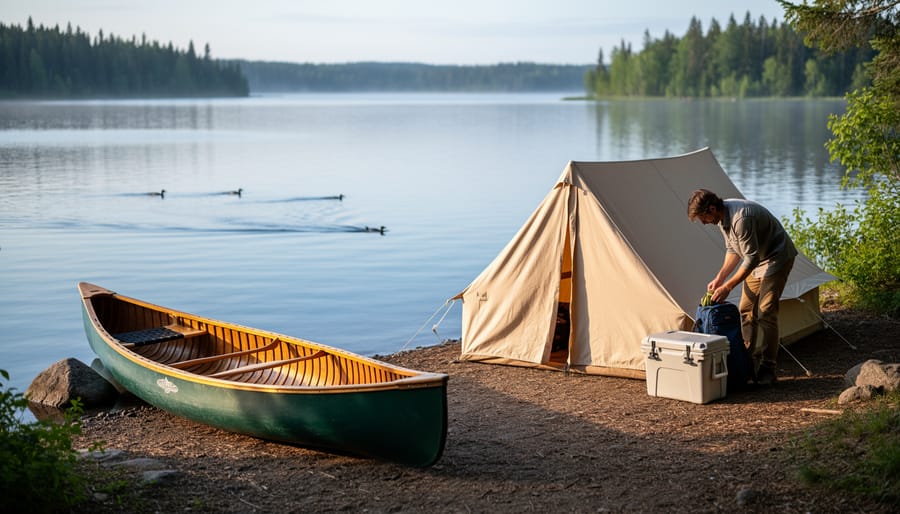
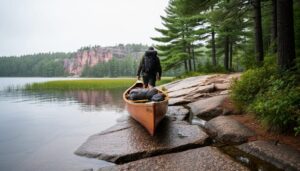
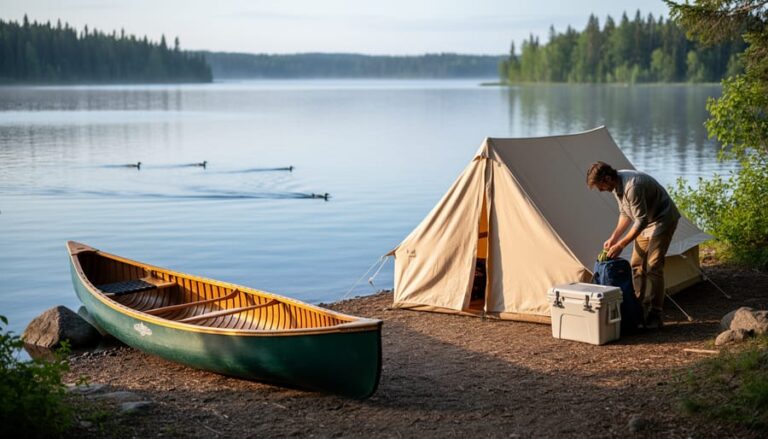
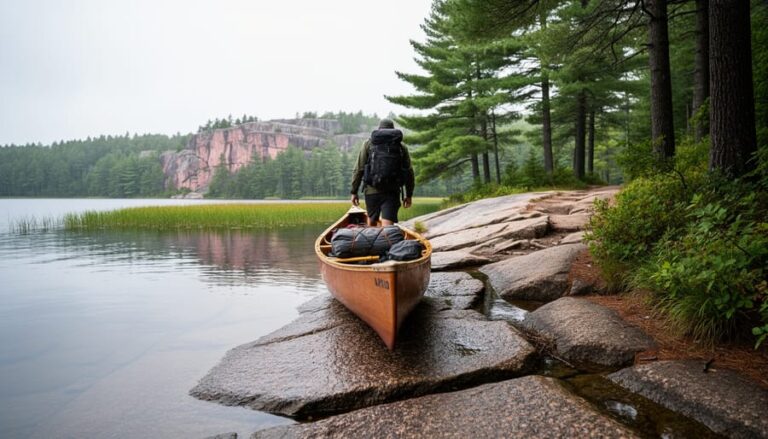
Learning to camp at Rocher Panet doesn’t require wilderness expertise or expensive gear. You’ll need basic camping equipment (tent, sleeping bag, cooler), the ability to reserve a site in advance through Ontario Parks, and roughly 3-4 hours to drive from major Southern Ontario cities, set up camp, and start enjoying one of Frontenac Provincial Park’s most beginner-friendly backcountry experiences. The site sits on the edge of Big Salmon Lake, accessible by a short 1.5 km paddle followed by an easy portage, making it perfect for first-timers who want a taste of backcountry camping without the intimidation factor.
What makes Rocher Panet special is its sweet spot between accessibility and genuine wilderness immersion. Unlike frontcountry campgrounds where you pitch your tent 10 feet from your car and neighbours, this site gives you privacy, stunning lake views, and the chance to hear loons at dawn, but you won’t need expert navigation skills or days of paddling to reach it. The granite outcrop the site is named for provides natural swimming spots and lookout points, while the sheltered bay protects your canoe from wind.
If you’ve been hesitating to try camping because you’re not sure where to start, Rocher Panet offers the training wheels you need. This beginner camping guide approach walks you through exactly what to pack, how to get there, setting up your first backcountry campsite safely, and what to do once you arrive. You’ll finish your trip with confidence, new skills, and probably plans for your next adventure.
Why Camping Rocher Panet Is Perfect for First-Time Campers
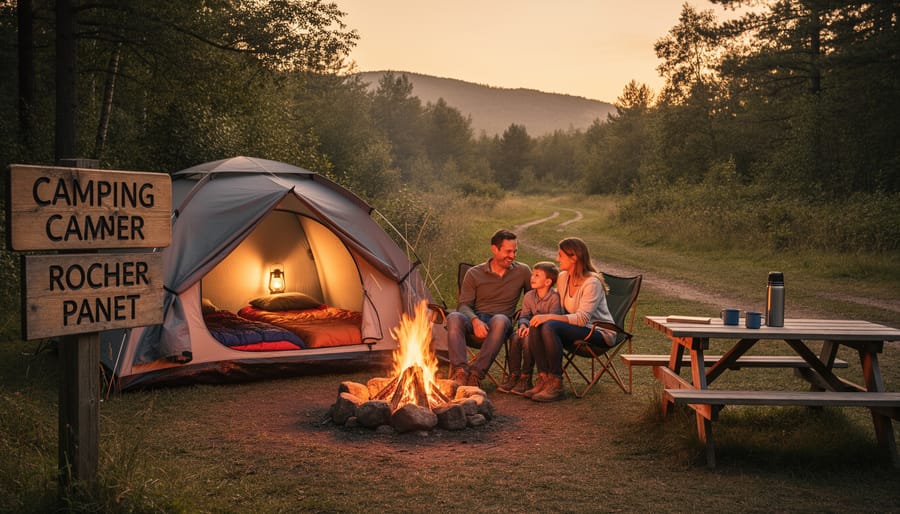
I still remember pulling into Camping Rocher Panet for the first time with a trunk full of borrowed gear and a head full of questions. Within ten minutes of arriving, a park attendant had walked me through check-in, pointed out the closest comfort station, and assured me that plenty of other first-timers were settling in that weekend. That immediate sense of welcome set the tone for what turned out to be the confidence-building experience I needed.
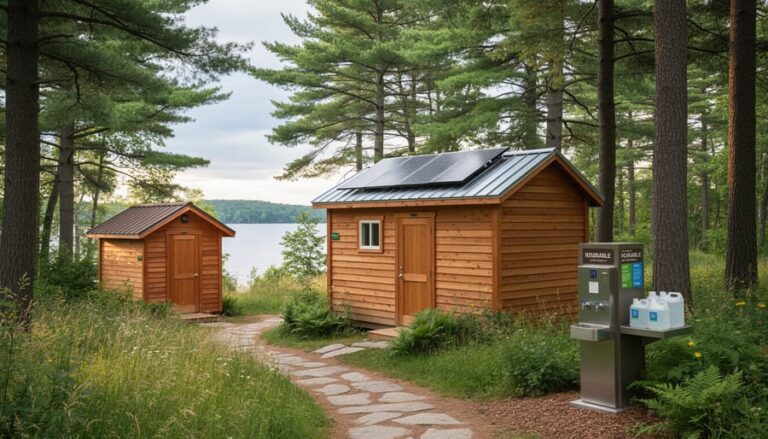
The park’s layout works in your favour as a newcomer. Unlike remote backcountry sites, Rocher Panet positions you close to essential facilities without sacrificing the camping atmosphere. Clean comfort stations with hot showers sit within a short walk of most sites, and the camp office staffs knowledgeable attendants who’ve fielded every beginner question imaginable. You’re camping, but you’re not abandoned to figure it all out alone.
What really distinguishes Rocher Panet is the campsite variety. You can choose an electrical site if you want the security of powering a small heater or charging your phone, or opt for a non-serviced spot to test your self-sufficiency. Many sites offer a mix of sun and shade, level ground for easy tent setup, and enough space between neighbours to feel private without feeling isolated. The park also features roofed shelters at some sites, giving you a backup plan if weather turns nasty during your learning curve.
The natural setting delivers classic Ontario camping without intimidating wilderness. Mature forest surrounds the sites, and the namesake Rocher Panet rock formation provides a focal point for short, manageable hikes. You’ll hear loons on the water and spot chipmunks around camp, but wildlife encounters stay on the gentle side. Ontario Parks specifically highlights locations like this in their beginner resources because they offer enough nature to feel authentic while maintaining the infrastructure that prevents small problems from becoming trip-ending disasters.
Essential Gear and Supplies for Your Rocher Panet Adventure
What You Can Rent or Buy On-Site
Rocher Panet keeps a modest camp store stocked with the essentials you might have forgotten or underestimated. You’ll find firewood bundled and ready, ice for your cooler, basic groceries like hot dog buns and marshmallows, and a selection of camping supplies from bug spray to batteries. Prices run slightly higher than grocery stores, but the convenience when you realize you left the matches at home is worth it.
For larger gear, you won’t find rental options directly at the park. If you’re traveling light or testing the camping waters before investing in equipment, check outfitters in nearby Hawkesbury or Rigaud before your trip. Several shops rent tents, sleeping bags, and cooking gear by the weekend. Call ahead to reserve, especially during peak summer months.
One insider tip: the park office sells detailed trail maps and can point you toward lesser-known spots that aren’t crowded. Staff members are genuinely helpful and often share advice that guidebooks miss. Swing by when you check in rather than waiting until you need something urgently.
Important Safety Considerations Before You Arrive
Your safety matters more than any camping checklist, and a little preparation goes a long way at Rocher Panet. This park sits in a region known for sudden weather shifts, curious wildlife, and the kind of backcountry quiet that means you’re responsible for your own wellbeing. Here’s what you need to know before you pack the car.
Check the forecast for Saint-Raymond-de-Portneuf the week before your trip and again the morning you leave. Summer afternoons can bring violent thunderstorms that roll in fast, while spring and fall nights dip below freezing without warning. Pack layers you can add or shed, a waterproof jacket even if skies look clear, and extra tarps to keep gear dry. If lightning threatens, stay inside your vehicle until it passes, never shelter under isolated trees.
Wildlife encounters are part of the experience, but raccoons, porcupines, and black bears all live here. Avoid wildlife by proper storage of all food, toiletries, and scented items in your vehicle or the metal lockers provided at some sites. Never leave coolers, dishes, or garbage outside overnight. If you spot a bear, make noise, back away slowly, and report the sighting to park staff immediately.
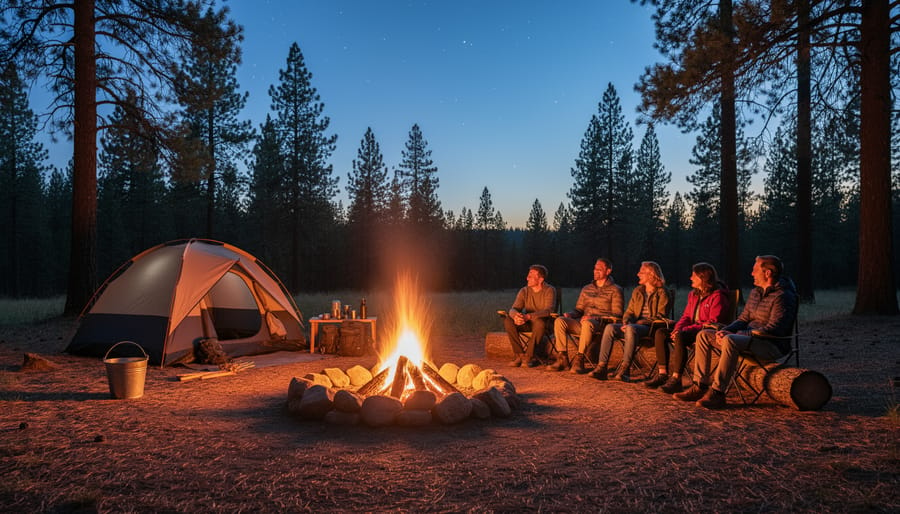
Fire safety extends beyond bans. Use only the metal fire rings provided, keep flames small and contained, never leave a fire unattended, and douse it completely with water until the ashes are cold to the touch. Bring a small shovel and bucket dedicated to fire duty. The park provides firewood for purchase, which prevents the spread of invasive insects, don’t bring wood from home.
Stock a basic first aid kit with bandages, antiseptic, tweezers for splinters, pain relievers, any personal medications, and treatments for blisters and insect bites. These camping essentials address the minor scrapes and stings that happen when you’re learning. For anything serious, the nearest hospital is in Saint-Raymond, about 20 minutes away, but cell service at the park is spotty at best. Let someone outside your group know your arrival and departure dates.
Drinking water at Rocher Panet comes from taps at comfort stations, which are tested and safe. Still, bring your own containers and refill as needed rather than relying on natural sources, which require filtering or boiling. If you plan to swim, know your limits and watch children constantly, there are no lifeguards.
Step-by-Step: Setting Up Your First Campsite at Rocher Panet
Picking and Preparing Your Site
When you arrive at your site, take five minutes to walk the entire area before unloading your car. You’re looking for the flattest spot large enough for your tent, run your hand over the ground to feel for hidden roots, rocks, or bumps that’ll dig into your back at 2 a.m. Trust me, what looks flat often isn’t.
Check the tree canopy overhead. Morning shade keeps your tent cooler and lets you sleep past sunrise, but avoid camping directly under dead branches (widowmakers, locals call them). A mix of sun and shade throughout the day is ideal.
Scout the path to the nearest bathroom and water source while it’s still light. You’ll appreciate knowing exactly where to go when nature calls after dark. Most Rocher Panet sites place facilities within a three-minute walk, but that walk feels much longer when you’re half-asleep.
Finally, identify the flattest area for your cooking zone, keeping it at least fifteen feet from where you’ll sleep. Note where the fire pit sits and plan your tent door accordingly, you want easy access without creating a tripping hazard at night.
Tent Setup Tips for Beginners
Before you pull your tent out of its bag, walk your site and clear any rocks, sticks, or pinecones from where you’ll pitch. Lay down a ground tarp slightly smaller than your tent footprint, folding the edges underneath prevents rain from pooling between the layers. Spread your tent on top and stake the corners loosely before inserting poles, which keeps everything in position as you work.
Most beginner mistakes happen because people rush. Take your time threading poles through the sleeves, and don’t force anything, if a pole won’t slide easily, you’re probably going the wrong way. Once the frame’s up, walk around and adjust stakes so the floor sits flat without wrinkles or sags. Pull guy lines taut at 45-degree angles, which stops your tent from collapsing in wind or rain overnight.
Position your door away from prevailing wind and toward a pleasant view if possible. At Rocher Panet, this often means facing the water or a clearing rather than dense bush. Place a small mat or tarp just outside the entrance, you’ll thank yourself later when you’re not tracking dirt and pine needles into your sleeping area. Store shoes and wet gear in the vestibule, not inside where they’ll make everything damp.
Practice mastering camping skills like this at home first if you’re nervous. Setting up your tent once in the backyard builds confidence and reveals any missing stakes or broken zippers before you’re doing it in fading light.
Organizing Your Camp Kitchen and Fire Area
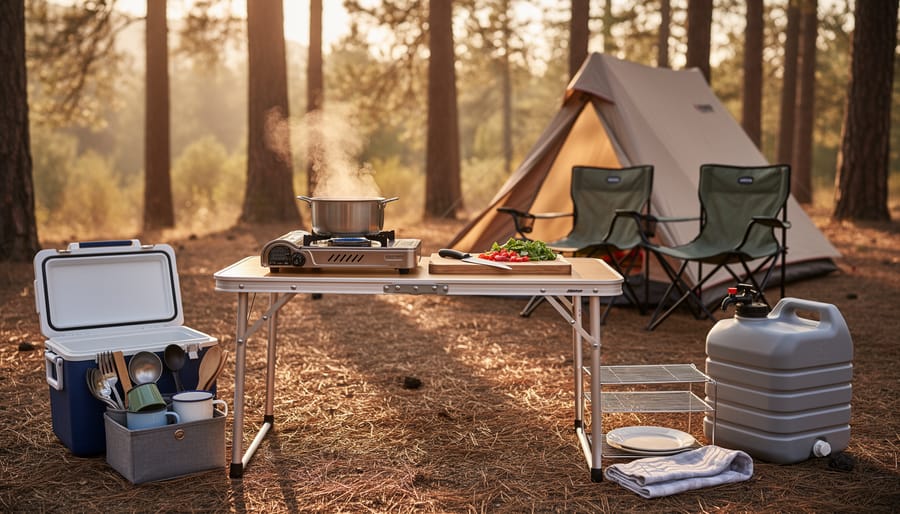
Start by designating two separate zones at your site: one for food prep and one for the fire pit. Your cooking area should be on a stable, flat surface at least three metres from your tent, picnic tables at Rocher Panet work perfectly for this. Keep all food, coolers, and scented items stored here when not in use, and hang a garbage bag from the table leg to collect scraps immediately.
For the fire area, use only the metal fire ring provided at your site. Never build a ground fire or move the ring. Clear any leaves or debris within a one-metre radius, and keep a bucket of water and your shovel nearby before striking the first match. Rocher Panet requires fires to be fully extinguished when you leave your site or go to sleep, drown the embers, stir the ashes, and drown them again until you can touch them safely.
Set up your cooking gear in a logical sequence: stove or grill grate, utensils, pots, and ingredients within arm’s reach. If you’re new to outdoor cooking, simple camp meal ideas work best for your first trip. Store all food in sealed containers inside your vehicle overnight, not at the table or in your tent, to avoid attracting raccoons and other wildlife.
Making the Most of Your Stay: Activities and Experiences
Once your camp is set up and you’re feeling comfortable, Rocher Panet becomes your playground for discovering what camping is really about. The park offers a gentle introduction to outdoor activities that won’t overwhelm first-timers.
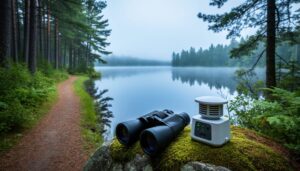
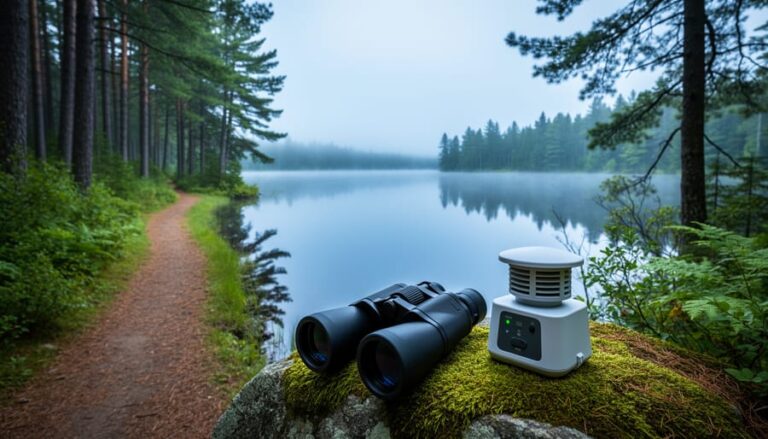
Start with the interpretive trails that wind through the park’s mixed forest. The shorter loops (under 2 km) are perfect for morning walks when wildlife is most active. I’ve spotted white-tailed deer, red squirrels, and countless bird species just by moving quietly and pausing frequently. Bring binoculars if you have them, but your phone camera works fine for capturing moments. The trails are well-marked, so you won’t worry about getting lost while you’re still building your navigation confidence.
The beach area draws families throughout the day, but visit in the early morning or late afternoon for a more peaceful swim. The water is refreshing without being shockingly cold, and the sandy bottom makes it ideal for beginners who might be nervous about swimming in natural waters. Always swim with a buddy and stay within the designated area, it’s marked with buoys for a reason.
After sunset, Rocher Panet reveals one of its best features: minimal light pollution for excellent stargazing. Grab a blanket, find a clearing away from your campfire, and let your eyes adjust for about twenty minutes. You’ll spot constellations you’ve never noticed in the city. Check out our stargazing tips for help identifying what you’re seeing and making the most of Ontario’s night skies.
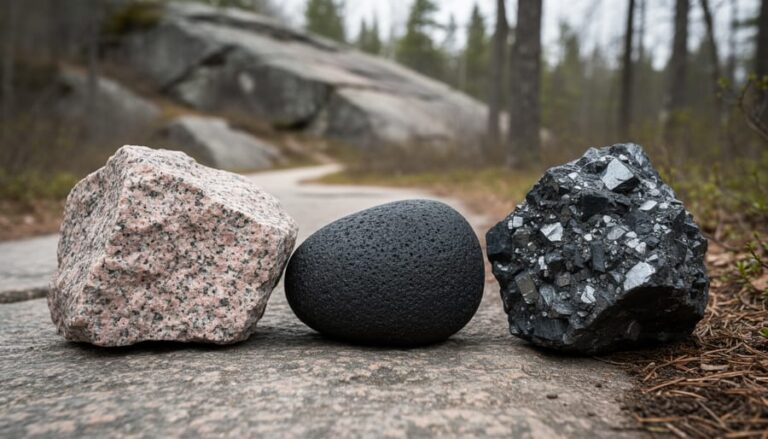
Here’s an insider tip: visit the naturalist programs if they’re running during your stay. These free sessions teach you about local ecology and often include guided walks. You’ll learn to identify animal tracks, edible plants, and geological features you’d otherwise walk right past.
Practice Leave No Trace principles throughout: stay on marked trails to protect fragile vegetation, pack out everything you pack in, and give wildlife plenty of space (25 metres minimum). Take photos from a distance rather than approaching animals, and resist the urge to feed that curious chipmunk, it’s not good for them, despite how cute they are.
Knowing You’ve Got It Right: Signs of a Successful First Trip
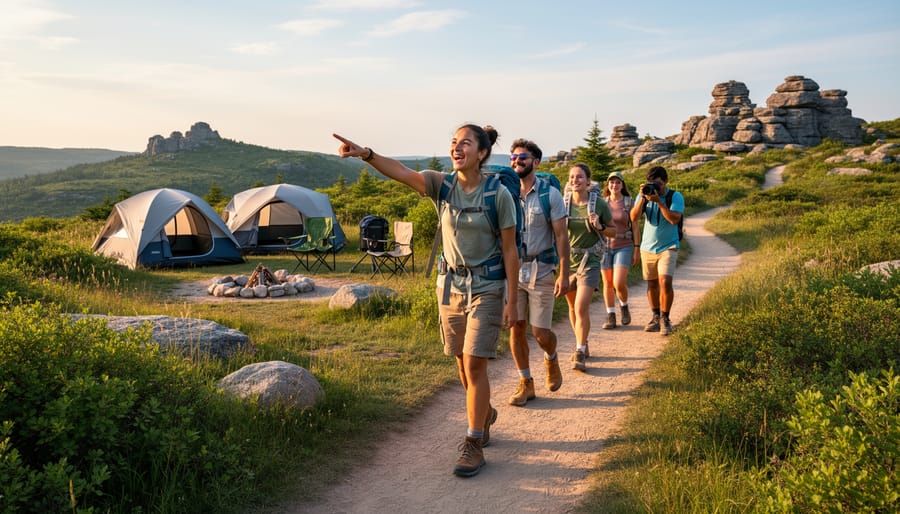
You made it through your first night under the stars at Camping Rocher Panet. How do you know if you actually succeeded? Success isn’t about perfection, it’s about the small victories that build your confidence for the next adventure.
If you woke up comfortable (or at least not miserable), managed to cook a meal without burning the forest down, and felt a moment of genuine peace watching the lake or listening to the evening sounds, you’re doing great. First-time campers often worry they’re doing everything wrong, but the truth is, you’re learning a skill that gets easier each time.
Take stock of what worked. Maybe your tent stayed dry, your campfire burned cleanly, or you figured out that perfect morning coffee routine. These wins matter more than the stuff that didn’t go smoothly. Did you forget something? Everyone does. Made a mistake setting up? That’s how you learn. The goal isn’t flawless execution, it’s coming away with experiences you can build on.
What should I do differently on my second camping trip?
Focus on one area you want to improve, whether that’s meal planning, sleeping comfort, or campsite organization. Most campers refine their gear list after the first trip and pack smarter the second time.
Is it normal to feel a bit overwhelmed on your first camping trip?
Absolutely. Learning to camp involves dozens of small skills happening simultaneously. Feeling tired or slightly frazzled is part of the process, and it gets significantly easier with practice.
When should I plan my next camping trip?
Strike while the motivation is hot. Many campers find booking their next trip within a few weeks helps solidify the skills they just learned and builds momentum.
Before you leave Rocher Panet, do a mental review. What surprised you? What felt easier than expected? These reflections shape your next outing. Jot down a quick note in your phone about what to bring, skip, or do differently, future you will thank present you.
Your camping journey doesn’t end here. Rocher Panet gave you a safe, supportive environment to learn the basics. Now you can explore other Ontario Parks with confidence, try backcountry sites, or return to Rocher Panet in a different season. Each trip adds another layer of skill and comfort. You’re not just a beginner anymore, you’re a camper.
You’ve got everything you need to make your first camping trip to Rocher Panet a success. The beauty of starting here is that you’re learning in a place designed to support beginners while still offering that authentic outdoor experience that makes camping so rewarding.
Will everything go perfectly? Probably not, and that’s completely fine. Maybe your tent stakes won’t go in quite right on the first try, or you’ll discover you packed three flashlights but forgot batteries. These small hiccups become the stories you’ll laugh about later, and each one teaches you something valuable for next time.
The truth is, camping is something you learn by doing. That first night under the stars at Rocher Panet marks the beginning of a journey that can take you anywhere in Ontario’s incredible network of provincial parks and beyond. Some of our most experienced campers started exactly where you are now, wondering if they could handle it.
Pack your gear, trust the checklist you’ve made, and head to Rocher Panet. The hardest part is simply deciding to go. Once you’re there, surrounded by nature and figuring things out as you go, you’ll understand why so many people keep coming back to the outdoors.

+ There are no comments
Add yours