
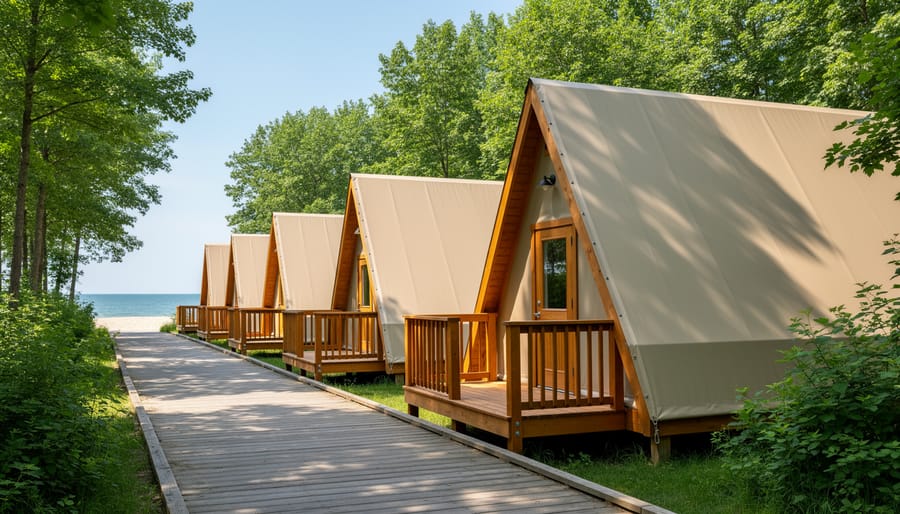
Point Pelee National Park offers year-round camping through 24 oTENTik A-frame cabins at Camp Henry, combining the comfort of a roof over your head with an authentic backcountry feel. These walk-in sites give you furnished canvas cabins just steps from your parking spot, and if you’re planning a summer 2026 visit, you’re in luck: overnight stays are 25% off from June 19 to September 7 under the Canada Strong Pass.
Located at Canada’s southernmost mainland tip, Point Pelee is famous for bird migration and monarch butterflies, but the camping experience here is surprisingly intimate for a park that draws hundreds of thousands of visitors annually. The oTENTik setup strikes a sweet middle ground between tent camping and cottage rental. You get a bed frame, table, chairs, and heating, but bring your own sleeping bags and cooking gear.
Here’s what makes these sites different: they’re accessible year-round, which is rare for Ontario camping. Winter birding enthusiasts and quiet-season explorers can reserve a heated cabin when most provincial parks close up shop. Four sites (#8, #11, #17, and #18) meet full accessibility standards, and if you camp with pets, sites #8 and #9 welcome furry companions. The walk-in setup means parking your vehicle nearby and carrying gear a short distance, creating a buffer from road noise while keeping convenience within reach.
Whether you’re chasing the spring warbler migration or seeking a peaceful autumn getaway along Lake Erie’s shore, Point Pelee’s camping puts you right in the heart of one of Canada’s smallest but most ecologically rich national parks.
What Makes oTENTik Camping Different at Point Pelee
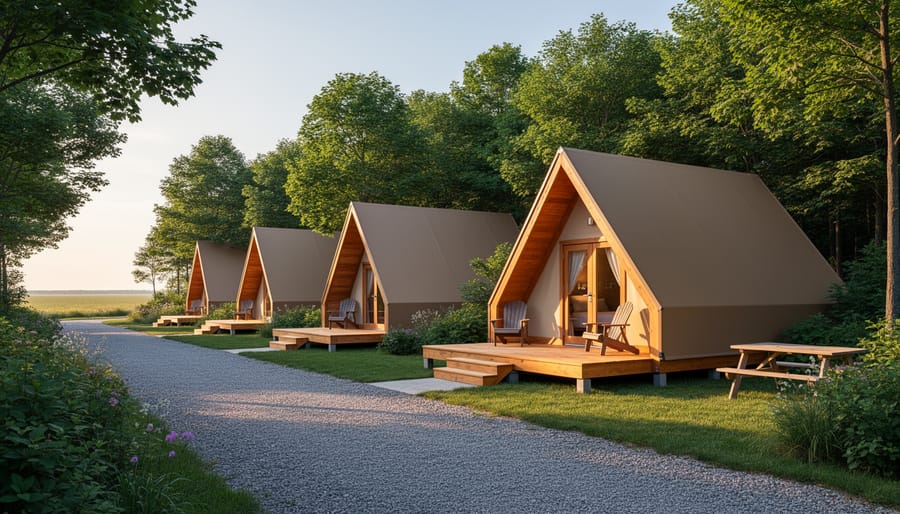
The first time I hauled my gear up to an oTENTik at Camp Henry, I wasn’t sure what to expect. The A-frame cabin looked like someone had crossed a tent with a cottage and somehow made both camping purists and comfort-seekers happy. That’s exactly what Parks Canada designed these structures to do.
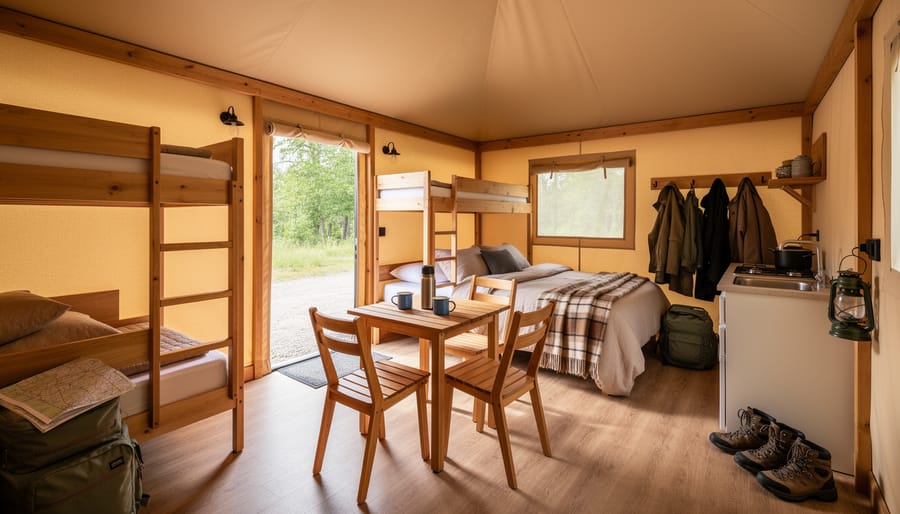
An oTENTik sits on a raised wooden platform with canvas walls stretched over a sturdy frame, creating that distinctive triangular silhouette. Inside, you’ll find a table, chairs, three bunk beds, and a small propane heater, amenities that separate this from pitching your own tent, yet you’re still cooking outdoors and hauling water. There’s no electricity, no plumbing, just shelter and basic furniture. It’s camping with training wheels, or glamping without the Instagram-worthy chandelier.
Point Pelee’s location makes these cabins particularly clever. Canada’s southernmost mainland point experiences everything from scorching August heat to January windchills, and those canvas walls handle the temperature swings better than you’d think. I’ve stayed during a September cold snap when overnight temps dropped to 4°C, and that propane heater kept us comfortable while tent campers two sites over were layering on every piece of clothing they’d packed.
The year-round availability changes how you experience the park. Most Ontario campgrounds close by October, but Point Pelee’s oTENTiks let you witness the November hawk migration or explore the Carolinian forest under snow, experiences traditional camping rarely offers in this province. You’re not fighting with tent poles in the wind or waking up on frozen ground, yet you’re still sleeping steps from some of Canada’s best birding habitat.
That balance is what makes them work.
Planning Your Stay: Sites, Accessibility, and Booking Details
Camp Henry’s 24 oTENTik sites are nestled in a peaceful wooded setting that feels worlds away from the bustle of typical campgrounds, yet they’re strategically located for easy access to Point Pelee’s trails and beaches. Unlike backcountry camping, these sites strike a clever balance, you walk in from nearby parking (about 50-100 meters, depending on your site), which preserves that tranquil, car-free atmosphere without requiring you to haul gear for miles.
Here’s what matters most when planning your stay: each site accommodates one vehicle in the designated parking area, so coordinate with your group if you’re carpooling. The walk-in setup means you’ll want to think strategically about what you pack, more on that later, but it’s genuinely manageable even for families with young kids or first-time campers. I’ve watched parents push strollers and pull small wagons along the paths without much fuss.
The real game-changer is the accessibility options. Sites 8, 11, 17, and 18 are specifically designed with accessibility features, making Point Pelee camping genuinely inclusive. Site 8 does double duty as both accessible and one of only two pet-friendly sites (along with #9), which is a rare combination that opens up the park to even more visitors.
| Site Number | Special Features | Best For |
|---|---|---|
| #8 | Accessible + Pet-Friendly | Families with mobility needs and furry friends |
| #9 | Pet-Friendly | Dog owners who want year-round access |
| #11, #17, #18 | Accessible | Wheelchair users, limited mobility visitors |
| Remaining 20 sites | Standard oTENTiks | General camping, all abilities welcome |
Booking your oTENTik requires advance planning through Parks Canada’s campground reservations system, and spots fill quickly during peak migration seasons. The year-round availability means you can visit Point Pelee in January as easily as July, though you’ll want to check seasonal road access during extreme winter weather.
Here’s a money-saving insider tip for 2026: if you’re planning a summer visit between June 19 and September 7, you’ll get 25% off camping fees under the Canada Strong Pass promotion. Just remember that your camping fee doesn’t include the daily park entry fee, budget separately for that, and consider a Discovery Pass if you’re planning multiple visits or exploring other national parks this year.
What You’ll Actually Pay (And How to Save in 2026)
Let’s talk real numbers, because I’ve seen too many campers arrive at the gate surprised by the actual cost.
The Canada Strong Pass brings a 25% discount on camping fees from June 19 to September 7, 2026, a significant break during peak summer season. This applies to your oTENTik nightly rate at Camp Henry, whether you’re staying mid-week or on a weekend. If you’re planning a summer trip to Point Pelee, these dates give you the best value for your camping dollar.
Here’s the catch that trips people up: entry fees are separate. Your camping reservation covers your oTENTik site, but you’ll still pay the standard Parks Canada entry fee for each person in your group. When I budgeted my first Point Pelee trip, I forgot this detail and scrambled to cover the extra $20 for two adults. Factor in both costs from the start, camping plus daily entry, to avoid that moment of surprise at the gate.
The walk-in setup actually saves you money in one unexpected way: you’re limited to one vehicle per site, so you won’t be tempted to bring multiple cars and rack up extra parking fees. Pack light, walk your gear the short distance from the lot, and your budget stays predictable. For families or groups splitting costs, the accessible sites work especially well since they accommodate more people in a single booking.
The Best Seasons for Point Pelee Camping (Yes, Even Winter)
Most Ontario campers pack away their gear when the leaves fall, but Point Pelee’s oTENTik cabins flip that script entirely. I’ve visited Camp Henry in three different seasons now, and each time feels like discovering a completely different park, same trails, same southernmost point, but radically different atmospheres.
Spring at Point Pelee is legendary for a reason. May brings the peak of bird migration when thousands of warblers, vireos, and other songbirds funnel through this narrow peninsula on their way north. The oTENTiks give you a massive advantage here: you can wake up at 4:30 AM for dawn birding without wrestling a frost-stiffened tent in the dark. The boardwalk trails come alive with birdsong, and you’ll share the marsh with serious photographers hauling telephoto lenses bigger than your backpack.
Summer is beach season, plain and simple. The sandy shores along Lake Erie warm up beautifully, and the calm water makes it perfect for families. This is high season, so book well ahead, especially if you want one of the pet-friendly sites. The 25% discount from June 19 to September 7, 2026 under the Canada Strong Pass makes summer camping more accessible than ever, though you’ll still need to pay entry fees separately.
Fall brings a second wave of birding as raptors and monarchs migrate south. September and October offer that sweet spot of warm days, cool nights, and far fewer crowds. The marshes take on amber tones, and you can actually hear yourself think on the Tip trail.
Winter camping at Point Pelee remains Ontario’s best-kept secret. Yes, it gets cold, but the heated oTENTiks make it manageable with proper sleeping bags. I’ve walked the snow-dusted boardwalks in January with maybe two other people in the entire park. The silence is profound.
- Spring: Pack layers for unpredictable weather, binoculars, and a good field guide, temps range wildly
- Summer: Bring reef-safe sunscreen, beach gear, and bug spray for marsh trails, heat and humidity peak
- Fall: Layer for crisp mornings and warm afternoons, plus camera gear for migration photography
- Winter: Invest in a cold-rated sleeping bag, hand warmers, and insulated boots, the cabin heats but doesn’t substitute for proper gear
The year-round availability isn’t just a feature; it fundamentally changes how you can experience this park. Instead of cramming your visit into the crowded May migration window, you can choose the season that matches your interests. Want solitude? Go in February. Want guaranteed warm weather? July’s your month. That flexibility alone makes the oTENTik concept brilliant.
What to Do From Your Camp Henry Base
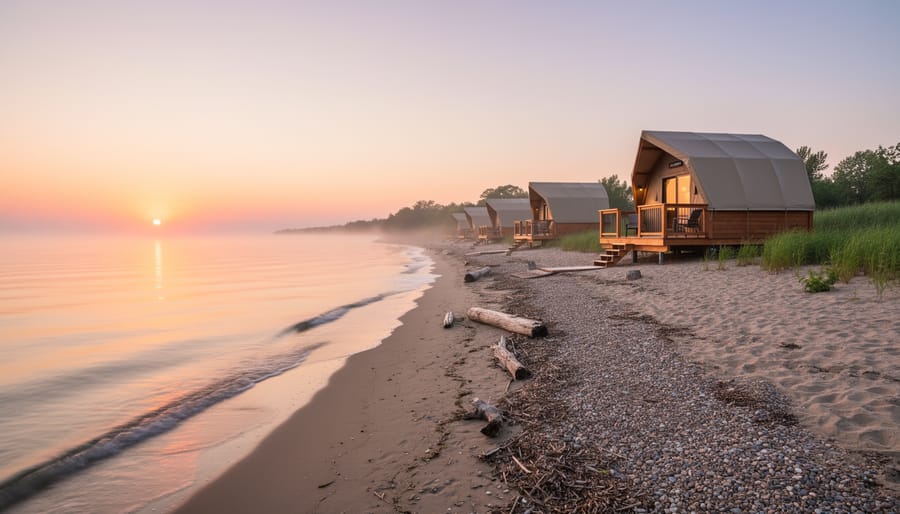
Camp Henry sits perfectly positioned to explore everything Point Pelee offers. From your oTENTik door, you’re minutes from experiences that’d take hours to reach from outside the park.
Start with the Marsh Boardwalk, a flat one-kilometre loop that’s ridiculously good for birding. I watched a Great Blue Heron freeze mid-step at 7am, both of us waiting to see who’d move first. Spring and fall bring warblers, flycatchers, and the occasional lucky sighting of something rare blown off course during migration.
The Tip Trail is your must-do, 3.2 kilometres one way through Carolinian forest to Canada’s southernmost point. Rent a bike or walk; either way, arrive before sunrise if you can. Watching dawn break over Lake Erie from the actual tip, knowing you’re standing farther south than parts of California, hits different. The sand spit shifts constantly, sometimes extending metres into the water, sometimes nearly disappearing.
Beach lovers should hit the West Beach for sunset swimming in surprisingly warm shallows. The sandy bottom and gentle waves make it perfect after a day of hiking. East Beach offers quieter strolls and better shelling.
For trails beyond the Tip, try the Woodland Nature Trail, a 1.4-kilometre loop through dense forest that feels prehistoric in its stillness. The Centennial bike trail connects everything if you brought wheels.
Whatever you explore, practice Leave No Trace principles. Point Pelee’s ecosystem is fragile, stick to marked paths, pack out everything, and give wildlife space. The park’s conservation work depends on visitors treating it gently.
Packing Smart for Walk-In oTENTik Camping
The walk-in setup at Camp Henry changes how you pack. I learned this the hard way my first visit, dragging a massive cooler and three overstuffed bags across the parking area. The oTENTik cabins provide the structure and sleeping platforms, so you’ll avoid hauling tent poles and stakes. But you’re still responsible for bedding, cooking gear, food, and personal items, all of which need to make the walk from your vehicle.
Here’s your strategic approach to minimize trips while following both camping rules and national park rules:
- Stage everything at your vehicle first. Lay out all gear and consolidate into the fewest bags possible before making any trips.
- Load your heaviest items (cooler, water containers) into a wheeled cart or wagon if you have one, the path from parking is relatively smooth.
- Make your first trip with bedding and overnight essentials, so your cabin is ready if you’re arriving late.
- Return for cooking gear, food, and any remaining items in one final haul.
For spring and fall, pack layers rather than bulky winter coats, fleece, a rain shell, and a warm hat compress better. Summer trips let you travel lightest, though bug spray and sunscreen become essential. Winter camping requires serious insulation for sleeping, since the cabins aren’t heated. Bring foam sleeping pads even if you’re using an air mattress, the extra barrier from the cold platform makes a massive difference.
A collapsible wagon honestly transforms the walk-in experience, especially with kids or pets using sites 8 or 9.
Point Pelee’s oTENTik cabins aren’t just another camping option, they’re redefining what it means to experience Ontario’s natural spaces. By removing the barriers that keep people from traditional tent camping (unpredictable weather, gear investments, physical limitations), these A-frame shelters open the park to families, seniors, accessibility-conscious travelers, and anyone who’s ever thought “I’d love to camp, but…” The year-round availability means you’re not limited to summer crowds; you can chase spring warblers, enjoy autumn’s quiet beaches, or try winter camping without committing to extreme conditions.
What makes this model worth celebrating is how it balances conservation with access. You’re still walking into Camp Henry with your gear, still experiencing the marsh’s dawn chorus and the Tip’s legendary sunrises, but without sacrificing comfort or excluding those who can’t pitch a tent. Four accessible sites and pet-friendly options prove Parks Canada is thinking inclusively.
Ready to try it? Head to the Parks Canada reservation system to check availability, especially if you’re eyeing that 25% summer discount window. Your southernmost Canadian camping adventure is just a booking away.

+ There are no comments
Add yours