
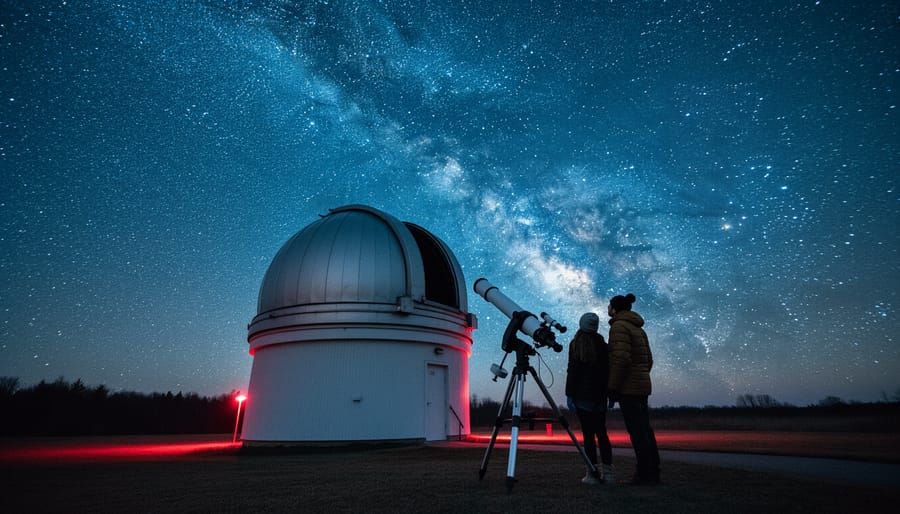
Observatory parks in Ontario deliver what casual stargazing from your backyard never can: professional-grade telescopes, expert astronomers to guide your night, and protected dark-sky environments where the Milky Way blazes overhead instead of fading behind light pollution. These aren’t just open fields where you hope for clear weather. They’re purpose-built facilities with public programs, heated observation rooms, and staff who know how to find Saturn’s rings or the Andromeda Galaxy within seconds of you asking.
Most Ontario observatory parks run evening programs between April and October, though a few hearty locations keep winter hours when cold, clear nights offer the sharpest views. You’ll typically pay between ten and twenty dollars for a viewing session, and many sites offer free solar observation during daytime hours. The difference between squinting at a blurry moon through binoculars and seeing Jupiter’s cloud bands in crisp detail through a research-grade telescope is the difference between guessing and actually seeing the universe.
The best part? You don’t need any equipment or astronomy knowledge. Show up, dress warmly (even summer nights get chilly after sunset), and let the resident astronomers do the heavy lifting. They’ll adjust the scopes, explain what you’re looking at, and answer questions ranging from basic constellation identification to the physics of black holes. Whether you’re planning a family outing or a solo expedition into the cosmos, Ontario’s observatory parks make serious stargazing accessible to everyone.
Why Choose Observatory Parks for Stargazing
When you show up at an observatory park for the first time, you’ll notice the difference immediately. Instead of squinting at the sky wondering if that’s Mars or just an airplane, you’ve got a trained astronomer standing beside you, adjusting a serious telescope and pointing out Saturn’s rings in crystal-clear detail. That’s the real appeal here.
The equipment alone makes these parks worth visiting. We’re talking research-grade telescopes, sometimes multiple scopes set up for different viewing targets, plus binoculars and specialized filters you’d never buy for casual use. At home, a decent telescope runs $800 to $2,000, and then you’re stuck figuring out how to use it. Here, everything’s ready to go, and someone who actually knows the night sky will show you exactly where to look.
The educational component transforms what could be a frustrating solo outing into something genuinely enlightening. On-site astronomers don’t just operate the equipment. They explain what you’re seeing, answer your questions about black holes or the lifecycle of stars, and share stories that make the cosmos feel less abstract. Many parks offer structured programs, from beginner workshops to advanced astrophotography sessions, that you’d pay hundreds for elsewhere.
These designated dark-sky areas sit far from urban sprawl, with strict lighting controls that protect the viewing conditions. You’re not battling streetlights or the orange glow from a nearby town. The difference in what you can see is staggering, thousands more stars, the Milky Way’s cloudy band clearly visible, faint nebulae that vanish in light-polluted skies.
Beyond the astronomy, you’re supporting conservation. Entrance fees and program costs fund dark-sky preservation initiatives and environmental protection efforts, keeping these areas pristine for future stargazers.
Top Observatory Parks for Stargazing in Ontario
1. Killarney Provincial Park Observatory Area
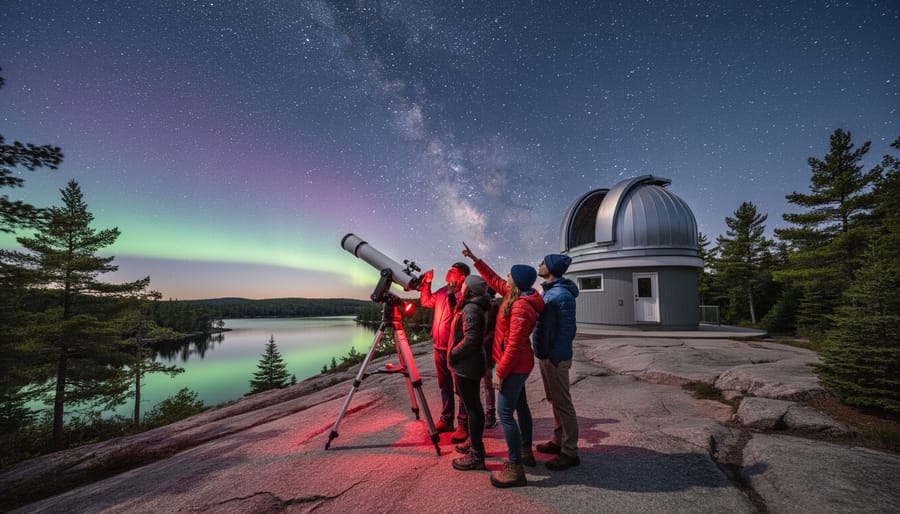
Killarney Provincial Park’s observatory area sits within the La Cloche mountain range, where white quartzite ridges create a natural amphitheatre that frames some of the darkest skies in southern Ontario. On clear nights, the Milky Way stretches overhead so vividly that first-time visitors often mistake it for cloud cover until their eyes adjust. This park earned its reputation among serious astronomers not just for minimal light pollution, but because the rocky terrain and treeless peaks provide unobstructed 360-degree views, rare in Ontario’s forested landscape.
The park hosts seasonal astronomy nights at the George Lake Campground, where volunteer astronomers set up telescopes and guide visitors through deep-sky objects invisible to urban dwellers. I watched a family of four go silent when they first saw Saturn’s rings through the 10-inch reflector telescope, the kind of moment that makes the two-hour drive from Sudbury feel worthwhile. The viewing platform near the day-use area offers the best sightlines for photographing star trails over Georgian Bay, while the eastern shore of Killarney Lake eliminates any residual glow from Highway 637.
Between June and September, rangers lead guided night hikes that weave Indigenous star stories with modern astronomy, connecting celestial navigation to Ontario’s wild spaces below. Bring warm layers even in summer, the exposed granite radiates cold after sunset, dropping temperatures 15 degrees below daytime highs.
2. Gordon’s Park Dark Sky Preserve
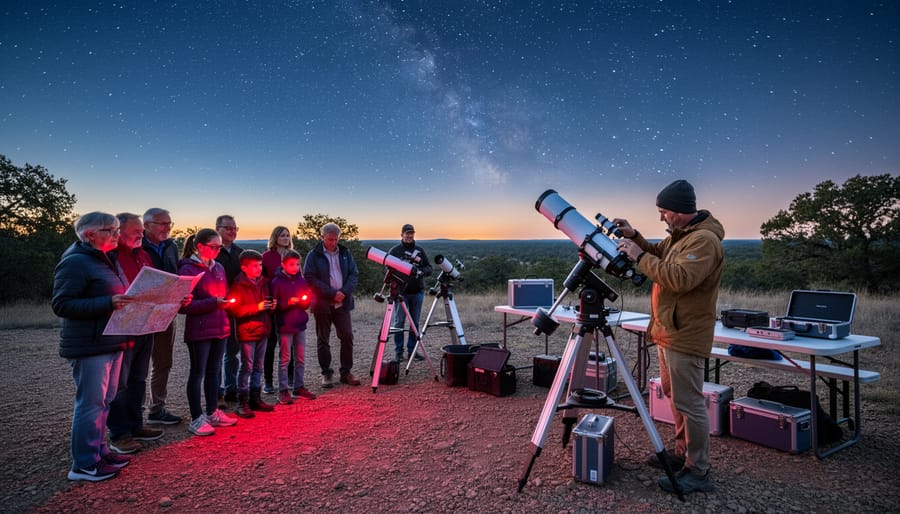
Gordon’s Park, perched on the northern tip of Manitoulin Island, holds Royal Astronomical Society of Canada Dark-Sky Preserve designation and offers one of Ontario’s most immersive stargazing experiences. What sets this location apart is its combination of exceptionally dark skies with a welcoming, community-focused atmosphere that turns telescope nights into genuine celestial gatherings.
The preserve maintains several permanently mounted telescopes available to all visitors, eliminating the need to haul your own equipment up the island. During peak season, resident astronomy enthusiasts lead viewing sessions most clear nights, sharing both telescope time and their contagious passion for the cosmos. These aren’t scripted tours, expect genuine conversations about what you’re seeing, from Saturn’s rings to distant nebulae, with guides who genuinely love pointing out celestial objects you’d never spot on your own.
Summer brings the Milky Way arching overhead in spectacular detail, while autumn offers crisp, stable air perfect for planetary observation. The park’s campground means you can simply step outside your tent when conditions turn ideal at 2 a.m., rather than driving home disappointed. One regular visitor described staying up until dawn during a meteor shower, trading hot chocolate and stories with fellow stargazers between spectacular shooting stars, the kind of spontaneous magic that happens when dark skies meet good company. The preserve hosts special astronomy weekends throughout the season, drawing amateur astronomers from across the province for equipment-sharing and sky-watching camaraderie.
3. Torrance Barrens Dark-Sky Preserve
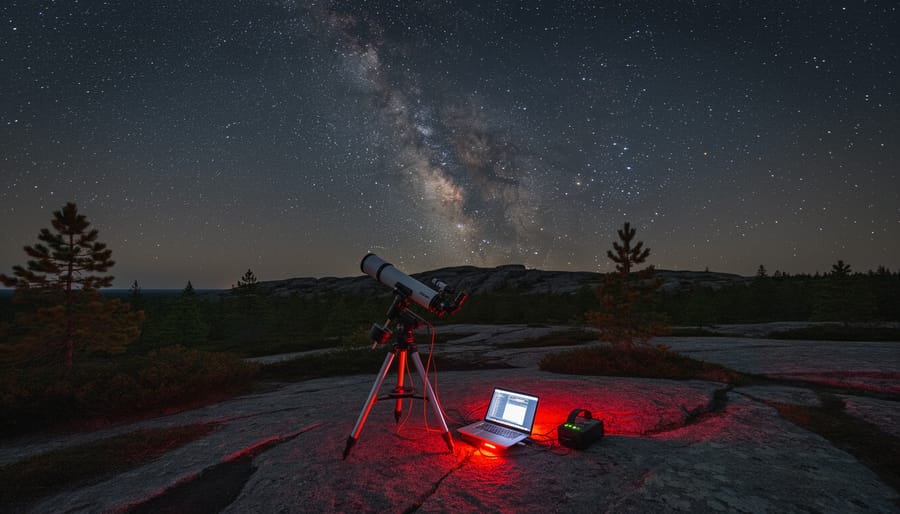
Just an hour and a half north of Toronto, Torrance Barrens has earned its reputation as one of southern Ontario’s most accessible dark-sky preserves. The exposed granite bedrock creates natural viewing platforms with unobstructed 360-degree horizons, making it popular with both astronomy clubs and casual stargazers who appreciate not having to trek deep into the wilderness.
What draws people back is the combination of legitimately dark skies and a welcoming community atmosphere. The preserve hosts regular Saturday night public viewing sessions during summer, where local astronomy club members set up an impressive array of telescopes ranging from 6-inch refractors perfect for lunar craters to 14-inch Dobsonians that reveal Jupiter’s cloud bands and the Orion Nebula’s swirling gases. You don’t need to bring anything, though experienced visitors often bring red-filtered headlamps and lawn chairs.
The viewing season peaks from May through October, when stargazing at Torrance Barrens reveals the Milky Way stretching overhead like a luminous river. During new moon weekends, you’ll spot the Andromeda Galaxy as a faint smudge visible to the naked eye, Saturn’s rings through the telescopes, and meteor showers that put on genuine shows without competing city glow. August’s Perseid meteor shower typically draws the biggest crowds.
The site maintains basic facilities including a parking area and portable toilets, but no observatory building. That rawness is part of the appeal, you’re genuinely standing under the stars, not viewing through a dome. Dress warmer than you think necessary; even July nights turn chilly on the open barrens after midnight.
4. Bruce Peninsula National Park Stargazing Sites
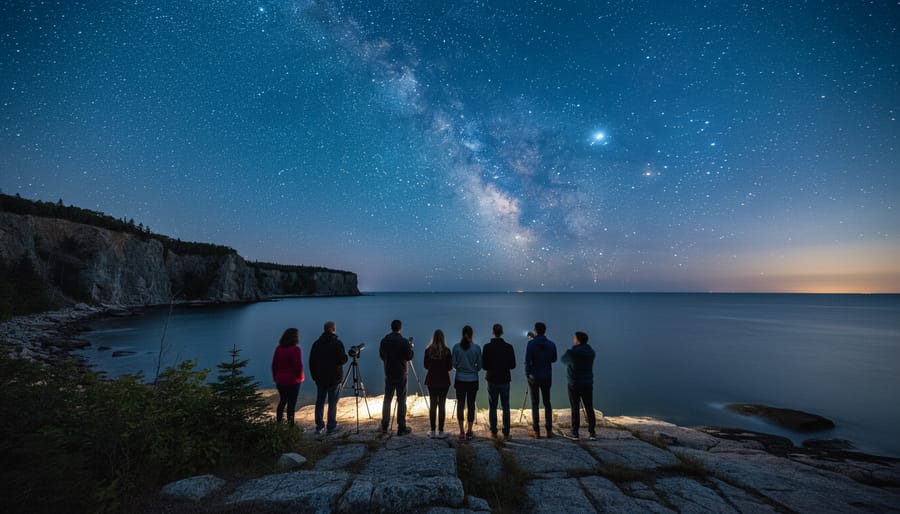
Bruce Peninsula National Park offers stargazing experiences that pair perfectly with its dramatic limestone cliffs and turquoise waters. The park doesn’t have a traditional observatory building, but it’s designated as a Dark Sky Preserve, which means you’ll find exceptionally dark skies along the shores of Georgian Bay.
The Cyprus Lake campground area serves as the main stargazing hub. On clear nights, park interpreters set up telescopes near the amphitheatre and lead evening astronomy programs. These sessions typically run from late May through September and they’re included with your park admission. The interpreters point out constellations, planets, and deep-sky objects while explaining the geological and Indigenous stories connected to the night sky. They’re fantastic at adapting explanations for kids and experienced stargazers alike.
What makes Bruce Peninsula special is how you can spend your day hiking the Grotto or walking along the cliff edges, then transition to night-sky viewing without leaving the park. The contrast between the rugged daytime landscape and the star-filled sky creates a memorable 24-hour experience.
The best viewing spots are along the shoreline near Cyprus Lake or at the nearby parking areas, where you’re away from campground lights. Bring a red-light headlamp to preserve your night vision while navigating the rocky terrain. Summer brings excellent views of the Milky Way stretching across the southern horizon, while autumn offers clearer skies and longer darkness for extended viewing sessions.
5. Algonquin Provincial Park Visitor Centre Observatory
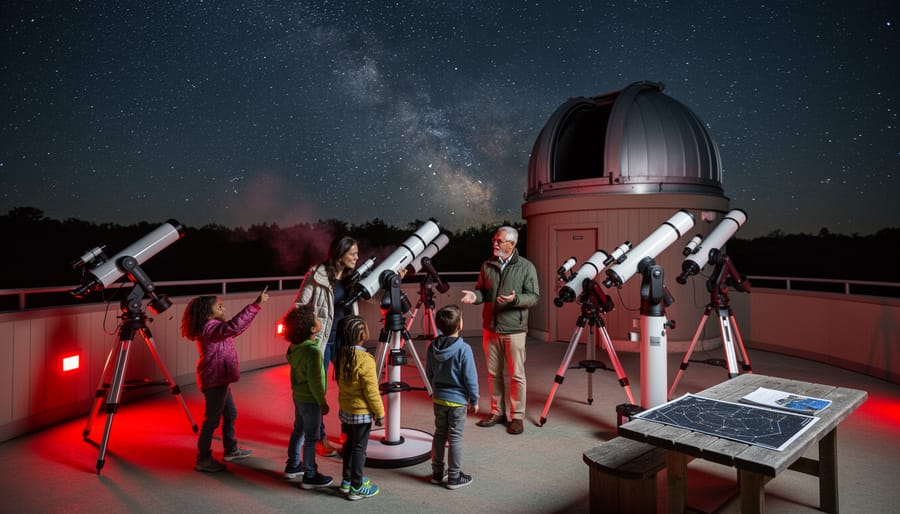
Algonquin’s Visitor Centre Observatory sits just off Highway 60, making it one of the most accessible stargazing destinations in Ontario. I’ve watched families pull up here on summer evenings, kids buzzing with excitement about seeing Saturn’s rings for the first time, and the park delivers on that promise beautifully.
The Thursday evening public telescope nights from May through September draw crowds for good reason. Park naturalists set up multiple telescopes on the viewing platform and walk families through the night sky with patience and genuine enthusiasm. They adjust the equipment so even three-year-olds can peer through safely, and they explain what you’re seeing in language that clicks with kids without talking down to adults.
What sets Algonquin apart is the programming depth. Beyond basic telescope viewing, naturalists run constellation tours, mythology storytelling sessions, and hands-on demonstrations about light-years and planetary motion. My nephew learned more about astronomy in two hours here than a semester of school science class taught him.
The facility itself helps with the family-friendly vibe. Clean washrooms, a lit pathway from the parking lot, and the nearby Visitor Centre mean you’re not wandering through wilderness in the dark with small children. Late summer offers the best combination of warm evenings and clear skies, though meteor shower events in August can get packed, arrive thirty minutes early to secure a good viewing spot.
What to Expect During Your Observatory Visit
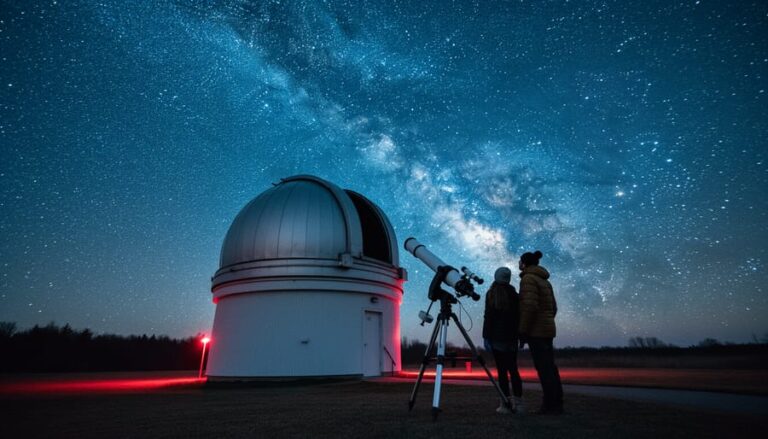
Your observatory park visit typically begins at twilight, about 30 to 45 minutes before full darkness sets in. Staff members greet you at the visitor centre or designated viewing area, providing a brief orientation about the evening’s program and safety reminders for navigating in low light. As dusk deepens, an astronomer or park interpreter introduces the night’s celestial targets, perhaps Saturn’s rings, the Andromeda Galaxy, or seasonal constellations, and explains how the session will unfold.
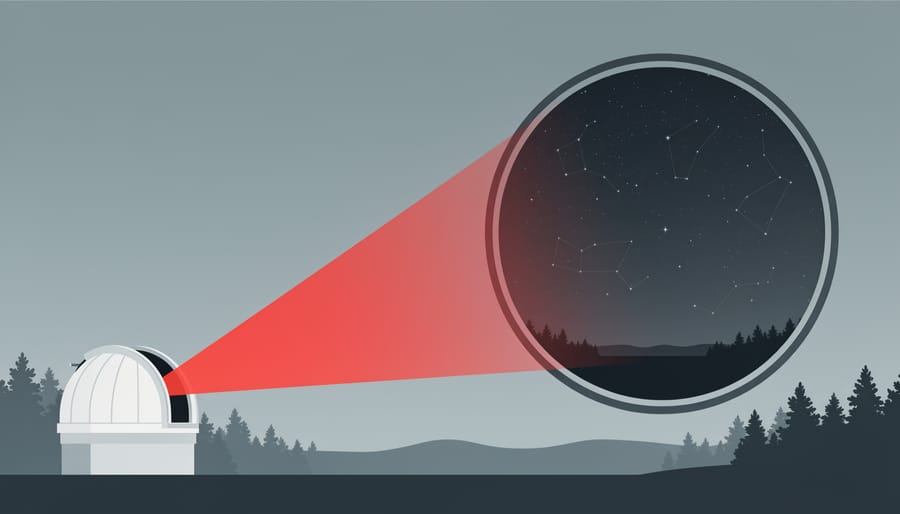
Once darkness arrives, you’ll gather around the observatory’s main telescope, usually a substantial instrument far more powerful than anything you’d own personally. The astronomer aligns it with the first object, and visitors take turns peering through the eyepiece while learning about what they’re seeing. Between telescope sessions, many programs include short presentations using laser pointers to trace constellations directly on the sky, teaching you to navigate from the Big Dipper to Polaris or identify the Summer Triangle. Some parks offer two-season stargazing experiences where you can observe how the night sky transforms between spring and fall visits.
Photography enthusiasts often set up cameras on tripods nearby, and staff may offer basic tips on long-exposure settings, though the focus remains on visual observation rather than astrophotography instruction. Programs typically run 90 minutes to two hours, depending on weather and crowd size.
To make the most of your visit, bring these essentials:
- Red flashlight or headlamp to preserve night vision
- Warm layers, even in summer, temperatures drop significantly after sunset
- Star chart or smartphone astronomy app
- Small notebook for jotting down observations
- Portable camping chair if the park doesn’t provide seating
- Insect repellent during warmer months
Expect a relaxed, informal atmosphere where questions are welcomed. Weather remains the biggest variable, clouds can end viewing early, though many programs include indoor backup presentations about astronomy and dark-sky conservation.
Planning Your Observatory Park Visit: Practical Information
Timing your observatory park visit right makes all the difference between an unforgettable night under the stars and a cloudy disappointment. Late spring through early fall (May through October) offers the warmest conditions and the most frequent programs, though Ontario’s winter skies are exceptionally clear and crisp if you can brave the cold. Peak season runs from June through August, when most parks operate nightly or weekend astronomy programs.
Moon phases deserve careful attention. New moon periods (when the moon is completely dark) provide the darkest skies and best deep-sky viewing, while quarter moons offer enough light to navigate safely without overwhelming faint celestial objects. Full moons wash out all but the brightest stars, though they’re perfect for lunar observation through telescopes. Check moon phase calendars when planning your trip, and aim for the week before or after a new moon.
Weather planning requires flexibility. Cloud cover is your biggest obstacle, so monitor forecasts for several days leading up to your visit and have backup dates if possible. Clear Sky Charts (astronomy-specific forecasts showing cloud cover, transparency, and seeing conditions) are invaluable tools. Even partly cloudy evenings can work if clouds are scattered rather than solid, but overcast skies mean no stars at all.
| Park | Entry Fee | Program Cost | Reservation | Best Season |
|---|---|---|---|---|
| Killarney Provincial Park | $18/vehicle | Free with entry | Recommended | June-September |
| Gordon’s Park | $10/person | $15-25 | Required | May-October |
| Torrance Barrens | Free | Donation-based | Not required | Year-round |
| Bruce Peninsula | $15/vehicle | Free with entry | Recommended | July-September |
| Algonquin Park | $20/vehicle | Free with entry | Required for programs | May-October |
Most programs run on weekends and select weeknights during peak season, typically starting an hour after sunset. Arrive 30-45 minutes early for orientation and to secure parking. Provincial parks require vehicle permits purchased at entry gates or online in advance, while some smaller preserves operate on donations. Telescope programs fill quickly during summer weekends, so booking ahead prevents disappointment, especially for family-friendly sessions at popular locations like Algonquin’s Visitor Centre.
Getting There and Where to Stay
Most observatory parks in Ontario are located in remote areas chosen specifically for their dark skies, which means you’ll need to plan your journey carefully. Driving is the primary option, expect two to four hours from major cities like Toronto or Ottawa, depending on your destination. Parks provide detailed directions on their websites, and GPS coordinates are reliable for most locations. Parking is typically free and plentiful near observatory sites, though arriving before sunset helps secure spots during popular astronomy events.
Public transit doesn’t serve these remote locations, so car rental becomes essential if you’re flying in. Some parks offer shuttle services during special stargazing weekends, but confirm availability when booking.
For accommodations, most observatory parks operate campgrounds where you can sleep under the stars you’ve just observed. Backcountry camping at Killarney or Algonquin lets you maximize dark-sky exposure, while frontcountry sites at Gordon’s Park offer more amenities. If camping isn’t your preference, nearby towns provide lodges and motels, Manitoulin Island has options near Gordon’s Park, while Huntsville serves Algonquin visitors.
Multi-day visits make sense because weather unpredictability means clear skies aren’t guaranteed your first night. Spending two or three days allows backup viewing opportunities and lets you explore daytime trails. Many photographers extend stays to capture dawn light shows and practice time-lapse tips learned from observatory staff during evening sessions.
Insider Tips for the Best Stargazing Experience
Arrive at the observatory park at least 30 minutes before the scheduled stargazing program begins. This gives your eyes crucial time to adjust to darkness, full night vision takes about 20 to 30 minutes to develop, and you’ll see dramatically more stars once your pupils have fully dilated. Use this transition time to explore the visitor center, chat with other astronomy enthusiasts, or scout out your preferred viewing spot before the crowd gathers.
Don’t hesitate to engage with the on-site astronomers, they’re passionate about sharing knowledge and genuinely enjoy answering questions, whether you’re a complete beginner or have some astronomy experience. Ask them to point out constellations you’ve always wanted to identify, request a closer look at a specific planet or nebula through the telescope, or inquire about what celestial events might be visible during your stay. These experts often share insider knowledge about upcoming meteor showers, rare planetary alignments, or the best times to return for specific viewing opportunities.
For photography beginners, start simple with your smartphone on night mode rather than getting overwhelmed by complex camera settings. Position your phone against a stable surface or small tripod, use a timer to avoid shake, and experiment with different exposure times. Many astronomers will gladly help you capture your first star trail or Milky Way photo.
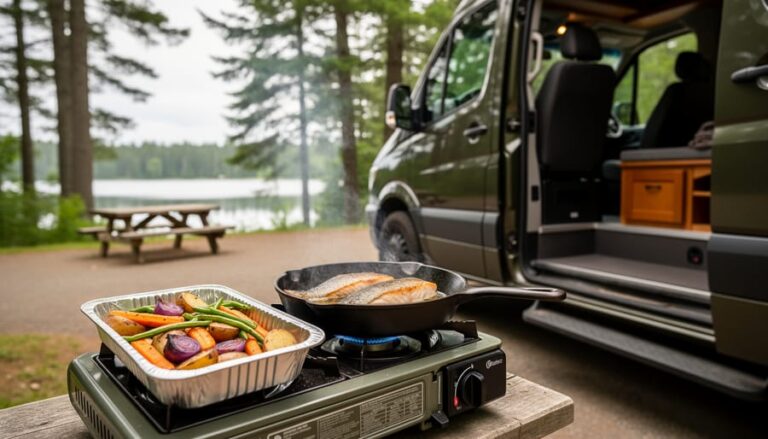
Combine your stargazing visit with daytime park activities like hiking, canoeing, or campfire cooking to make the most of your trip. This multi-day approach lets you experience the park’s full character while waiting for optimal viewing conditions.
Practice respectful dark-sky etiquette by keeping noise levels low during programs, never shining lights toward viewing areas, and staying on designated paths to protect fragile ecosystems. Support conservation by choosing parks with official Dark Sky Preserve designation, which funds ongoing light pollution reduction efforts and habitat protection that benefits both wildlife and stargazers.
Frequently Asked Questions
Do I need to bring my own telescope?
No, observatory parks provide professional-grade telescopes and equipment as part of their programs. Staff astronomers operate the telescopes and help visitors observe celestial objects, though you’re welcome to bring binoculars or a personal telescope if you have one.
Are stargazing programs suitable for children?
Yes, most observatory park programs welcome families and adapt explanations for different age groups. Kids typically love looking through telescopes at the moon’s craters and planets, though very young children might struggle with late evening schedules.
What happens if clouds roll in during my visit?
Many parks offer backup indoor presentations about astronomy, constellation mythology, or space science when viewing isn’t possible. Some locations provide rain checks or partial refunds for ticketed events, though policies vary by park.
Can I take photos through the telescopes?
Yes, smartphone photography through telescope eyepieces is possible and staff often help visitors line up their cameras. Dedicated astrophotography with tripods and cameras is also welcome, though flash photography disrupts everyone’s night vision.
Are the observatory areas accessible for visitors with mobility challenges?
Accessibility varies by location, but many parks have paved paths to viewing areas and accessible washroom facilities. Contact the specific park beforehand to discuss your needs and confirm which areas you can comfortably reach.
Do parks offer winter stargazing programs?
Some observatory parks run year-round programs, while others operate seasonally from spring through fall. Winter stargazing offers exceptionally clear skies and unique constellations, though you’ll need proper cold-weather gear and should review wild encounters safety for nighttime park visits in any season.
These questions cover the practical concerns most first-time visitors have when planning an observatory park trip. The answers reflect what you’ll actually encounter rather than theoretical possibilities, helping you show up prepared and get the most from your celestial adventure.




+ There are no comments
Add yours