
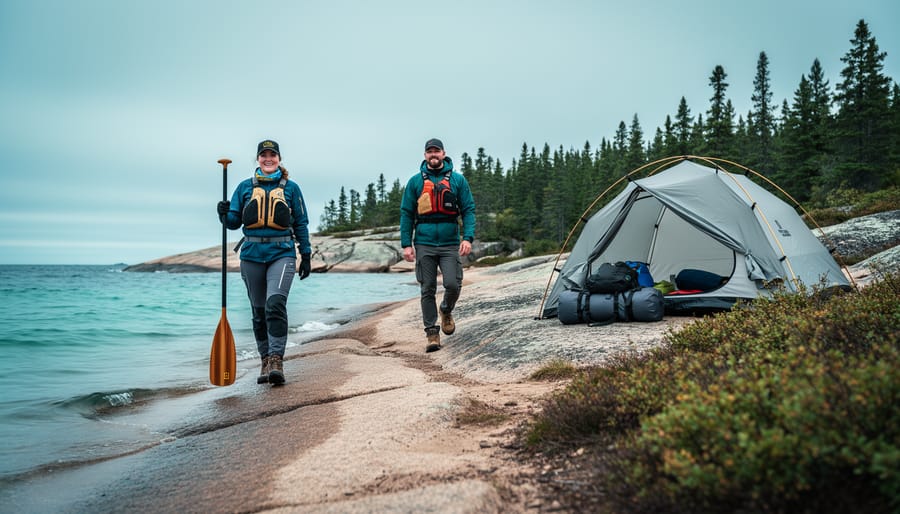
Four days is the sweet spot for an adventure trip in Ontario. It’s enough time to truly disconnect, explore beyond the trailhead, and return home with sore muscles and stories worth telling, but not so long that you’ll drain your vacation days or blow your budget. Whether you’re paddling through backcountry lakes, scrambling over Precambrian rock, or traversing coastal trails, the province offers adventures that pack maximum experience into a long weekend.
The trips we’ve curated here aren’t theoretical bucket-list daydreams. Each one can be booked, planned, and completed between Thursday and Sunday, with clear routes, known campsites, and manageable distances for intermediate adventurers. You’ll find the rugged wilderness of Algonquin’s backcountry canoe routes, the dramatic cliffs and turquoise waters of the Bruce Peninsula, the remote northern landscapes of Lake Superior Provincial Park, and the windswept beauty of Killarney’s white quartzite ridges.
What makes these four trips stand out is their diversity. One rewards paddlers, another hikers, a third those who love coastal camping, and the fourth anyone chasing that iconic Canadian Shield experience. All four share something critical: they’re long enough to leave cell service behind and short enough to fit into a normal work schedule.
The logistics matter just as much as the destination. You’ll need the right permits, proper gear for September conditions (yes, it can snow), and realistic daily mileage expectations. We’ve broken down each adventure with insider tips on everything from bear-proof food storage to the best swimming spots you won’t find on official maps. By the end, you’ll know exactly which trip matches your skill level and how to make it happen.
How We Chose These 4-Day Adventures
Choosing four trips from Ontario’s vast wilderness wasn’t about highlighting the most extreme or Instagram-famous options. We focused on adventures that deliver a genuine backcountry experience without requiring expert-level skills or specialized training. Each trip offers something different, whether you’re drawn to paddling, hiking, or coastal exploration, so there’s a fit for various interests and comfort zones.
Diversity of landscape mattered enormously. Ontario’s geography spans everything from Canadian Shield granite to Great Lakes coastline to the ancient Niagara Escarpment, and these four trips showcase that range. We prioritized routes with strong visual rewards and memorable moments, the kind where you’ll pause mid-portage or mid-ridge and think “this is why I came out here.”
Seasonal viability played a role too. These aren’t fair-weather-only adventures. While each has an optimal window, they’re feasible across broader timeframes, giving you flexibility in your calendar. We also considered how well each trip supports sustainable outdoor ethics, established campsites, permit systems that protect fragile areas, and opportunities to travel light and leave no trace. These aren’t just great adventures; they’re responsible ones that help preserve Ontario’s backcountry for the long haul.
1. Algonquin Park Backcountry Canoe Loop, Paddle Through Wilderness
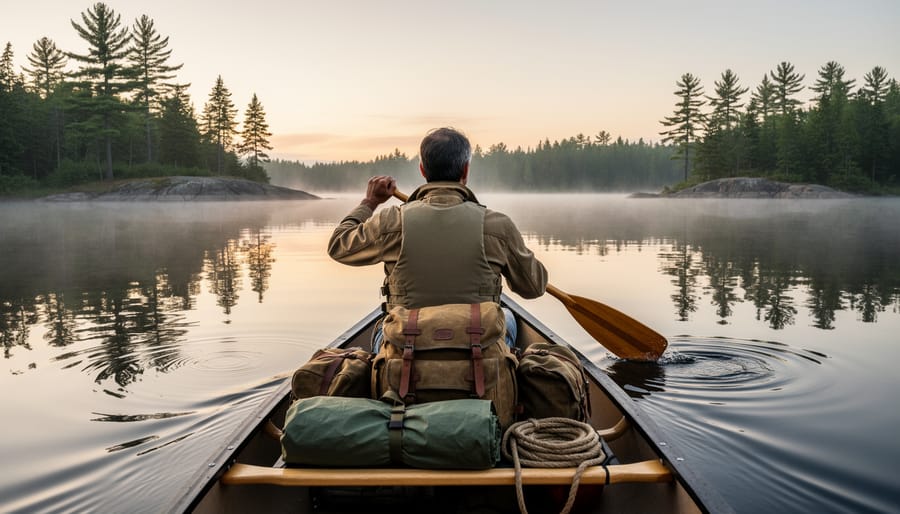
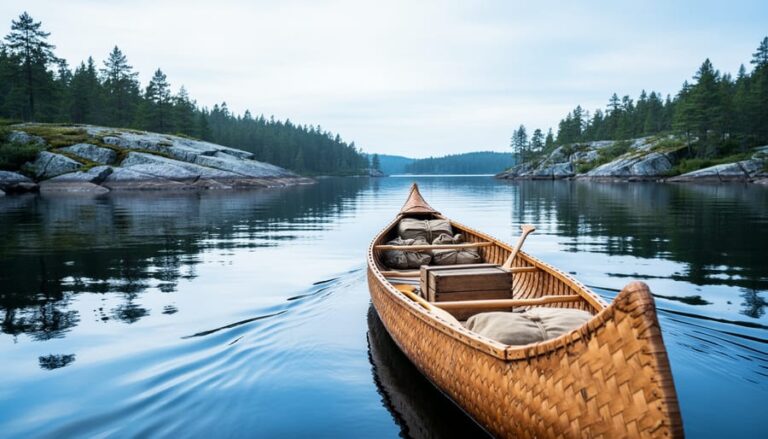
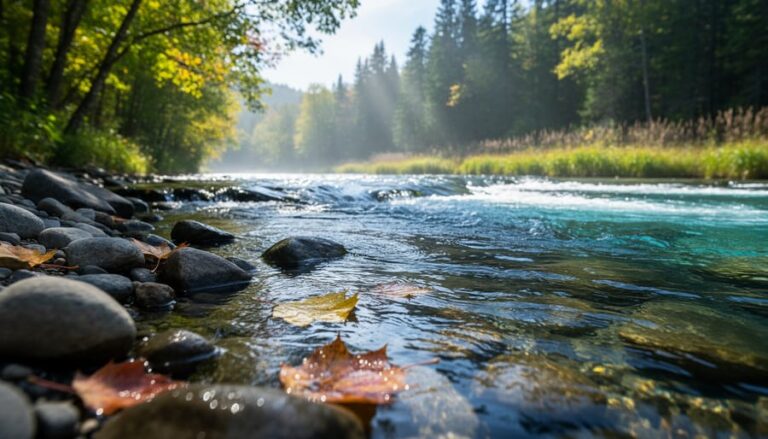
Picture yourself gliding across a mirror-still lake at dawn, mist rising from the water as a loon calls from the far shore. That’s day one of Algonquin Park’s backcountry canoe loops, and it only gets better from there. The Cedar Lake-Manitou Lake loop is a near-perfect introduction to wilderness paddling: roughly 35 kilometers of interconnected lakes with manageable portages, no whitewater to navigate, and campsites so remote you’ll feel like the only people in the park.
Day one typically starts at the Cedar Lake access point, where you’ll paddle across Cedar’s calm waters before hitting your first portage, a gentle 295-meter carry that sets the rhythm for the trip. By mid-afternoon, you’ll be setting up camp on one of Cedar’s interior sites, where the only sounds are wind in the pines and the occasional splash of a beaver tail. Day two brings the longest paddle to Big Trout Lake via a series of short portages (the 410-meter trail between Cedar and Big Trout is your biggest challenge). This is where Ontario wildlife encounters become regular occurrences, moose feeding in shallow bays at sunset, otters playing along rocky shorelines, and great blue herons lifting off as you round a point.
Days three and four let you settle into the paddle-portage-camp meditation. There’s something transformative about the simplicity: wake, break camp, paddle, portage, repeat. You’ll navigate to Manitou Lake, where the campsites perched on granite outcrops offer sunset views that justify every ounce you carried.
- Reserve your permit and campsites through Ontario Parks at least two weeks ahead for summer weekends
- Rent gear from Algonquin Outfitters or Opeongo Store if you’re new, they provide everything and teach proper portaging technique
- Pack a barrel for food (required for bear safety) and waterproof bags for clothes and sleeping gear
- May offers fewer bugs and crowds; September delivers stunning fall colors without the blackflies
- Bring a detailed waterproof map, cell service ends at the access point
The portages are short enough that even first-timers can manage them with proper technique (lift with your legs, use the yoke pad, take breaks). By day four, when you paddle out, you’ll understand why people return year after year, it’s not about conquering wilderness, it’s about moving through it at the pace it requires.
2. Killarney Provincial Park Hiking and Camping Circuit, White Quartzite Ridges
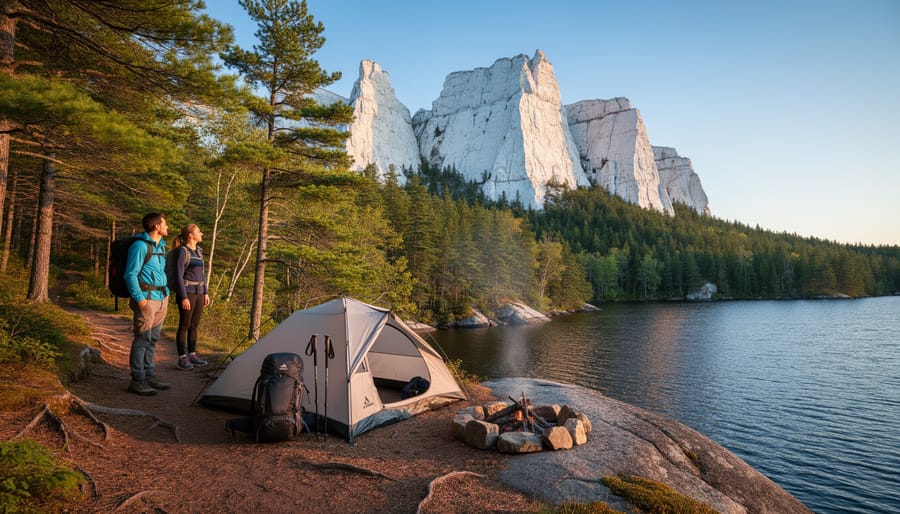
Killarney Provincial Park sits two hours northwest of Sudbury, where the La Cloche Mountains meet Georgian Bay in a collision of white quartzite ridges and impossibly blue water. This is the landscape that inspired the Group of Seven, Franklin Carmichael painted these very ridges in the 1920s, and a 4-day circuit here gives you enough time to hike the park’s iconic trails, sleep under star-saturated skies, and earn those jaw-dropping vistas through steady elevation gain.
Start your trip from the George Lake Campground trailhead, where most hikers access the backcountry. Day one covers roughly 8 kilometres to OSA Lake, following the Granite Ridge Trail through mixed hardwood forest before the terrain opens to exposed quartzite. You’ll gain about 200 metres in elevation, enough to get your legs warmed up without crushing them. Camp at OSA Lake’s backcountry sites, arrive early in summer to claim a spot with water access, since these six sites fill quickly on weekends.
Day two is your showstopper: the push to The Crack and Silver Peak. Leave your heavy pack at camp and day-hike the 6-kilometre out-and-back to The Crack, a dramatic quartzite cleft that frames Georgian Bay 150 metres below. The scramble up Silver Peak adds another hour but rewards you with 360-degree views across the La Cloche range. On a clear September morning, the hardwoods below blaze orange and red against those trademark white ridges and cobalt lakes.
Day three takes you southeast toward Killarney Lake, an 11-kilometre trek through boreal forest and over smaller ridges. This is quieter terrain, where you might spot moose browsing wetlands or hear the eerie call of a common loon echoing across the water. Killarney Lake’s campsites sit tucked in pine groves with filtered lake views, perfect for an afternoon swim if the weather cooperates.
Your final day loops back to George Lake, about 7 kilometres of gentle descent. Stop at Freeland Lake if you have time; it’s a turquoise gem that photographs beautifully in late-afternoon light. You’ll hit the trailhead tired, dusty, and already planning your return trip.
3. Lake Superior Coastal Adventure, Kayaking and Beach Camping
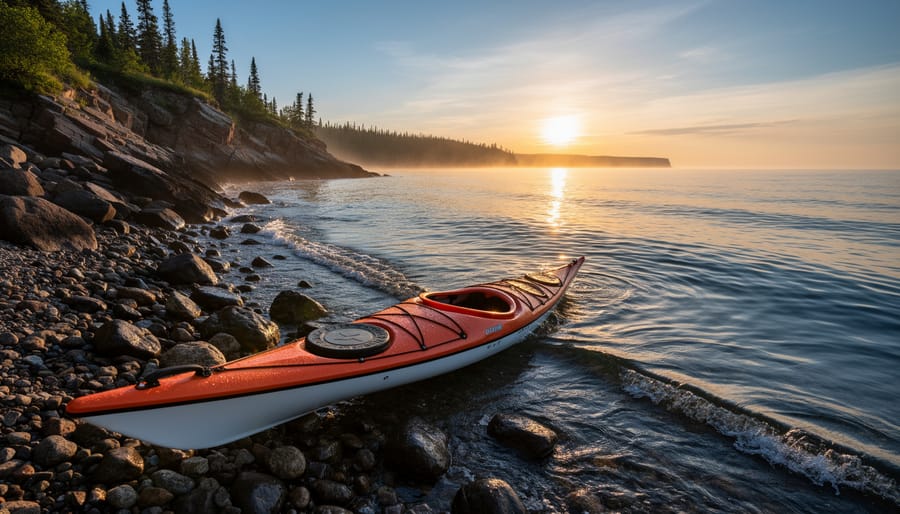
Picture yourself gliding through glassy water at dawn, the rising sun painting Lake Superior’s cliffs in shades of amber and rose. This 4-day coastal kayaking adventure combines the thrill of paddling the world’s largest freshwater lake with the simplicity of beach camping under star-filled skies. Whether you launch from Pukaskwa National Park’s remote wilderness or Lake Superior Provincial Park’s accessible shoreline, you’ll discover why paddlers return year after year to this magnificent stretch of coast.
The experience feels more like ocean kayaking than typical Ontario paddling. Superior’s moods shift dramatically, calm mornings can give way to afternoon swells, and the lake commands respect. Most paddlers tackle 10-15 kilometers daily, hugging the coastline and stopping to explore sea caves carved into ancient volcanic rock. At Pukaskwa, you might paddle past towering cliffs where peregrine falcons nest, then beach your kayak on a crescent of pink granite sand. Lake Superior Provincial Park offers the iconic Agawa Rock pictographs, accessible only by water, and sheltered bays perfect for novice coastal kayakers building their skills.
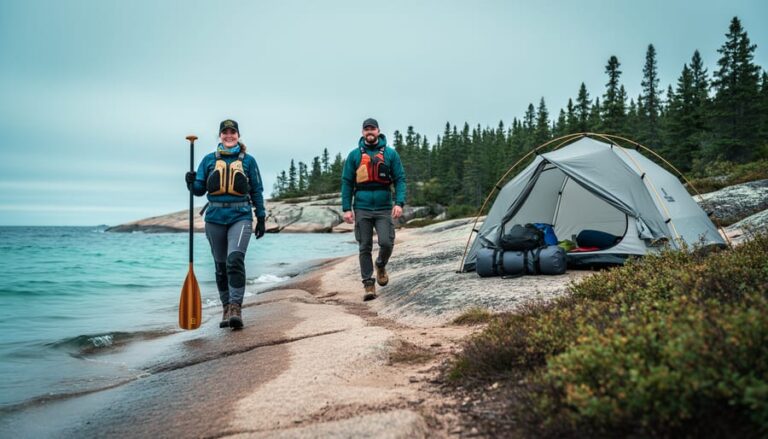
Your camps become temporary homes on wilderness beaches. There’s something primal about hauling your kayak above the tideline (yes, Superior has seiche-driven water level changes), pitching your tent on sand smoothed by centuries of waves, and cooking dinner as the sunset turns the lake molten. On our last trip, a bull moose waded into the shallows at dusk, utterly unfazed by our presence. These unscripted moments define the journey.
Before you go, understand Superior’s unique demands:
- Check marine forecasts twice daily, wind and wave conditions change rapidly on this vast lake
- Bring a spray skirt, bilge pump, and dry bags; expect to get wet even on calm days
- Pack extra layers and a reliable shelter, temperatures drop quickly after sunset
- Secure your kayak and gear at night; sudden storms can roll in while you sleep
- Carry bear-proof food canisters or use provided food lockers at designated sites
The rhythm of paddling, the crackle of driftwood fires, the stories shared with fellow adventurers you meet at remote campsites, these become the memories that outlast any Instagram post. After your journey, swing through communities like Wawa or Marathon to refuel, where to eat after days on the water, and swap tales with locals who know Superior’s temperament intimately. Book between late June and early September when water temperatures are warmest and daylight stretches long into evening.
4. Bruce Trail End-to-End Section Hike, Escarpment Views and Trail Towns
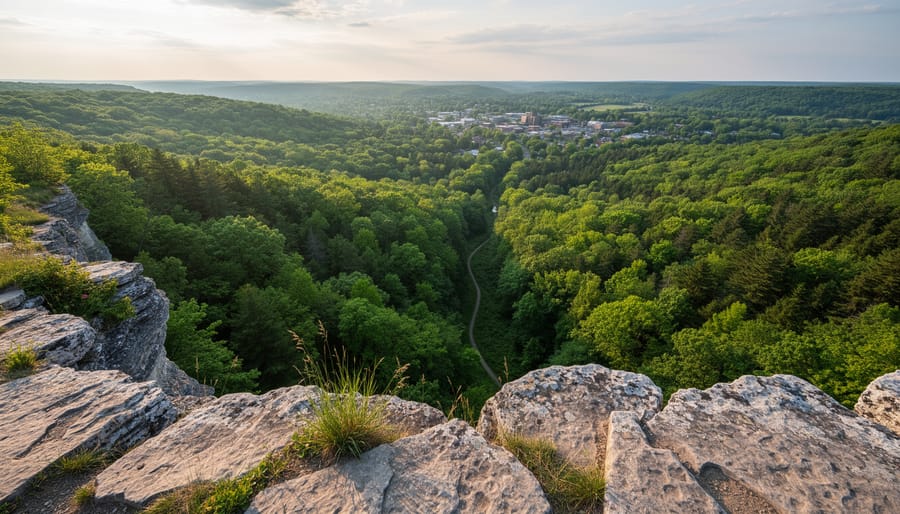
The Bruce Trail offers something rare in multi-day hiking: the chance to cover serious distance while staying connected to civilization. A four-day section hike from Tobermory to Lion’s Head, or any comparable 70-80 kilometer stretch along the Niagara Escarpment, delivers spectacular ridge-top views and deep forest walking, with the bonus of warm meals and proper beds if you want them. Unlike deep backcountry routes, this adventure lets you choose your own comfort level each night, swapping stories with fellow hikers over breakfast in a trail-side inn or pitching your tent at a provincial park campground.
The terrain unfolds in layers. You’ll climb wooden staircases up limestone cliffs, scramble over dolostone slabs worn smooth by glaciers, and walk through cathedral-quiet cedar forests where the trail is cushioned with rust-colored needles. The escarpment edge delivers the payoff: sweeping views across Georgian Bay’s cobalt waters, with islands scattered like puzzle pieces to the horizon. In September, the maples blaze orange against the evergreens. In June, wildflowers crowd the forest floor and trilliums carpet the understory.
What makes this hike particularly approachable is the infrastructure. Trail towns are spaced every 15-25 kilometers, giving you natural stopping points and resupply options. You can structure your trip in several ways:
- Fully supported: Book B&Bs or inns in Lion’s Head, Dyer’s Bay, and Tobermory; arrange a shuttle service like Bruce Trail Transport to move your vehicle or provide drop-off and pick-up
- Hybrid approach: Camp two nights, inn two nights, carrying a lighter pack and shipping gear ahead to your lodging
- Self-supported camping: Stay at Cyprus Lake, High Dump, and other campgrounds, carrying all your gear and food
- Trail towns offer cafes, grocery stores, gear shops, and laundromats for mid-trip resupply and creature comforts
The social dimension adds richness you won’t find on remote routes. You’ll meet section hikers chipping away at the full 900-kilometer trail, retirees on walking holidays, and locals who treat trail maintenance like a calling. Pubs in Lion’s Head and Tobermory buzz with hiker conversations come evening, comparing blister remedies, debating the toughest climbs, sharing beta on water sources. It’s adventure with a human touch, proof that wilderness and community can coexist beautifully on the same path.
What to Pack for a 4-Day Adventure Trip
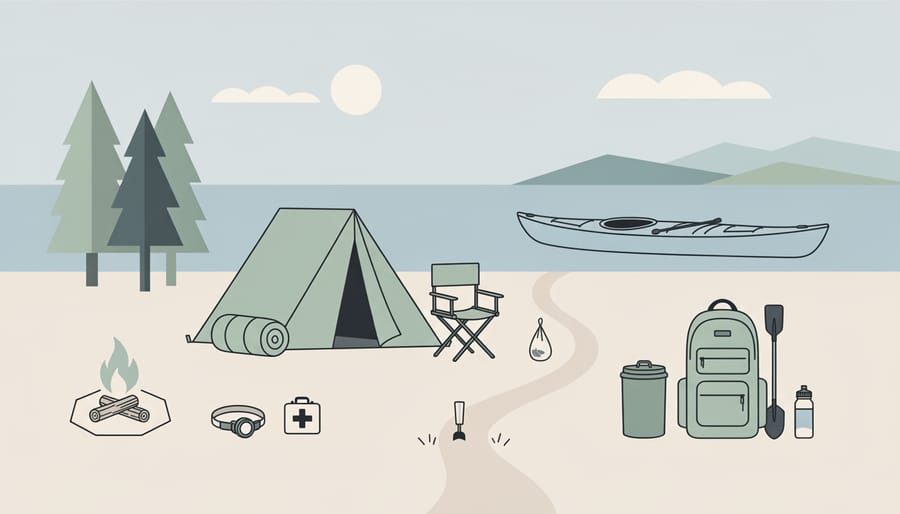
Packing for a 4-day adventure requires balancing weight with necessity. You’ll carry everything on your back or in your boat, so every item earns its place. Start with the Ten Essentials: navigation tools (map, compass, GPS), sun protection, insulation, illumination (headlamp with extra batteries), first-aid supplies, fire starter, repair kit and tools, nutrition, hydration, and emergency shelter. These form your safety foundation, whether you’re paddling Algonquin or hiking the Bruce.
Clothing deserves careful thought. Ontario’s weather shifts fast, so layer strategically: moisture-wicking base layers, insulating mid-layers (fleece or down), and a waterproof shell. Pack two pairs of wool socks, a warm hat, and gloves even in summer, nights on the water drop to single digits. Skip cotton; it stays wet and steals your warmth.
- Clothing: Base layers, insulating fleece, waterproof jacket and pants, wool socks (2 pairs), camp shoes, sun hat
- Shelter: Lightweight tent, sleeping bag rated for season, insulated sleeping pad
- Cooking: Compact stove, fuel canister, pot, utensils, reusable food containers, biodegradable soap
- Safety: First-aid kit, water filter or purification tablets, bear hang rope, whistle, knife or multi-tool
- Eco-essentials: Reusable water bottle, trash bags (pack it all out), trowel for waste burial, natural insect repellent
Food planning matters. Calorie-dense, lightweight options work best: instant oatmeal, nut butter, dried fruit, hard cheese, pasta, and dehydrated meals. Plan 2,500-3,000 calories per day. A water filter or purification tablets let you drink from lakes and streams safely, cutting pack weight significantly. Many accessible Ontario Parks have potable water at trailheads, but treat all backcountry sources.
Choose eco-friendly gear when possible. Reusable silicone bags replace disposable plastic, and biodegradable soap minimizes impact. A solar charger keeps devices powered without batteries. Remember: what you carry in, you carry out. No trace means no trash left behind.
Planning Your Trip: Permits, Seasons, and Logistics
Getting the logistics right can make the difference between a smooth adventure and a frustrating scramble. Here’s what you need to know to lock down permits, pick the perfect season, and handle the practical details that’ll let you focus on the experience itself.
For any of these trips, you’ll book campsites through the Ontario Parks reservation system, which opens five months in advance at 7 a.m. Popular spots, especially in Algonquin and Killarney, fill fast during summer weekends, so mark your calendar.
Backcountry permits (required for Algonquin canoe routes and Killarney hiking) are included with your campsite reservation. For the Bruce Trail section hike, you won’t need permits for the trail itself, but if you’re camping in provincial parks along the way, book those sites separately.
Timing matters. Late May through early June offers wildflowers, fewer bugs than July, and uncrowded trails, though water can be chilly for kayaking. September is the sweet spot: stable weather, stunning fall colours, and far fewer people, you’ll often have campsites to yourself. July and August bring warm water and long daylight but also peak crowds and biting insects, especially in Algonquin. For Lake Superior kayaking, aim for July through early September when water temps are most tolerable and storms less frequent.
Transportation varies by trip. Algonquin and Killarney have access points you can reach by car, with outfitters near park gates offering shuttle services for point-to-point routes and gear rentals. The Bruce Trail section hike requires a shuttle between trailheads, local services exist, or coordinate a two-car drop. If you’re planning a family adventure safety checklist should include confirming vehicle access, emergency contact plans, and knowing where cell service drops off (often within the first hour).
Frequently Asked Questions
Do I need experience for these trips?
Not necessarily. The Bruce Trail section hike and Killarney’s established campgrounds suit beginners who are reasonably fit, while the Algonquin canoe loop and Lake Superior kayaking trips benefit from prior paddling skills or going with an experienced partner. Start with guided trips or easier routes if you’re new to backcountry travel.
Can I do these trips solo?
Yes, many adventurers tackle these routes alone, especially the Bruce Trail and Algonquin’s well-traveled canoe circuits. Solo travel demands extra self-reliance and safety precautions, tell someone your itinerary, carry a communication device, and honestly assess your skill level before heading out alone.
What if the weather turns bad?
Ontario’s weather can shift quickly, so pack rain gear and extra layers regardless of the forecast. Most trips have bailout options or shorter routes if conditions deteriorate, and knowing when to call it and head home is part of responsible adventuring. Check forecasts daily and be flexible with your plans.
Are these trips family-friendly?
The Bruce Trail and car-camping bases in Killarney work well for families with older kids who can handle moderate hiking. Algonquin and Lake Superior trips suit adventurous families with teens experienced in paddling, but the remoteness and physical demands make them challenging for younger children.
Costs vary widely depending on your approach. Campsite fees run $10-50 per night through Ontario Parks, while gear rentals (canoes, kayaks, packs) add $50-150 per day if you don’t own equipment. Budget $200-400 total for a DIY trip with your own gear, or $800-1500 for a guided experience with meals and equipment included. Permits for backcountry camping require advance reservation, especially in summer, so book early to secure your dates.
If you’re inspired but want more Ontario adventure ideas beyond these four-day itineraries, shorter weekend trips and day excursions throughout the province offer plenty of ways to scratch that outdoor itch between longer expeditions.
Four days in the wilderness changes you in ways a weekend never quite can. There’s something about that third night under the stars, when your shoulders finally relax, your phone becomes irrelevant, and you start noticing the small things like the pattern of waves on a lake or the exact shade of lichen on granite, that rewires how you see the world. Ontario’s wild places are waiting to offer you that reset, whether you’re drawn to the rhythmic splash of a canoe paddle, the satisfying burn of a ridge climb, or the hypnotic crash of Superior’s waves against ancient shoreline.
The best part? You don’t need months of planning or expedition-level experience. Pick the adventure that speaks to you, block off those four days, and commit. Book the permit, gather your gear, tell a friend your itinerary. The logistics fall into place once you decide to go.
Years from now, you won’t remember the emails you answered or the meetings you attended this month. But you’ll remember the loon call that echoed across the lake at dusk, the shared laughter around the campfire, and the quiet pride of carrying everything you need on your back. Ontario’s backcountry is calling. Answer it.

+ There are no comments
Add yours