
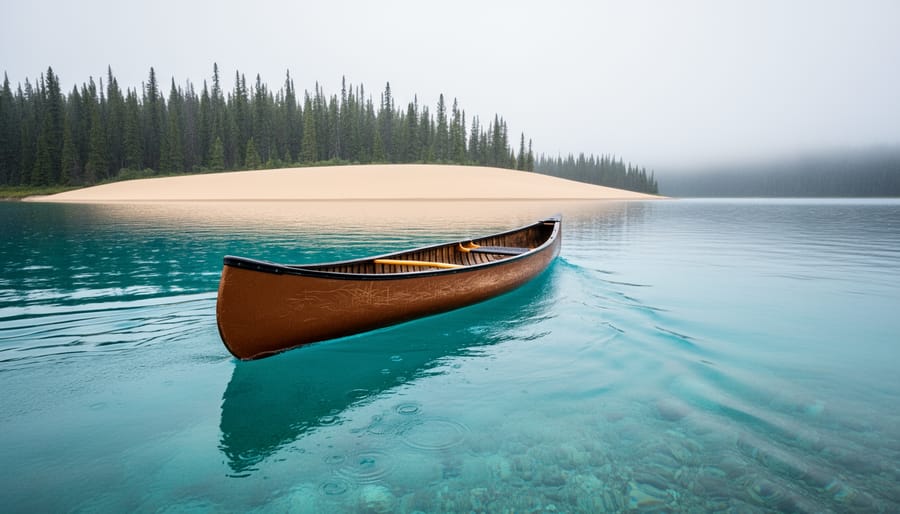
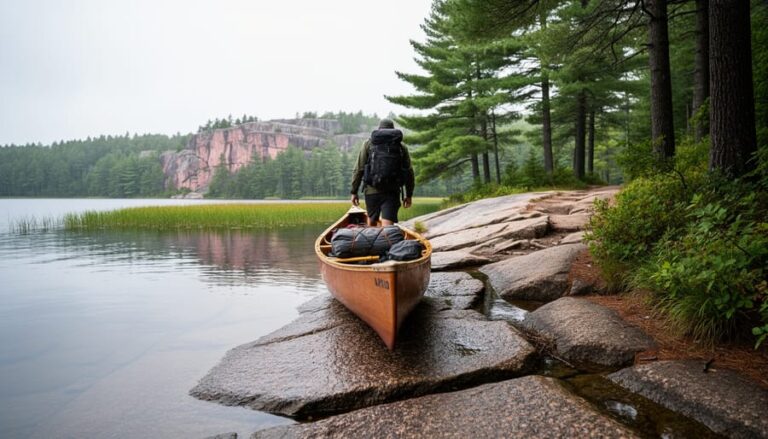
Esker Lakes Provincial Park shelters some of Ontario’s most pristine glacial lakes, where ancient ice sheets carved a network of crystal-clear waterways perfect for backcountry canoeing, fishing, and wilderness camping. Located roughly 80 kilometers north of Kirkland Lake in Ontario’s near-north, this 3,000-hectare park offers paddlers and anglers direct access to over 20 interconnected lakes, each surrounded by sandy esker ridges and boreal forest that feels a million miles from civilization.
What sets these lakes apart is their geological story. Ten thousand years ago, retreating glaciers deposited massive sand and gravel ridges called eskers across the landscape, creating the distinctive high ground that now frames each lake. The result is unusually clear water, sandy shorelines rare in the Canadian Shield, and excellent habitat for lake trout, northern pike, and smallmouth bass. You won’t find motorboats here. The park enforces a paddle-only policy, meaning the only sounds you’ll hear are loon calls echoing across the water and your paddle dipping into the lake.
If you’re ready to Escape to Esker Lakes for a true backcountry experience, you’ll need to plan for portaging between lakes, securing a permit ahead of time (especially for summer weekends), and packing everything in and out. The payoff is solitude, spectacular fishing, and the kind of wilderness paddling that reminds you why Ontario’s north is legendary among canoeists. This guide breaks down which lakes to target, what activities work best, and the insider knowledge that turns a good trip into an unforgettable one.
Why the Upper Peninsula Lakes Are Worth the Journey

The Upper Peninsula lakes owe their existence to the last ice age. Around 10,000 years ago, retreating glaciers deposited massive ridges of sand and gravel, eskers, that now form the distinctive spine running through this landscape. These ancient formations created a network of deep, narrow lakes nestled between steep gravel ridges, some rising over 30 meters above the water. The result is a lake system unlike anywhere else in Ontario.
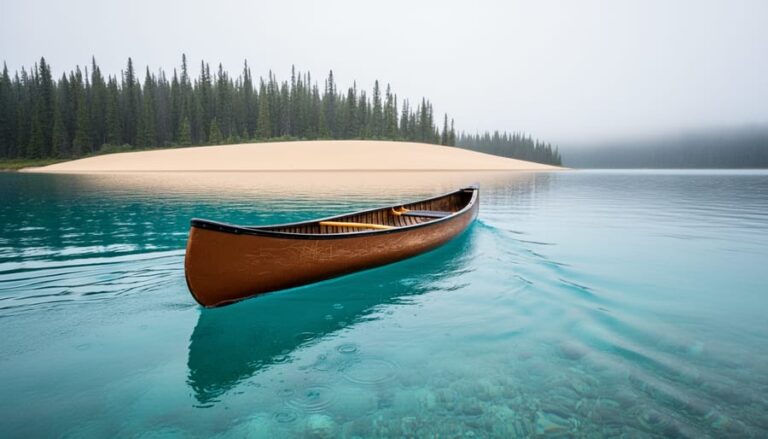
What sets these lakes apart is their exceptional clarity. Fed by cold springs and protected from agricultural runoff, many esker lakes offer visibility down to 8 meters or more. You’ll paddle over submerged boulders and spot fish from the surface, a stark contrast to the tannin-stained waters common elsewhere in the Shield. The sand and gravel esker composition filters the water naturally, maintaining remarkable purity.
This is remote country. You won’t find marinas, cottages, or paved boat launches here. Most lakes require paddling in from access points, and cell service vanishes once you leave the highway. That isolation is precisely the appeal. Loons call across glassy morning water. Black bears forage along shorelines. On clear nights, the Milky Way stretches horizon to horizon without a single light to dim it.
The paddling is world-class, with interconnected routes allowing trips from two days to two weeks. Backcountry campsites occupy rocky points and esker ridges, offering panoramic views. Anglers target lake trout in the deep channels and walleye near rocky shoals. Wildlife sightings, moose, otters, eagles, happen daily, not occasionally.
This isn’t beginner territory, though intermediate paddlers with proper preparation will thrive. Expect portages, weather challenges, and self-reliance. The reward is experiencing Canadian wilderness as it’s meant to be: wild, beautiful, and wonderfully untouched.
Top Upper Peninsula Lakes to Explore
1. Esker Lakes Provincial Park
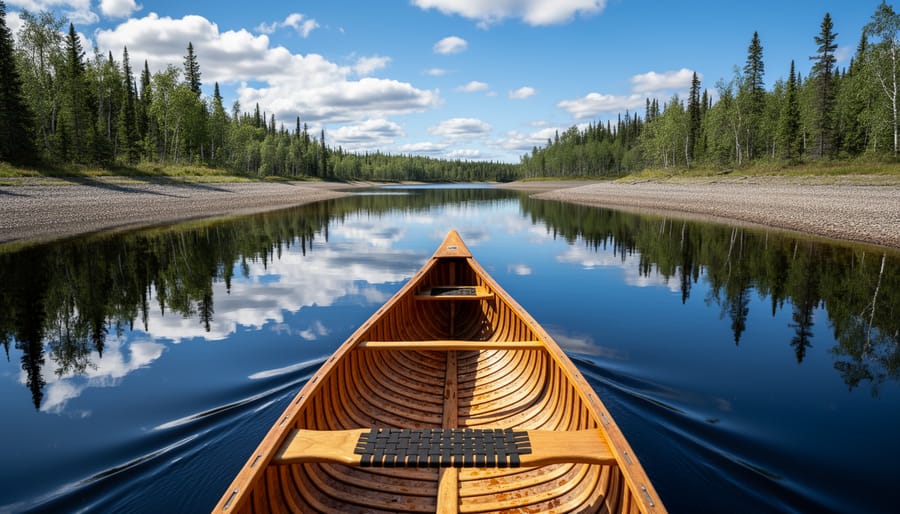
Esker Lakes Provincial Park stands out as the crown jewel of Ontario’s northern wilderness, showcasing a rare chain of six interconnected lakes draped across a prominent glacial esker ridge. The park’s signature feature, a serpentine sand and gravel ridge rising sharply from the surrounding forest, creates dramatic shorelines and crystal-clear waters that drop off steeply from sandy beaches. Paddlers can follow the Munro Esker canoe route through this connected system, navigating short portages between lakes while camping at designated backcountry sites perched on esker crests with sweeping water views.
Brook trout thrive in these cold, pristine waters, particularly in the smaller northern lakes where fewer anglers venture. For the best experience, enter from the Biscotasing access point in late May or early June when bug pressure is lighter and you’ll have your pick of campsites. Mid-September offers equally good conditions with stunning fall colors reflected in glass-calm waters. Skip the busy Canada Day weekend if you prefer solitude, the park sees a fraction of visitors compared to southern parks, but this is when locals arrive. The esker ridges themselves make excellent short hikes from your campsite, offering panoramic views across the lake chain that few wilderness areas can match.
2. Upper Wolseley Lake
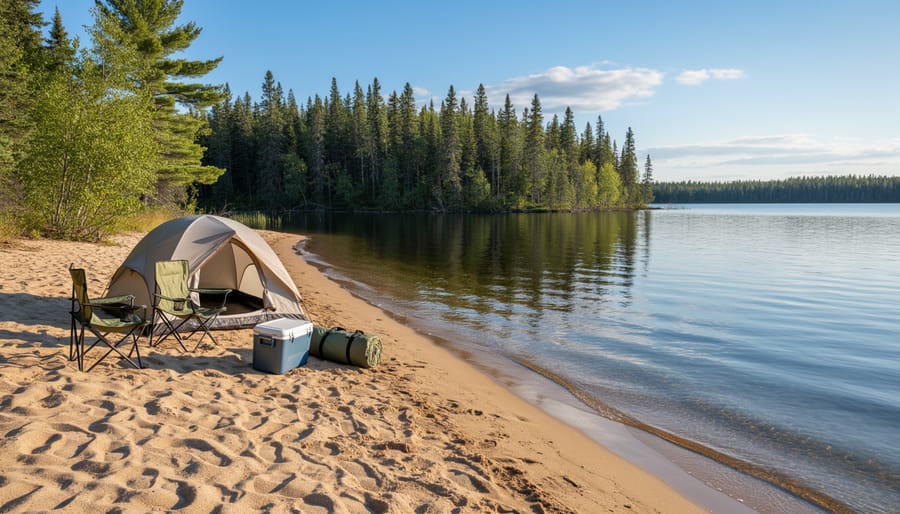
Upper Wolseley Lake stretches across 6,500 acres of pristine wilderness, offering one of the region’s most rewarding combinations of accessibility and authentic backcountry feel. The lake’s dozen-plus islands create natural campsite destinations, many featuring sandy esker beaches that feel almost tropical against the Canadian Shield backdrop, a striking contrast you won’t find at most northern Ontario lakes.
What sets Upper Wolseley apart is its crystal-clear water, often exceeding 20 feet of visibility on calm days. You’ll spot bass and pike cruising the shallows from your canoe, and the walleye fishing consistently ranks among the best in the area. Launch from the public access on Highway 560, and within an hour’s paddle you’ll feel completely removed from civilization, despite being relatively close to services in Gowganda.
The lake’s size means you can spend several days exploring different bays and islands without covering the same water twice. Pack a beach towel, those esker sand beaches are perfect for mid-paddle swimming breaks.
3. Scarecrow Lake
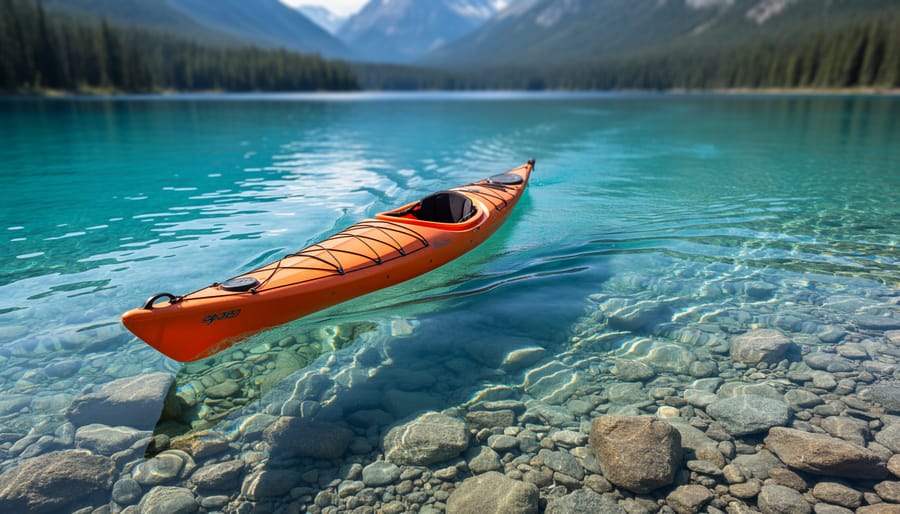
Scarecrow Lake earns its reputation as the jewel of the upper peninsula’s smaller bodies of water. What it lacks in size, it makes up for in sheer beauty and accessibility for paddlers seeking a manageable wilderness experience.
The water clarity here rivals anything in Ontario, you’ll spot fish swimming fifteen feet below your kayak on calm mornings. Smooth granite rock formations line the shoreline, creating natural diving platforms and sun-warmed slabs perfect for afternoon lounging. The compact size (you can paddle the perimeter in two to three hours) makes this an ideal choice for families with kids or anyone testing their backcountry skills before tackling longer routes.
Two well-maintained campsites sit on opposite shores, offering privacy despite the lake’s popularity. Early summer brings the warmest swimming temperatures, though the glacial origins mean the water stays bracing even in August. Pack a mask and snorkel, the rocky bottom and clear water make for surprisingly good underwater viewing.
4. Gowganda Lake System
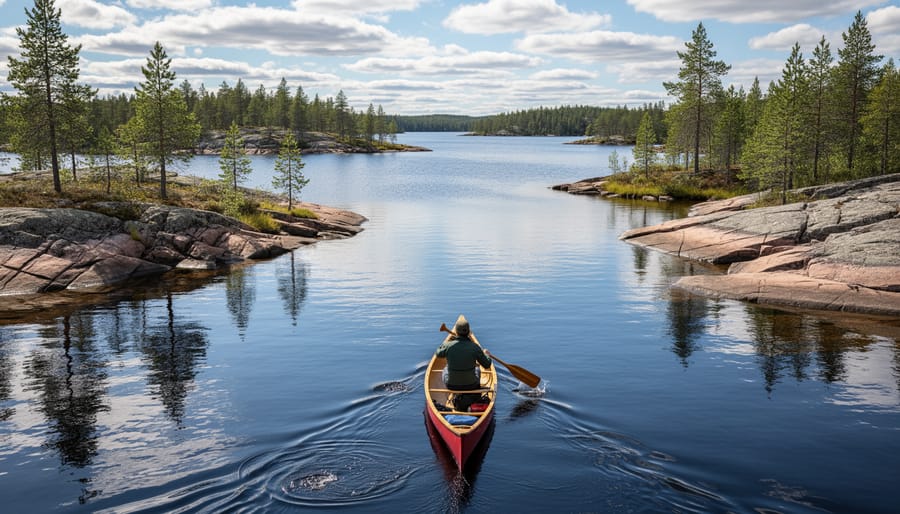
The Gowganda Lake system offers a distinctive blend of wilderness paddling and Ontario’s silver mining heritage. This network of interconnected lakes sits in what was once a booming mining region in the early 1900s, and remnants of that era, old mine shafts, foundations, and equipment, dot the shorelines alongside pristine Canadian Shield scenery.
The main paddling route connects Gowganda Lake with Smoothwater Lake and beyond, offering three to five-day trips through varying landscapes. You’ll paddle past rocky outcrops, sheltered bays, and small islands ideal for camping. The fishing here is excellent, particularly for lake trout in the deeper sections.
What sets Gowganda apart is the tangible history. You might beach your canoe near a rusted ore cart or camp within sight of century-old tailings. It’s a reminder that even Ontario’s wildest places have human stories woven through them. The campsites tend to be quieter than more heavily-promoted parks, and the water clarity rivals any esker lake, just watch for submerged timbers near old logging sites when navigating shallow channels.
5. Matinenda Lake
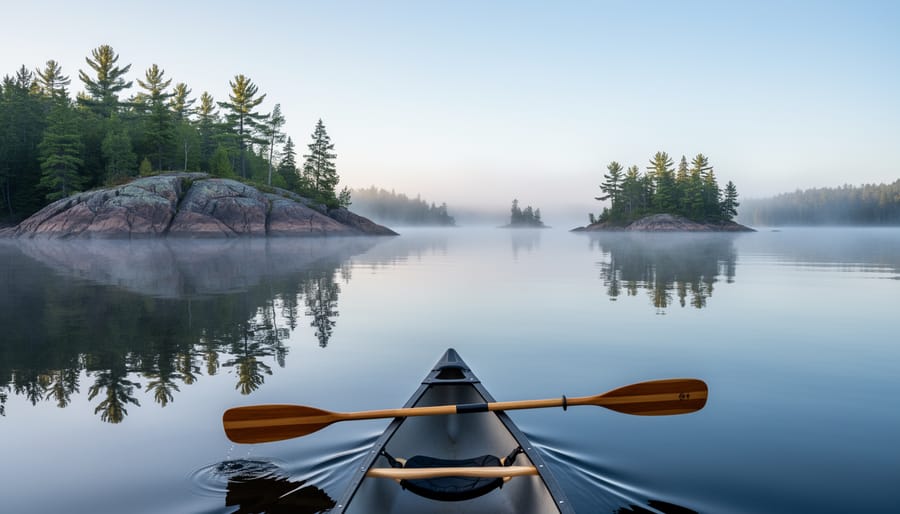
Matinenda Lake stands out as one of the region’s most expansive paddling destinations, stretching over 30 kilometers with countless bays, islands, and hidden coves to explore. This isn’t a lake you knock off in an afternoon, it’s built for multi-day canoe trips where you can spend days discovering new corners without retracing your paddle strokes.
The fishing here is exceptional, particularly for walleye. Local anglers target rocky points and deeper channels near island drop-offs, where walleye congregate in cooler water. Spring and fall produce the most consistent action, though summer evenings can be productive too.
What makes Matinenda special is its variety. You’ll paddle across wide-open stretches where wind can build serious waves, then tuck into calm, protected coves rimmed with old-growth forest. Some bays feel like secret backcountry hideaways despite being part of this massive system. The numerous islands mean you’ll find excellent campsites with different exposures, choose sunrise views over open water or sheltered spots for windy nights.
What to Do on Upper Peninsula Lakes
The Upper Peninsula lakes transform into your personal wilderness playground, where activities range from adrenaline-charged paddling to quiet mornings casting for trophy fish. These glacially-carved waters reward adventurous spirits willing to venture beyond the crowds.
Backcountry Paddling
Canoeing and kayaking form the backbone of any Upper Peninsula lakes adventure. Multi-day routes connect chains of lakes via portages ranging from short carries to challenging kilometer-long treks. The esker systems create natural highways through the wilderness, with sheltered bays offering respite when winds pick up on larger open waters. Kayakers appreciate the crystal clarity that lets you watch your paddle slice through ten feet of water, while canoeists find the routes ideal for week-long expeditions with minimal portaging between certain lake chains.
Angling in Pristine Waters
The fishing here rivals Ontario’s best-known destinations. Lake trout thrive in the deep, cold waters surrounding esker formations, troll near underwater ridges in 30-50 feet of water using silver spoons or live bait. Walleye populate the shallower bays and rocky shorelines, hitting best at dawn and dusk with jigs or crankbaits. Smallmouth bass frequent the boulder-strewn points, while northern pike lurk in weedy shallows. These Ontario lake ecosystems support healthy fish populations thanks to minimal development pressure.
Essential Activities to Experience:
- Multi-day canoe routes linking remote backcountry lakes via scenic portages
- Trophy fishing for lake trout, walleye, and smallmouth bass using catch-and-release practices
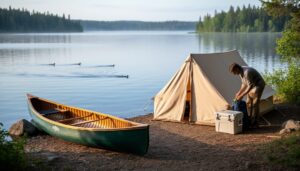
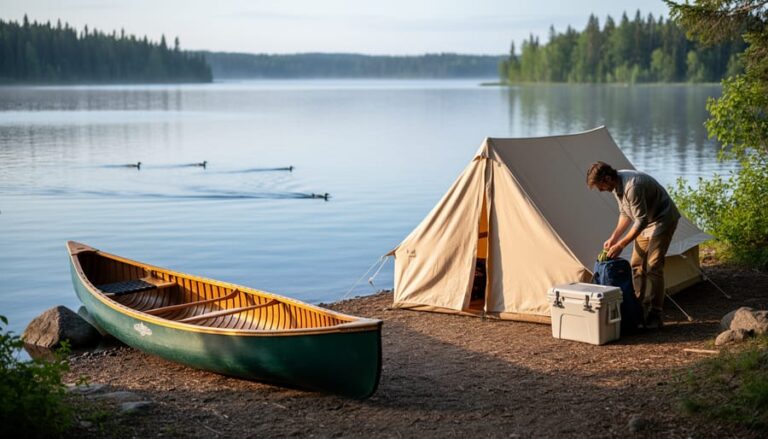
- Wilderness camping on designated sites with stunning water views
- Swimming in glacial-clear waters reaching comfortable temperatures by mid-July
- Hiking esker ridges for panoramic views of interconnected lake systems
- Wildlife photography capturing moose, loons, beavers, and occasional black bears
Swimming in these glacial lakes offers an unforgettable experience, the water clarity lets you see your toes in shoulder-deep water, though temperatures remain brisk even in summer. Hiking the esker ridges provides a different perspective on the landscape you’ve been paddling through, with sweeping views across the lake chains and surrounding boreal forest. Wildlife photographers find endless subjects, from early morning mist rising off glassy waters to moose feeding in shallow bays at sunset.
Practice Leave No Trace principles throughout: pack out all waste, use designated fire rings only, wash dishes 70 meters from water sources, and store food in bear-proof containers or proper hangs.
Practical Information for Your Visit
Getting to the Upper Peninsula lakes region requires some planning, but the reward is worth the effort. Most visitors access Esker Lakes Provincial Park via Highway 560 north from Sudbury, a roughly two-hour drive followed by logging roads that require a high-clearance vehicle. For Gowganda Lake, take Highway 560 to Gowganda township, while Scarecrow and Upper Wolseley lakes have access points along Highway 560 and secondary forest roads. An essential park map guide will help you navigate the network of logging roads and identify put-in points. GPS coordinates are useful since signage can be minimal on backroads.
Cell service disappears once you leave Highway 560, so download maps and trip information beforehand. Let someone know your itinerary and expected return date.
| Season | Water Conditions | Highlights | Considerations |
|---|---|---|---|
| Spring (May-June) | Ice-out mid-May, cold water | Fewer bugs early, waterfalls flowing | Unpredictable weather, limited rentals |
| Summer (July-August) | Warmest swimming temperatures | Peak season, all facilities open | Busiest period, book ahead |
| Fall (September-October) | Cooling quickly, clear water | Brilliant foliage, solitude | Cold nights, freeze risk late October |
Backcountry permits are required for overnight camping in Esker Lakes Provincial Park and cost around $12 per person per night (2026 rates). Reserve through Ontario Parks starting in March for summer trips. Day use is free but you still need to register. Equipment rentals are limited in this remote area. Gowganda Outfitters rents canoes, paddles, and camping gear, but book well ahead. Expect to pay $50-70 per day for canoe rentals, plus $15-20 for paddles and life jackets.
Budget $100-150 per person for a weekend trip including permits, gas, and basic supplies, or $200-300 for longer expeditions with rentals. Bring cash for last-minute purchases in Gowganda since card readers aren’t universal at small outfitters.
Local Tips for Upper Peninsula Lakes Adventures
Seasoned paddlers know the clearest water is found in the smaller, sheltered bays on the eastern sides of most esker lakes, these areas catch morning light beautifully and tend to have less wind-blown sediment. To dodge crowds, visit mid-September through early October when the bugs are gone and fall colors peak, or target weekdays in June after ice-out but before summer vacation begins. Many regulars skip the obvious first campsite past each access point and paddle an extra hour to reach quieter sites with better views.
For gear, a quality water filter matters more than you’d think, these lakes are pristine, but proper filtration keeps them that way and protects you. A lightweight portage cart saves your back if you’re tackling longer carries, though it’s not essential for casual trips. Pack a bear barrel or rope for hanging food; wildlife encounters are common, and following proper bear safety tips keeps both you and the animals safe. Never leave food scraps or fish waste at campsites, pack everything out or dispose of it in deep water far from shore.
For photography, golden hour on esker lakes is spectacular. Position yourself to capture the sun reflecting off the ridges’ sandy slopes, and shoot from water level in your canoe for dramatic perspectives of the formations rising above the treeline. Early morning mist often clings to the water’s surface, creating ethereal scenes worth setting your alarm for.
Frequently Asked Questions
Are Upper Peninsula lakes suitable for beginners?
Yes, many Upper Peninsula lakes work well for novice paddlers, especially if you start from an accessible entry point like Esker Landing base camp where you can practice on calmer waters before venturing further. Choose smaller lakes like Scarecrow for your first trip, and consider visiting during calm weather in July or August when conditions are most predictable.
Do I need a backcountry permit?
For Esker Lakes Provincial Park and most designated wilderness areas in the region, you’ll need to reserve and pay for backcountry camping permits in advance through the Ontario Parks reservation system. Fees typically run around $12-15 per person per night, with additional vehicle permits required at most access points.
What’s the water temperature like in Upper Peninsula lakes?
These glacially-fed lakes stay cold year-round, with surface temperatures reaching 18-22°C in July and August but dropping quickly below the top layer. Early season (June) and fall (September) water can be shockingly cold at 10-15°C, so plan your swimming accordingly and always wear a wetsuit or drysuit when paddling in cooler months.
Can I bring my dog on the lakes?
Dogs are permitted in most Ontario provincial parks including the backcountry, but they must stay leashed and you’re responsible for packing out all waste. Keep in mind that wildlife encounters are common, so solid voice control is essential even when your dog is on-leash.
What are the motorboat restrictions?
Many Upper Peninsula lakes restrict motorboats to 10 horsepower or less, and some designated wilderness lakes prohibit motors entirely to preserve the backcountry experience. Check specific regulations for each lake before your trip, as restrictions vary between provincial parks and Crown land areas.
Do I need a fishing license for Upper Peninsula lakes?
Anyone over 18 fishing in Ontario needs a valid Ontario fishing license, available as sport or conservation licenses for residents and non-residents. The region offers excellent walleye, northern pike, and lake trout fishing, with specific size and catch limits that vary by lake and zone.
These clear, cold lakes reward careful trip planning. Double-check permit requirements and gear lists before you head out, and you’ll have everything you need for an incredible wilderness experience.

+ There are no comments
Add yours