

Step into a Ontario sugar bush on a crisp March morning and you’ll witness something magical: pure maple sap flowing from centuries-old trees, wood smoke curling from the sugar shack, and that intoxicating sweet scent that signals spring’s arrival. These working forests transform into welcoming destinations each year, where visitors can experience one of Canada’s most beloved traditions firsthand—from watching sap boil into golden syrup to tasting pancakes drizzled with maple goodness straight from the evaporator.
A sugar bush isn’t just a maple grove; it’s a living classroom and seasonal celebration rolled into one. Across Ontario, family-run operations open their doors during sugaring season (typically late February through April), offering tours that reveal the fascinating journey from tree to table. You’ll learn why only certain trees get tapped, discover how temperature swings create the perfect sap flow, and understand why this short harvest window makes maple syrup so precious.
Planning a sugar bush visit connects beautifully with other culinary adventures in Ontario, especially if you’re exploring the province’s natural landscapes. Many sugar bushes sit near provincial parks and conservation areas, making them perfect additions to weekend getaways. Whether you’re bringing curious kids, planning a romantic escape, or simply craving authentic Ontario experiences, these seasonal destinations offer something genuinely special—a chance to slow down, connect with nature’s rhythms, and taste tradition in its purest form.
What Exactly Is a Sugar Bush?
If you’ve ever wondered where maple syrup really comes from before it reaches your breakfast table, let me introduce you to the sugar bush—and trust me, it’s way more magical than the grocery store aisle! A sugar bush is simply a grove or forest of maple trees that are tapped each spring to collect sap for making maple syrup. Think of it as nature’s sweetest treasure trove, where rows of maples stand ready to share their liquid gold when conditions are just right.
The tradition has deep roots stretching back centuries to the Indigenous origins of maple syrup harvesting, when First Nations peoples discovered that maple sap could be collected and transformed into a sweet treat during late winter. They taught early settlers this remarkable skill, and the practice has evolved beautifully over generations.
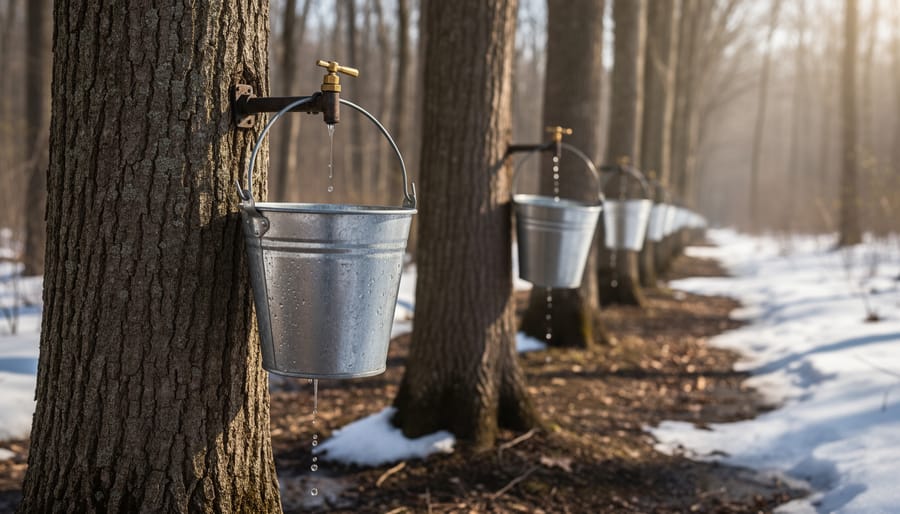
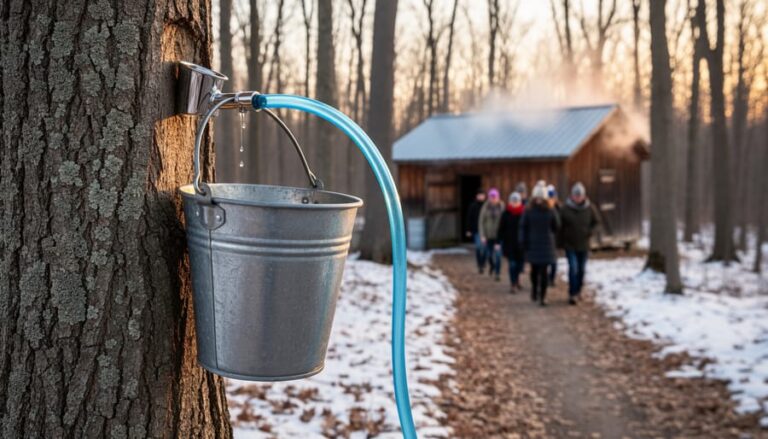
Today’s sugar bushes blend time-honored traditions with modern innovation. You’ll still see traditional metal buckets hanging from spout taps on some trees, but many operations now use intricate tubing systems that transport sap directly to the sugar shack. Not just any maple will do, though. Sugar maples are the superstars here, with their sap containing the highest sugar content. Red and black maples also contribute, though they require more sap to produce the same amount of syrup.
Here’s where Ontario really shines: our climate is absolutely perfect for syrup production. Those crisp, freezing nights followed by warm, sunny days in early spring create the ideal pressure changes that make sap flow freely. It’s nature’s perfectly timed dance, and Ontario performs it brilliantly every year, producing some of the world’s finest maple syrup right in our backyard.
The Magic of Maple Syrup Season
There’s something almost mystical about sugar bush season in Ontario. Picture this: you’re walking through a forest of towering maples in late March or early April, when winter hasn’t quite let go but spring is definitely flirting with the landscape. The air is crisp, snowbanks still linger in the shadows, and thousands of metal taps are dripping precious sap into buckets or flowing through intricate tubing systems strung between the trees.
The magic happens because of nature’s perfect recipe—a freeze-thaw cycle that’s essential for sap production. When nighttime temperatures drop below freezing (typically around -4°C) and daytime temperatures climb above freezing (ideally 5-7°C), pressure builds inside the maple trees, pushing that sweet, watery sap out through the taps. No freeze-thaw cycle? No flowing sap. It’s that simple.
This narrow window typically runs from mid-March through late April, though Mother Nature doesn’t always follow the calendar. Some years the season starts early; other years it arrives fashionably late. Veteran sugar bush operators watch weather forecasts obsessively, knowing that prime sap-flow days are precious and fleeting.
Here’s an insider tip: visit during a warm, sunny afternoon following a cold night for the most active sap flow. You’ll witness the drip-drip-drip at its peak and feel the buzz of activity as producers rush to collect and boil their harvest before it spoils. The season only lasts 4-6 weeks, so don’t wait too long to plan your adventure.
Your Maple-to-Table Experience: What to Expect
Walking Through the Bush
Stepping into a maple bush during sugar season feels like entering a sweet-scented cathedral. The trees are still bare, but you’ll immediately notice the transformation—buckets hanging from taps on massive sugar maples, or intricate networks of blue tubing weaving through the forest like veins carrying liquid gold. It’s truly magical to see nature and ingenuity working together.
As you wander along the trails, take time to examine a tapped tree up close. You’ll see how the spout gently pierces the bark, allowing sap to drip steadily into collection buckets. Some operations still use traditional buckets, which creates that iconic postcard-perfect scene, while larger commercial operations rely on vacuum-tubing systems that transport sap directly to the sugar shack.
Here’s an insider tip: March and early April means mud season in Ontario. The freeze-thaw cycles that make sap flow also create gloriously messy conditions underfoot. Wear waterproof boots with good traction—those cute sneakers will become casualties. Layer your clothing too, as spring weather is notoriously fickle. A water-resistant jacket is essential.
Most sugar bushes offer marked walking trails ranging from easy strolls to longer hikes. The eco-friendly approach means staying on designated paths to protect tree roots and understory plants. Listen for the gentle plink-plink of sap hitting metal buckets—it’s surprisingly meditative.
Inside the Sugar Shack
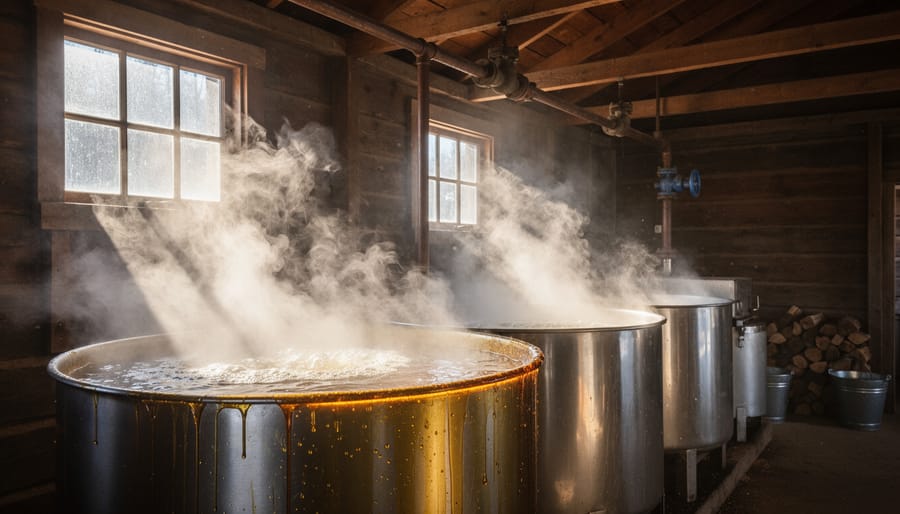
Step through the doorway of a sugar shack and you’ve entered the beating heart of maple syrup production. The warmth hits you first—a welcome embrace that melts away any lingering winter chill. Clouds of sweet-smelling steam billow from enormous stainless steel evaporators, where sap transforms into liquid gold before your eyes.
Here’s the magic in simple terms: it takes roughly 40 litres of sap to make just one litre of syrup. The sap flows continuously through shallow pans over a roaring fire, and as water evaporates, the sugar concentration increases. You’ll see it bubble and roll, gradually darkening from clear to that gorgeous amber hue.
Don’t be shy—sugarmakers love sharing their craft. Ask them how they know when syrup reaches the perfect density (hint: it’s all about temperature and a tool called a hydrometer). Find out what grade they’re producing that day and why weather affects sap flow. Many will offer you a taste of fresh syrup, still warm from the evaporator—an experience you won’t forget.
Pro tip: visit on cooler days when steam production is most dramatic, creating that quintessential sugar shack atmosphere that makes for incredible photos and memories.
Tasting the Sweet Rewards
Here’s where your visit gets truly delicious! Most sugar bushes offer tastings that’ll make your sweet tooth sing. Start by sampling fresh maple syrup while it’s still warm from the evaporator—the aroma alone is intoxicating. Many producers proudly showcase different grades, from the delicate Golden with its subtle taste to the robust Very Dark with its bold maple punch. Each grade has devoted fans, so try them all to discover your favorite.
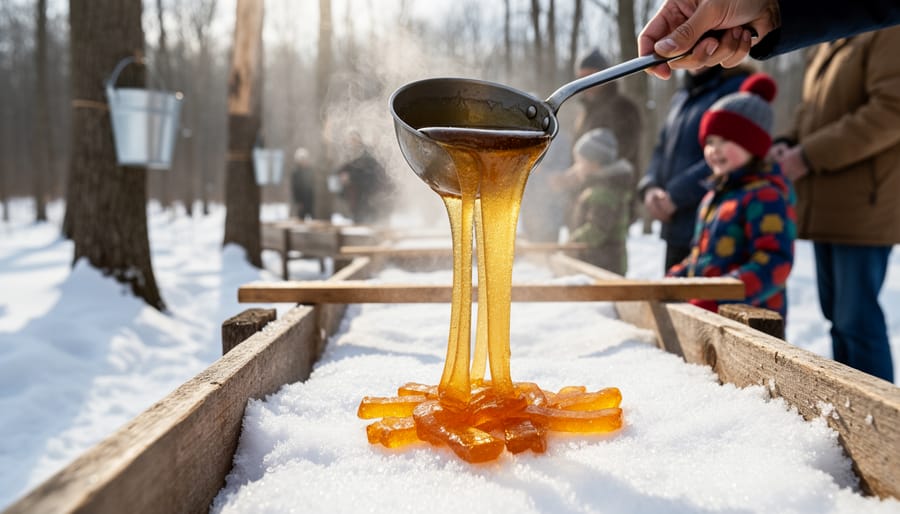
Don’t miss the maple taffy experience if snow’s still on the ground. Watching hot syrup transform into chewy candy as it hits the snow is pure magic, and rolling it onto a popsicle stick feels wonderfully old-fashioned. Traditional pancake breakfasts are another highlight, where fluffy stacks meet generous pours of that liquid gold you just watched being made.
Insider tip: Ask producers about their process and sustainability practices. Supporting operations that use eco-friendly methods—like energy-efficient evaporators and responsible forest management—helps preserve these traditions for future generations. Many sugar bushes also feature local artisan products in their shops, from maple butter to candies, perfect for bringing home edible memories of your adventure.
Hands-On Activities for Families
A visit to a sugar bush becomes truly magical when the whole family can dive into the experience together. Many operations offer horse-drawn wagon rides through the snowy maple forest, where kids can spot animal tracks and learn to identify sugar maples by their bark. The gentle clip-clop of hooves and crisp winter air create memories that last far beyond the day itself.
Look for sugar bushes with hands-on opportunities where children can help tap trees or carry small buckets of sap. There’s something incredibly special about letting kids participate in this timeless tradition, and they’ll beam with pride knowing they contributed to making real maple syrup. Some locations even provide child-sized equipment so little ones feel like genuine sugar makers.
Petting zoos are popular additions at family-friendly sugar bushes, featuring friendly farm animals that provide entertainment between pancake servings. Traditional games like sack races, tire swings, and snow taffy pulls keep everyone engaged. Insider tip: arrive mid-morning on weekdays to avoid the weekend rush and give your family more space to explore at your own pace. Don’t forget to dress in layers since sugar shacks get toasty inside while outdoor activities keep you moving through the winter chill.
Top Sugar Bush Destinations Near Ontario Parks
Ontario’s park system offers some fantastic opportunities to pair your sugar bush adventure with outdoor exploration. Near Algonquin Provincial Park, several family-run operations welcome visitors during March and April, allowing you to combine pancake breakfasts with afternoon wildlife spotting or snowshoeing through pristine wilderness. The beauty here is timing your visit for a full day—morning at the sugar bush, afternoon exploring park trails still dusted with snow.
Over in the Kawartha Highlands region, you’ll find sugar bushes that take sustainability seriously. One operation near Petroglyphs Provincial Park has been tapping the same maple stands for four generations using eco-friendly practices like gravity-fed collection systems and wood-fired evaporators fueled by their own sustainable woodlot. They offer guided walks where you can learn how traditional methods blend with modern conservation efforts. Pro tip: book a midweek visit in late March when crowds thin out and you might spot the first migrating birds returning north.
If you’re planning a camping trip, consider the sugar bushes around Silent Lake Provincial Park. Several operations offer early-season weekend packages perfect for families testing out their camping gear before summer. Imagine waking up to crisp morning air, visiting the sugar shack for fresh maple taffy on snow, then spending your afternoon fishing the ice-out lakes or hiking trails just beginning to emerge from winter.
Down near Prince Edward County and Sandbanks Provincial Park, a few innovative producers have extended their season by adding maple-themed farm tours and workshops. These spots work beautifully for spring shoulder-season camping when the weather’s warming up but summer crowds haven’t arrived yet.
Insider secret: Many sugar bush operators offer discounts if you show your valid camping permit or park pass, so always ask at the admission booth. This partnership between producers and parks helps support both local agriculture and conservation efforts.
Planning Your Sugar Bush Adventure
Making Reservations
Here’s a pro tip from someone who learned the hard way: popular sugar bushes fill up fast, especially for those legendary pancake breakfasts. Picture arriving hungry only to find there’s a two-hour wait or worse, they’re fully booked. Many operations now require advance reservations, particularly on weekends during peak season in March and early April.
Book your visit as early as possible, ideally when the season opens. Some family-run sugar bushes only accommodate groups by appointment, while larger venues might have limited walk-in availability. When you call ahead, ask about their tapping schedule too—you’ll want to time your visit when the sap is really flowing for the full experience. A little planning ensures you won’t miss out on warm syrup drizzled over fresh pancakes while the steam rises from the sugar shack.
What to Bring
Pack smart for your sugar bush adventure! Waterproof boots are essential since sugar bush trails can get wonderfully muddy in early spring. Dress in layers – mornings start chilly, but those steaming evaporators warm things up fast. Bring your camera to capture those golden syrup moments and any wildlife you might spot. Most sugar bushes operate on cash only, so hit the ATM beforehand. Here’s an eco-friendly insider tip: bring reusable containers when purchasing syrup. Many producers happily fill your jars, reducing plastic waste while you take home that liquid gold.
Best Times to Visit
Here’s my insider tip: weekends bring the full sugar bush experience to life with pancake breakfasts, live demonstrations, and wagon rides all running simultaneously. The energy is infectious, especially when families and groups gather around steaming evaporators. However, if you prefer a quieter, more intimate experience, visit mid-week when crowds thin out. You’ll have more one-on-one time with sugar makers who can share their craft in detail and answer all your questions without rushing. Early mornings any day of the week offer the magical sight of steam rising through maple groves as sap boils down into liquid gold.
Why This Experience Matters
Visiting a maple sugar bush connects you to something deeply rooted in Canadian identity. This tradition, passed down through generations and originating with Indigenous peoples, represents more than just sweet syrup—it’s about understanding where our food comes from and honoring the rhythms of nature. When you participate in these Ontario’s heritage traditions, you’re keeping alive a craft that defines our national character.
Beyond the cultural experience, supporting local sugar bushes means supporting sustainable agriculture. Modern maple producers are environmental stewards, maintaining healthy forests that sequester carbon, protect watersheds, and provide wildlife habitat. The tapping process doesn’t harm trees when done properly—many maples continue producing sap for over a century.
Timing your visit with the spring thaw also reconnects you with seasonal living, something we often lose in our climate-controlled world. There’s genuine magic in witnessing nature’s transformation from winter dormancy to spring awakening, with maple syrup as the delicious proof that change is happening. Plus, you’re directly supporting Ontario farm families who work hard to bring this authentic taste to your table.
There’s something truly magical about visiting a maple sugar bush in spring—it’s one of those authentic Ontario experiences that stays with you long after the last drop of syrup has been savored. You’re not just collecting a bottle of sweet liquid gold; you’re connecting with centuries of tradition, breathing in crisp forest air, and becoming part of a celebration that marks the end of winter and the promise of warmer days ahead.
Whether you’re watching sap drip into buckets on a heritage farm, tasting fresh taffy on snow, or learning from passionate sugarmakers who’ve been doing this for generations, every sugar bush visit offers something unique. Bring your family, gather your friends, or make it a solo adventure—there’s room for everyone around the sugar shack table.
Now’s the perfect time to start planning your maple adventure. Check out sugar bushes in your region, book that pancake breakfast, and consider extending your trip to explore Ontario’s beautiful provincial parks nearby. Many sugar bush operations are conveniently located near hiking trails and natural areas perfect for a full day of outdoor exploration. Spring in Ontario is fleeting, but the memories you’ll make among the maples will last forever. Grab your boots, embrace the mud season, and discover why generations of Ontarians keep coming back year after year.





+ There are no comments
Add yours