
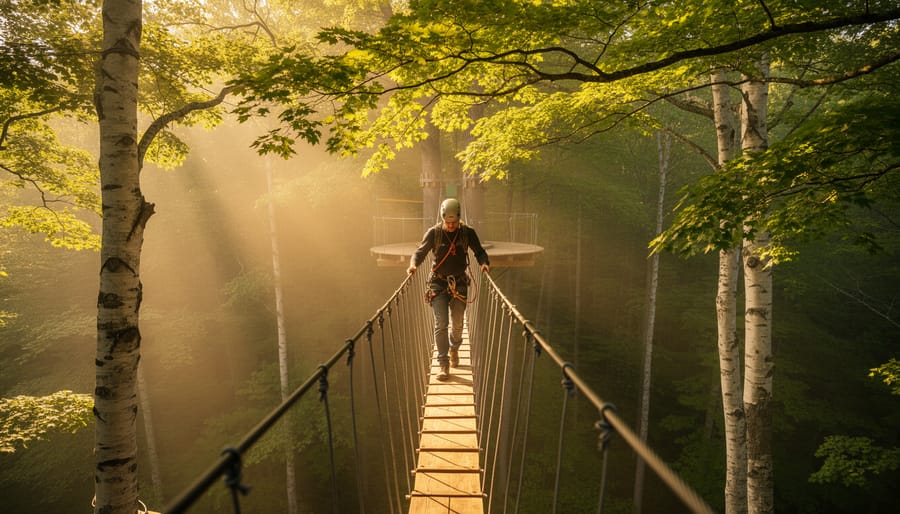
Look up. Way up. That dense green ceiling floating 30 to 45 meters above the rainforest floor isn’t just a roof of leaves—it’s an entire universe teeming with life that most people never experience firsthand. The rainforest canopy is where roughly 70-90% of all rainforest species live, hunt, pollinate, and thrive in a sunlit world completely different from the shadowy ground below.
For decades, this aerial ecosystem remained the exclusive domain of scientists dangling from ropes and researchers perched in rickety platforms. But today’s adventure travelers have cracked the code to accessing these treetop wonderlands safely and sustainably. Whether you’re ziplining through the canopy at speeds that make your stomach flip, stepping carefully across suspended bridges that sway with every movement, or ascending platforms that lift you into the leafy stratosphere, modern canopy experiences transform casual nature lovers into wide-eyed explorers.
Ontario offers surprising opportunities to climb into forest canopies without boarding international flights. The province’s temperate forests may not match Amazonian biodiversity, but they deliver genuine treetop adventures with their own ecological marvels—from observing bird migrations at eye level to understanding how Canada’s forests function as climate regulators.
This isn’t armchair nature watching. Canopy exploration demands physical engagement, pushes comfort zones, and rewards participants with perspectives that fundamentally shift how they see forests. The view from 40 meters up changes everything, and the memories stick long after your feet touch solid ground again.
What Makes Ontario’s Tree Canopy Special
The Hidden Ecosystem Above Your Head
Imagine an entire world thriving 30 to 45 meters above the forest floor, where roughly 90% of all rainforest species make their home. Up in the canopy, life exists on a scale that’s hard to fathom until you’re actually there among the branches.
Three-toed sloths hang motionless from lianas, their fur tinged green with algae that provides perfect camouflage. Scarlet macaws nest in hollow tree trunks, their bright plumage flashing like jewels against the green backdrop. Here’s something that surprised me on my first canopy tour: many birds never actually touch the ground their entire lives. They’re born, feed, nest, and die entirely in the treetops.
The insect life is staggering. Leaf-cutter ants create highways along branches, carrying pieces of vegetation back to their colonies. Morpho butterflies with wings spanning six inches drift through sun-dappled clearings. And tucked into every crevice, you’ll find orchids, bromeliads, and ferns growing as epiphytes, plants that root on other plants without harming them.
The canopy also serves as a natural water reservoir. Those cup-shaped bromeliads collect rainwater, creating miniature ecosystems where poison dart frogs lay their eggs and raise tadpoles. It’s like discovering apartment buildings in the sky, each supporting dozens of interdependent species. When you climb into this hidden world, you’re not just observing nature—you’re stepping into the beating heart of the forest itself.
Carolinian Canopies vs. Boreal Forests
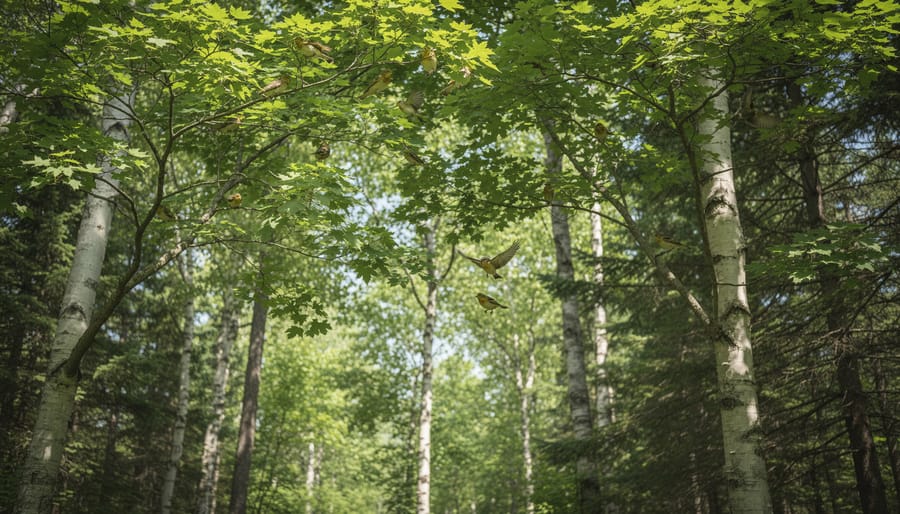
Ontario’s forest character transforms dramatically as you travel from south to north, creating distinctly different canopy experiences. In the southernmost reaches, you’ll discover Carolinian forests – a rare ecosystem found in less than one percent of Canada’s landmass. These deciduous woodlands feature tulip trees, black walnows, and sassafras creating dense, multi-layered canopies that feel surprisingly tropical during summer months. The thick foliage, high humidity, and rich understory plants can genuinely evoke a rainforest atmosphere, especially after rainfall.
As you venture north into the Canadian Shield region, mixed forests blend deciduous and coniferous species. Here’s an insider tip: visit these transitional zones in early morning when mist rises through the canopy – it’s the most “rainforest-like” moment you’ll experience in Ontario. Parks like Frontenac Provincial Park showcase this beautiful blend, where maple and oak mingle with white pine and hemlock.
Further north, you’ll enter true boreal forest territory, where coniferous trees dominate. While equally spectacular, these northern canopies feel more open and less jungle-like. For the lushest, most immersive canopy adventure reminiscent of tropical rainforests, focus your explorations on southern and central Ontario, where Ontario’s natural wonders create perfect conditions for dense, layered forest ecosystems.
Where to Experience Canopy Adventures in Ontario
Guided Canopy Tours and Zipline Adventures
Ontario’s commercial canopy tour operators have transformed forest exploration into accessible adventures for everyone from curious kids to thrill-seeking adults. These professionally designed experiences let you soar through the treetops while learning about the ecosystem from expert guides who know every branch by name.
TreeTop Trekking, with locations at Ganaraska Forest near Port Hope and Bronte Creek Provincial Park, offers progressive courses ranging from gentle family-friendly routes to challenging ziplines that’ll test your nerve. Their signature feature? Suspended bridges and platforms that give you time to actually stop and observe forest life rather than just zipping past it. Visit on weekday mornings in September for smaller crowds and spectacular fall colours framing your adventure.
Treetop Adventure Park in Brampton brings vertical challenge to the canopy experience with their aerial obstacle courses winding through mature hardwood forests. Each coloured course increases in difficulty, so you can gauge your comfort level. Insider tip: book the first time slot of the day when bird activity peaks and you might spot woodpeckers working on their breakfast just arm’s length away.
For a true educational twist, Long Point Eco-Adventures on Lake Erie combines ziplines with guided nature interpretation. Their twilight tours during summer months offer something magical as you glide through the canopy while bats emerge for their evening hunt. The guides share fascinating connections between the forest floor and canopy ecosystems that’ll change how you see trees forever.
These operations typically run from May through October, though some offer winter experiences. Most provide all safety equipment and thorough training, making Ontario park adventures accessible regardless of previous experience. Book ahead for weekends and consider travel insurance that covers adventure activities.
Educational Tree Climbing Programs
While Ontario doesn’t have traditional rainforest canopies, several conservation areas and adventure parks offer incredible educational tree climbing experiences that capture that same sense of wonder. TreeGO Aerial Adventure Parks, with locations in Barrie, Stouffville, and Ganardie, provides guided canopy tours where naturalists share fascinating forest ecology insights while you’re suspended among the treetops. These programs are perfect for families with children eight and up.
For school groups, Halton Region Conservation Authority runs specialized canopy workshops at Crawford Lake Conservation Area, where students learn about forest layers, native species, and ecosystem connections while safely exploring elevated platforms. The Scenic Caves Nature Adventures near Collingwood offers family-friendly treetop walking experiences combined with interpretive programs about the Niagara Escarpment’s unique biodiversity.
Insider tip: Book early morning sessions in spring or fall when wildlife is most active. You’ll spot nesting birds and sometimes even porcupines high in the branches. Many parks offer eco-conscious programs using sustainable gear and teaching conservation principles alongside climbing techniques. The Long Point Eco-Adventures combines canopy access with wetland education, making it ideal for nature enthusiasts wanting a deeper environmental connection. Most programs accommodate various fitness levels, though checking specific age and weight requirements beforehand ensures everyone can participate safely.
DIY Canopy Exploration (For the Experienced)
For experienced climbers with solid forest survival skills, some Ontario provincial parks permit self-guided tree climbing with proper equipment and advance permits. Algonquin Park and Frontenac Provincial Park have designated areas where technical climbing is allowed, though you’ll need to demonstrate proficiency and carry liability insurance. Safety is paramount: always use certified arborist gear, climb with a partner, and inform park staff of your plans. Never attempt canopy exploration without proper training in single rope technique and tree assessment. Weather conditions change rapidly at height, so check forecasts and carry emergency communication devices. Remember, these ancient trees deserve our respect—follow Leave No Trace principles and avoid damaging bark or branches. This is wilderness adventure at its purest, but it demands serious preparation and accountability.
What to Expect on Your First Canopy Adventure
Gear Up: Safety Equipment and What You’ll Wear
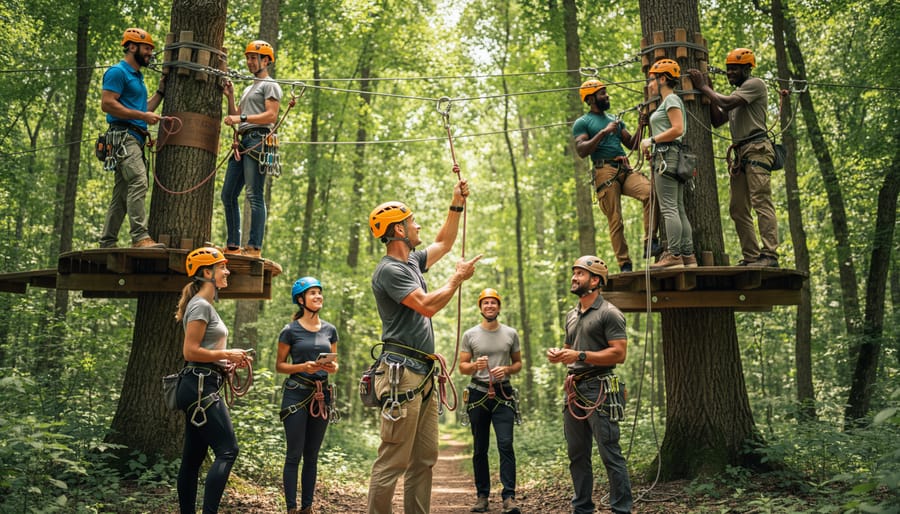
Good news—most canopy tour operators provide all the essential safety gear, so you won’t need to raid an outdoor equipment store before your adventure. You’ll be outfitted with a professionally fitted climbing harness, helmet, and all necessary carabiners and belay devices. The guides will double-check everything before you head up, and they’ll explain how each piece works to keep you secure among the treetops.
As for what you should bring, dress in comfortable, weather-appropriate layers that you can move freely in. Think athletic wear rather than fashion statements—you’ll be climbing, reaching, and possibly getting a workout. Closed-toe shoes with good grip are essential; save the flip-flops for after. Long pants help protect your legs from scratches if you brush against bark.
Here’s an insider tip: bring gloves if you have sensitive hands, as rope work can cause friction. Most operators don’t provide these, but lightweight gardening or cycling gloves work perfectly. Don’t forget sunscreen and insect repellent—Ontario’s forests can be buggy, especially in summer. A small backpack for water and snacks is smart, though some tours provide secure storage at ground level while you’re up exploring the canopy.
The Climb: Techniques and What It Really Feels Like
Let’s be honest: those first few meters off the ground get your heart pumping. The initial climb isn’t technically difficult—most canopy tour operators use secure harness systems and provide thorough safety briefings—but there’s definitely a mental adjustment as you leave solid earth behind. Your arms might feel the burn if you’re not used to hauling yourself upward, but the platforms between climbing sections give you plenty of chances to catch your breath.
Around 20 meters up, something shifts. The ground noise fades—traffic, conversation, even your own nervous chatter—and you start hearing the forest differently. Bird calls become crystal clear. Leaves rustle with purpose. One guide told me she watches people’s faces change at this height; the nervous concentration softens into genuine wonder.
By 30 meters, you’re in another world entirely. The air feels different, slightly cooler and surprisingly fresh. Looking down through the canopy layers is surreal—it’s like peering through green-tinted water. Your initial jitters transform into an almost meditative focus.
Insider tip: wear gloves even if they seem optional. Your hands will thank you after gripping cables and ropes. Also, take genuine breaks on the platforms. Yes, there’s often a group behind you, but these pauses aren’t just for rest—they’re when you’ll actually notice the insects, spot that warbler flitting past, or feel the gentle sway that reminds you you’re standing in a living, breathing tree.
The physical challenge is moderate—think energetic hiking rather than rock climbing.
Insider Tips for an Unforgettable Experience
Best Times to Climb (Seasonal Secrets)
Timing your canopy adventure can transform your experience from simply memorable to absolutely magical. Ontario’s forest canopies reveal different personalities throughout the year, each season offering its own rewards.
Spring brings an explosion of fresh green growth and incredible bird activity. You’ll hear warblers and thrushes everywhere as they return from migration. The downside? Blackflies can be pesky in May and early June, so pack natural insect repellent and long sleeves.
Summer offers the fullest, lushest canopy experience with complete leaf coverage creating that true rainforest-like atmosphere. Early morning climbs (around 7-8 AM) reward you with cooler temperatures, softer light for photography, and the most active wildlife. Insider tip: weekday mornings are significantly less crowded than weekends.
Fall is absolutely spectacular. Late September through October delivers those famous Ontario colours, and you’ll experience them from a perspective few people ever see. The crisp air also means fewer bugs and excellent visibility.
Winter canopy walks on suspended bridges offer a peaceful, almost meditative experience. While climbing opportunities decrease, some facilities maintain winter access where you can appreciate the forest’s architectural beauty without leaf cover. Just bundle up and embrace the stillness.
What to Look for While You’re Up There
Once you’re nestled among the branches, slow down and let the forest reveal itself. Look for epiphytes—those fascinating plants growing on tree bark without harming their hosts. Orchids, ferns, and mosses create miniature gardens in the treetops, thriving on moisture and filtered sunlight. You’ll spot them clustered where branches meet trunks.
Keep your eyes peeled for wildlife signs. Bird nests tucked into crevices, woodpecker holes dotting older trees, and scratch marks from climbing mammals tell stories of canopy residents. Listen for rustling leaves that might signal squirrels or birds moving between branches. Early morning climbers often catch glimpses of roosting birds before they begin their day.
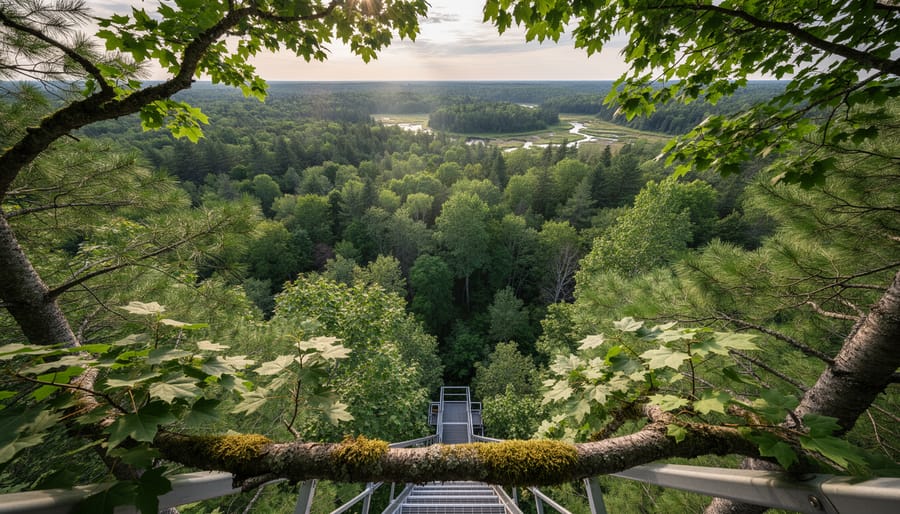
Notice how light filters differently through various canopy layers—that dappled effect creates distinct microclimates supporting diverse life forms. Check out the forest floor from above; this aerial view offers unique perspectives you’d never experience from ground level.
Insider tip: Bring binoculars for observing distant branches and canopy details without disturbing wildlife. Your guide can point out species-specific features that make Ontario’s forests special, from identifying tree species by their bark to spotting seasonal changes in real-time.
Eco-Friendly Canopy Exploration
How Tree Climbing Tourism Supports Conservation
When you pay for a canopy tour, you’re doing more than treating yourself to an unforgettable adventure. Your tourism dollars directly fund forest conservation efforts that might not otherwise exist. Many tree climbing operations dedicate a portion of their revenue to protecting surrounding ecosystems and maintaining trail systems with minimal environmental impact.
Here’s something most visitors don’t realize: those guides sharing fascinating facts about epiphytes and bird species? They’re often contributing to actual research. Tourism sites frequently partner with universities and conservation groups, collecting data on canopy biodiversity while hosting guests. You become part of citizen science just by showing up curious.
The educational ripple effect is powerful too. When families experience the canopy firsthand, they return home as forest ambassadors, sharing their newfound appreciation with friends and communities. Kids who’ve climbed into the treetops become adults who vote for environmental protections.
Insider tip: Ask your guide about specific conservation projects your visit supports. Many operations are thrilled to share details about habitat restoration or species monitoring programs, adding meaningful context to your climb while showing exactly where your adventure investment goes.
Leave No Trace in the Trees
When you’re up among the branches, you become a temporary guest in someone else’s home—and that means treading lightly. The golden rule? Take only photos, leave only footprints (and even those should be minimal!). Keep noise levels down so you don’t disturb nesting birds or sleeping mammals. I learned this the hard way when my excited chatter sent a family of red squirrels scattering during my first canopy walk.
Choose tour operators who demonstrate genuine commitment to conservation—look for those using sustainable materials for platforms, limiting group sizes, and contributing to forest research or protection programs. These companies often provide the best experiences because they truly understand the ecosystem you’re exploring.
Never feed wildlife, no matter how tempting those curious chickadees might be, and stick to designated pathways to prevent damage to delicate epiphytes and mosses. Like other eco-friendly outdoor activities, canopy exploration works best when we’re mindful visitors. Pack out everything you bring in, and consider supporting local conservation efforts with donations or volunteer time.
There’s something profound that happens when you climb into the forest canopy. The world shifts beneath your feet—literally. Suddenly, you’re seeing Ontario’s wilderness the way a songbird does, moving through layers of life that most people never witness. That moment when you realize you’re standing in the same branches where warblers nest and squirrels leap? It changes you.
The beauty of this adventure is that it’s not tucked away in some distant tropical location requiring flights and complicated travel plans. It’s right here, woven into the fabric of Ontario’s diverse landscapes. Whether you’re a Toronto resident looking for a weekend escape or someone who’s traveled from afar, these canopy experiences are refreshingly accessible.
Here’s the thing about stepping into the tree canopy—it reconnects you with something essential. In our screen-filled lives, we’ve become disconnected from the natural systems that sustain us. But when you’re clipped into a harness, reaching for the next platform, breathing in that green forest air, you remember what it feels like to be part of something bigger.
You don’t need to be an expert climber or wilderness guide. You just need curiosity and a willingness to see familiar forests from an entirely new angle. The guides, the safety systems, the thoughtfully designed courses—they’re all there to support your journey upward.
So what are you waiting for? Your perspective-changing adventure is calling from the treetops. Answer it.





+ There are no comments
Add yours