
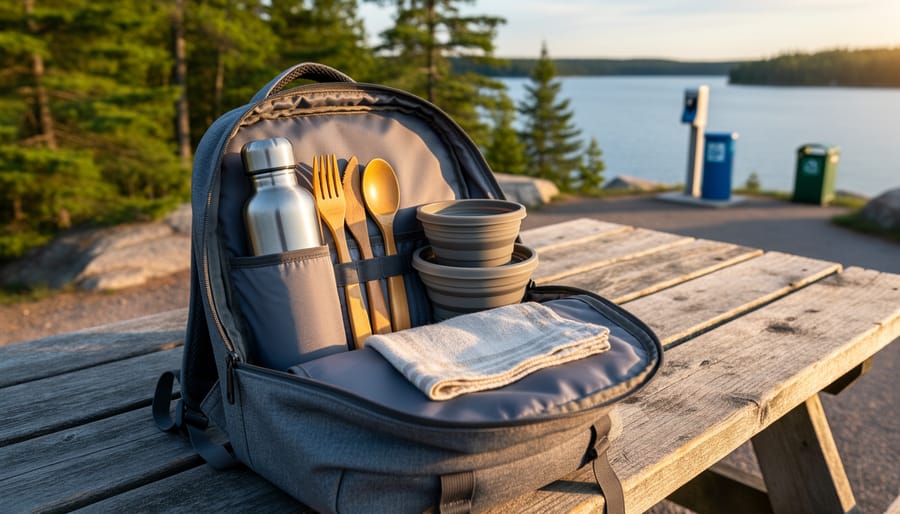
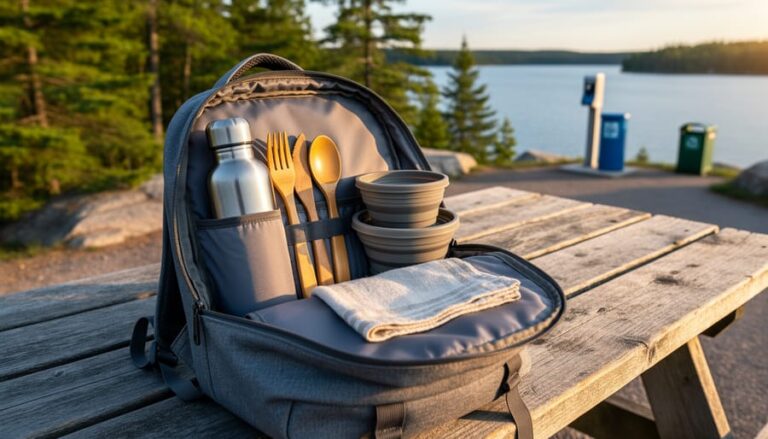
Pack reusable water bottles, cutlery sets, and cloth napkins in your day pack before heading to Ontario’s provincial parks—you’ll skip single-use plastics while picnicking at scenic lookouts. Bring collapsible containers for leftovers and snacks instead of disposable bags, making it easy to carry out everything you carry in without wrestling with crinkly wrappers on the trail.
Choose accommodations and tour operators that visibly prioritize waste reduction through composting programs, refillable toiletry dispensers, and digital ticketing systems. Many Ontario parks now offer water refill stations and recycling depots at trailheads, so scout these locations on park maps before your visit to plan your route efficiently.
Shop at local farmers’ markets near your destination for package-free produce and artisan goods that support regional economies while eliminating excess packaging. You’ll discover fresh ingredients for campfire meals without the cardboard and plastic that typically fills your cooler, plus you’ll taste the difference in flavour.
Download park apps and e-guides rather than collecting paper brochures, and snap photos of trail maps instead of taking printed copies. When camping, opt for concentrated biodegradable soap in reusable containers rather than single-use toiletry packets, and pack out all organic waste including fruit peels that disrupt local ecosystems and attract wildlife to human areas.
These simple swaps transform your outdoor adventures into genuinely sustainable experiences without compromising comfort or spontaneity, proving that environmental responsibility enhances rather than limits your connection to Ontario’s stunning natural spaces.
What Zero Waste Really Means When You’re Out in Nature
Let’s clear up some confusion right away: zero waste doesn’t mean you’ll never produce a single scrap of garbage during your outdoor adventure. That’s the beauty of it—you don’t need to achieve perfection to make a meaningful difference!
When you’re camping or exploring Ontario’s parks, zero waste is really about being mindful of what you bring in and ensuring you take everything back out with you. Think of it as “leave no trace, but make it even simpler.” I remember my first attempt at a zero waste camping trip—I was so worried about getting it perfect that I almost stressed myself out. Then a park ranger told me something that stuck: “Every piece of trash you pack out is one less piece harming wildlife. That’s a win.”
The practical side looks like this: swap single-use items for reusables where possible. Bring a refillable water bottle instead of disposable ones. Pack snacks in reusable containers rather than individually wrapped packages. Choose bar soap over plastic bottles. Small swaps add up surprisingly fast.
But here’s what really matters—understanding the environmental impact of travel motivates us to do better. When thousands of visitors adopt even modest waste reduction habits, parks see dramatically less litter, wildlife encounters with trash decrease, and natural ecosystems stay healthier. Ontario’s parks have reported significant reductions in waste removal costs when visitors embrace these practices.
The key is starting where you are. Maybe your first trip you manage to eliminate plastic bags. Next time, you tackle food packaging. Before you know it, zero waste becomes second nature, and you’re that friend sharing insider tips about the best collapsible camping gear!
Ontario Parks Already Doing the Heavy Lifting
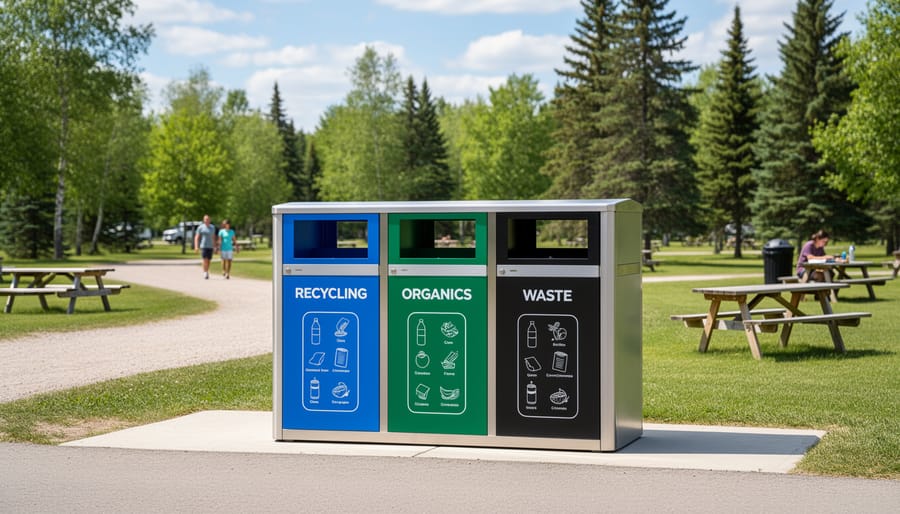
Composting and Recycling Stations That Actually Work
I’ll be honest—the first time I approached a composting station at Algonquin Provincial Park, I stood there like a deer in headlights, holding my banana peel and wondering which bin it belonged in. But here’s the good news: Ontario parks have seriously upped their game with waste sorting systems that are actually intuitive.
The best stations feature colour-coded bins with clear visual guides showing exactly what goes where. At Killarney Provincial Park, I discovered my favourite setup: large picture diagrams above each bin depicting common items. No more guessing whether that greasy pizza box counts as recyclable (spoiler: it goes in compost or garbage, depending on how soiled it is).
My insider tip? Take a photo of the sorting guide on your phone when you first arrive. You’ll reference it constantly throughout your trip, especially when you’re at your campsite deciding what to do with food scraps. Most parks now provide compostable bags at their visitor centres—grab a few extras.
Here’s what really works: station placement matters. The parks that succeed put these stations near high-traffic areas like pavilions and beaches, making proper disposal convenient rather than a chore.
One game-changer I’ve noticed? Many stations now include a “when in doubt” guide right on the bins. This small addition has eliminated so much confusion. Remember, contamination ruins entire batches of recycling, so if you’re genuinely unsure, ask a park attendant—they’re always happy to help, and I’ve learned something new every time.
Refill Stations and Water Programs
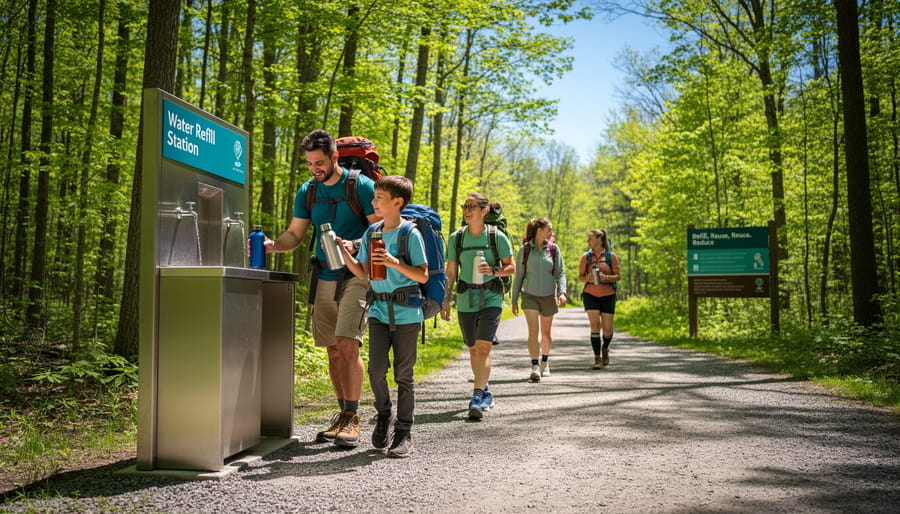
Here’s something I absolutely love seeing when I’m hiking in Ontario: those sleek water refill stations popping up at trailheads and visitor centers. They’re game-changers for anyone committed to ditching single-use plastics without lugging heavy water supplies from home.
Algonquin Provincial Park has installed refill stations at several key locations, including the visitor center and popular access points. I’ve watched families fill up their reusable bottles there countless times, and it’s become such a natural part of the park experience. Bruce Peninsula National Park followed suit, positioning stations near the Cyprus Lake campground and along the famous Grotto trail—trust me, having ice-cold water within reach after that rocky descent is incredible.
What really impresses me is how these initiatives go beyond just infrastructure. Many parks now offer bottle-free zones at events and encourage visitors through friendly signage reminding everyone that tap water in Ontario is some of the cleanest in the world. Some even provide discounts at park stores when you bring your own container.
The impact? Parks Canada reports that these stations prevent thousands of plastic bottles from entering landfills each season. One ranger told me that at popular parks, they’re seeing up to 80 percent fewer single-use bottles in waste bins compared to five years ago.
My insider tip: Download apps like Tap or RefillMyBottle before your trip. They map out refill locations across Ontario, so you’ll never be caught without access to fresh water during your zero-waste adventures.
Your Zero Waste Camping Checklist
Before You Leave Home
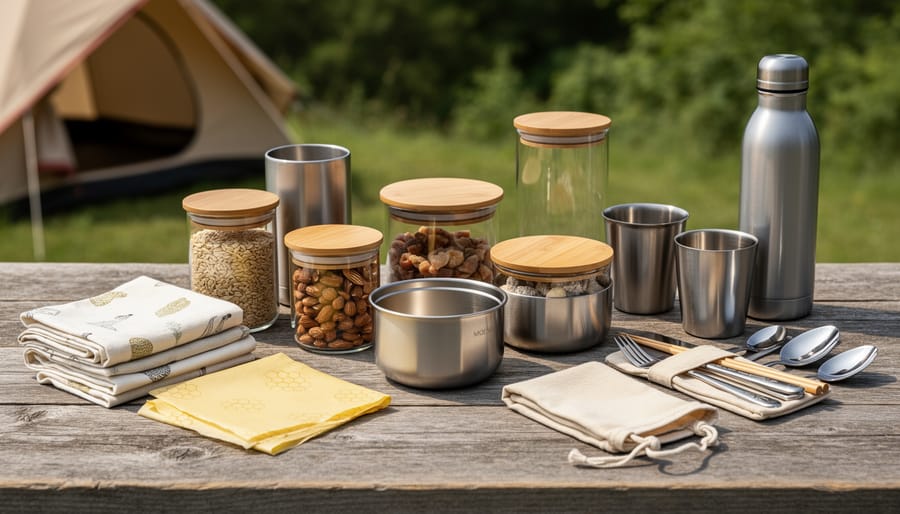
A little planning before you hit the road makes zero waste camping surprisingly simple! Start by raiding your kitchen for reusable containers – I always pack a set of nesting stainless steel containers and mason jars for storing snacks and leftovers. They’ve saved me countless times from grabbing pre-packaged trail mix at gas stations.
Plan your meals before you leave and prep ingredients at home. Chop vegetables, portion out pasta, and mix your own trail mix to store in cloth bags or containers. This eliminates those bulky cardboard boxes and plastic wrappers that usually clutter up your campsite. Plus, you’ll save money and eat better!
Pack your zero waste essentials: cloth shopping bags for grocery runs, a reusable water bottle for everyone, bamboo utensils, and cloth napkins. Don’t forget beeswax wraps instead of plastic wrap – they’re perfect for covering bowls or wrapping sandwiches. Toss in bar soap and shampoo bars instead of liquid toiletries in plastic bottles.
Here’s an insider tip: freeze water in your reusable bottles overnight. They’ll keep your cooler cold and give you fresh drinking water as they melt throughout your trip!
At the Campsite
Once you’ve set up your campsite, the real fun begins – and so does your opportunity to make a difference! I’ve learned through years of camping that small, intentional choices throughout the day add up to significant waste reduction.
Start your mornings right by storing food in reusable containers rather than disposable bags. Glass jars work wonderfully for dry goods like oatmeal and trail mix, while silicone bags are perfect for fresh items. When cooking, embrace one-pot meals that minimize cleanup and water usage – my personal favorite is a hearty campfire chili that feeds a crowd and leaves just one pot to wash. Here’s an insider tip: bring a mesh bag to strain your dishwater, catching food particles before disposal in designated grey water areas.
For proper disposal, familiarize yourself with your campground’s waste stations. Separate organics from recyclables, and always pack out what you pack in. Many Ontario parks now offer composting stations, making it easier than ever to divert food scraps from landfills.
Keep a small “trash audit” mindset – before tossing anything, ask yourself if it could be reused or repurposed during your trip. That empty peanut butter jar? Perfect for storing tomorrow’s pancake batter. You’ll be amazed how creative you become when zero waste is the goal!
The Gear That Makes It Easier
Making the switch to zero waste camping is honestly way easier than you’d think, especially with the right gear. Start with a good quality reusable water bottle—I’ve had my insulated stainless steel one for five years now, and it’s still going strong on every Ontario trail. Collapsible silicone containers are absolute game-changers for storing snacks and leftovers without the crinkly plastic waste.
For cooking, swap those disposable plates for lightweight bamboo or enamelware that’ll last hundreds of camping trips. Beeswax food wraps work brilliantly instead of plastic wrap, and they actually keep sandwiches fresher on the trail. Here’s an insider tip: bring a small mesh laundry bag for organizing your reusables and airing them out after use.
Don’t forget biodegradable soap and a portable solar charger to keep devices powered without disposable batteries. My favorite find? A compact titanium spork that lives on my backpack—I haven’t used a plastic utensil in three years. The upfront investment might seem steep, but these items pay for themselves after just a few trips, plus you’ll never have that frantic moment of realizing you forgot forks at the campsite again.
Small Wins That Add Up to Big Impact
Here’s what really gets me excited: when you see the numbers, you realize that small changes genuinely create massive impact. Last summer alone, Algonquin Provincial Park reported a 40% reduction in single-use plastic waste after introducing their comprehensive zero waste program. That’s roughly 12,000 fewer plastic bottles ending up in landfills, just from one park in one season.
But the story gets even better. Bruce Peninsula National Park tracked their composting initiative and found that families who participated diverted an average of 2.3 kilograms of food waste per camping trip. Multiply that by the thousands of visitors each summer, and we’re talking about 18 tonnes of organic material being composted instead of creating methane in landfills.
Sarah Chen from Toronto shared her family’s experience: “We thought going zero waste at Killarney Provincial Park would be complicated, but honestly? It became a fun challenge for the kids. They got so into it that now they’re the ones reminding us to bring reusable containers everywhere we go.” Her family estimated they prevented about 50 pieces of single-use plastic from entering the waste stream during just one weekend trip.
Parks Ontario data shows that when 100 campers commit to zero waste practices for a single weekend, they collectively prevent approximately 500 disposable items from being thrown away. Scale that up across Ontario’s 340 parks and conservation areas, and the impact becomes staggering.
The ripple effect matters too. Park staff have noticed that visitors who adopt zero waste habits during their stays often continue these practices at home, creating lasting change that extends far beyond vacation days.
What’s Coming Next for Sustainable Parks
Ontario parks are rolling up their sleeves with some exciting zero waste initiatives that’ll make your next camping trip even greener. Several parks are piloting composting programs that go beyond basic organic waste, turning everything from paper towels to compostable cutlery into nutrient-rich soil. By 2025, expect to see expanded refill stations throughout provincial parks where you can top up everything from water bottles to biodegradable soap dispensers.
Here’s an insider tip: sign up for Ontario Parks’ email newsletter to get early announcements about new sustainability programs and beta-test opportunities. Some parks are inviting visitors to participate in “zero waste weekends” where early adopters can try out new systems and provide feedback. It’s a fantastic way to shape the future of park sustainability while scoring some bragging rights.
The integration of zero emission transportation options is also expanding, making it easier to arrive at parks without leaving a carbon footprint. Look out for upcoming packaging-free camp stores where you can purchase essentials using your own reusable containers, and digital waste tracking apps that gamify your zero waste journey with badges and challenges.
Want to stay in the loop? Follow your favorite parks on social media, join local outdoor recreation groups, and consider volunteering for park clean-up days. These connections give you firsthand knowledge of emerging programs while building a community of like-minded eco-conscious travelers who share tips and inspiration.
Here’s the truth that might surprise you: zero waste travel doesn’t limit your outdoor experience—it actually enriches it. When you’re not juggling armfuls of disposable items or searching for trash cans, you’re more present in the moment. You notice the rustling leaves, the birdsong, the way sunlight filters through the forest canopy. You become part of the landscape rather than just passing through it.
The beauty of zero waste practices is that you don’t need to overhaul your entire trip overnight. Pick just one new habit for your next park adventure. Maybe it’s packing your lunch in reusable containers, or bringing a refillable water bottle instead of buying plastic. Small changes create ripples that extend far beyond your camping trip.
Ontario’s parks are waiting for you, and they’re more accessible for earth-friendly Ontario adventures than ever before. So grab your reusable gear, fuel up your enthusiasm, and get out there. Every conscious choice you make helps preserve these incredible spaces for future explorers—and that’s something worth celebrating.






+ There are no comments
Add yours