
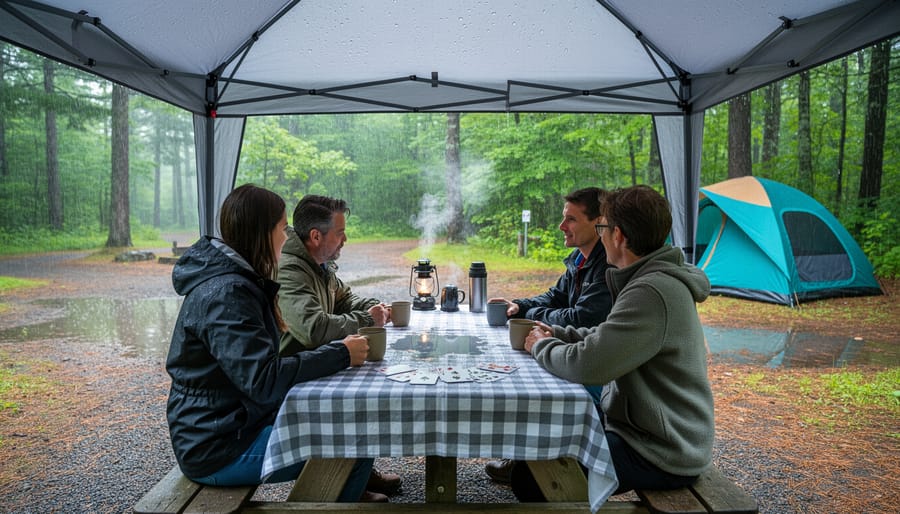
Picture this: you’re at your campsite in Algonquin Provincial Park, the morning drizzle has started, and everyone’s huddled awkwardly under the tarp you rigged between two trees. Meanwhile, your neighbors are sitting comfortably under a proper camping gazebo, sipping coffee and playing cards while staying completely dry. That could be you.
A camping gazebo isn’t just another piece of gear to haul around. It’s your outdoor living room, rain shelter, and bug-free dining area all rolled into one. Whether you’re planning your first trip through Learning to Camp programs or you’re a seasoned camper tired of Ontario’s unpredictable weather ruining mealtimes, understanding gazebos will transform how you experience the outdoors.
Here’s what most beginners don’t realize: Ontario provincial parks allow gazebos at most car camping sites, but there are size restrictions and setup rules you need to know before you invest. The difference between a $60 pop-up canopy that collapses in the first windstorm and a $300 gazebo that lasts for years often comes down to understanding frame materials, wind resistance ratings, and whether you actually need those mesh walls.
I’ve spent countless nights at provincial park campsites across Ontario, from Killarney to Presqu’ile, and I can tell you that the right gazebo setup makes the difference between retreating to your tent when conditions turn and actually enjoying your camping trip regardless of weather. You don’t need the fanciest model, but you do need one that matches your camping style and Ontario’s unique climate challenges.
This guide cuts through the marketing hype and gives you exactly what you need to know: which features actually matter, how to set up properly without damaging park property, and insider tips for choosing a gazebo that won’t end up in a landfill after one season.
Why Camping Gazebos Are Game-Changers for Ontario Campers
Ontario’s weather has a knack for keeping campers on their toes. I’ve watched clear morning skies turn into torrential downpours by lunch, then blazing sunshine by dinner. A camping gazebo creates that crucial buffer zone between you and whatever Mother Nature decides to throw your way.
The sudden rain is the big one. Ontario storms roll in fast, especially near the Great Lakes and in northern parks. When you’re at a picnic table chopping vegetables or dealing with camp stove maintenance, you can’t just abandon everything and dive into your tent. A gazebo means your cooking station stays dry, your gear stays protected, and you can actually finish making dinner instead of eating granola bars in a damp tent while waiting for the weather to pass.
Sun protection matters more than most first-timers realize. Those long June days at the beach in Sandbanks or an exposed site at Killarney can leave you fried and exhausted by mid-afternoon. A gazebo provides that shaded retreat where you can escape the UV rays, cool down, and regroup. Kids especially benefit from having a designated shade zone during peak sun hours.
Then there are the bugs. Ontario’s blackflies and mosquitoes are legendary, particularly in May and early June. Most quality gazebos accept mesh sidewalls that transform your dining area into a screened room. Eating meals without constantly swatting insects changes the entire camping experience.
For beginners still figuring out camp organization, a gazebo essentially expands your usable living space. Your tent becomes just for sleeping. The gazebo handles everything else: meal prep, games, conversation, gear storage during rain. It creates structure and comfort zones that make those first camping trips less overwhelming and more enjoyable. You’re not trying to do everything hunched over a picnic table or crammed in a tent.
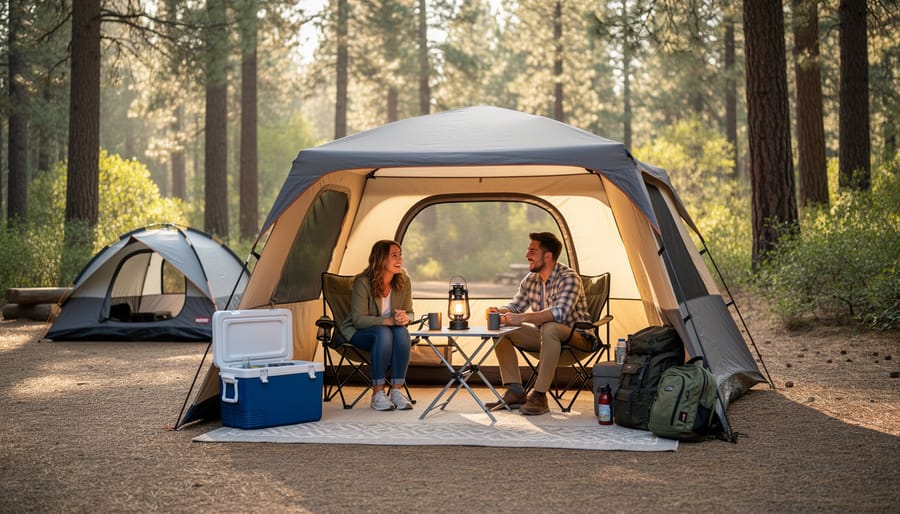
Choosing the Right Camping Gazebo for Ontario Provincial Parks
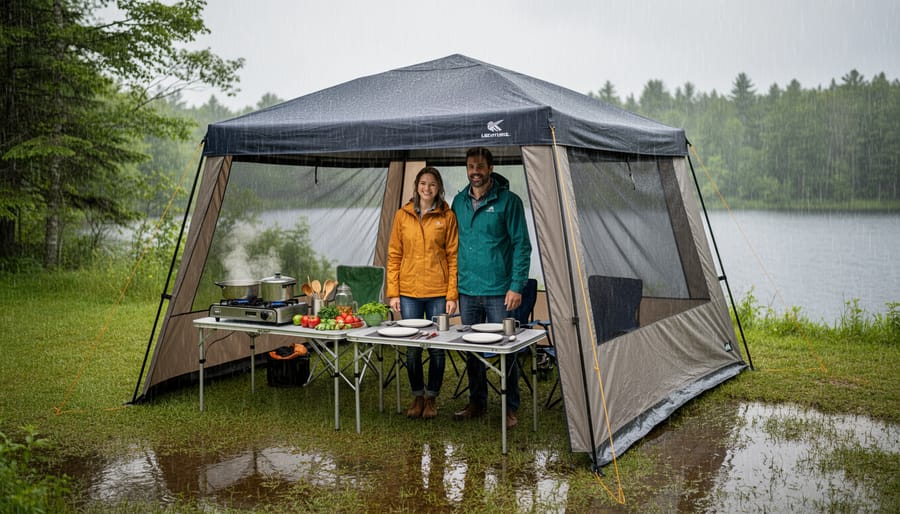
Size and Site Regulations
Most Ontario provincial park campsites measure between 12-15 metres deep and 8-10 metres wide, giving you a defined footprint to work with. A 10×10-foot gazebo fits comfortably on most sites, while 12×12-foot models push the limits at smaller parks like Grundy Lake or Bon Echo. Before you buy, check your intended park’s site dimensions on their website, backcountry and walk-in sites often run tighter than drive-in locations.
Provincial regulations require you to avoid shelter near the fire pittypically maintaining at least 3 metres clearance for safety. Position your gazebo away from overhead branches (fire hazard and sap drips) and respect the invisible property lines between neighbouring sites, nothing kills the camping vibe faster than your gazebo pole landing in someone else’s space. Conservation areas like those managed by local authorities sometimes have stricter footprint rules than provincial parks, so call ahead if you’re visiting a less-known system. When in doubt, go slightly smaller; you can always extend your outdoor living area with a tarp, but you can’t shrink an oversized gazebo once you’ve arrived.
Weather Protection Features
Ontario’s weather can pivot from brilliant sunshine to sideways rain in under an hour, especially near the Great Lakes. Your gazebo needs to handle these curveballs without turning into a kite or a puddle collector.
Look for waterproof ratings of at least 2000mm PU coating for Ontario’s hard rainfall. Anything less and you’ll watch water bead through the fabric during a Muskoka afternoon storm. The seams matter just as much as the fabric, taped or welded seams prevent leaks where panels connect, which is where most budget gazebos fail after their first season.
Wind resistance depends on design, not just stakes. Vented tops let gusts escape instead of catching like a sail, crucial for exposed sites at parks like Presqu’ile or Sandbanks. Side panels with zip-down sections give you flexibility: close them during a storm, roll them up when bugs arrive at dusk. Steel or fibreglass poles bend rather than snap, though steel adds weight you’ll notice on portage routes.
UV protection (look for UPF 50+) shields you during Ontario’s intense July sun, when shade temperatures still hit 30°C. Your skin and your kids will thank you after a full day outside.
Beginner-Friendly Setup Systems
Pop-up canopies are the easiest route for your first camping trip. You’ll literally unfold them like an accordion, extend the legs, and you’re done in under five minutes solo. They’re perfect when you’re still figuring out tent stakes and fire-starting.
Instant-frame gazebos come next on the complexity scale. These use pre-attached poles that snap or slide into place, think about ten minutes with two people. One person holds the frame steady while the other locks the corners. I’ve watched countless newbies at Sandbanks successfully set these up on their first try.
Traditional pole-sleeve gazebos require more patience. You’ll feed poles through fabric sleeves, connect segments, and raise the structure together. Budget fifteen to twenty minutes with two people minimum. The payoff? They’re typically sturdier in wind once you’ve mastered the technique.
Hub-style systems split the difference. Central hubs hold pole intersections, reducing confusion about which pole goes where. Two people can manage setup in roughly twelve minutes after one practice round at home.
My advice? Start with pop-up or instant-frame models. Master your campsite routine first, then graduate to more complex systems if you need better wind resistance for exposed Great Lakes sites.
Setting Up Your Gazebo: A First-Timer’s Walkthrough
Choosing Your Gazebo Spot
Walking into your campsite for the first time, you’ll face a tempting urge to claim the flattest spot immediately. Resist it. Take five minutes to observe how the sun tracks across your site and where the prevailing wind comes from, usually southwest in most Ontario parks. Your gazebo works hardest when positioned to block afternoon sun while allowing morning light to naturally warm your breakfast space.
Position your gazebo at least 3 metres from your fire pit. This isn’t just a park rule, it’s about preventing ember damage to your canopy and keeping smoke from pooling under the roof. I learned this the hard way at Silent Lake when wind shifted and filled our poorly-placed gazebo with campfire smoke during dinner.
If your site has a picnic table, set up adjacent but not directly over it. This gives you flexibility to move between covered and open spaces. Check overhead for widow-makers, dead branches that could fall during wind. Avoid low-lying areas where rain puddles, and ensure guy lines won’t create trip hazards on main pathways to your tent or the washroom facilities at night.
Anchoring on Canadian Shield Bedrock
The Canadian Shield’s exposed granite surfaces can turn gazebo setup into a puzzle, but experienced Ontario campers have figured out practical workarounds. When you can’t drive stakes into solid rock, weight becomes your anchoring strategy. Fill stuff sacks or dry bags with rocks you find around your site, then secure them to your gazebo’s guy lines, four to six bags weighing 10-15 pounds each usually does the job. Some campers bring dedicated sandbags from home, which work brilliantly but add bulk to your packing.
If you’re lucky enough to find natural rock crevices near your setup spot, you can wedge tent stakes horizontally into gaps for surprisingly solid holds. Another clever trick involves the ratchet strap method: loop straps around large boulders and connect them to your gazebo’s corner poles, creating a stable anchoring system that doesn’t require penetrating the ground at all. Parks like Killarney and Bon Echo, where bedrock dominates many sites, are where these techniques really shine, just scout your campsite’s anchor points before you start assembling the gazebo frame.
Ontario Park Regulations You Need to Know
Before you pack that gazebo, you’ll want to know what’s actually allowed at your destination. Ontario provincial parks welcome camping gazebos, but they treat them as temporary structures rather than additional tents, which means they don’t require separate camping permits. Your standard campsite reservation covers your gazebo as long as it fits within your site boundaries and doesn’t encroach on neighbouring sites or park infrastructure like fire pits and picnic tables.
Most Ontario Parks campsites accommodate structures up to 10×10 feet without issues, though backcountry sites naturally have tighter constraints. The golden rule: your gazebo must stay entirely within the cleared camping area markers. Extending onto trails, natural vegetation zones, or waterfront setback areas violates Ontario camping rules designed to protect sensitive ecosystems.
Setup timing matters more than you’d think. Most provincial parks enforce quiet hours from 11 PM to 7 AM, and hammering stakes during these windows can earn you warnings from park staff. Plan your gazebo setup during daylight hours, ideally when you first arrive at your site. If severe weather forces a late-night takedown or emergency setup, you’ll get a pass, but courtesy to fellow campers goes a long way.
Conservation areas operated by local authorities often have stricter rules than provincial parks. Some prohibit any structures beyond tents, while others limit canopy sizes to 8×8 feet. Always call ahead or check specific conservation area websites before assuming your gazebo is welcome.
Private campgrounds offer the most flexibility. Many explicitly allow large gazebos and party tents without size restrictions, though you’ll still need to respect site boundaries and neighbouring campers. Some commercial campgrounds even provide concrete pads perfect for anchoring gazebos on non-rocky terrain.
The key takeaway: your reservation confirmation doesn’t automatically green-light every shelter type. A quick call to your specific park before your trip prevents disappointed packing and potential setup conflicts with park staff.
Real Camping Scenarios: When Your Gazebo Saves the Day
The theory sounds great until you’re actually there, rain pelting your picnic table at 7 AM. Last summer at Algonquin’s Mew Lake campground, I watched a family without a gazebo abandon their breakfast plans entirely, huddling in their tent nibbling granola bars while we sat comfortably under our gazebo flipping pancakes on the camp stove. The difference between a soggy, defeated morning and a cozy camping breakfast often comes down to 100 square feet of covered space.
At Frontenac Provincial Park, the bugs stage their evening ambush like clockwork. Around 6 PM, just when you want to sit outside and watch the sunset over Big Salmon Lake, the mosquitoes arrive in force. One evening, our neighbors tried the bug spray route, reapplying every twenty minutes while swatting constantly. Meanwhile, we added mesh sides to our gazebo and enjoyed wine and cards in peace. The kids played board games at the camp table instead of being driven inside by insects. That single evening made our gazebo investment worth every dollar.
The midday sun in southern Ontario parks gets brutal by mid-July. I learned this the hard way at Pinery Provincial Park with two kids under five. By noon, the campsite felt like a convection oven with zero natural shade on our sandy site. We jerry-rigged a tarp that first day, but it sagged and trapped heat underneath. The next morning, we drove to town and bought a pop-up gazebo. Suddenly we had a shaded headquarters where the kids could play with toys, we could prep lunch without squinting, and everyone’s mood improved dramatically. You can make your campsite work without one, but with young children, shade becomes non-negotiable.
Group camping at sites like Bon Echo transforms with a gazebo. Eight adults trying to socialize means someone’s always standing awkwardly or perched on a cooler. Set up a gazebo over the picnic table, add a couple of camp chairs underneath, and you’ve created an actual gathering space where everyone fits comfortably. When light rain started during our potluck dinner, nobody had to scatter. The evening continued exactly as planned, just with a rhythmic patter overhead.
Gazebo Care and Maintenance Between Trips
Your gazebo just protected you from three days of Ontario rain, now it’s time to return the favour. I learned this lesson the hard way after stuffing my first gazebo into its bag while still damp, only to open it next spring to a mouldy disaster.
Start with a thorough cleaning at home, not at the campsite. Set up your gazebo in the backyard or driveway and hose down the canopy to remove pine needles, sap, and dirt. For stubborn stains or bird droppings, use mild soap and a soft brush, never bleach, which degrades waterproof coatings. Following Leave No Trace principles means keeping your gear in good shape so it lasts longer and reduces waste.
Drying is critical in Ontario’s humid climate. Leave your gazebo fully set up for at least four hours on a sunny day, even if it feels dry to the touch. Check all seams and pockets where moisture hides. Frame poles need attention too, wipe them down to prevent rust, and apply silicone spray to moving parts before winter storage.
Store your gazebo loosely in a breathable bag or hang it in a cool, dry basement. Never leave it compressed in a hot garage or damp shed through winter. Come spring, inspect all stress points, check guy lines for fraying, and replace any bent stakes. A well-maintained gazebo easily handles five to eight seasons of Ontario camping.
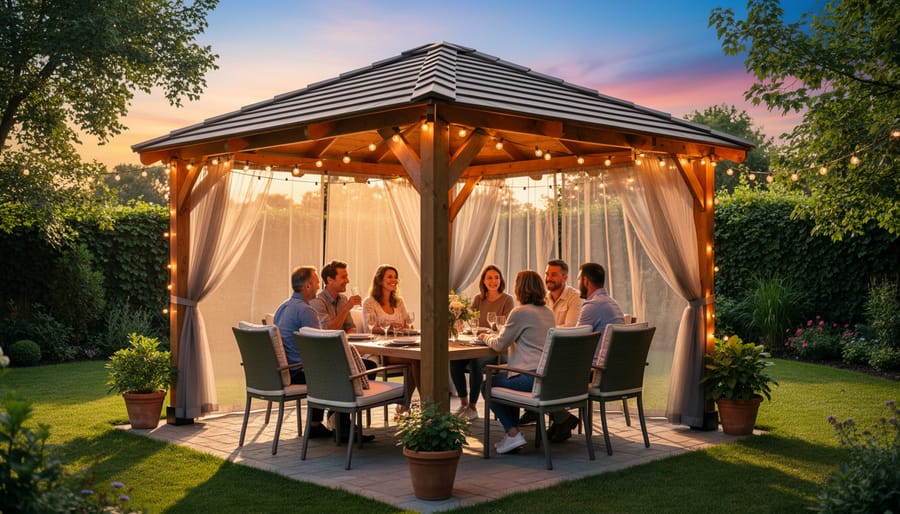
Adding a camping gazebo to your Ontario parks adventure isn’t about piling on extra gear, it’s about removing barriers that make camping feel overwhelming when you’re just starting out. That dry space during an afternoon downpour, the bug-free dinner under your shelter, the shaded refuge when the sun gets intense: these small comforts let you focus on what actually matters. You’ll notice more birds, relax into conversations, and wake up eager for day two instead of wondering if you should pack up early.
For your next provincial park trip, consider bringing a gazebo along. Set it up thoughtfully within your site boundaries, anchor it properly so nothing blows away, and pack it out clean. Remember that Leave No Trace applies to temporary structures too, position your gazebo to avoid trampling sensitive vegetation and never let it become an excuse to expand beyond your designated campsite.
The beauty of camping lies in stepping outside your usual comfort zone, but there’s wisdom in bringing just enough comfort to make that step inviting rather than intimidating. Your gazebo might become the difference between a stressful trial and a genuinely enjoyable weekend that makes you book your next trip before you’ve even left the park.







+ There are no comments
Add yours