
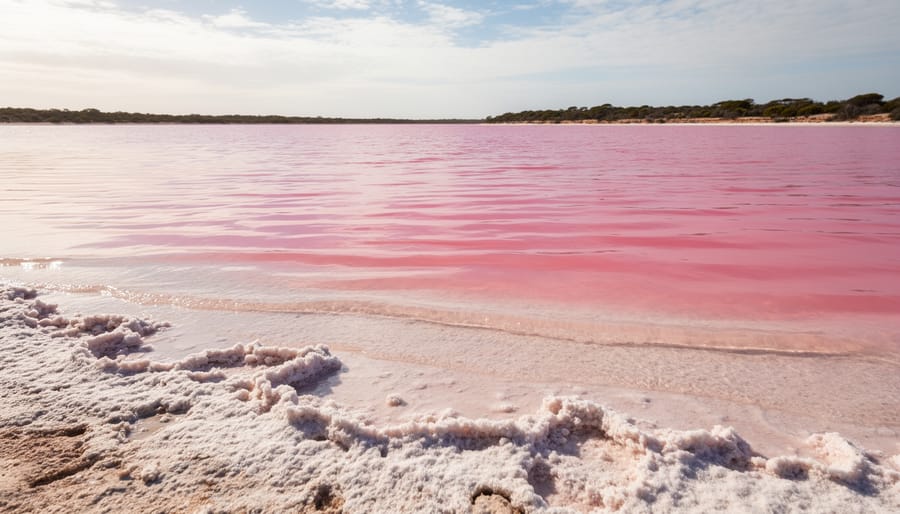
Western Australia is home to some of the world’s most stunning pink lakes, natural wonders where salt-loving algae and high salinity transform ordinary water into vivid bubblegum and rose-hued spectacles. The most famous is Lake Hillier on Middle Island near Esperance, a permanently pink oval that’s open year-round with free admission, though you’ll need a scenic flight to see it since the island is protected. Closer to Perth, Lake Hillier isn’t your only option. The Pink and Rainbow Lakes near Esperance offer equally dramatic color displays best viewed from June to January, accessible through operators like Fly Esperance. Up north, the Pink Lake in Port Gregory (Hutt Lagoon) stretches for miles and can be viewed from the road, making it one of the few you can visit without chartering a plane.
The science behind the pink is surprisingly simple. Dunaliella salina, a type of algae that thrives in extremely salty conditions, produces red and pink pigments to protect itself from intense sunlight. When conditions are right (high salt concentration, warm temperatures, and bright sun), the water glows in shades ranging from pale rose to deep magenta. Not every pink lake stays pink all year, though. Seasonal rainfall can dilute the salt levels and fade the color temporarily, which is why timing matters.
If you’re planning a trip in 2026, budget anywhere from $530 for multi-day tours departing from Perth to the cost of a rental car and fuel for self-guided exploration. The key is understanding which lakes require aerial viewing and which you can photograph from the shoreline, a distinction that can save you hundreds of dollars while still delivering that Instagram-worthy moment.
Why Western Australia’s Lakes Turn Bubble-Gum Pink
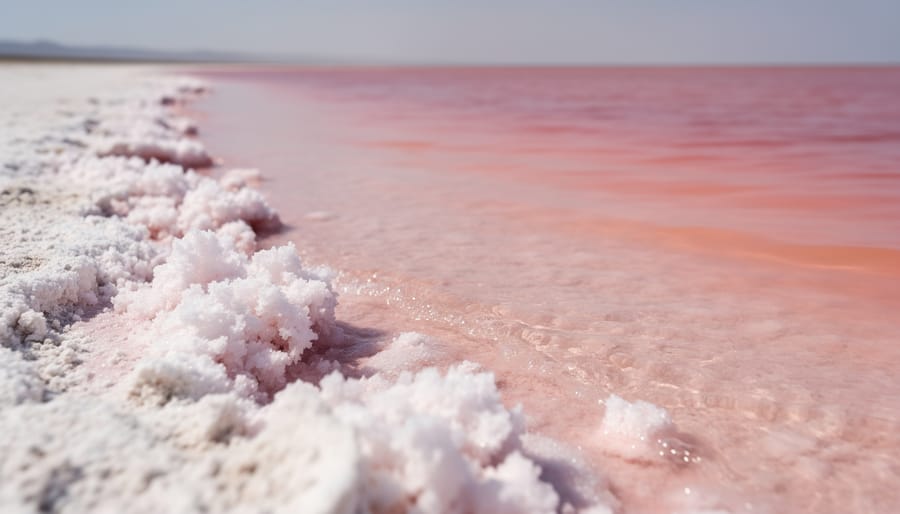
The magic behind Western Australia’s bubble-gum pink lakes lies in a remarkable partnership between extreme conditions and tiny organisms. When salt concentrations soar far beyond ocean levels, sometimes ten times saltier, a special species of algae called Dunaliella salina thrives where almost nothing else can survive. These microscopic salt-lovers produce beta-carotene, the same pigment that makes carrots orange, as protection against intense sunlight and harsh salinity. It’s this carotene that tints the water various shades of pink, from soft blush to vivid magenta.
The colour intensity you’ll witness depends heavily on environmental factors. Summer heat and low rainfall concentrate the salt and boost algae populations, creating the most vibrant displays. Cooler months or recent rain can dilute the effect, sometimes reducing the pink to a pale rose or even leaving the water looking more white than pink. This natural variability means every visit offers a unique spectacle, you might catch Lake Hillier at its most intense fuchsia or find the Pink Lake near Esperance showing softer hues.
Temperature and wind also play supporting roles in this natural colour show. Warm, still conditions allow algae to multiply and concentrate near the surface, deepening the pink. Strong winds can churn the water and disperse the colour-producing organisms, temporarily muting the effect. Understanding this science doesn’t diminish the wonder, if anything, knowing you’re witnessing a precise alignment of salinity, sunlight, and resilient life makes the experience even more extraordinary.
Lake Hillier: The Famous Pink Lake on Middle Island
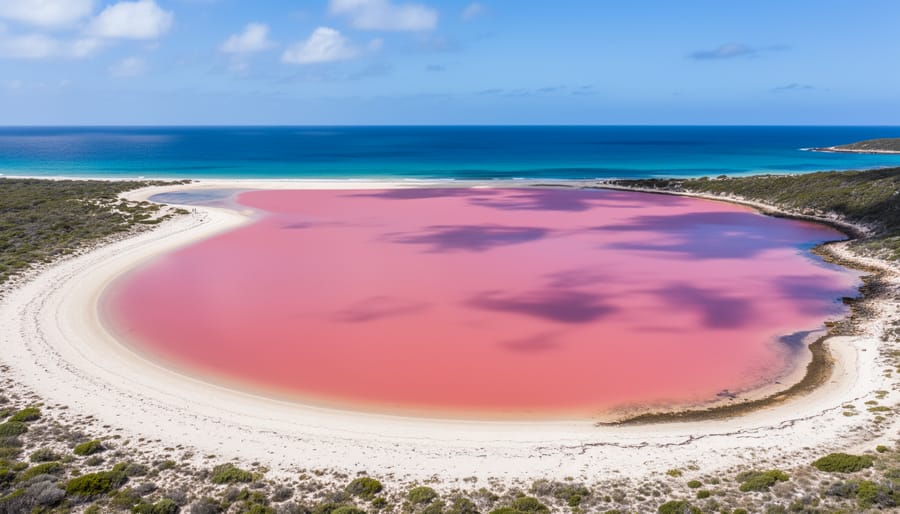
Lake Hillier stands out as Western Australia’s most photographed pink lake, and once you see it, you’ll understand why. This oval-shaped saltwater wonder sits on Middle Island, part of the Recherche Archipelago off the southern WA coast near Esperance. Unlike many pink lakes that fade to pale mauve or lose their color entirely in certain seasons, Hillier maintains its vivid bubble-gum hue year-round, a trait that’s made it famous worldwide.
The lake stretches about 600 meters long, surrounded by a rim of white salt crystals and dense eucalyptus forest, with the deep blue Southern Ocean just beyond. That contrast, shocking pink against green forest and turquoise water, creates one of nature’s most surreal landscapes. The color stays vibrant whether you’re overhead in summer heat or winter chill, making it reliable for visitors in any season.
Here’s the catch: Middle Island sits within a protected nature reserve, so you can’t walk right up to the shore. The lake is technically open 24/7 with free admission, but accessing it requires special permits that aren’t readily available to casual tourists. For most visitors, that means scenic flights are your best, and really only practical, option. Helicopter and small plane tours departing from Esperance circle over Hillier, giving you spectacular aerial views and that iconic photo angle showing the lake’s perfect oval shape.
Book flights for late morning when the sun hits the lake directly; harsh midday light washes out the pink, while early morning shadows can dull the intensity. Bring a polarizing filter if you’re serious about photography, and sit on the pilot’s side for the best angles during the typical flight path. The entire experience lasts about an hour, but those few minutes hovering over Hillier will be the highlight you remember.
Pink Lake and Rainbow Lakes Near Esperance
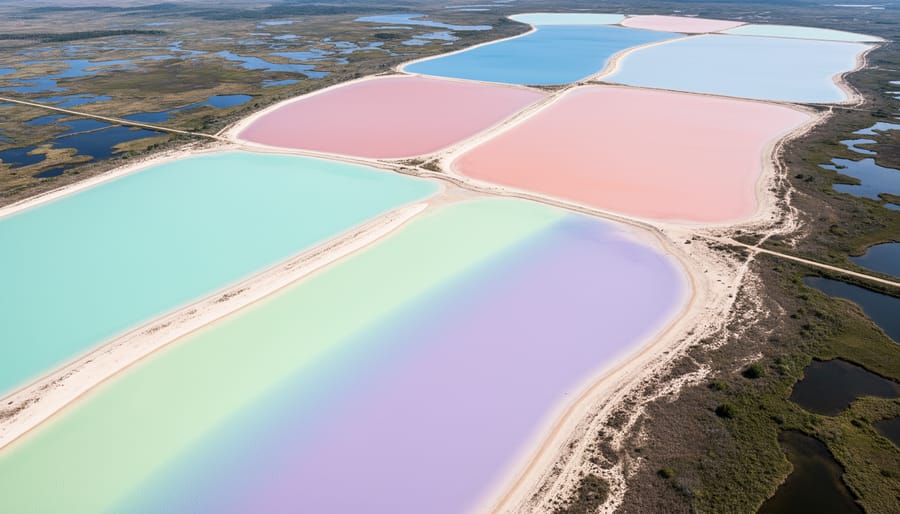
Just an hour and a half flight from Perth, the Esperance region delivers one of Western Australia’s most spectacular natural shows. The Pink and Rainbow Lakes sit in a landscape where multiple salt lakes cluster together, each displaying its own unique hue. When viewed from above, these lakes create a patchwork of colors ranging from soft blush to deep magenta, punctuated by emerald greens and creamy whites. The “rainbow” effect happens when several differently colored lakes appear in your field of vision simultaneously, their contrasting shades creating a surreal palette that seems almost painted onto the landscape.
The intensity of the pink coloration shifts with the seasons, making timing crucial for your visit. From June through January, the lakes typically show their most vibrant colors as the algae thrive in warm conditions and evaporation concentrates the salinity. Outside this window, you might still catch pink tones, but they’ll be more subdued.
Scenic flights with Fly Esperance offer the best vantage point for appreciating this natural artwork. From ground level, you’d miss the full impact of the color contrasts and the patterns these lakes create across the terrain. The aerial perspective reveals how the pink lakes interact with their surroundings, the white salt crusts, the surrounding scrubland, and the brilliant blue of the Southern Ocean not far beyond.
For capturing these views, iPhone photography techniques work surprisingly well from aircraft windows. Turn off the flash, shoot in burst mode to compensate for movement, and position your lens as close to the glass as possible without touching it. The midday light can be harsh, but it also brings out the most saturated colors in the lakes.
Planning Your Pink Lake Adventure in WA
Planning your trip to WA’s pink lakes requires some advance preparation, but the payoff is worth it. Most pink lakes are remote and best viewed from the air, so scenic flights are essential to your experience. For Lake Hillier on Middle Island, aerial tours are your only option since ground access isn’t available to casual visitors. Fly Esperance offers several scenic flight packages that showcase the Pink and Rainbow Lakes near Esperance, with prices varying based on flight duration and group size.
| Lake/Location | Distance from Perth | Best Viewing Method | Cost Range | Best Time to Visit |
|---|---|---|---|---|
| Lake Hillier (Middle Island) | ~720 km southeast | Scenic flight | Free admission (flight costs extra) | Year-round |
| Pink & Rainbow Lakes (Esperance) | ~720 km southeast (1.5-hour flight) | Scenic flight or roadside viewing | Flight packages vary by operator | June to January |
| Multi-day tour packages | Varies | Combination ground/air | From $530 (2-day Kalbarri tour) | Depends on itinerary |
When booking flights, aim for mid-morning or early afternoon departures when the sun angle intensifies the pink hues. Book at least two weeks ahead during peak season (June through January) since small aircraft fill quickly. Multi-day tours like the 2 Days Kalbarri and Pink Lake Tour (from $530) bundle accommodation, transport, and aerial experiences, which simplifies logistics if you’re unfamiliar with the region.
Pack your camping safety gear if you plan to explore beyond the pink lakes themselves, particularly around Esperance where camping spots offer stunning coastal access. For photography, bring a polarizing filter to cut glare from the water’s surface and a telephoto lens (200mm or longer) for aerial shots. Your camera’s shutter speed should stay above 1/1000th second to avoid blur from the aircraft’s movement.
Consider building your itinerary around Esperance as a base camp. You can catch the Pink and Rainbow Lakes from June to January when the color contrast is most dramatic, then spend remaining days exploring the nearby coastal reserves and beaches. This approach gives you backup options if weather delays your scenic flight, which occasionally happens in shoulder seasons.
Eco-Friendly Pink Lake Tourism
Protecting WA’s pink lakes starts with understanding that these fragile salt ecosystems require careful stewardship. Many lakes have restricted ground access precisely because foot traffic can damage the delicate algae blooms and disrupt salt crust formations that create the pink phenomenon. When operators designate aerial viewing only, they’re safeguarding the very conditions that make these lakes spectacular.
Choose tour companies that demonstrate genuine conservation commitment. Look for operators who limit group sizes, maintain designated flight paths, and contribute to local environmental programs. Ask about their sustainability practices before booking. The best companies educate visitors about why certain lakes remain off-limits and how tourist behavior directly impacts water quality and algae health.
Apply core Leave No Trace principles to accessible pink lake areas. Never wade into restricted waters, dispose of all waste properly, and stick to marked paths where ground access is permitted. Your eco-tourism tips from Ontario outdoor experiences translate directly here: respect closures, minimize your footprint, and prioritize the ecosystem’s long-term health over a single photo opportunity.
Remember that pink intensity fluctuates naturally with rainfall and temperature. If conditions aren’t ideal during your visit, accept that nature operates on its own schedule. Responsible tourism means appreciating what these lakes offer while ensuring they’ll remain pink for future generations.
Beyond the Pink: What Else to Explore in Western Australia
Once you’ve experienced the otherworldly pink lakes, the surrounding regions offer plenty more to keep your adventure going. The coastline around Esperance rivals anything you’ll find along Ontario’s Great Lakes, think pristine white sand beaches that stretch for miles, turquoise waters perfect for swimming, and rugged granite headlands that make for spectacular sunset viewing. Lucky Bay in Cape Le Grand National Park is particularly stunning, and you might share the beach with surprisingly friendly kangaroos.
For camping enthusiasts, Western Australia delivers big. Cape Le Grand and Cape Arid National Parks both offer established campgrounds with basic facilities, similar to Ontario’s provincial park system but with dramatically different scenery. The coastal camping here puts you steps from the ocean rather than lakeshores, and the star-filled night sky, free from light pollution, is unforgettable.
If you’re drawn to hiking, the trails around Esperance showcase unique granite formations and coastal ecosystems you won’t find back home. The trails tend to be less crowded than Ontario’s popular routes, giving you that genuine wilderness feeling. For water activities, kayaking the archipelago offers encounters with seals and dolphins, while the fishing opportunities attract anglers from around the world.
The beauty of building your WA itinerary around pink lake visits is that you’re already positioned near some of the state’s best outdoor experiences, making it easy to combine natural wonders into one memorable trip.



+ There are no comments
Add yours