
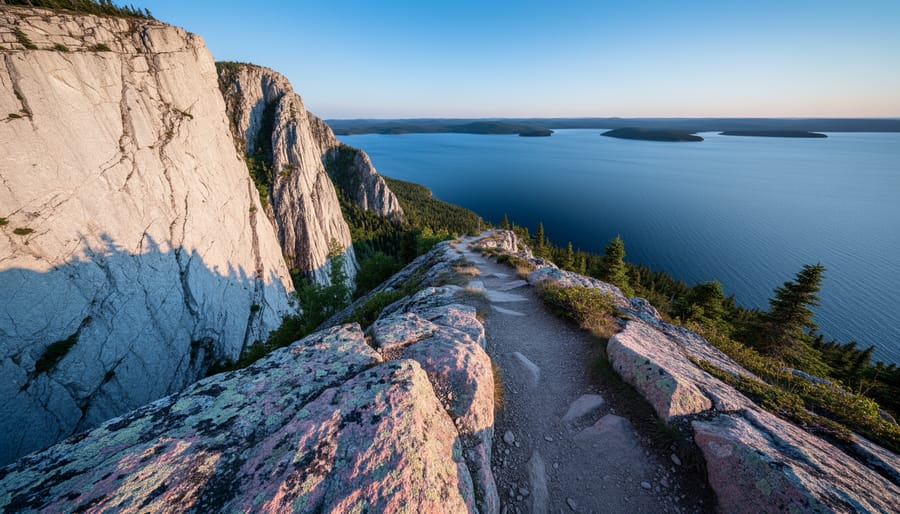
Stand at the edge of the La Cloche Mountains and you’ll understand why artists from the Group of Seven obsessed over this landscape. Killarney Provincial Park delivers those signature white quartzite ridges, impossibly blue lakes, and pink granite shores that look photoshopped but aren’t. The question isn’t whether it’s beautiful. It’s whether those famous trails and backcountry campsites justify the five-hour drive from Toronto when other parks sit closer to home.
Here’s what matters: Killarney earns its reputation through sheer drama. The Crack hike slices between 100-foot rock walls before spitting you onto a bare summit overlooking Georgian Bay. Silver Peak rewards you with 360-degree views that genuinely rival anything in Algonquin. The backcountry canoe routes thread through crystal-clear water so transparent you’ll see fish 20 feet down.
But this park demands more than casual enthusiasm. Trails here run steep and rocky. The backcountry sites book out six months ahead for summer weekends. You’ll portage longer distances than nearby alternatives, and those stunning white mountains mean limited shade on scorching August afternoons.
If you’re debating between Killarney and quieter options like Frontenac, the choice hinges on what you value. Want jaw-dropping scenery and don’t mind crowds or challenging terrain? Killarney delivers. Prefer easier access, gentler trails, and better availability? You’ve got solid alternatives worth considering. Let’s compare what actually matters when you’re planning your next Ontario camping trip.
The Tale of Two Parks: What Makes Each One Special
Killarney and Frontenac sit on opposite sides of Ontario, each offering a distinct slice of Canadian Shield wilderness. Killarney Provincial Park hugs the northern shores of Georgian Bay, about 80 kilometers southwest of Sudbury. Those white quartzite ridges you’ve seen in photos? They’re the real deal, rising dramatically above turquoise lakes that look almost tropical on sunny days. The Group of Seven painters fell hard for this landscape in the 1920s, and their artistic devotion eventually helped establish Killarney as a park in 1964.
Frontenac Provincial Park, meanwhile, anchors itself between Ottawa and Kingston in eastern Ontario, surrounded by farmland and small towns rather than vast northern forests. Don’t let its southern location fool you, though. Frontenac packs serious wilderness character across its maze of interconnected lakes and granite outcrops. It’s a younger park, established in 1974, but the landscape itself is ancient Canadian Shield, wearing its 1.2 billion years well.
| Feature | Killarney | Frontenac |
|---|---|---|
| Location | Georgian Bay, near Sudbury | Between Kingston & Ottawa |
| Size | 645 km² | 51 km² |
| Distance from Toronto | ~400 km (4.5 hours) | ~270 km (3 hours) |
| Signature Feature | White quartzite ridges & Georgian Bay | Backcountry lakes & Rideau Trail |
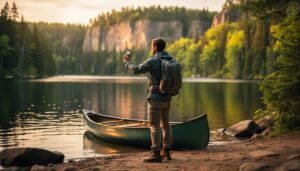
What draws people to Killarney? The scenery hits different. Those white and pink rocks create contrasts you won’t find elsewhere in Ontario. Paddlers chase the sheltered coves and island-dotted bays, while serious hikers tackle some of the province’s most challenging terrain.
Frontenac attracts a different crowd, or maybe just a different mindset. Its proximity to urban centres makes spontaneous weekend trips realistic. The park delivers legitimate backcountry solitude without the northern remoteness, and the trail network offers flexibility that rigid point-to-point routes can’t match. You’ll spot more wildlife here too, the forest corridors connecting to surrounding wilderness bring regular deer, beaver, and even the occasional black bear through the park.
Hiking Heaven: Comparing the Trail Experiences
Killarney’s Iconic Trails: The La Cloche Silhouette and Beyond
The La Cloche Silhouette Trail stands as Ontario’s most spectacular multi-day hike, a 78-kilometre loop that’ll challenge even seasoned backpackers. Those gleaming white quartzite ridges rising above sapphire-blue lakes create landscapes that feel more like the Norwegian fjords than central Ontario. The trail demands respect with its exposed rock scrambles, steep ascents, and backcountry navigation through sections where the path isn’t always obvious, but the payoff comes in jaw-dropping vistas at every ridgeline.
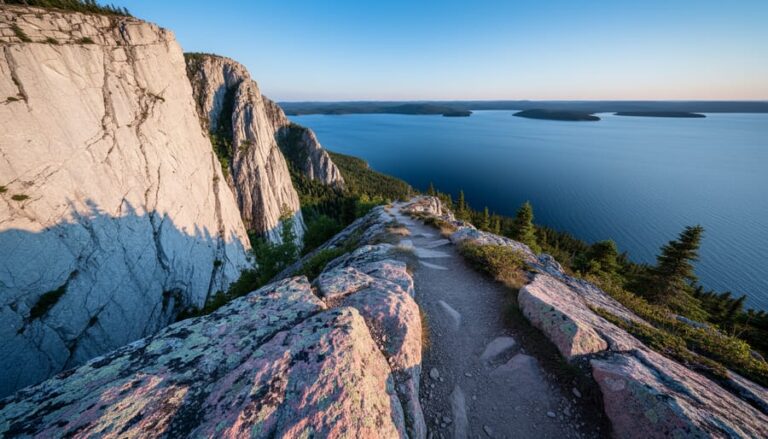
For day hikers, The Crack delivers Killarney’s signature scenery in a manageable package. This 6-kilometre round trip climbs steeply through the forest before emerging onto those famous white cliffs, where a narrow fissure in the rock opens to panoramic views of Georgian Bay’s turquoise waters below. The contrast between the bleached quartzite underfoot and the intensely blue lakes is genuinely breathtaking.
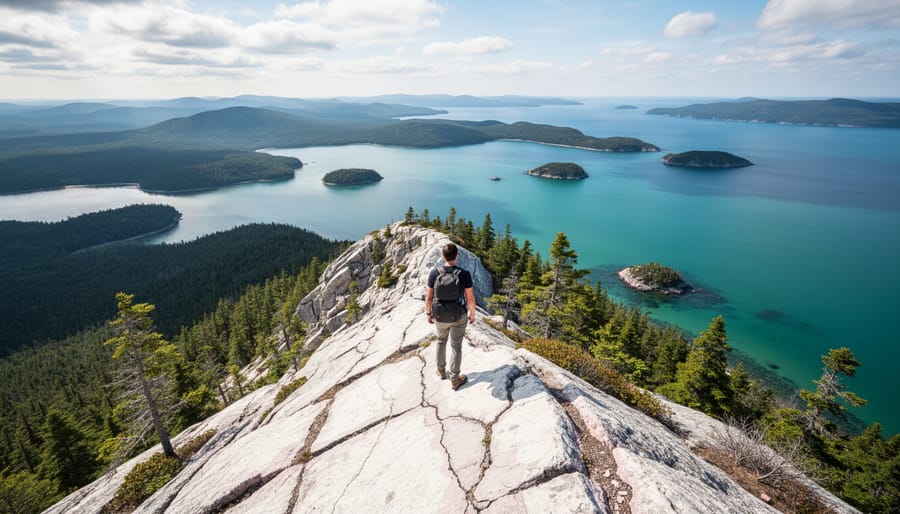
Your Killarney park map becomes essential for exploring beyond the marquee trails. The Chikanishing Trail offers a gentler 3.5-kilometre introduction to Killarney’s coastal beauty, while the Silver Peak Trail rewards the climb with 360-degree views from the park’s second-highest point.
September through early October hits the sweet spot for hiking here. The bugs have vanished, fall colors ignite the hardwood valleys, and you’ll actually find solitude on trails that see conga lines in July. Those white rocks also heat up intensely in summer sun, so pack more water than you think you need and start early to beat the midday scorcher.
Frontenac’s Hidden Gem Trails: Quieter but Just as Rewarding
Frontenac won’t knock your socks off with Instagram-worthy vistas, but here’s what I’ve learned after visiting both parks multiple times: sometimes the best trails are the ones where you don’t have to jostle for parking at 6 AM.
The park’s 22 interconnected trails create a choose-your-own-adventure playground. Unlike Killarney’s heavily trafficked routes, I’ve spent entire afternoons on Frontenac’s trails and encountered maybe two other hikers. The Arab Lake Gorge Trail remains my personal favorite, a moderate 5.5 km loop that surprises with elevation gains you’d never expect in Eastern Ontario. The gorge itself drops dramatically between rock walls, creating an intimate, almost secret-garden feeling that Killarney’s sweeping landscapes can’t match.
What really sets Frontenac apart is its connection to the 387-km Rideau Trail. You can hike serious distance here without the permit stress of Killarney’s backcountry. The 15-km Big Salmon Lake loop offers backcountry solitude with multiple bailout points, perfect for testing your overnight hiking legs before tackling something like La Cloche.
Wildlife enthusiasts, pay attention: I’ve spotted more animals in Frontenac than anywhere else in Ontario. Deer are practically guaranteed, and I’ve had close encounters with porcupines, foxes, and even a black bear from a respectful distance. The interconnected lakes and wetlands create habitat diversity that supports incredible birdwatching, especially during spring and fall migrations.
The trail system might lack Killarney’s drama, but the elevation changes surprise newcomers. These aren’t gentle strolls. The pink granite outcrops and mixed hardwood forests deliver that genuine Canadian Shield experience without the crowds fighting for the same view.
Camping Showdown: Where You’ll Actually Sleep Better
Killarney’s Backcountry Paradise (And Why It’s Harder to Get)
Let’s be honest: snagging a Killarney backcountry reservations spot feels like winning the lottery. Those iconic pink granite campsites along La Cloche lakes book out within minutes of opening, sometimes literally 30 seconds for prime summer weekends. I’ve watched the system crash under the demand, fingers hovering over “refresh” at 7 a.m. sharp on reservation day.
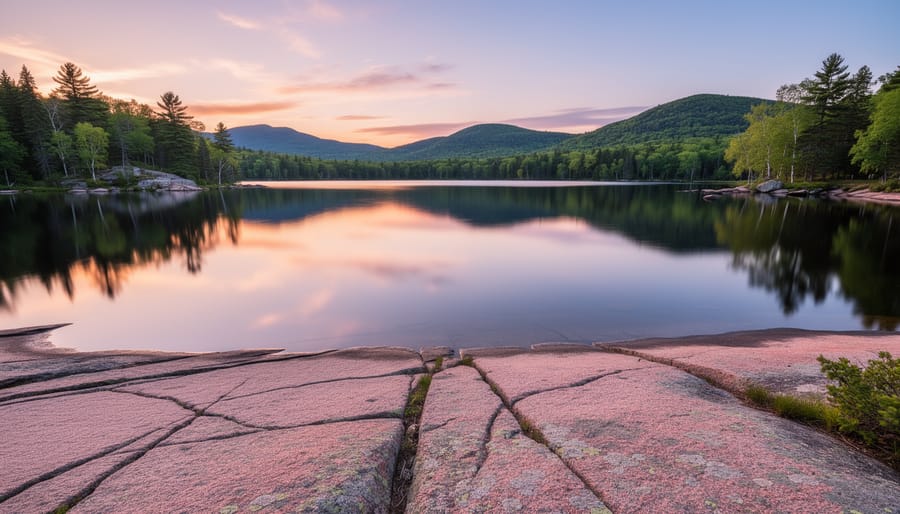
But here’s the thing: the struggle is part of what makes it special. Waking up on a smooth granite shelf overlooking turquoise water, surrounded by white quartzite ridges, genuinely ranks among Ontario’s most spectacular camping experiences. These aren’t your typical forest sites. You’re camping on ancient rock formations with panoramic lake views, often with nobody else in sight.
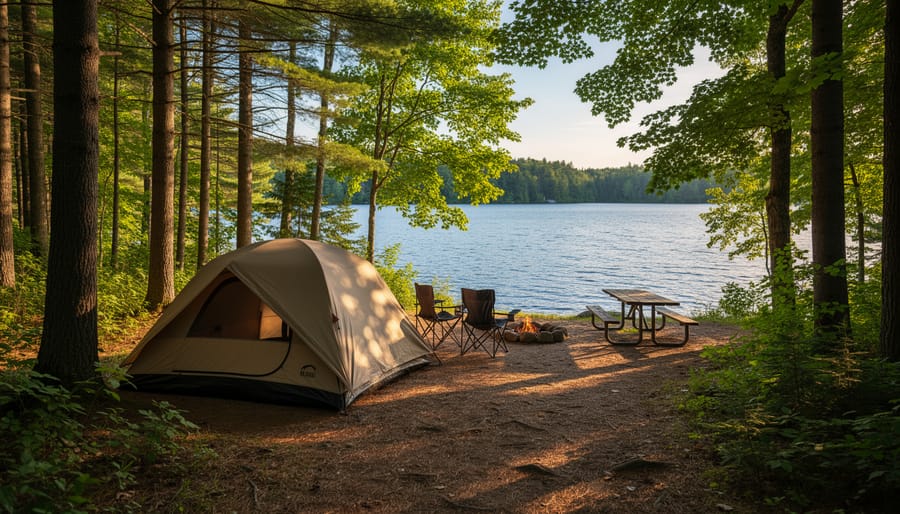
George Lake campground offers a more accessible entry point, with 127 car camping sites serving as your base for day hikes. It’s comfortable, hot showers, flush toilets, firewood delivery, but you’re trading that wilderness solitude for convenience. Still worth it if backcountry spots are gone.
For booking success, set multiple alarms for five minutes before reservations open (five months ahead). Have your account pre-loaded and payment ready. Consider shoulder seasons, late May or September, when availability improves dramatically and bugs decrease. Weekday trips also face less competition.
Here’s my insider tip: check our reservation advice for system strategies, but also watch for cancellations starting two weeks before your target dates. People’s plans change, and persistence pays off. I scored a July long weekend site in June through daily checking.
The effort matters because these campsites deliver something genuinely rare: wilderness beauty without requiring a multi-day expedition to reach it.
Frontenac’s Accessible Alternative: More Flexibility, Less Hassle
Here’s the truth about Frontenac: you can actually get a campsite without losing sleep over it. While Killarney fills up the moment reservations open, Frontenac’s backcountry sites often have availability even a week or two before your trip. I’ve shown up mid-summer and found spots available at multiple lakes.
The park offers around 48 backcountry campsites spread across interior lakes, and they come in varied configurations. Some are accessible after a 30-minute paddle, others require a full day’s journey deep into the park. You’ll find everything from lakefront sites with sandy beaches to forested hideaways tucked into quiet bays. The beauty is choice. Need an easy weekend escape? Big Salmon Lake sites are gorgeous and relatively close. Want serious solitude? Push into South Otter or Little Salmon Lake where I’ve gone entire days without seeing another soul.
The reservation system works the same as other Ontario parks, but the difference is demand. You can book campsite options here without the frantic 7am scramble that Killarney requires. Most sites cost the same as Killarney (around $12-15 per night), but you’re trading that iconic pink granite shoreline for a legitimate wilderness experience that somehow feels more attainable. The campsites themselves offer proper backcountry isolation with designated fire pits and thunderboxes, yet you skip the months-long planning ordeal.
Amenities and Facilities: What You’ll Actually Find
Killarney’s George Lake Campground offers hot showers, flush toilets, and a small camp store for forgotten essentials. You’ll find electrical sites if you need them, plus a boat launch and beach access. Cell service is spotty at best. Frontenac keeps things simpler with vault toilets and hand-pump water stations at most sites, though some walk-in sites near Big Salmon Lake have no facilities at all. Neither park has laundry facilities, and both follow standard Ontario camping rules.
| Facility | Killarney | Frontenac |
|---|---|---|
| Showers | Hot showers available | None |
| Electrical Sites | Yes | No |
| Water Access | Taps throughout | Hand pumps only |
| Camp Store | Small on-site store | None |
| Cell Service | Minimal/none | Minimal/none |
The takeaway: Killarney caters to comfort-seekers who appreciate a hot shower after a long hike, while Frontenac rewards those who pack thoughtfully and embrace a stripped-down experience. Bring extra water containers and biodegradable soap for Frontenac, and expect to be truly off-grid at both destinations.
The Scenery Factor: Which Views Will Blow Your Mind
Let’s be honest about what’ll actually take your breath away at each park, because they deliver completely different visual experiences.
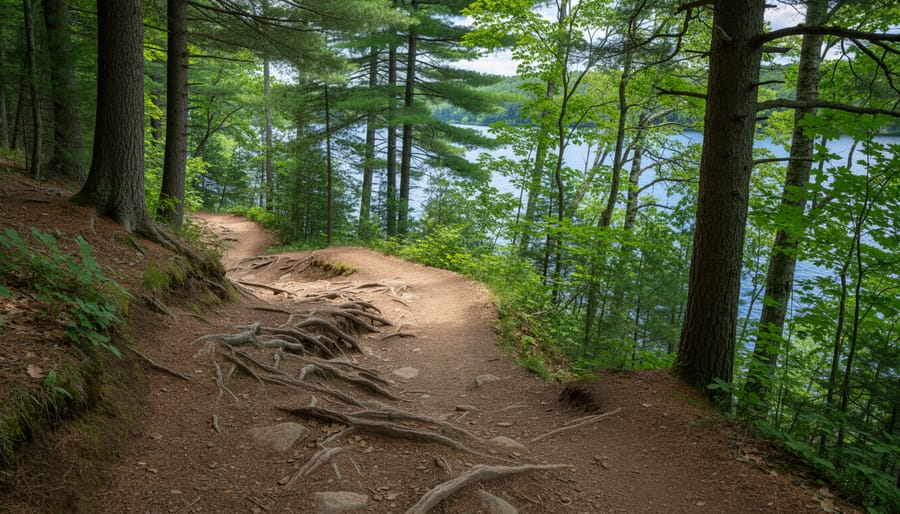
Killarney hits you over the head with drama. Those white quartzite cliffs rising above turquoise Georgian Bay waters create landscapes that look photoshopped even in person. Stand at The Crack’s overlook, and you’re staring at a 100-metre drop into impossibly blue water with pink granite shorelines stretching to the horizon. The La Cloche range offers panoramic views where you can see for kilometres across lakes that shift from turquoise to cobalt depending on the light. Sunrise here paints the white rock formations in shades of pink and gold that photographers dream about. It’s big, bold, and unapologetically stunning.
Frontenac works differently. The scenery sneaks up on you with intimate moments rather than grand vistas. You’ll paddle around a bend and find a perfect reflection of red maples in a still lake. The ridgeline views don’t stretch as far, but they reveal layer upon layer of forested hills fading into blue-grey distance. What this park does brilliantly is fall colour. The Canadian Shield forest explodes in October, and because Frontenac’s lakes are smaller and more sheltered, you get mirror-perfect reflections of crimson and gold that Killarney’s windswept Georgian Bay can’t match.
For photographers, Killarney rewards wide-angle landscape shots and dramatic golden hour work. Frontenac shines in macro photography, forest details, and those moody, foggy morning scenes. Nature lovers obsessed with “wow” moments should pick Killarney. Those who appreciate subtlety and seasonal change will find Frontenac equally satisfying, just in a quieter way.
Neither park will disappoint visually, they’re just speaking different languages. Choose based on whether you want to be amazed or enchanted.
The Practical Stuff: Getting There, Costs, and Timing
Getting to these parks requires different levels of commitment, and that might be your deciding factor.
Killarney sits about 2.5 hours southwest of Sudbury and roughly 4.5 hours from Toronto. The final stretch on Highway 637 feels remote, which adds to the wilderness vibe but also means you’re genuinely far from services. Frontenac, on the other hand, is only 30 minutes north of Kingston and about 2.5 hours from Toronto or Ottawa. You’ll pass grocery stores and gas stations on your way to Frontenac’s entrance, a comforting reality if you forgot something.
Both parks charge the standard Ontario provincial park vehicle permit, currently $17.50 daily or $81 annually. Camping fees run similar rates, though Frontenac’s sites are typically $7-10 cheaper per night for backcountry spots.
Timing matters enormously. Killarney transforms during fall when the white hills contrast with blazing maples. Late September brings peak colors but also crowds, especially on weekends. You’ll find relative peace in early June or late September weekdays. Frontenac experiences gentler seasonal swings. Its fall colors rival Killarney’s, but the park never feels overrun, even during peak October weekends.
Killarney’s reservations open in January and popular dates vanish within hours for summer and fall weekends. I’ve watched George Lake campsites disappear in fifteen minutes. Frontenac’s sites remain available much longer, sometimes offering same-week bookings in July.
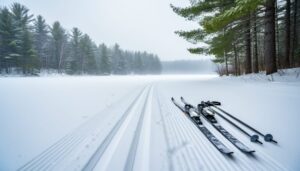
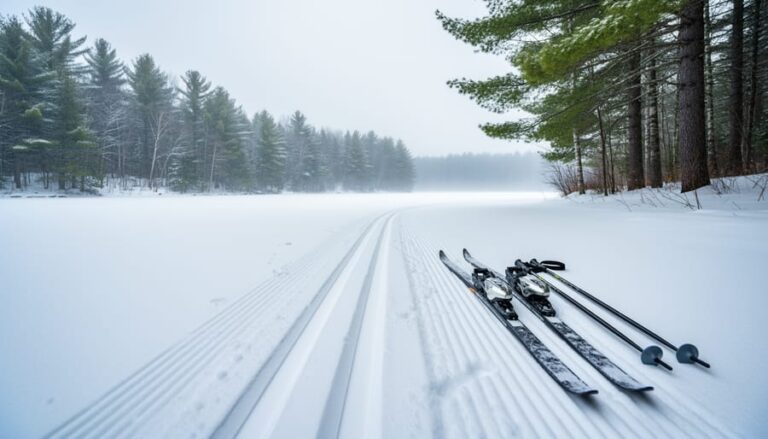
Winter changes everything. Killarney essentially closes for vehicle access, becoming a hardcore backcountry destination. Frontenac welcomes winter campers and cross-country skiers year-round, maintaining access and some facilities. If you’re craving a winter camping experience without extreme isolation, Frontenac wins decisively.
Wildlife and Nature: What You’ll Actually See
Both parks deliver incredible nature encounters, but what you’ll actually spot differs quite a bit. At Killarney, keep your eyes on the skies and shorelines, bald eagles soar over Georgian Bay regularly, and you might catch ospreys diving for fish near the turquoise lakes. The stunted pine and birch forests clinging to those white quartzite ridges create a subarctic feel, with blueberries carpeting the rocks in late summer. Moose sightings happen occasionally near wetlands, especially around dawn.
Frontenac offers richer wildlife diversity in a more intimate setting. The dense mixed forests shelter white-tailed deer (you’ll likely see them), black bears (less common but present), and an impressive array of songbirds. The park’s position on the Canadian Shield creates habitat for species you won’t find at Killarney, including five-lined skinks sunning on warm rocks. Spring brings incredible wildflower displays along the trails, while fall transforms the hardwood stands into blazing color, something Killarney’s evergreen-dominated landscape can’t match.
For responsible viewing at either park, practice Leave No Trace principles: observe from a distance, never feed animals, and keep food properly stored. Early morning or dusk offers the best wildlife activity. Bring binoculars rather than approaching for photos, and remember that a glimpse of a black bear disappearing into the forest is a privilege, not a photo op worth pursuing.
So Which Park Should You Choose?
Here’s your park-choosing roadmap: match your adventure style to the right destination. If you’re after jaw-dropping scenery, don’t mind planning months ahead, and want bragging rights for conquering one of Ontario’s most iconic trails, Killarney delivers that bucket-list experience. The white quartzite ridges and turquoise waters create Instagram-worthy moments you won’t find anywhere else in the province.
Frontenac shines for adventurers who value flexibility and solitude over superlatives. Weekend warriors who struggle with Ontario’s insane reservation system will appreciate Frontenac’s availability, while experienced paddlers and hikers seeking genuine backcountry peace without the crowds find their sweet spot here. The park rewards those willing to explore beyond the obvious.
First-timers to backcountry camping might actually prefer Frontenac’s gentler learning curve and forgiving reservation windows, while seasoned adventurers chasing specific experiences (like traversing the La Cloche Silhouette) will accept Killarney’s challenges for the payoff. Distance matters too. Toronto folks save two hours driving to Frontenac, while those based in northern Ontario have easier access to Killarney’s trailheads.
Here’s the truth: you can’t go wrong with either park. Killarney delivers those jaw-dropping vistas and Instagram-worthy white quartzite ridges, while Frontenac offers a quieter, equally stunning escape without the reservation gymnastics.
My insider tip? If you’re serious about Ontario’s outdoors, don’t force yourself to choose. Visit Killarney in late spring or early summer when the landscape explodes with color, then hit Frontenac in fall when the Shield lakes mirror brilliant foliage. They’re only three hours apart, making a combo trip totally doable.
Ontario’s provincial parks each have their own personality, and experiencing that diversity is what makes exploring this province so rewarding. Whether you’re chasing solitude on a backcountry lake or tackling challenging ridge walks, both parks prove you don’t need to travel far for world-class outdoor adventures.
Start checking those reservation calendars now. Your next Ontario adventure is waiting.



+ There are no comments
Add yours