
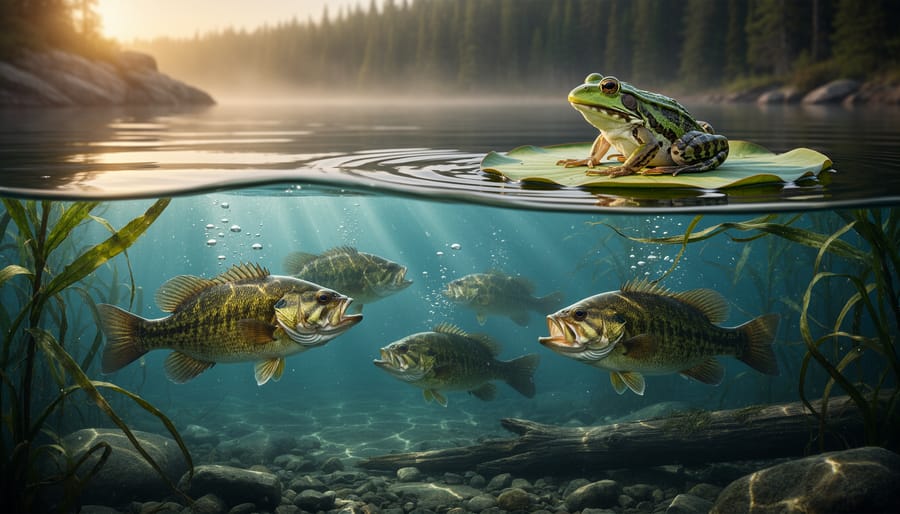
Dip your hand into any Ontario lake this summer and you’re experiencing abiotic factors at work—those non-living elements that shape every fishing hole, swimming spot, and paddle route across the province. Temperature, sunlight penetration, dissolved oxygen levels, pH balance, and water flow determine which fish you’ll catch, which plants you’ll see swaying beneath your canoe, and whether that backcountry lake supports the vibrant ecosystem you’re hoping to explore.
Understanding these five factors transforms casual observers into informed outdoor enthusiasts. When you notice why bass congregate in sun-warmed shallows during spring, or why certain stretches of river teem with life while others seem barren, you’re reading the invisible blueprint of freshwater habitats. These aren’t abstract textbook concepts—they’re the reasons your favorite fishing spot produces trophy pike, why some lakes feel refreshingly cool in August while others become bath-warm, and why stream crossings on hiking trails vary dramatically in clarity and wildlife activity.
Whether you’re planning a weekend camping trip, selecting prime fishing locations, or simply curious about the waterways you love, recognizing how temperature, light, oxygen, acidity, and current interact gives you insider knowledge. You’ll anticipate where wildlife gathers, understand seasonal changes in your favorite swimming holes, and appreciate the delicate balance that makes Ontario’s 250,000 lakes each uniquely remarkable. Let’s explore how these five abiotic factors create the diverse aquatic playgrounds waiting outside your tent flap.
What Abiotic Factors Actually Mean for Ontario’s Lakes and Rivers
When you’re gliding across Algonquin’s clear waters or casting a line into Lake Superior, you’re witnessing a fascinating interplay between living and non-living elements. Abiotic factors are simply the non-living, physical and chemical components that shape freshwater environments—think temperature, sunlight, oxygen levels, pH, and minerals. On the flip side, biotic factors include all the living things: fish, aquatic plants, insects, and microorganisms. Together, these elements create the unique character of Ontario’s terrestrial and aquatic ecosystems.
Here’s a relatable example: ever notice how some lakes feel refreshingly cool even in July, while shallow bays warm up quickly? That’s an abiotic factor—temperature—directly affecting which fish species you’ll find and where they’re feeding. Or perhaps you’ve observed crystal-clear water in the Canadian Shield lakes versus the tea-coloured streams up north? That’s dissolved minerals and organic matter at work, influencing everything from plant growth to water clarity during your morning paddle. Understanding these factors helps you predict where to spot wildlife and appreciate why each waterway feels distinctly different.
Temperature: The Thermostat That Controls Everything
Why That Lake Feels Different in Summer vs. Spring
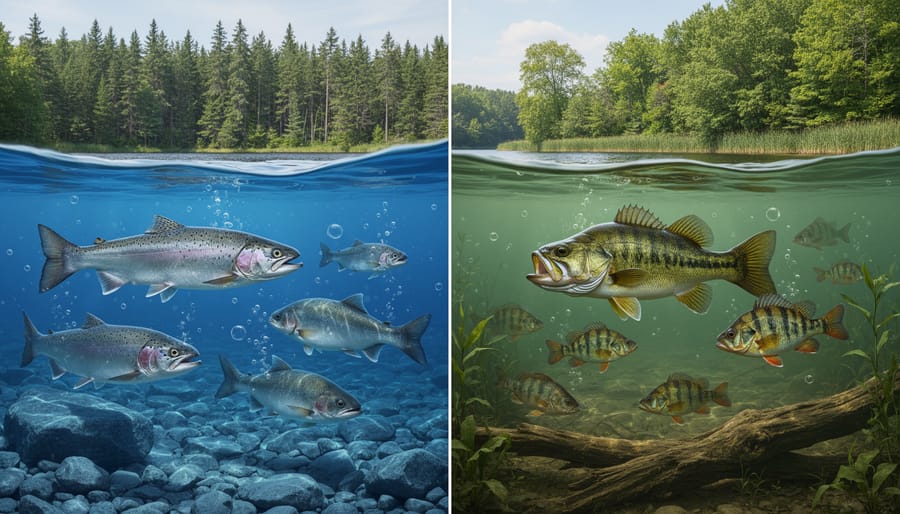
Ever dive into a lake in July and notice how the surface feels like bathwater, but your feet are freezing? That’s thermal stratification at work, and it’s one of the coolest abiotic factors shaping freshwater life. During summer, Ontario’s lakes develop distinct layers: warm water sits on top (the epilimnion), cold water sinks to the bottom (the hypolimnion), and a thin transition zone called the thermocline separates them. This isn’t just trivia for science class. It actually explains why fish behave differently throughout the season.
In spring and fall, lakes “turn over” as temperatures equalize and wind mixes everything up. This circulation brings oxygen down deep and nutrients up to the surface, creating excellent fishing conditions. But in summer, those layers stay put. Bass and pike often hang out near the thermocline where temperatures suit them perfectly, while cold-water species like lake trout retreat to the chilly depths. Scientists studying thermal mixing patterns in Lake Ontario have documented how these seasonal changes impact entire aquatic ecosystems. Next time you’re fishing or swimming, take note of these temperature zones. Understanding stratification might just help you land that trophy catch.
Dissolved Oxygen: The Invisible Ingredient Fish Can’t Live Without
The Winter Mystery: How Fish Survive Under Ice
Ever wondered what’s happening beneath that thick layer of ice when you’re drilling your fishing hole on a frozen Ontario lake? Here’s the fascinating truth: fish are down there living their best slow-motion lives, and it all comes down to oxygen levels.
When lakes freeze over, they become sealed ecosystems. The ice acts like a lid, preventing new oxygen from mixing in through wind and waves. You’d think this would spell disaster, right? But here’s nature’s clever trick: aquatic plants and algae beneath the ice continue photosynthesizing when sunlight penetrates through, producing precious oxygen bubbles that sustain fish populations throughout winter.
Here’s an insider tip for ice fishing enthusiasts: fish tend to congregate in areas where oxygen is most abundant. Look for spots near underwater vegetation or spring-fed areas where fresh, oxygen-rich water enters the lake. These are your honey holes!
One eco-friendly suggestion: clear snow from a small patch of ice near shore during your winter camping trips. This allows sunlight to reach underwater plants, helping them produce oxygen. Just remember, thick ice with heavy snow cover can stress fish populations by blocking light, so every little bit of exposed ice helps keep those lake trout thriving until spring breakup.
pH Levels: Why Some Waters Support More Life Than Others
Think of pH as the water’s personality – it determines which creatures feel at home and which ones can’t survive. The pH scale runs from 0 to 14, with 7 being neutral. Most Ontario freshwater fish and plants thrive in slightly acidic to neutral waters (pH 6.5-8), but venture across our province and you’ll discover how dramatically this factor varies.
I’ll never forget my first camping trip to Algonquin Park. The crystal-clear lake looked pristine, but our guide explained why we weren’t catching as many fish as expected – these Canadian Shield lakes typically have lower pH levels (around 5.5-6.5) due to granite bedrock that doesn’t buffer acidity. Compare this to the limestone-rich lakes in southern Ontario near places like Point Pelee, where pH levels sit comfortably between 7.5-8.5, supporting incredibly diverse aquatic communities.
| pH Range | What Thrives | Example Ontario Locations |
|---|---|---|
| 5.5-6.5 (Acidic) | Trout, smallmouth bass, limited plant diversity | Algonquin Park, Muskoka lakes |
| 6.5-7.5 (Neutral) | Pike, walleye, perch, abundant aquatic plants | Lake Simcoe, Kawartha Lakes |
| 7.5-8.5 (Alkaline) | Diverse fish species, rich plant life, mollusks | Lake Erie shoreline, southern wetlands |
Here’s the thing – pH affects everything from fish reproduction to how nutrients cycle through the ecosystem. When pH drops too low (below 5), many fish can’t reproduce successfully, and you’ll notice fewer mayflies and other aquatic insects.
Want to help protect these delicate pH balances? Here are some insider eco-friendly tips: Never dump soaps or cleaners near waterways when camping, even biodegradable ones. Stick to designated boat launches to prevent invasive species that can alter pH through their waste. When fishing, practice catch-and-release to maintain healthy populations that have adapted to their specific pH environment.
Light Penetration: The Sun’s Reach Beneath the Surface
Ever wonder why some Ontario lakes sparkle crystal-clear while others look like murky tea? It’s all about light penetration, and trust me, it makes a huge difference when you’re out exploring our waterways.
Sunlight is basically the battery pack for freshwater ecosystems. It only reaches so deep before fading to black, and that depth determines where plants can grow and where the food chain starts. In super clear lakes like those in the Canadian Shield, you might see aquatic plants thriving 20 feet down. But in nutrient-rich waters with algae blooms, light might barely reach past a few feet.
Here’s what’s cool for kayakers and snorkelers: you can actually see this in action. Next time you’re paddling around Frontenac Park, dip your paddle in and watch how quickly it disappears. Clear water means healthy Ontario’s wetland plant life can photosynthesize deeper, supporting more fish and wildlife.
Photography tip: shoot underwater scenes during midday when the sun’s directly overhead for maximum light penetration. The golden hours might be gorgeous above water, but below the surface, you need that strong vertical light to capture those vibrant greens and the dance of sunbeams through the water column.
Insider tip: bring a white disc (even a frisbee works) and lower it into the water until it disappears. That’s your Secchi depth, a simple measure of water clarity that scientists use. It’s a fun way to compare different lakes on your Ontario adventures.
Water Flow and Currents: The Force That Shapes River Life
Ever tried paddling upstream in a river? That burning in your arms tells you everything about the power of water flow—and how it shapes the creatures living below your kayak. While a calm lake might feel like nature’s swimming pool, a rushing river or stream is more like an underwater obstacle course where only the specially adapted survive.
Think about it this way: in still waters like Lake Simcoe or Algonquin’s peaceful interior lakes, you’ll find creatures built for slow, graceful movement—think largemouth bass cruising leisurely or dragonfly nymphs resting on underwater plants. But head to a fast-moving stretch like the Madawaska River, and you’re in trout territory. Brook trout and their cousins have streamlined bodies and powerful fins designed to hold steady in currents that would sweep away their lake-dwelling cousins.
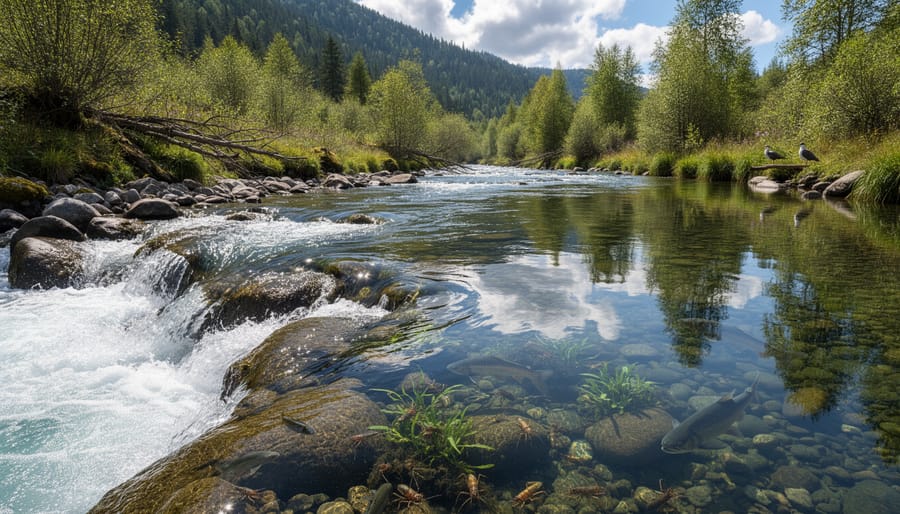
Current speed actually determines everything from fish behaviour to insect diversity. In rapids, you’ll spot blackfly larvae clinging to rocks with tiny hooks, and caddisfly nymphs building weighted cases to anchor themselves. Flip over to a quiet pool, and suddenly there are mayflies and damselflies that couldn’t handle rougher water.
Here’s an insider tip for paddlers: always scout rapids from shore first, especially on unfamiliar rivers. The Grand River’s sections near Elora Gorge offer fantastic opportunities to observe both habitat types safely—fast chutes followed by calm pools where you can catch your breath and watch different species in action. For beginners wanting to experience varied flows safely, the Magnetawan River provides gentle Class I rapids perfect for learning how current affects both your paddling and the ecosystem around you.
How These Factors Work Together in Ontario’s Diverse Waters
Picture this: you’re canoeing across a pristine Canadian Shield lake near Frontenac Park, where the water is so clear you can see down fifteen feet. That transparency comes from low nutrient levels in the ancient granite bedrock—meaning fewer dissolved substances, cooler temperatures thanks to depth, and slightly acidic pH from surrounding pines. The rocky bottom provides minimal sediment, so light penetrates deeply. These conditions create the perfect home for lake trout and smallmouth bass, species that thrive in cold, oxygen-rich waters.
Now imagine paddling through a southern Ontario river on a warm July afternoon. The water feels noticeably warmer and looks cloudier—completely different! Here, agricultural runoff increases dissolved nutrients, the shallower flow warms quickly under the sun, and sediment from surrounding farmland reduces light penetration. The pH tends toward neutral, supporting a totally different cast of characters like northern pike and yellow perch.
Finally, explore one of Ontario’s magical freshwater wetlands in spring. These are nature’s nurseries! The shallow water warms rapidly, creating soup-thick conditions rich with dissolved oxygen from abundant plant life. Sediment settles in these calm waters, while decaying vegetation creates slightly acidic conditions. This unique combination of all five factors makes wetlands incredibly productive—you’ll spot countless minnows, frogs, and wading birds.
Here’s an insider tip: visit the same location across different seasons to witness how temperature and light dramatically shift these ecosystem interactions. Bring a simple pH testing kit on your next camping trip—it’s a game-changer for understanding why certain fish bite better in specific spots!
Now that you understand how temperature, dissolved oxygen, pH, light penetration, and water flow shape Ontario’s freshwater ecosystems, you’re ready to experience these forces firsthand! Next time you’re at Algonquin Park’s crystal-clear lakes or exploring the rocky shores of Lake Superior Provincial Park, take a moment to observe these factors in action. Notice how water temperature changes at different depths, watch sunlight dance through shallow bays, or feel the current’s strength where rivers meet lakes.
I encourage you to practice simple eco-friendly habits during your adventures – avoid using soap near water sources, stick to designated paths to prevent erosion, and never introduce foreign substances that could disrupt pH or oxygen levels. Killarney Provincial Park offers stunning opportunities to witness light penetration through its famously clear waters, while the rushing rivers of Quetico Provincial Park showcase dramatic water flow dynamics.
These five abiotic factors aren’t just scientific concepts – they’re the invisible architects creating the aquatic wonderland you love exploring. By understanding and respecting these delicate balances, you become a steward of Ontario’s incredible freshwater diversity. So grab your paddle, pack your curiosity, and discover the living science waiting in every lake, river, and stream across this beautiful province!







+ There are no comments
Add yours