
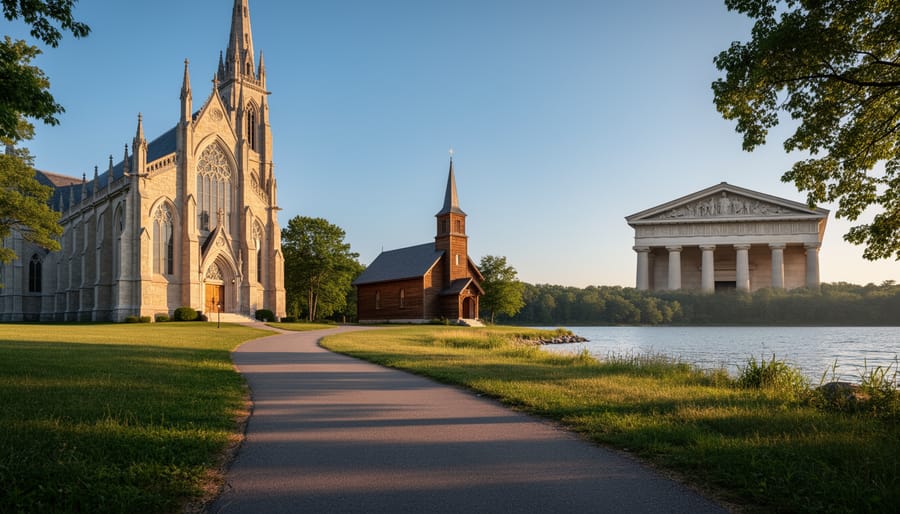
Ontario’s religious heritage tells the story of Canada through its most sacred spaces. From the Gothic spires of Ottawa’s Parliament Hill chapels to the humble stone churches that dot the countryside, these sites offer travelers a rich journey through centuries of faith, architecture, and cultural identity. Whether you’re mapping out a heritage road trip, searching for photography-worthy landmarks, or simply curious about the spiritual foundations that shaped the province, Ontario’s 12 most significant religious sites blend historical grandeur with accessible outdoor exploration.
These aren’t dusty museums behind velvet ropes. Most welcome visitors year-round, and many sit within walking distance of hiking trails, conservation areas, and waterfront parks, making them natural stops on any Ontario adventure. You’ll find soaring cathedrals in urban centers where you can combine cultural touring with city exploration, and quiet rural sanctuaries surrounded by forests and farmland perfect for contemplative walks.
The province’s religious landscape reflects waves of settlement and immigration: early French Catholic missions, British Anglican parishes, diverse denominations that arrived with European immigration, and more recently, temples, mosques, and gurdwaras representing Ontario’s growing multicultural fabric. Each building carries layers of stories about the communities who built them, the artisans who decorated them, and the social movements they sheltered.
This guide ranks Ontario’s most compelling religious heritage sites based on architectural significance, historical impact, visitor accessibility, and integration with outdoor activities. You’ll get insider tips on the best times to visit, what to look for in each building’s design, and how to respectfully explore these active places of worship while honoring their sacred purpose.
How We Chose Ontario’s Top Religious Heritage Sites
Selecting Ontario’s most significant religious heritage sites required balancing multiple factors to serve both spiritual pilgrims and curious travelers. These sites represent centuries of faith traditions that shaped Ontario’s development alongside historic trade routes and settlement patterns. Our selection criteria included:
- Architectural significance and distinctive design that reflects broader religious art traditions
- Historical impact on Ontario’s spiritual and cultural development
- Year-round accessibility for visitors of all backgrounds
- Quality of preservation and ongoing restoration efforts
- Representation of Ontario’s diverse religious communities across denominations and traditions
- Proximity to provincial parks, camping areas, and outdoor recreation opportunities
These sites matter because they tell stories that resonate beyond faith communities. For secular tourists, they offer windows into the spiritual foundations that influenced Ontario’s art, architecture, and social movements. For outdoor enthusiasts planning park visits or camping trips, they provide cultural depth and contemplative spaces that complement wilderness experiences. Each location chosen welcomes respectful visitors regardless of personal beliefs while maintaining its sacred character for active congregations.
1. Martyrs’ Shrine, Midland, Ontario’s Most Visited Pilgrimage Site
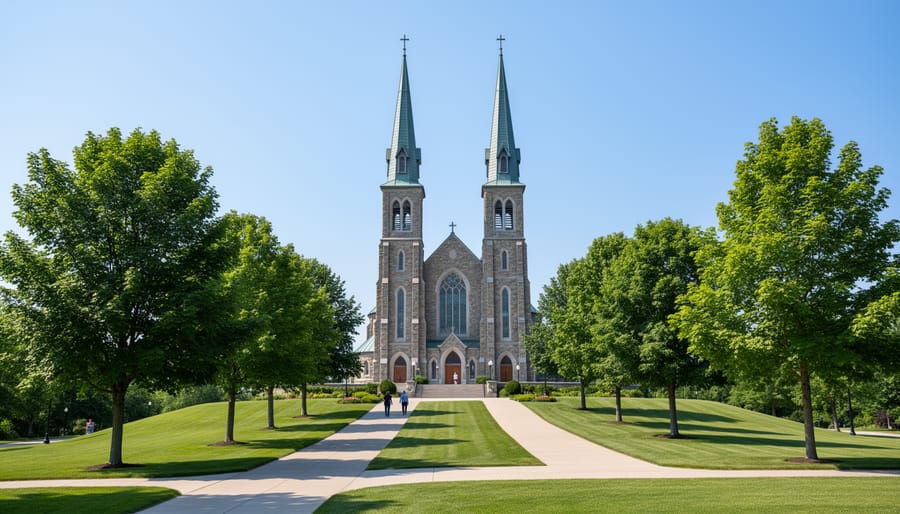
The twin spires of Canada’s largest Catholic shrine rise above the Midland landscape like beacons guiding travelers to one of Ontario’s most spiritually and historically significant destinations. Built in 1926 to honor eight Jesuit missionaries martyred in the 1640s, the Martyrs’ Shrine attracts over 100,000 visitors annually who come for both pilgrimage and cultural exploration.
The architecture alone justifies the visit. The shrine’s stone facade, inspired by Gothic Revival elements, frames an interior filled with stained glass windows depicting the missionaries’ stories. Outside, 30 acres of manicured grounds offer peaceful walking trails past bronze Stations of the Cross, prayer grottos, and gardens that bloom spectacularly from May through October.
What sets this heritage site apart for outdoor enthusiasts is its living history connection to the surrounding landscape. The shrine sits near the original Jesuit mission site of Sainte-Marie among the Hurons, creating a historical corridor that deepens any visit. The grounds themselves encourage quiet reflection while walking wooded paths that connect past and present.
Visit weekday mornings in September or early October for smaller crowds and stunning fall colors. The shrine is fully wheelchair accessible with paved paths throughout. Combine your heritage tour with camping at Awenda Provincial Park, just 15 minutes north, where hiking trails through old-growth forests and Georgian Bay beaches extend your outdoor adventure.
2. Sainte-Marie among the Hurons, Midland, Living History Meets Sacred Ground
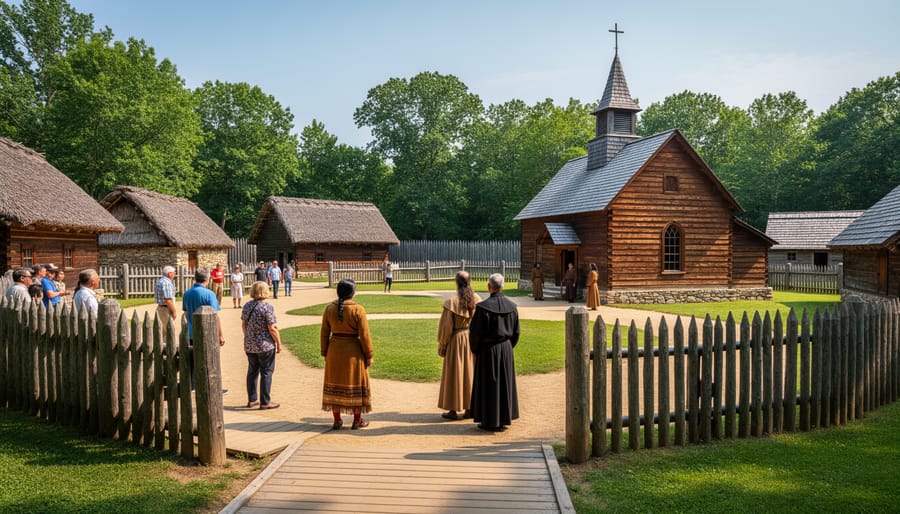
Walking through Sainte-Marie among the Hurons feels like stepping back to 1639. This reconstructed Jesuit mission on the banks of the Wye River near Midland stands where French missionaries first established their North American headquarters among the Wendat people. Unlike a static museum, the site comes alive through costumed interpreters demonstrating 17th-century blacksmithing, carpentry, and daily mission life within authentic timber palisades.
The spiritual weight here runs deep. This ground witnessed both cultural exchange and tragedy, the site was abandoned and burned in 1649 after Iroquois attacks killed several Jesuits who would later be canonized as martyrs. Today’s reconstruction honors both the French religious mission and the Indigenous communities whose lives intertwined with these newcomers. The on-site museum provides crucial context about Wendat culture and the complex dynamics of colonial contact.
Families and scout groups find exceptional value here. The 15-acre outdoor site encourages exploration through gardens, workshops, and a wigwam village representing Wendat life. Kids engage with hands-on history while absorbing lessons about early Canadian settlement and Indigenous resilience. Spring through fall offers ideal weather for the outdoor experience, though winter programs add atmospheric depth.
Plan two to three hours for a thorough visit. The site sits minutes from camping at Awenda Provincial Park, making it perfect for combining cultural education with your outdoor itinerary.
3. Notre-Dame Cathedral Basilica, Ottawa, Gothic Grandeur in the Capital
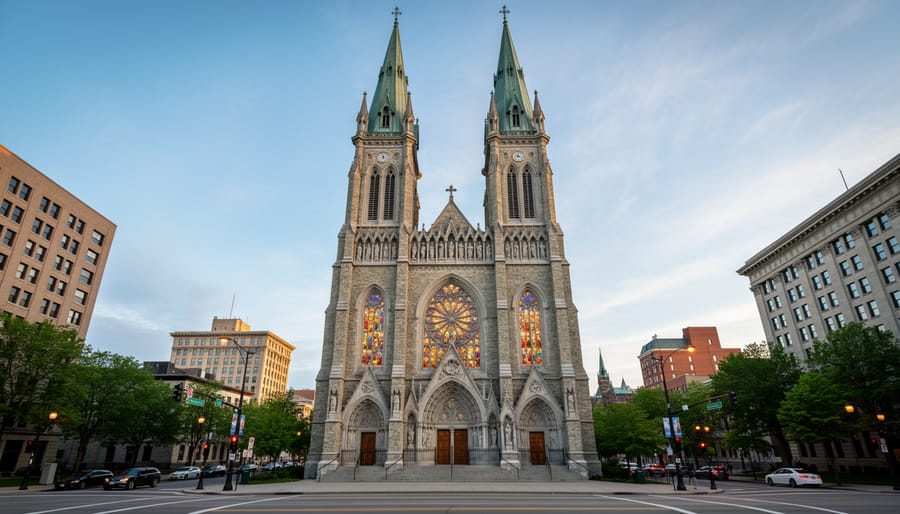
Ottawa’s oldest and largest church stands as a masterpiece of Gothic Revival architecture, with twin spires rising 63 metres above Sussex Drive. The basilica’s interior dazzles visitors with hundreds of hand-carved wooden sculptures, mahogany columns, and stained glass windows that bathe the sanctuary in jewel-toned light. The intricate ceiling features deep blue paint adorned with gold stars, creating an atmosphere that feels both grand and intimate.
Admission is free, though donations are welcomed to support ongoing preservation. The basilica opens daily for visitors outside of service times, with guided tours available in summer months that reveal the stories behind the artwork and architecture. Photography is permitted, and the afternoon light streaming through the stained glass creates particularly stunning shots.
Located steps from the Rideau Canal and ByWard Market, the basilica fits perfectly into a day exploring downtown Ottawa. After your visit, walk five minutes to the canal pathways for cycling or strolling, or explore nearby Major’s Hill Park for river views and picnic spots. Winter visitors can combine their basilica tour with skating on the canal, while summer offers easy access to the pedestrian-friendly market district. The location makes it simple to blend cultural heritage with outdoor activity in Canada’s capital.
4. St. James Cathedral, Toronto, Anglican Heritage in the City Core
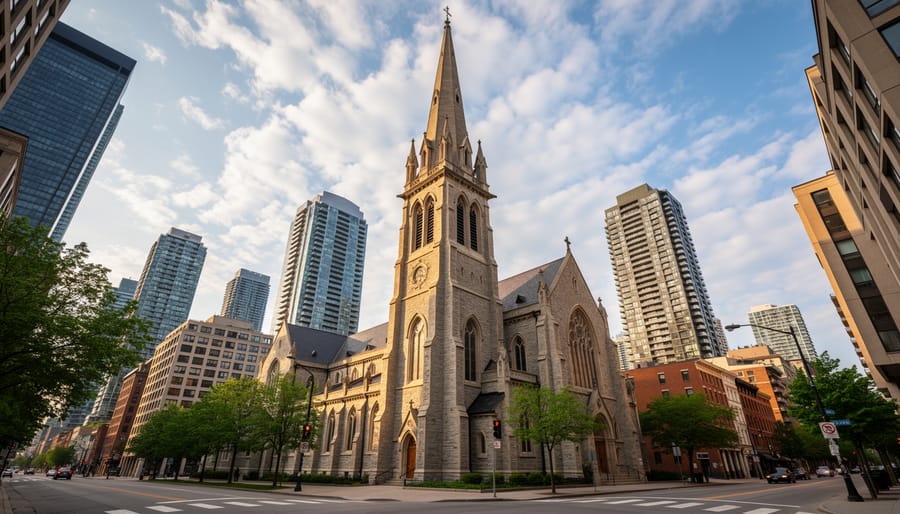
St. James Cathedral rises above Toronto’s downtown core with a commanding presence that’s drawn visitors since 1853. Its soaring Gothic Revival spire, the tallest church spire in Canada at over 300 feet, serves as a striking landmark visible from the harbour and surrounding streets. The cathedral marks the site of Toronto’s oldest Anglican congregation, dating back to 1797, and its current structure showcases remarkable craftsmanship with hand-carved stone details, stunning stained glass windows, and vaulted ceilings that create breathtaking acoustics.
What makes St. James particularly appealing for outdoor enthusiasts exploring Toronto is its prime location steps from the waterfront. After touring the cathedral’s interior and historic cemetery, you can easily walk to the Martin Goodman Trail for lakefront cycling or stroll through St. James Park, a peaceful green space perfect for picnics with cathedral views. Free guided tours run regularly, and music lovers shouldn’t miss the renowned organ recitals and choir performances that fill the space with sound.
Visit on a weekday morning for quieter exploration, or time your trip for one of the seasonal concerts that showcase both the building’s beauty and its living community role.
5. Sharon Temple, East Gwillimbury, A Uniquely Canadian Sacred Space
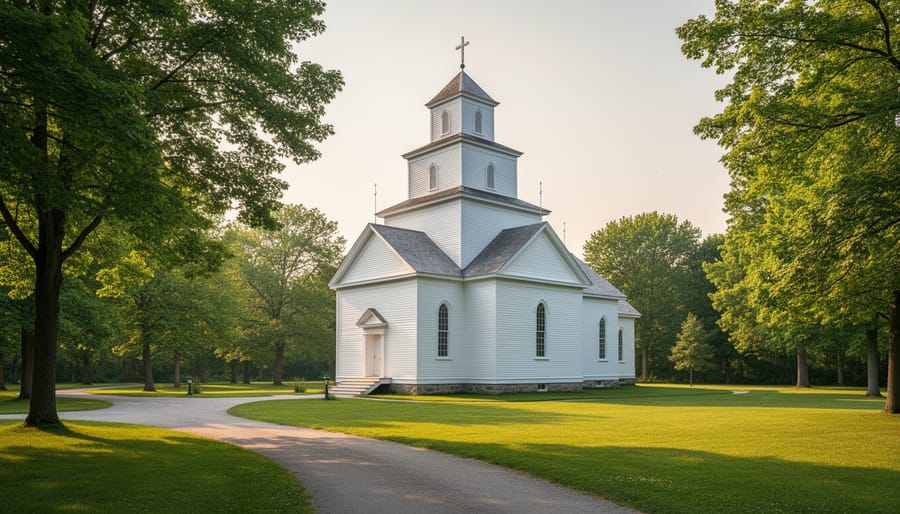
Standing just north of Toronto in the small community of Sharon, this pristine white temple looks like nothing else you’ll encounter in Ontario’s religious landscape. Built between 1825 and 1832 by the Children of Peace, a breakaway Quaker group, the Sharon Temple embodies radical equality in its very structure. The square building rises in three tiers, each with four doors on every side, symbolizing that all people are welcome from any direction and that no entrance holds more importance than another.
Step inside and you’ll find no pulpit, no elevated platform, just open space where everyone stood on equal footing during worship. The original organ, one of Canada’s oldest, still sits at ground level. Natural light floods through windows on all levels, creating an almost ethereal atmosphere. The surrounding Heritage Gardens offer peaceful walking paths perfect for reflection, while seasonal events like lantern tours and heritage fairs bring the site’s fascinating history to life.
For outdoor enthusiasts, Sharon Temple pairs beautifully with nearby Holland Marsh conservation areas. The Bradford Marsh trails lie minutes away, offering birdwatching and wetland exploration. Pack a picnic for the temple grounds, it’s a genuinely tranquil spot where you can ponder Ontario’s lesser-known religious movements while planning your next camping adventure up the road at Sibbald Point Provincial Park.
6. Basilica of Our Lady Immaculate, Guelph, Limestone Masterpiece
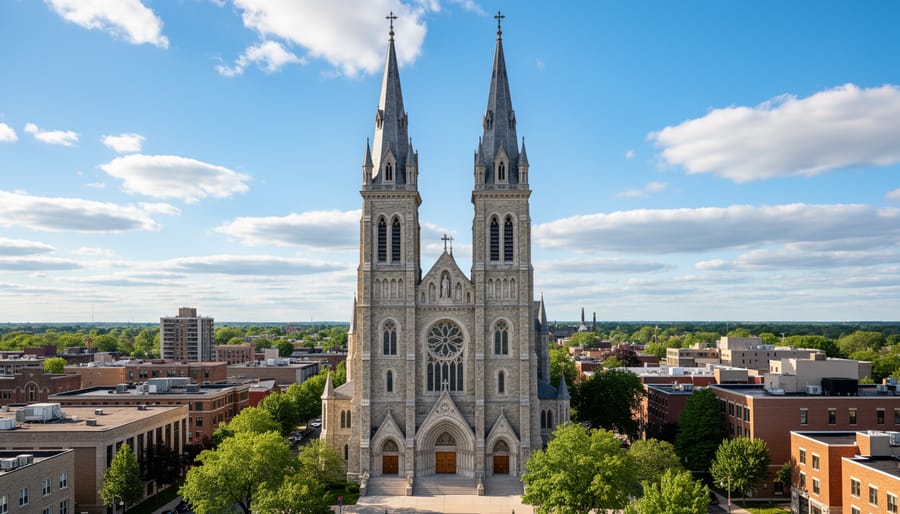
Standing 170 feet tall, the Basilica of Our Lady Immaculate dominates Guelph’s skyline with its twin spires of locally quarried limestone. Built between 1876 and 1888, this Italian Renaissance masterpiece by architect Joseph Connolly rivals Europe’s finest churches while remaining distinctly Ontario in its materials and setting.
Step inside to discover soaring vaulted ceilings, intricate frescoes, and 64 stained glass windows that cast colourful light across marble altars. The acoustics make any musical event memorable. Guelph’s Catholic community built this basilica with remarkable craftsmanship that still impresses visitors seeking architectural beauty alongside Ontario’s military heritage sites like the Battle of the Thames location.
The basilica offers free tours on weekdays and welcomes respectful visitors during non-service hours. Its downtown location puts you within walking distance of the Speed River Trail system, perfect for combining cultural exploration with riverside hiking. Summer concerts in the adjacent square create a vibrant atmosphere.
For campers staying at nearby Guelph Lake Conservation Area or Starkey Hill Interpretive Centre, the basilica makes an impressive cultural stop before heading back to the trails.
7. Metropolitan United Church, Toronto, Victorian Elegance on Queen Street
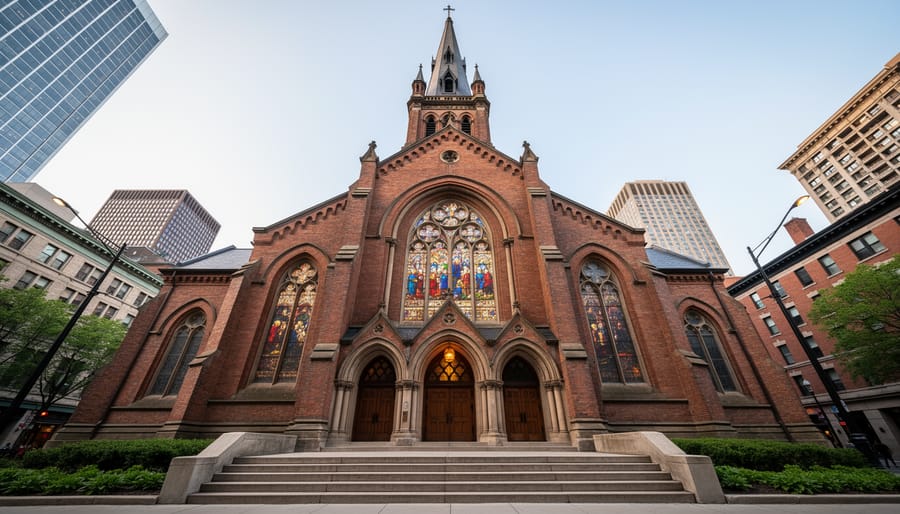
Metropolitan United Church stands as one of Toronto’s most impressive examples of Romanesque Revival architecture, its commanding presence on Queen Street East anchoring the city’s historic Corktown neighbourhood since 1872. The church’s robust sandstone exterior and massive bell tower create an imposing silhouette that contrasts beautifully with the surrounding Victorian streetscape.
Step inside and you’re greeted by soaring vaulted ceilings, intricate woodwork, and some of Toronto’s finest Victorian-era stained glass windows. The craftsmanship reflects the prosperity and ambition of Toronto’s 19th-century Methodist community, which built this cathedral-sized church to serve a working-class neighbourhood. The acoustic excellence makes it a popular venue for concerts and community events throughout the year.
Heritage tours run regularly during summer months, offering insights into both the building’s architectural significance and its ongoing role as an active United Church congregation with robust social justice programming. The downtown location makes it easy to combine a visit with walks through Corktown Common, a modern riverside park just blocks away that offers green space, playgrounds, and trails leading to the Don Valley system. Free admission makes Metropolitan United an accessible cultural stop for budget-conscious travelers exploring Toronto’s east end.
8. St. Paul’s Anglican Church, Kingston, Loyalist Heritage and Royal Connection
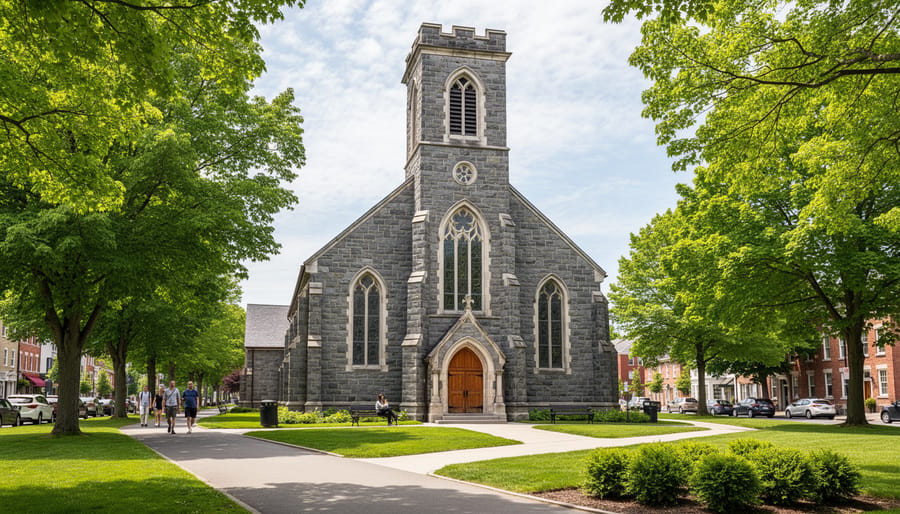
St. Paul’s Anglican Church stands as Kingston’s oldest congregation, established in 1785 when Loyalist refugees arrived following the American Revolution. The current stone building, completed in 1845, replaced an earlier wooden structure and showcases elegant Gothic Revival architecture with its pointed arches, buttressed walls, and square tower rising above the historic downtown.
The church’s most distinctive feature is the Royal Pew, reserved for British monarchs and their representatives, a tangible connection to Ontario’s colonial past. The wooden box pew, draped in crimson velvet, has hosted visiting royalty and governors general throughout Canadian history. Inside, you’ll find memorial plaques honoring Loyalist families, stained glass windows depicting biblical scenes, and hand-carved woodwork that survived nearly two centuries.
St. Paul’s sits two blocks from Kingston’s waterfront, making it easy to combine a church visit with walks along the Confederation Basin or bike rides on the K&P Trail. The surrounding Heritage District offers additional historical sites within comfortable walking distance. For overnight stays, Lake Ontario Park campground is fifteen minutes away, providing 72 sites with full amenities and direct waterfront access. The church welcomes respectful visitors during daylight hours except during services.
9. St. Andrew’s Presbyterian Church, Niagara-on-the-Lake, Simplicity Meets History
St. Andrew’s Presbyterian Church stands as one of Niagara-on-the-Lake’s most photographed landmarks, its crisp white clapboard exterior and graceful steeple embodying early 19th-century Upper Canadian church architecture. Built in 1831 to replace an earlier structure burned during the War of 1812, the church represents the determination of Loyalist settlers to rebuild their community after wartime devastation.
The interior reflects Presbyterian ideals of simplicity and clarity, with original box pews, tall windows flooding the space with natural light, and minimal ornamentation that lets the craftsmanship speak. Unlike the elaborate Catholic and Anglican structures elsewhere in Ontario, St. Andrew’s beauty lies in its restraint and honest materials.
The adjoining cemetery contains graves dating to the early 1800s, offering a peaceful walk among heritage markers and mature trees. Many Loyalist families and prominent early citizens rest here, making it a valuable stop for history buffs exploring Ontario’s historic sites.
Located steps from Niagara-on-the-Lake’s charming main street, the church pairs perfectly with visits to Fort George National Historic Site, Niagara River recreation trails, and nearby wineries. The town’s tree-lined streets and lake proximity make cycling between heritage attractions a pleasant afternoon activity for families and outdoor enthusiasts.
10. Church of the Holy Trinity, Toronto, Hidden Gem in the Downtown Core
Tucked behind the bustle of the Eaton Centre on Toronto’s busiest shopping street, Church of the Holy Trinity offers something rare in the downtown core: genuine peace. Most visitors walk right past without noticing this 1847 Gothic Revival gem, which makes discovering it feel like stumbling upon a secret garden in the heart of the city.
The church sits in Trinity Square, a surprisingly green oasis complete with mature trees, benches, and walking paths. Unlike many heritage churches that charge admission, Holy Trinity remains free and welcomes drop-in visitors throughout the week. The interior features original wooden pews, intimate stained glass windows, and an acoustic sweetness that makes regular concerts here unforgettable.
What sets this site apart for outdoor enthusiasts is its integration with urban nature. The churchyard provides a quiet lunch spot after morning hikes in nearby Riverdale Park or before exploring the waterfront trail system. Scout groups and families appreciate the contrast, stepping from Toronto’s commercial heart into this reflective space demonstrates how heritage sites create breathing room in busy landscapes.
The church hosts community programming that aligns with eco-conscious values, including environmental forums and free public events. Visit midweek mornings for the quietest experience, or time your stop during one of their lunchtime concerts to combine cultural heritage with live music.
11. St. Paul’s Basilica, Toronto, Byzantine Beauty in the East End
St. Paul’s Basilica rises like a golden jewel in Toronto’s east end, bringing Byzantine architectural splendor to Ontario in a style you’d expect to find in Istanbul or Athens. Completed in 1889, this Catholic church dazzles visitors with its massive copper dome (originally gilded, now weathered to distinctive green-blue), intricate mosaics depicting biblical scenes, and an interior adorned with ornate iconography that feels worlds away from Ontario’s typical Gothic Revival churches. The basilica’s unique Eastern Christian aesthetic makes it one of the province’s most photographically striking religious sites, the dome alone is worth the visit.
Located on Power Street in Cabbagetown, St. Paul’s sits within walking distance of the Don Valley trail system, where you can combine your cultural visit with riverside hiking or cycling. The church offers free admission during daytime hours, though donations are appreciated. Unlike some heritage sites requiring advance planning, similar to visiting War of 1812 sites St. Paul’s welcomes drop-in visitors most days. Check service schedules if you prefer a quiet viewing experience, and bring your camera for the mosaic details.
12. Quaker Meeting House, Newmarket, Simple Elegance and Peace
The Quaker Meeting House stands as a quiet testament to Ontario’s often-overlooked Quaker heritage, offering visitors a stark contrast to the ornate grandeur of other religious sites. Built in 1810, this modest white clapboard structure embodies the Quaker principles of simplicity and equality, no elaborate decoration, no raised pulpit, just plain wooden benches arranged in a square to symbolize that all worshippers are equal before God.
What makes this site special for outdoor enthusiasts is the profound sense of peace that permeates the grounds. The surrounding heritage landscape includes mature trees, gentle walking paths, and open green space perfect for contemplation after a morning hike or bike ride. It’s an ideal stop for families and scout groups learning about Ontario’s diverse religious history, particularly those who appreciate minimalist beauty over architectural drama.
The meeting house sits near the Tom Taylor Trail, making it easy to integrate into a day of exploring Newmarket’s outdoor offerings. Visit on a quiet weekday afternoon for the full meditative experience, this is a place that rewards slow, thoughtful exploration rather than rushed tourism.
Planning Your Religious Heritage Tour Across Ontario
Planning a heritage tour works best when you cluster sites geographically and pair them with nearby outdoor activities. The Midland area anchors a natural multi-day itinerary: visit Martyrs’ Shrine and Sainte-Marie among the Hurons in the morning, then camp at Awenda Provincial Park where you can hike shoreline trails and swim in Georgian Bay. Ottawa pairs Notre-Dame Cathedral Basilica with waterfront cycling along the Rideau Canal, while Kingston lets you combine St. Paul’s Anglican Church with Fort Henry explorations and the Thousand Islands. For adventurous families and scout groups, weave religious heritage into broader historical touring, the same trip that includes the Battle of Detroit site can incorporate Sharon Temple or churches along the St. Lawrence route.
Spring and fall offer ideal touring conditions with fewer crowds, vibrant landscapes, and comfortable temperatures for combining indoor heritage visits with outdoor exploration. Summer brings extended hours at many sites but also peak tourist traffic; winter limits access to some locations but creates striking photo opportunities, especially at limestone buildings dusted with snow. Pack reusable water bottles and snacks to minimize waste, respect quiet zones around sacred spaces, and leave no trace on church grounds. Most sites welcome families and educational groups, call ahead to arrange group tours or ask about scavenger hunt materials that engage younger visitors. Combining spiritual history with nature immersion creates richer experiences than either pursuit alone.
What Makes These Sites Special for Outdoor Enthusiasts
Religious heritage sites offer outdoor enthusiasts something most trailheads and campgrounds can’t: centuries of human story woven directly into Ontario’s landscape. These buildings anchor your understanding of why certain settlements sprang up along particular waterways, why trails follow the routes they do, and how Indigenous territories transformed during colonization. When you’re planning a weekend at Awenda Provincial Park, adding Martyrs’ Shrine or Sainte-Marie among the Hurons turns a simple camping trip into a richer exploration of the land’s complete history.
The practical advantages matter too. Most heritage sites occupy beautifully maintained grounds that function as peaceful green spaces, perfect for a contemplative morning walk before hitting the trails or a quiet picnic spot when the weather turns. Sharon Temple’s gardens and Notre-Dame’s riverside location in Ottawa both offer respite and beauty without requiring strenuous activity. Many sites also provide clean facilities, parking, and visitor amenities that make them useful stopping points during longer touring routes.
Respect the sacred nature of these spaces with low-impact practices: stay on designated paths, keep voices moderate, and pack out any waste. If you’re visiting during active worship times, observe quietly from designated areas. These simple courtesies ensure these treasures remain welcoming to all visitors while honoring the communities that maintain them.
Frequently Asked Questions About Visiting Ontario’s Religious Heritage Sites
Visiting Ontario’s religious heritage sites raises practical questions for first-time visitors, especially those more accustomed to hiking trails than historic sanctuaries. These sacred spaces welcome respectful visitors of all backgrounds, but understanding a few guidelines makes the experience more rewarding for everyone.
Are these sites open to non-religious visitors?
Absolutely. All the sites featured welcome visitors regardless of religious affiliation, though active worship spaces appreciate respectful behavior during services. Many sites offer dedicated tour times for general visitors.
Do I need to pay admission fees?
It varies by site. Living history museums like Sainte-Marie among the Hurons charge admission, while many active churches request donations but don’t require them. Several sites offer free entry with paid guided tour options.
Can I take photos inside these heritage buildings?
Most sites permit photography for personal use, but flash photography and tripods may be restricted, especially during services. Always check posted rules or ask staff before photographing, and never disturb worshippers or ceremonies.
What’s the best season to visit these sites?
Late spring through early fall offers the most reliable access and pleasant weather for combining site visits with outdoor activities. Summer brings extended hours at many locations, while winter visits offer peaceful solitude but may have limited schedules.
Most heritage sites accommodate families beautifully, with Martyrs’ Shrine and Sainte-Marie among the Hurons particularly well-suited for children thanks to their expansive grounds and interactive elements. Scout groups find educational value in the historical narratives these sites preserve.
Showing respect in active worship spaces means simple courtesies: dress modestly, speak quietly, silence your phone, and avoid touring during services unless you’re participating. If you’re unsure about protocol, staff members are usually happy to guide you. Many sites post visitor guidelines at entrances.
Guided tours enhance your understanding significantly. Several locations offer scheduled tours led by knowledgeable volunteers who share stories you’d miss on a self-guided visit. The investment of time pays off in richer historical context and architectural details you might overlook.
Ontario’s religious heritage sites offer something rare: places where history, architecture, and nature converge in spaces designed for reflection and beauty. Whether you’re planning a weekend camping trip to Georgian Bay, exploring Toronto’s urban trails, or scouting locations across the province, these twelve sites provide meaningful stops that deepen your connection to Ontario’s diverse cultural landscape.
The best part? Most of these treasures sit within easy reach of provincial parks, conservation areas, and outdoor recreation hubs. A morning hike can naturally lead to an afternoon exploring centuries-old craftsmanship and stories that shaped this land. You don’t need to be religious to appreciate the artistry, peace, and historical significance these spaces offer every visitor.
Remember to tread lightly. Respect active worship schedules, follow photography guidelines, and leave these sites as pristine as you found them. Pack out what you pack in, stay on designated paths, and consider supporting preservation efforts through donations or volunteer opportunities.
These sacred spaces have stood for generations. With thoughtful visiting practices, they’ll inspire travelers and outdoor enthusiasts for generations to come. Your next Ontario adventure might just include a moment of unexpected wonder inside limestone walls or beneath soaring spires.







+ There are no comments
Add yours