
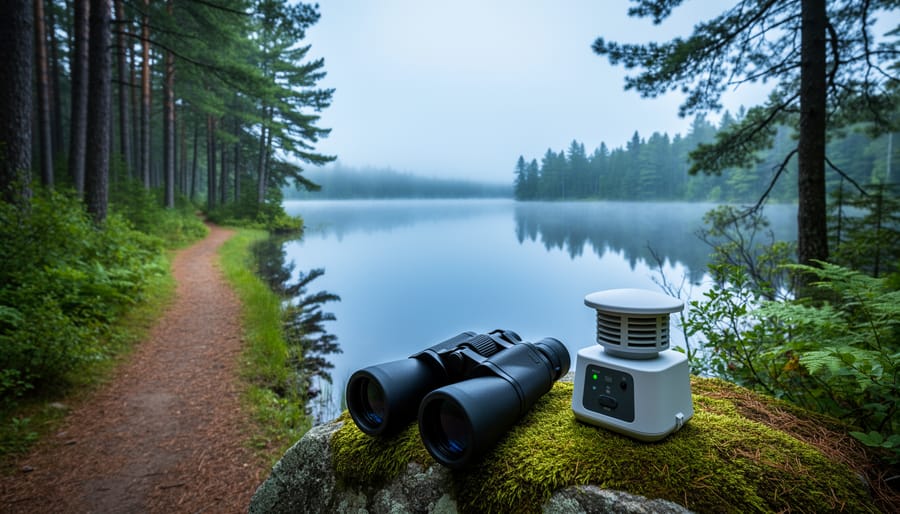
AI is a set of computer technologies that can learn from data, recognize patterns, and make decisions, and right now its relationship with the environment cuts both ways: it’s helping scientists protect nature while simultaneously consuming massive amounts of energy.
If you’ve been reading about artificial intelligence lately, you’ve probably seen wildly different claims. Some articles celebrate AI as the ultimate conservation tool. Others warn that training a single AI model can produce as much carbon as five cars over their entire lifetimes. Both are true, which makes the “is AI good or bad?” question genuinely complicated.
Here’s what matters for those of us who care about Ontario’s parks, trails, and wild spaces: AI is already at work in environmental monitoring across the province, tracking everything from invasive species to water quality. The technology helps park managers spot problems faster and protect ecosystems more effectively than traditional methods. At the same time, the energy required to run these systems has real environmental costs that often stay hidden behind the scenes.
This article breaks down how AI actually works in environmental applications, what types of AI tools are being used in natural spaces you might visit, and whether the technology’s benefits outweigh its carbon footprint. You’ll get a clear picture of the trade-offs, along with practical insights into how AI shapes the outdoor experiences and conservation efforts happening right now across Ontario. No hype, no doom-and-gloom, just the full story so you can form your own informed opinion.
What AI-Driven Environmental Assessment Actually Means
Think of AI-driven environmental assessment tools as having thousands of tireless park rangers working around the clock, each equipped with perfect memory and the ability to spot patterns invisible to the human eye. Instead of people physically checking every trail for erosion or testing water samples by hand at each lake, artificial intelligence processes vast amounts of data, from satellite images to sensor readings to wildlife camera footage, to understand how our footsteps, campsites, and activities affect the natural spaces we love.
Here’s what makes these tools different from traditional environmental monitoring: they can analyze years of data in hours, predict problems before they become visible, and track changes across entire ecosystems simultaneously. When you hike the Highland Trail in Algonquin Park, AI systems might be tracking how foot traffic patterns correlate with soil erosion rates, comparing this year’s trail conditions to a decade of historical data, and flagging spots that need maintenance before they become muddy gullies. At your favorite swimming beach, sensors feed water quality readings into AI systems that predict algae blooms days before they appear, protecting both swimmers and aquatic life.
- Environmental Impact Assessment
- The process of evaluating how human activities, like camping, hiking, or park development, affect natural ecosystems, traditionally done through manual surveys and reports. AI accelerates and expands this process by continuously monitoring conditions rather than relying on periodic human checks.
- Machine Learning in Conservation
- Computer systems that improve their environmental predictions over time by analyzing patterns in data, like learning which trail conditions lead to erosion or which visitor patterns disturb wildlife. The more data they process, the better they get at spotting threats to the ecosystems campers depend on.
- Predictive Modeling
- Using current and historical data to forecast future environmental changes, such as predicting how increased camping traffic will affect a watershed or where invasive species might spread next. This allows park managers to prevent problems rather than just react to them.
- Remote Sensing
- Gathering environmental information from a distance using satellites, drones, or stationary sensors rather than requiring people to physically visit every location. This technology monitors forest health, water levels, and wildlife movements across vast areas that would be impossible to cover on foot.
The real power comes from connecting these different data streams. Wildlife cameras in Killarney Provincial Park don’t just snap photos, AI analyzes those images to identify species, count populations, and track movement patterns through habitats that overlap with popular hiking routes. This information helps park managers balance our access to nature with protecting the animals that call these spaces home, ensuring that the moose you hope to photograph from a safe distance will still be there for your kids to see years from now.
How AI Environmental Tools Work in the Real World
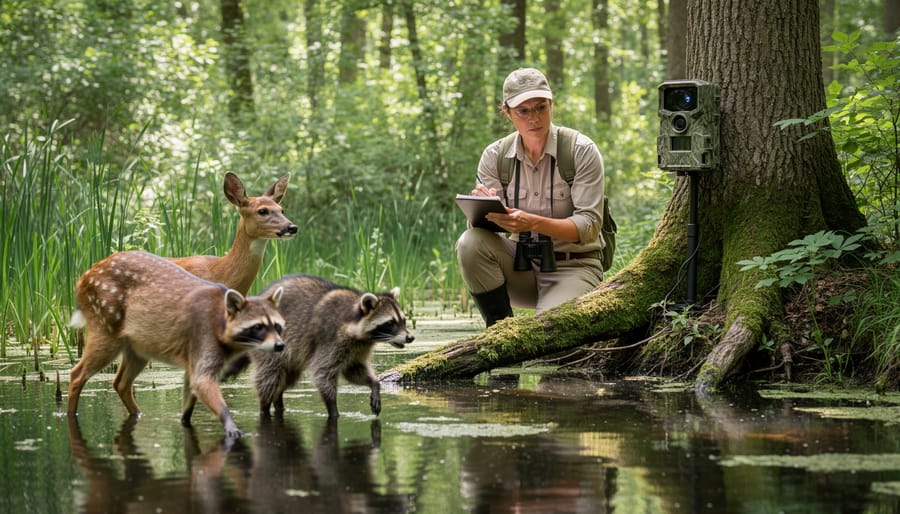
Think of AI environmental tools as having three connected stages, each building on the last to give park managers the insights they need.
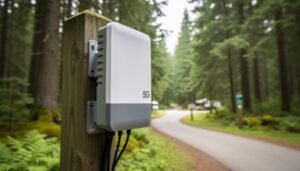
First comes data gathering. Throughout Ontario’s parks, networks of smart sensors collect information around the clock. These might be stream gauges measuring water flow, acoustic monitors recording bird calls, or soil sensors tracking moisture levels. Satellites add another layer, capturing images that show vegetation health across thousands of acres. Drones fitted with cameras fly over sensitive areas, documenting erosion patterns or counting wildlife. Trail cameras snap photos of passing animals. Even visitor apps contribute data when hikers report trail conditions or wildlife sightings. All this information flows into central databases, creating a constantly updating picture of what’s happening on the ground.
Next, AI systems get to work analyzing this flood of data. Machine learning algorithms spot patterns humans might miss. In Algonquin Park, for example, AI could process years of trail camera footage to map exactly when and where moose cross popular hiking routes, helping rangers plan safer visitor experiences. The software might compare satellite images from different seasons to predict where heavy foot traffic will cause the most erosion damage next summer. It can cross-reference weather patterns, visitor numbers, and ecosystem health markers to identify emerging problems before they become serious.
Finally, the systems generate actionable recommendations. Rather than drowning park staff in raw data, AI tools deliver focused insights: “Close this section of trail for two weeks to prevent permanent damage” or “Increase ranger presence at this lake during evening hours to protect nesting loons.” The technology handles the number-crunching, freeing humans to make the final calls and connect with visitors.
Different Flavors of Environmental AI Tools
AI environmental assessment tools come in several distinct varieties, each tackling different aspects of ecosystem health and human impact. Think of them as a toolkit where each instrument has its own specialty, some watch wildlife, others analyze water, and still more predict how our footsteps affect the trails we love.
The main types you’ll encounter in Ontario’s outdoor spaces include:
- Wildlife population trackers that monitor animal movements and breeding patterns using camera traps and Bio-GPS trackers
- Water quality monitoring systems that continuously test lake and stream conditions for algae blooms, pollutants, and temperature changes
- Vegetation and forest health analyzers using satellite imagery to spot disease outbreaks, invasive species spread, and deforestation
- Carbon footprint calculators that measure emissions from park operations, visitor travel patterns, and facility energy use
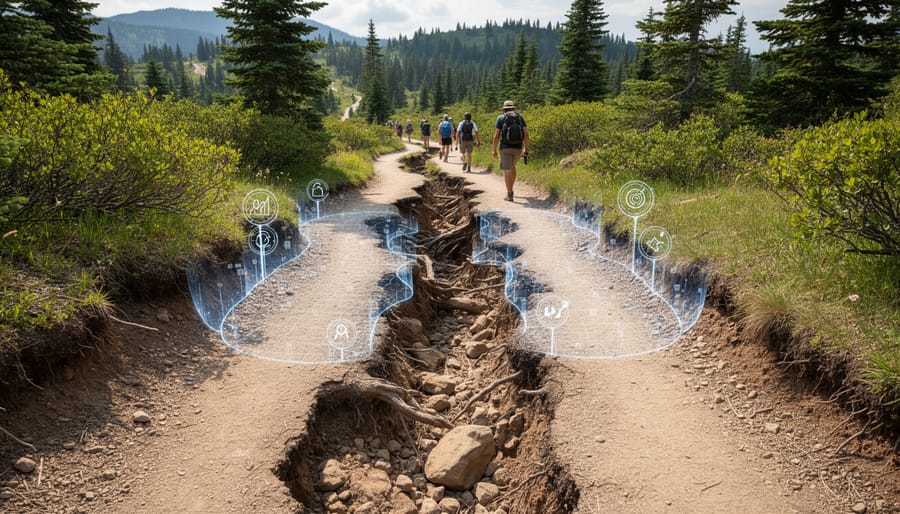
- Trail impact assessments tracking erosion rates, soil compaction, and vegetation loss along popular hiking routes
Wildlife monitoring systems are probably the most visible to park visitors. These AI tools process images from trail cameras in places like Algonquin Park, identifying individual animals, counting populations, and tracking migration patterns without disturbing the creatures themselves. The software can distinguish between a black bear and a large dog, or recognize the same moose appearing at different camera locations across the park.
Ecosystem health analyzers work more quietly in the background, crunching data from sensors scattered throughout natural areas. They might flag unusual temperature patterns in a wetland or detect early signs of pine tree stress before a human ranger would notice anything wrong. For campers planning a backcountry trip, these systems help ensure the lakes you’re paddling to remain healthy and swimmable, catching problems before they become major issues that require closing access to favorite spots.
The Green Side: How AI Helps Our Parks and Wild Spaces
Let’s look at the genuine environmental wins when AI tools help manage Ontario’s parks and wild spaces. The benefits go far beyond what traditional methods could achieve alone.
The biggest game-changer? Speed. When AI monitors trail cameras and satellite data in real time, park managers spot problems like invasive species outbreaks or habitat damage within hours instead of months. A system scanning aerial imagery can flag a sudden die-off of hemlocks or detect unusual erosion patterns before they spiral into major restoration projects. That early warning saves not just money, but the ecosystems themselves.
Precision matters enormously in conservation work. Instead of broad brush approaches, AI analysis pinpoints exactly which stream sections need attention, which wildlife corridors face the highest risk, or where visitor pressure exceeds carrying capacity. Rangers can focus their limited time and budgets on the spots that truly need intervention. One Ontario park used predictive modeling to identify three specific trail segments causing 80% of soil compaction issues, allowing targeted repairs instead of closing entire trail systems.
Wildlife monitoring gets gentler with smart systems too. Acoustic sensors identify bird species by call without researchers tramping through nesting areas. Camera traps with AI recognition log animal movements automatically, eliminating the need to repeatedly check physical traps that disturb habitat. Sensitive areas stay undisturbed while scientists still gather the data they need.
The accuracy boost matters for long-term planning. When AI crunches decades of temperature records, rainfall patterns, and species observations, it reveals trends human analysts might miss. Parks can prepare for climate shifts, adjust management strategies based on what’s actually happening rather than assumptions, and measure whether conservation efforts truly work. That feedback loop creates smarter protection over time, keeping Ontario’s natural spaces healthier for everyone who loves them.
The Not-So-Green Side: AI’s Own Environmental Footprint

Here’s the honest truth: while AI helps monitor and protect natural spaces, the technology itself isn’t exactly lightweight on the planet. The data centers powering these environmental assessment tools consume massive amounts of electricity, often equivalent to small towns, much of it still generated from fossil fuels. Every prediction about trail erosion or wildlife movement requires computing power, and that power needs cooling systems that run 24/7.
Then there’s the physical hardware scattered across parks. Those sensors tracking water quality and cameras monitoring wildlife populations eventually become electronic waste. Batteries die, components fail, and upgrades happen regularly. In remote Ontario parks, even retrieving and properly recycling old equipment adds carbon emissions from vehicle trips.
The manufacturing side matters too. Producing processors, sensors, and satellite components requires mining rare earth minerals, often through environmentally damaging extraction processes. A single AI-powered monitoring station involves global supply chains, shipping emissions, and resource-intensive production before it ever helps with protecting parks before build ing impacts them.
It’s a genuine trade-off. AI tools might help us make smarter conservation decisions and reduce harmful human activities, but they’re not carbon-neutral solutions. The question becomes whether the environmental benefits, better ecosystem protection, reduced trial-and-error impact, faster threat response, outweigh the costs of running the technology itself. Most researchers believe thoughtfully-deployed AI offers net positive gains, especially as renewable energy powers more data centers, but acknowledging both sides matters when we’re talking about truly sustainable conservation.
Where Ontario Parks Are Using Smart Environmental Tech
Ontario’s park system is quietly becoming a testing ground for smart environmental technology, though you might not notice the sensors and algorithms at work during your hike.
At Algonquin Park, AI-powered camera systems now monitor visitor traffic on popular trails like the Track and Tower route, helping rangers predict when footpaths need maintenance before erosion becomes serious. The same technology tracks wildlife movement patterns, allowing park planners to adjust trail closures during sensitive breeding seasons without relying solely on manual surveys.
Bruce Peninsula National Park uses satellite imagery analysis combined with AI to map vegetation health across the Niagara Escarpment. The system flags areas where invasive species like dog-strangling vine are taking hold, letting crews target removal efforts before these plants overtake native wildflowers that make the Grotto area so stunning in summer.
Climate adaptation planning has gotten smarter too. Parks Ontario combines weather data, soil moisture readings, and historical patterns through AI models to predict which areas face the highest wildfire risk or where shoreline camping sites might need relocation due to changing water levels. This helps them make proactive decisions about infrastructure investments rather than just reacting to disasters.
Some parks are experimenting with systems similar to the FNAI Biodiversity Matrix which uses ecological data to assess habitat quality and guide conservation priorities. These tools help smaller parks with limited budgets focus their resources where they’ll have the biggest impact on protecting the ecosystems you come to experience.
For sustainable tourism, AI analyzes reservation patterns and visitor feedback to optimize campsite allocation, reducing overcrowding at popular spots while directing adventurers toward underutilized gems that deserve more attention.
What This Means for Your Next Camping Trip
You might not notice AI working behind the scenes during your weekend at Killarney or Bon Echo, but its influence on your camping experience is already growing. Parks using environmental monitoring systems can shift visitor traffic to less-stressed areas, meaning you’ll find less crowded trails and campsites in better condition. That wildlife corridor analysis might be why the park expanded certain trails while keeping others restricted, giving you better chances of spotting moose or nesting birds without disturbing them.
Some Ontario parks now use AI-powered booking systems that distribute campers across sites more evenly throughout the season, reducing wear on popular spots. The result? Healthier vegetation around your campsite, clearer water at swimming areas, and trails that last longer between major maintenance closures.
You can support these tech-enabled conservation efforts with simple actions. Report trail conditions through park apps when prompted, your observations help train the monitoring systems. Respect seasonal closures, which are increasingly based on real-time ecosystem data rather than fixed dates. Book early if a park offers dynamic pricing that rewards off-peak visits, as this helps spread environmental impact across the calendar.
The best part? As these tools improve ecosystem health, your future trips become even better. Cleaner lakes mean better swimming and fishing. Protected wildlife corridors lead to more frequent animal sightings. Smarter trail management means fewer muddy detours and eroded slopes. The technology works quietly so you can enjoy nature loudly.
Common Questions About AI and Environmental Protection
Is AI worth the energy it uses for environmental protection?
It depends on the specific application. AI tools that prevent large-scale environmental damage or help protect critical habitats often deliver environmental benefits that outweigh their energy costs. The key is choosing efficient systems and powering them with renewable energy whenever possible.
Can AI replace human park rangers and naturalists?
No, and that’s not the goal. AI excels at processing huge amounts of data and spotting patterns, but it can’t replace the judgment, local knowledge, and human connection that rangers and naturalists provide. Think of AI as a tool that frees up experts to focus on interpretation, education, and hands-on conservation work.
How accurate are AI environmental predictions?
Accuracy varies widely based on the quality of data fed into the system and how well the AI is trained. Well-designed tools monitoring familiar ecosystems can be remarkably accurate, while predictions about rare events or poorly understood ecosystems carry more uncertainty. The best systems include confidence scores and human verification.
Will AI make parks feel less natural?
Most environmental AI operates behind the scenes through remote sensors and data analysis, so you probably won’t notice it during your visit. The goal is protecting natural experiences, not creating a high-tech atmosphere. You might see better trail conditions and healthier ecosystems, but the wilderness feel remains intact.
Are these tools accessible to smaller parks?
Increasingly, yes. While cutting-edge systems require significant investment, more affordable options are emerging. Some smaller parks partner with universities for research projects, share regional monitoring networks, or use simplified versions of commercial tools. Cloud-based platforms are also making sophisticated analysis available at lower costs.
Do visitors need to do anything different when parks use AI monitoring?
Usually not. Your main responsibility remains the same: follow Leave No Trace principles, stay on marked trails, and respect wildlife. If a park uses visitor counters or trail sensors, they’re typically passive and don’t require any action from you.
One question that comes up less often but matters just as much: how do we make sure AI recommendations don’t conflict with Indigenous knowledge and traditional land management practices? The answer lies in collaboration from the start. Effective environmental AI in Ontario works best when it incorporates traditional ecological knowledge alongside scientific data, creating a more complete picture of ecosystem health. Several parks are already exploring this integrated approach, recognizing that technology should complement, not replace, thousands of years of land stewardship wisdom.
The conversation about AI and environmental protection keeps evolving as the technology develops and we learn more about both its capabilities and its limitations. What remains constant is the need for thoughtful implementation that genuinely serves conservation goals rather than just chasing innovation for its own sake.
So where does all this leave us on the question of whether AI is good for the environment? Like most things in nature, it’s complicated. AI-driven environmental assessment tools genuinely help protect Ontario’s parks and wild spaces, they catch threats faster, guide smarter conservation decisions, and help balance our love of the outdoors with the land’s need to thrive. That’s real progress worth celebrating.
But these tools aren’t magic fixes. They consume energy, require resources, and work best when paired with experienced park staff, Indigenous ecological knowledge, and the common sense of visitors who actually care about leaving no trace. Technology can show us where the trail’s eroding, but it can’t stop us from cutting switchbacks. It can predict wildlife stress points, but it can’t make us respect quiet zones.
The most exciting part? When human wisdom and smart tech work together, Ontario’s natural spaces become more resilient and more welcoming. Your camping trips happen in healthier ecosystems, your favourite trails stay maintained, and the wildlife you hope to spot has better protection.
Keep exploring responsibly, stay curious about how your parks are being protected, and remember that the best conservation tool is still you giving a damn.



+ There are no comments
Add yours