
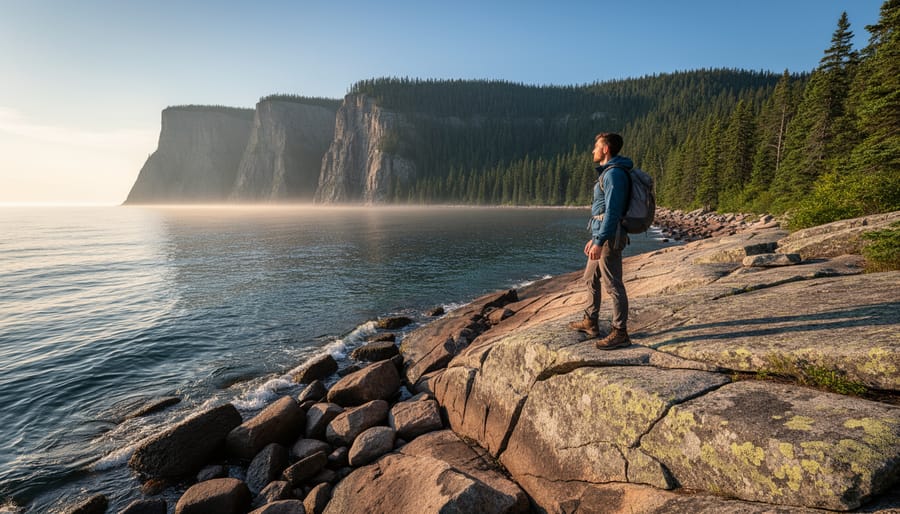
Sleeping Giant Provincial Park sits on the Sibley Peninsula just outside Thunder Bay, offering 244 square kilometres of Canadian Shield wilderness along Lake Superior’s north shore. What draws visitors here is the park’s signature landform: a sleeping giant silhouette visible from Thunder Bay, formed by mesa cliffs that rise over 240 metres above the lake. Whether you’re planning your first visit or returning to explore deeper, expect dramatic coastal bluffs, boreal forest trails, and some of the most spectacular vistas in Ontario.
The park’s 100 kilometres of trails range from easy shoreline walks to challenging overnight routes. The Top of the Giant trail climbs to those iconic mesas for panoramic views across Lake Superior, while the Kabeyun Trail hugs the coast through old-growth forest. Highway 587 bisects the park and provides access to most trailheads, making it easy to string together day hikes or design a multi-day backcountry loop.
You’ll need a daily vehicle permit (valid 8 am to 10 pm) displayed on your dash. Book online up to five days in advance to guarantee your spot. Backcountry camping requires a separate permit for any of the 27 wilderness sites, available year-round through the Ontario Parks reservation system. Trails stay open through winter, though conditions vary with snow depth.
This map to adventure covers everything you need: the best trails by difficulty and season, backcountry camping logistics, winter recreation options, and local tips to help you experience Sleeping Giant beyond the tourist snapshots.
Why Visit Sleeping Giant Provincial Park
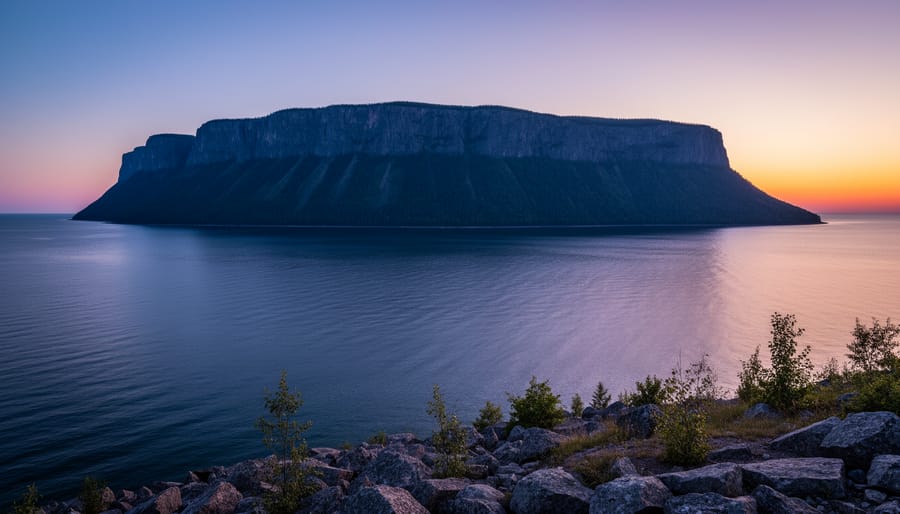
Sleeping Giant Provincial Park stands as one of Ontario’s most spectacular natural preserves, where the legendary Sleeping Giant formation rises dramatically from Lake Superior’s coastline. This 244-square-kilometre wilderness on the Sibley Peninsula near Thunder Bay offers a rare combination of geological drama and accessible outdoor adventure. The park takes its name from the striking mesa formation that resembles a reclining giant when viewed from Thunder Bay, a silhouette steeped in Ojibwe legend and visible across the bay.
The park’s landscape showcases the ancient Precambrian rock of the Canadian Shield, with towering cliffs plunging 240 metres to Lake Superior’s waters. This rugged terrain supports remarkable biodiversity, including old-growth forests, rare arctic-alpine plants clinging to cliff faces, and wildlife ranging from black bears to migratory songbirds. The coastline itself offers 20 kilometres of Lake Superior shoreline access, where you can explore cobblestone beaches, sea caves, and dramatic headlands.
Year-round recreation defines the park’s appeal. Summer brings hikers tackling everything from the strenuous Top of the Giant to family-friendly interpretive trails, while paddlers explore sheltered bays. Winter transforms Sleeping Giant into a Nordic skiing destination, with 32 km of maintained cross-country ski trails that draw both casual skiers and serious competitors participating in the Sleeping Giant Loppet, an annual event that showcases the park’s winter beauty. The trails remain open throughout the winter for those seeking snowshoe adventures or crisp-air hiking.
For wilderness seekers, the park’s backcountry camping system provides genuine isolation just an hour from Thunder Bay, making true wilderness surprisingly accessible.
Top Hiking Trails and Areas to Explore
1. Top of the Giant Trail
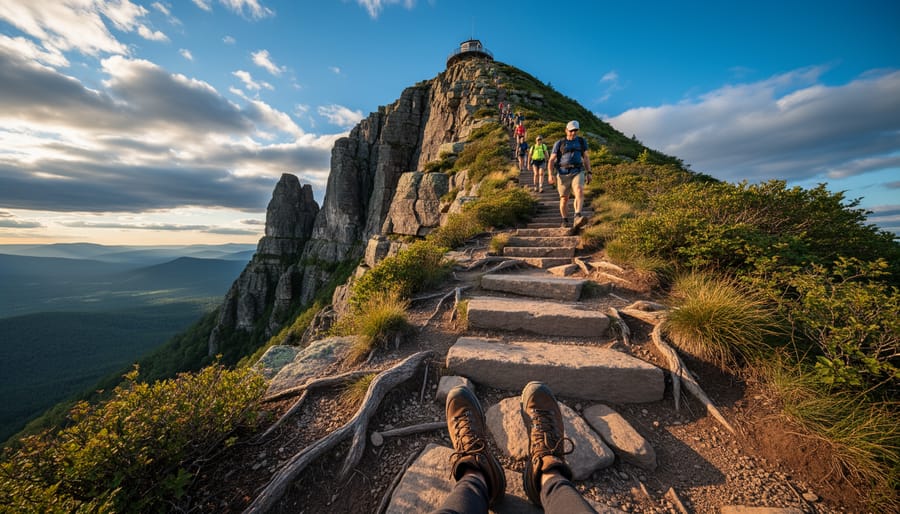
The Top of the Giant Trail is the park’s crown jewel, a strenuous 22-kilometre return hike that climbs to the highest point of the Sleeping Giant formation at 244 metres above Lake Superior. This is no casual stroll. You’ll tackle relentless elevation gain through dense boreal forest, scramble over rocky sections, and navigate exposed ridgelines where the wind off the lake can knock you sideways.
The reward? Standing at the “giant’s chest,” you get 360-degree views that stretch across Thunder Bay, the Sibley Peninsula, and the seemingly endless expanse of Lake Superior. On clear days, you can see Isle Royale in the distance. The terrain shifts constantly, from muddy forest paths to bare rock slabs to wooden boardwalks through wetlands. Most hikers take seven to nine hours round-trip, and you’ll want to start early to avoid finishing in darkness, especially since permits are only valid until 10 pm.
Pack more water than you think you need (there are no reliable sources along the trail), wear broken-in boots with ankle support, and check the weather forecast. Afternoon thunderstorms can make the exposed sections dangerous. This trail humbles even experienced hikers, but that summit view is worth every steep step.
2. Sea Lion Trail
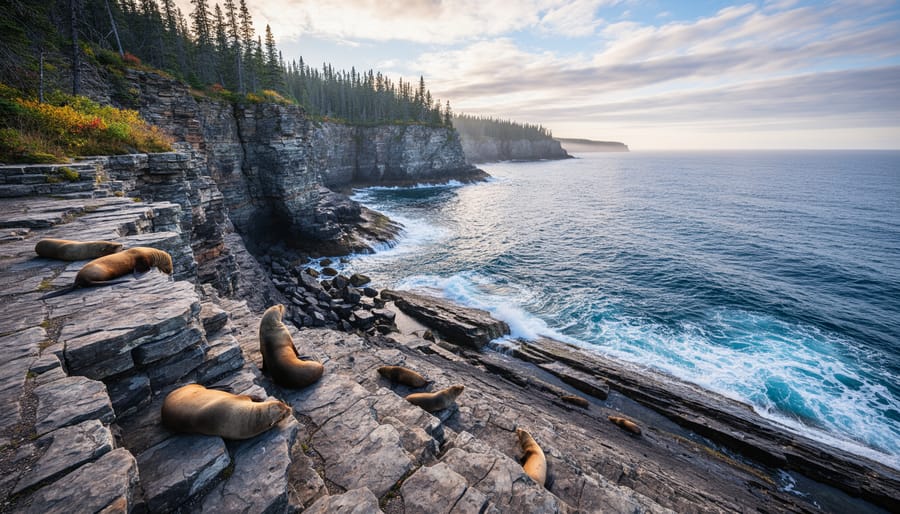
The Sea Lion Trail stretches roughly 2 kilometres along Lake Superior’s rugged shoreline, delivering some of the park’s most photogenic coastal scenery without the full-day commitment of Top of the Giant. You’ll traverse rocky beaches, scramble over ancient volcanic outcrops, and navigate tight passages between cliff faces and the lake. The trail earns its moderate rating from uneven footing and exposed sections where wind whips off the water, wear sturdy boots with good ankle support.
What sets this hike apart is the shoreline geology. Watch for the sea lion, shaped rock formation that gave the trail its name, perched dramatically where waves crash against basalt shelves. Early morning or late afternoon light transforms these formations into striking silhouettes, and mist rising off Superior adds ethereal depth to wide-angle shots. Bring a polarizing filter to cut glare and reveal underwater rock formations in the crystal-clear shallows.
The trail connects to Middlebrun Bay, giving you options to extend your hike or loop back. Pack wind layers even on calm days, conditions shift fast along this exposed coast.
3. Kabeyun Trail
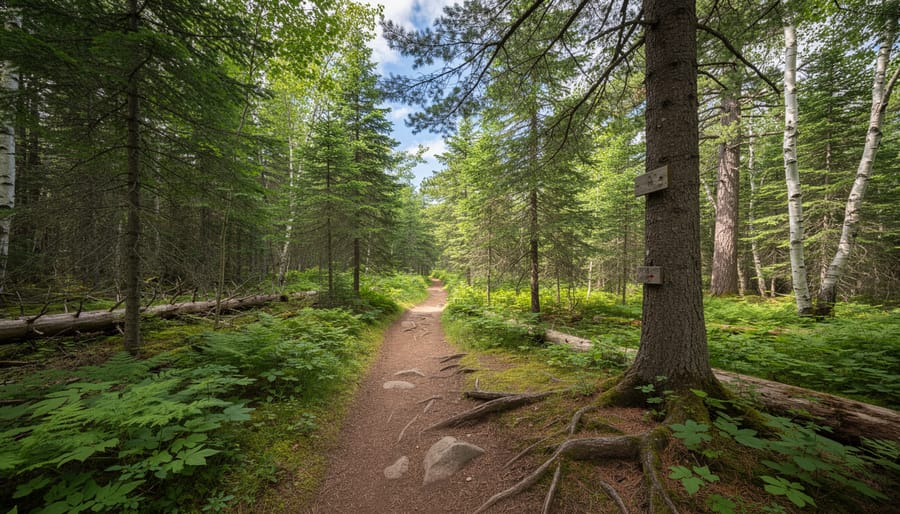
The Kabeyun Trail stretches 40 kilometres through Sleeping Giant’s rugged interior, offering the park’s premier multi-day backpacking experience. This point-to-point route traverses ancient boreal forest, crosses exposed ridgelines, and connects a network of remote backcountry campsites where you’ll fall asleep to waves crashing against Lake Superior’s shoreline.
Plan for two to three days to hike the entire trail, though you can tackle shorter sections by arranging a shuttle or accessing interior campsites from connecting trails. The terrain is challenging, expect steep climbs, root-tangled descents, and rocky sections that demand attention with every step. Navigation markers are present but can be sparse in places, so carry a detailed trail map and know how to use it.
Backcountry permits are required and should be booked well in advance during summer months, as the 27 sites throughout the park fill quickly. You can reserve online, by phone, or in person at the Marie Louise Lake Park Office from mid-May to mid-October. Water sources exist along the route, but treatment is essential. Pack for variable weather, conditions can shift dramatically even in summer, and exposed sections offer no shelter from wind or rain.
4. Talus Lake Trail
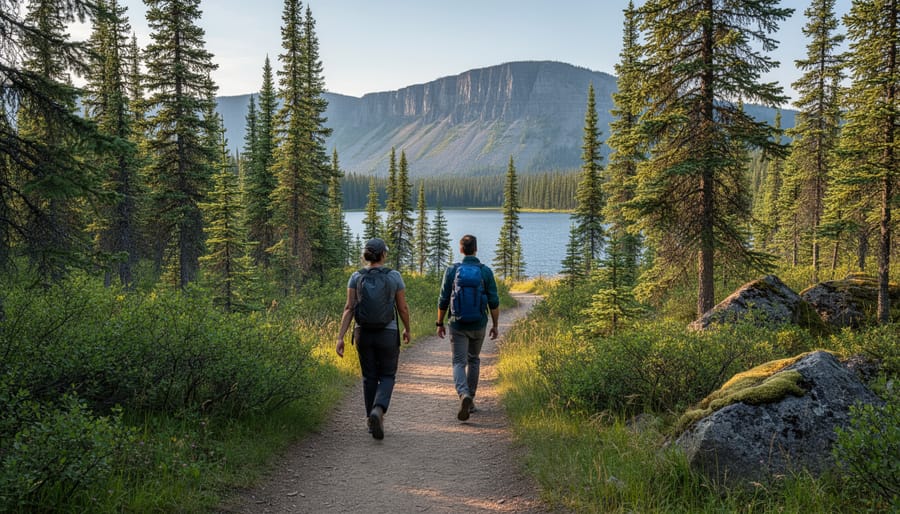
Talus Lake Trail offers a gentle introduction to Sleeping Giant’s boreal forest, perfect for families and visitors seeking a shorter, interpretive walk. This easy 2-kilometre loop meanders through dense spruce and birch stands, with interpretive panels explaining the unique plant communities and geological features that define the park’s interior ecosystem.
The trailhead sits conveniently off Highway 587, making it one of the most accessible options when you’re short on time or hiking with young children. The relatively flat terrain and well-maintained path suit all fitness levels, and you’ll likely spot red squirrels, warblers, and perhaps moose tracks in muddy sections.
Talus Lake itself provides a peaceful centerpiece, its dark waters reflecting the surrounding forest canopy. Early morning visits often reward you with mist rising off the water and active wildlife along the shoreline. Plan roughly 45 minutes to an hour for the full loop, longer if you stop to read the interpretive signs or simply sit by the lake and absorb the stillness of the boreal woods.
5. Middlebrun Bay Area
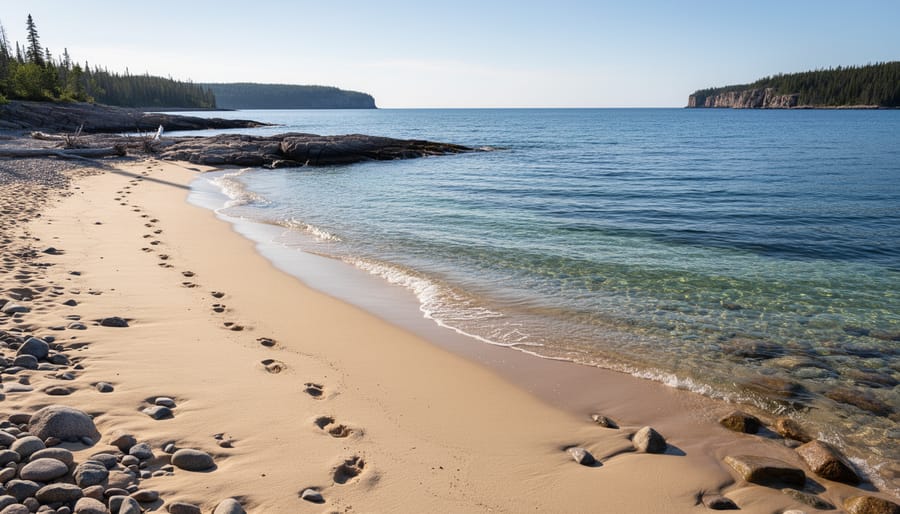
Middlebrun Bay sits along the park’s southern Lake Superior coastline, offering one of the most accessible shoreline experiences in Sleeping Giant. Unlike the clifftop trails, this area invites you to get right down to the water’s edge where the lake meets a boulder-strewn beach.
The bay’s main draw is its rugged shoreline. You can scramble over smooth, wave-worn rocks that range from fist-sized to car-sized, exploring tide pools and geological formations shaped by Superior’s relentless waves. The larger boulders create natural seating areas perfect for a picnic with expansive water views stretching to the horizon.
Beach walking here reveals the lake’s moods: calm mornings reflect the surrounding forests like glass, while windy afternoons send waves crashing against the rocks with impressive force. The contrast between the deep blue water and the ancient Precambrian bedrock is striking, especially in late afternoon light.
Middlebrun Bay works well as a low-effort addition to a park visit. It’s accessible from Highway 587 and requires minimal hiking to reach the shore, making it ideal for families with young children or anyone seeking a less strenuous way to experience Lake Superior’s raw beauty.
6. Sawyer Bay and Thunder Bay Lookout
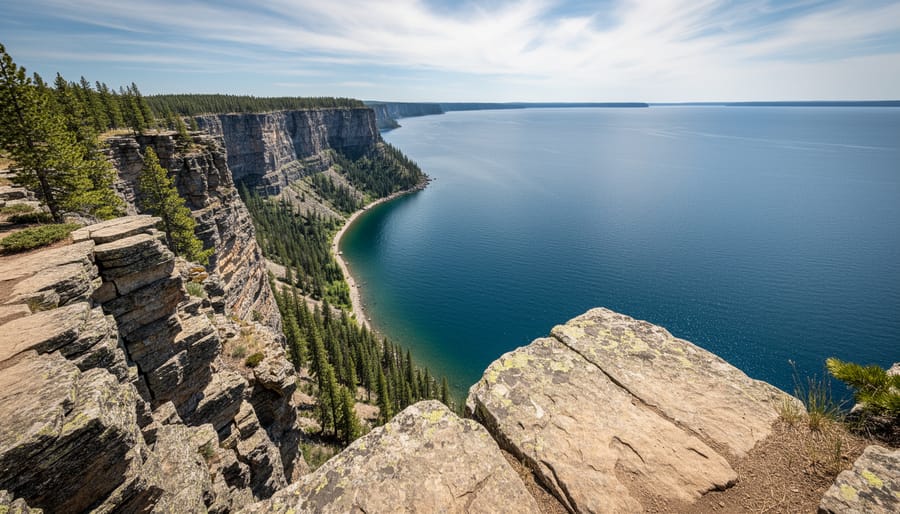
Sawyer Bay sits on the western edge of the park where the Sibley Peninsula meets Lake Superior’s open waters. The main draw here is Thunder Bay Lookout, reached via a short but steep climb from Highway 587 that rewards you with sweeping views across the bay toward Thunder Bay city and the surrounding coastline.
The lookout platform perches on Precambrian rock formations, billion-year-old diabase sills that form the backbone of the Sleeping Giant. On clear days, you’ll spot Isle Royale far to the south and watch freighters navigate the shipping lanes. The geological storytelling is obvious: layered rock faces, columnar jointing in the cliff walls, and talus slopes tumbling toward the water below.
Sawyer Bay itself offers quieter shoreline exploration. A rough trail traces the rocky beach where you can examine wave-polished stones and watch for bald eagles hunting over the water. The bay tends to be less crowded than Middlebrun or the Sea Lion area, making it a solid choice when you want lake views without the parade of hikers heading to the Giant’s summit.
7. Perry Bay Area
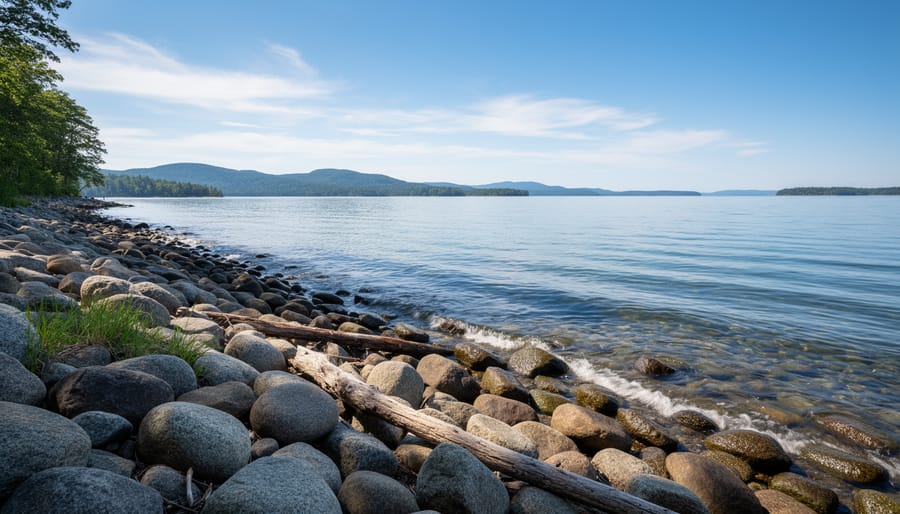
Perry Bay sits in the southeastern corner of Sleeping Giant Provincial Park, far from the main Marie Louise Lake hub where most visitors congregate. This relative isolation makes it the park’s best choice for hikers seeking genuine solitude and a quieter Lake Superior experience. The Perry Bay Trail winds through dense boreal forest before opening onto rocky shoreline stretches where you’re likely to have the beach entirely to yourself, even on summer weekends.
The area serves as a gateway to several backcountry campsites, making it popular with overnight paddlers and backpackers who appreciate the lowered human traffic. Wildlife sightings increase here, black bears, moose, and woodland caribou use these less-disturbed sections as corridors. Birdwatchers consistently report better luck with shy species like boreal chickadees and spruce grouse compared to busier trails.
Access requires driving the full length of Highway 587 and hiking in from the southeastern trailhead, which naturally filters out casual day-trippers. Pack everything you need; there are no facilities beyond the trail marker. The extra effort rewards you with the kind of wilderness stillness that’s increasingly rare in Ontario’s popular parks.
Winter Activities and the Sleeping Giant Loppet
When snow blankets Sleeping Giant Provincial Park, this Thunder Bay landmark transforms into a Nordic skiing paradise. The park maintains 32 km of ski trails that draw both recreational skiers and competitive athletes to this winter wonderland.
Cross-country skiing takes centre stage here from December through March. The trail network accommodates all skill levels, from gentle lakeside routes to challenging interior loops that wind through boreal forest and along frozen shorelines. Classic track-setting and skate-ski lanes make the most of the snow cover, though conditions vary throughout the season depending on recent weather. Snowshoers can explore most summer hiking trails once they’re snow-covered, opening up the entire backcountry for those who prefer strapping on wide frames to gliding on narrow planks.
The highlight of the park’s winter calendar is the annual Sleeping Giant Loppet a cross-country ski race that brings hundreds of competitors to these trails each winter. This Nordic event offers multiple race distances, allowing both serious racers and recreational participants to test themselves against the park’s terrain. Even if you’re not signing up to race, the Loppet attracts a festival atmosphere to the park, with well-groomed trails and a community of ski enthusiasts who appreciate this distinctive Lake Superior setting.
Winter camping remains available for those brave enough to tackle backcountry sites in sub-zero temperatures. The 27 backcountry sites accept reservations year-round, though you’ll need proper four-season gear and cold-weather experience to camp safely when temperatures plummet. Most winter visitors opt for day trips, skiing or snowshoeing in from trailheads along Highway 587 and returning to warmer accommodations in Thunder Bay by evening.
What sets Sleeping Giant apart as a Nordic destination is the combination of groomed trails, dramatic scenery, and the challenge of skiing beside Lake Superior’s frozen shoreline. You’re not just exercising on maintained tracks, you’re gliding through a wilderness landscape where the Giant’s silhouette rises against winter skies.
Backcountry Camping in Sleeping Giant
Sleeping Giant’s 27 backcountry campsites offer true wilderness immersion along Lake Superior’s rugged shoreline and through boreal forest interior. These remote sites range from Kabeyun Trail’s multi-day backpacking camps to shoreline spots accessible via moderate hikes, giving you options whether you’re testing your backcountry skills or seeking a quieter alternative to frontcountry campgrounds.
You’ll need a backcountry camping permit for any overnight stay at these sites, which you can book year-round through three methods: online at the Ontario Parks reservation system, by calling 1-888-668-7275, or in person at the Marie Louise Lake Park Office during its mid-May to mid-October operating season. Book early for summer weekends and the fall colour peak in late September, popular sites along the Kabeyun Trail fill quickly.
Most backcountry sites provide a tent pad, fire ring, thunder box (pit toilet), and a bear-proof food cache. You’ll carry everything else in, and that means planning carefully:
- Book your permit through one of the three official channels and print or download confirmation
- Follow Leave No Trace principles, pack out all waste, minimize campfire impact, and respect wildlife
- Store all food and scented items in the provided bear cache; black bears are active throughout the park
- Bring a water filter or purification tablets, lake and stream water requires treatment
- Pack a repair kit, first aid supplies, and extra layers; weather shifts fast on Superior’s coast
The backcountry experience here differs markedly from car camping. You’ll hear waves on Lake Superior from coastal sites, watch for moose along interior wetlands, and earn spectacular solitude after the day-hikers head home. Some sites perch on cliff edges with nothing but lake between you and the horizon, while others nestle in sheltered bays where you can swim after a long trail day.
Winter backcountry camping is permitted year-round for the truly adventurous, though snow depth and extreme cold demand four-season gear and solid winter camping experience. Most backcountry campers stick to May through October when trail conditions cooperate and the portage distances feel more manageable.
Practical Visitor Information
Park Access and Permits
Getting into Sleeping Giant Provincial Park is straightforward, but a few details will save you hassle at the gate. Every vehicle needs a daily permit displayed on your dashboard, no exceptions. These permits run 8 am to 10 pm, so plan your visit within those hours or you’ll technically be in the park without valid authorization.
You have three ways to grab your permit. The smartest move for busy summer weekends is booking online at the Ontario Parks reservation site, where permits go live up to five days ahead at 7:00 a.m. sharp. If you miss that window or prefer talking to a human, call the Ontario Parks Reservation Line at 1-888-668-7275. On-site purchases work too, though availability isn’t guaranteed during peak season.
Highway 587 runs straight through the park and puts you within reach of nearly every trailhead, making navigation simple once you’re past the entrance. The road bisects the entire park, so whether you’re heading to the Top of the Giant or exploring coastal trails, you’ll start your hike from one of the Highway 587 access points. Just remember that your permit sticker needs to be visible through your windshield, park staff do check, and you don’t want to return from a six-hour hike to find a ticket on your car.
When to Visit and Seasonal Considerations
Sleeping Giant Provincial Park rewards visitors year-round, though each season demands different preparation. Summer (June through August) brings the warmest weather and busiest trails, with temperatures ranging from 15°C to 25°C, ideal for hiking the Top of the Giant and exploring Lake Superior’s shoreline. July and August see peak crowds, particularly on weekends, so consider weekday visits or early morning starts to secure trailhead parking.
Fall transforms the park into a photographer’s paradise. September and early October deliver spectacular foliage displays across the boreal forest, cooler temperatures that make long hikes more comfortable, and noticeably thinner crowds. The trade-off? Shorter daylight hours and unpredictable weather that can shift from sunny to stormy within hours.
Winter opens a completely different experience. The hiking trails remain open throughout the winter, though they transform into 32 km of maintained cross-country skiing routes. Snow typically arrives in late November and holds through March, making January and February prime months for Nordic skiing, including the annual Sleeping Giant Loppet event. Winter visitors should prepare for temperatures well below freezing and plan around the park’s 8 am to 10 pm daily vehicle permit hours.
Spring (April to May) is the park’s quietest season, marked by muddy trails, black flies, and lingering snowmelt that can make some backcountry routes impassable. The Marie Louise Lake Park Office opens in mid-May, coinciding with improved trail conditions and the start of camping season.
Local Tips for Your Sleeping Giant Adventure
Start your day early to claim the best parking spots at popular trailheads like Top of the Giant, especially on summer weekends when the lot fills by mid-morning. Bring a headlamp even for day hikes, the dense forest canopy makes trails darker than you’d expect, and if you’re running late getting back, you’ll thank yourself. Cell service is virtually nonexistent throughout the park once you leave the Marie Louise Lake area, so download offline maps and let someone outside the park know your itinerary.
For wildlife watching, the early morning hours along the Sawyer Bay and Middlebrun Bay shorelines offer your best chances of spotting moose, especially in late spring and early summer when they feed on aquatic plants. Black bears are common but typically avoid hikers; make noise on the trail and never leave food unattended at campsites or in your vehicle. The quieter Perry Bay section sees fewer visitors and rewards patient observers with glimpses of woodland caribou, though sightings remain rare.
Photographers should plan for golden hour at Thunder Bay Lookout, where the westward view over Lake Superior creates stunning sunset compositions. The rocky outcrops along Sea Lion Trail provide dramatic foreground elements for wide-angle shots, while autumn colours peak in late September when the boreal forest transforms into brilliant oranges and reds against the dark lake water.
Can I camp without reservations?
No, backcountry camping permits are required for all 27 backcountry sites and must be purchased in advance online, by phone, or in person at the Marie Louise Lake Park Office from mid-May to mid-October.
Are dogs allowed on trails?
Yes, dogs are permitted on trails but must be kept on leash at all times and are not allowed in swimming areas or park buildings.
What’s the cell service like?
Cell service is extremely limited to nonexistent throughout most of the park, with occasional signal only near the Highway 587 entrance area.
How difficult is the Top of the Giant really?
It’s a genuinely challenging 22 km round-trip with steep, rocky sections and significant elevation gain, most hikers need 8-10 hours, and proper footwear and fitness are essential.
Pack out everything you pack in, including orange peels and biodegradable items that disrupt the ecosystem. The park’s fragile sub-arctic plant communities recover slowly from damage, so stay on established trails and use designated campsites. Water from Lake Superior and backcountry sources requires treatment before drinking. Most experienced visitors recommend bringing more water than you think you’ll need, as natural sources can be scarce along ridgetop trails like Top of the Giant.
Whether you’re chasing the adrenaline of summiting the Top of the Giant, gliding through groomed Nordic trails during the Loppet, or simply seeking a quiet backcountry campsite along Lake Superior’s rocky shore, Sleeping Giant Provincial Park delivers experiences that stick with you long after you’ve left. This isn’t just another provincial park, it’s a Thunder Bay icon where dramatic geology meets accessible wilderness, where day-trippers and serious backpackers find their own rhythm among the cliffs and forests.
The key to a great visit? Plan ahead. Secure your daily vehicle permit online up to five days in advance, book backcountry sites early if you’re camping, and check trail conditions before you head out. Respect the park’s fragile ecosystems by staying on marked trails, packing out everything you bring in, and giving wildlife plenty of space. Sleeping Giant has been here for millennia, shaped by ancient lava flows and Ojibway stories. Your thoughtful visit helps ensure it remains wild and welcoming for generations to come.




+ There are no comments
Add yours