

Pack your adventure gear based on Ontario’s diverse seasons – waterproof shells for spring rains, breathable layers for summer trails, and insulated equipment for winter expeditions. Smart adventurers start with essential safety tools: a reliable GPS device, multi-tool, first-aid kit, and emergency beacon for remote backcountry exploration.
Choose gear that pulls double duty. A lightweight hammock serves as both emergency shelter and relaxation spot, while merino wool base layers regulate temperature across seasons and activities. Quality matters more than quantity when every ounce counts on the trail.
Whether you’re tackling the rugged La Cloche Silhouette Trail or paddling through Algonquin’s pristine lakes, your gear selection can make or break your Ontario adventure. Invest in durable, eco-conscious equipment that withstands our challenging terrain while minimizing environmental impact. Local outfitters understand our unique conditions – from humid summers to bone-chilling winters – and stock gear specifically tested for Ontario’s wilderness challenges.
Ready your pack with purpose, knowing each piece of equipment serves as your lifeline to comfort and safety in Ontario’s vast outdoor playground. Adventure awaits – but only for those properly equipped to embrace it.
Core Camping Equipment for Ontario’s Varied Terrain
All-Weather Shelter Solutions
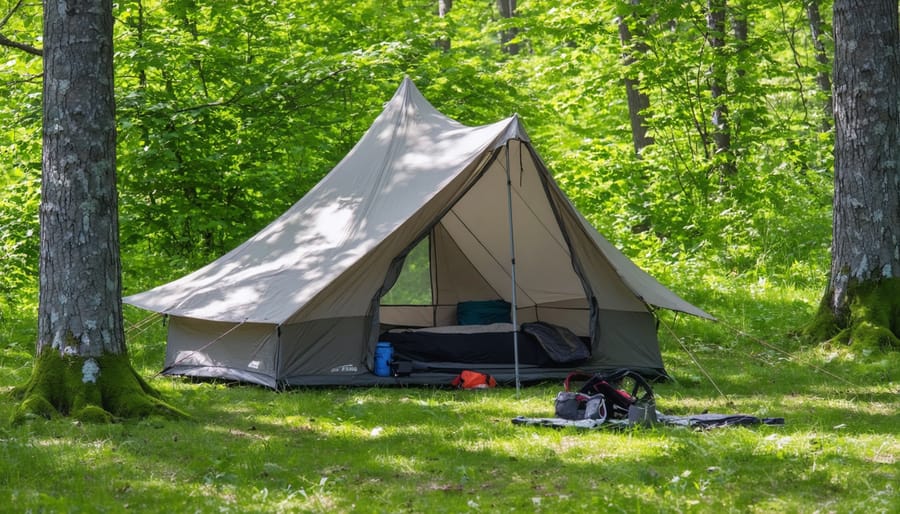
When it comes to protecting yourself from Ontario’s diverse weather conditions, choosing the right shelter can make or break your adventure. As someone who’s experienced everything from summer thunderstorms to winter frost, I can’t stress enough the importance of selecting appropriate shelter gear among your lightweight packing essentials.
For three-season camping (spring through fall), a quality lightweight tent with good ventilation and a waterproof rainfly is your best bet. Look for models with aluminum poles and ripstop nylon construction – they’re both durable and packable. During summer months, consider tents with mesh panels for better airflow and protection from our enthusiastic mosquito population.
Winter adventurers should opt for four-season tents with stronger pole structures and steeper walls to handle snow loads. Pro tip: always bring a footprint or ground cloth to protect your tent’s floor and add an extra moisture barrier.
Don’t overlook the versatility of tarps! A lightweight silnylon tarp can serve as an emergency shelter, extra coverage for your tent’s vestibule, or a cozy spot for meal preparation during rain showers. For minimalist adventures, try a simple A-frame tarp setup – it’s surprisingly effective and eco-friendly since it requires fewer materials.
Remember to test your shelter setup at home before heading out, and always carry a small repair kit for unexpected tears or broken poles. Your shelter choice should match both the season and your adventure style while respecting our beautiful Ontario wilderness.
Sleep Systems for Ontario Conditions
Getting a good night’s sleep in Ontario’s varied climate requires the right combination of gear. For three-season camping (spring through fall), a sleeping bag rated for -7°C to -12°C (20°F to 10°F) offers versatility and comfort. Look for bags with water-resistant down or synthetic fill to handle our humidity and occasional rain.
I’ve found that a quality sleeping pad is just as crucial as your bag. For Ontario’s rocky Canadian Shield terrain, combine a closed-cell foam pad with an inflatable pad for maximum comfort and insulation. The foam pad also serves as backup if your inflatable gets punctured – a lesson I learned the hard way on Killarney’s La Cloche trail!
Hammock camping has gained popularity in Ontario’s forest-rich landscape. If you go this route, don’t forget your bug net (those mosquitoes mean business!) and invest in a good underquilt. A tarp setup is essential for our unpredictable weather – go for one with doors for those gusty nights.
Pro tip: During summer camping, a lightweight sleeping bag liner can turn your cold-weather bag into a comfortable warm-weather option. For winter adventures, look for bags rated to -30°C or lower, and consider a vapor barrier liner to keep your bag dry from condensation.
Remember to store your sleeping bag uncompressed at home to maintain its loft and insulating properties. Consider renting gear first to test what works best for you in different seasons.
Trail-Ready Essentials
Navigation Tools and Safety Equipment
When venturing into Ontario’s wilderness, reliable navigation tools and safety equipment are just as crucial as weather-appropriate outdoor apparel. Start with a waterproof compass and detailed topographic maps of your destination area – these never run out of batteries and are essential backups even if you’re tech-savvy.
Speaking of technology, a rugged GPS device can be a game-changer on the trails. Look for models with pre-loaded Ontario maps and long battery life. I always recommend carrying a portable power bank for backup charging. Pro tip: download offline maps before your adventure, as cellular coverage can be spotty in remote areas.
Your emergency kit should include a whistle (three blasts is the universal distress signal), a basic first aid kit, and an emergency blanket. A headlamp with spare batteries is non-negotiable – I learned this the hard way when darkness caught me off-guard on the Bruce Trail!
For longer expeditions, pack a satellite communicator or personal locator beacon (PLB). While they might seem like overkill, these devices have proven invaluable during emergencies in Ontario’s backcountry. Remember to register your device and familiarize yourself with its operation before heading out.
Consider investing in a water filtration system and fire-starting tools – both essential for unexpected overnight situations. Keep everything organized in a waterproof container or dry bag to protect against Ontario’s unpredictable weather.

Hydration and Food Storage
Staying hydrated and well-fed during your Ontario adventures isn’t just about comfort – it’s essential for safety and enjoyment. When I’m hitting the trails, I always pack my trusty water filtration system. The LifeStraw or Sawyer Mini are perfect companions for accessing Ontario’s abundant freshwater sources while keeping things lightweight. These compact filters easily fit in your pack and can process thousands of liters of water.
For food storage, bear-resistant containers are a must, especially in areas like Algonquin Park where black bears are active. I recommend the BearVault BV500 – it’s durable, transparent (so you can see what’s inside), and certified bear-resistant. For day trips, consider lightweight, eco-friendly food containers made from sustainable materials. When it comes to outdoor meal planning, use reusable silicone bags for snacks and collapsible containers that save space when empty.
Pro tip: Always bring one more water container than you think you’ll need. I prefer double-walled stainless steel bottles that keep water cool in summer and prevent freezing in winter. For extended trips, consider a gravity-fed water filtration system – it’s a game-changer for base camping and can filter water while you set up camp or prepare meals.
Seasonal Gear Considerations
Summer Adventure Equipment
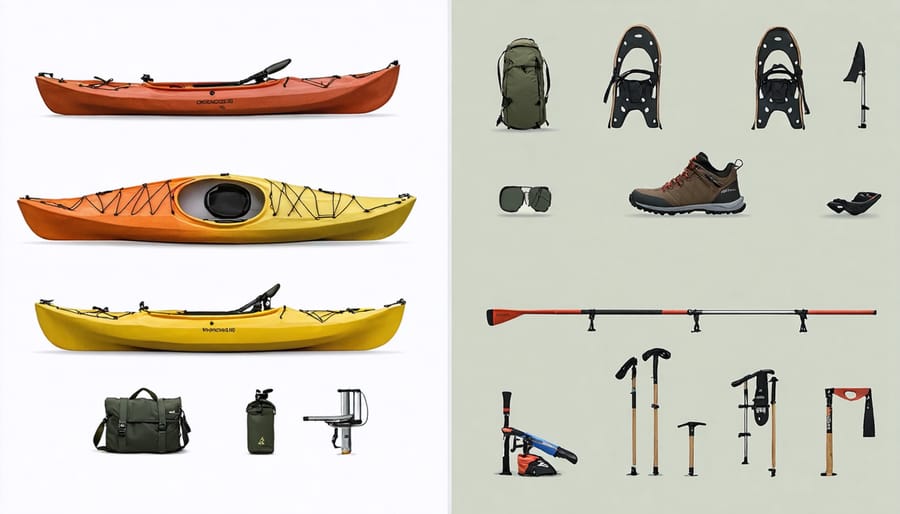
When the sun’s blazing and Ontario’s lakes are calling, you’ll want to gear up with summer-specific equipment that keeps you cool and protected. A wide-brimmed sun hat and UV-protective sunglasses are absolute must-haves for those long days on the water or trail. Pack quick-dry clothing made from lightweight, moisture-wicking materials – they’re perfect for switching between land and water activities.
For water adventures, invest in a reliable dry bag to keep your electronics and essentials safe. A quality pair of water shoes with good grip will serve you well, whether you’re portaging between lakes or exploring rocky shorelines. Don’t forget a durable water bottle with insulation to keep your drinks cool throughout the day.
If you’re planning on paddling, a lightweight personal flotation device (PFD) designed for warm weather is essential. Look for ones with mesh panels for better ventilation. For hiking and camping, consider a portable misting fan and cooling towels – they’re game-changers during humid Ontario summers.
Pro tip: Pack a lightweight, long-sleeve UPF shirt. It might seem counterintuitive in hot weather, but it’ll protect you from both sun and bugs while keeping you surprisingly cool. And speaking of bugs, an eco-friendly insect repellent is worth its weight in gold during Ontario summers. Consider natural options like lemon eucalyptus sprays that are gentler on our waterways.
Spring and Fall Essentials
Spring and fall in Ontario can be tricky to pack for, with temperatures and conditions changing dramatically throughout the day. The key is layering and versatility. Start with a reliable waterproof shell jacket that’s lightweight enough to stuff in your daypack when the sun comes out. I’ve found that packable down jackets are worth their weight in gold during these seasons – they provide warmth without bulk and compress easily when not needed.
A good moisture-wicking base layer is essential, and merino wool is your best friend here. It regulates temperature well and doesn’t hold onto odors during multi-day adventures. Pack convertible hiking pants that zip off into shorts, perfect for those days that start crisp but warm up quickly.
Don’t forget the often-overlooked accessories that make shoulder season adventures more comfortable. A lightweight beanie and gloves take up minimal space but make a huge difference during chilly mornings. A neck gaiter or buff is incredibly versatile, serving as sun protection, warmth, or even an emergency face covering.
Pro tip: Keep a small dry bag in your pack for unpredictable weather. Nothing ruins an adventure faster than wet gear! For eco-conscious adventurers, look for gear made from recycled materials – many outdoor brands now offer sustainable options that perform just as well as traditional gear.
Winter Exploration Gear
When winter blankets Ontario in snow, having the right gear can transform a chilly outing into an incredible adventure. Start with a high-quality base layer made from merino wool or synthetic materials – these work wonders in keeping you warm while wicking away moisture. Layer up with an insulating mid-layer, like a fleece or down jacket, and top it off with a waterproof, breathable shell to shield against snow and wind.
Don’t forget your extremities! Invest in waterproof winter boots rated for at least -25°C, common in Ontario winters. Pack extra wool socks, and consider toe warmers for extended outdoor activities. Insulated, waterproof gloves are essential, and I always recommend carrying a backup pair. A warm hat that covers your ears and a neck gaiter or balaclava will keep the winter chill at bay.
For snow activities, microspikes or crampons are invaluable for icy trails, while snowshoes are perfect for deep powder conditions. Pack a vacuum-sealed thermos for hot drinks – nothing beats warming up with hot chocolate during a winter hike!
Pro tip: Look for gear with reflective elements, as winter days are shorter. Consider renting equipment first if you’re new to winter activities – many Ontario outdoor stores offer this service. And remember, choose gear with recyclable materials when possible to minimize environmental impact while exploring our winter wonderland.
Eco-Friendly Gear Options
As outdoor enthusiasts, we have a responsibility to protect the natural spaces we love to explore. Choosing eco-friendly gear for nature lovers not only reduces our environmental impact but often provides superior durability and performance.
Consider switching to recycled materials whenever possible. Many Ontario outfitters now offer backpacks and clothing made from recycled plastic bottles or reclaimed fabrics. These materials are incredibly durable and often lighter than traditional options. I recently discovered a local brand that makes waterproof jackets from recycled marine plastic – they perform brilliantly on rainy Bruce Trail hikes!
Solar-powered gear is another game-changer for sustainable adventuring. Portable solar chargers and lights eliminate the need for disposable batteries while ensuring you stay powered up on multi-day trips. They’re particularly useful during Ontario’s long summer days when you can harvest plenty of solar energy.
Look for gear with minimal packaging and products from companies with repair programs. Some Ontario outdoor shops now offer gear repair services, helping extend the life of your equipment. Pro tip: many manufacturers will replace parts or repair items for free, saving both money and resources.
Don’t overlook secondhand options. Ontario has excellent outdoor gear consignment shops where you can find high-quality pre-loved equipment. I’ve scored some amazing deals on barely-used camping gear this way, giving perfectly good equipment a second life while saving substantially on costs.
Remember, sustainable adventuring isn’t just about what you buy – it’s about how you use it. Choose versatile pieces that work across multiple seasons, maintain your gear properly, and always follow the “leave no trace” principles while exploring Ontario’s wilderness.
Embarking on an adventure in Ontario’s great outdoors is an incredible experience, but success lies in thoughtful preparation and the right gear choices. Remember that quality equipment isn’t just about comfort – it’s about safety and environmental responsibility too. Start building your adventure kit gradually, focusing first on essentials like weather-appropriate clothing, reliable navigation tools, and proper footwear.
Consider borrowing or renting gear for your first few outings before making major investments. This approach helps you understand exactly what works best for your adventure style. When you do purchase, opt for durable, multipurpose items that will serve you well across different seasons and activities.
Don’t forget to test your gear before heading out, especially for longer expeditions. Practice setting up tents, using your stove, and familiarizing yourself with safety equipment. Keep a maintenance schedule for your gear and regularly check for wear and tear.
Most importantly, remember that the best adventures are those that respect both nature and fellow outdoor enthusiasts. Pack mindfully, leave no trace, and share your knowledge with others. With the right preparation and gear, you’re ready to explore Ontario’s wilderness safely and responsibly.





+ There are no comments
Add yours