

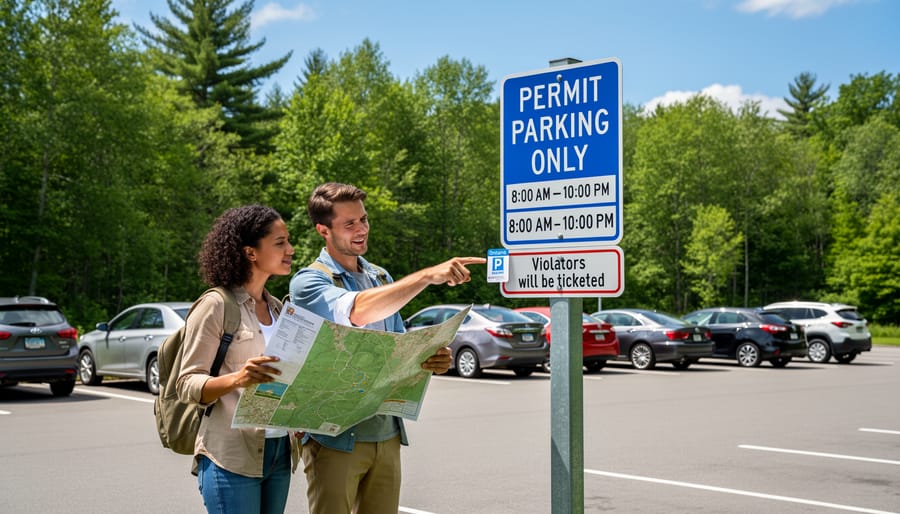
Look for the white and green signs displaying “Permit Parking Only 8am-5pm” at your chosen Ontario park entrance—these tell you exactly when you need that vehicle permit hanging from your rearview mirror. During enforcement hours, parking without a valid permit means risking a ticket that’ll cost you way more than the day pass itself. Outside those hours, from 5:01pm until 7:59am the next morning, you can generally park for free, though some parks have seasonal variations you’ll want to confirm before your visit.
The system works simply: purchase your permit online before arriving or grab one at the park gate, display it prominently on your dashboard, and you’re golden for the entire day within those posted hours. Weekend warriors and early-bird hikers often ask whether arriving at 7:30am means free parking—technically yes, but you’ll need that permit the moment the clock strikes 8am, so buying in advance saves the morning scramble.
Here’s an insider tip that saves hassle: snap a photo of the specific parking regulations posted at your trailhead, because enforcement times occasionally differ between park sections, especially at larger conservation areas. Most visitors don’t realize that “permit parking” doesn’t just mean paying a fee—it actually helps fund trail maintenance, washroom facilities, and those gorgeous natural spaces we all love exploring.
Breaking Down ‘Permit Parking Only 8am-5pm’
Who Needs a Permit During Peak Hours
If you’re planning to visit an Ontario Park during peak hours (8am-5pm), nearly everyone needs a permit to park legally. This includes day-trippers heading out for a morning hike, families setting up for a lakeside picnic, photographers chasing that perfect sunrise shot, or anyone simply wanting to explore the trails.
Here’s the straightforward rule: if you’re driving into the park for any recreational purpose during these hours, you need day-use permits. This applies whether you’re staying for twenty minutes or the entire day. I’ve learned this the hard way after receiving a ticket during a quick waterfall visit I thought would be “too brief to matter.”
The permit requirement covers all standard vehicles, from compact cars to SUVs and minivans. Even if you’re just dropping someone off for a program or picking up a friend from the trailhead, technically you need that permit displayed on your dashboard.
Insider tip: Annual pass holders are always covered during these hours, making them worthwhile if you visit more than seven times yearly. The permit system helps manage park capacity while funding essential trail maintenance and conservation efforts, so your fee directly supports the natural spaces you’re enjoying.
What Happens After 5pm (The Gray Area)
Good news for night owls and early birds! Once that 5pm clock strikes, the permit parking rules generally no longer apply, which means you can typically park for free. The same goes for those peaceful early morning hours before 8am. This creates a fantastic opportunity if you’re planning a sunset hike or want to catch the sunrise over a misty lake without worrying about permit fees.
Here’s an insider tip: many experienced park visitors plan their adventures around these hours during peak season. Arriving at 4:30pm? You’ll only need to pay for that final half-hour. Planning to photograph the golden hour? You’re in the sweet spot for free parking.
However, keep in mind that while permit requirements relax after hours, other park rules still apply. Gates may be locked at certain times, and you’ll need to check if overnight parking is permitted at your specific location. Some parks restrict after-hours access entirely for safety reasons. Always verify the individual park’s regulations before assuming you can arrive or stay late. The last thing you want is to return from a twilight adventure only to find yourself locked in or, worse, facing a different type of parking violation.
Ontario Parks Day-Use Permits: Your Complete Breakdown
How Much You’ll Actually Pay
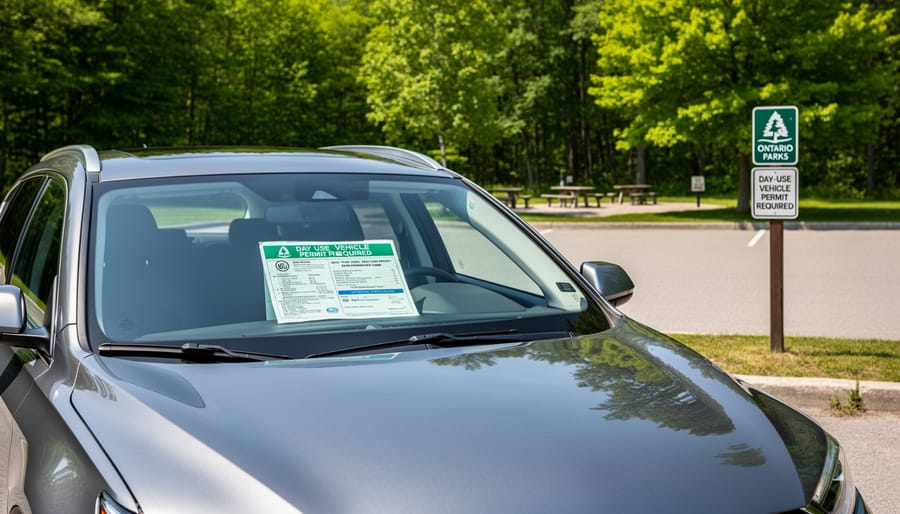
Here’s the good news: day-use vehicle permits at most Ontario Parks typically run between $13 to $22 per day during peak season (May to October), with off-season rates often dropping to around $12. Your permit covers everyone in your vehicle, making it great value for families or friend groups piling into one car.
During those 8am-5pm hours, you’ll need a valid permit displayed on your dashboard. Outside these times, parking is generally free, which is perfect if you’re catching a sunset hike or arriving super early for dawn photography.
Insider tip: Not all parks charge the same rates or even require permits at all! Some smaller conservation areas and certain provincial parks offer completely free day-use access year-round. Before you visit, check the specific park’s website or call ahead. I’ve saved myself plenty of money by discovering free alternatives just a short drive from popular paid parks.
Seasonal passes are your best friend if you’re a frequent visitor. At around $85-$145 annually, they pay for themselves after just 5-7 visits. Plus, you’ll skip the entry booth lineup and simply drive straight through. During winter months, many parks reduce hours or switch to self-serve permit stations, so always verify current operating schedules before heading out.
Three Ways to Get Your Permit (Before You Arrive)
Getting your hands on Ontario Parks permits is easier than you might think, and you’ve got three convenient options to choose from.
The quickest way? Purchase online through the Ontario Parks reservation website before you leave home. This method lets you skip the gate line entirely, and you’ll receive a digital confirmation you can display on your phone. It’s my go-to choice because I can compare different parks and dates at my own pace with a coffee in hand. Plus, going paperless means one less receipt cluttering your glove compartment.
Second, download the free Ontario Parks app on your smartphone. This eco-friendly option lets you buy permits on the road and stores everything digitally. I’ve used it while grabbing breakfast on the way to Algonquin, and it saved me at least 20 minutes at the gate.
Finally, you can purchase permits directly at park gates when you arrive. While this traditional method works perfectly fine, expect longer wait times during peak summer weekends and holidays. The upside? You can ask staff questions face-to-face and get personalized recommendations for trails and campsites based on current conditions.
Special Permit Situations You Should Know About
Here’s a money-saving insider tip: if you’re planning multiple visits throughout the season, annual permits are your best friend. They typically pay for themselves after just three or four day trips, and you’ll breeze past the fee station with confidence every time.
Ontario’s Places to Grow Act has introduced special consideration passes for certain qualifying residents in designated growth areas, so check if you’re eligible for reduced rates. Families can benefit from group permits that cover multiple vehicles when you’re caravanning with friends or extended family members. I’ve found this particularly helpful during reunion camping trips when we need parking for several cars at trailheads.
Accessibility permits deserve special mention. If you have an accessible parking permit, most Ontario Parks honor these year-round, regardless of the 8am-5pm restriction. However, you still need to display both your accessibility permit and valid park pass. The parks are genuinely committed to ensuring everyone can enjoy our natural spaces. When in doubt, call the specific park ahead of your visit to confirm their accessibility parking policies and available accommodations. Park staff are incredibly helpful and want you to have the best experience possible.
Real-World Scenarios: When You Need (and Don’t Need) a Permit
The Weekend Hiker
Picture this: you’ve been dreaming about exploring Rattlesnake Point all week, and Saturday morning finally arrives. You load up your daypack, grab your water bottle, and hit the road around 9am. By the time you pull into the trailhead lot at 10am, you’re squarely in the 8am-5pm window—so yes, you’ll need that parking permit displayed on your dashboard.
Here’s the simple rule: if your car is in that lot anytime between 8am and 5pm, even for just an hour, you need a valid permit for the entire day. The good news? Day permits are straightforward to purchase at the park office or self-serve kiosks near most trailheads. Have your license plate number handy and bring a credit card—many parks are moving away from cash-only systems.
My insider tip? Download the park’s mobile app before you leave home. Some Ontario parks let you purchase permits digitally, saving you precious hiking time. Plus, if the lot looks crowded when you arrive, having that permit ready means you can quickly find a spot and hit the trail while others are still fumbling for change. Always snap a photo of your permit confirmation too—park staff occasionally check vehicles during peak hours, and having backup proof on your phone has saved me more than once.
The Early Bird Photographer
Picture this: you pull into a stunning provincial park trailhead at 6:30 AM, just as golden light starts breaking through the trees. The parking lot sign reads “Permit Parking Only 8AM-5PM,” and you’re wondering if you’re about to get ticketed while setting up your tripod.
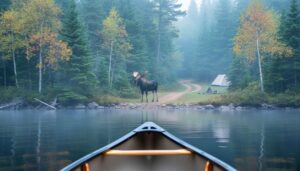
Here’s the good news for sunrise chasers—you can typically park before 8 AM without a permit at most Ontario Parks locations. The enforcement window hasn’t started yet, which means those magical early morning hours are yours to enjoy freely. I’ve done this countless times at parks like Algonquin and Killarney, arriving well before dawn to catch that perfect shot of mist rising off the lake.
However, here’s an insider tip: if you’re still there after 8 AM (and let’s be honest, once you start photographing, time flies), you’ll need a valid permit displayed on your dashboard. Park enforcement officers do make rounds, and they won’t care that you arrived early if it’s now 9 AM and you’re permit-free. My recommendation? Purchase your day-use permit online the night before or grab one immediately when you arrive, even if it’s pre-8 AM. Keep it in your glove compartment and display it before the enforcement window opens. That way, you can focus on capturing those breathtaking sunrise shots without constantly checking your watch or rushing back to your vehicle.
The Beach-Loving Family
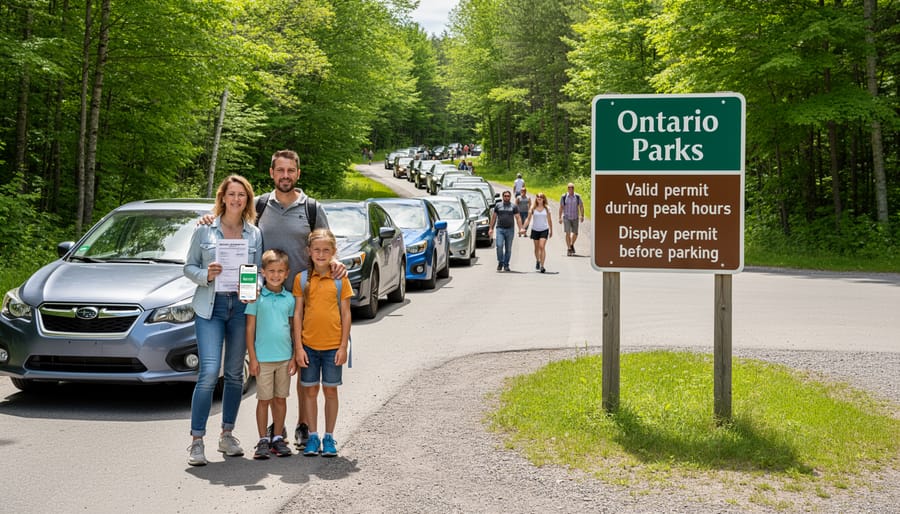
The Martins had been planning their beach day at Sandbanks Provincial Park for weeks, and Saturday’s sunshine felt like a reward. They arrived around 2pm, excited but slightly nervous about the “Permit Parking Only 8am-5pm” signs they’d spotted online. Would they need a permit? The answer was yes—even though they planned to leave by 4:30pm, the restricted hours were still in effect.
Sarah Martin had done her homework. She’d purchased their vehicle permit online the night before, printing it out and displaying it on their dashboard before they even left the parking lot. “Best decision ever,” she told her husband as they watched a family at the next spot scrambling to buy a permit on their phones while their kids waited impatiently with beach toys.
Here’s an insider tip the Martins learned: arriving after 2pm during peak season meant shorter lines at the gate but also fewer parking spots near the beach. They’d built in extra time to circle around, which paid off when they snagged a spot near the washrooms.
The beauty of understanding these time restrictions? The Martins knew they could return after 5pm for a sunset walk without needing another permit, turning one day pass into two memorable experiences.
Common Mistakes That Lead to Parking Tickets (And How to Avoid Them)
The ‘I’ll Just Be Quick’ Trap
I learned this lesson the hard way at Bon Echo Provincial Park. I figured a 10-minute dash to the trailhead wouldn’t matter since I was “barely parking.” Wrong! When I returned, a bright orange ticket greeted me on my windshield—$40 for skipping a $15 daily permit.
Here’s the reality: enforcement officers patrol regularly during permit hours, and they don’t distinguish between all-day visitors and quick stops. Whether you’re running to the washroom, snapping photos at the lookout, or checking trail conditions, your vehicle occupies a permitted space from the moment you park. Officers often ticket multiple vehicles in a single sweep, so the “I’ll only be a minute” gamble rarely pays off.
Think of permit parking like Ontario Parks camping rules—they apply the moment you enter, regardless of duration. The consequences aren’t just financial. Unpaid tickets can escalate to collection agencies and affect vehicle registration renewals. Save yourself the headache and budget a few extra minutes to purchase your permit properly.
Display Your Permit Properly (Yes, It Matters)
Here’s my insider tip from years of Ontario Parks visits: improper permit display is one of the easiest ways to get an unnecessary ticket, even when you’ve paid! Always place your permit on your dashboard, driver’s side, facing up and clearly visible through the windshield. Don’t tuck it under your sun visor or leave it in your glove compartment – parking enforcement officers need to confirm your permit without entering your vehicle.
For those with hanging permits, attach them to your rearview mirror with the dates and permit number facing outward. I’ve seen fellow visitors get ticketed simply because their permit flipped backward in the wind! Before you head out on the trails, take a quick photo of your displayed permit – if there’s ever a dispute, you’ll have timestamped proof. Also, double-check that your permit dates match your visit dates. It sounds obvious, but it’s surprisingly common to accidentally display last week’s permit, especially if you’re a regular visitor enjoying Ontario’s beautiful parks throughout the season.
Overstaying vs. Early Arrival Rules
Here’s the thing about timing: if you park at 4:30 PM with a valid permit, you’re good to go even if you stay past 5 PM. The permit requirement applies when you arrive during enforcement hours. Think of it like checking into a hotel – you need the right credentials when you enter.
Now, what about early birds? If you arrive at 7 AM when it’s free parking and stay past 8 AM, you’ll need to purchase a permit before enforcement begins. Set a phone reminder for 7:45 AM to grab that permit. Park staff do their rounds, and they won’t know you arrived earlier.
My insider tip? Always err on the side of caution. If you’re planning an all-day adventure and arrive before 8 AM, just buy your permit right away. It saves you from scrambling later and lets you fully enjoy your Ontario outdoor experience without worrying about the clock.
Planning Your Perfect Ontario Parks Visit
Beat the Crowds: Timing Your Arrival
Here’s my insider secret: arrive before 7:30am or plan for an after-3pm entry. I’ve found that the sweet spot is rolling into the parking lot around 7:15am, especially on weekends and holidays. You’ll beat the permit enforcement window and snag prime spots near trailheads before the rush begins.
During summer weekends, lots can fill completely by 9:30am. If you’re not an early riser, consider reserving your visit early and timing your arrival for mid-afternoon when day-trippers start heading home. I’ve noticed the 3-4pm window offers surprisingly open parking, plus you’ll catch beautiful late-day lighting for photos.
Eco-friendly tip: carpooling not only reduces your environmental footprint but also increases your chances of finding a spot during peak hours. On popular long weekends like Victoria Day or Canada Day, treat 8am as your absolute latest arrival time if you want guaranteed parking access.
What to Bring for a Seamless Entry
Before heading out to enjoy Ontario’s natural treasures, pack these essentials to ensure smooth sailing at permit parking zones. First and foremost, bring your permit confirmation email or receipt – saving it on your phone works great, but having a printed backup never hurts (especially in areas with spotty cell service).
Your vehicle permit pass should be displayed prominently on your dashboard where enforcement officers can easily spot it. I recommend using a permit holder or simply placing it face-up behind your windshield. Don’t forget a pen for filling out any self-serve permit envelopes at park entrances – trust me, you don’t want to be that person searching frantically through your glove compartment.
Here’s an insider tip: snap a photo of your displayed permit before leaving your car. This provides extra proof of compliance if any confusion arises. For eco-conscious visitors, consider bringing a reusable permit holder instead of disposable plastic sleeves. Pack your vehicle registration and driver’s license too, as park staff occasionally verify these details. Planning ahead with this simple checklist means more time exploring trails and less time worrying about parking logistics.
Now that you understand how permit parking works during those 8am-5pm hours, you’re all set to explore Ontario’s incredible parks without worry. Remember, the key takeaways are simple: arrive with your permit ready during enforcement hours, take advantage of free evening and early morning access when available, and always check your specific park’s regulations before heading out. Here’s an insider tip that seasoned park-goers swear by: download your permit confirmation to your phone and keep a screenshot handy, just in case you lose cell service at remote trailheads.
Most importantly, respecting these parking rules isn’t just about avoiding tickets. It’s about preserving Ontario’s natural treasures for future generations. The funds from parking permits directly support trail maintenance, wildlife conservation, and the pristine landscapes we all love. So grab your permit, pack your sense of adventure, and get out there to experience everything Ontario Parks has to offer. The waterfalls, forests, and starry skies are waiting for you!







+ There are no comments
Add yours