
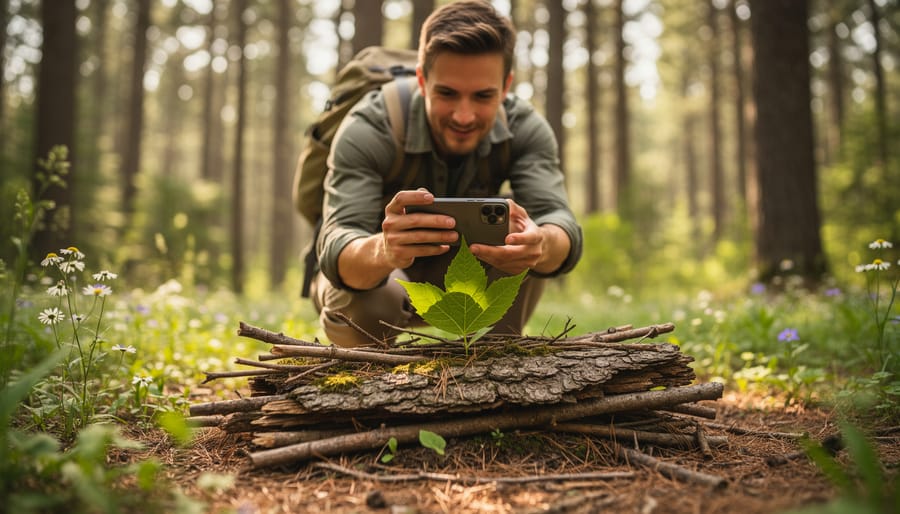
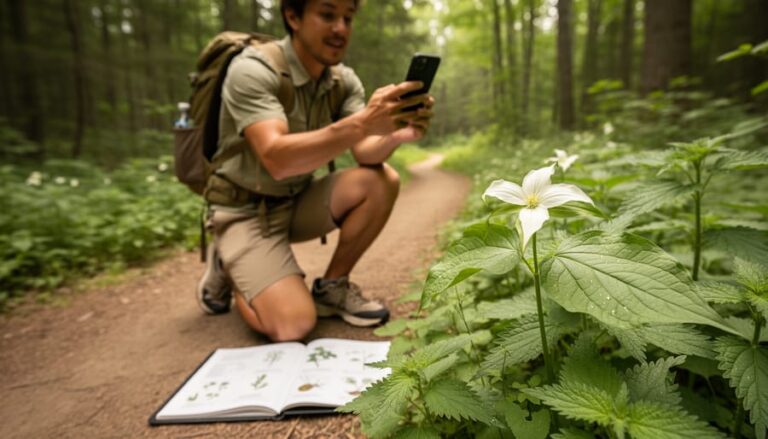
Biodiversity enhancement means actively creating the conditions where more native species can thrive, and in 2026, pocket-sized AI travel tools have transformed how everyday park visitors can participate. Instead of guessing which plants attract pollinators or wondering if that dead snag should stay standing, you can now photograph what you see, identify species instantly, and receive habitat-improvement suggestions tailored to Ontario’s ecosystems within seconds.
The process takes about four weekends spread across a season. You’ll survey what’s already living in your chosen area, add or protect features that fill ecological gaps (maybe a brush pile for amphibians or native wildflowers for bees), then monitor which species move in. No ecology degree required.
What makes this approach different from traditional conservation is the focus on participation over perfection. You’re not restoring a degraded site to some historical baseline. You’re working with what exists and nudging it toward supporting a wider range of life. A single rotting log placed strategically can shelter salamanders, beetles, fungi, and the birds that hunt them. Three species of native asters can feed a dozen pollinator species through fall.
This guide walks you through the complete workflow, from baseline documentation using free identification apps to verifying your results six months later. You’ll learn which small changes deliver outsized benefits, how to avoid common mistakes that waste effort, and when to step back and let nature do the work.
What You’ll Need: Tools and Materials for Your Biodiversity Discovery Project
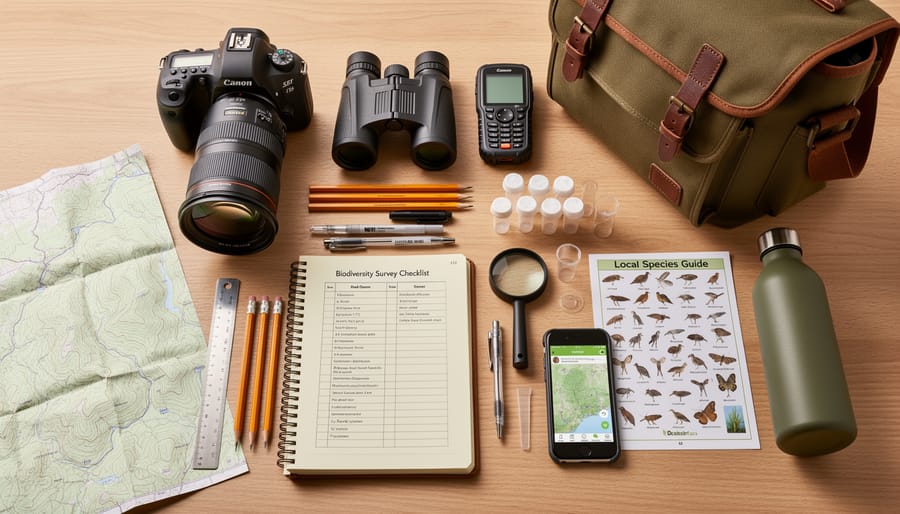
Getting started with biodiversity discovery in Ontario parks doesn’t require expensive equipment or specialized training. Most of what you need is already in your pocket, and the rest is freely available. Here’s your complete toolkit for transforming a simple park visit into a powerful biodiversity enhancement project.
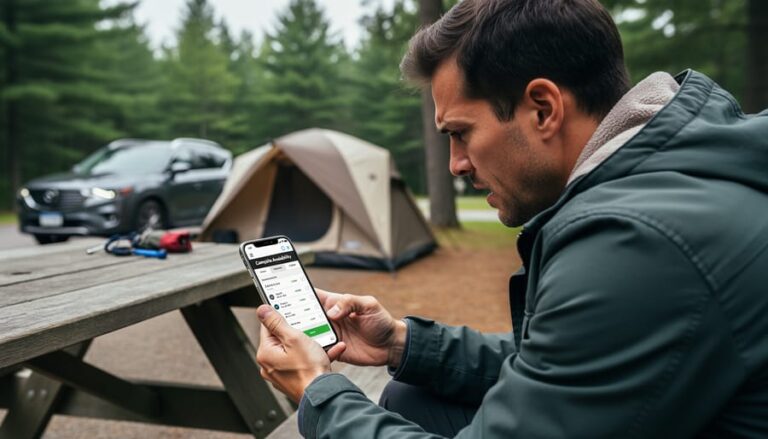
Your smartphone or tablet is the foundation of modern biodiversity discovery. Any device with a camera and internet connectivity (even spotty connection works, since many apps cache data) will do the job. Make sure you’ve got adequate battery life for your outing, a portable power bank is smart insurance, especially on longer hikes. Many Ontario parks now feature solar charging stations at trailheads and visitor centers, so you can top up before heading out.
- iNaturalist: The gold standard for biodiversity observations, with AI identification for plants, animals, insects, and fungi, plus a global community of experts who verify your finds.
- Seek by iNaturalist: Perfect for families and beginners, offering gamified species discovery without requiring account creation or data sharing.
- Merlin Bird ID: Cornell Lab’s free app identifies birds by photo, sound, or description, essential for Ontario’s incredible bird diversity.
- Picture Insect and PlantNet: Specialized tools for detailed insect and plant identification when you want a second opinion.
- Field notebook or notes app: Record observations AI can’t capture, behavior patterns, habitat conditions, weather, or personal insights.
- Binoculars (optional): Helpful for bird and wildlife observation without disturbing them.
- Hand lens or macro phone lens (optional): Opens up the hidden world of tiny insects, moss, and lichen.
Before you head out, check your chosen park’s website for any required permits or photography restrictions. Most Ontario parks welcome citizen science activities, but confirming ahead prevents surprises. Download your apps and test them at home so you’re comfortable when you’re standing in front of that mystery wildflower. Everything listed here is either free or commonly owned, making biodiversity discovery genuinely accessible to everyone.
Before You Start: Safety and Respect for Nature
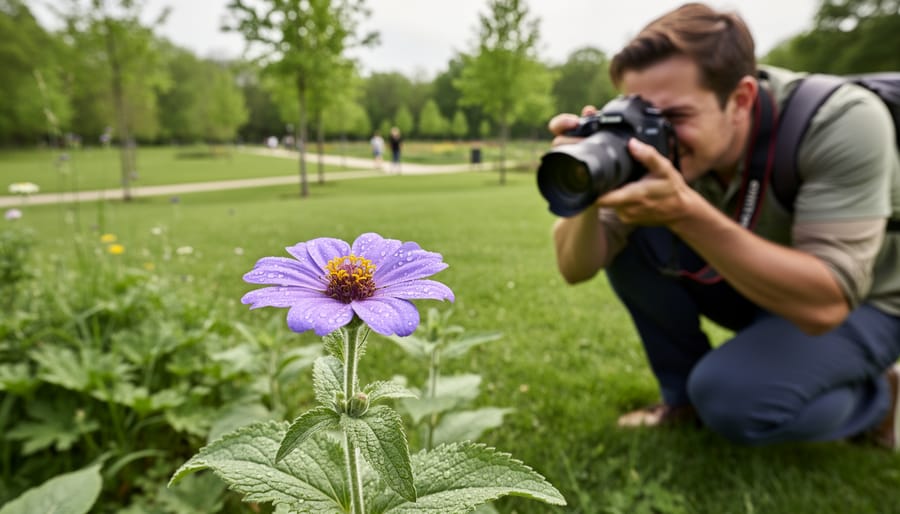
Before you grab your phone and head out to catalogue species, a few critical safety reminders will keep you, the wildlife, and the park itself protected. Biodiversity discovery should enhance ecosystems, not harm them.
Always stay on designated trails unless the park explicitly permits off-trail exploration. Trampling sensitive habitats destroys the very biodiversity you’re trying to document. That rare wildflower you want to photograph up close might be growing in fragile soil that takes years to recover from a single footprint.
Respect wildlife by keeping your distance. Never touch, feed, or pursue animals for a better photo, and never disturb nests, dens, or burrows. If an animal changes its behavior because of your presence, you’re too close. Birds flushed repeatedly from nests may abandon eggs, and feeding wildlife disrupts natural foraging patterns and can make animals dangerously habituated to humans.
Before you visit, check your chosen park’s regulations. Many Ontario parks prohibit collecting plants, insects, rocks, or other natural objects, even for scientific purposes, and collecting may be restricted without permits. The good news is that AI discovery tools only require photos, making observation-based biodiversity work perfectly aligned with Leave No Trace principles.
Never introduce anything to the ecosystem, whether it’s “helpful” native plants from your garden or bread for the ducks. Even well-meaning interventions can spread diseases, displace established species, or introduce invasive hitchhikers. Your role is observer and advocate, not interventionist, at least until you’ve coordinated with park managers on appropriate enhancement actions.
Step-by-Step: How to Discover and Enhance Biodiversity Using AI Tools
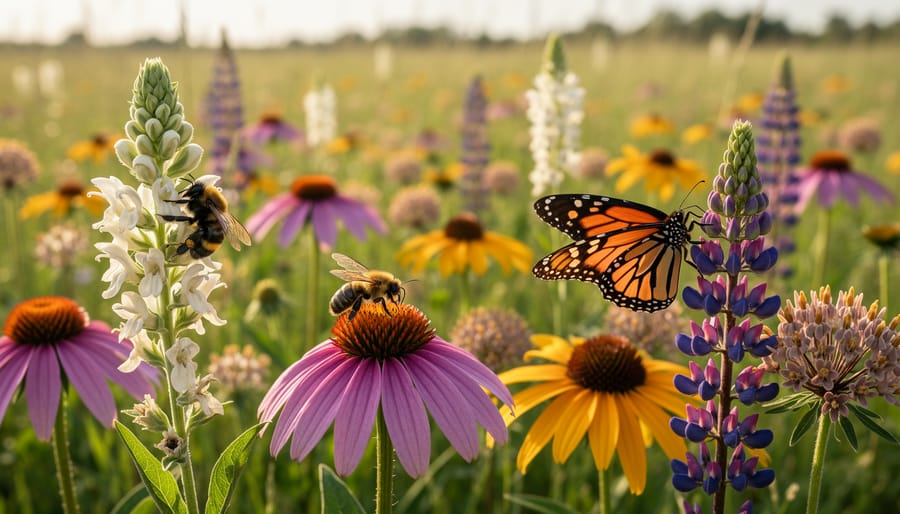
Step 1: Conduct Your Baseline Biodiversity Survey
Your baseline survey is where the magic begins. Think of it as creating a snapshot of your park’s current biodiversity that you’ll build on over time.
Start by choosing a manageable area, perhaps a one-kilometre loop that crosses different habitats. Forest edges are biodiversity hotspots where woodland meets meadow. Don’t skip wetland boardwalks or open meadows. Each habitat hosts different species, and your goal is to capture that variety.
Open your AI discovery app and photograph everything that catches your eye. For plants, get shots of leaves, flowers, and overall shape. Insects need close-ups showing wing patterns and body segments. Birds benefit from multiple angles if they’ll cooperate. Fungi require top and underside views. The more detail your photos capture, the more accurate your AI identification will be.
I’ll never forget my first dawn chorus walk at Frontenac Provincial Park. I expected the usual robins and chickadees, but my Merlin Bird ID app picked up seventeen species before breakfast, including a scarlet tanager I’d walked past a dozen times without noticing. That morning taught me that discovery isn’t just about new places. It’s about truly seeing what’s already there.
Visit at different times. Morning light reveals active pollinators. Evening brings out different bird species. Each season unveils new organisms. Log every observation in iNaturalist, creating your digital biodiversity journal. Unlike 3D park tours or AR nature walks this real-world exploration generates data that directly guides your enhancement work.
Step 2: Analyze What’s Missing or Underrepresented
Once you’ve logged your observations, it’s time to play detective with your data. Open your iNaturalist app and look at the species you documented, what patterns emerge? More importantly, what’s conspicuously absent?
Start by comparing your findings to what should be thriving in Ontario parks during that season. If you surveyed in summer but spotted zero milkweed or Joe-Pye weed, that’s a red flag for missing pollinator food sources. Notice lots of non-native plants like garlic mustard or dog-strangling vine? That crowding-out effect explains why you might not see native woodland wildflowers or the butterflies that depend on them.
Here’s an insider approach I use: pull up Ontario’s native species lists for your ecoregion (available through Ontario Nature or regional conservation authorities) and cross-reference them with your observations. In the Carolinian zone, for example, you should encounter species like wild bergamot and purple coneflower. Absent from your survey? You’ve identified an enhancement opportunity.
The iNaturalist community is gold for pattern recognition. Post your observations and ask experts why certain groups might be missing. I once queried why I found zero native bees in a meadow that looked perfect for them, a local naturalist pointed out the lack of early-spring bloomers, which broke the bee lifecycle. That single insight shaped my entire enhancement plan.
Don’t expect perfection in one survey. You’re building a baseline, and even gaps in your data tell a valuable story about what your park ecosystem needs.
Step 3: Choose Your Biodiversity Enhancement Actions
Your AI discovery work has shown you what’s thriving and what’s missing, now it’s time to turn those insights into action. The beauty of biodiversity enhancement is that everyone can contribute, whether you’re a weekend hiker or someone with land adjacent to a park. Start where you are, with what you have.
If you’re a casual park visitor, your observations alone create value. Share your iNaturalist findings with park staff through their website contact forms or visitor centres, managers genuinely want this data to inform habitat management decisions. Join citizen science projects like the Ontario Reptile and Amphibian Atlas or eBird Canada, where your sightings contribute to provincial conservation planning. Many Ontario Parks also run volunteer days for invasive species removal (garlic mustard pulls in spring, buckthorn cutting in fall), which directly free up space for native plants to recover. I’ve met incredible people at these events, and there’s something deeply satisfying about leaving a trail section healthier than you found it.
For those with property near parks or working with community groups, here are proven actions ranked by effort and impact:
- Plant a native pollinator garden using species your survey identified as absent (milkweed for monarchs, wild bergamot for native bees), visible results within one season
- Create brush piles from fallen branches in corner areas, providing instant shelter for small mammals, amphibians, and ground-nesting birds
- Install species-specific structures like bat houses (if your survey found few insect-eaters) or nesting boxes for cavity-nesting birds underrepresented in your area
- Establish pollinator corridors by coordinating with neighbours to plant continuous native strips connecting fragmented habitats, higher effort but transformative for local biodiversity over 2-3 years
Match your action to your discovery. Found zero butterfly species during peak summer? Focus on host plants, not just nectar sources. Noticed an absence of berry-eating birds? Plant native shrubs like serviceberry or elderberry that fruit at different times. The AI tools showed you the gaps; now you’re filling them intentionally, one species at a time.
Step 4: Document and Monitor Changes Over Time
Biodiversity enhancement isn’t a one-and-done activity; it’s a journey that unfolds over months and years. The same AI tools that helped you discover what was missing can now track what’s returning.
Start by creating a simple monitoring routine. Revisit the exact spots where you took your baseline photos, ideally at the same time of year or season. Take fresh photos from similar angles and log them in your AI apps. iNaturalist lets you add observations to specific “projects,” which is perfect for organizing your monitoring data. Create a personal project like “Riverside Park Enhancement 2026-2028” to keep all your tracking observations in one place. This makes it easy to scroll through and spot patterns over time.
Before-and-after photos tell a powerful story. Capture the same patch of ground in spring 2026 and again in spring 2027. You might see bare dirt transform into a carpet of native wildflowers, or a struggling shrub suddenly buzzing with pollinators. These visual records motivate you during the slow periods and provide proof when sharing your work with park managers or community groups.
Watch your species counts climb. New arrivals are thrilling rewards: the first monarch butterfly nectaring on your planted milkweed, a ruby-throated hummingbird investigating the cardinal flowers, or a previously absent native bee species appearing in your observations. Celebrate these wins, no matter how small they seem.
Share your progress with Ontario’s naturalist community through iNaturalist comments, local Facebook groups, or park volunteer networks. Your documentation might inspire others and contribute valuable data to regional biodiversity research.
How to Verify Your Success: Measuring Biodiversity Improvement
Knowing whether your biodiversity enhancement efforts are actually working can feel tricky at first, but nature gives you plenty of clear signals if you know what to watch for. The most straightforward metric is your iNaturalist data, compare your current species counts to your baseline survey from months or years earlier. If you logged 23 plant species in your first survey and now you’re consistently finding 35-40, that’s real progress. Pay attention not just to total numbers but to the types of species appearing. Are you seeing more native wildflowers? Different butterfly species than before? These shifts tell the story of a recovering ecosystem.
Indicator species are your best friends for measuring success because they’re sensitive to ecosystem health. Native bees visiting new wildflowers you planted? Excellent sign. Hearing more varied bird songs during spring mornings? Your habitat improvements are working. Spotting frogs or salamanders near water features means amphibians feel safe enough to breed there. In Ontario parks, watch for species like monarch butterflies (if you’ve added milkweed), eastern bluebirds (if you’ve installed nest boxes), or native ruby-throated hummingbirds at tubular flowers.
Visual changes matter too. Healthier ecosystems have more continuous plant coverage with less bare soil, a longer succession of blooms from spring through fall, and visible layers of vegetation at different heights. If that patch that used to be all grass now has goldenrod, asters, and black-eyed Susans blooming at different times, you’re creating year-round food sources.
Be realistic about timelines. Some changes happen fast, annual wildflowers can bloom the first season, and pollinators will find them within weeks. Other improvements take patience. Shrubs need 2-3 years to mature enough for nesting birds. Amphibian populations respond slowly, often requiring 3-5 years of consistent habitat quality. Tree plantings won’t provide full canopy benefits for a decade or more.
Once you’re seeing consistent improvements, consider expanding your efforts to adjacent areas or connecting with local naturalist groups who can amplify your impact. Ontario Parks runs several citizen science initiatives like the Ontario Reptile and Amphibian Atlas and various BioBlitz events where your observations contribute to provincial biodiversity monitoring. Becoming a park biodiversity ambassador, sharing your knowledge with other visitors and helping organize community enhancement days, turns your personal success into a movement that benefits entire ecosystems.
Common Questions About Using AI Tools for Biodiversity Enhancement
How accurate are AI identification apps for identifying species?
Apps like iNaturalist and Merlin Bird ID are impressively accurate for common species, often reaching 90% or higher success rates with clear photos. For unusual finds, rare species, or tricky look-alikes, it’s smart to wait for community verification on iNaturalist or cross-reference with a field guide before taking any enhancement actions based on that identification.
Do these apps work in remote parks without cell service?
Seek by iNaturalist and Merlin Bird ID both offer offline modes that work without internet, though you’ll need to download regional data packs before your trip. For full iNaturalist functionality with community ID help, you can save observations offline and upload them later when you reach WiFi spots at park visitor centers or nearby towns.
Do I need to be a scientist or have special training to do this?
Not at all! These tools are designed for everyone, from curious kids to seasoned hikers. Your observations contribute valuable data regardless of your expertise, and the iNaturalist community includes friendly experts who help verify identifications and answer questions.
How do I get permission to do enhancement projects in Ontario Parks?
Start by contacting the park office or checking the Ontario Parks website for volunteer programs and stewardship opportunities. Many parks welcome citizen science contributions and have organized events for invasive species removal or native plantings, while more involved projects may require a permit or partnership with park staff.
What do these tools cost?
All the core apps mentioned (iNaturalist, Seek, Merlin Bird ID, PlantNet) are completely free to download and use. There are no subscriptions or hidden fees, making biodiversity discovery accessible to anyone with a smartphone.
How can I get my kids excited about biodiversity discovery?
Turn it into a scavenger hunt using Seek, which has achievement badges and challenges that appeal to younger explorers. Let them be the photographer and app operator, celebrate each new species as a discovery, and keep sessions short and fun rather than focusing on data collection.
The beauty of AI-powered biodiversity tools is that they remove the intimidation factor from nature study. You don’t need to memorize Latin names or carry heavy field guides anymore. Just point your camera, let the app do the heavy lifting on identification, and focus on the exciting part: noticing patterns, asking questions, and taking action to help your local ecosystem thrive. Most Ontario park visitors I’ve met are surprised to learn they’ve been walking past dozens of species they never noticed before, and that simple awareness is often the first step toward meaningful enhancement work.
You don’t need a science degree or expensive equipment to make a real difference in Ontario’s parks, just a smartphone and a willingness to look closely at the world around you. The process we’ve covered is genuinely simple: discover what’s there using AI apps, analyze the gaps, take thoughtful action, and monitor how things change. When hundreds of park visitors do this work, the collective impact transforms entire ecosystems.
Why not start this weekend? Pick a local park, download iNaturalist or Merlin, and spend an hour recording what you find. You’ll be amazed at how quickly you start noticing species you’ve walked past for years. As seasons pass and your observations accumulate, you’ll watch “your” park come alive in new ways, more butterflies visiting the wildflowers, birds nesting in spaces you helped restore, connections forming with fellow naturalists who share your enthusiasm.
This kind of observation and stewardship is the most sustainable form of park tourism we have. You’re not just visiting nature; you’re actively participating in its recovery. That relationship, built one observation at a time, enriches both the ecosystem and your own sense of place in Ontario’s remarkable natural spaces.



+ There are no comments
Add yours