
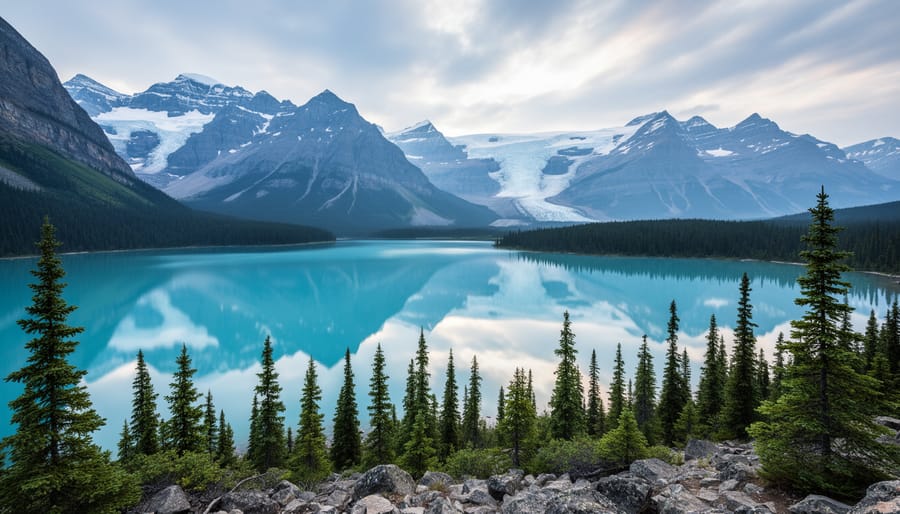
Canada is home to 48 protected areas under the national parks system: 37 national parks and 11 national park reserves spread across every province and territory. These stunning landscapes safeguard 343,377 square kilometers of wilderness, from the Pacific tidal pools of British Columbia to the Arctic tundra of Nunavut, representing 31 of Canada’s 39 distinct terrestrial natural regions.
If you’ve only explored a handful of Canada’s most famous parks like Banff or Jasper, you’re missing out on an incredible diversity of ecosystems and experiences. I’ve personally discovered that some of the quieter, lesser-known parks offer equally spectacular scenery without the summer crowds. The complete list reveals hidden gems you’ve probably never heard of, from Akami-Uapishkᵁ-KakKasuak-Mealy Mountains National Park Reserve in Labrador to Aulavik National Park in the high Arctic.
This guide gives you the full official inventory organized by region, so you can plan everything from weekend getaways close to home to epic cross-country adventures. Whether you’re an Ontario resident looking to explore Bruce Peninsula National Park in your own backyard or an international traveler mapping out a multi-park journey, understanding the scope of this remarkable system helps you make smarter choices about where to invest your precious vacation time.
The parks range from easily accessible destinations with modern facilities to remote wilderness areas requiring floatplane access and serious backcountry skills. Knowing what’s out there is the first step to discovering your next unforgettable Canadian adventure.
Why Visit Canada’s National Parks
Canada’s national parks system offers something no other country can quite replicate: a protected network spanning Arctic tundra to temperate rainforest, prairie grasslands to Atlantic coastlines, all within a single nation. These 37 national parks and 11 national park reserves represent 31 of Canada’s 39 terrestrial natural regions, protecting approximately 343,377 square kilometers of the country’s most ecologically significant landscapes. When you visit, you’re not just seeing beautiful scenery, you’re stepping into carefully preserved ecosystems that function as living laboratories for biodiversity and climate research.
The diversity alone makes the case compelling. You can watch polar bears in Wapusk, kayak among orcas off the Pacific coast, hike through boreal forest that stretches to the horizon, or stand on ancient rock formations that reveal Earth’s geological history. Each park protects something irreplaceable, whether it’s endangered species habitat, intact watersheds, or landscapes found nowhere else on the planet.
Beyond the ecological significance, Canada’s national parks offer experiences that matter:
- Unparalleled biodiversity, from caribou migrations in the Arctic to old-growth forests on the coasts
- World-class hiking and camping infrastructure that balances access with wilderness preservation
- Indigenous cultural experiences and interpretive programs led by First Nations, Inuit, and Métis guides
- Wildlife viewing opportunities you won’t find in more developed destinations, grizzlies, wolves, whales, and bison in their natural habitats
- Direct contribution to conservation through your park fees and responsible tourism practices
Many parks were established through collaboration with Indigenous communities, and some reserves, like Akami-Uapishkᵁ-KakKasuak-Mealy Mountains, exist because of ongoing partnerships that honor land rights while protecting critical ecosystems. When you visit, you’re supporting a conservation model that respects both ecological and cultural heritage.
The eco-friendly angle matters here. These aren’t theme parks or manufactured attractions. Your presence, when done thoughtfully, helps justify continued protection and funding for threatened landscapes. Parks Canada’s mandate balances preservation with education, meaning your visit serves a purpose beyond personal enjoyment, it demonstrates public value for wild places in an era when they’re increasingly under pressure.
The Complete Canadian National Parks List
Canada’s 48 protected areas under the national parks system span every province and territory, collectively safeguarding approximately 343,377 square kilometers of the country’s most extraordinary landscapes. Before diving into the complete list, it’s worth understanding the distinction between the two designations you’ll see: national parks are fully established protected areas, while national park reserves exist in regions where Indigenous land claim negotiations are still ongoing. Once those agreements are finalized, reserves typically transition to full national park status, but both offer the same level of ecological protection and visitor access in the meantime.
The system represents 31 of Canada’s 39 terrestrial natural regions, from coastal rainforests and prairie grasslands to Arctic tundra and the Canadian Shield’s ancient bedrock. Here’s the complete inventory organized by province and territory, helping you identify which destinations align with your interests and travel plans.
| Province/Territory | Park Name | Key Feature/Landscape Type |
|---|---|---|
| Alberta | Banff, Elk Island, Jasper, Waterton Lakes, Wood Buffalo (shared with NWT) | Rocky Mountains, boreal forest, prairie-parkland transition, bison habitat |
| British Columbia | Glacier, Gulf Islands, Gwaii Haanas (reserve), Kootenay, Mount Revelstoke, Pacific Rim (reserve), Yoho | Coastal rainforest, Haida heritage, alpine meadows, old-growth cedars |
| Manitoba | Riding Mountain, Wapusk | Boreal-prairie ecotone, polar bear denning habitat |
| New Brunswick | Fundy, Kouchibouguac | World’s highest tides, Acadian coastal forests, barrier islands |
| Newfoundland and Labrador | Gros Morne, Terra Nova, Torngat Mountains, Akami-Uapishkᵁ-KakKasuak-Mealy Mountains (reserve) | Fjords, geological wonders, Arctic wilderness, boreal forest |
| Northwest Territories | Aulavik, Nahanni (reserve), Tuktut Nogait, Wood Buffalo (shared with AB) | Arctic islands, dramatic canyons, caribou calving grounds |
| Nova Scotia | Cape Breton Highlands, Kejimkujik | Coastal cliffs, Acadian forest, Mi’kmaw petroglyphs, dark sky preserve |
| Nunavut | Auyuittuq, Qausuittuq, Quttinirpaaq, Sirmilik, Ukkusiksalik | Arctic peaks, glaciers, High Arctic desert, polar wildlife |
| Ontario | Bruce Peninsula, Georgian Bay Islands, Point Pelee, Pukaskwa, Thousand Islands | Niagara Escarpment, Canadian Shield, Great Lakes ecosystem, southernmost point |
| Prince Edward Island | Prince Edward Island | Red sandstone cliffs, dune systems, Green Gables heritage |
| Quebec | Forillon, La Mauricie, Mingan Archipelago (reserve) | Gaspé Peninsula coastline, boreal lakes, limestone monoliths |
| Saskatchewan | Grasslands, Prince Albert | Mixed-grass prairie, black-tailed prairie dogs, boreal transition |
| Yukon | Ivvavik, Kluane (reserve), Vuntut | Coastal plain calving grounds, Canada’s highest peaks, Old Crow Flats wetlands |
Each park protects unique ecosystems you won’t find replicated elsewhere in the system. Grasslands in Saskatchewan shelters one of North America’s last intact prairie landscapes, complete with burrowing owls and black-tailed prairie dogs. Quttinirpaaq in Nunavut takes you within 800 kilometers of the North Pole, where 24-hour summer daylight illuminates ice caps and polar deserts. Point Pelee in Ontario sits at the same latitude as northern California, serving as a critical stopover for migrating monarch butterflies and songbirds funneling through Canada’s southernmost point.
The reserves carry the same weight of protection as fully designated parks. Gwaii Haanas in British Columbia encompasses traditional Haida territories and ancient village sites, with co-management agreements ensuring Indigenous voices guide conservation decisions. Nahanni in the Northwest Territories protects the dramatic South Nahanni River canyon system while land claim discussions continue with the Dehcho First Nations.
This breadth means you can structure trips around specific interests rather than trying to see everything. Chasing waterfalls? Nahanni’s Virginia Falls drops twice the height of Niagara. Craving solitude? Aulavik on Banks Island sees fewer than 50 visitors annually. Want accessible family adventures? Elk Island near Edmonton offers bison viewing just 45 minutes from a major airport. The complete list gives you the framework; the next sections will help you pinpoint where to start.
Top Canadian National Parks Worth Prioritizing
With 48 national protected areas spanning vastly different ecosystems, from Pacific rainforests to Arctic tundra, we’ve selected seven standout parks that showcase Canada’s geographic and ecological range. Our picks balance practical accessibility with authentic wilderness experiences, ensuring representation from coast to coast to coast. We prioritized parks with strong visitor infrastructure alongside remote destinations for adventurous travelers, ecological significance within Parks Canada’s 31 natural region framework, and varied landscapes that demonstrate why Canada’s national parks system protects over 343,000 square kilometers. This approach gives Ontario readers familiar starting points like Bruce Peninsula while inspiring explorations of iconic Rockies destinations and rarely-visited northern territories. Each featured park offers distinct experiences you won’t find elsewhere in the system.
1. Banff National Park, Alberta
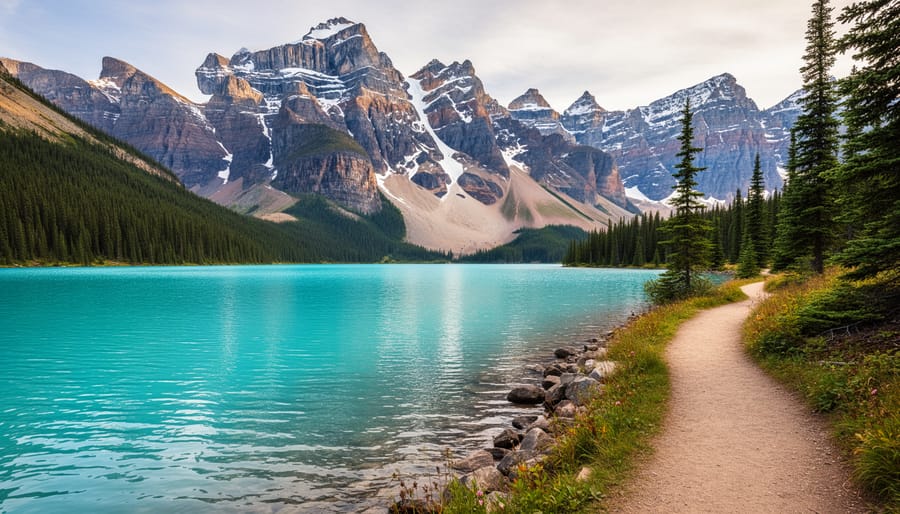
Established in 1885, Banff became Canada’s first national park and remains the crown jewel of the country’s protected areas. The park delivers everything visitors imagine when they picture the Canadian Rockies: jagged limestone peaks piercing endless blue sky, impossibly turquoise lakes like Louise and Moraine fed by glacial melt, and dense conifer forests sheltering elk, bighorn sheep, and grizzly bears.
The accessibility sets Banff apart. Well-maintained trails range from easy lakeside strolls to challenging alpine scrambles, and the town of Banff provides full services within park boundaries. That convenience comes with a trade-off: summer crowds can overwhelm the most famous spots. Visit Lake Louise before 8 a.m. or after 6 p.m. to experience the view without the shoulder-to-shoulder traffic, or explore lesser-known gems like Johnson Canyon and Peyto Lake during midday.
For eco-friendly visiting, stick to designated trails to protect fragile alpine meadows, use the park shuttle system between Lake Louise and Moraine Lake during peak season, and maintain proper wildlife distance. Bears control access corridors here, and respecting their space protects both you and the animals from harmful encounters.
2. Pacific Rim National Park Reserve, British Columbia
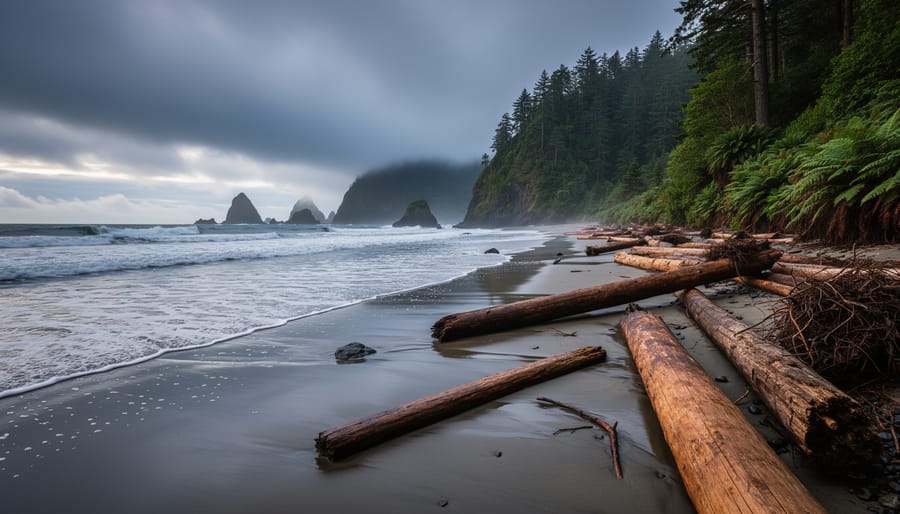
Pacific Rim National Park Reserve hugs Vancouver Island’s wild west coast, where ancient temperate rainforest meets the crashing Pacific. This isn’t a place for calm swims, it’s where you come to feel the raw power of the ocean against some of Canada’s most dramatic shoreline. The park divides into three distinct units: Long Beach, the Broken Group Islands, and the West Coast Trail, each offering a different way to experience this rugged coastal ecosystem.
Long Beach is the most accessible section, featuring 16 kilometres of windswept sand backed by old-growth forest. November through February brings storm-watching season, when waves can reach six metres and the Wickaninnish Inn’s viewing decks fill with people watching nature’s theatre. Come prepared with waterproof layers, you’ll want them.
The West Coast Trail demands serious preparation: this 75-kilometre backcountry route requires advance reservations, orientation sessions, and genuine wilderness skills. It’s not a casual hike, but experienced trekkers find it transformative.
This land holds deep significance for the Nuu-chah-nulth peoples, whose territories encompass the park. Indigenous-led tours reveal traditional plant uses and the cultural connections that pre-date Parks Canada by thousands of years. Beach etiquette matters here: stay off drift logs during high surf (they can roll), respect tide pool creatures by looking without touching, and pack out everything you bring in.
3. Gros Morne National Park, Newfoundland and Labrador
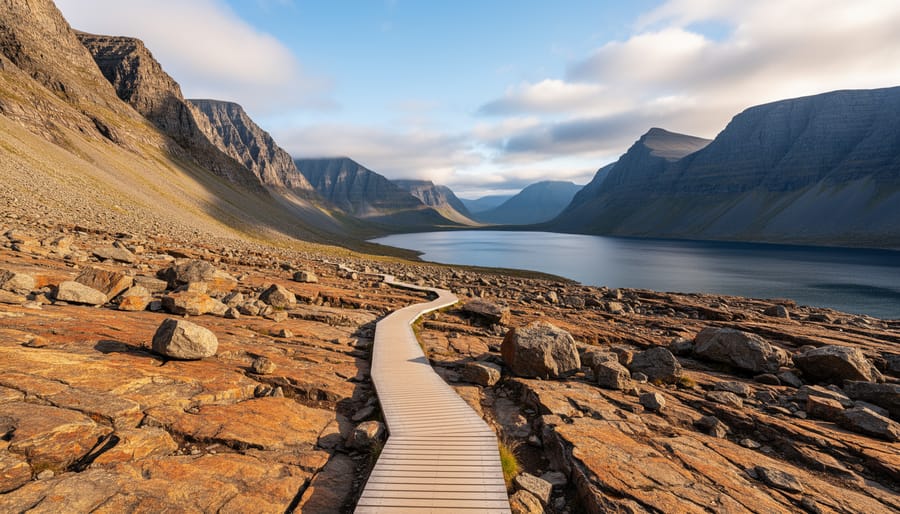
Gros Morne earned its UNESCO World Heritage designation for a reason you can actually see and touch: this is one of the few places on Earth where ancient ocean floor and the rocks of the Earth’s mantle lie exposed at the surface. The Tablelands, a rust-orange expanse of peridotite rock that resembles something from Mars, offers a surreal hiking experience where almost nothing grows due to the mineral composition. It’s genuinely otherworldly, and the flat 4-kilometer trail makes it accessible for most fitness levels.
The park’s fjords cut deep into Newfoundland’s western coast, and a boat tour through Western Brook Pond is worth every dollar. Despite its name, this is actually a landlocked fjord with 600-meter cliffs rising straight from the water. Tours run from late May through early October, and you’ll want to book ahead during summer peak season. The approach requires a 3-kilometer walk from the parking area, so factor in extra time.
For hiking, the Green Gardens trail delivers coastal meadows, sea stacks, and volcanic remnants in a moderately challenging 9-kilometer loop. Pack layers, weather shifts fast here, and coastal winds can be fierce even in summer.
4. Bruce Peninsula National Park, Ontario
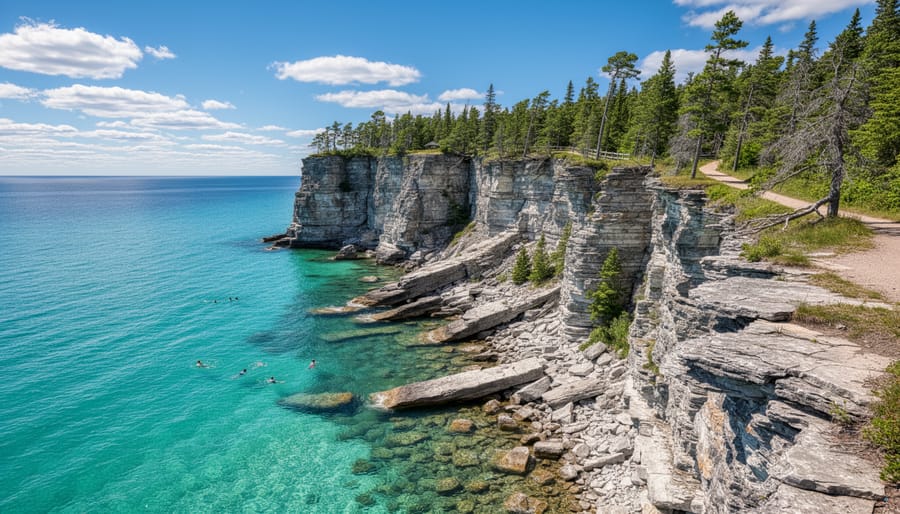
Bruce Peninsula National Park sits at the tip of the Niagara Escarpment where it meets Georgian Bay’s turquoise waters, offering Ontario residents a taste of rugged wilderness without leaving the province. The park’s crown jewel is the Grotto, a wave-carved cavern in the cliffside where incredibly clear water glows blue-green against white limestone. The Bruce Trail runs through the park, with sections along the escarpment edge providing dramatic views over the bay.
Here’s what you need to know before visiting: parking reservations are mandatory during peak season (May through October) and they sell out weeks in advance, so book early through the Parks Canada reservation system. The Grotto trail gets packed on summer weekends, but arrive before 9 AM or visit on a weekday for a quieter experience. For swimming, Halfway Log Dump offers easier water access than the Grotto’s rocky scramble, and the beach at Cyprus Lake campground provides a family-friendly option with gentler entry.
The water stays cold year-round, typically 15-18°C even in August, so plan accordingly. Wear sturdy footwear with good grip, the limestone gets slippery when wet, and the trail includes ladder climbs and rocky sections.
5. Auyuittuq National Park, Nunavut
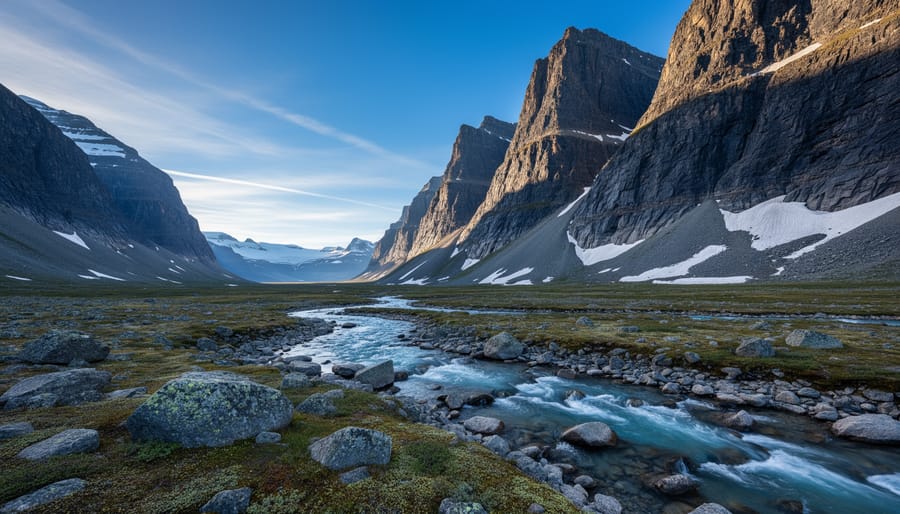
Auyuittuq National Park delivers the Arctic adventure most southern parks can’t touch. Located on Baffin Island, this 19,089-square-kilometer wilderness translates to “the land that never melts” in Inuktitut, a fitting name for terrain dominated by the Penny Ice Cap and granite peaks that soar over 2,000 meters.
The crown jewel is the Akshayuk Pass, a 97-kilometer glacial valley that cuts through the heart of the park. Backpackers who tackle this multi-day route navigate river crossings, ford braided streams, and camp beneath towering walls where glaciers calve into valleys. During summer, the midnight sun bathes the landscape in 24-hour daylight, creating surreal hiking conditions where your watch becomes irrelevant.
This isn’t a park for casual visitors. You’ll need genuine backcountry skills, navigation experience, river-crossing technique, and the ability to handle rapidly changing Arctic weather. There are no trails, campgrounds, or facilities once you’re in the park. Charter flights from Pangnirtung or Qikiqtarjuaq provide the only access, and you must register with Parks Canada before entering.
Plan for a 10-to-14-day expedition minimum, pack bear-resistant food storage, and bring layers for temperatures that swing from warm valley sun to hypothermic conditions when storms roll through. The reward? Wilderness so raw and untouched it redefines what a national park experience can be.
6. Jasper National Park, Alberta
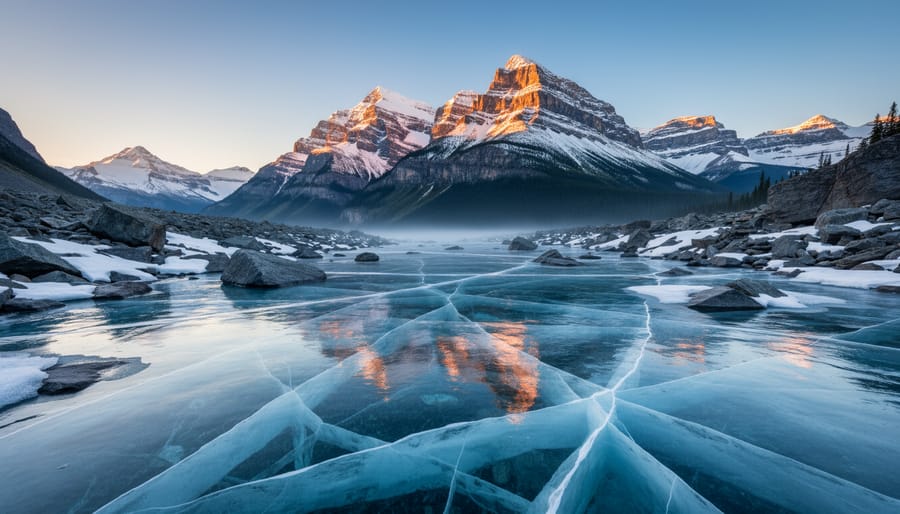
Jasper offers a quieter Rockies experience than its famous southern neighbor, spanning 11,000 square kilometers of wilderness with fewer tour buses and more elbow room on the trails. The park earned Dark Sky Preserve designation in 2011, making it one of the world’s largest accessible areas for stargazing, October’s Jasper Dark Sky Festival draws astronomers and casual sky-watchers alike to witness the Milky Way arching overhead with zero light pollution.
The Columbia Icefields Skywalk puts you 280 meters above the Sunwapta Valley on a glass-floored platform, while the ancient Athabasca Glacier allows you to walk on ice that’s been accumulating for millennia. Unlike more crowded mountain destinations such as Algeronquin Park in Ontario, Jasper’s backcountry sees far fewer visitors, giving you genuine solitude on multi-day treks.
Wildlife safety matters here: elk wander through Jasper townsite year-round, and the Maligne Valley corridor supports healthy grizzly and black bear populations. Carry bear spray on every hike, make noise on blind corners, and never approach animals for photos, give elk and bighorn sheep at least 30 meters of space, bears at least 100 meters. For stargazing, drive to the Fairmont Jasper Park Lodge’s lakefront or Old Fort Point after dark with a red-light headlamp to preserve your night vision.
7. Ivvavik National Park, Yukon
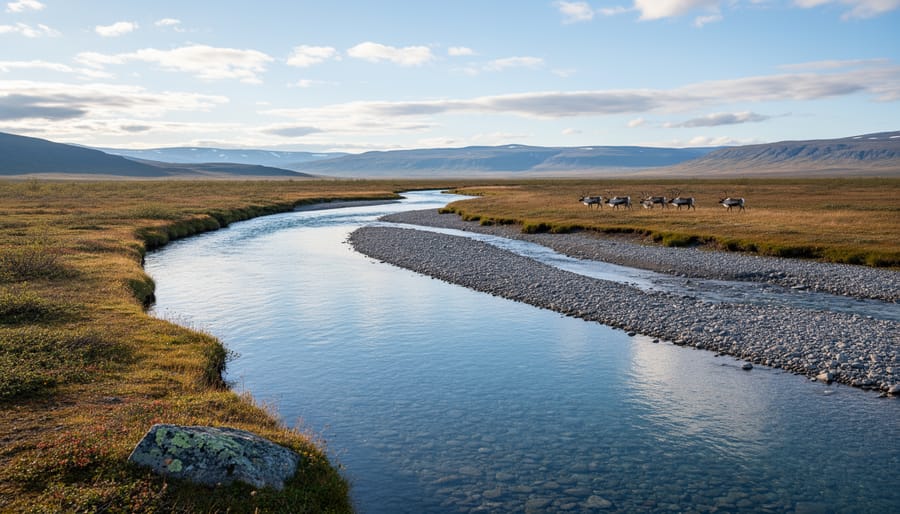
Ivvavik represents Canada’s most remote national park experience and holds special significance as the first park created through an Inuvialuit land claim agreement in 1984. Located in Yukon’s far north, it’s only accessible by chartered plane from Inuvik, making it the ultimate destination for adventurers seeking true Arctic wilderness. The park protects the calving grounds of the Porcupine caribou herd, witnessing their annual migration through these treeless valleys ranks among Canada’s most profound wildlife spectacles.
The Firth River corridor offers a world-class multi-day rafting journey through mountains that rise straight from the tundra, ending at the Beaufort Sea. You’ll paddle past nesting peregrine falcons, grizzly bears, and muskoxen while experiencing midnight sun in summer. This isn’t a trip for beginners, expect to be entirely self-sufficient with proper safety gear checklist essentials and Arctic-rated equipment.
Ivvavik embodies low-impact tourism at its finest. With no established trails or campgrounds, you follow camping rules that emphasize Leave No Trace principles in fragile tundra ecosystems. Parks Canada limits visitor numbers to preserve the wilderness character. Check reservation tips well in advance, most trips book a year ahead through licensed outfitters who arrange the complex logistics for this once-in-a-lifetime Arctic adventure.
Planning Your National Parks Visit: Practical Information
Planning a national parks visit requires some advance preparation, but the effort pays off when you arrive ready to enjoy Canada’s protected wilderness. Start by understanding the Parks Canada Discovery Pass system, which offers two main options: an annual adult pass covering unlimited entry to all national parks, national historic sites, and national marine conservation areas, or daily entry fees charged per park. For anyone planning to visit multiple parks or make several trips throughout the year, the annual pass delivers better value and eliminates the hassle of paying at each entrance.
The Parks Canada reservation system handles camping bookings, backcountry permits, and select activities like the Grotto at Bruce Peninsula. Create an account before your desired reservation date opens, as popular campsites and time slots fill within minutes of release. For remote parks requiring charter flights or boat access, contact authorized operators at least six months ahead to secure your spots.
Timing matters significantly across Canada’s vast geography. Summer (June through August) brings accessibility to most parks, with all facilities open and roads cleared, but also brings crowds and higher prices. Alpine parks like Jasper and Banff stay approachable into September with stunning fall colors and fewer visitors. Many northern parks, including Auyuittuq and Aulavik, offer only brief summer windows for access. Winter transforms accessible parks into quieter wonderlands for snowshoeing and cross-country skiing, though services scale back and some roads close.
Packing depends on your destination’s climate and remoteness. Basic essentials span all parks: layers for temperature swings, rain gear, sturdy footwear, sun protection, and reusable water bottles following Leave No Trace principles. Arctic parks demand expedition-grade clothing and gear. Coastal parks need waterproof everything. Add a physical map since cell service proves unreliable or nonexistent in most parks, particularly remote northern and mountain locations where you should expect zero connectivity for days.
Vehicle requirements range from standard cars for developed parks to high-clearance 4x4s for rugged access roads. Some remote parks require float planes or boats as the only entry option, eliminating vehicle needs entirely but requiring coordination with specialized operators.
Local Tips and Insider Advice
Book your visits between late May and mid-June or September through early October when trails are accessible but crowds thin out dramatically. You’ll find cheaper accommodation, easier parking, and a more intimate wilderness experience. Wildlife tends to be more active during these cooler periods too, especially in the Rockies where elk rut season in September brings spectacular viewing opportunities.
When encountering wildlife, maintain at least 100 metres from bears and wolves, 30 metres from other large animals like moose and elk. Never feed animals or leave food unattended; a fed bear is a dead bear. Bring binoculars for safe, respectful observation that doesn’t alter animal behaviour.
Canadian parks operate under strict Leave No Trace principles adapted to our specific ecosystems. Pack out all waste including toilet paper, camp 70 metres from water sources, and stick to established trails to protect fragile vegetation. In alpine and tundra environments above the treeline, even footprints can damage plants that take decades to recover.
- Arrive at popular trailheads before 8am during peak season to secure parking and beat the crowds
- Download offline maps and trail information before entering parks where cell service is spotty or non-existent
- Support Indigenous tourism operators offering cultural experiences and guided tours
- Pack bear spray for western and northern parks, and know how to use it before you go
- Check Parks Canada alerts for current trail conditions, closures, and wildlife warnings
Parks Canada’s free interpretive programs run throughout summer, featuring guided hikes, evening campfire talks, and hands-on activities that deepen your understanding of the landscape. These ranger-led experiences reveal stories you’d miss exploring solo.
Indigenous-led tours offer perspectives on the land that predate park establishment by thousands of years. From Mi’kmaw canoe building in Cape Breton Highlands to Inuvialuit cultural programs in Ivvavik, these experiences connect you to the living heritage that shapes these protected spaces.
For photography, shoot during golden hour (first and last two hours of daylight) when warm light transforms landscapes. Bring a polarizing filter for lake reflections in the Rockies, and use a wide-angle lens for dramatic foreground elements in coastal parks. Pack extra batteries since cold weather drains them fast.
Multi-park road trips work best when you cluster geographically: combine Banff and Jasper in Alberta, or tackle the Maritimes’ three ocean-side parks in one loop.
Frequently Asked Questions
Planning a trip to Canada’s national parks raises plenty of practical questions, especially when you’re navigating a system that spans 37 national parks and 11 national park reserves across every province and territory. Here are answers to the questions we hear most often.
How many national parks does Canada have?
Canada has 48 nationally protected areas in total: 37 national parks and 11 national park reserves, covering approximately 343,377 square kilometers and representing 31 of the country’s 39 terrestrial natural regions.
What’s the difference between a national park and a national park reserve?
A national park reserve exists where Indigenous land claim negotiations are still ongoing. Once these agreements are finalized, the reserve typically becomes a full national park, though both offer the same level of protection and visitor access.
Do I need separate passes for each park?
No. The Parks Canada Discovery Pass covers entry to all national parks, national marine conservation areas, and national historic sites for one year from purchase, making it the most economical choice if you’re visiting multiple locations.
Are dogs allowed in national parks?
Dogs are permitted in most national parks but must remain on-leash at all times and are restricted from certain trails, beaches, and backcountry areas to protect wildlife. Check specific park regulations before your visit, as rules vary.
Can I visit national parks in winter?
Yes, though accessibility varies dramatically by location. Parks in southern Canada like Bruce Peninsula and Banff offer winter activities, while many northern and remote parks close entirely or become inaccessible due to extreme conditions and lack of services.
Which parks are most accessible for families with young children?
Bruce Peninsula in Ontario, Prince Edward Island National Park, and the Banff townsite area offer paved trails, short walks, and excellent facilities for families. Look for parks with frontcountry camping, visitor centers, and designated family programming.
How do I contribute to conservation while visiting?
Practice Leave No Trace principles, stay on marked trails, properly dispose of waste, respect wildlife viewing distances, and consider participating in Parks Canada’s citizen science programs or volunteering opportunities. Your Discovery Pass fees directly support conservation work.
Do I need reservations for national parks?
Entry to most parks doesn’t require advance booking, but camping, certain trails, parking at popular sites, and activities like guided tours often do. Book several months ahead for summer visits to high-demand parks like Banff, Pacific Rim, and Bruce Peninsula.
One question that comes up constantly is about cell service. Don’t count on it. Most national parks have limited or zero cell coverage, especially once you leave visitor centers and campgrounds. Download offline maps, print your confirmation emails, and let someone know your itinerary before heading into backcountry areas.
The beauty of the national parks system is that it’s designed for everyone, from families wanting accessible nature experiences to adventurers seeking true wilderness. Start with parks that match your comfort level and build from there. Even experienced outdoors enthusiasts find something new when they visit a park in a different region or season than they’re used to.
Canada’s 48 national protected areas, spanning 37 national parks and 11 national park reserves across every province and territory, represent one of the world’s most ambitious conservation efforts. From Arctic wilderness to Pacific rainforests, these parks safeguard 343,377 square kilometers of our most spectacular landscapes while protecting 31 distinct natural regions. Whether you’re drawn to Banff’s iconic peaks or Auyuittuq’s midnight sun, there’s a national park experience waiting for you in 2026.
For Ontario readers, your national parks journey can start close to home. Bruce Peninsula offers that stunning combination of turquoise waters and dramatic escarpment cliffs just a few hours from the GTA, while Pukaskwa on Lake Superior’s north shore delivers true wilderness without crossing a provincial border. Use these accessible gems as your gateway to the broader system.
As you plan your adventures, remember that visiting national parks comes with responsibility. Practice Leave No Trace principles, respect wildlife viewing distances, stick to designated trails, and consider traveling during shoulder seasons to reduce environmental impact. These protected spaces belong to future generations too, let’s keep them wild, beautiful, and thriving.






+ There are no comments
Add yours