
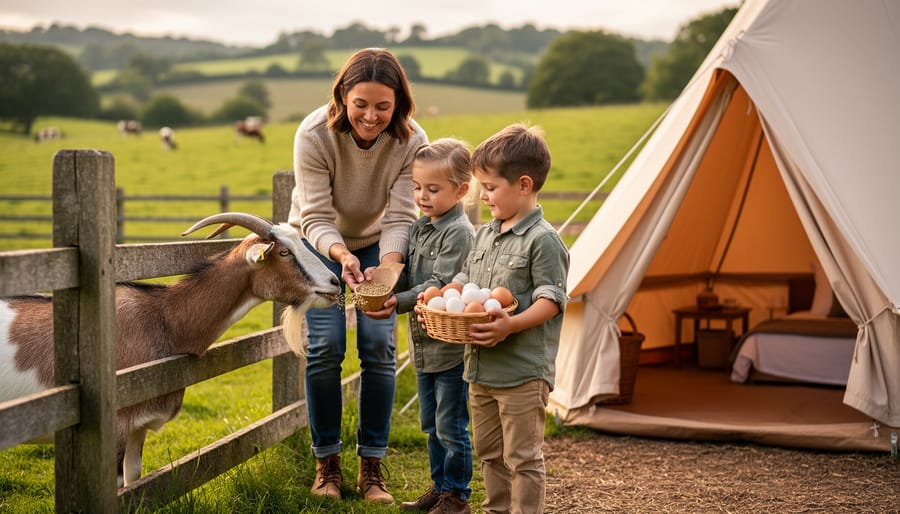
Old MacDonald camping brings the beloved nursery rhyme to life by combining family-friendly farm stays with classic outdoor camping experiences. Popularized by Ol’ MacDonald’s Resort in Alberta, this camping style lets kids meet barnyard animals, collect fresh eggs, and fall asleep to the sounds of the countryside while parents enjoy the slower pace of rural life. Think of it as agritourism meets traditional camping: you get the tent-pitching adventure or cozy cabin retreat alongside authentic farm experiences like feeding chickens, petting goats, and learning where food actually comes from.
The concept taps into something families are craving right now. Screen-fatigued kids light up when they’re chasing ducklings across a farmyard, and there’s genuine educational value when a five-year-old realizes milk doesn’t magically appear in grocery stores. For Ontario families, this trend offers a refreshing alternative to conventional campgrounds. You’ll find working farms across the province that welcome campers, from dairy operations in Eastern Ontario to pick-your-own berry farms near Georgian Bay.
What sets these experiences apart is the participatory element. Many hosts invite guests to help with age-appropriate morning chores, turning routine farm tasks into memorable adventures. The settings tend to be quieter than busy provincial parks, with smaller crowds and a neighborly atmosphere where families actually talk to each other around evening fires. Plus, farm camping naturally leans eco-friendly since you’re supporting local agriculture and learning sustainable food practices firsthand. Whether you’re booking a powered site for your RV or pitching a tent in a pasture, the combination of outdoor skills and agricultural education creates something genuinely different from your typical weekend getaway.
What Makes Old MacDonald-Style Camping Different
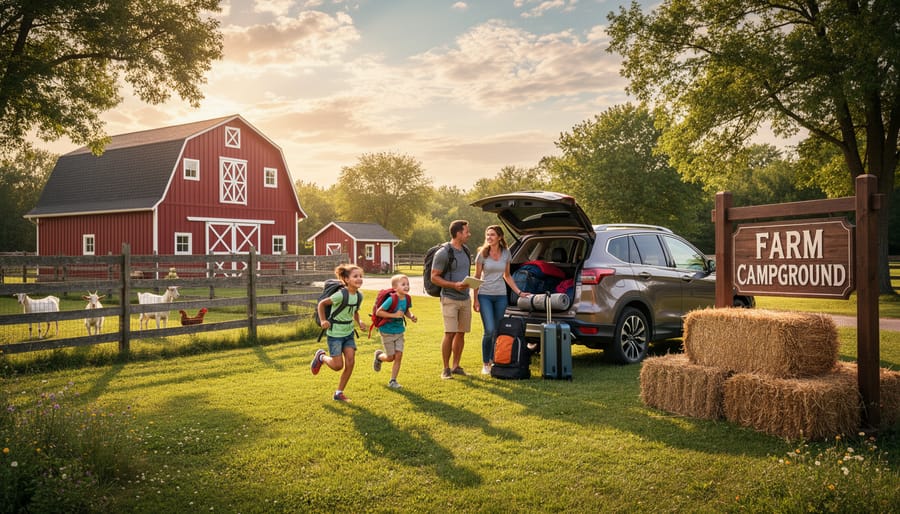
Traditional camping has you pitching a tent and cooking over a fire. Old MacDonald-style camping adds something most campgrounds can’t offer: the chance to wake up to roosters crowing, bottle-feed a calf before breakfast, and fall asleep to the sound of horses settling in for the night.
This approach to camping blends the rustic outdoor experience families love with hands-on agricultural activities that turn a simple weekend away into something genuinely memorable. The concept takes its name from Ol’ MacDonald’s Resort in Alberta, a family-run operation on Buffalo Lake that’s become the gold standard for farm-themed camping. What sets this place apart is how seamlessly it weaves animal interactions and farm life into the camping experience, creating an environment where kids aren’t just visitors to nature but active participants in it.
At its core, this camping style revolves around connection. You’re not isolated in a tent row but immersed in a working farm environment where campers help with morning chores, learn where their food comes from, and interact with animals in ways that city life rarely allows. Children collect eggs, groom ponies, and discover that vegetables don’t magically appear in grocery stores.
The farm setting naturally creates family bonding opportunities that differ from typical camping. Instead of everyone retreating to screens when rain rolls in, you might find yourselves in a barn learning about sheep shearing or helping prepare feed. Evening campfires often feature farm-fresh s’mores ingredients and stories from multi-generational farming families who genuinely want to share their lifestyle.
For Ontario families, this style offers something beyond provincial park camping. It combines the simplicity of sleeping under canvas with structured activities that keep children engaged, making it particularly appealing for parents introducing young kids to outdoor experiences. The agricultural element adds educational depth without feeling like a classroom, teaching responsibility and environmental awareness through real work that matters.
Finding Farm-Themed Camping Experiences in Ontario
Provincial Parks with Agricultural Heritage
Ontario’s provincial parks offer more than wilderness camping, several weave agricultural heritage into the outdoor experience. Black Creek Pioneer Village, while primarily a heritage site, partners with nearby campgrounds to offer immersive historical packages where families can explore 19th-century farm life before retreating to modern campsites. The village features working heritage farms where children watch blacksmiths, bakers, and farmers demonstrate pioneer skills.
Upper Canada Village near Morrisburg operates similarly, combining a living history museum with camping access. Visitors experience 1860s farm routines, milking demonstrations, heritage breed livestock, and period-accurate agricultural techniques, then camp along the St. Lawrence River. These sites excel at showing how Ontario farming shaped the province.
For a more integrated approach, some conservation areas run interpretive programs about nature education in provincial parks that include agricultural ecology topics. Look for parks offering “farm heritage weekends” or guided walks through historical homesteads within park boundaries, where naturalists explain how early settlers cleared land and raised livestock alongside wilderness camping traditions.
Private Farm Campgrounds and Resorts
Ontario’s family-run farm campgrounds offer a refreshing alternative to the predictable experience of traditional provincial parks. Instead of numbered campsites and centralized washrooms, you’ll find yourself waking to roosters crowing, children gathering eggs for breakfast, and the genuine warmth of multi-generational farm families who’ve been welcoming guests for decades.
These resorts typically blend rustic camping with working farm operations. You might pitch your tent or park your RV within view of grazing livestock, with daily feeding times becoming part of your vacation routine rather than scheduled entertainment. Many offer a sliding scale of accommodation, from basic tent sites to glamping setups and farmhouse rooms, letting families choose their comfort level while staying immersed in the agricultural setting.
What sets farm campgrounds apart is their authentic, hands-on nature. Traditional campgrounds provide nature trails and swimming; farm resorts add tractor rides through fields, helping with evening chores, learning to milk goats, or picking berries that become tonight’s dessert. The pace feels slower, the connection more tangible.
The trade-off? Fewer amenities than commercial campgrounds. You won’t find mini-golf or organized kids’ clubs. Instead, entertainment springs organically from farm life, bottle-feeding calves, exploring barns, and discovering how food travels from field to table. For families seeking educational experiences wrapped in genuine hospitality, that exchange feels more than fair.
What to Expect at a Family Farm Camping Experience
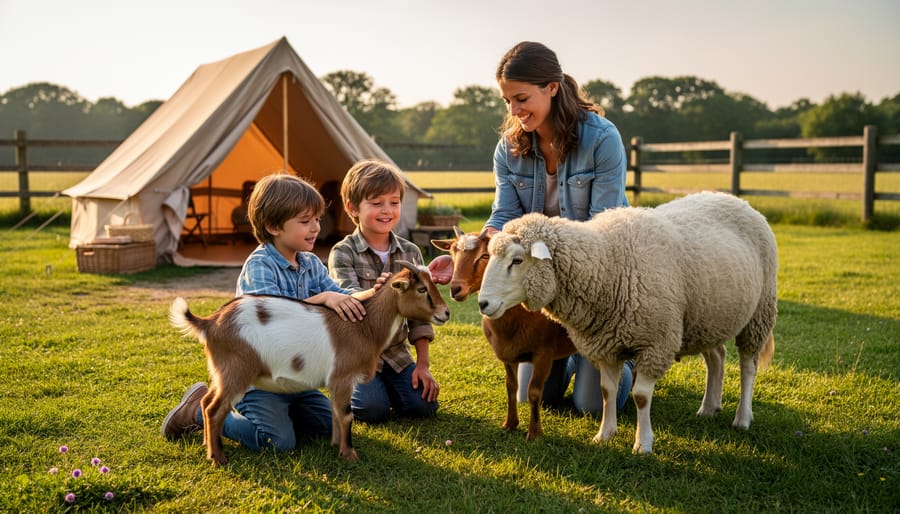
The day begins before you realize it at a farm camping retreat. Just after sunrise, gentle mooing and the occasional bleating drift across the campground, mixing with birdsong and the crackle of early campfires. Kids wake with anticipation, eager to help with morning chores, something they’d never volunteer for at home.
Your family joins other campers for the daily feeding routine, where children learn to scatter grain for chickens and fill troughs for goats and sheep. The animals recognize the routine, crowding close with hopeful eyes and soft noses nudging small hands. There’s genuine magic in watching a city kid overcome nervousness to pet a calf for the first time, or collect warm eggs from nesting boxes while a proud hen clucks nearby.
A typical day unfolds something like this:
- Early morning animal feeding and farm chores alongside staff
- Hearty farm-style breakfast back at your campsite or in a communal area
- Mid-morning exploration of trails, ponds, or agricultural exhibits on the property
- Afternoon activities such as wagon rides, gardening workshops, or seasonal harvesting
- Evening campfire with s’mores, storytelling, and sometimes impromptu barn dances
Between structured activities, families spread blankets under shade trees for picnics featuring local produce from farm stands. Kids run between campsites making friends, their laughter punctuated by animal sounds that feel both exotic and comforting. The pace is unhurried, dictated by nature rather than schedules.
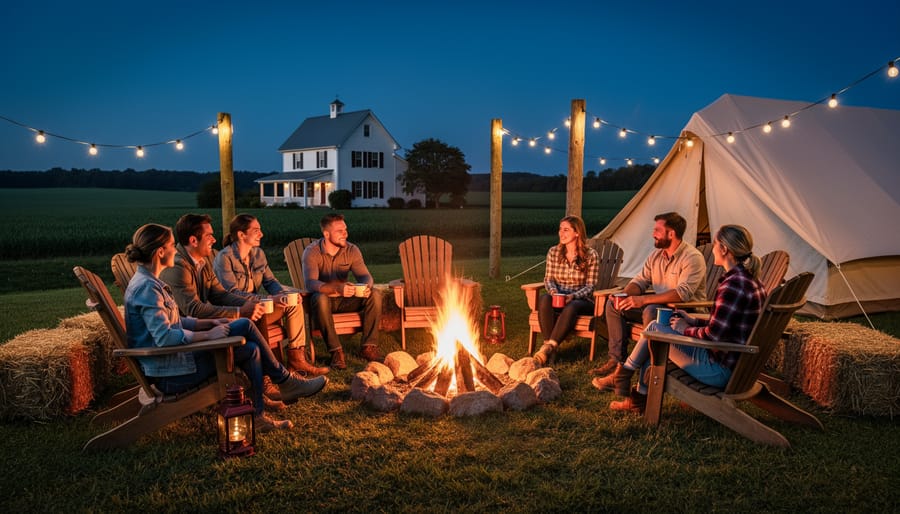
As dusk settles, the farm transforms. Campfires dot the landscape while fireflies emerge from tall grass. The sweet scent of hay mingles with woodsmoke. Parents and children gather around flames, sharing stories about the day’s discoveries, the friendly pig who loved belly rubs, or the brave moment someone finally touched a snake at the nature program. The blend of camping independence and agricultural connection creates something uniquely restorative, a counterpoint to screen-dominated routines that feels both novel and timeless.
Planning Your Old MacDonald Camping Adventure
Best Times to Visit
Spring brings the magic of new life to farm campgrounds, making it the most enchanting season for families with young children. You’ll witness wobbly-legged calves, fluffy chicks, and playful lambs, experiences that turn everyday camping into educational theater. The mild weather also makes outdoor exploration comfortable, though you’ll want to pack layers for cool mornings and evenings.
Fall offers a completely different reward: harvest season transforms farm campgrounds into sensory wonderlands. Kids can help pick pumpkins, press apple cider, and understand where their food originates. The autumn foliage adds stunning backdrops to your camping photos, and cooler temperatures mean fewer bugs and more comfortable sleeping conditions.
Summer remains popular for its predictable weather and school schedules, but expect more families and less intimate animal interactions as staff focus on peak-season operations. Winter farm camping exists but caters to a niche audience comfortable with cold-weather challenges.
When planning your trip, securing Ontario campsite reservations well ahead matters regardless of season, especially for popular farm-based locations. Consider calling private farm campgrounds directly rather than relying solely on online booking systems, family-run operations often have flexible arrangements and can answer specific questions about what animals or activities will be available during your visit.
Making It Educational and Fun
Farm camping transforms screen time into discovery. Before arrival, involve kids in creating a camping packing list that includes a nature journal, camera, or sketch pad for documenting farm life. Many parents find this prep work builds excitement more effectively than any cartoon ever could.
Once on-site, turn daily farm chores into hands-on lessons. Morning egg collection teaches responsibility and the economics of food production. Ask farmhands if your children can help measure feed rations, suddenly, math feels urgent and real. When kids bottle-feed calves or groom ponies, they’re learning animal behaviour, empathy, and the effort behind every glass of milk.
Mealtimes offer natural teaching moments. If the campground serves farm-fresh ingredients, trace the journey from barn to plate. Challenge older children to calculate water usage for livestock or sketch the farm’s ecosystem, who eats what, and how everything connects.
Evening campfires become storytelling labs. Many farm campgrounds welcome questions about seasonal cycles, heritage breeds, or why certain crops grow in Ontario’s climate. This curiosity often carries home long after the tent comes down.
For families seeking structure beyond self-guided exploration, Ontario offers excellent kids’ outdoor programs that complement farm camping experiences. The key is balancing planned learning with unstructured time to simply observe, wonder, and get muddy.
Eco-Friendly Camping on the Farm
Farm camping embodies the principles of sustainable tourism in ways traditional campgrounds rarely match. When you choose a family farm over a commercial resort, you’re directly supporting local agriculture and keeping money in rural communities. These working farms already operate with minimal waste, composting, recycling, and using resources efficiently, so your camping footprint shrinks just by being there. Many farm campgrounds source eggs, produce, and dairy from their own land or neighbouring operations, giving families genuine farm-to-table meals without the transportation costs and emissions of grocery store supply chains.
The educational value runs deeper than you might expect. Kids who collect eggs in the morning or help water the vegetable garden develop a visceral understanding of where food comes from, a lesson no classroom can replicate. They see firsthand how farmers manage land responsibly, rotate crops, and care for animals without industrial shortcuts. This hands-on exposure plants seeds (sometimes literally) for lifelong environmental awareness. Parents tell us their children return home asking to start compost bins or questioning why supermarket tomatoes taste different.
Embracing eco-friendly camping practices fits naturally into the farm setting. You’ll find opportunities to participate in the farm’s existing sustainability efforts, feeding kitchen scraps to chickens, learning about rotational grazing, or understanding how cover crops improve soil health. These experiences transform a simple camping trip into a masterclass in environmental stewardship, all while creating memories your family will carry forward for years.
Old MacDonald camping represents more than just a weekend getaway, it’s a chance to slow down and reconnect with the rhythms of farm life while introducing your kids to where their food actually comes from. These experiences tap into something families are craving: authenticity mixed with adventure, learning that doesn’t feel like a lecture, and memories built around animal encounters and campfire stories rather than screens.
Ontario’s farm camping scene offers that perfect blend of rustic charm and hands-on discovery. Whether you’re watching your toddler’s face light up during morning egg collecting or teaching older kids about sustainable agriculture through real-world examples, these trips stick with families long after the tents are packed away.
So grab your camping gear, leave the schedules behind, and explore what Ontario’s agricultural heritage sites and family farm resorts have waiting. The chickens need feeding, the trails are calling, and there’s a campfire spot with your family’s name on it. Sometimes the best education happens when kids are covered in hay dust and grinning from ear to ear.







+ There are no comments
Add yours