

Step into Ontario’s wetlands, where a vibrant tapestry of plant life creates some of North America’s most fascinating urban wildlife habitats. From the delicate cattails swaying in the breeze to the hardy marsh marigolds dotting the waterline, these remarkable ecosystems showcase nature’s resilience and diversity in spectacular fashion.
Unlike typical forests or meadows, wetland vegetation adapts to life in constantly changing water levels, creating distinct zones of plant life that transform with the seasons. Picture a natural amphitheater where emergent plants like bulrushes stand tall in the shallows, while floating vegetation like water lilies creates a dreamy mosaic across deeper waters. These plants don’t just survive here—they thrive, engineering complex communities that support countless species of birds, insects, and mammals.
What makes Ontario’s wetland vegetation truly special is its role as nature’s multitasker: purifying water, preventing floods, and providing critical shelter for wildlife. Whether you’re exploring a coastal marsh along the Great Lakes or discovering a hidden bog in the northern wilderness, these green guardians offer a masterclass in environmental adaptation and resilience.
Common Wetland Plants You’ll Spot in Ontario
Floating and Surface Plants
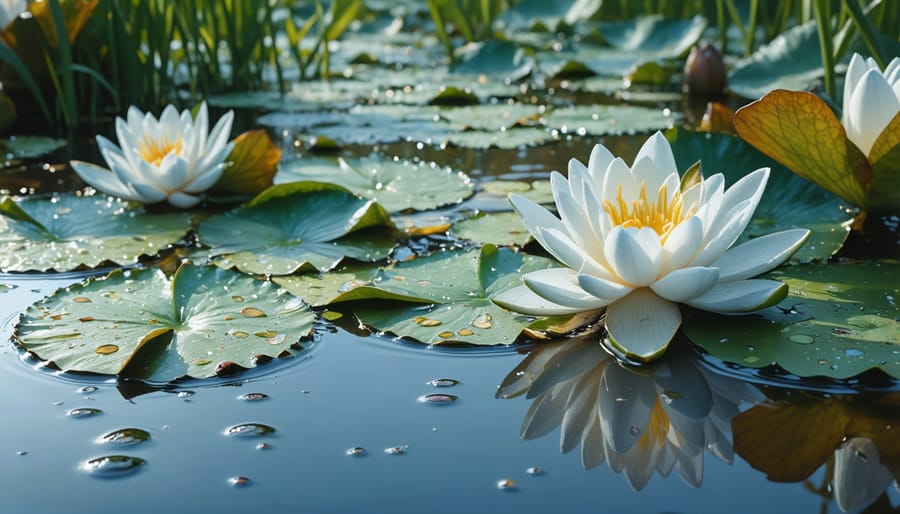
Gliding across Ontario’s wetlands, you’ll discover a mesmerizing world of floating and surface plants that create nature’s own water garden. Water lilies, with their stunning white and yellow blooms, are perhaps the most iconic of our local flora and fauna, gracing the surface from late spring through early fall.
Keep an eye out for the tiny but mighty duckweed, which forms vibrant green carpets on quiet waters. Despite its small size (each plant is no bigger than a pencil eraser!), duckweed plays a crucial role in providing food and shelter for various waterfowl and small aquatic creatures.
Water hyacinth, though non-native, adds splashes of purple to our wetlands with its showy flowers. Just remember – while beautiful, it’s important to admire these plants from a distance to protect their delicate ecosystems.
My favorite sight is watching sunset reflect off the broad leaves of floating pondweed, creating mirror-like surfaces that sparkle with golden light. These plants are more than just pretty faces – they help maintain water quality and provide essential habitat for fish and amphibians.
Pro tip: Visit early morning or late afternoon when the water is calm to see these floating gardens at their best. Bring a camera with a polarizing filter to capture stunning shots through the water’s surface!
Emergent Plants
Standing tall like nature’s skyscrapers, emergent plants are the most visible residents of Ontario’s wetlands. These remarkable plants root themselves in the rich underwater soil while their stems and leaves reach proudly above the water’s surface, creating a stunning vertical display that changes with the seasons.
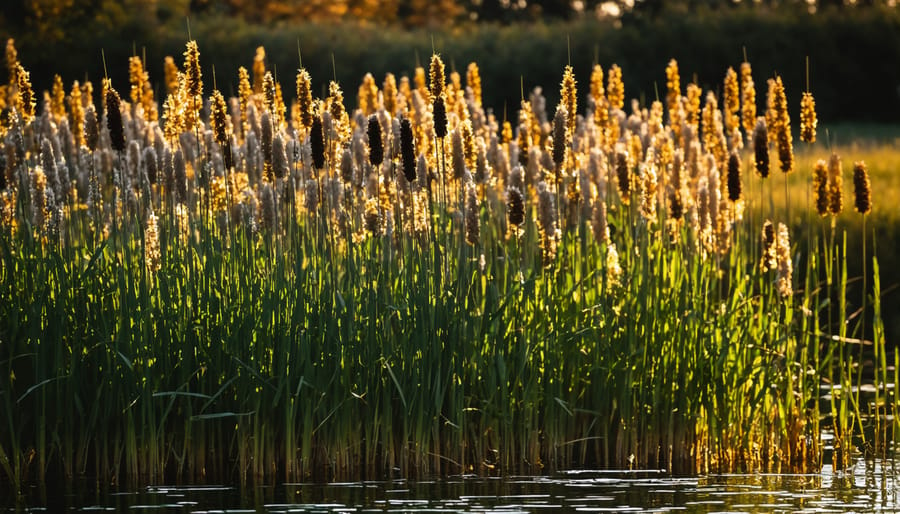
Cattails are perhaps the most recognizable of these wetland warriors, with their distinctive brown, cigar-shaped heads swaying gently in the breeze. You’ll often spot them along the edges of marshes and ponds, where they provide essential shelter for red-winged blackbirds and other wetland wildlife.
Bulrushes, with their tall, slender stems topped by clusters of small brown flowers, are another common sight in our wetlands. These hardy plants are nature’s water filters, helping to clean our waterways while providing food and building materials for local wildlife.
Keep an eye out for wild rice, an important cultural and ecological plant that grows abundantly in many Ontario wetlands. Its delicate green stalks and flowing seed heads create a mesmerizing dance when touched by summer winds.
Other emergent plants you might encounter include sweet flag, with its sword-like leaves and subtle sweet aroma, and pickerelweed, sporting beautiful purple flower spikes that attract butterflies and bees throughout the warm months.
Pro tip: Visit wetlands during early morning or late afternoon for the best photography opportunities – that’s when the sunlight creates magical highlights on these towering plants.
Seasonal Changes in Wetland Vegetation
Ontario’s wetlands transform dramatically throughout the year, offering visitors a dynamic showcase of nature’s seasonal rhythms. In spring, as temperatures rise and ice melts, you’ll witness the first stirrings of life as skunk cabbage pushes through the thawing ground, followed by marsh marigolds dotting the landscape with brilliant yellow blooms. This is when many native species begin their annual growth cycle, making it an exciting time for nature enthusiasts.
Summer brings an explosion of color and activity, with cattails reaching their full height and wildflowers painting the wetlands in vibrant hues. Purple loosestrife, though invasive, creates stunning purple displays alongside the indigenous blue flag iris. The air fills with the sweet fragrance of water lilies, which spread their broad leaves across quiet pools.
Fall transforms wetlands into a photographer’s paradise. The cardinal flower’s bright red spikes persist into early autumn, while woody plants like red osier dogwood turn deep crimson. Sedges and grasses take on golden hues, creating a warm palette that contrasts beautifully with the still waters.
Winter, while seemingly dormant, reveals the elegant structure of wetland plants. Brown cattail heads stand sentinel against the snow, providing food and shelter for wildlife. Even in the coldest months, some plants like winterberry display bright red berries against the white landscape.
For the best viewing experience, visit during early morning or late afternoon when the light is soft and wildlife is most active. Spring and fall typically offer the most dramatic displays, but each season has its unique charm. Pro tip: bring waterproof boots and visit after a dry spell when paths are less muddy. Also, consider joining a guided nature walk to learn about the fascinating adaptations these plants have developed to thrive in wetland conditions.
Where to See Ontario’s Best Wetland Plants
Boardwalk Trails
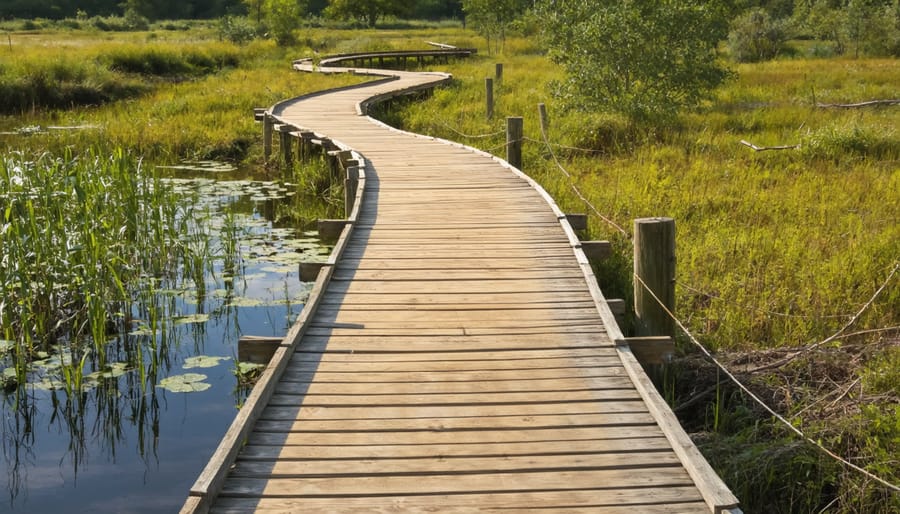
Ontario’s wetlands become even more accessible thanks to well-maintained boardwalk trails that wind through these fascinating ecosystems. These elevated wooden pathways allow visitors to venture deep into wetland areas while protecting the delicate vegetation below. Many trails feature wheelchair-accessible sections, ensuring everyone can experience the beauty of these unique environments.
Along these boardwalks, you’ll find strategically placed viewing platforms and interpretive signs that help identify common wetland plants and their ecological roles. These observation decks are perfect spots for photography, bird watching, or simply taking in the peaceful atmosphere. Some of the best boardwalk experiences can be found at Mer Bleue Bog in Ottawa, where a kilometer-long boardwalk showcases classic bog vegetation, and Point Pelee National Park, where raised walkways lead you through marsh habitats.
For the best viewing experience, visit during early morning or late afternoon when the light is soft and wildlife is most active. Remember to bring binoculars and a camera with a zoom lens to capture close-up shots of interesting plants without leaving the boardwalk. Many locations offer guided interpretive walks during spring and summer months, providing expert insight into the wetland’s plant life.
Pro tip: Download trail maps before your visit, and check seasonal boardwalk conditions online, as some sections may be temporarily closed for maintenance or during sensitive growing periods.
Canoe Routes
Exploring Ontario’s wetlands by canoe offers an intimate perspective of the diverse plant life that thrives in these aquatic ecosystems. Popular routes like the Minesing Wetlands near Barrie feature narrow waterways winding through towering cattails and wild rice stands, perfect for both beginners and experienced paddlers.
In the Kawartha Highlands, paddlers can navigate through channels bordered by floating mats of water lilies and pickerelweed, creating natural corridors that feel like secret passages through the marsh. The best time for these trips is early morning or late afternoon when the wildlife is most active and the light creates stunning reflections on the water.
For a full-day adventure, the Long Point marshes on Lake Erie offer extensive waterways where you can observe rare coastal wetland plants. Remember to bring a waterproof plant guide and binoculars to help identify the various species you’ll encounter. Late spring and early summer provide optimal viewing conditions when most wetland plants are in bloom.
Pro tip: Always stick to marked canoe routes to protect sensitive vegetation. Some areas may require permits or guided tours, so check with local conservation authorities before your trip. Consider joining a naturalist-led paddle to learn about the ecological significance of wetland plants while developing your paddling skills.
Photography Tips for Wetland Plants
Capturing the beauty of wetland plants requires a bit of patience and know-how, but the results can be absolutely stunning. Here are some tips to help you take amazing photos of Ontario’s wetland vegetation.
First, timing is everything. Early morning and late afternoon offer the best lighting conditions, creating a warm, golden glow that makes plants pop. The soft light during these “golden hours” reduces harsh shadows and brings out the rich colors of cattails, water lilies, and other wetland species.
Pack the right gear for wetland photography. A macro lens is perfect for capturing intricate details of small flowers and interesting textures. Don’t forget to bring a polarizing filter – it helps reduce glare from water surfaces and makes colors more vibrant. A tripod is essential, especially in low-light conditions or when shooting in windy weather.
Protect your equipment from moisture by using weather-sealed cameras and lenses if possible. Keep some silica gel packets in your camera bag, and always carry a microfiber cloth to wipe away any water droplets. Consider using rubber boots or hip waders to get closer to your subjects without getting soaked.
Composition can make or break your wetland photos. Try getting down low to capture plants from their level – this creates more intimate and engaging images. Look for interesting patterns in clusters of plants, and don’t be afraid to experiment with different angles. Including water reflections can add a magical element to your shots.
Focus on the details that make wetland plants unique: the fuzzy heads of cattails, the delicate petals of wild irises, or water droplets on lily pads. Sometimes the most compelling photos zoom in on these small features rather than trying to capture entire landscapes.
Remember to practice responsible photography. Stay on designated trails when possible, and be careful not to damage plants while positioning yourself for shots. The best photos are those that capture nature’s beauty while preserving it for others to enjoy.
As we’ve explored the incredible diversity of wetland vegetation in Ontario, it’s crucial to remember our role in protecting these precious ecosystems for future generations. Every visit to our wetlands is an opportunity to practice responsible nature appreciation while supporting natural ecosystem preservation.
When visiting wetlands, stick to marked trails and boardwalks to avoid disturbing sensitive plant communities. Consider joining local conservation groups or participating in citizen science projects that help monitor and protect these vital areas. Remember to pack out what you pack in, and resist the temptation to collect plants or seeds, no matter how beautiful they may be.
Photography enthusiasts, bring your cameras but keep a respectful distance from vegetation. Many wetland plants are delicate and can be damaged by well-meaning visitors trying to get the perfect shot. The best photos often come from patient observation and using zoom lenses.
By sharing your wetland experiences with others and teaching children about the importance of these ecosystems, you’re helping create a legacy of conservation. Whether you’re a first-time visitor or a seasoned naturalist, every step you take in our wetlands can contribute to their protection or degradation – the choice is yours to make.
Let’s ensure these magnificent plant communities continue to thrive for generations to come, supporting the incredible biodiversity that makes Ontario’s wetlands so special.












+ There are no comments
Add yours