
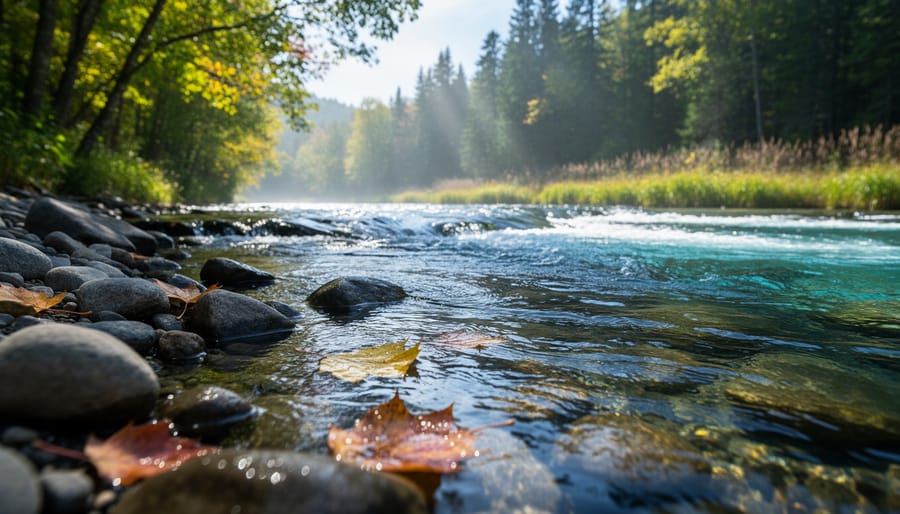
Freshwater habitats are ecosystems where water contains less than 1% salt concentration, including rivers, lakes, streams, wetlands, and ponds. These life-supporting environments cover less than 3% of Earth’s surface yet sustain nearly 10% of all known species, from microscopic algae to massive muskellunge, and provide drinking water for billions of people worldwide.
For anyone exploring Ontario’s natural landscapes, understanding freshwater habitats transforms a simple paddle or hike into something far more meaningful. That creek babbling through a provincial park isn’t just scenic background noise. It’s a complex, functioning system where water chemistry, temperature, flow rate, and oxygen levels determine which creatures thrive and which can’t survive at all. The mayfly nymphs clinging to rocks in a fast-moving stream need completely different conditions than the painted turtles basking in a quiet marsh.
Ontario holds roughly one-fifth of the world’s freshwater supply, making it one of the planet’s most water-rich regions. From the rushing rapids of northern rivers to the shallow, sun-warmed bays of Lake Erie, our province offers living laboratories where you can witness these ecosystems in action. Whether you’re a teacher planning field trips, a family choosing a cottage destination, or a traveler deciding which parks to visit, knowing how freshwater habitats work helps you appreciate what you’re seeing and why protecting these places matters.
This guide breaks down the essentials: what defines freshwater ecosystems, how they actually function, the main types you’ll encounter across Ontario, and why they’re critical to both wildlife and human communities. You’ll walk away with knowledge that makes every waterside experience richer and more connected to the natural world around you.
What Freshwater Habitats Really Mean
At its core, a freshwater habitat is any body of water with low salinity typically containing less than 0.5 grams of dissolved salt per litre, or under 1% salt concentration. That’s a world away from ocean water, which holds roughly 35 grams per litre. This difference isn’t just technical; it fundamentally shapes which plants, fish, insects, and animals can survive there.
Think of it this way: freshwater and saltwater are like two different countries with their own rules. Species adapted to one can’t simply move to the other without consequences. A lake trout thrives in Ontario’s cold lakes because its body is tuned to manage freshwater’s chemical balance. Drop that same fish in the Atlantic, and it wouldn’t last a day.
- Freshwater vs. Saltwater
- Freshwater contains less than 1% dissolved salts, while saltwater (marine environments) holds 3.5% or more. Organisms in each are physiologically adapted to their specific salinity level and can’t easily switch.
- Habitat vs. Ecosystem
- A habitat is the physical place where an organism lives, like a river or marsh. An ecosystem includes both the habitat and all the living things interacting within it, plus the flow of energy and nutrients connecting them.
- Aquatic Zones
- Layers within a water body defined by depth, light penetration, and temperature. Shallow zones near shore teem with plants and invertebrates; deeper, darker areas support different species adapted to cold and low oxygen.
- Biodiversity Indicators
- Species whose presence signals a healthy ecosystem, like stonefly larvae (clean, oxygen-rich streams) or certain frogs (pollution-free wetlands). Their absence often hints at water quality problems.
Ontario sits on a freshwater goldmine. The province holds about one-fifth of the world’s surface freshwater, spread across more than 250,000 lakes, countless rivers, and sprawling wetlands. This isn’t just volume, it’s diversity. You can paddle a warm, shallow marsh alive with bullfrogs near Windsor, then drive north to find cold, crystalline lakes so clear you can see bedrock 10 metres down.
That variety makes Ontario one of Canada’s freshwater hotspots. From the granite-rimmed lakes of the Canadian Shield to the slow rivers winding through southern farmland, each system supports its own community of life. Understanding what makes these habitats tick helps you see past the pretty scenery to the intricate, living machinery beneath the surface.
How Freshwater Habitats Work
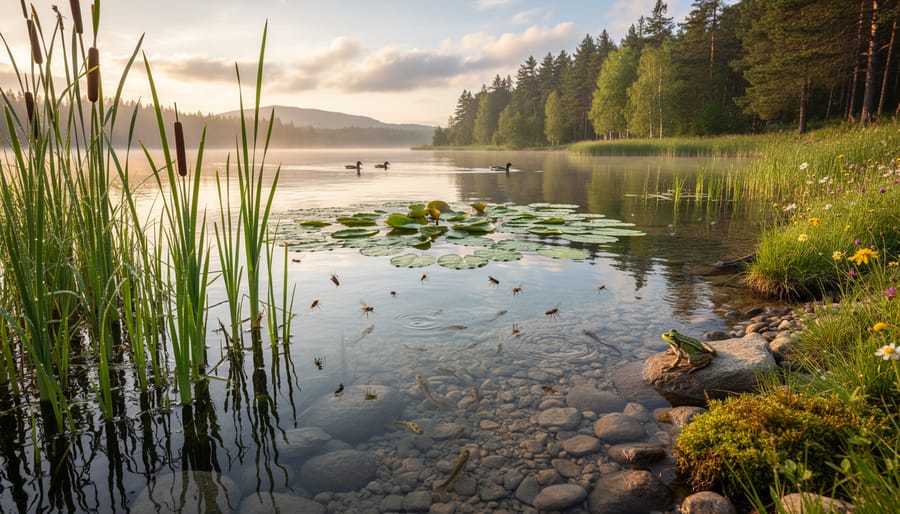
Freshwater habitats operate as finely-tuned systems where physical, chemical, and biological forces constantly interact. Water movement drives everything, whether it’s the gentle current of a slow river or the seasonal turnover of a deep lake. In Ontario’s northern lakes, summer heat creates distinct temperature layers: warm water floats on top (the epilimnion), a middle transition zone experiences rapid temperature drop (the thermocline), and cold, dense water settles at the bottom (the hypolimnion). Come fall, surface water cools, becomes denser, and sinks, triggering turnover that mixes oxygen and nutrients throughout the water column. This circulation is critical for fish survival during winter months.
Oxygen cycles tie directly to water temperature and plant activity. Aquatic plants and algae produce oxygen through photosynthesis during daylight, while all organisms consume it around the clock. Cold water holds more dissolved oxygen than warm water, which is why Ontario’s brook trout thrive in chilly headwater streams but struggle in shallow, sun-baked ponds. In summer, a warm lake’s bottom layer can become oxygen-starved, forcing fish into shallower zones. Wetlands complicate this picture in beneficial ways, as water slows through marshes and swamps, wetlands filter runoff trapping sediments and excess nutrients before they reach downstream rivers and lakes.
Nutrient exchange fuels the food web from the bottom up. Decomposing leaves, animal waste, and eroding soil release nitrogen and phosphorus into the water. Microscopic algae and rooted plants absorb these nutrients, converting sunlight into biomass. Tiny invertebrates graze on algae, minnows eat the invertebrates, and larger fish like walleye or pike eat the minnows. Birds, mammals, and reptiles harvest from every level. In Georgian Bay’s rocky shorelines, you can watch this chain in action, mayfly larvae cling to submerged rocks, smallmouth bass patrol for crayfish, and herons stalk the shallows at dawn.
Water quality ties all these processes together. High sediment loads block sunlight, limiting plant growth. Excess nutrients from agricultural runoff can trigger algae blooms that choke out other species and deplete oxygen when they die and decompose. Ontario’s diverse freshwater habitats stay healthy when water stays clear enough for photosynthesis, cool enough to hold oxygen, and balanced in nutrients, a delicate equilibrium shaped by geology, climate, and increasingly, human activity.
Types of Freshwater Habitats You’ll Find in Ontario
Lakes and Ponds
Lakes and ponds are standing water bodies that range from shallow half-acre ponds tucked into forest clearings to the vast expanse of Lake Superior. What sets them apart from rivers is their stillness, water circulates slowly, creating distinct depth zones that each support different communities of life.
The littoral zone hugs the shoreline where sunlight reaches the bottom. Here you’ll find rooted plants like bulrushes and water lilies, along with minnows, frogs, and diving beetles. This shallow edge is where most terrestrial and aquatic life interact, turtles basking on logs, herons stalking the shallows, dragonfly nymphs climbing stems to emerge as adults.
Beyond the shallows, the limnetic zone is open water where phytoplankton drift and small fish cruise beneath the surface. Sunlight penetrates here but doesn’t reach bottom, so life depends on the microscopic algae fueling the food web.
In deeper lakes, the profundal zone lies in perpetual darkness at the lake floor. Only cold-adapted organisms like certain worms and insect larvae survive here, feeding on organic debris that rains down from above.
Ontario’s lakes vary dramatically. Lake Superior stays frigid year-round, its depths holding lake trout that can live forty years. Contrast that with Muskoka’s shallower cottage lakes, which warm quickly in summer and stratify into layers, warm surface water sitting atop a cold, oxygen-poor bottom. By fall, cooling triggers turnover, mixing nutrients throughout the water column and kickstarting the ecosystem for another cycle.
Rivers and Streams
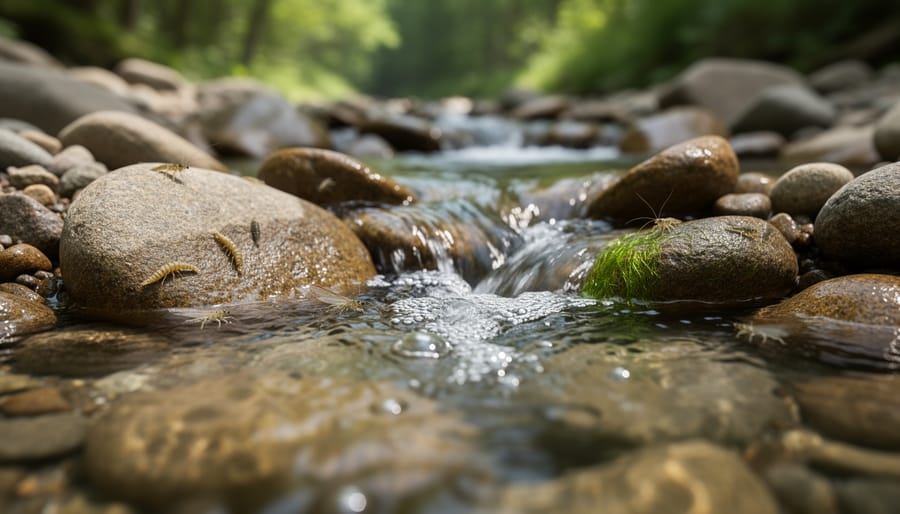
Rivers and streams are freshwater habitats defined by movement, water flowing downhill from source to mouth creates constantly changing environments that support species built for life in motion. Unlike the stillness of lakes, these systems never stop reshaping themselves.
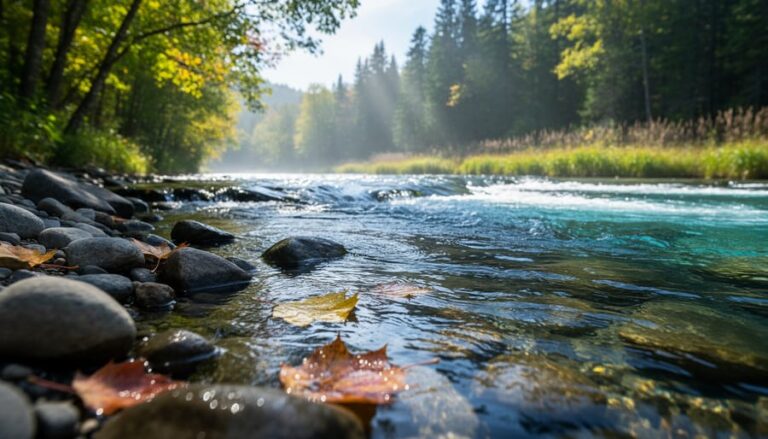
At the headwaters, where streams begin in Ontario’s highland forests or wetlands, the water runs cold, clear, and fast over rocky bottoms. The vigorous current carries high oxygen levels, which brook trout and stonefly nymphs depend on. The tumbling flow also scours the streambed clean, preventing silt buildup and creating spaces between rocks where aquatic insects hide from predators.
As tributaries merge and the gradient flattens, rivers widen and slow. The middle reaches of systems like the Ottawa River develop sandy or gravelly substrates where different species thrive, smallmouth bass, crayfish, and mussels that filter feed in the gentler current. Erosion carves deeper channels here, and sediment settles in calmer side pools where young fish find shelter.
By the time a river reaches its lower course, picture the broad, meandering Thames flowing through southwestern Ontario farmland, the current has slowed considerably. The water carries suspended sediment that clouds the shallows, and the riverbed accumulates silt and organic matter. Catfish, carp, and turtles dominate these murky, nutrient-rich waters. Riverside wetlands and oxbow lakes form as the river shifts course over decades, creating pockets of stillness within the flow.
Each zone supports a distinct community shaped entirely by how fast the water moves.
Wetlands: Marshes, Swamps, and Bogs
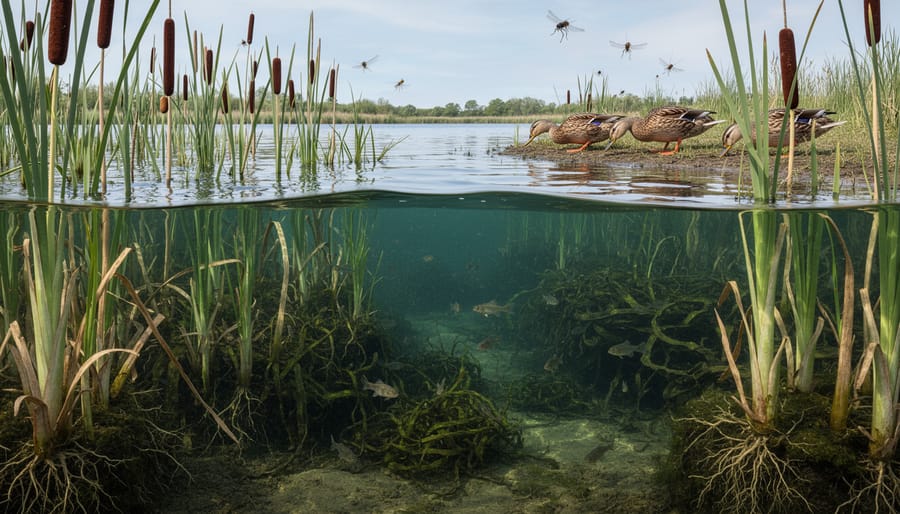
Wetlands sit at the intersection of land and water, creating some of Ontario’s most productive ecosystems. These freshwater wetlands come in three main types, each with its own character.
Marshes dominate the shallows with their stands of cattails, bulrushes, and sedges. Water levels fluctuate seasonally, and sunlight reaches the bottom, fueling dense vegetation. Point Pelee National Park’s marshes are legendary, hosting thousands of migrating birds each spring. Walk the boardwalks in May and you’ll see why these grass-dominated wetlands earn their reputation as wildlife magnets.
Swamps trade grasses for trees. Cedar, silver maple, and black ash grow with their roots submerged for part of the year, creating shaded, wooded wetlands. The canopy changes everything, cooler water, different species, a cathedral-like atmosphere. You’ll find swamps throughout southern Ontario’s river valleys, where spring floods bring nutrients that feed surprisingly diverse wetland plant life.
Bogs occupy the acidic end of the spectrum. Sphagnum moss builds up over centuries in poorly drained basins, creating spongy mats that trap nutrients and lower pH. Only specialized plants survive here, pitcher plants, sundews, leatherleaf. Algonquin’s bogs feel otherworldly, especially when draped in morning fog.
All three types excel at flood control, filtering pollutants, and supporting biodiversity far beyond what their size suggests. They’re nurseries for fish, breeding grounds for amphibians, and rest stops for intercontinental travelers on wings.
Vernal Pools and Seasonal Habitats
Vernal pools are temporary ponds that appear after snowmelt and spring rains, then vanish completely by midsummer, a boom-and-bust cycle that sounds harsh but creates a specialized nursery no predatory fish can access. These shallow depressions in forest floors become critical breeding grounds for wood frogs, spotted salamanders, and fairy shrimp, species that time their entire life cycles to this fleeting window of water. Because the pools dry out, fish can’t establish populations, giving amphibian eggs and tadpoles a safe haven to develop before the habitat disappears.
In southern Ontario’s deciduous woodlands, vernal pools often hide in plain sight, looking like muddy puddles in April, bone-dry leaf litter by August. Yet their seasonal rhythm supports food webs far beyond their boundaries. Emerging salamanders disperse into surrounding forests, becoming prey for snakes and small mammals, while migrating birds time arrival to feast on the explosion of aquatic insects. A single vernal pool might produce thousands of amphibians in a good year, making these tiny, temporary habitats disproportionately valuable for regional biodiversity despite occupying just fractions of an acre.
The Life That Calls Freshwater Home
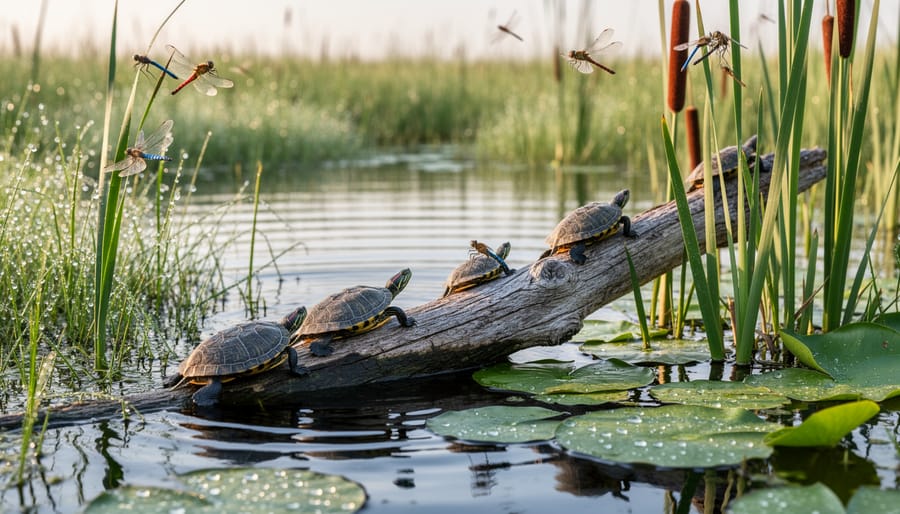
Ontario’s freshwater habitats teem with life at every scale, from microscopic organisms invisible to the naked eye to the loons whose haunting calls echo across northern lakes at dusk. This biodiversity isn’t just beautiful, it’s functional. Each species plays a role in keeping these ecosystems balanced and resilient, responding to the five hidden forces that shape freshwater communities.
At the foundation sit the primary producers: algae, diatoms, and aquatic plants like water lilies and pondweed. These photosynthesizers convert sunlight into energy, forming the base of every freshwater food web. In clear Muskoka lakes, you’ll see vast underwater meadows of milfoil. In shallow marshes, cattails and bulrushes tower above the waterline, their roots stabilizing sediment and providing shelter.
Invertebrates form the next tier, the cleanup crew and food source rolled into one. Mayfly nymphs cling to rocks in fast streams, their presence signaling clean, well-oxygenated water. Dragonfly larvae patrol pond bottoms as ambush predators, while crayfish scavenge everything from algae to dead fish. Freshwater mussels, often overlooked, filter gallons of water daily and can live for decades in river bottoms.
Fish species vary dramatically by habitat type. Cold, deep lakes like those in Algonquin host brook trout and lake trout that need oxygen-rich water and temperatures below 18°C. Warmer southern rivers support bass, pike, and walleye, the latter being Ontario’s most sought-after game fish. In shallow bays, you’ll find sunfish and perch darting among submerged logs.
Amphibians depend on freshwater for reproduction, even if adults roam forests. Spring peepers announce warming weather with their chorus, while northern leopard frogs hunt insects along shorelines. Spotted salamanders migrate to vernal pools each April, breeding in temporary waters that predatory fish can’t reach.
Birds exploit freshwater habitats from above and below. Great Blue Herons stalk shallows with spear-like precision, while Belted Kingfishers dive-bomb minnows from overhanging branches. Common Loons, Ontario’s unofficial avian emblem, nest on remote lake islands and dive 60 meters deep for fish. Wood ducks nest in tree cavities near swamps, and Osprey build massive stick nests in dead trees overlooking productive fishing grounds.
Mammals complete the picture. Beavers engineer entire wetlands by damming streams, creating habitat for dozens of other species. Muskrats build dome-shaped lodges in marshes, while otters, sleek, playful predators, hunt fish and crayfish along riverbanks. On a quiet morning paddle, you might spot a moose wading chest-deep in a bog lake, submerging to feed on aquatic plants rich in sodium.
Here’s what you’re likely to encounter on Ontario’s waters:
- Damselflies and dragonflies patrolling sunny shorelines, especially June through August
- Painted turtles basking on logs in marshy bays and slow river bends
- Great Blue Herons standing motionless in shallows, hunting at dawn and dusk
- Smallmouth bass near rocky drop-offs in lakes like Georgian Bay
- Green frogs calling from lily pad clusters throughout summer
- Common Loons diving and surfacing, often with chicks riding on their backs in early summer
- Beaver lodges marked by stripped saplings and freshly gnawed stumps
The diversity you observe depends on season, water quality, and habitat type. Crystal-clear shield lakes host different communities than turbid southern rivers, but all support intricate webs of interdependence. Understanding these connections transforms a simple paddle or hike into a front-row seat to ecological theater that’s been playing for millennia.
Why Freshwater Habitats Matter (And How We Use Them)
Ontario’s freshwater habitats aren’t just scenic backdrops, they’re working ecosystems that power the province’s economy, sustain communities, and support the fish and frog life we love to encounter outdoors. Every time you fill a glass from the tap, you’re drawing from these systems. Roughly 95% of Ontarians rely on surface or groundwater sources fed by the province’s lakes, rivers, and wetlands for drinking water, treatment plants can polish it to safety standards, but clean source water makes the job infinitely easier and cheaper.
The recreational value hits home the moment you push a canoe into Algonquin’s waters or drop a line for walleye in Lake Erie. Ontario’s freshwater fisheries generate over 2 billion dollars annually when you count sport fishing licenses, tourism spending, and commercial operations. That sunset paddle, weekend camping trip, or fishing derby exists because these habitats remain productive. Wetlands earn their keep behind the scenes by acting as natural sponges during heavy rains, absorbing floodwaters that would otherwise swamp downstream towns. A single acre of wetland can hold up to 1.5 million gallons of water, slowly releasing it and recharging aquifers instead of sending it all at once into storm drains.
Climate regulation happens quietly. Lakes and wetlands store vast amounts of carbon in their sediments and vegetation, keeping it out of the atmosphere. Healthy aquatic plants also produce oxygen, those algae blooms you curse in overfertilized bays are a warning sign that nutrient balance has tipped, threatening the system’s ability to self-regulate.
How clean is Ontario’s freshwater?
Water quality varies widely, northern lakes are often pristine, while southern systems near agriculture or cities face pollution pressures from runoff and development. Provincial monitoring tracks over 1,000 sites to catch problems early.
Can I swim in all Ontario lakes?
Most are swimmable, but check local advisories, some beaches close temporarily due to bacteria spikes after storms, and a few shallow bays get algae blooms in late summer. Cold northern lakes stay safe but test your endurance.
What’s being done to protect these habitats?
Conservation authorities manage watersheds, provincial parks restrict shoreline development, and invasive species programs prevent new arrivals. Citizen monitoring groups also track water quality and report changes.
How does climate change affect freshwater habitats?
Warmer water holds less oxygen, stressing cold-water fish like trout. Shorter ice cover changes spring mixing patterns, and more intense storms flush excess nutrients and sediment into lakes, accelerating aging processes.
Ontario holds roughly 20% of the world’s accessible freshwater supply, a staggering responsibility. What happens to these habitats here ripples across ecosystems and economies. When you explore a marsh boardwalk or cast from a dock, you’re not just enjoying nature. You’re experiencing systems that quench cities, grow food, moderate floods, and anchor a multi-billion-dollar tourism industry that keeps lakeside towns thriving.
Insider Tips for Exploring Freshwater Habitats Responsibly
Experiencing Ontario’s freshwater habitats up close, whether you’re paddling a quiet lake at dawn or hiking along a marsh boardwalk, is unforgettable, but it requires a light touch to keep these ecosystems healthy for everyone who follows.
Start with the basics: pack out everything you pack in, and that includes the smallest bits of trash like fishing line or food wrappers that can harm wildlife. When you’re observing animals, keep your distance. Loons nesting on rocky shorelines and turtles sunbathing on logs spook easily, and getting too close can disrupt critical behaviors like feeding or breeding. Bring binoculars instead of crowding in for that perfect photo.
If you’re bringing a boat, kayak, or even wading boots, clean them thoroughly between water bodies. Invasive species like zebra mussels and spiny water fleas hitchhike on wet gear, and once established, they wreak havoc on native ecosystems. A quick scrub and complete drying between trips, especially if you’ve been out of province, makes a real difference.
Timing matters, too. Avoid sensitive areas during breeding seasons, typically spring and early summer for most fish, amphibians, and waterbirds. Many provincial parks post seasonal closures or guidance; respect those boundaries. And skip conventional sunscreens near the water, chemicals like oxybenzone harm aquatic life. Reef-safe mineral sunscreens with zinc oxide or titanium dioxide work just as well without the ecological footprint.
Want expert guidance? Parks like Algonquin, Killarney, and Bruce Peninsula offer naturalist-led canoe trips and wetland walks where you’ll learn to identify species and understand what you’re seeing. Conservation authorities across southern Ontario run similar programs, often free or low-cost.
The goal isn’t to avoid these places, it’s to enjoy them thoughtfully. Fresh water is Ontario’s signature resource, and every careful visit helps ensure the next generation inherits lakes, rivers, and wetlands as vibrant as the ones we explore today.
Ontario’s freshwater habitats are far more than scenic backdrops for your next camping trip or paddle. They’re living systems that clean our water, support thousands of species, and regulate the climate we depend on. From the rocky shores of Lake Superior to the quiet marshes of Prince Edward County, these ecosystems work around the clock to keep Ontario’s environment healthy and vibrant.
The beauty is, you don’t need a biology degree to appreciate them. Every time you dip your paddle, cast a line, or simply sit by the water’s edge, you’re connecting with one of the planet’s most vital resources. And with that connection comes responsibility. Clean your gear between visits to stop invasive species. Pack out what you pack in. Stay on marked trails near sensitive wetlands. These small actions add up when thousands of visitors do them.
Consider joining a local water monitoring program or reporting your wildlife sightings to citizen science projects. Your observations help researchers track changes in water quality and biodiversity, especially in remote areas that don’t get regular scientific attention.
Ready to explore? Ontario has over 250,000 lakes and countless rivers waiting for you. Pick one you’ve never visited, grab your binoculars or fishing rod, and discover what makes that particular habitat special. The loons, brook trout, and dragonflies will be there to greet you.





+ There are no comments
Add yours