

Step into Ontario’s forest habitats, where ancient maple stands and towering white pines create a living tapestry that shelters an extraordinary diversity of wildlife. From the elusive eastern wolf prowling through dense understory to black bears foraging in berry-rich clearings, our woodlands support over 50 mammal species and hundreds of bird varieties. These forests, interconnected with wetland ecosystems, form critical corridors for seasonal migrations and year-round shelter.
Unlike open grasslands or tundra, forest habitats create complex, multi-layered environments – from the leaf-littered forest floor where salamanders thrive, through the shrub layer where white-tailed deer browse, up to the canopy where red-shouldered hawks nest. Each layer supports distinct communities of animals that have evolved specialized adaptations for forest life. Whether you’re an experienced naturalist or first-time wildlife watcher, Ontario’s forests offer unparalleled opportunities to witness these remarkable creatures in their natural setting.
Majestic Mammals of Ontario’s Forests
Big Forest Residents
Ontario’s forests are home to some of our most magnificent large mammals, each playing a vital role in the ecosystem. The mighty moose, standing up to 6.5 feet tall at the shoulder, is a spectacular sight to behold. These gentle giants can often be spotted during dawn and dusk, feeding on aquatic plants in wetland areas or browsing on tree branches. Despite their impressive size, moose are surprisingly agile and excellent swimmers.
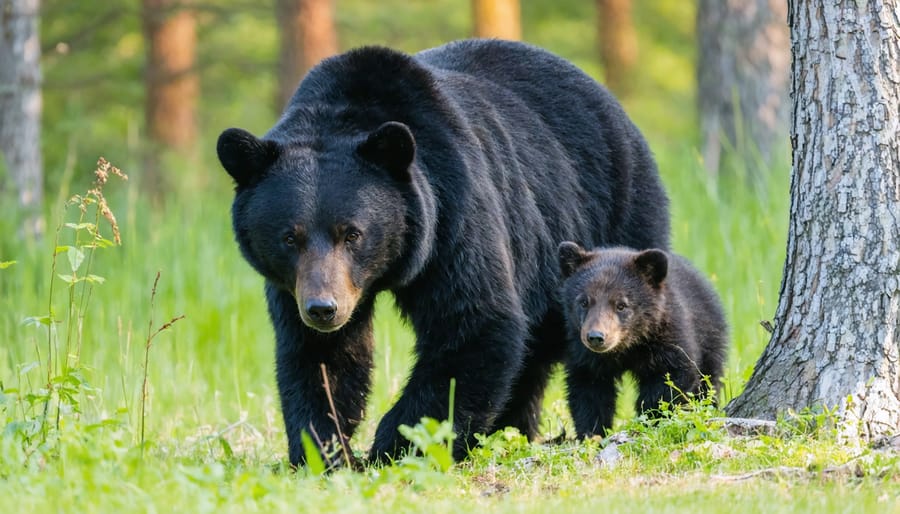
Black bears are another remarkable resident of Ontario’s forests. These intelligent omnivores are typically shy and prefer to avoid human contact. They’re most active in early morning or late evening, foraging for berries, nuts, and insects. While seeing a black bear in the wild is thrilling, remember to maintain a safe distance and never approach or feed them.
The white-tailed deer, perhaps our most commonly spotted large forest dweller, is a master of adaptation. These graceful creatures can be seen year-round, though they’re particularly active during spring and fall. Look for them in forest edges and clearings, where they browse on leaves, twigs, and forest undergrowth. During winter, they gather in groups called “yards,” seeking shelter in dense conifer stands.
Pro tip: When wildlife viewing, bring binoculars and stay downwind of these animals. Early morning visits offer the best chances for spotting these magnificent creatures in their natural habitat.
Small but Mighty Forest Dwellers
While Ontario’s forests are home to impressive large mammals, it’s the smaller creatures that often steal the show with their charm and adaptability. These clever residents have learned to adapt to urban environments, making them some of our most frequently spotted forest neighbors.
The red fox, with its distinctive rusty coat and bushy tail, is a master of versatility. These intelligent hunters can be spotted at dawn and dusk, skillfully stalking mice and voles through the underbrush. Their playful behavior and remarkable agility make them a delight to observe from a safe distance.
Raccoons and foxes share the forest with other fascinating mammals like the eastern chipmunk, whose cheek pouches can store an impressive amount of seeds and nuts. The nimble red squirrel chatters away in the treetops, while striped skunks waddle through the understory, hunting for insects and berries.
These smaller mammals play crucial roles in maintaining forest health. They spread seeds, control insect populations, and serve as food sources for larger predators. Keep your eyes peeled for their tracks in soft soil or snow, and listen for their distinct calls – from the fox’s haunting bark to the raccoon’s curious chittering. Remember to maintain a respectful distance and never feed these wild neighbors, allowing them to thrive naturally in their woodland home.
Birds of the Forest Canopy
Raptors and Owls
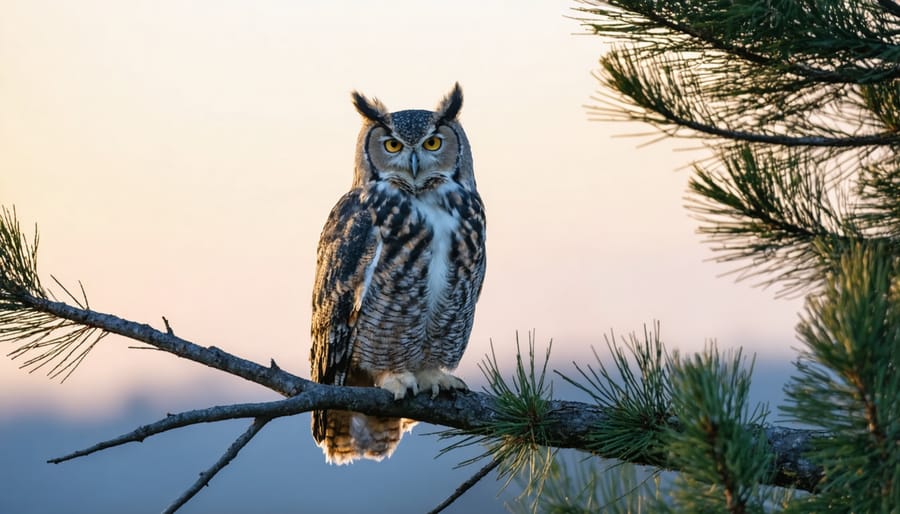
Looking up into Ontario’s forest canopy, you might catch a glimpse of some of our most magnificent aerial predators. The great horned owl, with its distinctive ear tufts and piercing yellow eyes, is a master of silent flight, hunting mainly at dusk and dawn. These impressive birds can often be spotted perched in large trees near forest edges, keeping a watchful eye on their surroundings.
Red-tailed hawks are another common sight, soaring gracefully above the treetops on warm air currents. Their distinctive rusty-red tail feathers flash brilliantly in the sunlight, making them easier to identify even from a distance. Listen for their characteristic raspy scream, which has become the go-to sound effect for birds of prey in many movies!
For the best chance of spotting these magnificent birds, try visiting forests during early morning or late afternoon hours. Bring binoculars and scan the tops of dead trees, which these birds often use as hunting perches. Remember to stay quiet and keep your distance – these skilled hunters are naturally wary of human presence.
Pro tip: Look for whitewash (droppings) and pellets beneath large trees, which can indicate a favorite roosting spot. During winter months, these birds become more visible as the leaves fall, offering excellent viewing opportunities for patient observers.
Songbirds and Woodpeckers
Ontario’s forests come alive with the melodious songs and rhythmic drumming of our smaller feathered friends. The Black-capped Chickadee, our provincial bird, is a year-round resident that brings cheer to winter walks with its distinctive “chick-a-dee-dee-dee” call. These friendly little birds often approach hikers, especially if you stand still and quiet for a few moments.
Among the most striking woodpeckers you’ll encounter is the Pileated Woodpecker, a crow-sized bird with a flaming red crest that can often be spotted hammering away at dead trees in search of carpenter ants. Listen for their loud, echoing drumming that reverberates through the forest canopy.
Spring brings a chorus of warblers, with species like the Yellow Warbler and American Redstart adding splashes of color to the forest understory. Pro tip: early morning is the best time to spot these songbirds, as they’re most active during their dawn chorus.
Keep an eye out for the Northern Flicker, a woodpecker that often feeds on the ground, hunting for ants. Their distinctive yellow-shafted wings flash brilliantly when they take flight. For the best bird-watching experience, bring binoculars and try to spot them in areas where mature trees meet clearings – these “edge habitats” are particularly rich in bird activity.
Remember to maintain a respectful distance and avoid disturbing nesting sites, especially during breeding season from April to July.
Forest Floor Friends
Reptiles and Amphibians
Ontario’s forests are home to a fascinating variety of cold-blooded creatures that play crucial roles in our woodland ecosystems. Among the most commonly spotted reptiles are the Eastern Garter Snake and the Northern Red-bellied Snake, both harmless species that help control pest populations. Keep your eyes peeled for these slender friends sunbathing on rocks or fallen logs during warm summer days.
In the damper areas of our forests, especially near vernal pools and streams, you’ll find an array of amphibians. The Red-spotted Newt, with its striking orange-red spots, is a delightful sight for nature enthusiasts. Listen for the spring chorus of Wood Frogs and Spring Peepers, whose calls signal the arrival of warmer weather.
One of Ontario’s most spectacular amphibians is the Blue-spotted Salamander, which can often be found under rotting logs or leaf litter. These secretive creatures are most active on rainy nights, making them a special treat for careful nighttime observers.
Pro tip: The best time to spot amphibians is during or just after a light rain, especially in early spring when they’re heading to breeding ponds. Remember to watch your step and never handle these sensitive creatures – their skin can absorb harmful chemicals from our hands. Instead, bring a camera and capture their beauty from a respectful distance.
Insects and Small Creatures
Ontario’s forests teem with fascinating small creatures that play vital roles in maintaining healthy ecosystems. From industrious ants building intricate colonies to iridescent butterflies pollinating native plant species, these tiny inhabitants are everywhere you look.
Keep an eye out for the striking Eastern Tiger Swallowtail butterfly, with its distinctive yellow and black wings, often seen floating through sunny forest clearings. The Giant Walkingstick, perfectly camouflaged against tree bark, offers visitors a delightful surprise when spotted during summer hikes.
Beneficial insects like the Northern Walking Stick and various species of beetles help maintain forest health by breaking down dead plant material and controlling pest populations. You might spot fascinating creatures like the Cecropia Moth, North America’s largest native moth, with its stunning wing patterns that can span up to 15 centimeters!
Ground-dwelling creatures include the Red-backed Salamander, commonly found under fallen logs, and various species of millipedes that help decompose forest litter. In spring and summer, listen for the rhythmic sounds of crickets and katydids, nature’s own symphony.
Pro tip: Bring a magnifying glass on your forest walks to discover this miniature world up close, but remember to observe these small wonders respectfully without disturbing their habitats.
Best Places to Spot Forest Wildlife
Top Wildlife Viewing Spots
Ontario’s forests offer incredible opportunities to witness wildlife in their natural habitat. Algonquin Provincial Park stands out as a premier destination, particularly along the Mizzy Lake Trail, where early morning hikers often spot moose, beavers, and various bird species. The Spruce Bog Boardwalk is another park highlight, offering safe viewing of wildlife from an elevated position.
In the Bruce Peninsula, the Bruce Trail provides excellent chances to spot black bears, white-tailed deer, and over 200 species of birds. The Niagara Escarpment section is especially rich in wildlife activity during spring and fall migrations.
Killarney Provincial Park’s La Cloche Silhouette Trail offers glimpses of foxes, wolves, and numerous bird species against stunning quartzite ridges. The park’s wetland areas are particularly active during dawn and dusk.
For a unique experience, visit Long Point Provincial Park on Lake Erie, where the diverse forest and marsh ecosystem attracts rare bird species and mammals. The observation tower provides an excellent vantage point for wildlife viewing without disturbing natural habitats.
Local’s Tip: Visit these spots during shoulder seasons (spring and fall) when animals are most active and tourists are fewer. Always carry binoculars and maintain a respectful distance from wildlife. Consider joining guided nature walks offered by park naturalists for the best viewing opportunities and expert insights into animal behavior.
Remember to practice Leave No Trace principles and avoid using flash photography, which can disturb animals in their natural habitat.

Wildlife Viewing Tips
Observing wildlife in Ontario’s forests can be an unforgettable experience when done safely and respectfully. Always maintain a minimum distance of 100 meters from large animals like moose and bears, and use binoculars or a zoom lens for closer views. Early morning and dusk are prime viewing times when animals are most active.
Move slowly and quietly through the forest, avoiding sudden movements or loud noises. Wear earth-toned clothing that blends with the environment, and try to position yourself downwind from where you expect to see wildlife. This prevents animals from catching your scent and fleeing.
Never feed wild animals or leave food unattended, as this can alter their natural behavior and create dangerous situations. Carry a whistle or bear bell to alert animals of your presence, reducing the chance of surprising them. When photographing wildlife, turn off your flash and silence your devices.
Consider joining a guided nature walk for your first few outings. Local naturalists can help you identify animal signs like tracks, scat, and markings while teaching you proper viewing etiquette. Remember to pack essential items like water, insect repellent, and a basic first aid kit.
Make note of your observations in a nature journal, including the date, time, and location. This helps you learn wildlife patterns and contributes to citizen science efforts in Ontario’s forests.
As we’ve explored the incredible diversity of Ontario’s forest habitats and their remarkable animal residents, it becomes clear just how precious these ecosystems are. Each creature, from the majestic moose to the tiny chickadee, plays a vital role in maintaining the delicate balance of our woodland communities. These animals don’t just make our forests more interesting – they’re essential to their survival through seed dispersal, pest control, and maintaining food chain equilibrium.
Remember, when we venture into these magical spaces, we’re guests in their home. By following responsible wildlife viewing practices – maintaining safe distances, avoiding feeding wild animals, and staying on marked trails – we help ensure these creatures can thrive for generations to come. Pack out what you pack in, keep noise levels down, and consider joining local conservation efforts to protect these vital habitats.
The next time you’re walking through an Ontario forest, take a moment to appreciate the complex web of life around you. Listen for the tap-tap of a woodpecker, watch for deer tracks in the soil, or simply sit quietly and observe the forest come alive around you. These moments of connection with nature aren’t just good for wildlife – they’re good for us too, offering peace, wonder, and a deeper understanding of our place in the natural world.
By protecting forest habitats, we’re not just saving animals – we’re preserving the heart and soul of Ontario’s natural heritage.












+ There are no comments
Add yours