
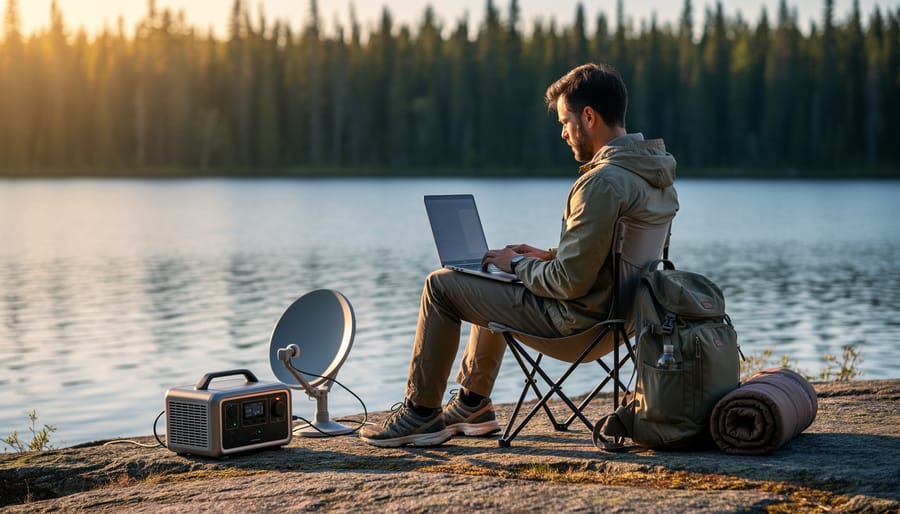
Working remotely from Ontario’s parks is absolutely viable in 2026, and thousands of digital nomads are already proving it. With the right connectivity tools, a strategic choice of location, and a few smart gear decisions, you can answer emails from a lakeside campsite in Algonquin, take Zoom calls overlooking Georgian Bay, and still have your afternoons free for hiking or paddling.
The landscape for outdoor remote work has shifted dramatically. Ontario Parks now offers improved cell coverage at key locations, while satellite internet solutions and mobile hotspots have become more affordable and reliable. This means the barrier between “vacation spot” and “productive workspace” has nearly disappeared. I’ve watched colleagues run entire businesses from their campsites, logging full workweeks before the sun sets and their recreation time begins.
What makes Ontario particularly compelling for this lifestyle is the sheer variety. You’re not limited to crowded campgrounds with questionable Wi-Fi. Provincial parks like Presqu’ile and Sandbanks offer strong connectivity alongside full amenities, while spots like Silent Lake and Killarney reward those willing to invest in satellite setups with unparalleled natural beauty and solitude.
The secret isn’t just finding a park with cell service. It’s understanding which locations align with your work demands, knowing the backup solutions that actually work when storms roll in, and packing the right equipment so your “office” doesn’t compromise your comfort. A proper power station matters more than an expensive tent. A portable monitor can transform your productivity. Even the timing of your trip affects connectivity quality, as summer crowds can strain available bandwidth.
This guide breaks down exactly how to make Ontario parks your remote office, from specific site recommendations to the gear that separates a frustrating experience from a transformative one.
Why Ontario’s Parks Are Perfect for the Remote Work Revolution
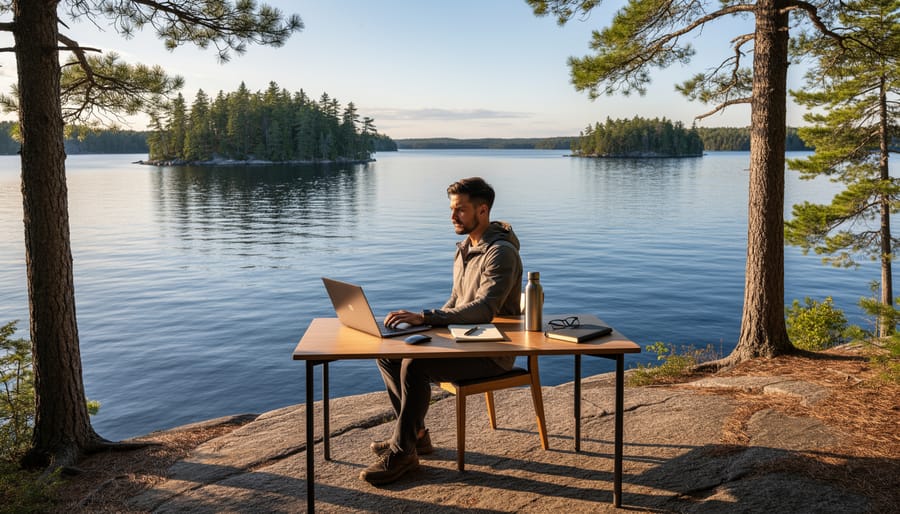
Ontario’s provincial parks weren’t designed with Zoom calls in mind, but they’re quickly becoming unlikely heroes of the remote work era. While most digital nomads flock to Bali or Lisbon, a growing number are discovering that Ontario’s 340 parks and conservation areas offer something those tropical hotspots can’t match: genuine connection with nature without sacrificing the infrastructure needed to earn a living.
The connectivity situation has improved dramatically over the past few years. Parks like Algonquin’s Mew Lake campground and Grundy Lake Provincial Park now have surprisingly reliable cell coverage in key areas, thanks to tower upgrades spurred by increased demand. You won’t get fiber-optic speeds, but many campers report stable enough connections for video calls during off-peak hours. The trick is knowing which sites within each park catch the best signal, usually those on higher ground or closer to park entrances.
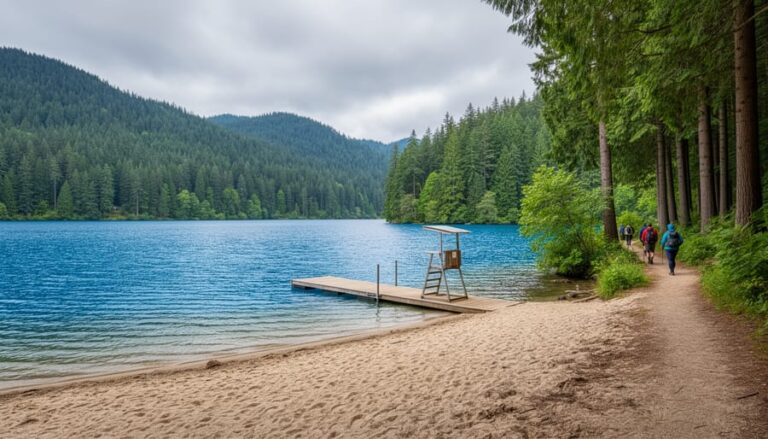
What really sets Ontario apart is the sheer variety of workspaces nature provides. Picture answering emails from a picnic table overlooking Georgian Bay at sunset, or taking that afternoon strategy call while watching loons dive in a pristine lake. These aren’t just Instagram moments, they’re genuine productivity boosters. Research consistently shows that exposure to natural environments reduces stress hormones and improves focus, something anyone who’s ever tried to concentrate in a sterile hotel room can appreciate.
The mental health benefits go beyond nice views. When your commute is a five-minute walk from your tent to a lakeside boulder, and your lunch break involves a quick paddle or trail hike, you’re not just working remotely, you’re actually recharging. Several nomads I’ve spoken with report sleeping better, feeling less anxious, and maintaining clearer work-life boundaries than they ever did in traditional office settings or even urban coworking spaces.
Infrastructure matters, and Ontario parks are catching on. More campgrounds now offer electrical hookups at a wider range of sites, recognizing that laptops and hotspots need power. Comfort stations with outlets where you can top up devices between calls have become standard. Parks like Sandbanks and Presqu’ile even have dedicated day-use areas with tables and shade that function as informal outdoor coworking spaces.
The accessibility is another overlooked advantage. Most southern Ontario parks sit within two hours of major cities, meaning you can escape to Killarney for a work week without burning vacation days or missing important meetings. You get the wilderness experience with an exit strategy if deadlines pile up.
Setting Up Your Mobile Office in the Great Outdoors
Essential Tech and Power Solutions
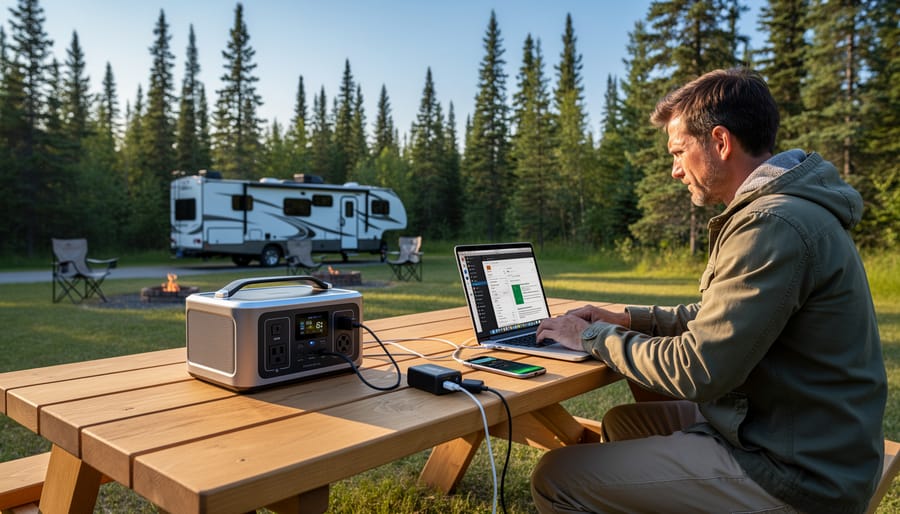
Working remotely from Ontario’s backcountry means one non-negotiable: reliable power. Your laptop dies, your workday ends. Here’s what actually keeps you running when outlets are kilometres away.
Portable power stations have revolutionized remote work. Units like the Jackery Explorer 500 or EcoFlow River series pack 500-1000Wh capacity, enough to charge a laptop 4-6 times or run it directly for an entire workday. Unlike generators, they’re silent, emit no fumes, and weigh under 7kg. Budget $500-900 for a solid mid-range unit. The tradeoff? They’re pricey upfront, but you’ll skip the headaches of gas, maintenance, and angry neighbours glaring at you for running a generator at 8am.
Solar panels pair brilliantly with power stations in Ontario’s summer months. A 100W foldable panel (around $200-300) recharges a depleted power station in 6-8 hours of decent sun. Reality check: Ontario’s cloud cover and tree canopy mean solar alone won’t cut it for consecutive rainy days. Think of panels as range extenders, not primary power.
Backup battery packs (20,000-30,000mAh) are your emergency lifeline. Keep two charged, one for your phone, one for tablets or secondary devices. They’re cheap insurance at $40-80.
Small inverter generators like the Honda EU2200i offer unlimited runtime if you’re car camping and need serious power. They’re quieter than traditional generators but still draw attention. Check campground rules first, many prohibit generators entirely or limit hours strictly.
Staying Connected: Internet Options That Actually Work

Let’s be honest: park WiFi is largely a myth. Most Ontario provincial parks that advertise internet access offer spotty connections limited to visitor centers during business hours, useless when you’re on a video call at 9 AM from your campsite.
Your real lifeline is cellular data. Rogers and Bell dominate coverage in provincial parks, with signal reaching surprisingly deep into places like Algonquin’s Highway 60 corridor and Killarney’s George Lake campground. Telus runs a distant third. Before booking, check actual coverage maps rather than provider promises, crowdsourced apps like OpenSignal show real user experiences.
A quality cellular booster changes everything. The WeBoost Drive Reach pulls signal from distant towers, turning one bar into three. Mount the exterior antenna on your RV roof or vehicle, and suddenly you’re streaming meetings from sites that seemed hopeless. Budget $500-700, but consider it essential infrastructure, not optional gear.
Mobile hotspots outperform phone tethering for serious work. Dedicated devices like the Netgear Nighthawk handle multiple connections without draining your phone battery. They also support external antennas for further range extension. Pair unlimited data plans from Rogers or Bell (expect $75-120 monthly) with a booster, and you’ve got legitimate work capability.
The hard truth? Some parks simply won’t work. Pukaskwa, Woodland Caribou, and remote northern locations offer minimal coverage regardless of equipment. Save these for true vacation weeks. Parks along the Highway 11 and 17 corridors, like Arrowhead, Bon Echo, and Sleeping Giant, provide the sweet spot of nature and connectivity.
Always pack offline alternatives. Download critical files, use offline email modes, and schedule bandwidth-heavy tasks for town runs. The freedom of Ontario’s outdoors comes with accepting that sometimes, nature wins over connectivity.
Best Ontario Parks and Camping Spots for Digital Nomads in 2026
Parks with Reliable Connectivity
Algonquin Provincial Park’s Highway 60 corridor offers surprisingly robust connectivity, with Rogers and Bell providing consistent LTE coverage at major campgrounds like Mew Lake and Pog Lake. You’ll get reliable service for video calls and uploads during business hours, though speeds can slow during peak summer weekends when campgrounds hit capacity.
Presqu’ile Provincial Park, situated near Brighton, delivers some of the best connectivity in the system. Its proximity to urban infrastructure means most campsites get strong signals from multiple carriers. Digital nomads report seamless streaming and file transfers even from beachside locations.
For those willing to venture north, Killarney Provincial Park’s George Lake campground surprises many with decent Bell coverage, though Rogers users may struggle. Test your connection before committing to a site, as tree cover creates dead zones in certain loops.
Pinery Provincial Park on Lake Huron provides solid coverage throughout most campgrounds, particularly along the main entrance road. The park’s relatively flat terrain and proximity to Grand Bend means fewer signal interruptions.
The reality check: even parks with “good” coverage experience occasional dropouts. Thunderstorms, dense foliage, and distance from cell towers all play roles. Download critical files before settling in, maintain offline work capabilities, and always have a backup plan. Some nomads keep a list of nearby coffee shops or libraries for emergency connectivity when park signals fail.
Comfort-Focused Campgrounds for Extended Stays
When you’re working remotely from a campground for weeks or months rather than a quick weekend, creature comforts stop being luxuries and become necessities. You need reliable electrical hookups (30 or 50 amp) to power your devices, charge equipment overnight, and run a space heater or fan depending on the season. After a week without doing laundry, you’ll appreciate having on-site facilities more than you’d expect.
Bon Echo Provincial Park offers roofed shelters and comfort camping sites with electrical service that work well for extended stays, plus washroom buildings with hot showers. The park attracts a quieter crowd than some busier locations, giving you focused work time during weekdays. Similarly, Arrowhead Provincial Park provides year-round facilities including winter camping options with electrical hookups, ideal if you’re testing the nomad lifestyle across seasons.
Private campgrounds generally offer more extensive amenities for long-term stays. Many KOA locations across Ontario provide monthly rates, full hookups, WiFi access, coin laundry, and camp stores for supplies. Resorts like Horseshoe Resort’s campground near Barrie include swimming pools, restaurants, and recreational facilities that break up long work stretches.
Look for campgrounds advertising “seasonal sites” or “monthly rates”, they’re accustomed to longer-term residents and often have better infrastructure. Before committing to an extended stay, visit for a few nights first. What seems charming for a weekend can reveal annoying quirks (like sketchy power, inconsistent water pressure, or noise issues) when you’re relying on it as your primary residence and workspace.
Budget-Friendly Options for Long-Term Nomads
Living the digital nomad lifestyle in Ontario doesn’t require draining your savings. Crown land camping offers the cheapest option, completely free for up to 21 days in most areas, though you’ll sacrifice amenities and reliable connectivity. For longer stays with basic facilities, consider Bon Echo or Grundy Lake provincial parks, where monthly rates during shoulder seasons (May and September) drop significantly below peak summer pricing.
Private campgrounds like Yogi Bear’s Jellystone parks offer weekly and monthly discounts that cut costs by 30-40% compared to nightly rates. Ask about work-camper programs too, some campgrounds exchange a few hours of daily help for reduced or free site fees. Stock up on groceries in larger towns before heading to parks where convenience stores charge premium prices, and invest in a good cooler to minimize food waste and expensive restaurant meals.
Balancing Work and Play: Making the Most of Your Location
The secret to thriving as a digital nomad in Ontario’s parks isn’t working less, it’s working smarter. Most successful park-based nomads structure their days around natural light and energy peaks, tackling demanding tasks during morning hours when minds are fresh and before the midday heat makes outdoor work uncomfortable.
Sarah, a graphic designer who spent three months working from Killarney Provincial Park last summer, found her rhythm by starting at 6 AM. She’d knock out four focused hours before the trails got crowded, then reward herself with an afternoon paddle. “I actually got more done than in my Toronto apartment,” she told me over coffee at a lakeside campsite. “There’s something about knowing a hike awaits that makes you ruthlessly efficient.”
The key is treating outdoor time as essential, not optional. Block your calendar for activities just as you would for client meetings. If you’re exploring multiple parks, build road-trip safety checks into your morning routine so transitions between locations don’t eat entire workdays.
Consider the “bookend” approach: work early morning and evening, leaving midday for adventures when parks are liveliest. This works particularly well for remote workers dealing with west-coast clients or international time zones. You’re available for meetings before California wakes up, free during prime hiking hours, then back online for evening check-ins.
Pack your workspace efficiently so setup takes minutes, not hours. One freelance writer I met at Algonquin keeps his laptop, charger, and hotspot in a weatherproof bag that stays ready to deploy. When inspiration strikes at 9 PM after a day on the trails, he’s working within five minutes.
Don’t forget the practical stuff that keeps this lifestyle sustainable. Make time to stay healthy by incorporating movement breaks, drinking enough water, and eating real meals instead of surviving on trail mix and instant coffee. The nomads who last longest in the parks are those who treat their bodies as well as their laptops.
Weathering the Seasons: Year-Round Nomad Life in Ontario
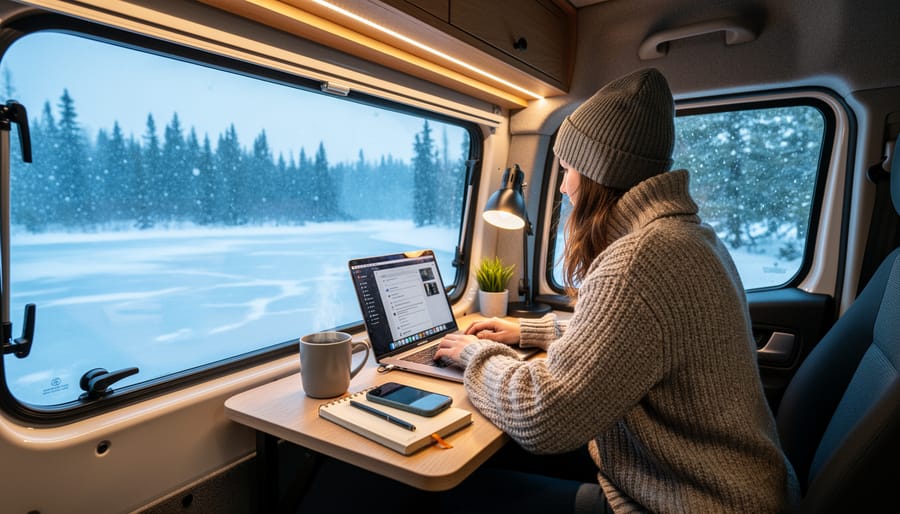
Ontario’s seasons don’t just change the scenery, they fundamentally reshape what digital nomad life looks like. Most nomads follow a migration pattern: May through October in provincial parks, then either heading south or transitioning to winter-equipped private campgrounds and RV parks that stay open year-round.
Summer is straightforward. Parks are fully operational, connectivity is at its peak, and you can work comfortably from a picnic table. The challenge? Competition for sites and higher fees. Booking opens months in advance for popular parks, so plan accordingly.
Fall transforms Ontario into a remote worker’s dream. Crowds thin after Labour Day, rates drop at many private campgrounds, and the weather remains pleasant through mid-October. You’ll save money during shoulder season while enjoying some of the year’s best conditions. Cell towers face less congestion too.
| Season | Best Months | Main Challenges | Essential Gear |
|---|---|---|---|
| Summer | June-August | Crowds, heat, bugs, high fees | Bug netting, cooling fans, screen tent |
| Fall | September-October | Cold nights, early park closures | Heated blanket, insulated tent, backup heater |
| Winter | December-February | Extreme cold, limited park access | 4-season tent/RV, diesel heater, serious insulation |
| Spring | April-May | Mud, rain, unpredictable weather | Waterproof everything, elevated workspace |
Winter separates casual campers from committed nomads. Most provincial parks close by November, leaving you with private campgrounds or heading to southern Ontario’s limited winter-camping options. An insulated RV with a proper furnace becomes non-negotiable. You’ll burn through propane and need reliable power for space heaters.
The reality? True year-round nomading in Ontario requires either significant investment in winter gear or willingness to explore on a budget by migrating seasonally. Many nomads compromise: eight months mobile in Ontario, four months in a short-term rental or down south. Spring brings mud season, parks reopen, but you’ll deal with soaked ground and temperamental weather until late May. Those who stick it out get their pick of empty campgrounds.
Eco-Friendly Nomad Practices for Ontario’s Parks
Working remotely from Ontario’s parks is a privilege that comes with responsibility. The good news? Being eco-conscious doesn’t require giving up your laptop lifestyle, it just means making smarter choices about how you occupy these spaces.
Start with your power setup. Solar panels beat generators every time for both noise pollution and carbon footprint. Modern portable solar arrays can charge laptops and phones surprisingly well, and they’re getting more affordable. If you’re winter camping and need backup heat or power, choose propane over gasoline generators, they’re cleaner and quieter. Speaking of cold-weather stays, proper winter road safety practices reduce unnecessary trips and fuel consumption when you’re accessing remote parks.
Leave No Trace principles apply doubly when you’re camping long-term. Pack out everything, including food scraps (yes, even biodegradable stuff, it attracts wildlife and disrupts ecosystems). Set up your work station on durable surfaces like rock slabs or established clearings rather than trampling new vegetation. When nature calls during Zoom meetings, use designated facilities even if they’re a five-minute walk away.
Your tech waste matters too. Bring rechargeable batteries, avoid single-use electronics packaging, and download maps and resources before arriving to minimize data usage and tower strain. Many parks now offer recycling stations, actually use them.
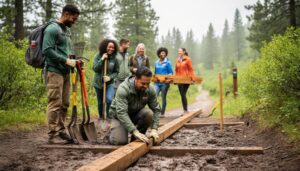
Consider contributing to park conservation funds or volunteering for trail maintenance days. Ontario Parks’ ecological integrity program welcomes support, and some campgrounds offer reduced rates for volunteers. You’re essentially a temporary resident of these ecosystems, not just a visitor passing through. Treat them accordingly, and they’ll remain viable workspaces for the nomads who follow you.
The lines between office and outdoors have blurred, and Ontario’s parks stand ready to become your next workspace. What started as a pandemic necessity has evolved into a lifestyle that thousands are now embracing, proof that you don’t need to choose between career ambitions and a life filled with adventure.
Working from Algonquin’s pine forests or answering emails beside Lake Superior’s shores isn’t just romantic fantasy. It’s increasingly practical, sustainable, and transformative. Remote workers who’ve made this shift consistently report something deeper than improved WiFi speeds or scenic Zoom backgrounds. They talk about recalibrated priorities, better mental clarity, and a reconnection with what matters beyond deadlines and deliverables.
Ontario’s 340-plus provincial parks offer more than campsites, they’re gateways to a different way of living. Each location brings its own rhythm, whether you’re catching sunrise over Georgian Bay between meetings or unwinding with a sunset paddle after closing your laptop. The infrastructure exists, the community is growing, and the province’s natural beauty provides daily reminders of why you chose this path.
Your digital nomad journey doesn’t require quitting everything or buying an expensive RV. Start with a weekend test run at a nearby park with good connectivity. Experience that first morning coffee with loons calling across the water while your inbox loads. Feel how afternoon hikes recharge your creative energy.
The wilderness is calling, and this time, you can answer without requesting time off. Pack your laptop, download this guide, and discover what happens when Ontario’s great outdoors becomes your greatest office.







+ There are no comments
Add yours