

Step onto Ontario’s highlands above 500 meters, where the landscape transforms into a miniature arctic tundra that seems impossibly out of place in southern Canada. Here, twisted shrubs cling to windswept granite, delicate wildflowers burst through rock crevices, and plants that normally thrive thousands of kilometers north have carved out remarkable survival niches. This is alpine flora—nature’s ultimate survivors, adapted to harsh winds, extreme temperature swings, and shallow soils that would defeat most vegetation.
Ontario’s alpine zones exist as ecological islands, particularly along the Niagara Escarpment and in the highlands of Frontenac and Algonquin regions. These rare environments support species like the Three-toothed Cinquefoil, whose white flowers dot granite outcrops, and stunted Balsam Fir shaped into “krummholz” formations by relentless winds. You’ll find Arctic-Alpine species nestled alongside Ontario’s diverse plant life, creating biodiversity hotspots that punch well above their size.
**Insider tip:** Visit during late spring through early summer (May to July) when alpine wildflowers peak, and always check weather conditions—these exposed highlands can shift from sunny to stormy within minutes.
The alpine plants you’ll discover aren’t just botanically fascinating; they’re living testaments to resilience, having persisted since the last ice age retreated 10,000 years ago. Understanding where to find them and how to explore responsibly opens a window into one of Ontario’s most overlooked natural treasures.
What Makes Ontario’s Highlands ‘Alpine’?
You might wonder how Ontario, hundreds of kilometres from the Rocky Mountains, can claim to have “alpine” anything. The secret lies in a fascinating quirk of geography and climate that transforms certain elevated pockets of our province into surprisingly Arctic-like environments.
True alpine zones exist above the treeline on mountains, where harsh conditions prevent forests from growing. While Ontario’s highest points barely top 700 metres—nowhere near mountain heights—some locations manage to mimic these extreme conditions remarkably well. The Algonquin Highlands and the rugged terrain near Lake Superior create perfect stages for this natural drama.
Here’s what makes the magic happen: ancient Canadian Shield bedrock lies exposed to the elements, having been scoured clean by glaciers thousands of years ago. Without deep soil to anchor roots or retain moisture, only the toughest plants survive. Add brutal winters where temperatures plummet to -40°C, relentless winds that sweep across open rock faces, and you’ve essentially recreated alpine conditions at a fraction of the elevation.
Lake Superior’s north shore offers particularly extreme examples. Those fierce lake-effect winds—trust me, you’ll feel them if you visit in November—blast the landscape year-round, stunting tree growth and creating windswept barrens. I’ve stood on these headlands in summer wearing a winter jacket!
The result? Plants that normally grow only in the Arctic tundra or high mountain peaks find comfortable homes here. These “alpine” habitats are like ecological islands—isolated pockets where Arctic species have persisted since the glaciers retreated. It’s essentially time travel through botany, giving us front-row seats to what much of Ontario looked like 10,000 years ago, without needing a plane ticket north.
The Hardy Survivors: Plants That Thrive Where Others Can’t
Cushion Plants and Ground Huggers
Hugging the ground like nature’s own living carpet, cushion plants represent some of the most resilient survivors in Ontario’s alpine zones. These remarkable species have mastered the art of staying low—literally. By growing close to the earth’s surface, they escape the fierce winds that would tear taller plants apart while trapping precious warmth in their dense, compact forms.
**Mountain sandwort** forms delicate white-flowered mats that look almost too fragile for their harsh environment, yet they thrive in rocky crevices where few other plants dare to grow. **Moss campion** creates vibrant pink cushions that can live for over a century, slowly expanding across bare rock like botanical time capsules. These ancient survivors bloom with shocking intensity, transforming grey mountainsides into splashes of magenta. **Alpine bistort**, with its distinctive white or pink bottle-brush flowers, adds height—though still rarely exceeding 30 centimeters—to the alpine tapestry.
**Insider tip**: Late June through mid-July offers the most spectacular flowering displays for cushion plants. The snow has just melted, and these hardy survivors rush to complete their reproductive cycle before winter returns. Early morning visits reward you with dew-sparkled blooms and the best photography light.
Look for these ground-huggers along exposed ridgelines and rocky outcrops where soil is minimal. They’re surprisingly easy to spot once you train your eyes to look down rather than up—they’re nature’s reminder that sometimes the smallest things put on the biggest show.
Wildflowers That Brave the Elements
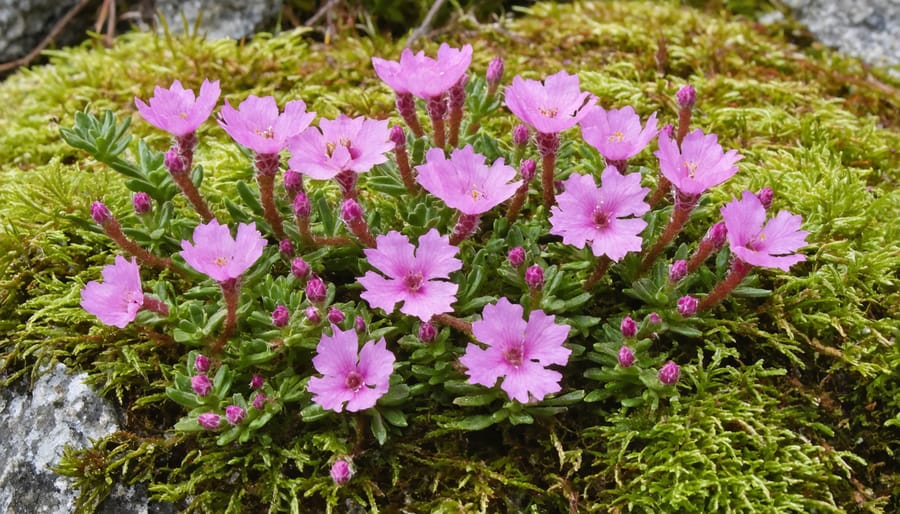
I’ll never forget scrambling over a wind-blasted ridge near Lake Superior and spotting a brilliant purple saxifrage clinging to a crack in the granite. This tiny pioneer blooms so early that snow often frames its vibrant cushions of color—nature’s way of proving that beauty thrives even in the harshest conditions.
Alpine wildflowers are the rock stars of high-elevation landscapes, and Ontario’s highlands showcase several stunning species. The delicate harebell nods on impossibly thin stems, its bell-shaped blue flowers dancing in mountain breezes. Alpine goldenrod creates sunny patches among the rocks, quite different from its lowland cousins. These hardy bloomers share space with other native wildflowers that have adapted to extreme conditions.
**Identification tips:** Purple saxifrage forms dense mats close to the ground with magenta-pink flowers emerging directly from the foliage. Harebells grow 10-40 cm tall with nodding blue-violet blooms. Alpine goldenrod stays compact compared to meadow varieties, rarely exceeding 30 cm.
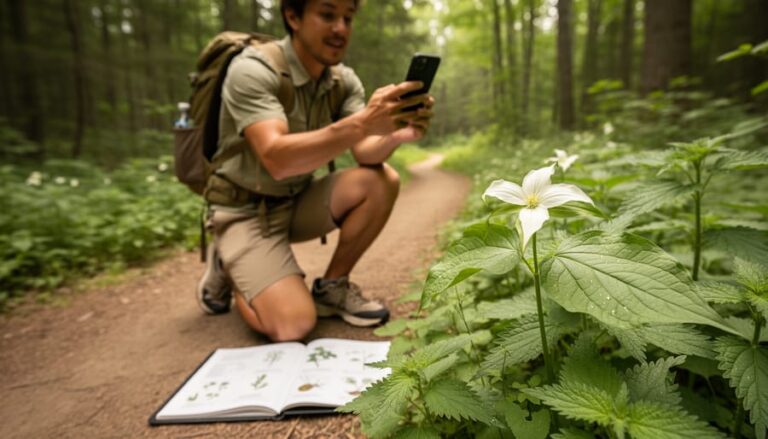
**Insider tip:** Visit in late June through early August for peak blooming. Bring a pocket guide or use a plant identification app—signal permitting! Photography works best on overcast days when harsh shadows won’t obscure delicate details.
**Eco-friendly reminder:** These plants grow incredibly slowly in challenging conditions. Admire them from established trails and never pick alpine flowers. One careless step can destroy decades of growth.
Ancient Survivors: Lichens and Mosses
Long before the showy wildflowers arrive each spring, lichens and mosses are already thriving in Ontario’s alpine zones—and they’ve been at it for millions of years. These ancient survivors might not catch your eye like a brilliant fireweed, but crouch down for a closer look and you’ll discover intricate worlds of unexpected beauty.
Lichens are actually fascinating partnerships between fungi and algae, working together to colonize bare rock faces where nothing else can survive. On the windswept ridges of Killarney Provincial Park, you’ll spot vibrant orange *Xanthoria* splashed across granite like nature’s graffiti, while chartreuse map lichens trace what look like topographic lines across boulders. These slow-growing organisms can be centuries old—that crusty patch you’re admiring might predate Confederation!
Mosses create miniature forests in rock crevices, their emerald cushions holding moisture like tiny sponges. This water retention is crucial for alpine forest ecosystems below, as mosses gradually release moisture during dry periods and prevent soil erosion.
**Insider tip**: Bring a magnifying glass or use your phone’s macro mode to photograph these cryptogamic wonders—you’ll be amazed at the intricate details invisible to the naked eye.
**Eco-friendly note**: These ancient organisms grow incredibly slowly, sometimes less than a millimeter per year. Step carefully on marked trails to avoid crushing centuries of growth in a single footfall.
Where to Find Ontario’s Alpine Gardens
Killarney Provincial Park’s La Cloche Mountains
Rising dramatically from the shores of Georgian Bay, Killarney’s La Cloche Mountains showcase some of Ontario’s most stunning alpine-like terrain. These gleaming white quartzite ridges—often compared to the Canadian Rockies in miniature—create harsh, windswept conditions that support remarkable flora adapted to thrive where few plants dare.
The exposed quartzite barrens host hardy species like three-toothed cinquefoil, with its delicate white flowers contrasting beautifully against silvery rock, and resilient lichens that paint the stones in shades of chartreuse and burnt orange. You’ll spot scrubby jack pines twisted into artistic shapes by relentless winds, alongside patches of lowbush blueberries that offer sweet trail snacks in late summer.
For the best experience, hike the challenging La Cloche Silhouette Trail or the more accessible Silver Peak Trail during late June through September when wildflowers peak. Early mornings reward you with fewer crowds and magical light dancing across the quartzite.
**Insider tip**: Skip the busy Crack Trail on summer weekends. Instead, explore the Chikanishing Trail system’s quieter ridges, where you’ll find equally spectacular flora and panoramic views without the queues. Remember to tread carefully—these fragile plants recover slowly from trampling, so stick to established paths and rock surfaces.
Lake Superior’s Coastal Highlands
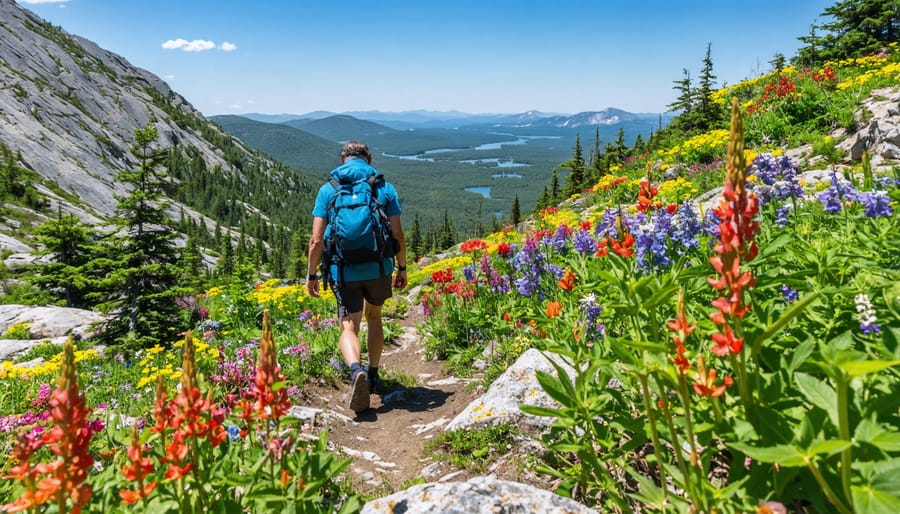
Lake Superior’s massive cold waters create unique microclimate conditions along its rugged shoreline, fostering unexpected alpine environments at relatively low elevations. Pukaskwa National Park’s coastal highlands showcase windswept rock barrens where stunted spruce, alpine bilberry, and cushion-forming plants cling to ancient Canadian Shield cliffs. Lake Superior Provincial Park offers similarly dramatic landscapes, with the Orphan Lake Trail revealing alpine meadows and exposed ridges where hardy wildflowers bloom against a backdrop of endless blue water.
The lake’s cool influence keeps summer temperatures moderate while intensifying wind exposure, mimicking true alpine conditions. Spring arrives late here—visit from late June through August for peak blooms.
**Eco-friendly exploration tips:** Stick to established trails to protect fragile plant communities, and consider paddling the coastal routes for a low-impact perspective of these remarkable ecosystems. Both parks offer backcountry camping permits—booking early ensures you’ll witness these botanical wonders without the crowds. Remember, these plants survive in harsh conditions; even a single footstep off-trail can damage decades of growth.
Algonquin Park’s Hidden Alpine Pockets
While Algonquin Park isn’t famous for towering peaks, it conceals surprising alpine-like environments that most visitors never discover. The rocky ridges along Barron Canyon Trail offer exposed ledges where stunted pines give way to cushion plants and hardy lichens clinging to windswept stone. I’ll never forget scrambling up a side trail near the canyon’s edge and finding tiny three-toothed cinquefoil blooming between the rocks—a reminder that elevation isn’t everything when it comes to alpine conditions.
For a more challenging adventure, head to Provoking Lake’s northern access points. The granite outcrops here create microclimates where temperature and exposure mimic true alpine zones. Early morning hikes reward you with better light for photography and fewer crowds.
**Insider tip:** Bring a hand lens or your phone’s macro mode to appreciate the intricate details of miniature alpine plants—some flowers are barely larger than your fingernail! Always stay on established paths or durable rock surfaces to protect these fragile communities. Pack out everything you bring in, and consider visiting mid-week when these hidden gems are quieter and the plants less disturbed by foot traffic.
Protecting These Fragile Ecosystems
Alpine plants may look hardy, but they’re actually some of nature’s most vulnerable survivors. A single footstep can crush plants that took decades to grow, and compacted soil prevents their delicate root systems from accessing the moisture and nutrients they desperately need. The good news? Protecting these incredible ecosystems is easier than you might think, and it makes your alpine adventures even more rewarding.
The golden rule is simple: stay on established trails. I know that perfect photo op might seem just a few steps away, but those “few steps” can cause damage that lasts for years. Alpine soils are incredibly fragile, and once disturbed, they erode quickly in harsh mountain winds. Think of trails as your VIP pass to nature’s show – they’re designed to get you to the best views while keeping the ecosystem intact.
When photographing alpine flowers, use your zoom lens instead of your feet. Get creative with angles from the trail – sometimes a lower perspective or side view captures even more drama than getting right on top of your subject. Pack a lightweight telephoto lens or use your phone’s zoom feature to capture stunning close-ups without leaving the path.
Practice “take only pictures, leave only footprints” – and make sure those footprints stay on designated trails. Pack out everything you bring in, including organic waste like apple cores (they don’t belong in alpine ecosystems). Avoid picking flowers or collecting seeds, as these plants need every opportunity to reproduce in their challenging environment.
By treading lightly, you’re ensuring that future visitors can experience the same alpine magic you’re enjoying today.
Planning Your Alpine Flora Adventure
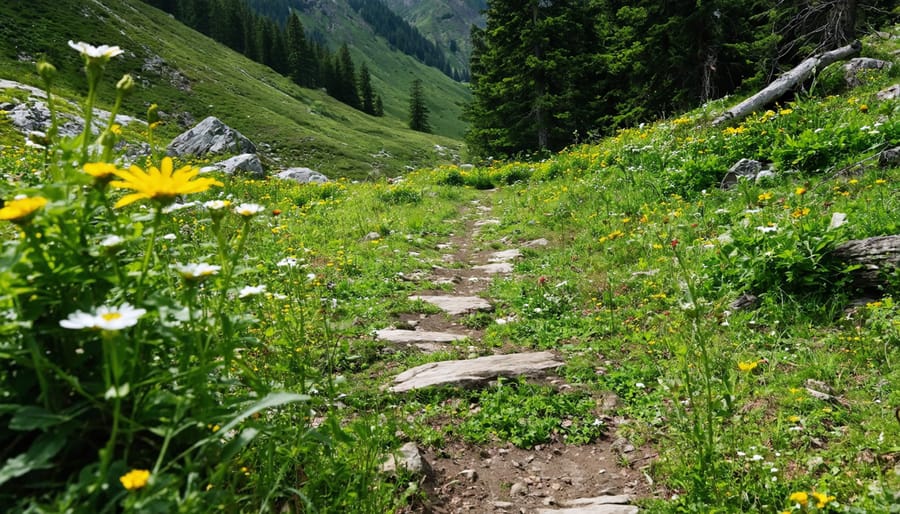
Timing is everything when it comes to alpine flora adventures. The sweet spot for catching Ontario’s highland blooms runs from late May through early August, with peak flowering typically occurring mid-June to mid-July. Here’s my insider tip: visit on weekdays during the last two weeks of June to experience the most spectacular displays without the weekend crowds.
Pack smartly for your botanical expedition. Essential items include a detailed field guide to alpine plants (the Ontario Wildflowers app works brilliantly offline), sturdy waterproof hiking boots with good ankle support, and layers you can adjust throughout the day. Don’t forget a hand lens or macro camera attachment – these tiny plants reveal incredible detail up close!
For photography enthusiasts, the diffused light on overcast days actually works wonders for capturing delicate petals without harsh shadows. Get down low, stabilize your camera against rocks if needed, and use a small reflector (even white paper works) to bounce light onto your subject.
Highland weather shifts faster than you’d expect. I’ve experienced sunshine, fog, and hail within a single hour! Always carry a windproof, waterproof shell, extra socks, and high-energy snacks. Check weather forecasts before heading out, but prepare for surprises – that’s part of the alpine experience. Start early morning when plants glisten with dew and temperatures are manageable for the climb ahead.
You don’t need to jet off to the Rockies or hike through the Alps to discover the magic of alpine flora—Ontario’s highlands have been quietly showcasing these botanical wonders all along, just waiting for you to explore them. These fragile ecosystems, perched atop our province’s highest points, offer something truly special: a chance to witness plants that have adapted to some of the harshest conditions on Earth, right here in your own backyard.
The beauty of Ontario’s alpine areas is their surprising accessibility. Whether you’re tackling the Crack trail in Killarney, ascending Ishpatina Ridge, or wandering the barrens of Pukaskwa, you’ll encounter miniature gardens that rival any mountain landscape—just on a more intimate scale. And here’s the insider tip: visiting these spots in early summer means you’ll catch the fleeting bloom season when these hardy survivors put on their most spectacular show.
As you plan your adventure, remember that these delicate communities depend on us treading lightly. Stay on established trails, resist the urge to pick flowers (they need every bit of energy to survive), and pack out everything you bring in. These ecosystems took thousands of years to establish—let’s make sure they’re around for generations to come.
So grab your hiking boots, charge your camera, and add Ontario’s alpine flora to your must-see list. This is bucket-list-worthy exploration without the passport.






+ There are no comments
Add yours