
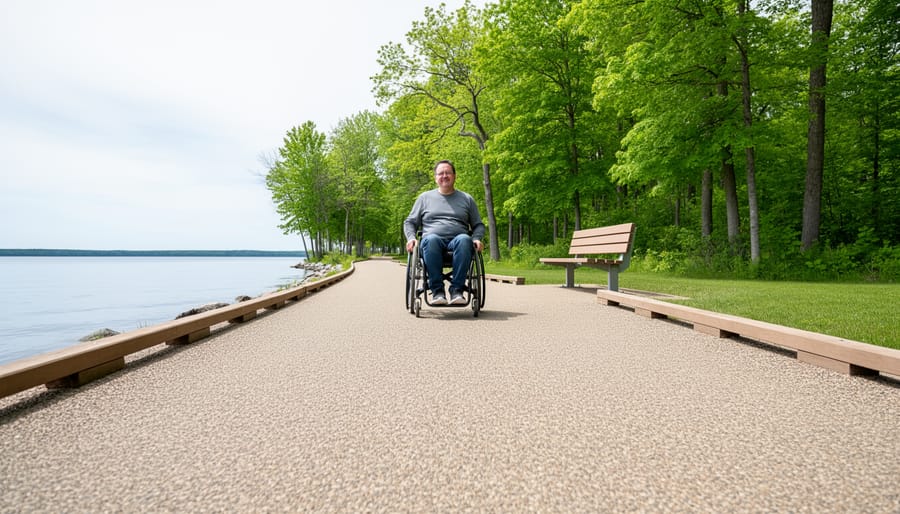
Ontario’s best wheelchair accessible paths deliver what you’re really looking for: firm, level surfaces, gentle grades under 5%, transfer-free access to trailheads, and reliable washroom facilities. Whether you’re rolling through hardwood forests or along lakeshore boardwalks, these 7 trails (detailed below) offer genuine outdoor experiences without the guesswork. Unlike Ontario rail trails that can run for dozens of kilometres, most of these paths range from 800 metres to 3.5 kilometres, perfect for a relaxed afternoon exploring nature without worrying about surface drop-offs or unexpected barriers.
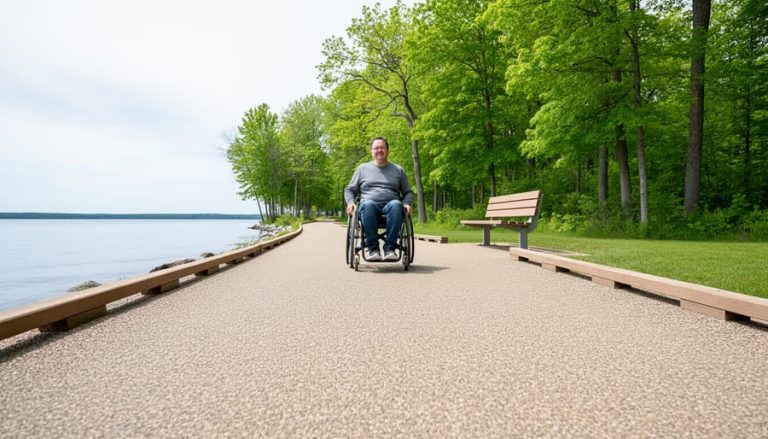
What sets these paths apart from standard “accessible” claims is their real-world navigability. Each one has been vetted for continuous smooth surfaces (crushed limestone, asphalt, or composite boardwalk), minimal cross-slopes, rest areas with benches positioned off the main path, and parking within 50 metres of the trailhead. You’ll find interpretive signage at seated eye level, viewing platforms wide enough for a full 360-degree turn, and seasonal maintenance schedules you can actually count on. The result? You spend your time watching for great blue herons or identifying wildflowers, not scanning ahead for the next rough patch.
Why Ontario’s Parks Are Leading the Way in Accessible Trails
Ontario Parks has transformed from offering token accessibility to embedding universal design into every new trail project. The province now maintains over 40 fully wheelchair-accessible paths across its park system, with eight major upgrades completed in 2026 alone. This isn’t about meeting minimum standards, it’s about creating genuine outdoor experiences where mobility devices move as freely as hiking boots.
The shift started with Ontario’s Accessibility for Ontarians with Disabilities Act, but parks staff pushed beyond compliance. They brought wheelchair users into the planning process from day one, testing prototypes and rejecting designs that felt like afterthoughts. The result? Trails with firm, stable surfaces (crushed limestone or smooth asphalt), maximum grades of 5%, and widths of at least 1.5 metres to accommodate power chairs and companions side-by-side.
Surface quality makes the difference between a frustrating roll and an enjoyable outing. Ontario’s accessible trails use compacted materials that drain well and resist rutting, with regular maintenance schedules that address frost heave and seasonal wear. Viewing platforms sit at multiple heights, interpretive signs mount at 36 inches, and rest areas include accessible picnic tables every 500 metres on longer routes.
The philosophy here is simple: if you need to explain why someone can’t access nature, you’ve already failed. Park planners now ask “how do we make this work?” instead of listing reasons it can’t. That mindset shows in details like transfer stations at trailheads, colour-contrasted edging for low-vision visitors, and emergency call buttons on remote accessible routes. Ontario treats accessibility as core infrastructure, not an add-on, which is why wheelchair users keep coming back.
Top Wheelchair-Accessible Paths Across Ontario Parks
1. Arrowhead Provincial Park, Stubb’s Falls Accessible Trail
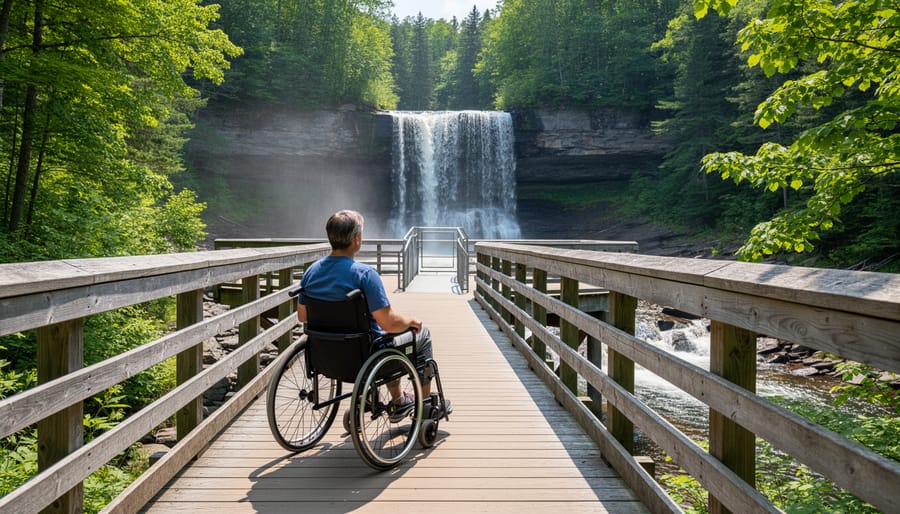
Stubb’s Falls Accessible Trail delivers one of Ontario’s most rewarding wheelchair-accessible waterfall experiences, with a 1.2-kilometre out-and-back boardwalk that winds through mixed forest to a stunning 20-metre cascade. The entire path features smooth wooden decking with a consistent width of 1.5 metres and gentle grades that never exceed 5%, making it manageable for manual wheelchair users and comfortable for power chairs.
The trail’s crown jewel is the viewing platform positioned directly across from Stubb’s Falls. Built at wheelchair height with sturdy railings and ample turning space, this deck offers unobstructed views of the waterfall and surrounding rock formations without any barriers between visitors and the scenery. You’ll hear the roar of the water long before you reach the platform, building anticipation that pays off spectacularly.
Accessible amenities include a paved parking area within 50 metres of the trailhead, wide accessible washrooms at the parking lot, and several rest benches positioned along the route with level approaches. Spring (late April through June) and fall (September to October) offer the best conditions, spring brings maximum water flow over the falls, while autumn frames the cascade with brilliant foliage. Winter access is maintained for the first 400 metres but becomes challenging beyond that point.
Families appreciate the relatively short distance, predictable surface, and the payoff of a dramatic natural feature that keeps kids engaged throughout the walk.
2. Presqu’ile Provincial Park, Marsh Boardwalk Trail
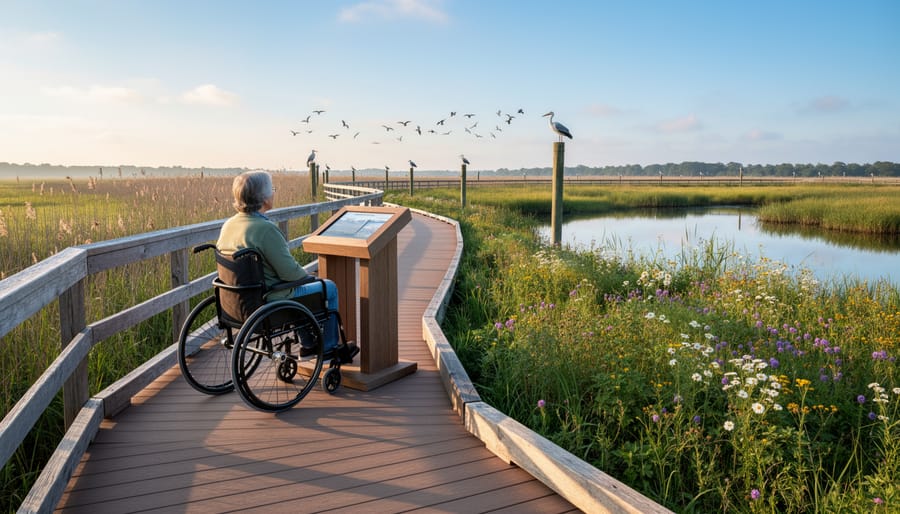
Presqu’ile’s Marsh Boardwalk Trail delivers one of Ontario’s finest accessible wetland experiences, and it’s remarkably easy to reach. The paved, 1.2-kilometre loop stays completely flat, no grades to worry about, making it ideal for manual wheelchair users who want an effortless roll through prime bird habitat.
What sets this trail apart is the thoughtful design. The boardwalk sections are wide enough (2.4 metres) for two wheelchairs to pass comfortably, and strategically placed viewing platforms jut out over the marsh at perfect wheelchair height. You’re not just observing from the sidelines, you’re right in the middle of the wetland action. Spring and fall migrations bring incredible variety: great blue herons, ospreys, and songbirds are practically guaranteed sightings.
The interpretive signage sits at accessible heights, angled so you can read without craning your neck. Each panel explains what you’re seeing, from cattail ecology to the seasonal rhythms of marsh life, making this an educational experience as much as a scenic one.
Parking couldn’t be more convenient. The accessible lot sits literally 50 metres from the trailhead, with smooth paved access and plenty of designated spots. Accessible washrooms are right there too, recently upgraded in 2026.
Visit early morning for the best wildlife activity and cooler temperatures, or catch the golden hour before sunset when the marsh glows. The trail stays open year-round, though spring (April to May) and fall (September to October) offer peak bird-watching opportunities.
3. Algonquin Provincial Park, Visitor Centre Trails
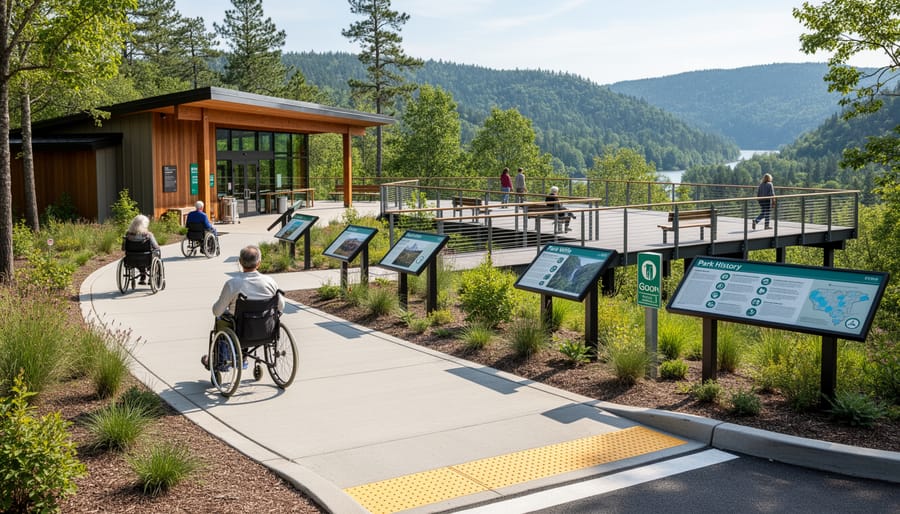
Algonquin Provincial Park’s Visitor Centre offers two interconnected paved loops that give wheelchair users a genuine taste of this iconic Canadian wilderness. The shorter 1.2 km loop circles through mixed forest on smooth asphalt with a maximum grade of 5%, while the extended 2.1 km route adds a spur to an elevated viewing deck overlooking Sunday Creek valley.
What sets these trails apart is their seamless integration with the world-class Visitor Centre itself. You can roll straight from the indoor exhibits showcasing Algonquin’s natural and logging history onto the outdoor paths without encountering steps or barriers. The viewing deck, positioned about 800 metres from the building, features sturdy railings at multiple heights and cutout sections allowing unobstructed sightlines for seated visitors. On clear days, you’ll spot distant ridges stretching toward the park interior.
The trails maintain a consistent 1.8-metre width, enough for two wheelchairs to pass comfortably, and the paving quality is excellent with minimal cracking or heaving. Mature sugar maples and yellow birch provide overhead shade in summer, though exposed sections can get hot midday in July and August.
Plan at least two hours to combine both loops with the indoor galleries and theatre. Accessible washrooms inside the centre are spotless and spacious. The large paved parking lot offers numerous accessible spaces within 20 metres of the main entrance. Spring brings trilliums along the forest floor, while September and early October deliver spectacular fall colour visible from both trail and deck.
4. Pinery Provincial Park, Riverside Trail
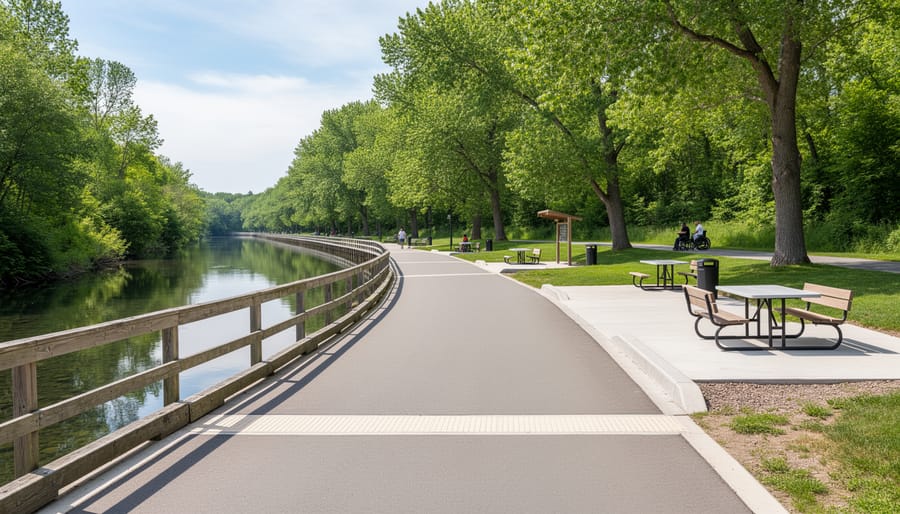
The Riverside Trail at Pinery Provincial Park offers one of the smoothest, most comfortable wheelchair-accessible experiences in Ontario’s park system. This 1.8-kilometre paved asphalt path runs alongside the scenic Old Ausable Channel, delivering consistent, crack-free surfacing that’s ideal for both manual and power wheelchairs.
What sets this trail apart is its thoughtful design for extended comfort. The path maintains a flat grade throughout, never exceeding a 1:20 slope, making it genuinely accessible rather than just technically compliant. Mature oak and pine trees provide substantial shade coverage along roughly 60% of the route, a real advantage during summer months when exposed trails become uncomfortably hot.
Strategically placed rest areas feature accessible picnic tables at proper height (28-30 inches clearance), with firm, level approach surfaces and companion seating. These spots overlook the channel where you’ll often spot painted turtles basking and great blue herons fishing in the shallows.
The trail connects seamlessly to Pinery’s accessible beach area via a short paved connector. The beach features a beach wheelchair available for loan (reserve ahead during peak season) and an accessible boardwalk extending onto the sand, letting you get much closer to Lake Huron than most accessible beach setups allow.
Park staff maintain the trail year-round, though spring visits offer the bonus of wildflower displays without the summer crowds. Accessible parking sits within 30 metres of the trailhead, and the nearby comfort station meets full accessibility standards.
5. Rondeau Provincial Park, Marsh Trail
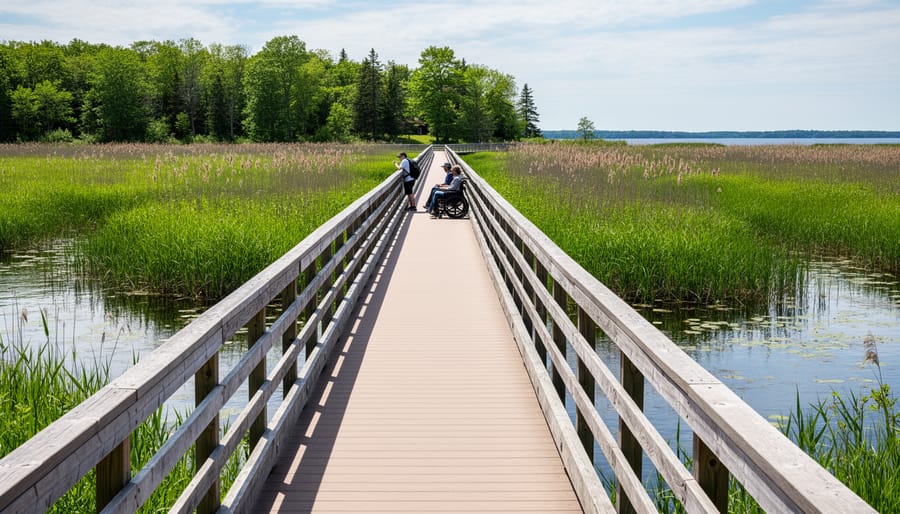
Rondeau Provincial Park’s Marsh Trail offers something truly special, a 1.2-kilometre elevated boardwalk that winds through one of Canada’s most ecologically diverse regions. The trail showcases the rare Carolinian forest zone, where species like tulip trees and sassafras grow at the northern edge of their range, sharing space with marsh habitat that hosts incredible wildlife year-round.
The boardwalk maintains a generous 1.5-metre width throughout, allowing comfortable two-way traffic and plenty of room for wheelchairs to navigate easily. The surface consists of non-slip composite decking that stays dry even after rain, with solid railings on both sides for added security. You will not encounter any steep grades, the entire route follows a gentle, naturally level path through the marsh ecosystem.
Three spacious viewing platforms punctuate the trail at strategic points, each offering wheelchair-height interpretive panels and unobstructed sightlines into the marsh. Spring brings migrating warblers by the dozens, while summer reveals nesting herons and turtles basking on logs. Autumn transforms the Carolinian canopy into spectacular colour that reflects perfectly in the still marsh waters.
Accessible parking sits just 50 metres from the trailhead, with smooth paved access leading directly to the boardwalk. The nearby visitor centre provides accessible washrooms and water bottle refill stations. Early morning visits in May or September offer the best combination of comfortable temperatures and peak wildlife activity, with far fewer mosquitoes than midsummer.
6. Awenda Provincial Park, Kettle’s Lake Accessible Trail
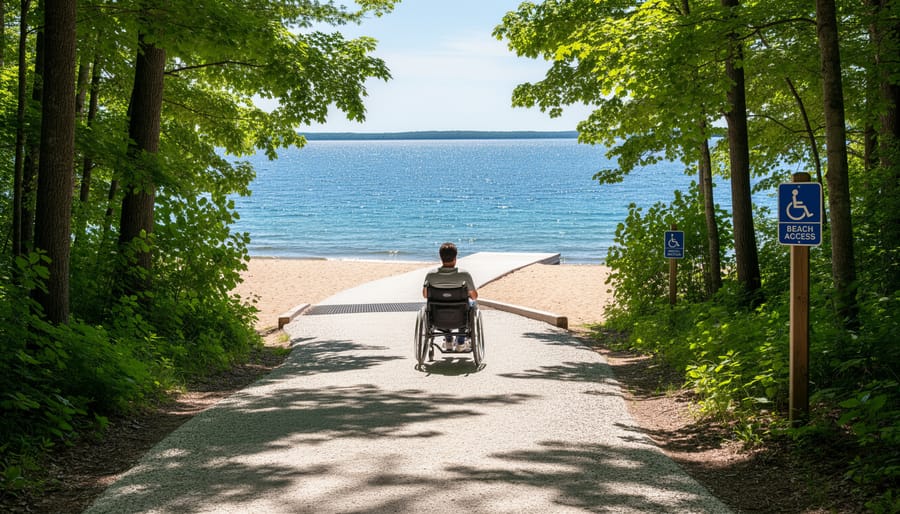
Kettle’s Lake Accessible Trail offers a peaceful 1.2-kilometre loop through mixed forest on a well-maintained crushed limestone surface that’s firm enough for manual and power wheelchairs yet softer on the arms than asphalt. The path maintains a maximum gradient of 1:20, making it one of the gentler accessible trails in the provincial park system.
The highlight is the lake viewpoint roughly halfway along the route, where the trail widens to accommodate a designated viewing area with space for multiple wheelchairs. On calm mornings, the lake surface mirrors the surrounding pines, and you’ll often spot loons diving near the shore. An accessible beach access point connects to the trail about 200 metres past the viewpoint, featuring a beach wheelchair available for loan at the park office (call ahead during peak summer weekends to reserve).
Visit between late May and early October for the best trail conditions. Spring melt can leave sections temporarily soft, while autumn brings spectacular foliage and fewer crowds. The crushed limestone drains well after rain, typically firming up within 24 hours. Accessible washrooms and parking sit within 50 metres of the trailhead, and shaded benches appear every 300 metres along the route.
7. Frontenac Provincial Park, Big Salmon Lake Accessible Route
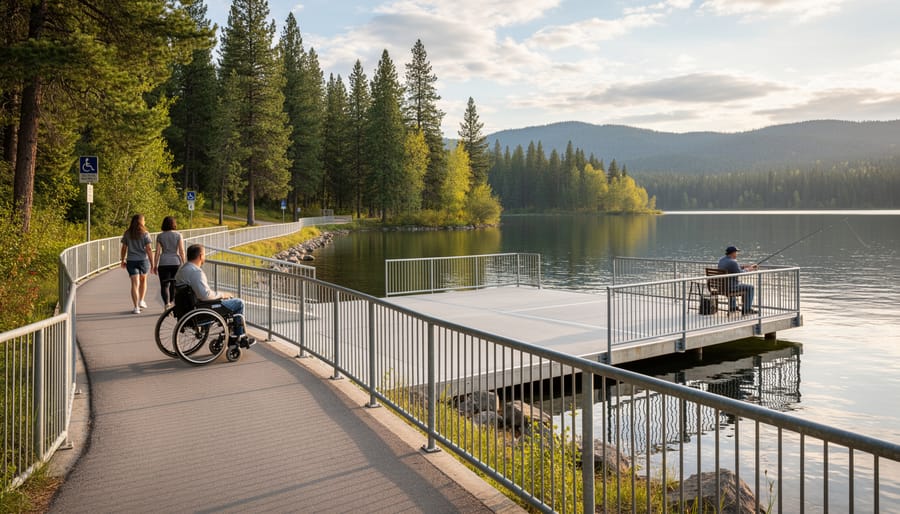
Frontenac Provincial Park‘s Big Salmon Lake Accessible Route represents the park’s commitment to backcountry accessibility, completed in phases through 2025. The 1.2-kilometre pathway features a compacted granular limestone surface that maintains firmness even after rain, with a maximum gradient of 5% and several level rest areas with benches.
The route connects the day-use parking area directly to three accessible campsites along Big Salmon Lake’s shoreline, each with firm tent pads and accessible picnic tables. Two elevated fishing platforms with transfer benches offer stable casting positions over deep water where bass and pike are plentiful. The platforms include rod holders and lowered railings that don’t obstruct sightlines.
For those seeking more adventure, the park has created Canada’s first wheelchair-accessible backcountry route extending an additional 800 metres to a remote viewing point. This section requires all-terrain mobility devices or manual chairs with off-road tires, and the park staff can advise on conditions before you commit.
Spring and fall offer the best surfaces here, as summer heat can soften the granular material slightly. Book accessible campsites well ahead, they’re popular with families introducing kids to backcountry camping in an inclusive setting.
Planning Your Accessible Trail Visit: Practical Information
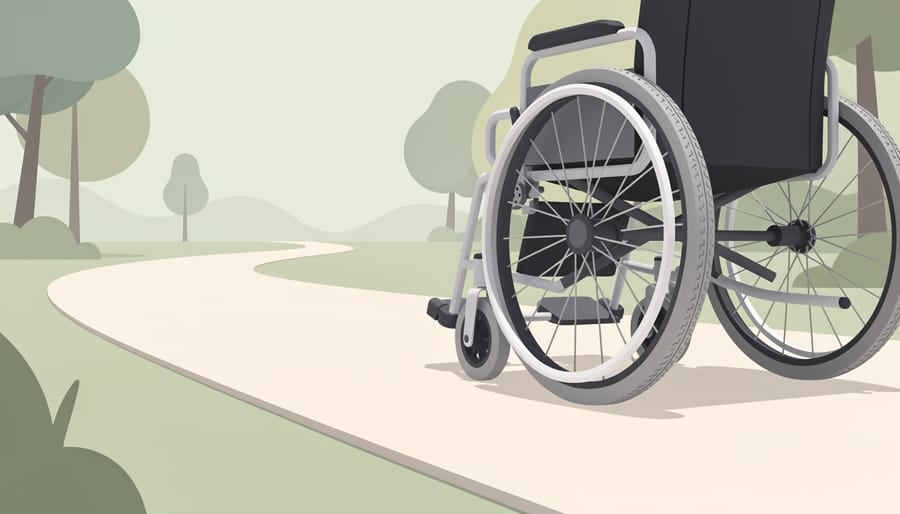
Before heading out, review parking logistics and access passes to ensure a smooth visit. All Ontario Provincial Parks require a valid day-use or annual vehicle permit, which you can purchase online or at park gates. Most of the wheelchair-accessible trails featured here are located within day-use areas, so standard vehicle permits apply, expect to pay around $12, $22 per vehicle depending on the park and season. If you’re visiting multiple parks, the annual pass offers better value and supports park maintenance programs that improve accessibility features.
Parking and drop-off areas near accessible trailheads typically include designated accessible spaces close to the path entrance, often within 50 metres or less. Presqu’ile, Pinery, and Arrowhead parks all have paved parking lots with level access directly to trailheads. At Algonquin’s Visitor Centre, accessible parking connects via smooth pavement to both outdoor trails and indoor exhibits. If you’re coordinating group visits or need assistance, park staff can often arrange closer drop-off access, call ahead to confirm arrangements. You can also plan with transit if you’re relying on public transportation to reach parks near urban centres.
| Park Name | Trail Length | Surface Type | Key Amenities |
|---|---|---|---|
| Arrowhead Provincial Park | 1.2 km | Boardwalk | Viewing platform, accessible washrooms |
| Presqu’ile Provincial Park | 800 m | Paved asphalt | Bird-watching platforms, interpretive signage |
| Pinery Provincial Park | 1.5 km | Smooth asphalt | Picnic tables, shaded rest areas |
| Rondeau Provincial Park | 900 m | Elevated boardwalk | Wide viewing platforms, accessible parking |
Accessible facilities vary by park but generally include barrier-free washrooms with adult change tables at or near trailheads, and water fountains at wheelchair-accessible heights. Trail maps with accessibility ratings are available at park offices and online through Ontario Parks’ website, where you can filter trails by surface type and gradient. Most paths remain open year-round, though winter conditions may affect surface quality, spring through fall offers the most reliable access and comfortable temperatures for extended outdoor time.
Local Tips for Wheelchair Users Exploring Ontario Trails
Early mornings on weekdays offer the quietest trail experiences, you’ll have boardwalks and viewing platforms mostly to yourself, and park staff are freshest for any assistance questions. Late September through early October brings spectacular foliage with fewer bugs and cooler temperatures that are easier on both you and your equipment.
Keep an eye on overnight rain. Even well-maintained crushed limestone paths can develop soft spots or puddles that make pushing harder, and boardwalks get slippery. I’ve learned to check Ontario Parks’ social media the morning of a visit, staff often post real-time trail conditions. The AllTrails app now includes user-submitted accessibility updates, though cross-reference with official park pages for accuracy.
Essential packing for wheelchair trail adventures:
- Tire repair kit and hand pump (crushed stone paths can cause slow leaks)
- Fully charged spare battery for power chairs, plus charging cable
- All-terrain or wider tires if your chair allows swaps (game-changer on gravel)
- Lightweight blanket or seat cushion for accessible picnic areas
- Reusable water bottle and high-energy snacks (facilities can be spaced far apart)
- Small first-aid kit including blister treatment for hands
Practice Leave No Trace principles, pack out everything, stick to designated paths to protect sensitive ecosystems, and give wildlife plenty of space from viewing platforms. These trail itinerary tips apply whether you’re planning a quick afternoon or a full day exploring multiple accessible routes.
Connect with Wheel to Survive Ontario and March of Dimes Canada’s outdoor recreation programs, both organize group trail outings where you can share equipment recommendations and discover lesser-known accessible gems with people who truly get it.
Common Questions About Wheelchair-Accessible Trails in Ontario
What accessibility standards do Ontario parks follow for trails?
Ontario parks generally follow the Accessibility for Ontarians with Disabilities Act (AODA) guidelines, which specify maximum gradients of 1:20 (5%) for accessible routes, minimum path widths of 1.5 meters, and firm, stable surfaces. Parks Ontario also uses the Universal Trail Assessment Process (UTAP) to rate trails on specific criteria like surface type, grade, and cross-slope.
What makes a trail truly wheelchair-friendly beyond just being paved?
A genuinely accessible trail includes rest areas every 30 to 50 meters, accessible viewing platforms at key景points, benches with transfer space, and clear signage at wheelchair eye-level. Surface quality matters as much as material, even paved trails can become inaccessible if cracks, heaving, or drainage issues develop.
Are accessible trails maintained year-round?
Most accessible trails in provincial parks are maintained from late April through October, with winter closures common due to snow and ice hazards. Some parks like Presqu’ile and Pinery keep select paved paths cleared during winter, but always check trail conditions before visiting during shoulder seasons.
How can I report accessibility problems or suggest trail improvements?
Contact Ontario Parks directly through their website feedback form or call the specific park office where you encountered issues. Many parks also welcome detailed reports through the AccessNow app, which helps track and prioritize accessibility improvements across the system.
If you’re planning a visit and want the most current information on surface conditions after recent weather, park websites typically update trail status weekly during peak season. Don’t hesitate to call ahead and speak with park staff, they can provide specific details about recent maintenance, temporary obstacles, or upcoming improvements that might affect your visit.


+ There are no comments
Add yours