
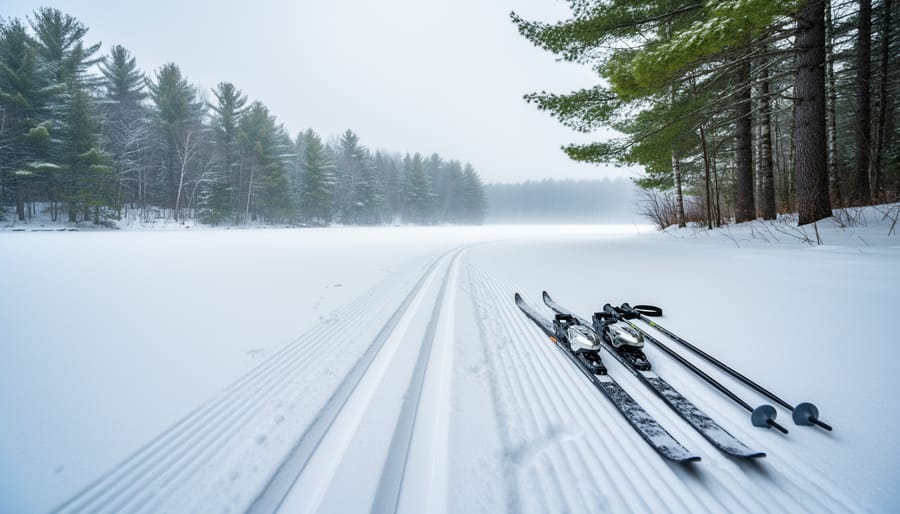
Just fifteen minutes across the Ottawa River from Canada’s capital sits 361 square kilometers of pristine wilderness that puts most Ontario parks to shame. Gatineau Park draws over 2.7 million visitors annually, and once you’ve hiked the Eardley Escarpment or skied the famous trails at Camp Fortune, you’ll understand why crossing the border into Quebec is absolutely worth it.
Yes, it’s technically in another province. But for anyone living in Ontario’s eastern corridor, especially Ottawa and the surrounding region, treating Gatineau Park as “too far” means missing out on some of the best outdoor recreation within a tank of gas. The park offers 165 kilometers of hiking trails that wind through Precambrian Shield landscapes, past pink granite cliffs, and around fifty pristine lakes. Compare that to many Ontario alternatives, and the choice becomes obvious.
What makes Gatineau particularly compelling right now is its accessibility without the chaos. While Ontario’s provincial parks have seen overwhelming demand since the pandemic, leading to booking nightmares and overcrowded trails, Gatineau maintains a surprisingly manageable visitor experience. You can often secure camping spots at Philippe Lake or La Pêche Lake campgrounds with far less advance planning than Algonquin or Killarney require.
The practical considerations matter too. Day-use parking costs just $12.25 per vehicle, camping runs between $25-35 per night depending on services, and the trail network caters to every skill level from casual walkers to serious backcountry enthusiasts. Winter transforms the park into cross-country skiing paradise, with over 200 kilometers of groomed trails that rival anything Ontario offers.
This guide breaks down everything Ontario residents need to know about making Gatineau Park your new go-to outdoor destination.
The Tale of Two Parks: Setting the Scene
Gatineau Park sprawls across 361 square kilometers of rolling Gatineau Hills just fifteen minutes from downtown Ottawa, while Frontenac Provincial Park claims a more modest 5,214 hectares of rugged Canadian Shield terrain in Eastern Ontario, roughly halfway between Kingston and Ottawa. Despite the provincial boundary, these two parks operate in overlapping circles for Ontario outdoor enthusiasts, especially those living in the National Capital Region or anywhere along the Highway 7 corridor.
| Feature | Gatineau Park | Frontenac Provincial Park |
|---|---|---|
| Location | Gatineau, Quebec | Sydenham, Ontario |
| Size | 361 km² (36,100 hectares) | 52 km² (5,214 hectares) |
| Distance from Ottawa | 15 minutes | 90 minutes |
| Distance from Toronto | 4.5 hours | 3 hours |
| Established | 1938 | 1974 |
| Primary Ecosystem | Mixed forest, lakes, wetlands | Canadian Shield, granite ridges, lakes |
Gatineau’s draw for Ontario residents goes beyond mere proximity. It’s managed by the National Capital Commission rather than a provincial parks system, which gives it a unique operational style and funding structure. The park’s polished infrastructure, think meticulously groomed ski trails, well-maintained lookouts, and extensive interpretive programming, rivals anything in Ontario’s provincial system. Its fifty lakes and dramatic escarpment views provide that “up north” feeling without the drive time.
Frontenac, by contrast, embodies Ontario’s backcountry ethos. It’s a maze of granite outcrops, beaver ponds, and interconnected lakes where you’re more likely to encounter loons than large crowds. The park sits within the Frontenac Arch, a granite bridge connecting the Canadian Shield to the Adirondacks, creating unique biodiversity. WhereGatineau feels developed and accessible, Frontenac leans wild and remote, even though it’s just an hour from Kingston’s coffee shops.
Trail Systems: Where the Rubber (or Ski) Meets the Snow
Gatineau’s Groomed Perfection
Gatineau’s reputation as a cross-country skiing destination is built on its 200 km cross-country network one of the largest groomed trail systems in North America. The National Capital Commission maintains these trails to a standard that would make Olympic coaches nod approvingly. Every morning during ski season, groomers head out at dawn to set fresh tracks, usually completing the job by mid-morning. If you’re serious about skiing on pristine corduroy, arrive between 9 a.m. and noon on weekdays.
The trails divide into three colour-coded difficulty levels: green for beginners, blue for intermediate, and black for advanced skiers who enjoy steep climbs and technical descents. The Western trails near Old Chelsea offer the most dramatic terrain, with challenging elevation changes and views over the Ottawa Valley that make the burn in your quads worthwhile. Trail 1 is legendary among locals for its relentless hills.
For a gentler introduction, head to the Lac Philippe sector. These trails wind through dense forest with more forgiving terrain, perfect if you’re still figuring out your cross-country ski gear or bringing kids along. The parking lot fills quickly on weekends, so plan accordingly.
Here’s an insider tip: skip the first sunny weekend after a fresh snowfall unless you enjoy skiing in a conga line. Instead, go midweek or wait until the following weekend when crowds thin out. Late January through February typically offers the most reliable snow conditions, though climate change has made early season skiing increasingly unpredictable.
The park also offers night skiing on select trails near P7 and P12, transforming the experience into something almost magical under lights strung through the trees.
Frontenac’s Rugged Beauty
Frontenac Provincial Park tells a different story than Gatineau’s manicured trails. This is backcountry Ontario at its finest, raw, quieter, and built for adventurers who value solitude over groomed perfection.
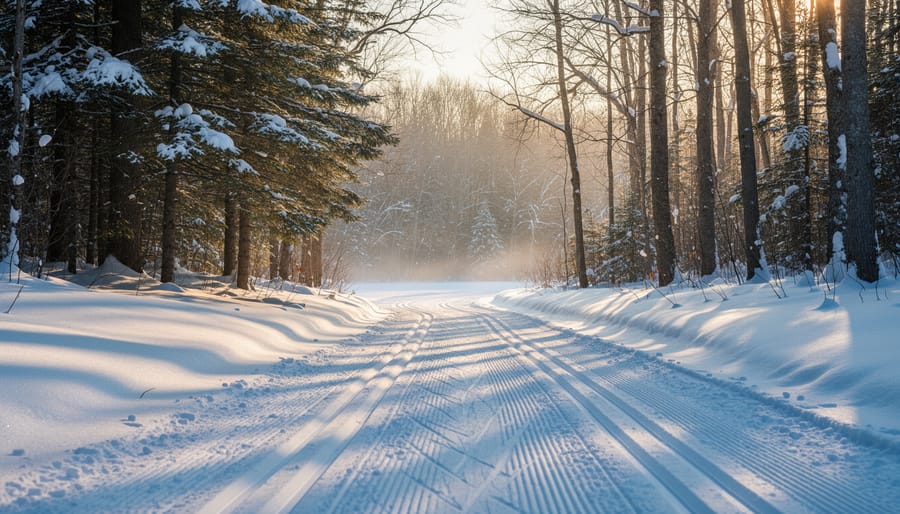
The park’s 100-plus kilometers of trails weave through rugged Canadian Shield terrain, connecting a network of glacial lakes and granite ridges. Unlike Gatineau’s well-signed, consistently maintained pathways, Frontenac’s trails embrace their wilderness character. You’ll navigate rocky outcrops, scramble over exposed bedrock, and occasionally lose the blazes in fresh snow. It’s not everyone’s cup of tea, but for those seeking authentic backcountry experience within a few hours of Toronto or Ottawa, it delivers.
The loop system is Frontenac’s secret weapon. Popular routes like the 22-kilometer Big Salmon Lake Loop or the shorter 12-kilometer Arab Lake Loop let you customize your adventure. Most interconnect, so you can design anything from a two-hour snowshoe ramble to a full-day winter trek. Last February, I spent six hours on the Slide Lake Loop and encountered exactly three other people.
Winter hiking and snowshoeing dominate here. The park maintains minimal grooming, making it challenging for classic cross-country skiing. Sure, you can ski the trails after other users pack them down, but don’t expect the smooth glide you’d find at Gatineau. Snowshoes or winter boots with good traction work better on Frontenac’s terrain.
What you sacrifice in grooming, you gain in wilderness atmosphere. The trails feel remote, even when you’re never more than a few kilometers from your car. Frozen waterfalls, animal tracks crossing your path, and that absolute silence that only comes from deep snow and thick forest, that’s Frontenac’s currency.
Getting There: Accessibility and Real-World Logistics
Getting There: Accessibility and Real-Real-World Logistics
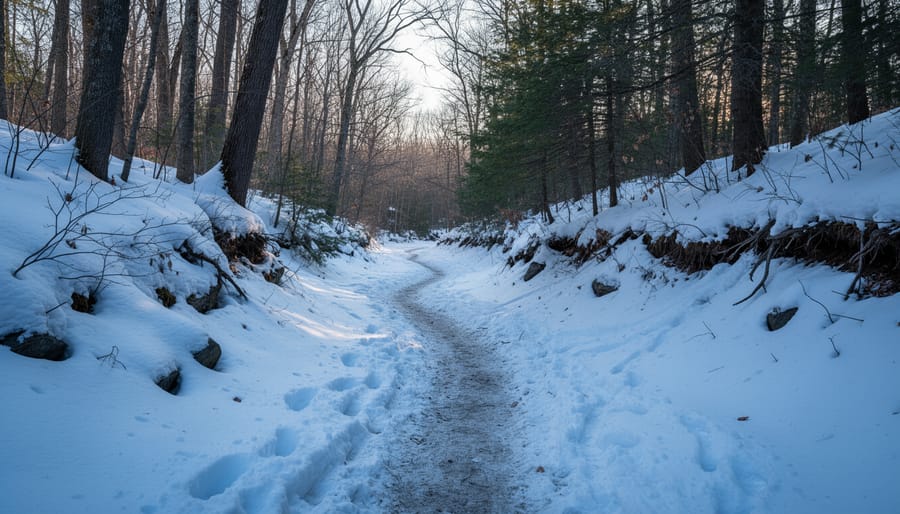
Gatineau Park sits just 15 minutes north of downtown Ottawa, making it absurdly convenient if you’re coming from Eastern Ontario. From Parliament Hill, you’re skiing groomed trails before your coffee gets cold. The park has multiple access points along the Gatineau Parkway, with major trailheads at P1, P2, and P3 offering massive parking lots that fill up fast on winter weekends. Get there before 9 a.m. or prepare to circle like a vulture. Public transit exists through the STO bus system from Ottawa, but expect transfers and limited winter schedules that make spontaneous trips frustrating.
Frontenac Provincial Park, meanwhile, demands commitment. Located near Sydenham, it’s roughly 50 kilometers north of Kingston, about an hour’s drive down Highway 38 followed by winding county roads. There’s no public transit option whatsoever. You need a car, period. The single main access point off Bedford Road means everyone funnels through the same entrance, but parking rarely becomes an issue even on busy days since day use visitors spread across the backcountry rather than congregating at groomed trailheads.
- Only 20-minute drive from downtown Ottawa makes it perfect for after-work skiing sessions.
- Multiple access points mean you can avoid crowded lots by trying different trailheads.
- Public transit technically exists for car-free travelers, though it’s clunky.
- Well-maintained parkway stays plowed all winter for reliable access.
- Parking lots overflow on sunny winter weekends, sometimes forcing closure of entry points.
- Cross-border confusion means some GPS units try routing through closed parkway sections in winter.
- Heavy traffic from Quebec ski hill crowds can slow parkway access during peak times.
- Parking stress essentially doesn’t exist even during holiday weekends.
- Single entrance point means no confusion about where to go or which trailhead to choose.
- Rural roads stay surprisingly well-maintained by Frontenac County plow crews.
- Complete car dependency eliminates options for non-drivers or those avoiding winter driving.
- Remote location means 90-minute drive minimum from Toronto or Ottawa, ruling out casual midweek visits.
- County roads can get sketchy during active snowfall without the quick clearing Gatineau Parkway receives.
For day-trippers from Toronto, neither park wins outright, Gatineau requires 4.5 hours of driving while Frontenac takes 3 hours. From Ottawa, Gatineau crushes it for convenience. Families with young kids appreciate Gatineau’s shorter commitment and warming huts every few kilometers, while adventurous types willing to drive farther find Frontenac’s solitude worth the extra windshield time.
Camping Options: From Backcountry to Base Camp
Gatineau’s Camping Scene
Gatineau Park operates three front-country campgrounds that cater to different camping styles, though your winter options here are surprisingly limited compared to what Ontario adventurers might expect. Lac Philippe is the largest and most popular, offering 200 sites spread across several loops with showers, flush toilets, and easy lake access. It’s perfect for families and car campers who want creature comforts after a day on the trails. Lac la Pêche provides a quieter, more intimate experience with 72 sites tucked into mature forest, while Taylor Lake rounds out the trio with 50 rustic sites that feel more secluded.
Here’s the catch: all three campgrounds close for winter, typically from mid-October through mid-May. Unlike many Ontario parks where winter camping is part of the culture, Gatineau focuses almost exclusively on day-use during ski season. You can book campsites through the National Capital Commission’s online system starting in January for the upcoming summer season, and popular weekends fill up fast.
If you’re set on a winter overnight experience here, you’ll need to look at nearby private campgrounds or accommodations in Chelsea and Wakefield. It’s a real departure from parks like Frontenac where winter backcountry camping is actively encouraged and supported.
Frontenac’s Backcountry Experience
Frontenac Provincial Park takes wilderness camping seriously, spreading 48 backcountry sites across its rugged landscape where you’ll earn your solitude. Most sites require a canoe paddle to reach, typically 2-5 kilometers from access points, though a few are accessible via hiking trails for those who’d rather keep their boots dry. Each site accommodates one tent and feels genuinely remote, tucked into rocky shorelines or perched on Canadian Shield outcrops with views that justify the paddle.
The permit system operates on a first-come, first-served basis during peak season, though spring and fall offer more flexibility. You’ll register at the park office, where staff mark available sites on waterproof maps and share current conditions. Unlike Gatineau’s reservation-heavy approach, Frontenac embraces a more traditional backcountry ethos where flexibility matters more than advance planning.
Winter camping transforms the experience entirely. The park stays open year-round, and those willing to snowshoe or ski to interior sites discover a landscape most people never see. Ice fishing, aurora watching, and complete silence become your entertainment. You’ll need legitimate winter gear and backcountry experience since services scale back dramatically once snow arrives.
The camping culture here leans heavily toward self-reliance. Pack out everything, treat your water, and expect to troubleshoot problems without nearby rangers. It’s less polished than Gatineau’s managed experience, which precisely suits paddlers and winter adventurers seeking authentic Ontario wilderness without crossing provincial borders.
Car Camping Comparison
If you’re looking for traditional car camping with your vehicle parked steps from your tent, Frontenac Provincial Park is your winner. The park offers well-maintained drive-in sites with picnic tables, fire pits, and relatively easy access to facilities, ideal for families or anyone who prefers creature comforts close at hand. Gatineau Park, conversely, shifts its focus heavily toward day-use during winter months, with limited overnight infrastructure when the snow flies. While summer brings more camping options at Gatineau, understanding winter camping rules makes Frontenac the clear choice for cold-weather car campers.
The Winter Sports Factor: Beyond Basic Trails
Both parks offer more than simple trail walking, but their philosophies diverge sharply when you venture beyond the groomed corridors. If you’re the type who shows up with a quiver of winter toys, understanding each park’s policies can save you a wasted trip.
Gatineau Park takes a surprisingly restrictive stance on alternative winter sports. Fat biking, that increasingly popular snow-crusher, isn’t permitted anywhere in the park during winter months. The National Capital Commission cites trail preservation and user safety conflicts as reasons, which frustrates many Ontario visitors accustomed to more permissive provincial parks. Snowshoeing is allowed, but you’re confined to designated multi-use trails or must break your own path through deep backcountry zones where no groomed tracks exist. The park does shine with ice skating opportunities, though. Meech Lake and Lac la Pêche maintain cleared skating loops most winters, and when conditions align, skating on these pristine wilderness lakes feels magical. Ice fishing is permitted on certain lakes with proper Quebec licensing, but access points are limited and regulations strict.
Frontenac Provincial Park swings the opposite direction, embracing a broader winter sports menu. Fat biking is welcome on most trails once snow conditions allow, making it a magnet for Ottawa Valley fat bikers willing to make the drive. Snowshoeing has no restrictions; you can explore virtually anywhere, from marked trails to completely wild terrain. The trade-off? No maintained skating areas whatsoever, and ice fishing, while technically permitted, lacks the infrastructure and access points that make it practical for casual visitors.
| Activity | Gatineau Park | Frontenac Provincial Park |
|---|---|---|
| Fat Biking | Not Permitted | Permitted on Most Trails |
| Snowshoeing | Designated Trails Only | Unrestricted Throughout Park |
| Ice Skating | Maintained Loops Available | None |
| Ice Fishing | Permitted (Quebec License Required) | Permitted (Limited Access Points) |
For multi-sport enthusiasts who pack skis, snowshoes, and a fat bike, Frontenac offers more freedom to improvise and explore. Gatineau rewards specialists: serious skiers who appreciate the trade-offs that come with protecting those immaculate groomed trails. Neither park caters to snowmobilers, which keeps the winter soundscape remarkably peaceful at both locations.
The User Experience: Amenities, Crowds, and Atmosphere
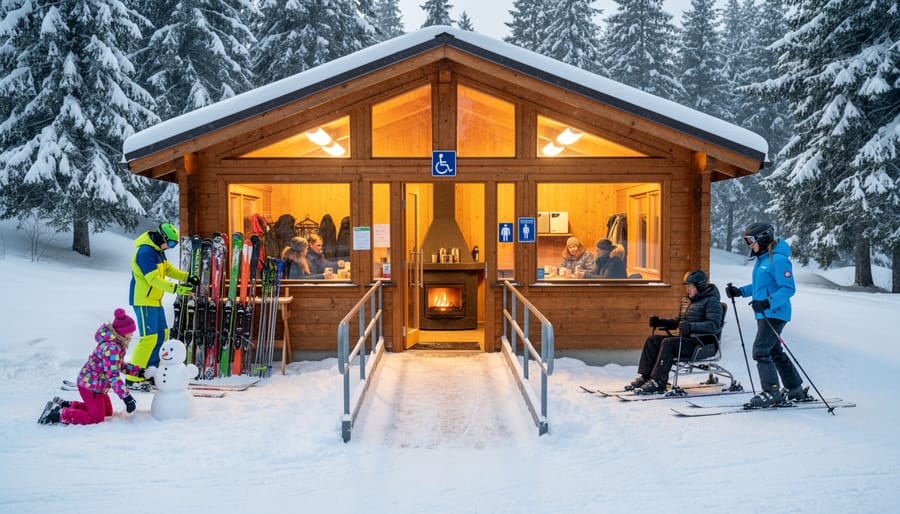
The moment you step into Gatineau Park on a Saturday morning, you know you’re in for a polished experience. The main parking lots fill up fast, arrive after 9am on sunny winter weekends and you’ll circle like a vulture. But once you’re in, the infrastructure impresses. The visitor center at Lac Philippe offers clean washrooms, detailed trail maps, and staff who actually know the conditions. Warming huts dot the trail network every 5-8km, stocked with benches and firewood. Some even have composting toilets nearby, a small mercy when nature calls at kilometer 15.
The vibe? Think European ski resort meets urban park. You’ll hear French chatter, spot families with toddlers on tiny skis, and encounter serious athletes in skin-tight suits gliding past. Weekend crowds can feel intense on popular routes like P7 and P8. I’ve been elbow-to-elbow with other skiers at trailheads, which dilutes the wilderness feeling but creates a social, almost festive atmosphere. Weekdays transform the experience entirely, suddenly you’re alone with chickadees and the swish of your own skis.
Frontenac operates on a different wavelength. The park office near Big Salmon Lake is modest, with basic maps and a friendly but limited staff presence. Warming huts don’t exist. Outhouses serve as your only facilities, and in winter, some are closed. You’re expected to be self-sufficient, which filters out casual visitors and creates a quieter, more serious outdoor crowd.
Even on peak weekends, Frontenac feels spacious. The backcountry ethos means people disperse quickly into the 5,000+ hectares. You might hike all day and see three other groups. The atmosphere is contemplative, slightly raw. There’s satisfaction in navigating without excessive signage, in finding your own rhythm without passing twenty other parties.
I’ve done mid-February Saturdays at both parks. Gatineau had me waiting in line for parking and dodging other skiers on narrow sections. Frontenac had me entirely alone for four hours, the only sounds my breathing and snow sliding off pine branches. Both experiences had merit, one felt like joining a winter sports community, the other like genuine wilderness solitude.
Cost Breakdown: What You’ll Actually Pay
Let’s talk money. If you’re driving from Ontario to hit the trails, you want to know exactly what you’ll shell out at each park.
For day-use access, the difference is stark. Gatineau Park charges absolutely nothing for parking or trail access during winter. Yes, free. You’ll park at P7, P12, or any of their trailheads and ski all day without opening your wallet. Frontenac, like all Ontario provincial parks, requires a day-use vehicle permit at $21.50 (2024 rates). If you visit frequently, Ontario’s annual vehicle permit ($148) covers Frontenac and every other provincial park, which pays for itself after seven visits.
| Cost Category | Gatineau Park | Frontenac Provincial Park |
|---|---|---|
| Day-Use Parking | Free | $21.50/vehicle |
| Backcountry Camping | $10/person/night | $14/person/night |
| Car Camping | $26.50-$33/night | $50.50-$59/night |
| Annual Pass | N/A | $148 (all ON parks) |
Camping costs tilt in Gatineau’s favour for backcountry sites ($10 versus $14 per person), though Frontenac’s car camping sites include more amenities despite the higher price tag. Neither park offers equipment rentals on-site, so factor that into your planning.
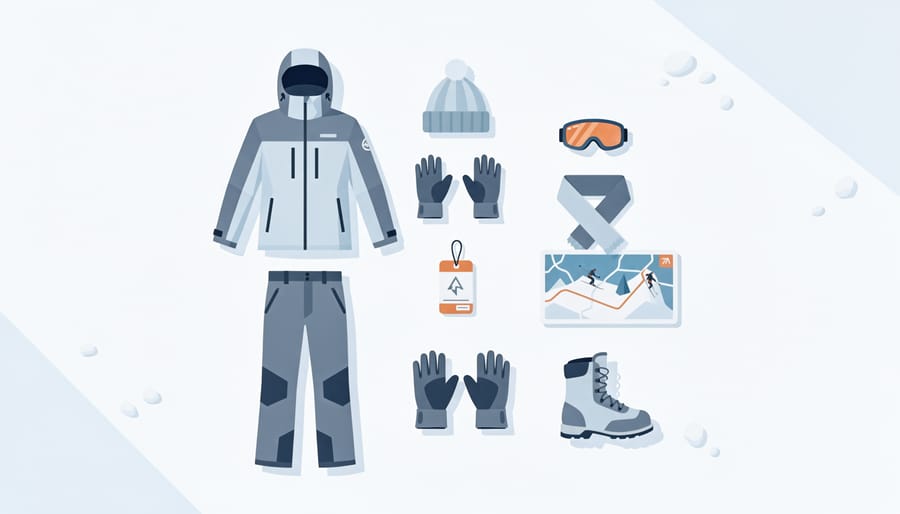
Here’s my honest take from an Ontario perspective: if you’re a day-tripper who’ll visit once or twice, Gatineau wins on pure economics. That free access adds up fast when you’re bringing a carload of friends. But if winter sports are your thing and you explore multiple Ontario parks annually, that provincial pass becomes your best friend. Just remember to pack proper gear and review winter safety tips before heading out, frostbite doesn’t care which park charges less.
Making Your Choice: Which Park Is Right for You?
Your perfect park match depends on what you value most in your winter escape.
Choose Gatineau if you’re a serious cross-country skier who prioritizes technique and consistently groomed trails. The 200km network with its meticulously maintained classic and skate ski tracks makes it the obvious choice for anyone training for events or simply craving that smooth, rhythmic glide. I’ve met countless Ontario skiers who make the pilgrimage specifically for the grooming quality, it’s that good. Gatineau also wins for day-trippers from Ottawa and eastern Ontario who want maximum trail options without committing to an overnight stay. The infrastructure (warming huts, clear signage, ample parking) makes it exceptionally family-friendly for introducing kids to cross-country skiing without intimidation.
Pick Frontenac if wilderness solitude speaks to your soul. You’re not just skiing or hiking here; you’re immersing yourself in backcountry quiet where you might not see another person for hours. This park rewards adventurers who prefer rugged, less-manicured experiences over perfectly groomed corridors. It’s ideal for Toronto and central Ontario residents willing to drive a bit further for that authentic wilderness feeling. Frontenac shines for paddlers planning multi-season visits (those canoe-in campsites are spectacular in summer), and for anyone who wants flexible winter activities beyond just classic skiing, snowshoeing and winter hiking dominate here.
Weekend warriors from Toronto face a real choice: Frontenac sits closer (roughly three hours versus four-plus to Gatineau), saving precious weekend hours. But Ottawa-area adventurers can reach Gatineau in twenty minutes, making it unbeatable for after-work ski sessions.
Budget-conscious explorers should note that Frontenac’s lower fees and free winter entry to certain areas stretch your dollar further, while Gatineau’s superior facilities justify its slightly higher costs if amenities matter to you.
Honestly, the real answer is both, just at different times. Hit Gatineau when you need that skiing fix and perfect trail conditions. Choose Frontenac when your spirit craves space, silence, and the raw beauty of Ontario’s backcountry. Each park excels at what it promises.
Here’s the truth: you don’t have to choose just one. Both Gatineau Park and Frontenac Provincial Park deserve spots on your winter adventure list, and visiting both over time gives you the complete picture of what Ontario-adjacent wilderness can offer.
If you’re craving perfectly groomed trails and want to combine your outdoor time with urban exploration, make Gatineau your base and spend an afternoon wandering Ottawa’s ByWard Market after your ski. The contrast between wilderness morning and city evening creates a pretty perfect weekend. On the other hand, if you’re heading to Frontenac, tack on a day in Kingston, grab lunch on the waterfront, tour Fort Henry, or explore the limestone heritage downtown before you disappear into the backcountry.
What strikes me most about this comparison is how it reflects the broader renaissance in Ontario winter sports culture. The explosion of participation in events like Sleeping Giant Loppet up in Thunder Bay shows that we’re not just tolerating winter anymore, we’re actively seeking it out, looking for ways to embrace those cold months instead of hibernating through them.
Whether you end up pointing your skis toward Quebec’s groomed perfection or Ontario’s rugged interior, you’re part of that shift. You’re choosing movement over stagnation, fresh air over cabin fever. Both parks reward that choice generously, just in different languages. Try one this season, bookmark the other for next year, and keep exploring everything our winter playground has to offer.




+ There are no comments
Add yours