
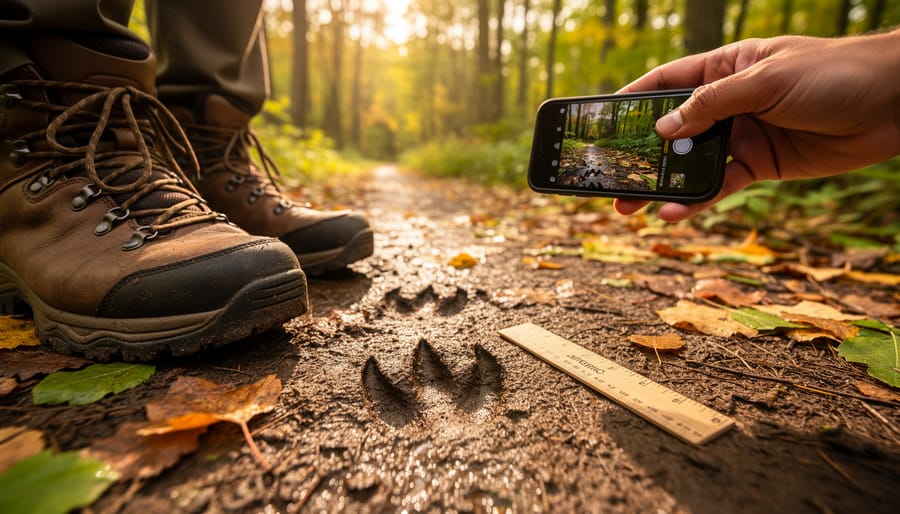
Download a field guide app like iNaturalist or Seek before your next hike—these free tools use image recognition to identify animals instantly through your phone’s camera, building your confidence as you explore Ontario’s trails. The technology connects you with a global community of naturalists who verify sightings and share knowledge in real-time.
Study animal tracks and scat first rather than relying solely on spotting live creatures. Most wildlife remains hidden during daylight hours, but their signatures tell rich stories: deer leave heart-shaped hoofprints, rabbits create distinct paired tracks from hopping, and coyote droppings often contain fur and bone fragments. Carry a small ruler to measure prints and compare them against reference cards.
Focus on three identifying features when you spot an animal: size relative to familiar objects, distinctive markings or colors, and behavior patterns. A chipmunk’s facial stripes differ from a ground squirrel’s plain face, while a red-tailed hawk’s soaring flight contrasts sharply with a turkey vulture’s wobbly glide. These quick observations matter more than perfect conditions or prolonged viewing.
Visit provincial parks during shoulder seasons for easier identification opportunities. Spring and fall migrations bring concentrated wildlife activity, while reduced summer crowds mean animals venture closer to trails. Park naturalists often lead free interpretive walks where you’ll learn local species’ habits and habitats—insider knowledge that transforms casual walks into wildlife discovery adventures.
Keep a simple observation journal noting date, location, weather, and what you saw. Patterns emerge quickly: certain birds appear near water sources, mammals follow food availability, and seasonal behaviors repeat annually, making you a skilled identifier through firsthand experience rather than memorization alone.
Why Wildlife Identification Matters More Than You Think
I’ll never forget the morning I spotted what I thought was just another deer along the Bruce Trail. But something seemed off about its behavior—it was smaller, moved differently, and when I pulled out my field guide, I realized I was watching a young coyote. That identification completely changed how I approached the rest of my hike. I became more aware of my surroundings, kept my distance, and gained a whole new appreciation for the ecosystem I was walking through.
That’s the thing about wildlife identification—it’s so much more than putting a name to a creature. It transforms how you experience the outdoors.
Understanding what you’re looking at keeps you safe. Knowing the difference between a curious black bear and a defensive one, or recognizing venomous Eastern Massasauga Rattlesnakes in their rocky Georgian Bay habitats, helps you make smart decisions on the trail. It’s not about fear—it’s about respect and awareness.
But the benefits go deeper. When you can identify species, you start noticing patterns. You’ll realize why you always see Great Blue Herons near certain wetlands, or why woodpecker activity spikes in spring. Suddenly, Ontario’s forests and lakes become less like random collections of animals and more like interconnected communities where everything has a role.
Your outdoor adventures become richer too. Instead of “I saw some birds,” you return home with stories about spotting a family of Common Loons teaching their chicks to dive, or witnessing a Red-tailed Hawk hunting over farm fields. These specific memories stick with you.
Here’s an insider tip: when you start identifying and recording your sightings through apps or citizen science projects, you’re actually contributing to conservation research. Your observations help scientists track species populations, migration patterns, and habitat health. That casual photo of a Monarch butterfly you took? It might help researchers understand pollinator decline.
Wildlife identification turns casual nature walks into meaningful experiences where you’re simultaneously learning, staying safe, and helping protect the incredible biodiversity that makes Ontario special.
Getting Started: The Basics of Wildlife Identification
What to Look For (Beyond Just the Animal Itself)
Successful wildlife identification goes way beyond simply knowing what a deer looks like. Think of yourself as a detective gathering clues, because animals leave evidence everywhere they go.
Start with silhouettes. Even from a distance, shape tells you tons. A great blue heron standing motionless in shallow water has that unmistakable hunched posture, while a turkey vulture soaring overhead holds its wings in a distinctive V-shape that separates it from hawks every time.
Movement patterns are equally revealing. Watch how a creature travels. Squirrels bound along in playful bursts, while porcupines waddle with an endearing awkwardness. River otters slide down muddy banks like kids at a waterpark, and you’ll never mistake that joyful energy for anything else.
Don’t forget your ears. Close your eyes in an Ontario forest and you might hear the drumming of a pileated woodpecker echoing like someone hammering a hollow tree, or the haunting evening call of a barred owl asking “who cooks for you?” These sounds become as recognizable as your favorite songs.
Ground-level clues matter too. Tracks in mud or snow tell stories about who passed by and when. Deer leave heart-shaped hoofprints, while raccoons show tiny handprints that look surprisingly human. Scat reveals diet and territory, and feeding signs like stripped bark or gnawed pinecones point to specific species.
Here’s an insider tip: habitat is your biggest clue. You won’t find beavers far from water or moose hanging around open prairies. Understanding where animals prefer to live narrows down your identification instantly, making you a wildlife-spotting pro in no time.
The Golden Rules of Wildlife Watching
Watching wildlife in their natural habitat is thrilling, but remember—you’re a guest in their home! The first golden rule? Keep your distance. That curious deer might look adorable, but crowding animals causes stress and can be dangerous. Binoculars are your best friend here, letting you observe detailed behaviors without disturbing the scene.
Stay quiet and move slowly. I’ve learned the hard way that crashing through underbrush guarantees you’ll see nothing but disappearing tails! Whisper if you must talk, and turn off phone ringers. Wildlife activity peaks during dawn and dusk, so plan accordingly.
Respect habitats by staying on marked trails. Trampling vegetation destroys food sources and nesting sites. Never feed wildlife—it disrupts natural diets and creates dangerous dependencies. Pack out everything you bring in, following eco-friendly practices that protect these spaces.
If you’re venturing deeper into Ontario’s wilderness, brush up on forest survival skills beforehand. Weather changes quickly, and being prepared ensures safe, memorable encounters.
Finally, photograph responsibly. No selfie is worth stressing an animal or risking your safety. These simple guidelines ensure wildlife watching remains magical for everyone.
Interactive Tools That Make Identification Easy
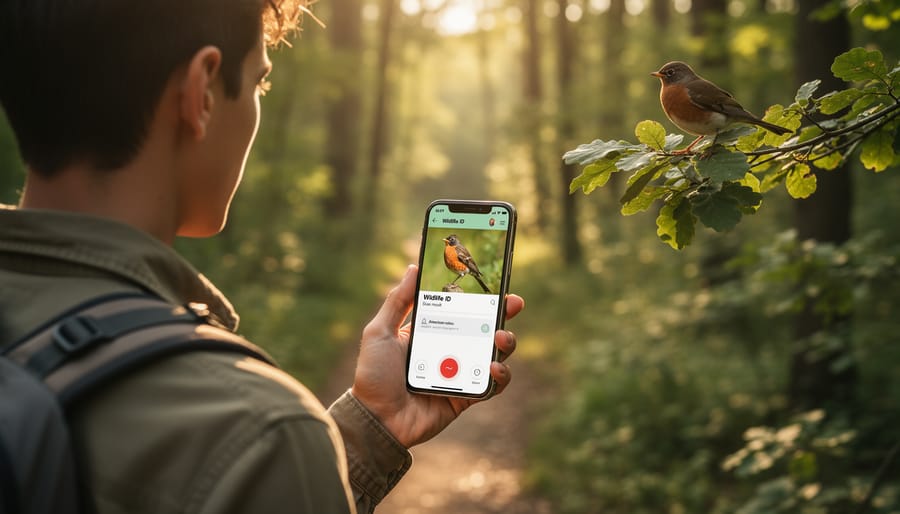
Smartphone Apps That Work Like Magic
Modern technology has transformed wildlife identification from a frustrating guessing game into an instant, accurate experience. Just like digital nature tools help you explore the stars, smartphone apps now let you identify creatures with a simple photo snap.
iNaturalist stands out as the community champion. I’ve used it countless times on trails across Ontario, and it consistently delivers reliable results. Simply photograph your wildlife encounter, and the app suggests species matches while connecting you with expert naturalists who verify your findings. The bonus? Every observation contributes to scientific research, making you a citizen scientist.
For bird enthusiasts, Merlin Bird ID is pure magic. Developed by Cornell Lab, it identifies birds through photos, songs, or answering simple questions about size and colour. Last spring at Algonquin Park, it helped me distinguish between similar warblers in seconds. The app works completely offline once downloaded, perfect for remote Ontario locations where cell service disappears.
Picture Insect excels at identifying creepy-crawlies. Point your camera at any bug, spider, or butterfly, and receive instant identification with fascinating facts. It’s particularly helpful for determining which insects are harmless and which to avoid.
Seek by iNaturalist offers gamified identification perfect for families. Kids love earning badges while learning about biodiversity.
Insider tip: For accurate results, photograph animals in good lighting from multiple angles. Capture distinctive features like markings, beak shapes, or wing patterns. Before heading into remote parks, download regional species packs for offline access. Clean your camera lens too—smudges create blurry photos that confuse identification algorithms. These apps work brilliantly, but patience and clear images make all the difference.
Community Science: Your Sightings Help Everyone
Your wildlife sightings can make a real difference! Interactive tracking platforms like iNaturalist and eBird transform casual observations into valuable scientific data. Every time you snap a photo of a bird, track, or wildflower and upload it, you’re contributing to research that helps protect Ontario’s ecosystems.
Getting started is incredibly simple. Download iNaturalist on your phone, photograph the creature you’ve spotted, and the app uses AI to suggest possible identifications. Other users and experts then verify your observation, creating a learning community where everyone benefits. It’s like geocaching adventures but for nature discoveries!
Ontario-specific projects make participation even more meaningful. The Ontario Reptile and Amphibian Atlas actively seeks sighting reports, especially of species at risk. Parks Canada’s monitoring initiatives welcome tourist contributions too. Even a single observation of a rare butterfly or unusual bird behaviour can fill critical gaps in conservation knowledge.
Insider tip: Before your park visit, browse recent sightings in the area through these platforms. You’ll discover what others have spotted recently, giving you a helpful preview of what to watch for on your own adventure.
Going Old-School: When Tech Takes a Backseat
Sometimes the best wildlife identification tool isn’t in your pocket—it’s a weathered field guide tucked into your backpack. While apps are fantastic, there’s something deeply satisfying about flipping through pages, comparing feather patterns, and sketching what you’ve seen in a worn observation journal. On foggy mornings when your phone battery dies or you’re deep in Algonquin’s backcountry without cell service, these analog companions become invaluable.
Traditional tracking cards teach you to really look—to notice the five toes on a mink print versus four on a fox. Keeping a hand-drawn journal slows you down in the best way, forcing careful observation that often reveals details a quick photo misses. Here’s an insider tip: laminated pocket guides are worth their weight in gold during Ontario’s unpredictable spring rains.
The beauty is you don’t have to choose. Snap a photo with your app for instant ID, then sketch it later to cement the memory. That’s how you transform from casual observer to confident naturalist.
Ontario’s Most Commonly Spotted Wildlife (And How to ID Them)
Mammals: From Chipmunks to Black Bears
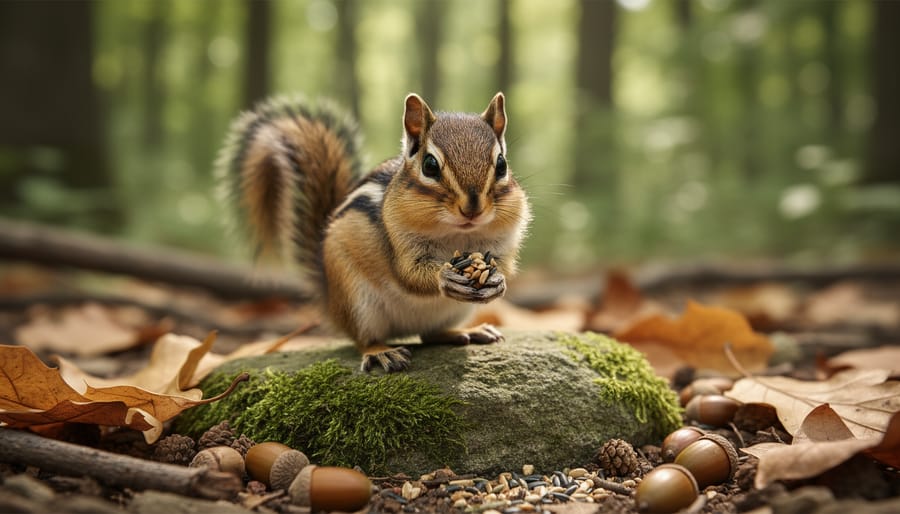
Ontario’s forests are alive with furry critters, and knowing who’s who makes your outdoor adventures even more rewarding! Let’s start small: chipmunks sport distinctive racing stripes down their backs and faces, while ground squirrels are larger with speckled coats and no facial stripes. Up in the trees, red squirrels are rust-colored chatterboxes with white eye rings, whereas gray squirrels are bulkier and, well, gray.
When it comes to white-tailed deer, watch for their trademark fluffy white tail that flashes up like a flag when they’re alarmed. During autumn, males sport impressive antlers. Here’s an insider tip: you’ll often spot them at dawn or dusk along forest edges.
Black bears deserve special mention for safety reasons. They’re typically black or cinnamon-colored with a straight facial profile, unlike the grizzly’s dished face (which you won’t find in Ontario). If you spot one, stay calm, make yourself look large, speak firmly, and back away slowly. Never run or approach. Keep your distance of at least 100 meters, and consider carrying bear spray in remote areas. Remember, spotting these magnificent creatures from a safe distance is a privilege that comes with respecting their space and supporting eco-friendly wildlife viewing practices.
Birds: Feathered Friends of the Forest and Lakes
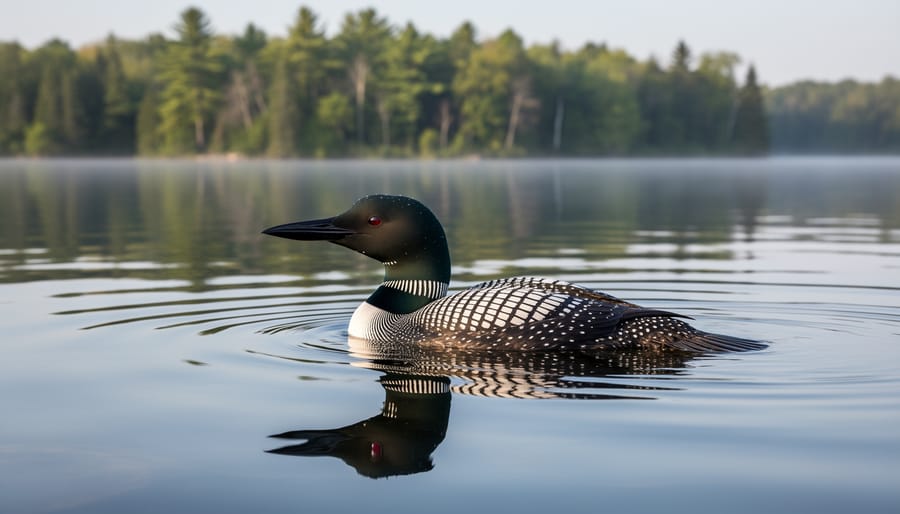
Ontario’s skies and shorelines come alive with some of Canada’s most iconic birds, and learning to identify them adds a whole new dimension to your outdoor adventures. Start with sound—the haunting wail of a Common Loon echoing across a northern lake is unmistakable and practically defines cottage country. Once you hear it, you’ll recognize it anywhere.
Blue Jays are woodland showstoppers with their brilliant blue plumage and raucous calls. They’re bold visitors at feeders and easy to spot year-round. For a cheerier soundtrack, listen for the Black-capped Chickadee’s namesake “chick-a-dee-dee-dee” call—these tiny, fearless birds often approach hikers and make fantastic photography subjects.
Waterfowl enthusiasts should watch for Canada Geese in V-formations overhead, Mallards dabbling in shallow wetlands, and the striking black-and-white patterns of Common Mergansers diving for fish. Insider tip: early morning visits to marshes reward you with maximum bird activity.
Raptors require looking up. Red-tailed Hawks soar on broad wings with distinctive rust-colored tails, while Turkey Vultures wobble slightly in flight, holding their wings in a characteristic V-shape. Ospreys hover dramatically before plunging into water for fish—an unforgettable sight at provincial parks.
Download a birding app like Merlin Bird ID before your trip. It identifies species by photo, song, or description, turning every sighting into a learning opportunity while supporting eco-friendly, observation-based wildlife appreciation.
Reptiles, Amphibians, and the Little Guys
Ontario’s smaller residents often steal the show once you know what to look for! Our painted turtles are the sunbathers you’ll spot on logs, sporting bright yellow and red patterns on their shells. Listen for the deep “jug-o-rum” call of bullfrogs near wetlands, while the tiny spring peepers create those iconic evening choruses that signal warmer weather.
Snakes get a bad rap, but Ontario’s species are mostly harmless helpers controlling rodent populations. The common garter snake, with its distinctive yellow stripes, is your most likely encounter. If you spot a black snake with a white chin near water, that’s probably a northern water snake—completely non-venomous despite its intimidating swim style.
Here’s an insider tip: flip over flat rocks or logs gently to discover red-backed salamanders, then carefully replace their cover. These lungless amphibians breathe through their skin and need that moisture.
Don’t overlook our insect world either! Monarch butterflies stage an incredible migration through Ontario each fall, while dragonflies patrol shorelines like tiny helicopters. That massive black and yellow spider in your cottage doorway? She’s a harmless orb weaver keeping mosquitoes at bay. Observing these little guys up close reveals an entire universe most visitors rush past.
Insider Tips for Better Wildlife Spotting
Here’s my secret: the best wildlife encounters happen when you slow down and think like a naturalist. I’ve learned that early mornings between 6-8 AM and late afternoons around 4-6 PM are absolute goldmine hours. Animals are most active during these cooler periods, and the soft lighting makes spotting movement so much easier.
Weather plays a bigger role than most people realize. Overcast days are actually fantastic for wildlife watching because animals feel more comfortable moving around without harsh sun exposure. After a light rain, you’ll notice increased activity as creatures emerge to feed. Just avoid heavy downpours when everyone sensibly takes shelter.
Location-wise, focus on transition zones where different habitats meet. That edge where forest meets meadow, or where a trail borders a wetland? That’s where you’ll find the action. Water sources are wildlife magnets, especially during dry spells. Set up quietly near a pond or stream, stay still for 15 minutes, and watch what appears.
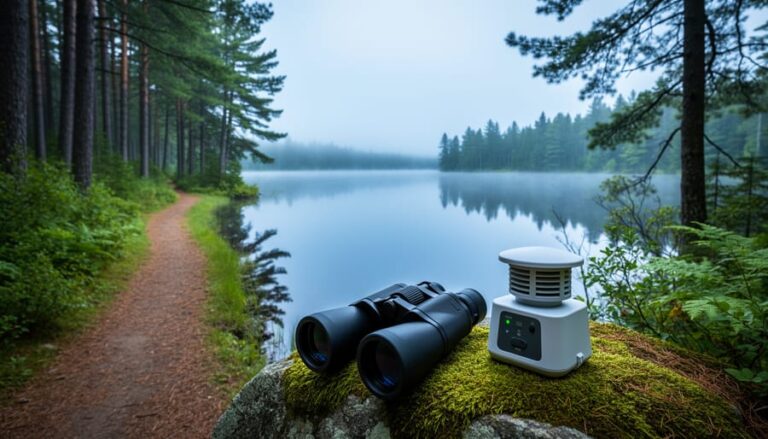
Pack smart for success. Bring quality binoculars, a field guide or identification app, a notebook for recording observations, and a camera with good zoom capabilities. Dress in earth-tone layers that don’t make rustling sounds. Leave scented products at home since strong fragrances can alert animals to your presence from surprising distances.
Here’s an insider tip that changed everything for me: look up. We naturally scan at eye level, but so much happens overhead. When exploring the forest canopy, you might spot woodpeckers, squirrels, or even roosting owls you’d otherwise miss completely.
Practice ethical wildlife watching by maintaining respectful distances. Never feed wild animals or attempt to lure them closer. Use designated trails to minimize habitat disruption, and if an animal changes its behavior because of your presence, you’re too close. Patient observers who respect wildlife boundaries always have the most meaningful, authentic encounters.
There’s something magical about spotting a scarlet tanager flashing through the trees or discovering fresh bear tracks on a forest trail. Wildlife identification transforms a simple walk in the park into an exciting treasure hunt where every rustling leaf and distant call becomes part of your adventure story. You don’t need to be a biologist or carry heavy field guides anymore. With modern apps on your phone and a curious mindset, you’re fully equipped to start connecting with Ontario’s incredible wildlife right away.
The beauty of wildlife identification is that you can begin exactly where you are, right now. On your next visit to an Ontario park, challenge yourself to identify just three species. Maybe it’s the chatty black-capped chickadee at your picnic table, the distinctive red maple leaves overhead, or those mysterious tracks crossing the trail. Each successful identification builds your confidence and deepens your appreciation for the natural world surrounding you.
Remember, every expert started as a beginner. The joy isn’t in knowing everything immediately but in the process of discovery itself. Take photos, use those tracking apps we discussed, and don’t worry about mistakes. They’re all part of the learning journey.
So here’s your challenge: get out there this weekend and see what you can discover. And when you identify something exciting, whether it’s your first pileated woodpecker or an unexpected fox sighting, share your story with us in the comments below. We’d love to celebrate your discoveries and hear about your wildlife adventures across Ontario’s amazing parks.








+ There are no comments
Add yours