

Waterscape photography transforms Ontario’s lakes, rivers, and waterfalls into stunning visual stories that capture the province’s natural beauty in ways few other subjects can match. Whether you’re standing at the edge of a misty waterfall in Algonquin Park or catching golden hour reflections on a glass-calm lake, you’re working with one of nature’s most dynamic and rewarding subjects.
The magic of waterscape photography lies in water’s dual personality—it can be a mirror, a blur of motion, or a textured canvas depending on how you approach it. Unlike underwater photography, which requires specialized gear and diving skills, waterscape work happens from shorelines, overlooks, and accessible viewpoints throughout Ontario’s provincial parks. You’ll need a camera (even your smartphone works for beginners), a tripod for those silky-smooth waterfall shots, and an eye for how light dances across water surfaces.
Ontario’s parks offer an incredible playground for this craft. From the dramatic cascades at Kakabeka Falls to the serene backcountry lakes of Killarney, each location presents unique opportunities to refine your skills. Spring brings rushing meltwater and dramatic flows, summer offers perfect reflection conditions during calm mornings, autumn adds fiery color to your compositions, and winter creates ethereal ice formations.
This guide walks you through specific park locations, essential techniques for different water conditions, and insider tips that’ll help you capture images worth framing—whether you’re shooting your first waterfall or building a professional portfolio.
What Makes Waterscape Photography Different
If you’ve ever stood at the edge of Lake Superior watching waves crash against ancient rocks, or marveled at how morning mist dances across a quiet river, you’ve witnessed the magic of waterscapes. But what exactly sets waterscape photography apart from other water-related genres?
Think of it this way: waterscape photography keeps you above the surface, capturing water as a defining element of the landscape. You’re photographing lakes reflecting cotton-candy sunsets, rivers carving through forests, waterfalls cascading over limestone cliffs, and shorelines where water meets land in endless variation. It’s about how water shapes, defines, and transforms Ontario’s natural spaces.
This differs significantly from underwater photography, where you’d don scuba gear or snorkeling equipment to capture what lies beneath—fish, aquatic plants, and submerged rock formations. Both genres celebrate water, but they tell completely different stories.
Here’s what makes waterscape photography particularly exciting in Ontario: water is everywhere, and it’s constantly changing. The same shoreline along Georgian Bay looks dramatically different in winter’s ice formations versus summer’s calm turquoise waters. A spring-swollen river creates entirely different photographic opportunities than its gentle autumn counterpart.
The storytelling possibilities are endless. You might capture the raw power of Niagara Falls, the serene stillness of Algonquin’s interior lakes, or the moody drama of Lake Erie’s storm-tossed shores. Each waterscape tells a story about Ontario’s diverse geography, seasonal transformations, and the timeless relationship between land and water.
**Insider tip**: Visit the same waterscape location across different seasons. You’ll build a compelling portfolio showing how dramatically Ontario’s water features transform throughout the year, while deepening your understanding of light, weather patterns, and composition.
Ontario’s Best Waterscape Photography Locations
Algonquin Provincial Park’s Iconic Lakes
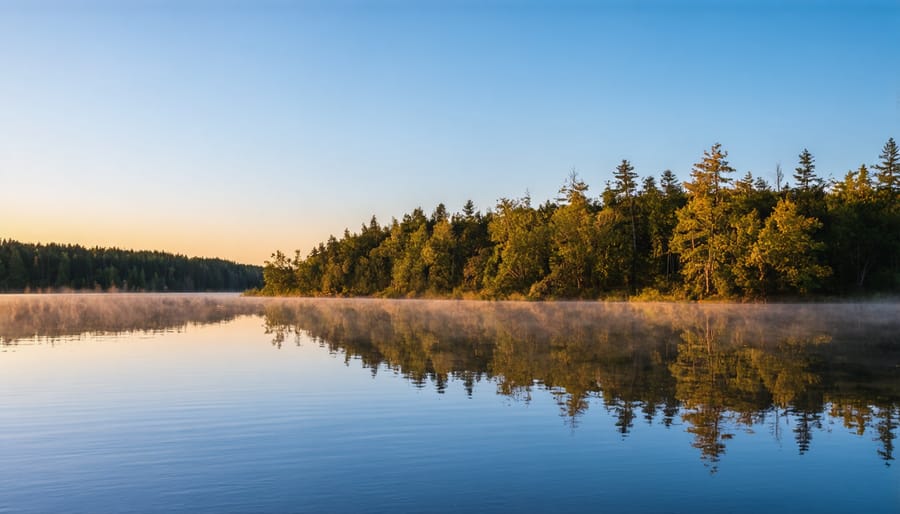
Algonquin Provincial Park delivers some of Ontario’s most breathtaking waterscape opportunities, especially if you’re willing to paddle out before dawn. I’ve found that the magic happens between 6:00 and 8:00 AM when mist rises off the water like spirits dancing across the surface. Canoe Lake and Lake of Two Rivers are your best bets for accessible morning shots—both have parking lots steps from launch points, making those early starts less painful.
The reflections here are absolutely stunning. On calm mornings, the water becomes a perfect mirror, doubling the visual impact of autumn colours or spring greenery. Pack a polarizing filter to control those reflections when needed, and bring layers—it’s chilly on the water at sunrise!
**Insider tip**: Visit mid-September through early October for peak fall colours, or try late May when ice-out creates dramatic patterns. Highway 60 corridor lakes offer easy access without backcountry permits, though venturing deeper rewards you with solitude. Rock Lake’s eastern bay provides excellent foreground interest with weathered logs and lily pads.
Remember to practice leave-no-trace principles—these pristine waters depend on respectful visitors. Arrive midweek if possible to avoid weekend crowds, and always secure your canoe properly while shooting from shore.
Killarney’s Crystal-Clear Georgian Bay
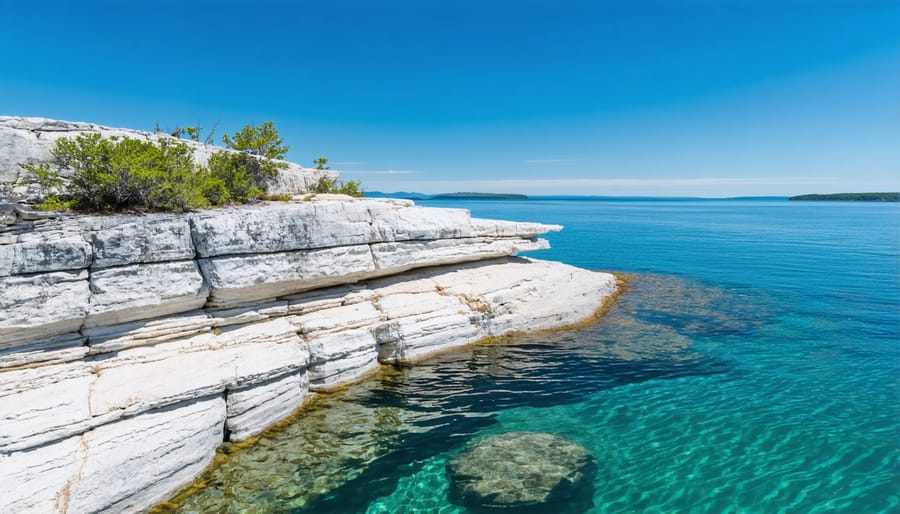
Killarney Provincial Park delivers some of the most jaw-dropping waterscape scenes you’ll find anywhere in Ontario. The moment you arrive, you’ll understand why artists from the Group of Seven became obsessed with this landscape—those brilliant white quartzite cliffs rising from impossibly turquoise waters create contrast that practically begs to be photographed.
Head to George Lake for your first shots. The smooth pink and white granite shorelines here glow beautifully during golden hour, and the calm morning waters offer perfect reflections of the La Cloche Mountains. For more dramatic compositions, paddle or hike to the Georgian Bay coastline where wind-sculpted rock formations meet crystal-clear water.
Here’s an insider tip: visit the Chikanishing Trail after a storm. The wave action against those ancient quartzite rocks creates spectacular splashes and foam patterns that add energy to your images. Bring a polarizing filter to cut through water reflections and reveal the stunning aquamarine depths below.
The geological diversity here is unmatched—you can capture everything from intimate tide pools nestled in white rock to sweeping vistas of endless blue. Remember to practice leave-no-trace principles on these fragile quartzite shores, and always check your footing before setting up that tripod on wet rock.
Bon Echo’s Cliff Reflections
Bon Echo Provincial Park offers one of Ontario’s most dramatic waterscape photography settings, where the sheer 100-meter cliff face of Mazinaw Rock rises straight from the water’s edge. Paddling out in a canoe or kayak during the golden hour transforms this already impressive scene into something magical—the rock face glows warm orange while casting perfect mirror reflections across Mazinaw Lake’s glassy surface.
Here’s an insider tip: arrive at least 45 minutes before sunset to scout your position and let the water settle after paddling. The calm conditions create those buttery-smooth reflections that make viewers do a double-take.
What makes Bon Echo truly special are the over 260 Indigenous pictographs adorning the cliff face—some dating back 400 to 1,000 years. These red ochre paintings add cultural depth and compelling foreground interest to your compositions. Position your kayak to include both the ancient rock art and its watery reflection for images that tell a deeper story.
Remember to photograph respectfully—these pictographs are sacred sites. Use a telephoto lens to capture details without disturbing the rock face, and consider visiting mid-week when you’ll have more solitude for patient, contemplative photography that honors this significant cultural landscape.
Hidden Gems for Quieter Shoots
If you’re craving solitude with your tripod, venture beyond the crowded hotspots to discover Ontario’s quieter waterscape treasures. These hidden gems offer stunning photo opportunities without the weekend crowds.
**Frontenac Provincial Park** delivers over 20 pristine lakes connected by rugged hiking trails. I’ve spent entire mornings at Big Salmon Lake without encountering another soul—just me, the mist, and perfect reflections of ancient granite cliffs. The backcountry sites here reward patient photographers with ethereal dawn scenes.
**Silent Lake** lives up to its name. This circular lake, ringed by dense forest, creates mirror-like conditions on calm mornings. The lack of motorboats means undisturbed waters ideal for long exposures. Pack a canoe to access unique vantage points from the water.
**Charleston Lake** surprises visitors with its blend of rocky shorelines and sheltered bays. The Tallow Rock Bay Trail leads to dramatic cliff perspectives over turquoise waters—a landscape that feels more Georgian Bay than Eastern Ontario.
**Insider tip**: Visit these top Ontario parks mid-week during September when fall colours emerge and most families have returned home. You’ll have prime shooting locations virtually to yourself while supporting eco-friendly, low-impact tourism.
Essential Gear for Waterscape Photography
Camera and Lens Recommendations
A versatile zoom lens in the 16-35mm or 24-70mm range will serve you beautifully across Ontario’s diverse waterscapes. I’ve found wide-angle lenses particularly magical for capturing the sweeping grandeur of places like Algonquin’s lakes at sunrise or the expansive shorelines along Lake Superior Provincial Park. For those dramatic sky-meets-water compositions, nothing beats an ultra-wide 14mm or 16mm lens.
Given Ontario’s unpredictable weather—I’ve experienced everything from fog to sudden downpours in a single morning—investing in a weather-sealed camera body is genuinely worthwhile. You’ll thank yourself when mist rolls in at Killarney or when photographing waterfalls at Kakabeka. Look for bodies with good dynamic range to handle the tricky exposure challenges water creates.
**Insider tip**: Pack a microfiber cloth in an easily accessible pocket. Water droplets on your lens are inevitable near waterfalls and rapids, and you’ll want to wipe them away quickly to catch those fleeting moments. A polarizing filter is equally essential—it cuts through surface glare and reveals the incredible aquamarine depths of Georgian Bay’s waters that make Ontario’s waterscapes so captivating.
Filters and Accessories That Matter
The right gear can transform your waterscape shots from ordinary to extraordinary, and you don’t need to break the bank to get started.
A **polarizing filter** is your best friend when shooting Ontario’s waterways. I learned this the hard way at Bon Echo Provincial Park—my first attempts at capturing the crystal-clear waters were plagued by surface glare that completely obscured the beautiful rock formations beneath. A polarizing filter cuts through that reflection like magic, revealing what lies below while simultaneously deepening blue skies and making autumn colors pop along the shoreline. Simply rotate the filter until you see the glare disappear through your viewfinder.
**Neutral density (ND) filters** are essential for creating those dreamy, silky-smooth waterfall effects you’ve probably admired in photography magazines. These filters reduce the amount of light entering your lens, allowing you to use longer shutter speeds even in bright daylight. At Kakabeka Falls, I use an ND filter to achieve exposures of several seconds, transforming rushing water into ethereal mist. Start with a 6-stop ND filter—it’s versatile enough for most situations.
Finally, invest in a **sturdy tripod**. Ontario’s rocky shorelines and uneven terrain demand stability, especially for those long exposures. Choose one that’s comfortable to carry on trails but heavy enough to withstand wind gusts near the water. Your shoulders might protest the extra weight during the hike, but your sharp, professional-quality images will make it worthwhile.
Techniques for Stunning Waterscape Shots
Mastering Reflections and Symmetry
The secret to jaw-dropping waterscape shots? Get up before everyone else! I’ve learned that the golden hour just after sunrise offers the calmest waters—before the wind picks up and paddlers hit the lake. Those first thirty minutes are pure magic for capturing glass-like reflections.
Here’s an insider tip: position yourself low, almost at water level. This perspective emphasizes the mirror effect and creates stunning symmetry between sky and water. I once crouched on a dock at Algonquin’s Canoe Lake at dawn, and the reflection of the autumn foliage was so perfect that viewers couldn’t tell which way was up!
For composition, try the classic 50-50 split—half sky, half reflection—but don’t be afraid to experiment with different ratios. Sometimes a 60-40 split creates more visual interest. Look for interesting foreground elements like fallen logs or lily pads to anchor your composition.
Timing is everything. Check weather forecasts for calm, windless mornings, and scout your location the evening before. Bring a microfiber cloth to wipe any water droplets from your lens—they’ll show up in your shots. Most importantly, practice patience. Wait for those fleeting moments when the water becomes absolutely still, creating nature’s perfect mirror.
Long Exposure Magic
Want to transform rushing water into dreamy, silky ribbons? Long exposure photography is your secret weapon! This technique works beautifully at Ontario’s waterfalls and along peaceful lakeshores, creating ethereal effects that’ll make your images stand out.
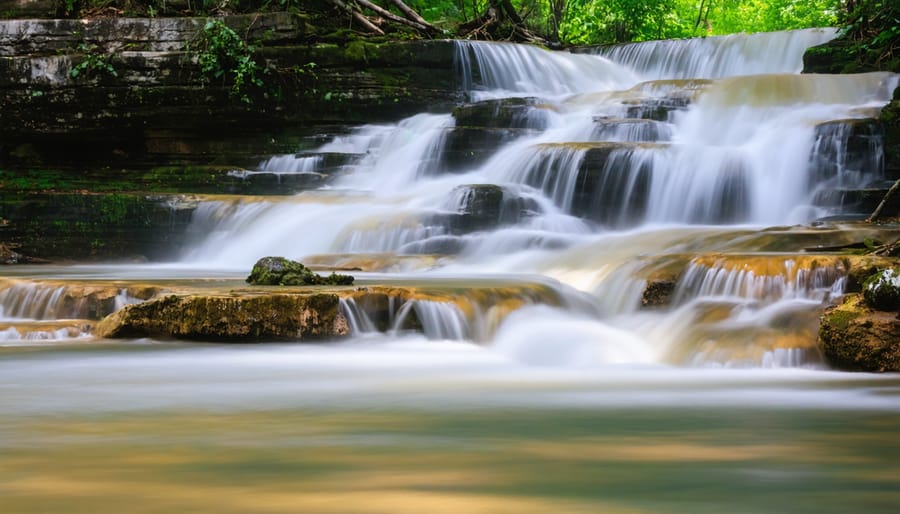
For waterfalls like those at Kakabeka Falls or Inglis Falls, start with shutter speeds between 1-4 seconds to capture that classic cotton-candy water effect. The key is finding the sweet spot—too fast and you’ll freeze the motion, too slow and you’ll lose all texture. I’ve found that 2 seconds often hits the magic mark for most cascades.
Lakes require a different approach. Since the movement is gentler, you’ll need longer exposures—think 30 seconds to several minutes—to smooth out ripples and create that glassy, mirror-like surface. Early morning at Killarney Provincial Park’s George Lake is perfect for this, when winds are calm and the water barely whispers.
**Insider tip**: Always use a sturdy tripod and a neutral density (ND) filter to achieve these longer exposures without overexposing your shot. A remote shutter release prevents camera shake, ensuring tack-sharp results. Dawn and dusk offer the best lighting conditions, plus you’ll have Ontario’s stunning wilderness mostly to yourself!
Working with Ontario’s Light
Ontario’s ever-changing light creates magical opportunities for waterscape photography, but you’ll need to adapt your approach throughout the day. Golden hour—that precious time just after sunrise and before sunset—transforms our lakes and rivers into liquid gold. I’ve found that arriving 30 minutes early lets you scout compositions while the light gradually warms up. The calm morning waters at places like Algonquin’s Canoe Lake create perfect mirror reflections during this time.
Don’t pack up when the sun climbs high, though! Harsh midday light actually works beautifully for waterfalls, where it illuminates spray and creates rainbows. Use a polarizing filter to cut through surface glare and reveal the stunning turquoise depths beneath. For open water scenes, underexpose slightly to maintain detail in bright reflections.
Ontario’s dramatic weather—from misty mornings to approaching thunderstorms—offers incredible photographic moments. Those moody skies before a storm add powerful atmosphere to your shots. Here’s my insider tip: always check weather forecasts and have a safe exit plan. Never venture onto exposed shorelines when lightning threatens, but photograph from your vehicle or a sheltered pavilion instead. Some of my most striking images came from waiting out storms safely, then capturing the ethereal light that follows.
Seasonal Waterscape Opportunities
Spring’s Rushing Waters and Ice Breakup
Spring awakens Ontario’s waterscapes with raw, untamed energy that photographers dream about all winter long. As temperatures rise, frozen rivers crack and thunder to life, creating dramatic scenes you won’t find any other time of year. Head to parks like Algonquin or Killarney during April and early May to catch swollen streams cascading over rocks with incredible force—the snowmelt transforms gentle trickles into roaring torrents.
Here’s an insider tip: arrive early morning when ice chunks still cling to riverbanks, creating stunning contrasts between solid and flowing water. The transitional textures are pure magic through your viewfinder. Use a polarizing filter to cut glare and reveal the crystal-clear depths beneath churning surfaces.
Safety first, though! Spring waters are deceptively cold and powerful. Always maintain stable footing on muddy banks, and never venture onto questionable ice. Waterproof boots aren’t optional—trust me on this one. For eco-friendly shooting, stick to established paths to protect fragile spring vegetation just beginning to emerge along shorelines.
Summer’s Glass-Calm Mornings
Summer mornings on Ontario’s lakes offer a photographer’s dream: mirror-like water that doubles every shoreline tree and cloud in perfect symmetry. Launch your kayak or canoe before 7 AM to catch that magical glass-calm window before winds pick up and motorboats arrive. The lush, vibrant greens of mid-summer create stunning reflections—especially at parks like Algonquin where dense forest meets pristine water. Here’s an insider tip: weekday mornings mean fewer crowds and undisturbed surfaces. If you’re visiting popular spots on weekends, venture to less-accessible bays where most tourists won’t paddle. Bring a polarizing filter to control reflections and glare, letting you capture both surface shimmer and underwater details in the same frame. Remember to practice Leave No Trace principles—secure all gear so nothing accidentally slips overboard to pollute these beautiful waterways we’re privileged to photograph.
Fall’s Fiery Reflections
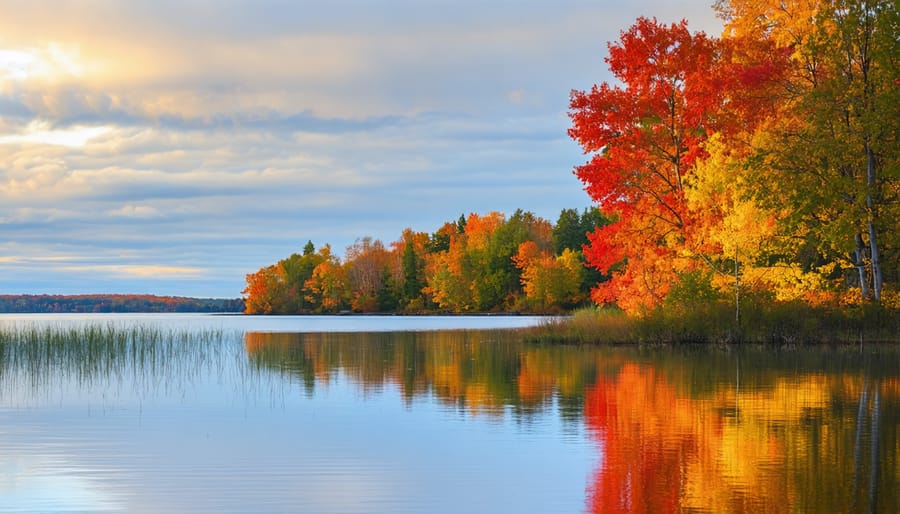
Autumn transforms Ontario’s waterscapes into nature’s most spectacular mirror show. From late September through October, the fiery reds, oranges, and golds of sugar maples and oak trees create stunning reflections across calm lakes and rivers. Killarney Provincial Park’s Georgian Bay shoreline offers particularly breathtaking opportunities, especially during those magical foggy mornings when mist hovers just above the water’s surface.
Here’s an insider tip: arrive at your chosen location before sunrise. The still morning air creates glass-like water conditions perfect for capturing crisp reflections. Algonquin Park’s numerous access points along Highway 60 provide easy shoreline photography without requiring a canoe trip—though paddling out offers even more dramatic perspectives.
For the best results, shoot during the “golden hour” just after sunrise when warm light enhances those autumn hues. Polarizing filters help reduce glare and deepen color saturation in your reflections. Don’t forget to explore transformed shorelines where fallen leaves create natural frames and fascinating foreground elements. Pack warm layers—those foggy mornings are chilly but absolutely worth it for photographers willing to embrace the season’s moody atmosphere.
Eco-Friendly Waterscape Photography Practices
Ontario’s stunning waterways deserve our protection, especially as we pursue the perfect shot. I’ve learned through years of photographing these beautiful spaces that being a responsible photographer means leaving each location as pristine as you found it—or better.
Start by following Leave No Trace principles every time you head out. This means staying on designated trails and established viewing areas, even when that “better angle” tempts you off the path. Trampling shoreline vegetation damages delicate ecosystems and causes erosion that affects water quality for everyone.
Here’s an insider tip I wish someone had told me earlier: scout locations beforehand using maps and park websites. This planning prevents unnecessary wandering through sensitive areas while you search for compositions. When you arrive, set up your tripod on durable surfaces like rocks or established clearings rather than soft vegetation.
Respect wildlife by maintaining safe distances—at least 30 meters for most species. If animals change their behavior because of your presence, you’re too close. I’ve captured my best wildlife-near-water shots by settling into one spot quietly and letting animals return to their natural routines.
Use only eco-friendly sunscreen and bug spray near waterways, as conventional products contain chemicals harmful to aquatic life. Pack out everything you bring in, including those tiny lens wipes and energy bar wrappers that easily blow away.
One practice that’s become my signature habit: I always pick up at least three pieces of litter I didn’t create during each photography session. It’s a small gesture that helps preserve these incredible locations for future photographers and ensures Ontario’s waterscapes remain as breathtaking in person as they appear in our images.
Ontario’s waterscapes are waiting for you, and the beauty of this adventure is that you don’t need expensive gear or years of experience to capture something magical. Whether you’re shooting on your smartphone during a lunch break at Algonquin or setting up a tripod at sunrise in Killarney, every photographer has their own unique perspective to share. The water doesn’t judge your equipment—it simply reflects, flows, and invites you to tell its story.
If you’re feeling inspired but want to sharpen your skills, consider joining one of Ontario’s photography workshops where you can learn alongside fellow enthusiasts in these stunning locations.
As you venture out with your camera, remember that we’re all temporary visitors to these extraordinary places. Practice leave-no-trace principles: stay on designated paths, don’t disturb wildlife or vegetation for that “perfect shot,” and pack out everything you bring in. The waterscapes you photograph today should remain pristine for the next generation of photographers to discover and cherish.
So grab your camera, check the weather forecast, and choose your first destination. Your Ontario water story is waiting to be captured—one ripple, one reflection, one magical moment at a time.






+ There are no comments
Add yours