

Planning accessible outdoor experiences transforms parks from exclusive spaces into welcoming destinations for everyone. Ontario Parks leads the way in accessibility planning, implementing universal design principles that go beyond basic requirements to create truly inclusive natural spaces.
Whether you’re organizing a family outing with a wheelchair user, seeking sensory-friendly trails, or managing a facility that needs accessibility upgrades, thoughtful planning makes the difference between a challenging experience and an enriching adventure. From barrier-free campgrounds to tactile interpretive panels and accessible beach pathways, proper accessibility planning opens doors to nature’s wonders for visitors of all abilities.
Recent initiatives across Ontario’s parks showcase how innovative accessibility solutions can blend seamlessly with natural environments. Elevated boardwalks wind through wetlands, allowing wheelchair users to observe wildlife up close. Beach Mobi-Mats create firm pathways across sand, while adaptive equipment rentals enable everyone to participate in outdoor activities.
This guide explores both the practical aspects of planning an accessible park visit and the behind-the-scenes work that makes these experiences possible. Whether you’re a visitor seeking information or a professional involved in accessibility planning, you’ll find the essential tools and insights needed to ensure everyone can experience the healing power of nature.
Understanding Ontario Parks’ Accessibility Standards
AODA Compliance in Parks
Ontario Parks takes pride in meeting and exceeding AODA requirements, ensuring everyone can enjoy our natural spaces. As part of our commitment to accessibility, we follow strict park rules and guidelines that promote inclusive experiences for all visitors.
Our parks feature accessible washrooms, picnic areas, and visitor centers designed with universal access in mind. Many trails have been modified with firm, stable surfaces and appropriate width to accommodate mobility devices. We’ve also installed tactile signage and audio descriptions at key points of interest for visitors with visual impairments.
Staff members receive regular training on accessibility awareness and are ready to assist visitors with various needs. We maintain detailed accessibility reports for each park, which are updated annually to reflect improvements and changes.
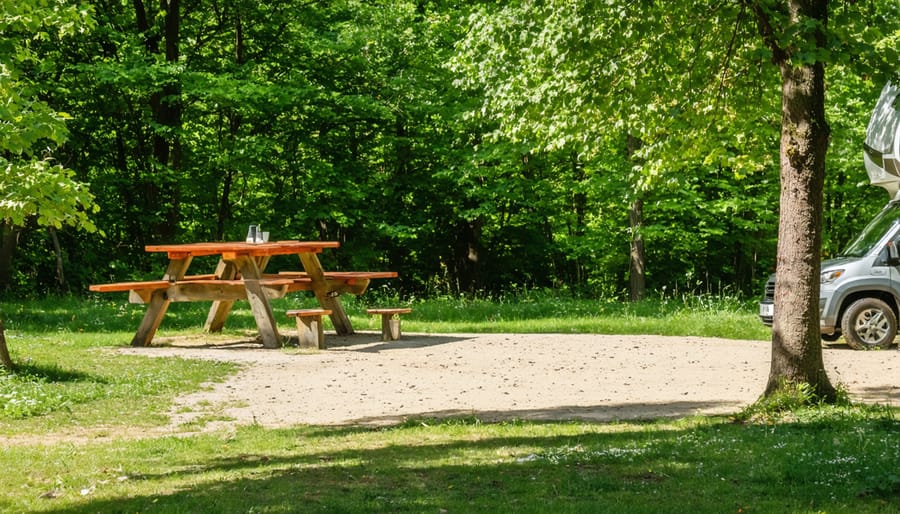
For campers, we offer several accessible campsites equipped with level surfaces, nearby accessible washrooms, and modified picnic tables. These sites can be reserved in advance to ensure availability during your visit. Remember to check specific park accessibility features when planning your trip, as amenities may vary between locations.
Multi-Year Accessibility Planning
Ontario Parks is committed to improving accessibility across its network through comprehensive multi-year planning initiatives. From 2024 to 2028, visitors can expect to see significant enhancements to park facilities, trails, and services. The focus includes installing more accessible washrooms, creating additional barrier-free campsites, and developing sensory-friendly spaces in visitor centers.
Several parks are already implementing these improvements, with Algonquin, Killarney, and Pinery leading the way. New accessible boardwalks and viewing platforms are being constructed to ensure everyone can enjoy Ontario’s natural wonders. Beach access mats and adaptive equipment rentals are also being expanded across various locations.
Future plans include the development of digital accessibility tools, such as virtual trail guides and interactive park maps designed for visitors with various needs. Ontario Parks is also working closely with accessibility advocates and community members to ensure improvements align with real user needs.
The planning process includes regular consultations with park visitors, annual progress reviews, and updates to accessibility standards based on emerging best practices. This commitment ensures that Ontario’s natural spaces become increasingly welcoming and accessible to all visitors.
Accessible Features in Ontario Parks
Barrier-Free Trails and Boardwalks
Ontario’s parks and conservation areas have made remarkable strides in creating accessible outdoor experiences through well-designed trails and boardwalks. These barrier-free pathways allow everyone to immerse themselves in nature’s beauty, regardless of mobility needs.
Many locations feature smooth, level surfaces with gentle grades perfect for wheelchairs and mobility devices. Wooden boardwalks, often equipped with raised edges for safety, wind through wetlands and forests, offering intimate encounters with local wildlife and plant life. Most accessible trails include regular rest areas with benches placed strategically along the route.
Viewing platforms and lookouts are thoughtfully positioned at key points, providing spectacular vistas while maintaining accessibility standards. These spaces are designed with appropriate turning radiuses and barrier-free surfaces, ensuring everyone can enjoy the views comfortably.
Popular destinations like Algonquin Park’s Spruce Bog Boardwalk and Crawford Lake’s viewing platform showcase how accessibility and nature appreciation can work in perfect harmony. The trails often feature interpretive panels at wheelchair-friendly heights, and many locations offer tactile elements for visitors with visual impairments.
Pro tip: Before visiting, check the trail length, surface type, and gradient information on the park’s website. Some locations also provide trail accessibility ratings and detailed maps to help you plan your route. During spring thaw or after heavy rains, even accessible trails may have temporary challenging conditions, so it’s worth calling ahead.

Accessible Camping Options
Ontario Parks offers a variety of accessible camping options to ensure everyone can enjoy the great outdoors. Many provincial parks feature barrier-free car camping facilities with level, firm surfaces and wider campsite layouts to accommodate mobility devices.
For those seeking more comfort, several parks provide roofed accommodations with accessible features. These include cabins and yurts equipped with ramps, wider doorways, and adapted bathrooms. The interiors are thoughtfully designed with ample turning space and accessible furniture arrangements.
Comfort stations and washroom facilities near accessible campsites are equipped with barrier-free entrances, grab bars, and roll-under sinks. Many parks also feature paved pathways connecting these facilities to campsites, making navigation easier for visitors using mobility devices.
Pro tip: During peak season, accessible campsites can book up quickly. I recommend reserving your spot at least five months in advance, especially for popular destinations like Killbear and Pinery Provincial Parks. Some parks even offer specialized equipment rentals, like beach wheelchairs, to help you make the most of your outdoor adventure.
Remember to check each park’s specific accessibility features online or call ahead to ensure they meet your needs. Park staff are always happy to provide detailed information about available accommodations and can help make your camping experience more comfortable and enjoyable.
Beach Access and Water Activities
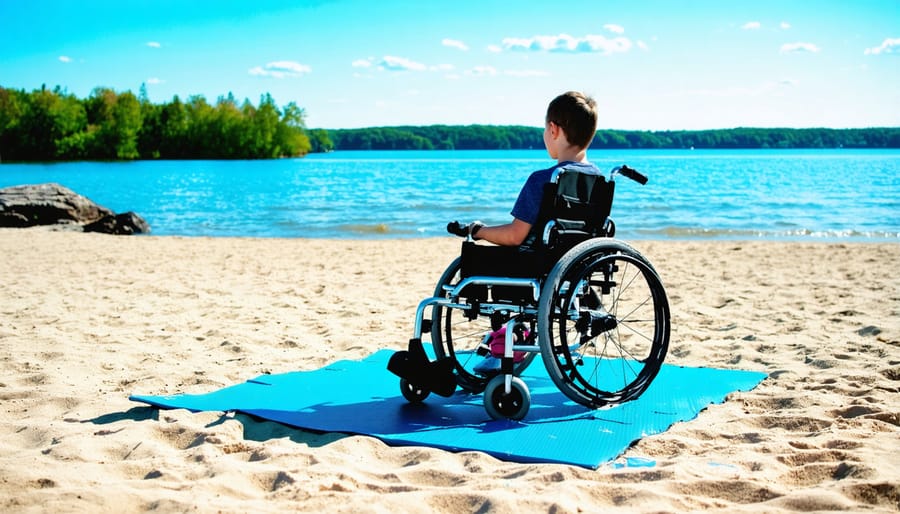
Ontario’s beaches are becoming more inclusive than ever, with innovative solutions making water activities accessible to everyone. Many provincial parks now feature Mobi-Mats – portable, non-slip beach access paths that create stable surfaces from parking areas right to the water’s edge. These blue pathways are a game-changer for wheelchair users, families with strollers, and anyone who finds walking on sand challenging.
Water wheelchairs are available at select beaches, allowing visitors to safely enjoy the cooling waters of Ontario’s lakes. These specially designed chairs have large, buoyant wheels that easily navigate both sand and shallow water. Pro tip: Reserve these chairs in advance, especially during peak summer months!
For those interested in day use activities, many parks offer adapted equipment for water sports. You’ll find everything from accessible kayak launches to modified paddleboards with extra stability features. Some locations even provide lift systems to help transfer visitors from wheelchairs into boats.
Beach accessibility features vary by location, but you’ll typically find:
– Accessible changing rooms and washrooms near the beach
– Transfer benches at water’s edge
– Enhanced signage with clear accessibility information
– Designated accessible parking close to beach entrances
– Trained staff to assist with equipment use
Remember to check the park’s website or call ahead to confirm which accessibility features are available at your chosen destination. Many parks also offer free equipment loans – just bring your spirit of adventure!
Planning Your Accessible Visit
Pre-Trip Planning Resources
Planning an accessible outdoor adventure in Ontario has never been easier, thanks to numerous resources available at your fingertips. Before heading out, visit Ontario Parks’ official accessibility portal, which offers detailed guides for each park’s accessible features, including trails, washrooms, and camping facilities. When you’re ready to reserve your accessible campsite, the online booking system allows you to filter specifically for accessible options.
For additional support, consider downloading the AccessNow app, which provides crowd-sourced accessibility information about parks and surrounding areas. The Parks’ visitor information centers also offer accessibility guides in various formats, including large print and braille versions upon request.
Many parks have partnered with local organizations to provide specialized equipment rentals, such as all-terrain wheelchairs and beach access mats. Pro tip: call the park directly at least two weeks before your visit to arrange any special equipment or assistance you might need.
Don’t forget to check out the Accessible Ontario website for transportation options to and from the parks. Several shuttle services now offer accessible vehicles with advance booking. For those traveling with service animals, parks maintain a list of nearby veterinary services and pet supply stores for peace of mind during your stay.
Remember to join online communities and forums dedicated to accessible outdoor recreation in Ontario – they’re fantastic resources for first-hand experiences and updated information about trail conditions and facility accessibility.
Park-Specific Accessibility Information
Finding detailed accessibility information for specific Ontario Parks is easier than ever, thanks to various online and offline resources. Start by visiting the official Ontario Parks website, where each park has its own dedicated page featuring a comprehensive accessibility section. These pages outline available facilities like accessible washrooms, campsites, trails, and beach access points.
For real-time updates and specific details, consider calling the park directly before your visit. Park staff can provide current information about trail conditions, facility maintenance, and seasonal accessibility features. They can also answer specific questions about your unique needs and help create a more comfortable visit.
The Ontario Parks’ Facility Report is another valuable resource, available both online and at park offices. This report includes detailed measurements, grades, and specifications of accessible features, helping you make informed decisions about which areas of the park will work best for your needs.
Don’t forget to check out user-generated content on social media and travel blogs. Many visitors share their firsthand experiences and helpful tips about park accessibility. These personal accounts often include practical details that might not be covered in official documentation, like the actual effort required to navigate certain trails or the most convenient parking spots.
Remember that accessibility features can change seasonally, so it’s worth double-checking the information close to your planned visit date.
Essential Tips and Contact Information
Planning an accessible visit to Ontario Parks is easier when you know who to contact and what to prepare. Start by reaching out to the park you plan to visit at least two weeks in advance. Park staff can provide detailed information about specific facilities and arrange any necessary accommodations.
Keep these essential tips in mind:
– Always call ahead to confirm current accessibility conditions
– Check weather forecasts, as conditions can affect accessibility
– Download or request park trail maps before your visit
– Pack any personal mobility devices you might need
– Bring a companion if you require assistance
– Consider visiting during off-peak hours for a more relaxed experience
For immediate assistance and information:
Ontario Parks Information: 1-888-ONT-PARK (1-888-668-7275)
TTY Service: 1-866-686-6072
Email: ontarioparks@ontario.ca
The Ontario Parks website features an accessibility feedback form where you can share your experiences or suggestions for improvement. Your feedback helps make our parks more inclusive for everyone.
For specialized equipment rentals or additional support services, contact local accessibility organizations in the area you plan to visit. Park staff can provide recommendations for trusted local providers.
Remember to document any specific accessibility requirements you have when making reservations, and don’t hesitate to ask questions about available services and facilities. Staff are there to help ensure you have a comfortable and enjoyable visit.
Ontario Parks remains steadfast in its commitment to making nature accessible to everyone. Through continuous improvements, innovative solutions, and dedicated planning, we’re working tirelessly to ensure that the breathtaking beauty of Ontario’s natural landscapes can be enjoyed by visitors of all abilities.
The journey toward complete accessibility is ongoing, and we’re proud of the progress made so far. From wheelchair-accessible trails and beaches to adapted camping facilities and inclusive programs, our parks are becoming more welcoming and accommodating with each passing season. We actively seek feedback from visitors and work closely with accessibility experts to identify areas for improvement and implement meaningful changes.
We encourage all visitors, regardless of their mobility or accessibility needs, to explore the wonders of Ontario’s provincial parks. Nature has an incredible power to heal, inspire, and connect us, and everyone deserves to experience these benefits. Whether you’re planning a day trip to observe wildlife, a family camping weekend, or a peaceful afternoon by the water, there’s a place for you in our parks.
Remember that planning ahead is key to ensuring a comfortable and enjoyable visit. Our park staff are always ready to provide detailed information about accessible features and assist in making your visit memorable. Don’t hesitate to reach out with questions or special requests – we’re here to help make your outdoor adventure possible.
As we look to the future, Ontario Parks will continue to break down barriers and create more inclusive outdoor spaces. We invite you to be part of this journey by sharing your experiences and suggestions. Together, we can ensure that the natural treasures of Ontario remain accessible for generations to come.
Your adventure in nature awaits, and we’re committed to making it possible. Come experience the magic of Ontario’s parks – where accessibility meets the great outdoors.









+ There are no comments
Add yours